Servoplant Aerocraft

The Aerocraft is a tandem two seat biplane built around a welded steel spaceframe fuselage and wooden wings.

Engine: Rotax 582, 64 hp
Wing span: 7 m
Wing area: 17.50 sq.m
MAUW: 450 kg
Empty weight: 200 kg
Fuel capacity: 60 lt
Max speed: 160 kph
Cruise speed: 120 kph
Minimum speed: 60 kph
Climb rate: 4 m/s
Seats: 2
Fuel consumption: 15 lt/hr
Price (1998): US$25,000

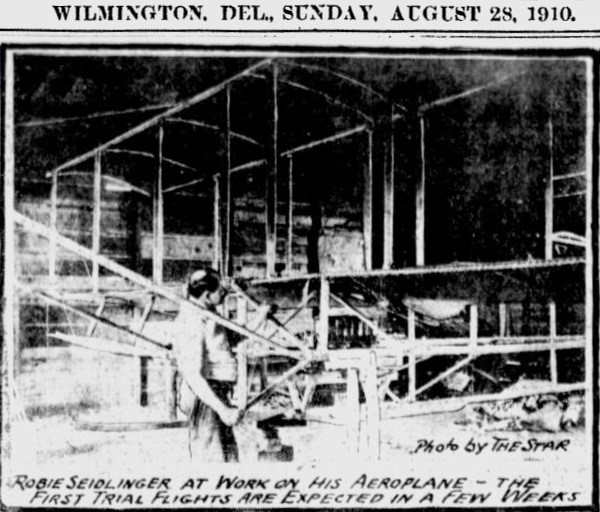
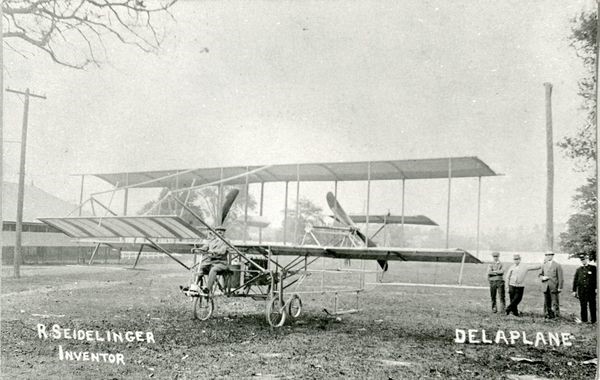
Seidelinger Delaplane

Designed and built by Robie Seidelinger for the Wilmington Aero Club, and flown by Eddie Bloomfield.

According to “Delaware Aviation History” by Frebert, taxi tests in the configuration shown resulted in moving the engine to a position after the wings rather than under the pilot’s seat, and use of a single propeller, as well as shortening the rear fuselage. In this later form it flew 300 yards on October 21, 1910, and made several other fights on the following days. It was destroyed when lightning struck its storage shed.

While built by Seidelinger, it was funded by the Wilmington Aero Club.

Seddon Mayfly

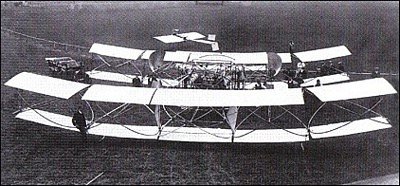
In 1908 Lieutenant John W. Seddon of the Royal Navy was inspired by a flying paper model to design a giant tandem biplane, with which he hoped to win a GBP10,000 prize for the first Manchester to London flight. Convinced that hoops of high-tensile steel tube were much more efficient than conventional wood and wire bracing, he persuaded the Navy to give him leave to work on his project and his mother largely to pay for it. The aircraft, named the ‘Mayfly’, was built in a bicycle factory and used up 610m of steel tubing.

The Seddon “Mayfly” of 1910 was a large and elliptical tube framework tandem biplane flying machine, employing Beedle aluminium sheet propellers, contracted by John W. Seddon to the English engineering company of Accles and Pollock just one year after Blériot’s Cross-Channel flight.

It was intended to take six people aloft – one pilot and five passengers. The aircraft never flew, and achieved nothing more than a high-speed ground-run. On its only high-speed run, a wheel collapsed and the aircraft was damaged. Repairs and modifications were hampered by Seddon’s return to duty and the Mayfly never did fly, eventually being dismantled by souvenir hunters. Often referred to as the Accles and Pollock aeroplane.

Scrappy UAC-200

The Scrappy is a single-place sport biplane constructed of steel tubing, wood and fabric. A 200-hp Lycoming engine provides the power.

Gross Wt. 1428 lb
Empty Wt. 981 lb
Fuel capacity, 28 USG
Wingspan 20 ft 8 in
Length 16 ft 8 in
Top speed 188 mph
Cruise 151 mph
Stall 55 mph
Climb rate 3700 fpm
Takeoff run 950 ft
Landing roll 1250 ft
Range 500 sm

Aviation Preservation Society of Scotland Sopwith 1½ Strutter

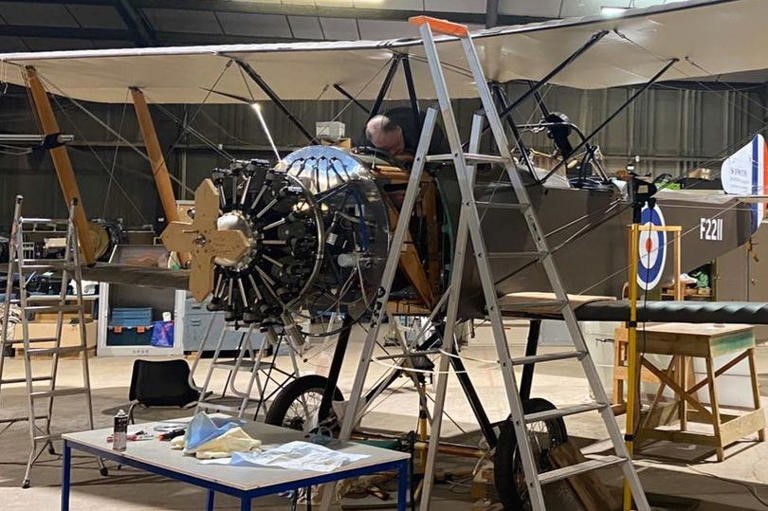
Adam Smith, former director of the National Museum of Flight, started to recruit volunteers in 2000. The group has included retired medics, teachers, civil engineers, film-makers and sign-writers – no one who knew how to build a plane.

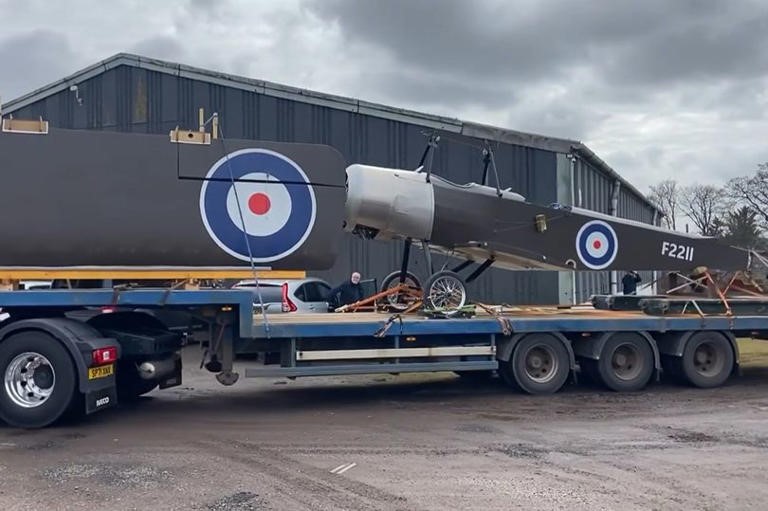
The exact working replica has been built by a team of dedicated experts and enthusiasts. The building of the plane took place over the 23 years. The Strutter was built from scratch in a big shed in East Lothian. A group of pensioners aged between 65 and 100 built the historic biplane with nine of them not living to see it finished as their names have been recorded on a plaque in the cockpit.

The plane was built by pensioners in a barn in East Lothian is set to be flown by a young female pilot, Ellie Carter, 20, for the first time.

But they have now completed a Strutter, with a working engine. The Strutter was seen leaving East Lothian on the back of a lorry to undergo testing in West Lothian.

Funding was needed to keep the Strutter in Scotland. It stands in an outsize converted fruit shed in Congalton, near Edinburgh, soon to be sold.

If the shed cannot be purchased, the plane was likely to move to England.

Mike Harper, chair of the Aviation Preservation Society of Scotland, said: “The Strutter is probably worth twice what the shed is worth, but we don’t want to see it leave Scotland, where it was designed and built.
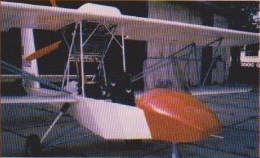
Sclaves 1910 Biplane

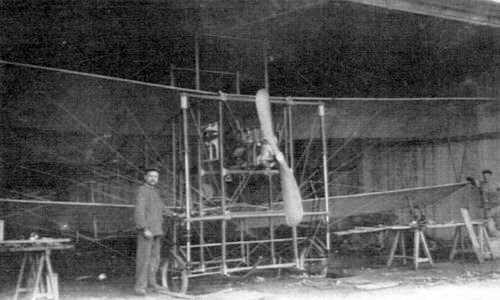
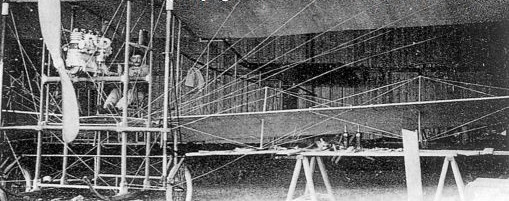
This tractor French biplane, constructed of metal pipes and an abundance of wire bracing, powered by an acetylene motor was tested at Amberieu in 1910 by a man from Lyon named Sclaves. At least one photo shows a 50 hp Prini-Berthaud engine. The rectangular wings were braced entirely by one pair of outboard struts on each side and wires from double kingposts on top. The heavy forward box structure seemed made of pipes; the rear fuselage was uncovered. The two wheels were castering.