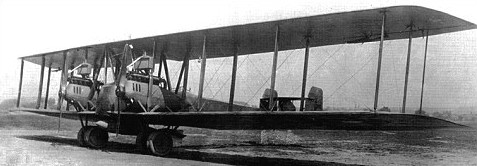
Friedrichschafen G.IV

The final version of the Friedrichshafen’s G bombers was the G.IV of 1918, which was basically similar to the G.IIIa but had a slightly shorter wing span, a modified and rounded fuselage nose and D.IVa engines mounted in tractor configuration.
The front gunner’s cockpit was dispensed with, leaving the main fuselage snub-¬nosed, and com¬pound tail surfaces, as in the G.IIIa, were employed. One or two examples may have seen limited operational trials, but this is unconfirmed.

Engines: 2 x 260 hp Mercedes D IVa.
Span: 22.6 m (74 ft 1.5 in).
Length: 12 m (39 ft 4.5 in).
Endurance: 5 hrs.
Armament: Bombload up to 1496 kg (3300 lb); 1 Parabellum machine gun in rear.

Frakes Turbo Cat

A Grumman Ag-Cat conversion.

Engines: P&WAC PT6A-34, 750 hp.
Seats: 1.
Wing loading: 18.52 lb/sq.ft.
Pwr loading: 8.1 lb/hp.
Max TO wt: 6075 lb.
Empty wt: 2807 lb.
Equipped useful load: 3231 lb.
Payload max fuel: 2751 lb.
Hopper cap: 300 USG.
75% cruise: 113 kt.
Working speed: 96 kt.
Working endurance: 2.5 hr.
Stall: 51 kt.
ROC: 2000 fpm.
Min field length: 900 ft.
Fuel cap: 276/480 lb.

DINFIA IA.53 Marboreta

Engine; 1 x Cont. O-470-R, 170kW or Lyc. O-540-B2 B5, 175kW
Wingspan; 11.6 m / 38 ft 1 in
Length; 8.4 m / 27 ft 7 in
Height; 2.8 m / 9 ft 2 in
Wing area; 21.5 sq.m / 231.42 sq ft
Max take-off weight; 1525 kg / 3362 lb
Empty weight; 880 kg / 1940 lb
Max. speed; 185 km/h / 115 mph
Cruise speed; 160 km/h / 99 mph
Ceiling; 4300 m / 14100 ft
Range w/max.fuel; 750 km / 466 miles
Crew; 1
Passengers; 1

Euronef ATTL-1

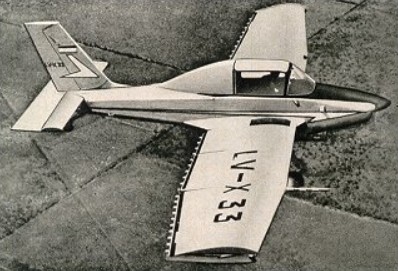
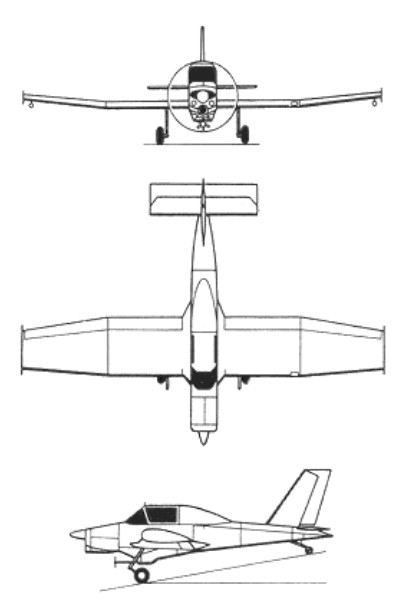
The Euronef ATTL-1 light aircraft made its first flight from Gosselies Airfield, Belgium, in 1990. The aircraft, powered by a Rotax engine has a top speed of 65 knots and is of all composite construction. Its main purpose is as a crop spraying aircraft and general agricultural aviation.
The construction of the aircraft is mainly of carbon fibre, glass fibre and Kevlar. It has seating for a pilot and one passenger. It has a high wing and fixed undercarriage with a single fin and rudder. Construction of a second prototype was under way in 1990.

EMBRAER EMB-200 / EMB-201 Ipanema / EMB-202 / EMB-203

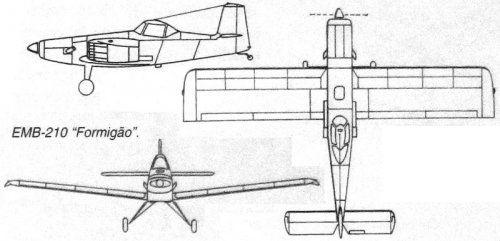
Design of an agricultural aircraft, to a specification laid down by the Brazilian Ministry of Agriculture, was initiated in May 1969 by the Departmento de Aeronaves of the nation’s Centra Te’chnico de Aeronautica. Following the establishment of EMBRAER on 2 January 1970, responsibility was transferred to EMBRAER.

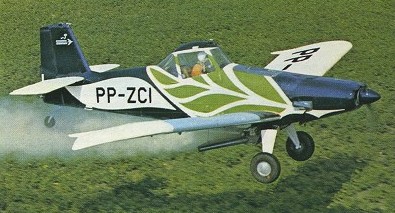
The first prototype, registration PP-ZIP, was flown for the first time on 31 July 1970, at Embraer’s headquarters in São José dos Campos, State of São Paulo.

Designated originally EMBRAER EMB-200 Ipanema (the name was chosen in honor of the Ipanema farm, located in Iperó, 128 km (80 miles) far from the city of São Paulo), the aircraft was a cantilever low-wing monoplane of all-metal construction with fixed tailwheel landing gear and power provided by a 260 hp / 194kW Avco Lycoming O-540-H2B5D engine, fixed-pitch propeller, hydraulic spraying system, and a 580 liter hopper.

Brazilian type certification was gained on 14 December 1971 and initial production versions were the EMB-200 and EMB-200A which differed by having fixed-pitch and variable-pitch propellers respectively. The Corsário de Aviação company from the State of Goiás, ordered ten aircraft, in March 1971, and was the Ipanema’s first customer. In February 1972, the first airplane, registration number PT-GBA, was delivered and entered service in the fight against pests that threatened cotton crops.

In 1974, after 73 EMB-200 series aircraft had been built, production of an improved EMB-201 began; this latter differed by having a 224kW IO-540 engine with a constant-speed propeller and detail improvements.

In November 1973, the 100th airplane was delivered to Serviços Agro Aéreos do Sul. In 1975, Uruguay’s Ministry of Agriculture and Fishing ordered ten Ipanemas, along with five EMB 110 Bandeirantes, marking Embraer’s first exports. A total of 200 EMB-201s was built.

In 1977, the updated EMB-201A first flown on 10 March, entered production. This introduced a new wing profile, improved systems and revisions in cockpit layout.

In 1980, Embraer acquired Indústria Aeronáutica Neiva, a company founded in 1954 and that produced small airplanes. With the merger of the two companies, the Ipanema’s production was transferred to Botucatu, São Paulo, in 1982. A total of 355 had been ordered by 1990, bringing total Ipanema sales to more than 630. In 1988, by which time 600 had been delivered, a further improved Ipanema was launched, but without a new designation, and options include a three-bladed Hartzell propeller, larger wheels, more powerful 300 HP engine, tail wheel with a larger diameter, new shock absorbers and wing profile, among others.

The EMB-201R is a single-seat glider-tug aircraft for the Brazilian Air Force. Three were built for the Air Force Academy gliding club. Brazilian Air Force designation U-19.

Certified in November 2015, the EMB-203 with a 320 hp Lycoming engine, has a wingspan of 13.3 m and its winglets redesigned, increasing control and improving the efficiency of spraying.

By August 2010, the Ipanema is the leader of Brazil’s agricultural aviation, with more than 1,100 planes delivered and 75% of the fleet in operation, nationwide.

On 15 March 2005, the 1000th Ipanema was delivered. Coincidentally, that was also the first model with the 320 HP ethanol-powered engine, which is the same fuel developed in Brazil used mainly by the nation’s automobiles. The project was developed in a partnership with the Department of Aerospace Science and Technology (Departamento de Ciência e Tecnologia Aeroespacial – CTA). From that point on, Embraer began to offer ethanol conversion kits for the airplanes powered by aviation gasoline (AvGas). Currently, around 25% of the Brazilian fleet uses ethanol.

Gallery

EMB-200
Engine; 1 x Avco Lycoming IO-540-H2B5D, 260hp
Wingspan: 36 ft 9 in / 11.20 m
Length: 24 ft 4.5 in / 7.43 m
Max payload norm: 1212 lb / 550 kg
Max payload restricted: 3963 lb / 1800 kg
Cruise 67%: 114 kt / 131 mph / 211 kph
ROC SL: 705 fpm / 215 m/min
Max range: 507 nm / 584 mi / 941 km
Seats: 1
Hopper capacity: 149.5 ImpG / 680 lt
Cockpit length: 3 ft 11.25 in / 1.20 m
Cabin width: 2 ft 9.5 in / 0.85 m
Cabin height: 4 ft 4.5 in / 1.34 m

EMB-200A
Prop: CS VP

EMB-201
Engine; 1 x Avco Lycoming IO-540-K1D5, 300hp / 224kW
Prop: CS VP

EMB-201A
Engine; 1 x Avco Lycoming IO-540-K1J5D, 300hp / 224kW
Max take-off weight; 1800 kg / 3968 lb
Empty weight; 1011 kg / 2229 lb
Wingspan; 11.20 m / 36 ft 9 in
Length; 7.43 m / 24 ft 5 in
Height; 2.22 m / 7 ft 3 in
Wing area; 19.94 sq.m / 214.63 sq ft
Max. speed; 225 km/h / 140 mph
Cruise speed; 204 km/h / 127 mph
Ceiling; 3470 m / 11400 ft
Range; 877 km / 545 miles

EMB-202
Powerplant: 1 × Textron Lycoming IO-540-K1J5D, 224 kW (300 hp)
Wingspan: 11.69 m (38 ft 4 in)
Length: 7.43 m (24 ft 5 in) (tail up)
Height: 2.20 m (7 ft 3 in) (tail down)
Wing area: 19.94 m2 (214.6 sq ft)
Aspect ratio: 6.9:1
Empty weight: 1,020 kg (2,249 lb)
Max takeoff weight: 1,800 kg (3,968 lb) (restricted category)
Fuel capacity: 264 litres (70 US gal; 58 imp gal) usable fuel
Hopper capacity: 950 litres (250 US gal; 210 imp gal) liquid or 750 kilograms (1,650 lb) dry
Maximum speed: 230 km/h (140 mph, 120 kn)
Cruise speed: 213 km/h (132 mph, 115 kn) (75% power)
Stall speed: 92 km/h (57 mph, 50 kn) (power off)
Never exceed speed: 272 km/h (169 mph, 147 kn)
Range: 938 km (583 mi, 506 nmi)
Service ceiling: 3,470 m (11,380 ft)
Rate of climb: 4.7 m/s (930 ft/min)
Take-off run to 15 m (50 ft): 332 metres (1,089 ft)
Landing run from 15 m (50 ft): 412 metres (1,352 ft)
Crew: 1 pilot

EMB-203
Engine: 320 hp Lycoming
Wingspan: 13.3 m
Eagle [1] DW-1 Eagle

Deliveries of Eagle Aircraft’s new ag-¬plane, manufactured by Bellanca, were planned to begin in October 1979. Designed from advanced glider technology, which en¬hances fuel efficiency, the Eagle was cer-tificated with 220 and 240 hp Continen¬tals and 275 and 350 hp Jacobs (all radi¬als); certification was pending with the 300¬hp Lycoming opposed powerplant.

Wood wings and steel tube fuselage, all Dacron-covered; spoilers on top surface of lower wings for more precise control at spray speed (65mph).

An agreement with Bellanca Aircraft Corporation of June 1979 was for Bellanca to manufacture Eagle on its behalf. Eagle production lasted until the early 1980s.

Eagle 300
First built: 1980.
Engine: 1 x Lycoming IO-540, 300 hp.
TBO: 1500 hrs.
Prop: Hartzell 3 blade, constant speed 86 in.
Seats: 1.
Length: 26 ft.
Height: 10.9 ft.
Wingspan: 55 ft.
Wing area: 386 sq.ft.
Wing aspect ratio: 15.1.
Max ramp wt: 5400 lbs.
Max take off wt: 5400 lbs.
Standard empty wt: 2650 lbs.
Max useful load: 2750 lbs.
Max landing wt: 4000 lbs.
Wing loading: 13.5 lbs/sq.ft.
Power loading: 18 lbs/hp.
Max useable fuel: 426 lbs.
Hopper capacity: 250 USG.
Climb rate: 750 fpm.
Climb @ 8000 ft: 450 fpm.
Service ceiling; 20,000 ft.
Max speed: 100 kts.
Working speed: 100 kts.
Fuel flow @ working speed: 103 pph.
Endurance @ working speed: 3.9 hr.
Stalling speed clean: 48 kts.
Turbulent air penetration speed: 103 kts.
Fixed tail-wheel undercarriage.
Fitted with spoilers.

Continental Copters El Tomcat

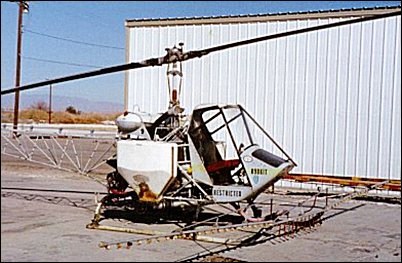
In 1959, Continental Copters Inc. of Fort Worth, Texas, developed and produced a specialised single-seat agricultural aircraft based on the Bell Model 47G-2. Payload is increased by deletion of unnecessary structure and equipment. Known as the El Tomcat Mk.II, this aircraft flew for the first time in April 1959 and received an FAA supplementary type certificate soon afterwards. An improved variant, the El Tomcat Mk.III, made its maiden flight in April 1965 as an improved version of the Mk.II, and subsequent variants were progressively introduced. The Tomcat Mk.III weighs empty 540kg and 1105kg loaded.
The El Tomcat Mk.IIIA was flown in January 1966 with 200hp Franklin 6V4-200-C32, 210hp 6V-335-A or a 235hp 6V-350-A engine.
The El Tomcat Mk.IIIB of 1967 had a still lower and repositioned windscreen, modified glassfibre nose, lower cabin roof and a 6V-350 engine.
The Mk.IIIC of 1968 was an improved version with a 200-235hp 6V4-200-C32, 6V-335-A or 6V-350A engine and was first flown in May 1968.
The Mk.V (first flown in June 1968) entered production in 1968 with a 220hp Lycoming VO-435-B1A engine (empty weight 620kg and maximum weight 1105kg), followed by the improved Mk.V-A with a 260hp VO-435-A1F engine and a folding jump-seat to permit carriage of a flagman to distant work sites. The latest version is the 265hp VO-435-BlA-engined Mk.V-B.

El Tomcat Mk.II

El Tomcat Mk.III
Empty weight: 540kg
Loaded weight: 1105kg

El Tomcat Mk.IIIA
Engine: 200hp Franklin 6V4-200-C32, 210hp 6V-335-A or 235hp Franklin 6V-350-A

El Tomcat Mk.IIIB
Engine: Franklin 6V-350

El Tomcat Mk.IIIC
Engine: 200-235hp Franklin 6V4-200-C32, Franklin 6V-335-A or Franklin 6V-350A

El Tomcat Mk.V
Ngine: 220hp Lycoming VO-435-B1A engine
Empty weight: 620kg
Maximum weight: 1105kg

El Tomcat Mk.V-A
Engine: 260hp VO-435-A1F
Disc loading: 2.6 lb/sq.ft.
Pwr loading: 9.42 lb/hp.
Max TO wt: 2450 lb.
Empty wt: 1420 lb.
Equipped useful load: 991 lb.
Payload max fuel: 817 lb.
Range max fuel/ cruise: 81 nm/ 1.3 hr.
Service ceiling: 10,500 ft.
Max sling load: 844 lb.
Cruise speed: 65 kt.
Working endurance: 1.5 hr.
ROC: 1500 fpm.
HIGE: 5900 ft.
HOGE: 1400 ft.
Fuel cap: 174 lb.
Seats: 1.

El Tomcat Mk.V-B
Engine: 265hp VO-435-BlA

Mk.VI-B
Engine: Lycoming TVO-435-B1A, 260 hp.
Seats: 1.
Disc loading: 2.6 lb/sq.ft.
Pwr loading: 10.9 lb/hp.
Max TO wt: 2850 lb.
Empty wt: 1490 lb.
Equipped useful load: 1321 lb.
Payload max fuel: 1147 lb.
Range max fuel/ cruise: 50 nm/ 0.8 hr.
Service ceiling: 10,500 ft.
Max sling load: 1194 lb.
Cruise speed: 65 kt.
Working endurance: 1.5 hr.
ROC: 1800 fpm.
HIGE: 5900 ft.
HOGE: 1400 ft.
Fuel cap: 174 lb.