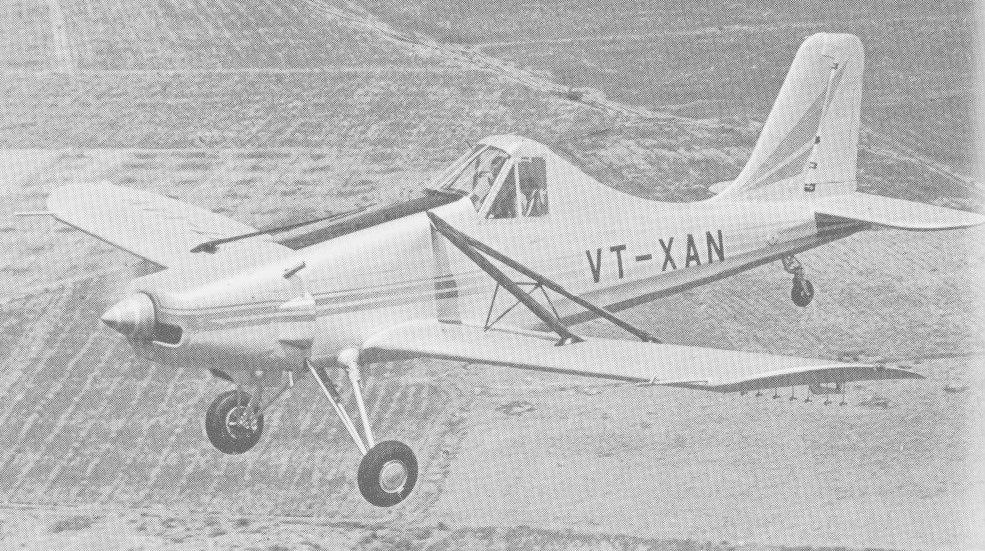
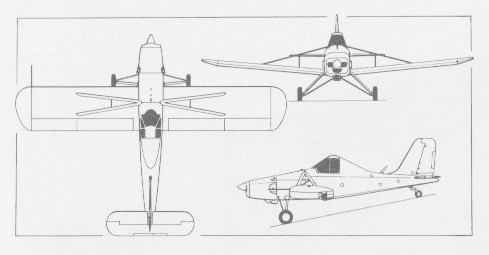
The HA-31 Mk.I Basant (Spring) first flew in 1972. The Mk.II production aircraft was much modified from the prototype.
The Indian Directorate of Agricultural Avia¬tion in New Delhi, having to 1981 purchased 24 HA 31 Basant agricultural aircraft, has con¬firmed the purchase of eight more. Of a total of 39 Basants built, five were purchased by the Haryana government.
HA-31 Mk.II Engine: Lycoming IO-720-C1B, 400 hp Wingspan: 39 ft 5.5 in / 12.00 m Length: 29 ft 6.25 in / 9.00 m Empty weight: 2645 lb / 1200 kg MTOW: 5000 lb / 2270 kg Max cruise75% 8000 ft / 2625m: 100 kt / 115 mph / 185 kph Max ROC SL: 750 fpm / 228 m/min Service ceiling: 12,500 ft / 3800 m Range max fuel: 348 nm / 400 mi /645 km Seats: 1 Payload Normal cat: 1333 lb / 605 kg Payload Restricted cat: 2000 lb / 907 kg
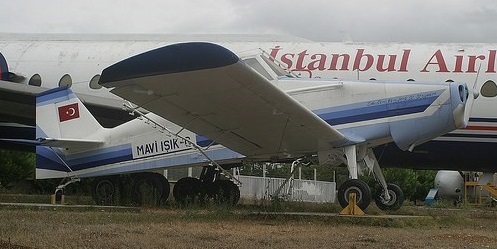
In 1978 2.HIBM constructed and developed the Mavi Isik 78-XA-1 agricultural aircraft. The maiden flight (TC-TXA) was successfully conducted in February 1979 in Kayseri. The sequent Mavi Isik-B (1980) and Mavi Isik-G-1 (1983) were developed from the prototype. It did not enter series production. Instead, Turkey bought Pezetel M-18A Dromader agricultural / fire-fighting aircraft.
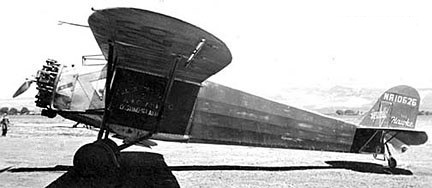
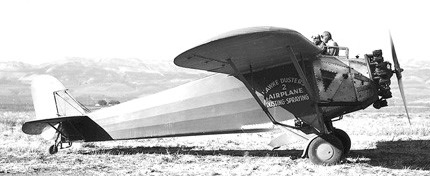
Designed by H Sherman Tharpe the Duster was modified from his 1929 Sierra BLW design and claimed to be the first airplane specifically designed as a duster (overlooking the Huff-Daland ag planes).
Hawke SJ
A single place monoplane, three were built: NR10609, NR10626 and NR10627.
Hawke SJ
NR10626 was scrapped in 1945 and the others were destroyed in crashes 1937 and 1945.
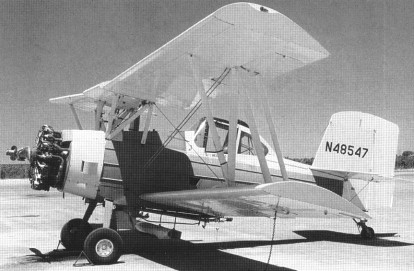
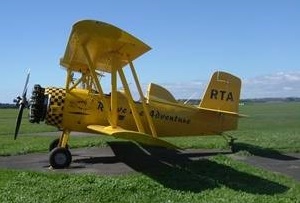
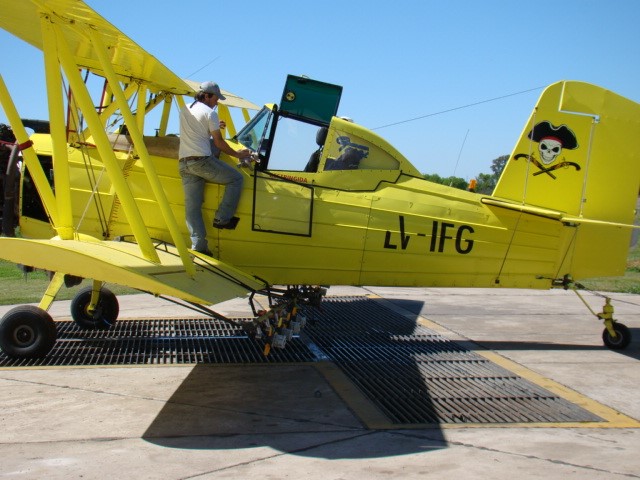
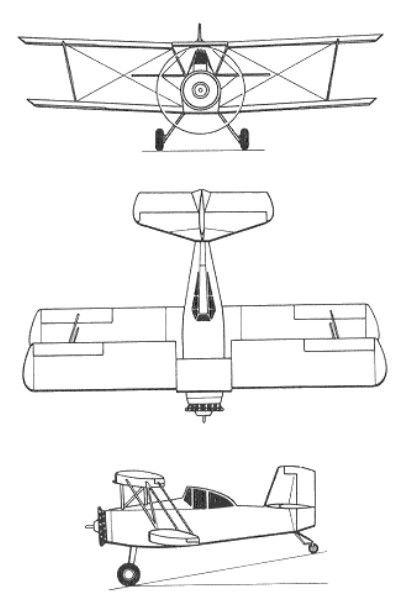
The Grumman Aircraft Corporation designed the G-164 Ag-Cat in the middle of the l950s but only built two aircraft, the first, N74054 (#X1) being flown on 27 May 1957, as later that year Grumman contracted the Schweizer Aircraft Corporation of Elmira, in New York State, to build 100 aircraft. The first of these, N10200, was flown on 17 October 1958 and the Grumman G-164 Ag-Cat was certified by the FAA in the restricted category in January 1959. The engine for the prototypes and early production aircraft was the Continental W670-6N seven-cylinder radial of 220 hp. Because of its lighter weight than other engines, the longer engine mounts were cowled and gave the Ag-Cat a length of 24 feet and six inches. The wing-span was 35 ft8 in. The first twenty-odd aircraft had flat fuselage side panels, rather than the more familiar ribbed panels. These early model aircraft were fitted with 215 US gallon hoppers.
The G-l 64 was also certified for the 220-225 hp Gulf Coast W670-240 (a modified Continental tank engine) and the 245 hp L4M or L4MB, 275-300 hp Jacobs R-755. Once with operators, some aircraft were converted to the 450 hp Pratt & Whitney R-985 or the 600 hp R-1340, the latter readily recognised by extremely short engine mounts. Aircraft in the serial range 301-400 were built new with a 300 hp Jacobs R755 and an aluminium hopper of 245 US gallons installed. Nearly all of these aircraft were fitted with an enclosed canopy, which were also retrofitted to earlier aircraft. Production of the G-164A Super Ag-Cat, with the P&W R-985 and a 300 US gallon fibreglass hopper, began in 1966 with number 401, N895X. The R-1340 engine was also fitted to these aircraft. Production of the G-164A ended at number 1730 with N6894Q.
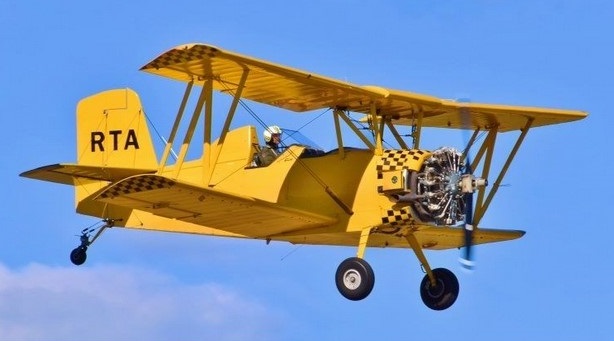
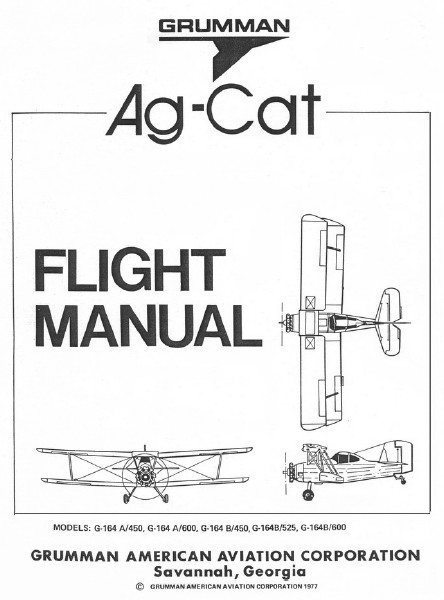
In 1974 Grumman American announced a new model Ag-Cat. The wingspan had been increased from 36 feet to 42 feet 3 inches, but the hopper size remained at 300 US gallons and the new model was introduced with the 450 hp R-985 and, again, the R-1340 was later fitted. The recognition feature of the G-164B was the broad cord fin and rudder. With the R-985 installed the length of the G-164B is 25 feet, 7 inches. N88348 (#1B) was the first G-164B completed and over 800 were manufactured before production ended. The G 164B was certified under the A model banner. In 1976 a stretched version, the G-164C, was flown and put into production. This was followed by the many turbine conversions. Grumman American introduced in 1978 the Ag Cat C duster, powered by a 600 hp Pratt & Whitney radial. It carries a 500 galIon hopper the biggest dustbin available in any production agplane. In February 1976 the Super Ag-Cat C was flown, and in November 1977 was certificated; it has a deeper and longer fuselage accommodating a 500 US gallon hopper.
The factory PT6 turbine conversion kit weighing in some 230 kgs lighter, is around 10 to 12 knots faster and the PT6 power will enable a full load of 1500 litres to be carried for most operations. Fitted will be a three bladed Harztell prop, providing for a quieter operation and a reversing capability if ever required. Although the Grumman Aircraft Engineering Company designed the Ag-Cat, built the two prototypes and marketed the type (subsequently through its subsidiary Grumman American Aviation Company), Schweizer Aircraft Corporation manufactured all the production Ag-Cats. Schweizer built 1400 aircraft between 1959 and 1975 and, with the exception of the engine fitted, the appearance of Grumman’s Ag-Cat hardly changed. In 1978 Gulfstream American bought Grumman American, and in 1979 a dual trainer Ag-Cat was shown at the Paris Air Show, although this was apparently designed and manufactured by some other company.
By 1979 Schweizer had produced 2,455 Ag-Cats at its Elmira, New York factory: 1,730 G-164As, 659 G-164Bs, 44 G-164Cs, and 22 G-164Ds – Super Ag-Cat Cs with a PT6A turbo-prop.
Reported in March 1979 was the Gulfstream American Ag-Cat B fitted, by Page Industries, with a 600 shp Lycoming LTP 101 turboprop. First flight of the prototype was made on 22 November 1978 and the installation was notable for being 34 in / 86.4cm shorter than the PT6 in the Ag-Cat. Another installation in an Ag-Cat, flight tested late 1978, was a 650 hp liquid-cooed Vee engine developed by Stage II from the Chrysler “hemi-head” auto engine and offering less drag than the Ag-Cat’s usual radial. Mid-Continent of Hayli, Missouri fitted a 1200 hp Wright Cyclone R-1820 in an Ag-Cat to produce the King Cat, which will take off at its 9500 lb / 4313 kg gross weight from a 1000 ft / 305 m strip.
In 1981 Schweizer bought the Ag-Cat manufacturing and marketing rights from Gulfstream American, and produced an improved G-164B known as the Ag-Cat B-Plus and powered by either a 450-hp R-985 or a 600-hp R-1340 Pratt & Whitney nine-cylinder radial.
A Hershy FatCat modification widens the fuselage and raises the top wing some 8 inches. Some have been powered by a Walter 601-F-II turbine engine delivering 750 hp using a five-bladed propeller, or the 600 hp Polish PZL 3S radial, and at least one has been equipped with two Lycoming TIO-540s, in separate Piper Seneca cowlings, mounted side-by-side, in the nose.
Ethiopian Airlines sc Company’s Agro Aircraft Manufacturing division produced the Ag-Cat Corporation Ag-Cat G164B Turbine under the name Eshet for distribution and operation in Ethiopia and African countries except Algeria, South Africa, and Tunisia. Admas Air Service in Ethiopia has produced over 10 Grumman Ag-Cats under licence from Schweitzer.
G-164A Ag-Cat Engines: P&W R-985, 450 hp. Seats: 1. Wing loading: 18.52 lb/sq.ft. Pwr loading: 13.5 lb/hp. Max TO wt: 6075 lb. Empty wt: 2870 lb. Equipped useful load: 3168 lb. Payload max fuel: 2688 lb. Range max fuel/ 75% pwr: 244 nm/ 2.8 hr. Service ceiling: 13,000 ft. Hopper cap: 300 USG. 75% cruise: 89 kt. Working speed: 89 kt. Working endurance: 3.4 hr. Stall: 68 kt. ROC: 400 fpm. Min field length: 2320 ft. Fuel cap: 276/480 lb.
G-164A Super Ag-Cat Engine; 600-hp Pratt & Whitney R-1340 nine-cylinder radial. Wing span; 35 ft 11 in. Wing chord (constant); 4 ft 10 in. Length; 24 ft 3in. Height; l0 ft 9 in. Wing area; 328 sq ft. Empty, equipped; 3,159 lb. Certificated max T-O; 4,500 lb. Max TO wt: 6075 lb. Power loading; 7.5 lb/hp. Equipped useful load: 2893 lb. Payload max fuel: 2413 lb. Range max fuel/ 75% pwr: 171 nm/ 1.8 hr. Service ceiling: 16,000 ft. Hopper capacity; 33 or 40 cu ft. Fuel capacity; 46, 69 or 80 US galls. Never-exceed speed; 128 kt. 75% cruise: 98 kt. Abrupt manoeuvre speed; 102 kt. Working speed; 82-91 kt. Working endurance: 2.9 hr. Stall speed, power off; 59 kt. Stall clean: 69 kt. Rate of climb; 710 ft/min. Take-off run; 395 ft. Seats: 1. Wing loading: 18.52 lb/sq.ft. Fuel cap: 276/480 lb.
G 164B Engines: P&W R-985, 450 hp. Seats: 1. Wing loading: 15.5 lb/sq.ft. Pwr loading: 13.5 lb/hp. Max TO wt: 6075 lb. Empty wt: 3025 lb. Equipped useful load: 3023 lb. Payload max fuel: 2543 lb. Range max fuel/ 75% pwr: 283 nm/ 2.8 hr. Service ceiling: 14,000 ft. Hopper cap: 300 USG. 75% cruise: 103 kt. Working speed: 91 kt. Working endurance: 3 hr. Stall: 61 kt. ROC: 625 fpm. Min field length: 1820 ft. Fuel cap: 276/480 lb.
G-164B Engine: P&W R-1340, 600 hp.
Schweizer Super Ag-Cat 164B/600 Engine: P&W R-1340, 600 hp. TBO: 1200 hrs. Prop: Hamilton Standard 2-blade, 108-in. Seats: 1. Length: 25.9 ft. Height: 11.3 ft. Wingspan: 42.3 ft. Wing area: 392 sq.ft. Wing aspect ratio: 5.49. Maximum ramp weight: 6075 lbs. Maximum takeoff weight: 6075 lbs. Standard empty weight: 3255 lbs. Maximum useful load: 2820 lbs. Maximum landing weight: 6075 lbs. Wing loading: 15.5 lbs/sq.ft. Power loading: 10.1 lbs/hp. Maximum usable fuel: 480 lbs. Hopper capacity: 400 USG. Best rate of climb: 576 fpm. ROC @ 6000ft: 379 fpm. Service ceiling: 17,000 ft. Maximum speed: 128 kts. Working speed: 100 kts. Fuel flow @ working speed: 192 pph. Endurance at working speed: 2.4 hrs: Stalling speed clean: 50 kts. Stalling speed flaps down: 52 kts. Turbulent-air penetration speed: 102 kts. Fixed tail wheel undercarriage.
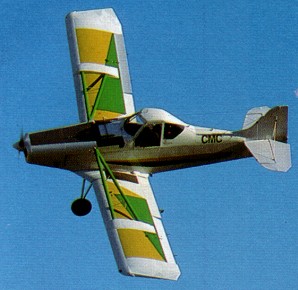
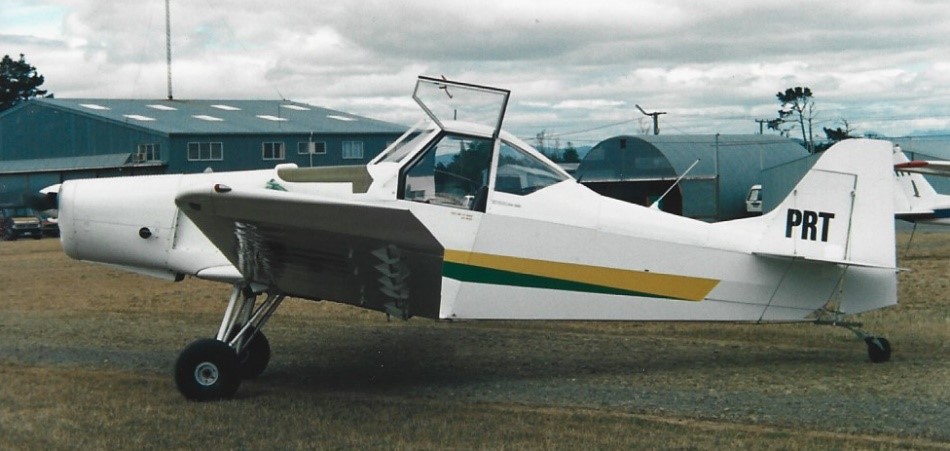
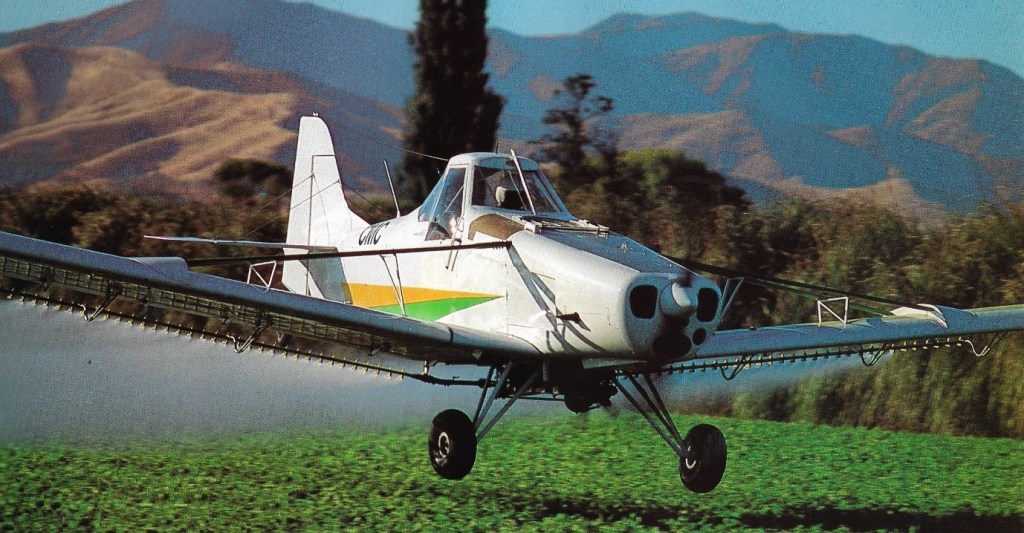
The Fatman was developed to improve on the PA-25 Pawnee by Peter Furlong and George Morgan. Gippsland Aeronautics began to rework the original Piper concept in 1983 and today only three components have commonality with the old familiar design interchangeable lift struts, undercar¬riage legs and engine mounts. Originally flying on a Pawnee Supplementary Type Certificate, after some fifteen interim prototypes the GA-200 achieved a type certificate of its own. Built and tested to FAR 23 specs, the 260 hp Lycoming 0 540 powered GA¬200 can haul a genuine 1500 cwt off and onto some confined spaces.
The GA¬200 featured a kevlar 180 litre fuselage fuel tank, however the company was offering an inboard (223 litre) wing fuel system as well as a further option with both fuselage and wing tanks, providing a six and a half hour endurance. No parts of the fuel system are installed forward of the firewall with the exception of the carburetor.
GA-200
All metal wings house fuel tanks with fuel gauges mounted in the wings. Normal tank venting is outboard on the wings. The leading edge of each wing is made of five nonstructural sections. Both wings have airscoops that pressurise both wings and fuselage to keep fertiliser dust out and eliminate the possibility of spray contamination. The bottom rudder slants up so – in the event that a tailspring breaks – the rudder will not sustain damage. The undercarriage is not the same as a Pawnee, having been beefed up using Fletcher mainwheels and the safety straps are now top mounted. The top leg attachment bolts are easily accessible from the outside of the airframe. The fuselage is of welded 4130 chrome moly steel tube – the high wear and tear area where the hopper outlet is fitted being of stainless steel. The hopper outlet is unique – the same base is used for both spray or solids, and doesn’t detract from aircraft performance or dump capability. The header tank features its own sight glass right in front of the pilot and holds enough fuel for about 15 minutes.
Fitted with two seats, the GA 200 has a superficial resemblance to its older brother but is in fact both shorter and wider. Engineered out of the design are the cooling problems common to the Pawnee and the 1930s vintage rag wing aerofoil. The fabric covered steel tube fuselage and all metal winged aircraft is fitted with an 800 litre hopper and has been designed and built to be extremely “fieldworthy”.
Federal Aviation Administration Type Acceptance Certificate No.98/14 was granted to the GA200C in the Restricted Category on 9 September 1998 at the original maximum take-off weight of 1315 kg. Type acceptance at the increased MCTOW of 1524 kg was granted on 17 February 1999, based on validation of CASA Certificate of Type Approval number 83-6.
GA-200 ZK-CMC pilot Ray Patchett
The GA200C is a development of the original GA200 at the instigation of the NZ agent. It has a larger volumetric capacity hopper (1050 litres), and associated with that a revised fuselage structure and a fuel injected 300 hp engine with constant speed propeller. The GA200C incorporates the Option 1 extended wing tips as standard and has a modified fuel system with gravity fed sump tank. Initially certification was achieved at the same weights as for the GA200 and at the same 250 hp in the standard category. Gippsland subsequently certificated the GA200C at a higher weight and with a slight increase in structural speeds. (To provide for the possible installation of an IO-580 engine.) The changed airworthiness limitations were originally going to be applied to a proposed GA200C-1 model, but that designation has now been dropped.
The GA200C Type Certificate Holder since Revision 9 dated 08.08.2006: GA200 Pty Ltd.
The last production example of the GA200 Series was serial number 200C-0345.
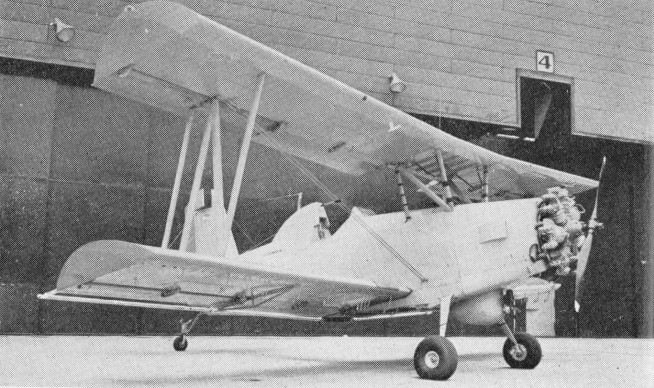
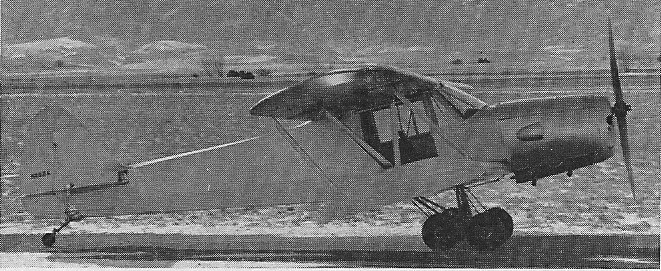
The General Airplane Service Model 11 is a modified biplane Piper Cub for crop dusting. Created by General Airplane Service of Sheridan, Wyo, it was modified to a reverse-tagger biplane, the plane is fitted with tandem one-wheel landing gear. The fuselage of a J-3 Cub with a Piper PA-18 top cabin structure, wing and tail. Power was a Ranger 200 hp in a Fairchild PT-19 cowling.
The first flight was on October 12,1953.
Engine: Ranger 200 hp Span: 32 ft 2.5 in Length: 24 ft Height: 6 ft 8 in Empty weight: 1200 lb Gross weight: 3000 lb Payload: 1500 lb Operating speed: 40-100 mph
USA Fixed-base operator at Sheridan, Wyoming, in early 1950s. Converted Piper J-3s, PA-11 s and PA-12s for agricultural work by installation of bigger engines. Company’s Model II ag-plane was a mixture of Piper parts with a 200 hp Ranger engine from Fairchild PT-19 and a new lower wing to make it a biplane; first flight October 12,1953.
Based on the Kinner Sportster, the 202 Mantis of 1956 was a single place open cockpit low wing monoplane agricultural sprayer. First flown on 30 May 1956, only one was built, registered N13701.


 All Aero