Transland Ag-2

The idea of an agricultural aircraft followed a meeting between George Wing, Lloyd Stearman, Tom Watson (from Aerial Agriculture in Sydney, Australia) and George Roth (of Murryair of Hawaii and later owner/producer of Eniroth). George Roth had been instrumental in the building of the Ag-1, and he was an obvious influence in the Ag-2 design by George Wing’s team.

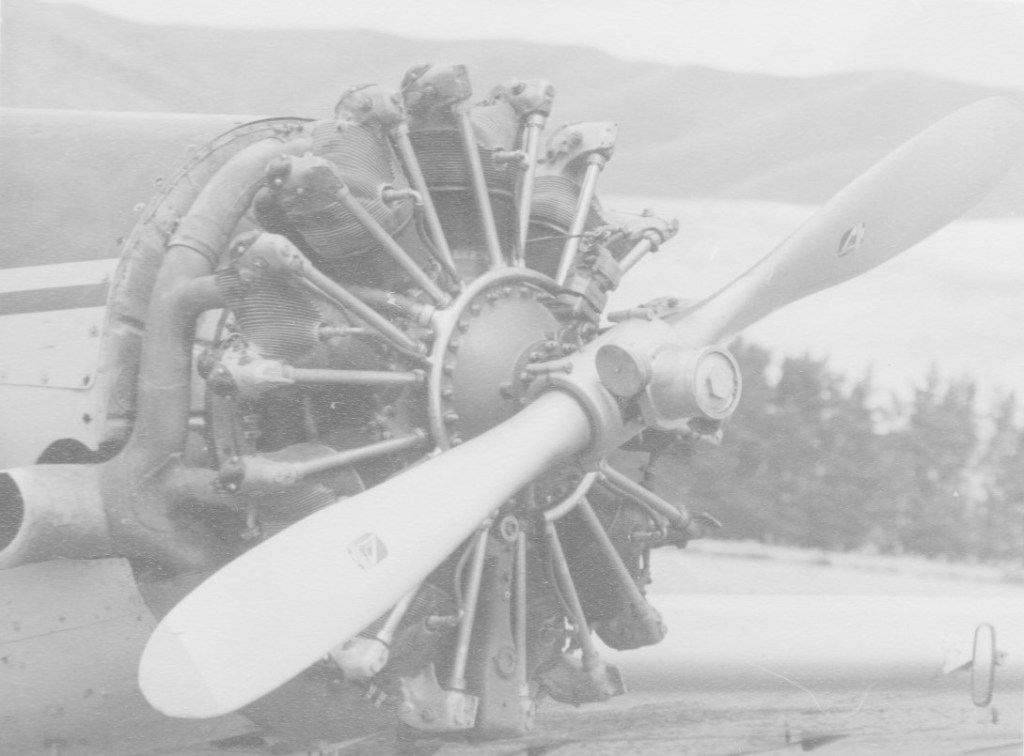
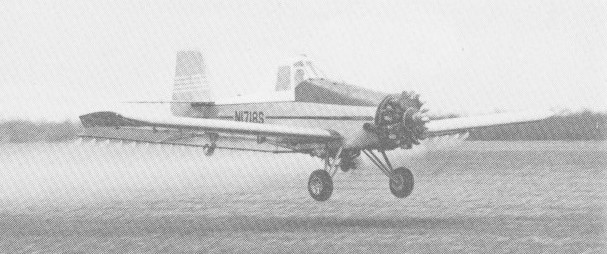
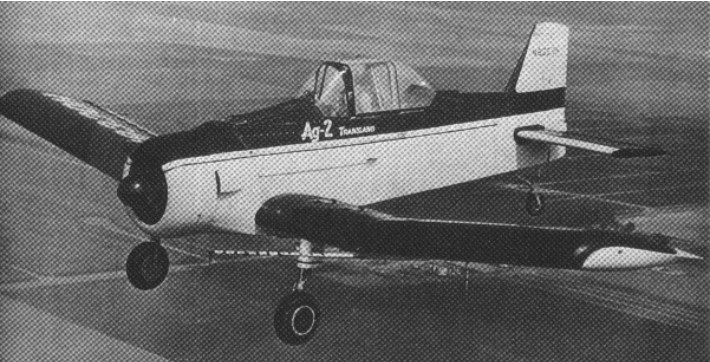
Construction of the first aircraft began in 1954 and the Transland Ag-2 made its first flight from Torrance as N8330H on 11 October 1956. At that stage, it was a single-seat aircraft powered by a 450-hp Pratt & Whitney R-985. Between the engine and the cockpit was housed an integral hopper of 53 cubic feet intended for solid materials and carrying a load of 3,000 lbs in the restricted category. The length of the cropduster was 28 ft, 5 inches and its height 9 ft. 8 inches.

The centre wing was built in two sections fastened to the fuselage either side of the hopper. Each section incorporated two 62.5 US gallon tanks which were intended as spray tanks totalling 250 US gallons. The wing was extremely thick – some eighteen inches deep – which gave high lift but also high drag. The aerofoil, a modified NACA 64021 section, had an aspect ratio of around 21%. A single flap extended under the fuselage between both sections. The outer wing panels also incorporated a 62.5 US gallon tank intended for aircraft fuel. The ailerons ran the full length of these panels with a top side lifting flap, which presumably kept a clean airflow over the wing and ailerons. Aluminium wing tips gave a wing span of 42 ft and a wing area of 321.6 sq.ft.

While the test flying was done on the first aircraft, a second, N8331H, was built and fitted with a 600-hp P&W R-1340. The payload was increased from 2,000 lbs to 3,000 lbs, giving an all-up weight in the agricultural category of 7,700 lbs. The empty weight of the aircraft was 3468 lbs.
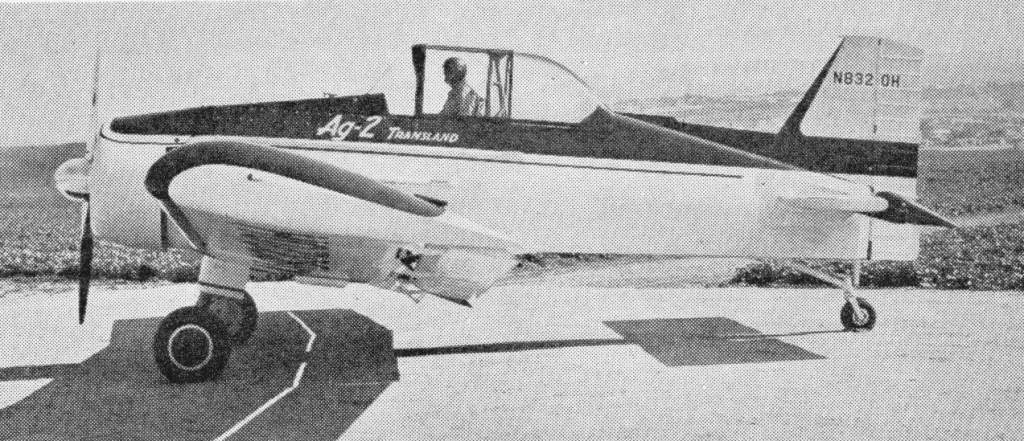
N8331H first flew from Torrance in June 1958. The first aircraft was also retrofitted with an R-1340 and the rear
cockpit modified to carry a passenger. The then Civil Aero¬nautics Administration awarded Type Certificate #4A20 to Transland Aircraft for the Ag-2 on 24 June 1958.

In 1959, a third and final aircraft, N8232H, was built and operated in Panama.

The monocoque design of the Ag-2 didn’t fail, it was twenty years ahead of its time. In the 1950s and ‘60s, the Stearmans and the Naval Aircraft N3Ns were still the “big planes” of an operator’s fleet and were able to be obtained cheaply for US$5,000, as opposed to the Ag-2’s price tag of US$25,000.

With 577 hours on the clock, N8330H was sold to Charles Chalking in Uruguay in 1962. The aircraft was flown to the South American country, where it was registered CX-AYC in May 1962. Under the name of Azucarera del Litorial SA of Paysandu, it flew some 224 hours on sugar fertilizing until 31 December 1963, when it was placed in storage. The aircraft spent 28 years in storage before being sold to an operator at Triente y Tres. Flown again on 25 September 1991, the Ag-2 had clocked up another 290 hours by 23 February 1993 before it was parked up at the airfield at Triente y Tres for seven years. Around 2000 the wings were removed and stored in a shed, while the fuselage was pushed to the edge of the airfield where weeds began to incarcerate it. In April 2003 the aircraft arrived in New Zealand for restoration, with 1091.2 flying hours. At some early stage the inside of the hopper was lined with fibreglass.

Engine: Pratt & Whitney R-985, 450-hp
Seats: 1
Length: 28 ft 5 in
Height: 9 ft. 8 in
Hopper cap: 53 cubic feet
Load cap: 2,000 lbs
Spary tank cap: 250 USG
Fuel cap: 62.5 USG
Wing span: 42 ft
Wing area: 321.6 sq.ft

Engine: Pratt & Whitney R-¬1340, 600-hp
Seats: 2
Payload: 3,000 lb
MAUW: 7,700 lb
Empty wt: 3468 lb
Transavia PL12 Airtruk

PL-12

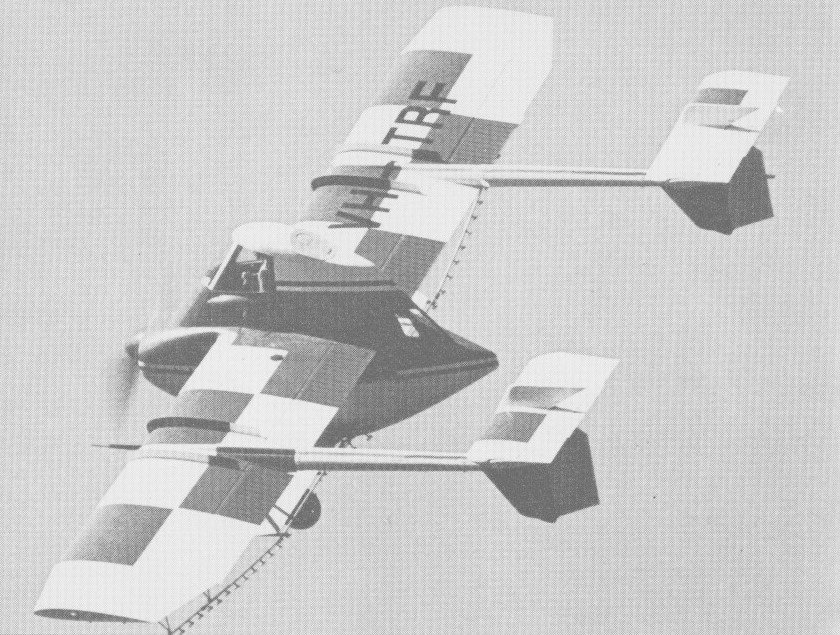
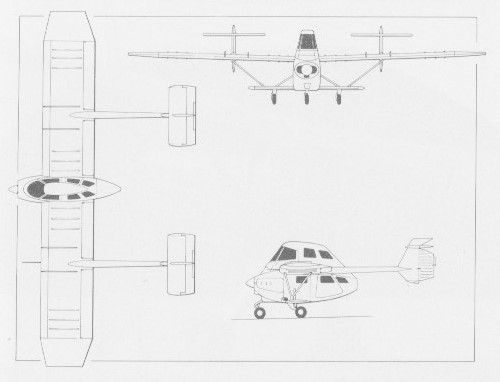
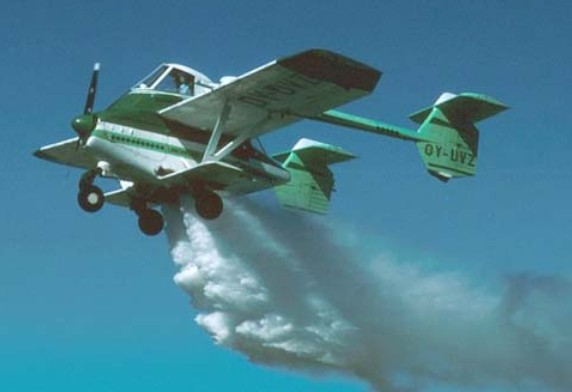
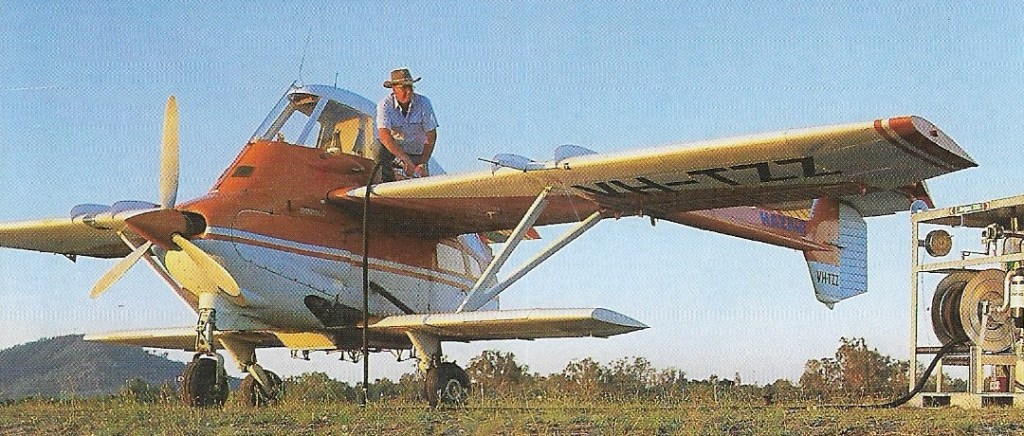
Designed in Australia by Luigi Pellarini and first flown on 22 April 1965, as a liquid chemical sprayer, the Airtruk can carry up to 180 Imp gallons (818 litres) and can dispense chemical over a swath width of 100ft (30.2m). First powered by a 285 hp engine, later models were fitted with the 300 hp Continental IO-520-F. The PL-12 entered production by Transavia Corporation in Australia in 1966.

Around 120 were made in the 23 years from its first flight in April 1965. Transfield manufactured the wholly-Australian designed multi-purpose aircraft for over twenty years. Initially designed as a specialised agricultural aircraft, it was refined over the years and used for many purposes including military surveillance and medivac roles in the PL-12-U utility version.

The last planes built by Transfield were made up of spare parts from many of the 117 planes produced at the company’s Seven Hills, Australia, workshop. Many were exported to countries such as Denmark, Yugoslavia, Spain, Africa, China and New Zealand.

PL-12

Flight Engineers Ltd was a joint company formed by agricultural operator Barr Brothers and Marine Helicopters Ltd. to maintain own fleets, but also undertook license-assembly of Transavia PL-12 Airtruk agricultural aircraft from 1973.

The T-320 model were assembled in Auckland, New Zealand. They featured increased side and head room, electric flaps and new ailerons. T320 version powered by Continental Tiara engine introduced 1977. Production ended 1980.

Gallery

Transavia PL12 Airtruk
Engine: One 285HP Rolls Royce Continental IO-520-A
Wing span: 12.15 metres (39 ft 10 in)
Length: 6.35 metres (20 ft 10 in)
Accommodation: One pilot – 2 pax
Hopper capacity: 180 ImpGal / 818 lt

PL-12-U
Engine: Continental IO-520-D, 300 hp
Wingspan: 39 ft 10.5 in / 12.15 m
Length: 20 ft 10 in / 6.35 m
Empty weight: 1830 lb / 830 kg
MTOW: 3800 lb / 1723 kg
Max cruise 75% SL: 102 kt / 117 mph
ROC: 800 fpm / 244 m/min
Service ceiling: 10,500 ft / 3200 m
Range max payload: 650 nm / 749 mi / 1203 km
Crew: 1
Passengers: 1 on upper deck / 4 on lower deck
Passenger cabin length: 9 ft 0 in / 2.74 m
Passenger cabin width: 3 ft 2 in / 0.97 m
Passenger cabin height: 8 ft 11 in / 2.11 m
Passenger cabin volume: 74 cu.ft / 2.10 cu.m

PL 12
Engine: Continental IO 520 D, 300 hp
Prop: 7 ft 4 in (2.23 m) dia 2 blade
Wing span: 39 ft 10.5 in (12.15 m)
Length: 21 ft 0in (6.40 m)
Height: 2.79 m
Wing area: 256 sq ft (23.79 sq.m)
Gross weight: 4,090 lb (1,855 kg)
Max cruising speed: 121 mph (195 kph)
Maximum speed: 208 km/h
Ceiling: 10,500 ft
Max range: 380 miles (610 km)
Accommodation: Crew of 1 and 2 pas¬sengers.

PL12-T300
Engine: Lycoming IO-540-K1A5, 300 hp
Prop: Hartzell 3 blade, 84in

PL12-T320
Engine: 1 x RR/Continental Tiara 6-320B

PL-12-U

Texas Helicopter M79 Jet Wasp II

The 1979 M79S Wasp II was a two place Ag modification of the Bell 47G. First flown on 6 January 1979.

First flown in 1979 with a piston engine, the M79T Jet Wasp II was a two-seat turboshaft powered modification of the Bell TH-13T helicopter. One was built (N1001X) in 1982.

M79S Wasp II
Engine: TVO-435, 270hp
Rotor: 37’1″
Length: 36’0″
Useful load: 1480 lb
Max speed: 106 mph
Cruise: 80 mph
Range: 300 mi
Seats: 2

M79T Jet Wasp II
Engine: Soloy-Allison 250
Seats: 2

Texas Helicopter M74 Wasp

Certified in 1976, the M74 Wasp was a single-seat piston-engined agricultural/utility modifications of Bell OH-13E (Bell 47) helicopter.

The 1977 M74A Wasp applied the modifications to Bell OH-13H.

M74 Wasp
Engine: Lycoming TVO-435-A1E, 200hp
Rotor: 35’1″
Length: 31’5″
Useful load: 1020 lb
Max speed: 100 mph
Cruise: 80 mph
Range: 150 mi
Seats: 1

M74A Wasp
Engine: Lycoming TVO-435, 240hp
Seats: 1

Texas A&M Ag-1

Weick Ag-1 N222

In 1949-50 the Texas A&M College in the USA developed a concept aircraft, the first purpose built agricultural aircraft designed by Fred E Weick and Hugh DeHaven, designated Ag 1 which flew in January 1950, piloted by Ted von Rosenberg. It was a low wing monoplane of all metal construction, powered by a 225 hp piston engine and designed to carry a chemical load of 1,200 lb (544 kg).

Weick Ag-1 N222

Built with US government support, the Ag 1 N222 was demon¬strated widely throughout the USA and was well received by the six or seven hundred pilots who flew it. The main criticism was that it was underpowered, and a decision was taken to refit it with a 300 hp engine. Before this could be done the Ag 1 collided with a powerline pole and ended up on its back. But the crash demonstrated one of the qualities for which it was designed: the aircraft was destroyed except for the cockpit area, but the pilot was uninjured, even though he had been subjected to forces more than 25 times that of gravity, according to the dynamometers installed for test purposes.

Engine: Continental E-225, 225hp
Wingspan: 39’0″
Length: 29’8″
Useful load: 1200 lb
Max speed: 115 mph
Cruise speed: 100 mph
Stall: 45 mph
Range: 400 mi
Seats: 1

Sukhoi Su-38

Su-38L

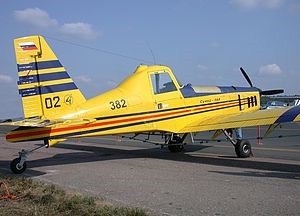
The Su-38L is a Russian agricultural aircraft, the first aircraft of this type to be designed and built by the Sukhoi Design Bureau civil aircraft section (Sukhoi Civil Aircraft (CJSC)). Design originally began in 1993 as a development of the Sukhoi Su-29 aerobatic aircraft. Development was suspended due to economic problems, and when restarted in 1998, the aircraft was redesigned, reducing the aircraft’s size and replacing the originally planned M-14 radial engine with a LOM Praha 337S inline engine. The first prototype made its maiden flight on 27 July 2001, with a second flying by June 2002. As no users had yet expressed interest in the aircraft, the project was proceeding at a low pace.

Su-38L

Engine: 1 × LOM Praha 337S, 184 kW (247 hp)

Max takeoff weight: 1,200 kg (2,646 lb)

Capacity: 500L (132 US Gallon) chemical hopper

Maximum speed: 150–180km/h (81–97 knots, 93–112 mph)

Ferry range: 1,200 km (648 nmi, 745 mi)

Crew: 1

Stroop AT-6

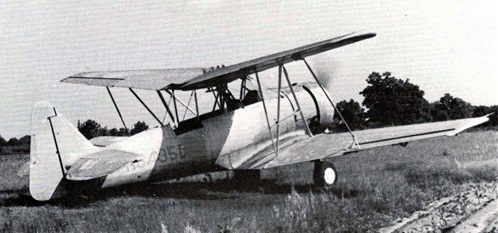
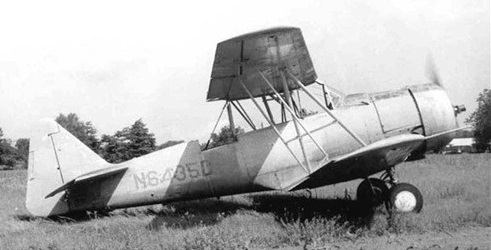
An AT-6 biplane conversion built in Selma, Alabama, by Robert C. Stroop, for use as a sprayer.

This aircraft, N6435D, c/n 88-17079, was an AT-6D originally ordered by the Army as 42-85295, but later assigned to the Navy as SNJ-5, B/N 84995. It was retired from the Navy, stored at NAF Litchfield Park, and then sold as surplus in the late fifties.

Requiring a low and slow sprayer in Alabama, Robert C. Stroop purchased the AT-6D and two more wings from AT-6, plus some additional fittings, and probably about 1964 converted the basic AT-6D into a biplane sprayer.

The airplane retained the basic configuration of the AT-6D, with only the cockpit and addition of the upper wing changing its appearance. The additional wing consisted of two outer wing panels from another airplane, and enough struts to stabilize the structure. The wing produced a negative stagger, probably to move the CG back so that the spray tank could be made larger, and a heavier load could be carried. Cabane struts braced the center section, and large “N” struts were installed outboard. Ailerons were interconnected by a smaller strut, and some bracing wires were installed between the cabane struts. There were no landing gear doors, and the cockpit was completely open except for the standard windshield. Only the front seat remained. The entire airplane was silver or unpainted.

With quite satisfactory takeoff and landing characteristics and a low stalling speed, it received a restricted certificate “only agricultural work”.

The aircraft was operated from 1965 to 1970 (the last known owner – farmer J.F. Carter, of Monroeville, AL,), after which his fate is unknown.

Snow S2 Thrush

S2R

By 1955 plans were under way for the S2 model, to be joined by the S2B, a 450 hp version, with the pilot sitting behind the hopper. This first flew in August 1956. The smaller model, the S2A, was fitted with the Continental W670-6A radial engine of 220 hp and 74 of these were built by the Snow Aeronautical Corporation. Only 17 of the larger 450 hp S2B were built and this was followed by the Snow S2C-450, still an open cockpit aircraft with distinctive overturn protection incorporating a larger hopper and a wing span increased to 44 feet, 7 inches. The empty weight was 2940 lbs and loaded, 5700 lbs. Some 215 were built, at least half with the 600 hp P&W R-1340-AN1 which increased the loaded weight to 6000 lbs.

The first Snow S2C appeared in 1960, a follow-on aircraft to the similar Snow S2B of which nineteen were produced. Both were powered by the 450-hp R-985. At that time Snow were also building the S2A which was produced until 1962. A smaller aircraft, the pilot sat in front of the hopper. Some S2C aircraft had the wingtips removed and were fitted with large end plates.

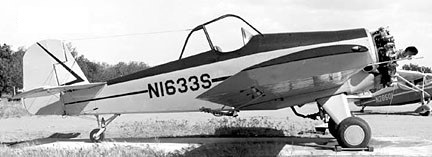
Snow S-2C N1633S

Around 260 Snow S2Cs were built, firstly powered with a 450hp P&W R-985-AN-1, first flying on 12 April 1961, a 600-hp P&W R-1340-AN-1 version first flying on 12 May 1961. From 1962 until production was superseded by the Aero Commander-Snow S2D-600 in 1965. Until this point all aircraft were built with open cockpits.

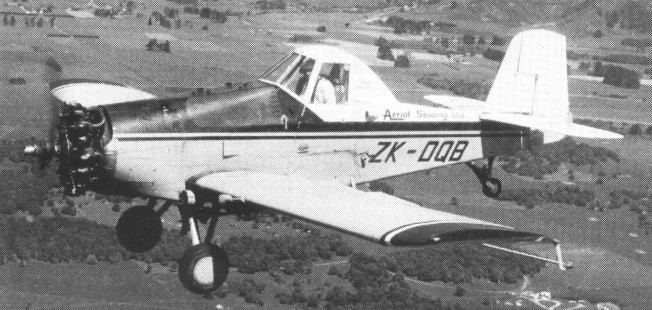
In 1965 the Snow Corporation was taken over by Aero Commander and a new model, the S2D-600, was flown in 1965. It was the first with the new enclosed cockpit, setting the lines for the later Thrushes and with a larger hopper. Snow also modified the aircraft to incorporate a loader driver seat directly behind the pilot’s and facing rear.

Aero Commander built 105 S2D-600’s. The S2D was fitted with an even larger hopper suitable for rice sowing and fertiliser spreading and this became the Rockwell S2R-600 Thrush in 1968.

Rockwell Thrush Commander

Re-engining became popular. Besides the R-1340 version, Rockwell introduced the S2R Thrush 800 fitted with a Wright R-1300B1 radial of 800 hp. In 1975 two US Ag operators, Marsh in Arizona and Ayres in Georgia, fitted Garrett and Pratt & Whitney turbines to Thrush aircraft. Marsh had previously fitted a Garrett TPE-331 Pre-Century of 575 shaft horse power to an open cockpit 1965 model Snow S2C and it was first flown on 9 July 1973. It is the first known conversion, known as the Marsh S2R-T Turbo-Thrush, of an agricultural aircraft in the United States; N1674S, #600-1250C (the 250th ag¬plane built by Snow), was later sold to Plexico as XB-ETQ. Another conversion by Serv-Aero Engineering was to fit the 1200 hp Wright R-1820-71 piston radial.
In 1977, the Ayers Corporation, of Albany, Georgia, purchased the Thrush Commander line and continued to build the S2R, with the same constructors serial sequence, finally ending at 2582R.

A new sequence was started by Ayres with the 750 hp P & W PT6A-34AG with constructors numbers beginning with 6001, and incorporating one major change, the fitting of a 500 US gallon hopper. The 5000 sequence was used for the 100 or so 800 hp Wrights built by Rockwell.

Once Ayres had taken over, one of the new versions was named the Bull Thrush, powered with a 1200 hp Wright R-1820-97 and fitted with a 500 US gallon hopper. One of the new features was a Dual Cockpit variant, being denoted by a DC at the end of the constructor’s number. From this time Ayres were to start a whole new series of constructors numbers, prefixed by S2R, followed by engine model fitted and then a number, in most cases, starting at -001. As example, S2R-1340-… (600 hp), S2R-1820-… (1200 hp), S2R-RS3-… (PZL R83, 595 hp) and S2R-T34-… (750 hp).

Model 600 S2D Owners Manual

Gallery

S2A
Engine: Continental W670-6A, 220 hp

S2B
Engine: 450 hp

S2C
Engine: 450hp P&W R-985-AN-1
Wingspan: 42’ 6”
Length: 29’ 8”
Height: 2.71 m (8’ 10.5”)
Empty wt: 2940 lb
Loaded wt: 5700 lb
Useful load: 2470 lb
Hopper load: 2000 lb
Max speed: 130 mpg
Cruise: 115 mph
Stall: 69 nph
Range: 330 mi

S-2C
Engine: 600hp P&W R-1340-AN-1
Wingspan: 42’ 6”
Length: 27’ 6”
Height: 2.71 m (8’ 10.5”)
Empty wt: 3150 lb
Loaded wt: 6000 lb
Useful load: 2720 lb
Hopper load: 2400 lb
Max speed: 140 mpg
Cruise: 120 mph
Stall: 72 nph
Range: 270 mi

S2R 600 Thrush
First built: 1968
Engine: 1 x P&W R-1340, 600 hp
TBO: 1000 hrs
Prop: Hamilton Standard 2 blade, constant speed 109 in
Seats: 1
Length: 29.3 ft
Height: 9.2 ft
Wingspan: 44.4 ft
Wing area: 326.6 sq.ft
Wing aspect ratio: 6
Max ramp wt: 6000 lbs
Max take off wt: 6000 lbs
Standard empty wt: 3700 lbs
Max useful load: 2300 lbs
Max landing wt: 6000 lbs
Wing loading: 18.3 lbs/sq.ft
Power loading: 10 lbs/hp
Max useable fuel: 624 lbs
Hopper capacity: 400 USG
Climb rate: 680 fpm
Climb rate @ 8000 ft: 275 fpm
Service ceiling; 15,000 ft
Max speed: 109 kts
Working speed: 100 kts
Fuel flow @ working speed: 187 pph
Endurance @ working speed: 3.2 hr
Stalling speed clean: 60 kts
Stall speed flaps down: 56 kts
Turbulent air penetration speed: 109 kts
Fixed tail-wheel undercarriage

Rockwell Thrush Commander 800
Engines: Wright R-1300-1B, 800 hp
Seats: 1
Wing loading: 18.4 lb/sq.ft
Pwr loading: 7.5 lb/hp
Max TO wt: 6000 lb
Empty wt: 4400 lb
Equipped useful load: 1550 lb
Payload max fuel: 963 lb
Range max fuel/ 75% pwr: 173 nm/ 1.5 hr
Service ceiling: 25,000 ft
Hopper cap: 400 USG
75% cruise: 119 kt
Working speed: 109 kt
Working endurance: 2.2 hr
Stall: 59-62 kt
ROC: 1350 fpm
Min field length: 900 ft
Fuel cap: 587 lb

Rockwell Thrush Commander
Engine: Pratt & Whitney R-1340-AN-1, 600 hp
Wingspan: 44 ft 5 in / 13.54 m
Length: 29 ft 4.5 in / 8.95 m
Empty weight: 3700 lb / 1678 kg
MTOW: 6900 lb / 3130 kg
Cruise 70%: 107.5 kt / 124 mph / 200 kph
ROC SL: 900 fpm / 274 m/min
Service ceiling: 15,000 ft / 4570 m
Ferry range 50% pwr: 408 nm / 470 mi / 756 km
Seats: 1
Hopper capacity: 53 cu.ft / 1.50 cu.m / 400 USG / 1514 lt / 3280 lb / 1487 kg

Rockwell Thrush Commander