
The aircraft G300 was being developed as an agricultural spraying aircraft. A single engine, low wing monoplane, the G300 has a 600 kg capacity spraying tank.
Seats: 1
Engine: SMA SR305, 230 hp
Fuel: JET A1
Spray capacity: 600 Kg.
The aircraft G300 was being developed as an agricultural spraying aircraft. A single engine, low wing monoplane, the G300 has a 600 kg capacity spraying tank.
Seats: 1
Engine: SMA SR305, 230 hp
Fuel: JET A1
Spray capacity: 600 Kg.
Crop duster UL
Has been developing the PZL-126P Mrowka very small single-seat agricultural aircraft (first flown 1990), with the unusual feature of detachable wingtip spray tanks with atomizers for low-volume spraying.
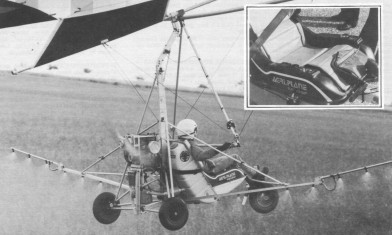
Single seat single engined flex wing aircraft with weight shift control. Rogallo wing with keel pocket. Pilot suspended below wing in trike unit, using bar to control pitch and yaw/roll by altering relative positions of trike unit and wing. Wing braced from above by kingpost and cables, from below by cables; rigid cross tube construction with single surface (33% double surface optional); not enclosing cross tube; pre formed ribs. Undercarriage has three wheels in tricycle formation; rubber suspension on all wheels. Push-right go left nosewheel steering independent from yaw control. Brake on nosewheel. Aluminium tube trike unit, without pod. Engine mounted below wing driving pusher propeller.
Designed by Patrice Renaud with the assistance of M Michelot and C Cardineau, the prototype Agriplane flew for the first time in February 1981, which makes it the first agricultural weight shift microlight in the world. Patrice was the victim of an accident in the course of a flight on another machine which laid him up for a long time, which explains why the machine was shown at the aeronautical and space salon at Le Bourget in June 1981, even though the first Agriplane Condors were not sold until March 1982.
Essentially intended for use as an agricultural tool, this microlight can nevertheless be fitted with a second seat and used as a tandem two seater dual control machine. A kit allows for this dual control adaption. The Condor is supplied with a glass fibre seat with a foam covering which forms the 23.8 US gal (19.8 Imp gal, 90.0 litre) tank for the spray medium. An autonomous hand controlled electric pump supplies the medium to the two spray booms mounted either side of the trike. Three lengths of boom were offered 19.8, 26.6 and 39.5ft (6.0, 9.0 and 12.0 m) fitted together with quick release couplings, which allows their fitment in 3 min. Interchangeable atomisers allow the amount of product sprayed to be varied between 1.0 and 2.0 US gal/acre (0.84.6 Imp gal/acre, 15.30 litre/ hectare).
Engine: Hirth, 46 hp at 7800 rpm.
Toothed¬ belt reduction.
Power per unit area 0.19hp/sq.ft, 2.0hp/sq.m.
Fuel capacity 5.8 US gal, 4.8 Imp gal, 22.0 litre.
Length overall 13.1 ft, 4.0 m.
Height overall 11.6 ft, 3.50 m.
Wing span 32.8 ft, 10.0 m.
Dihedral 4 degs.
Nose angle 135 degs.
Total wing area 248 sq.ft, 23.0 sq.m.
Wing aspect ratio 4.3/1.
Wheel track 5.7ft, 1.70 m.
Nosewheel dia¬meter overall 16 inch, 40 cm.
Main wheels diameter overall 16 inch, 40cm.
Empty weight 298 lb, 135kg.
Max take off weight 696 lb, 315kg.
Payload 398 lb, 180kg.
Max wing loading 2.80 lb/sq.ft, 13.7 kg/sq.m.
Max power loading 15.1 lb/hp, 6.8kg/hp.
Load factors; +5.5, 2.8 ultimate.
Max level speed 47mph, 75kph.
Never exceed speed 53mph, 85kph.
Max cruising speed 40mph, 65kph.
Economic cruising speed 34mph, 55kph.
Stalling speed 23 mph, 38 kph.
Max climb rate at sea level 600 ft/min, 3.0 m/ls.
Best Wide ratio power off 7/1 at 34 mph, 55 kph.
Take off distance 82 ft, 25 m.
Landing distance 50 ft, 15 m.
Range average cruise 68 mile, 110 km.
1982: Groupe Roland Perinet et Cie, Mpartement Agriplane, 86110 Mireheau, France.
Developed th Agriplane Condor 2090.
USA
Formed 1995 from former Maiden Ag-Craft Inc. to manufacture Ag-Cat agricultural biplane (first flown May 1957 as Grumman AgCat).
The circa 2003 Toy Cat is a highly modified Grumman Ag-Cat cropduster. Modifications include a one-piece canopy, tandem seating, cowl ring, spring-steel undercarriage with wheel pants and more.
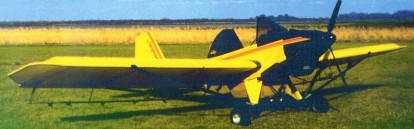
The AeroMaster AG is a complete light aerial ag system designed by a farmer for farmers. Using only 5 gallons of fuel per hour while covering 150-200 acres per hour gives low operating cost per acre. The SprayMiser rotary atomizer nozzle system provides a cost-effective technology for applying pesticides.
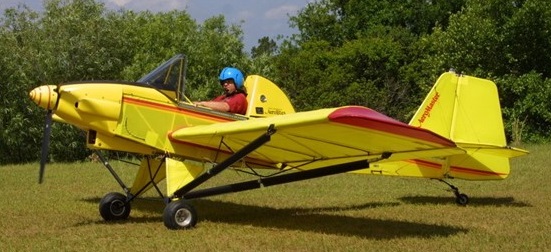
The AeroMaster is a low-wing, amateur-built aircraft with a 4130 chromoly steel fuselage frame. The welded fuselage accommodates all other components by a series of tabs to which the components are bolted. The wing’s construction with internal diagonal bracing has supported over +6 and -4 G in static load testing. Aluminum ribs placed in pockets in the dacron covering shape the airfoil. Standard three-axis control: conventional rudder pedals, throttle quadrant and joy-stick controlled ailerons and elevator are fitted.
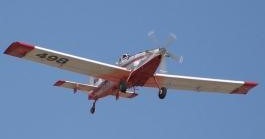
The aircraft includes the Spray Miser CDA Ag system and 30 USG chemical tank, covering up to 120 acres.
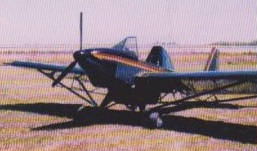
Aeromaster
Engine: Rotax 582, 64 hp
Wing span: 8.74 m
Wing area: 13.55 sq.m
Empty weight: 192 kg
MAUW: 453 kg
Fuel capacity: 37.8 lt
Max speed: 144 kph
Cruise speed: 112 kph
Minimum speed: 40 kph
Climb rate: 4 m/s
Fuel consumption: 15.8 lt/hr
Seats: 1
Kit price (1998): 22,325
Engine: Rotax Model 582, 66 hp @ 6500 rpm.
HP range: 50-80
Reduction: “C” type gear drive 3:1
Propeller: Warp Drive 3-blade carbon fiber
Length: 18 ft 6 in (5.64 m)
Height: 6 ft 11 in (2.11 m)
Wing Span: 28 ft 8 in (8.74 m)
Wing Area: 145.7 sq.ft (13.54 sq. m)
Wing Loading: 6.86 lb/sq.ft(33.5 kg/sq.m)
Empty Weight: 425 lb (193 kg)
MTOW: 1000 lb (454 kg)
Fuel Capacity: 10 US gal (38 liters)
Rate of Climb (Gross): 800 ft/min (244m)
Spray Speed: 65 mph (57 knot)
Best Rate of Climb (Vy): 45 mph (39 knot)
Design manuv. speed (Va): 60 mph (52 knot)
Speed max: 95 mph
Never Exceed Speed (Vne): 110 mph (96 knot)
Cruise: 75 mph
Stall, power on (Vs) (Gross): 32 mph (28 knot)
Range: 150 sm
Landing approach speed: 45 mph (39 knot)
Load Factor: +6, -4
Spray capacity: 30 USG
Takeoff Ground Roll (Gross): 500 ft (152 m)
Landing Ground Roll: 150 ft (46 m)
Seats: 1
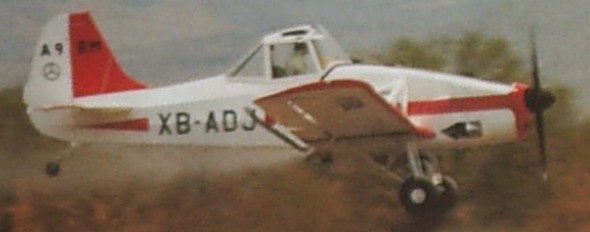
With an agreement between Industrias Unidas SA of Mexico and Rockwell International, Aeronautica Agricola Mexicana SA (AAMSA) was formed in 1971 to take over from Rockwell manufacture of the Aero Commander Quail Commander and Sparrow Commander agricultural aircraft. They had identical airframes but differed mainly by engine fit. The Sparrow Commander was powered by a 235 hp (175 kW) Lycoming O-540-B2B5 engine, while the Quail was fitted with the more powerful IO-540 engine. Both the Sparrow Commander and Quail Commander were available with liquid spray or dust disperdsal gear, or with a quick change combination dust or spray unit. Production of both types ended in the USA in 1970.
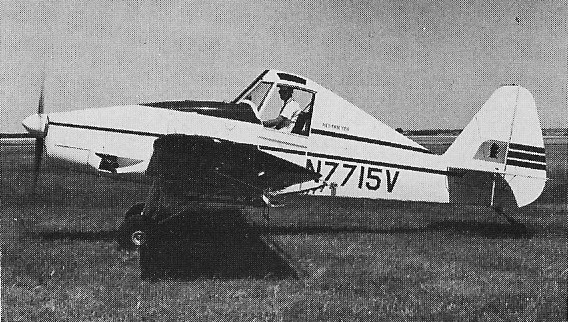
Construction of the Sparrow Commander continued in Mexico, as the AAMSA Sparrow. Only very small numbers had been built by 1975, when production was terminated. Only spares were manufactured in Mexico by AAMSA.
Manufacture then switched to the Quail Commander in 1971, designated A9B-M Quail. 101 A9B were built in Mexico, and by January 1982 26 A9B-M had been built.
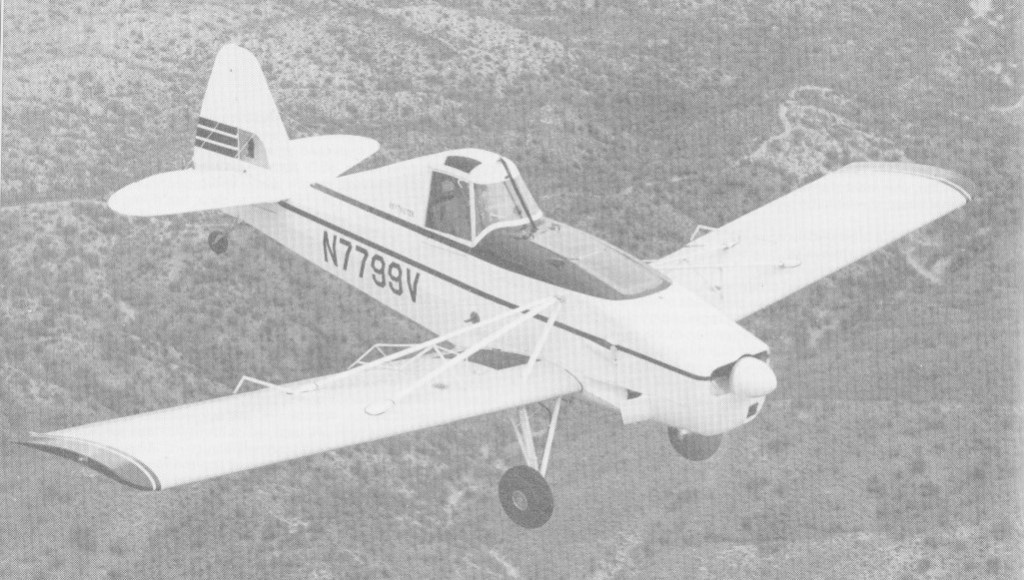
The Quail was a braced low-wing monoplane of composite construction. Its wings were based on wooden spars, with metal leading-edge skins and the remainder of the structure fabric covered; fuselage and tail unit were steel tube structures with fabric covering. The wings are Clark Y airfoil. The non-retractable tailwheel had shock absorbtion. The engine had a fixed pitch or optional variable-pitch propeller. The Quail had an enclosed cabin with a steel-tube overturn structure, cable cutters on the landing gear and windscreen, a cable deflector between the canopy and the tail fin, and proivision for avionics and night flying equipment. A 22.5 cu.ft (0.64 cu.m) glassfibre/polyester chemical hopper was fitted as standard with a capacity of 170 USG (643 lt) of liquid or 1200 lb (545 kg) of dry powder chemicals.
The Quail was manufactured in component form at the Industrias Unidas industrial complex at Pasteje in Mexico for assembly and marketing by its associated Aircraft Parts and Development Corp. in Laredo, Texas. By 1978 43 Quails had been built.
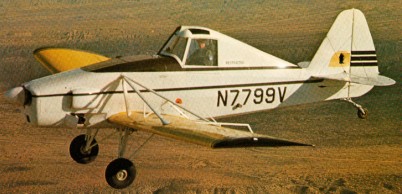
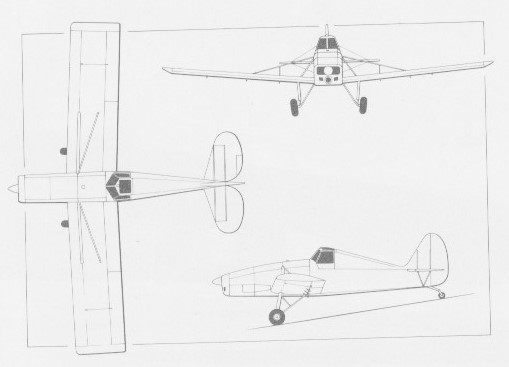
Sparrow Commander
Engine: Lycoming O-540-B2B5, 235 hp (175 kW)
Wingspan: 34 ft 9 in / 10.59 m
Length: 23 ft 6 in / 7.16 m
Empty weight: 1600 lb / 726 kg
Max payload: 1400 lb / 635 kg
MTOW (Agricultural): 3400 lb / 1542 kg
Max cruise 75% / 3000 lb / 1260 kg: 91 kt / 105 mph / 169 kph
Max ROC SL (Agricultural): 650 fpm / 198 m/min
Service ceiling (Agricultural): 14,000 ft / 4265 m
Range max cruise (Agricultural): 260 nm / 300 mi / 483 km
Seats: 1
Hopper capacity: 22.5 cu.ft / 0.64 cu.m / 170 USGal / 643 lt
NA Rockwell Quail Commander
Engine: Lycoming IO-540-G1C5, 290 hp.
Wing span: 34 ft 9 in / 10.59 m
Length: 23 ft 6 in / 7.16 m
Height: 7 ft 7 in / 2.31 m
Max TO weight: 3600 lb / 1633 kg
Max level speed: 120 mph / 193 kph
Hopper capacity: 210 USG / 795 lt
Ag payload: 1600 lb /726 kg
AAMSA A9B-M Quail
Engine: Avco Lycoming IO-540-K1A5, 300 hp.
Wing span: 34 ft 9 in / 15.76m
Length: 24 ft 0 in / 10.89m
Height: 7 ft 8 in / 3.48 m
Wing area: 182 sq.ft / 16.91 sq.m
Empty weight: 1800 lb / 816 kg
MTOW: 3800 lb / 1724 kg
Payload: 1600 lb / 725 kg
Max level speed: 120 mph / 193 kph / 104 kt
Normal operating speed: 90-100 mph / 145-161 kph
ROC: 850 fpm / 259 m/min
Service ceiling: 16,000 ft / 4875 m
Range 50%: 300 sm / 483 km / 260 nm
Hopper capacity: 28.5 cu.ft / 0.81 cu.m / 210 USG / 795 lt
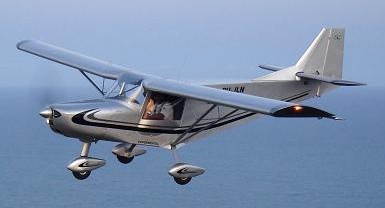
The Bravo 700 is a two-seat civil utility aircraft manufactured by Aero Bravo in Brazil in both kit and ready-to-fly form. It is a high-wing monoplane of metal construction with fixed tricycle undercarriage and is classed as an ultralight under Brazilian aviation regulations. An agricultural version, the Bravo 700 Agrcola with spraying gear and a chemical tank with a capacity of 140 l (37 US gal) had been developed to flight-testing stage.
Engine: 1× Rotax 912, 60 kW (80 hp)
Wingspan: 9.0 m (29 ft 6 in)
Length: 6.58 m (21 ft 7 in)
Height: 2.1 m (6 ft 11 in)
Wing area: 13 sq.m (140 sq.ft)
Empty Weight: 270 kg / 595 lb
MTOW: 500 kg / 1102 lbs
Max speed: 190 km/h (119 mph)
Stall: 30 kt / 35 mph / 56 kmh
Cruise: 91 kt / 104 mph / 168 kmh
Service ceiling: 4,000 m (13,120 ft)
Rate of climb: 300 m/min (984 fpm)
Range: 840 km (525 miles)
Wing loading: 38 kg/sq.m (8 lb/sq.ft)
Power/weight: 0.12 kW/kg (0.07 hp/lb)
Crew: one pilot
Capacity: 1 passenger
 All Aero