USA
Established in 1929, Ogden’s only product was the trimotor Osprey cabin monoplane, offered in three versions: the Model C, which carried two crew and four passengers (seven passengers if the toilet was removed), the Model PB with Menasco B4 engines, and the Model PC with Menasco Pirate engines.
Author: Terry
Offpiste Discovery
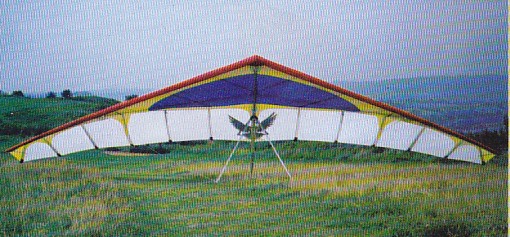
The 1996 Discovery was designed as a Skyfloater. It was aimed at those pilots wishing to fly for fun having found that the latest superships are demanding of skills especially in light wind conditions.
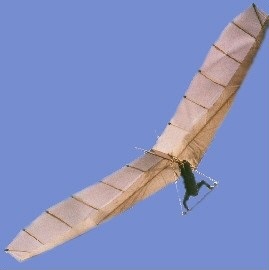
The 1996 Discovery was available in two sizes: 160 and 195. A feature of the Discovery is that it can be flown prone or seated.
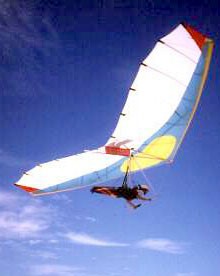
The 1997 Discovery 2 catered for all weights of pilot by four sizes: 160, 195, 195S and 210. The price was £1750, rising to £1800 for the 195 S version. A retro-fit kit was available for around £100 to upgrade the Mk 1 to Mk 2 spec.
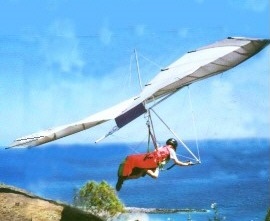
The 1997 Discovery 2 was described as glorious in light conditions due to low wing loading and featherlight handling, however once you pull the bar in more than a few inches glide and sink rate are terrible.
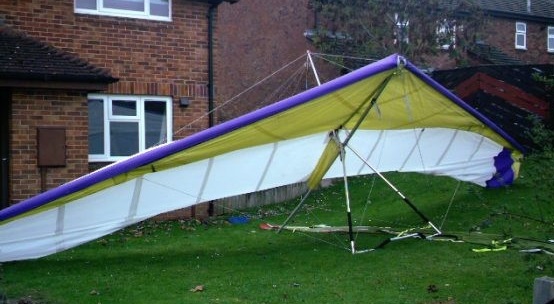
Discovery 160
Discovery 195
Discovery 2 160
Wing area: 14.8 sq.m / 160 sq ft
Wing span: 9.14 m / 30 ft
Certification: BHPA
Pilot weight: 55-89 kg
Nose Angle: 125 deg
Aspect ratio: 5.6
Hang glider weight: 23 kg / 49 lb
Maximum speed: 128 km/h
Packed length: 5.3 m
Packed length short: 2.9 m
Number of battens: 12
Price (1998) £ 1948
Discovery 2 195
Wing area: 18.1 sq.m
Certification: BHPA
Pilot weight: 66-102 kg
Wing span: 10.36 m
Nose Angle: 125 deg
Aspect ratio: 5.6
Hang glider weight: 25 kg
Maximum speed: 128 km/h
Packed length: 5.8 m
Packed length short: 3.1 m
Number of battens: 12
Price (1998) £ 1948
Discovery 2 195 S
Wing area: 18.1 sq.m
Certification: BHPA
Pilot weight: 85-135 kg
Wing span: 10.36 m
Nose Angle: 125 deg
Aspect ratio: 5.6
Hang glider weight: 27 kg
Maximum speed: 128 km/h
Packed length: 5.8 m
Packed length short: 3.1 m
Number of battens: 12
Price (1998) £ 1998
Discovery 2 bi 210
Wing area: 19.6 sq.m
Certification: BHPA
Pilot weight: 114-178 kg
Wing span: 10.7 m
Nose Angle: 126 deg
Aspect ratio: 5.8
Hang glider weight: 30 kg
Maximum speed: 128 km/h
Packed length short: 3.35 m
Number of battens: 12
Price (1998) £ 2702
Offpiste Ltd
1998: 52 long St, GL11 4JB Glos, United Kingdom
Hang glider builder
Oesterreichische-Ungarische D.I. Berg-Scout
Oesterreichische-Ungarische Flugzeugfabrik worked on a single-seat scout version of the Aviatik C.I. This airplane, the D.I. Berg-Scout, was at first prone to wing failures under load, but eventually ran to 11 production batches.
Oesterreichische-Ungarische Flugzeugfabrik
Austria
A subsidiary of the German Aviatik company, this manufacturer built Aviatik B.I and B.ll two-seat reconnaissance aircraft for the Austro-Hungarian Flying Service and worked on a single-seat scout version of the Aviatik C.I. This airplane, the D.I. Berg-Scout, was at first prone to wing failures under load, but eventually ran to 11 production batches.
Oertz-Werke Doppeldecker
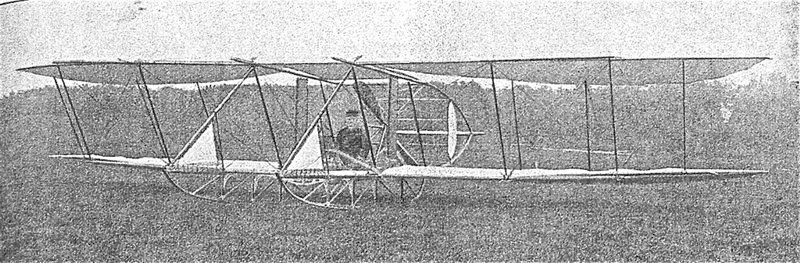
In 1910 Max Oertz built Doppeldecker with uncovered fuselage, pusher propeller and landing skids without wheels.
Oertz-Werke M1912-13
The Oertz-Werke Gmbh produced a single developed M1912-13 model.
Oertz-Werke M1911-12
The Oertz-Werke Gmbh produced three examples of the mid-wing M1911-12 monoplane Designed and built by May Oertz in Germany.
Oertz-Werke Gmbh
Max Oertz in Neuhof-Reiherstieg near Hamburg, Germany, an established builder of yachts, entered the aircraft business in 1911 and produced Wright machines.
They then built the Doppeldecker before another more well-known biplane. The company produced three examples of the mid-wing M1911-12 monoplane and a single developed M1912-13 model.
They built several flying boats and eventually sold the business to Hansa-Brandenburg in 1917.
Oelimichen No.6
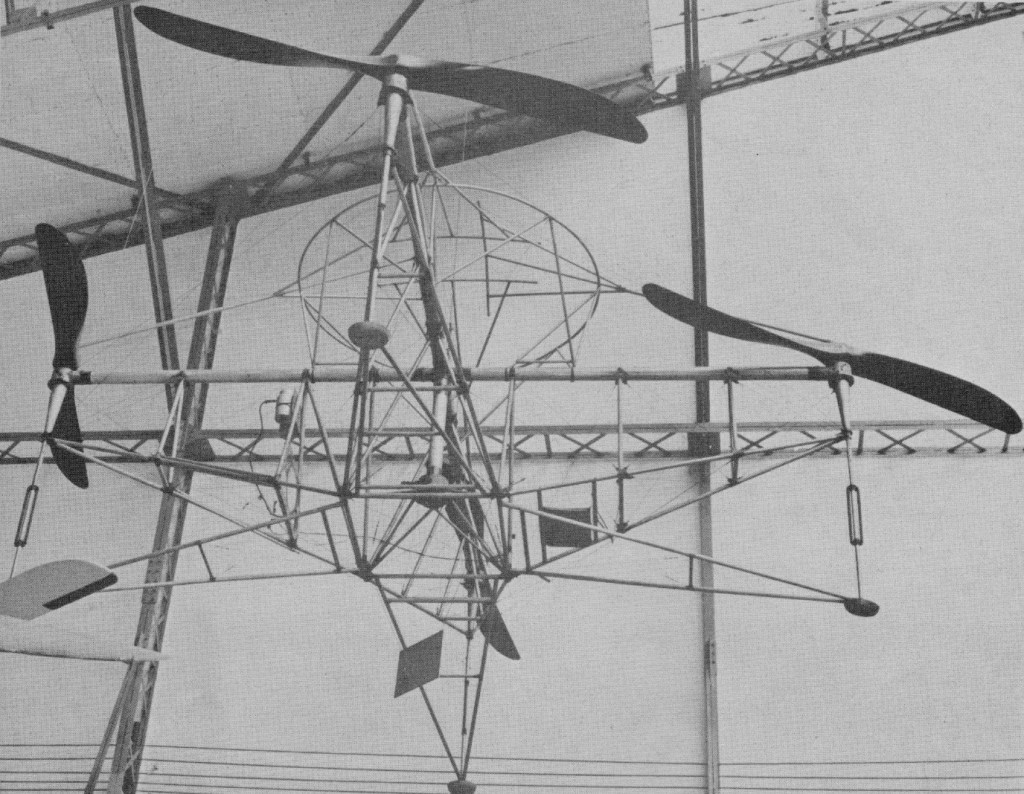
The Etienne Oelimichen No.6 of 1935 was a helicopter with a 353 cu.ft balloon mounted above to assure stability. It also had a quad rotor and quad gear.
On 2 March 1935 Oelimichen flew the craft for 5 minutes in the large dirigible hanger at Orly, demonstrating its stability.
The French Musee de l’Air possesses five of Etienne Oelimichen’s experimental helicopters developed from 1920 through 1938. In 1965 only his sixth project of 1935 was on display.
Width: 16.73 ft
Length: 16.73 ft
Rotor diameter: 9.18 ft

