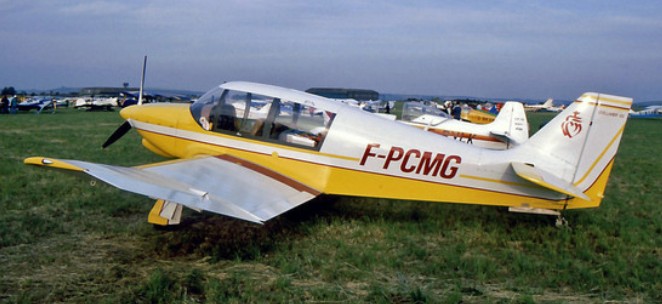
Ollivier CO-02 Collivier
The Old Rhinebeck Aerodrome has a reproduction 1910 Hanriot constructed by Cole Palen, Mike Lockhart, and Andy Keefe with the aid of drawings published in Flight during the winter of 1974 in Florida. It had originally been powered by a 1910, two-cycle, water-cooled Elbridge Featherweight engine, but it had later been retrofitted with a more capable, water-cooled, 50-hp Franklin after it had sustained connecting rod damage. Because of its lower weight, it often resulted in a nose-high pitch which had to be elevator-counteracted during flight, although its increased horsepower produced more sprightly performance than the original engined-version had offered.
The aircraft, initially demonstrating stability problems, was subsequently modified and first performed in the 1976 Hammondsport Air Show. Demonstrating its handling characteristics much further afield, it partook, along with the Curtiss Model D and the Sopwith Camel, of the 2003 Australian International Air Show in Geelong, flying circuits round Avalon Airport 11,000-foot runway.
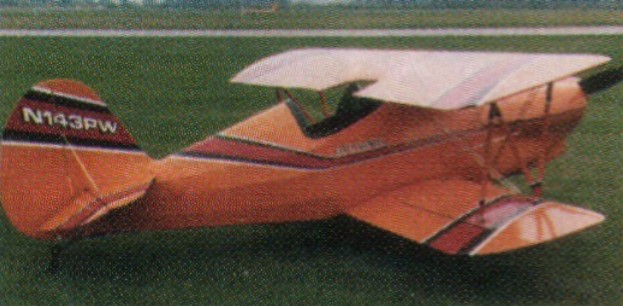
An aerobatic biplane you can build.
Engine: 65 hp
ROC: 2000 fpm
Top speed: 135 mph
Cruise: 118 mph (90 inverted)
Stressed +/-9 G.
Engine: Lycoming O-235, 108 hp
HP range: 108-125
Speed max: 155 mph
Cruise: 135 mph
Range: 250 sm
Stall: 55 mph
ROC: 3000 fpm
Take-off dist: 250 ft
Landing dist: 400 ft
Service ceiling: 17,000 ft
Fuel cap: 12 USG
Weight empty: 500 lbs
Gross: 850 lbs
Height: 4.5 ft
Length: 13.8 ft
Wing span: 16.7 ft
Wing area: 88 sq.ft
Seats: 1
Landing gear: tail wheel
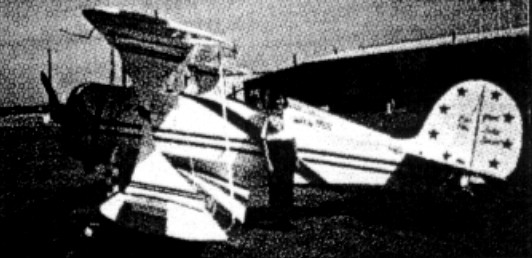
Engine: Lycoming O-320, 150 hp
HP range: 125-200
Height: 7.33 ft
Length: 20.33 ft
Wing span: 26.67 ft
Wing area: 187.5 sq.ft
Weight empty: 1025 lbs
Gross: 1618 lbs
Fuel cap: 26 USG
Speed max: 138 mph
Cruise: 125 mph
Range: 340 sm
Stall: 40 mph
ROC: 1200 fpm
Take-off dist: 300 ft
Landing dist: 400 ft
Service ceiling: 14,000 ft
Seats: 2
Landing gear: tail wheel

The Baby Great Lakes (one place) and Buddy Great Lakes (two place) aircraft are well proven designs which are easy to construct and fly, provide classic good looks, and are aerobatic. Construction is of wood and steel tubing and plans are well presented for the first time builder.
Aircraft Spruce & Specialty Company acquired all rights to these designs in May 1996 and now offers packs, plans, raw materials kits, and pre-fabricated kits for these aircraft.
My Dad was great friends with Walt Redfern. We owned one of the Great Lakes that he built (red and white). I even got sick in it while doing loops over Henley.
Tim Heale
Engine: Lycoming O-235, 108 hp
HP range: 85-125
Height: 6.25 ft
Length: 14.67 ft
Wing span: 18 ft
Wing area: 98 sq.ft
Weight empty: 550 lbs
Gross: 1000 lbs
Fuel cap: 14 USG
Speed max: 135 mph
Cruise: 135 mph
Range: 250 sm
Stall: 55 mph
ROC: 1600 fpm
Take-off dist: 400 ft
Landing dist: 400 ft
Service ceiling: 14,000 ft
Seats: 2
Landing gear: tail wheel
Back to Oldfield Baby Lakes


Australian built by Nigel Arnott, I owned and flew this little gem for ten years, powered by Rota 912. I believe it holds the record for Bass Straight crossings for an open cockpit bi plane, as l would make the crossing every week to mow the lawn. One and a half hours over water each way.
Jim

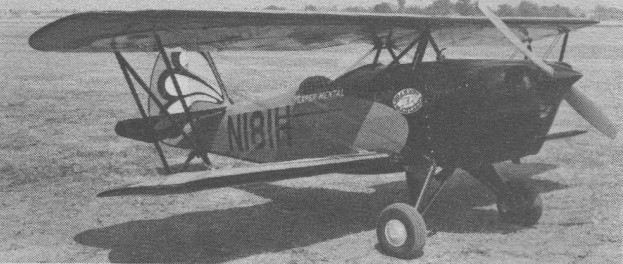
Designed and first built in 1960.
Harvey R. Swack had encountered a fellow named Barney Oldfield no relation to the auto racer who had designed a small, single seat sport biplane for homebuilders. Swack went into business with Oldfield, selling plans of the 2T 1 under the name “Baby Great Lakes” which he was entitled to do, as owner of the name, although the little homebuilt bore only a distant, imitative relationship to the original. When Champ¬lin bought Great Lakes Aircraft Company from Swack, Swack changed the name of the homebuilt design to “Barney Oldfield Special,” though it is still informally known as the “Baby Lakes.”
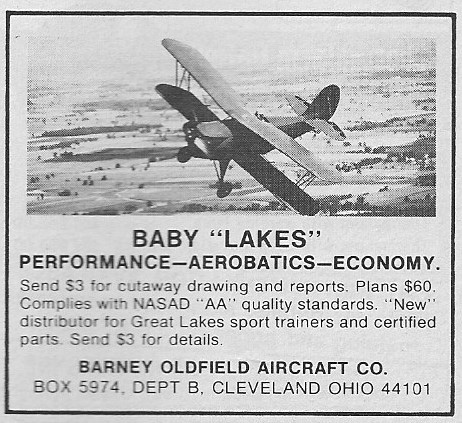

Barney Oldfield’s Baby Great Lakes flys much like its big brother, the Great Lakes Sport Trainer. The Baby “Lakes” was designed to get the same sort of flying ease and performance at lower cost. It uses a steel-tube fuselage, wood wings and fabric cover, and offers unusually lively aerobatic performance when powered by an 85-hp Continental engine. The Baby Lakes can also be fitted with 50- to 100-hp Continentals or the 108- and 125-hp Lycomings. (When fitted with the 108- and 125-hp engines, the airplane is called the Super Baby Lakes.) Its makers say it will out fly aircraft of twice the horsepower, and it is the least expensive, high-performance biplane available to the homebuilder.
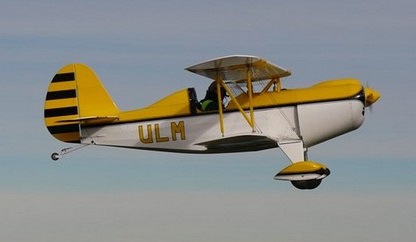
The Baby Great Lakes (one place) and Buddy Great Lakes (two place) aircraft are well proven designs which are easy to construct and fly, provide classic good looks, and are aerobatic. Construction is of wood and steel tubing and plans are well presented for the first time builder. Aircraft Spruce & Specialty Company acquired all rights to these designs in May 1996 and offers packs, plans, raw materials kits, and pre-fabricated kits for these fine aircraft.
The Baby Great Lakes Main Tank Standard holds 10 gallons. The Baby Great Lakes Tank Stretch is 3″ longer and holds 11 gallons.
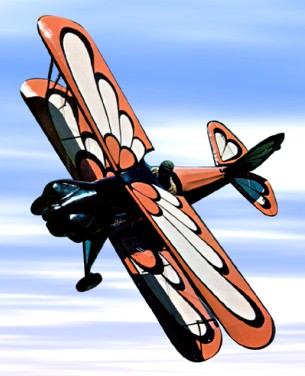
Oldfield Baby “Lakes”
Gross Wt. 850 lbs
Empty Wt. 475lbs
Fuel capaci¬ty 12 USG
Wingspan 16’8”
Length 13’9”
Height: 4.5 ft
Wing area; 86 sq.ft
Engine 85-h.p Continen¬tal
HP range: 65-100
Seats: 1
Top speed: 135 mph
Cruise: 118 mph
Stall: 50 mph
Climb rate 2000 fpm
Takeoff run: 300 ft
Landing roll: 400 ft
Ceiling: 17,000 ft
Range: 250 sm
Seats: 1
Undercarriage: tailwheel
1980: Barney Oldfield Aircraft Company, P.O. Box 5974, Cleveland, OH 44101.
1996: PO Box 228, Needham, MA 02192, USA.
LSA/aircraft builder
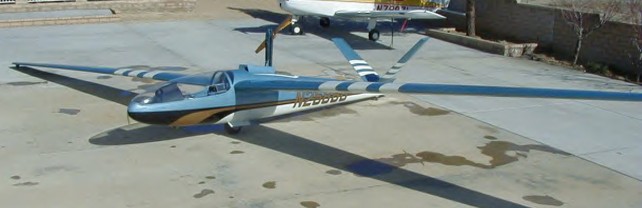
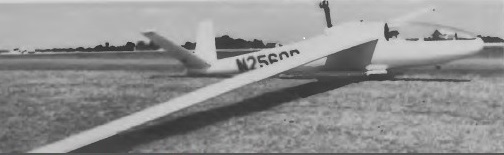
Designed and built by Mr Vernon W. Oldershaw of Bakersfield, California, in 15 months for a cost of $4,000, as a development of the O-2 but for Open Class competition, the O-3 featured a longer span of higher aspect ratio and a retractable gear.
The O-3 is of all-wood construction with cantilever shoulder wings and a V-tail; the wings have a spruce spar and plywood ribs and skins, with wooden ailerons and air brakes on the trailing edges. The ellipitcal-section fuselage is built up from plywood bulkheads, the front portion from the nose to the wing trailing edge having a glassfibre outer shell and the remainder being plywood-covered. The tail surfaces, which are slightly swept back, are of similar construction to the wings. There is a retractable rubber-sprung monowheel and a tailskid. The pilot sits under a one-piece flush-fitting cockpit canopy.
The original O-3 single-seat sailplane made its first flight in June 1967. One was flown in several Nationals and made a flight of 694 km./ 431 miles. Two O-3’s were built, and both were subsequently motorized. A two-cylinder, in-line, two-cycle Yamaha snowmobile engine was mounted inside the fuselage behind the wing spar driving a pylon-mounted wooden pusher propeller via belts.
Oldershaw began to develop a retractable powerplant installation which was added to a second O-3 completed in 1975, the engine being used primarily for take-off and climb to soaring height. It is a 31 hp Yamaha Snowmobile
SW433 two-stroke ‘flat twin’ driving a two-blade fixed-pitch wooden pusher propeller, the pylon mounted propeller retracting forwards into the fuselage behind closed doors to lie over the engine, which is behind the cockpit. There is a single aluminium fuel tank in the fuselage of 2.5 US gallons capacity.
Wing span: 16.46 m / 54 ft
Wing area: 11.52 sq.m / 124 sq.ft
Empty Weight: 345 kg / 760 lb
Payload: 109 kg / 240 lb
Gross Weight: 454 kg / 1000 lb
Wing Load: 39.41 kg/sq.m / 8 lb/sq.ft
L/DMax: 41 108 kph / 58 kt / 67 mph
MinSink: 0.64 m/s / 2.1 fps / 1.24 kt
Aspect ratio: 23.5
Airfoil: Wortmann 61-184 root, 60-126 tip
Seats: 1
Span: 55 ft 0 in
Height: 4 ft 8 in
Wing area: 125.0 sqft
Aspect ratio: 24.1
Empty weight: 780 lb
Max weight: 1,000 lb
Max speed: 125 mph (in smooth air, power off)
Max cruising speed: 95 mph (power on)
Min sinking speed: 2.30 ft/sec at 55 mph
Best glide ratio: 37:1 at 68 mph
Take-off run: 900 ft
Range with max fuel: 50 miles
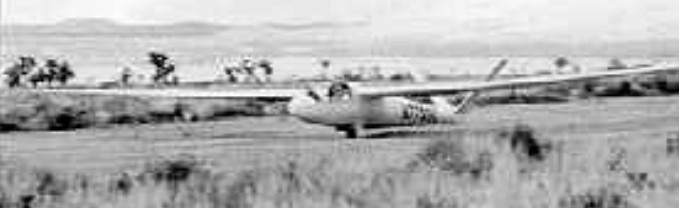
The all wood O-2 was designed by Vernon Oldershaw to be a competitive Standard Class aircraft with dive brakes, a V- tail and retractable gear, and first flew in 1961. It was flown in the 1962 and 1963 Nationals and made a number of flights of more than 200 miles, one of them 474.1 km./ 294.6 miles. One was built.
Wing span: 15 m / 49.2 ft
Wing area: 10.03 sq.m / 108 sq.ft
Empty Weight: 236 kg / 520 lb
Payload: 118 kg / 260 lb
Gross Weight: 354 kg / 780 lb
L/DMax: 39 108 kph / 58 kt / 67 mph
MinSink: 0.64 m/s / 2.1 fps / 1.24 kt
Wing Load: 35.29 kg/sq.m / 7.2 lb/sq.ft
Aspect ratio: 22.4
Airfoil: 63 (3)-618, 63 (2)-615
Seats: 1

