In the postwar period, Luigi “Gino” Pascale and his brother Giovanni “Nino” Pascale of Naples, Italy, having been enthusiastic flying model aircraft makers, decided to work on full-scale aircraft. The first, built while the brothers were college students, was the “P.48 Astore (Goshawk)” — a two-seat aircraft, with the seats in tandem, featuring a high strut-braced wing, fixed taildragger landing gear, and a Continental O-170 / A65 flat-four air-cooled engine with 48 kW (65 HP).
One Astore was built, performing its initial flight in 1952 — by which time Luigi Pascale had become an instructor in mechanical engineering at Naples University, where he would become a full professor and help establish a department of aeronautical engineering. The Astore was followed by other one-off designs: P.52 Tigrotto (Tiger Cub) P.53 Aeroscooter P.55 Tornado P.57 Fachiro The Fachiro I was followed by three “Fachiro II” and then 33 “Fachiro III”.
Partenavia Costruzioni Aeronautiche Spa, a Naples company formed in 1949 to build series of light aircraft. First to enter production was the P-57 Fachiro of 1957, a four-seat high-wing monoplane with Lycoming engine. This was followed by various developments including the P.64 Oscar (first flown April 1965), also produced in South Africa under license as the RSA.200 by AFIC (Pty) Ltd, and the P.66 Charlie. Partenavia’s first twin was the P.68 six-seat light transport, first flown in May 1970. It was subsequently placed into production in several forms, including the Observer 2 for observation and patrol. AP.68 TP-600 Viator 11 seat transport followed in March 1985. New projects in the early 1990s included PD.93 Idea four-seat trainer and utility monoplane, but in March 1998 Partenavia ceased work and its P.68 series was bought via auction by VulcanAir SpA.
After financial difficulties the company reappeared, in 1986, as Costruzioni Aeronautiche Tecnam (see Tecnam).
In 2008, Partenavia, an Aeritalia division, announced a decision to transfer manufacturing of single engined aircraft, including the mosquito, to fellow Aeritalia subsidiary Aviolight, which was floated at the end of February 2008.
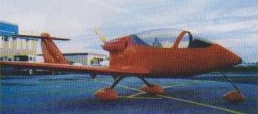
Designed by Saleem Saleh, the Mystere S-45 is basically the same as the S44 except for the Lycoming 160 hp O-320 engine and a larger tail boom. Construction is carbn fibre and fibreglass.
In 1991 the prototype was completing the test hours, and one kit had already been sold.
S44 Mystere Engine: Rotax 912, 80 hp Wing span: 8.60 m Wing area: 8.20 sq.m MAUW: 544 kg Empty weight: 317 kg Fuel capacity: 95 lt Max speed: 250 kph Cruise speed: 210 kph Minimum speed: 72 kph Climb rate: 5 m/s Seats: 2 tandem Fuel consumption: 15 lt/hr Price (1998): Can$69,000 Kit price (1998): Can$49,000
Model 1 Engine: 100 hp Super Mac (McCulloch) or 64 hp Rotax 582. Prop: Tennessee 52” x 26” wood (Super Mac) or IvoProp 64” (Rotax).
Model 2 Engine: 100 hp Arrow 996cc or 150 hp Mazda Rotary Prop: IvoProp 64” (Arrow) or other Lycoming prop Min speed: 20 mph Cruise: 65 mph Top speed: 85 mph Empty wt: 320 lb Useful load: 800 lb Gross wt: 1120 lb Width: 6 ft Height: 15 ft 11 in Length: 7 ft 8 in
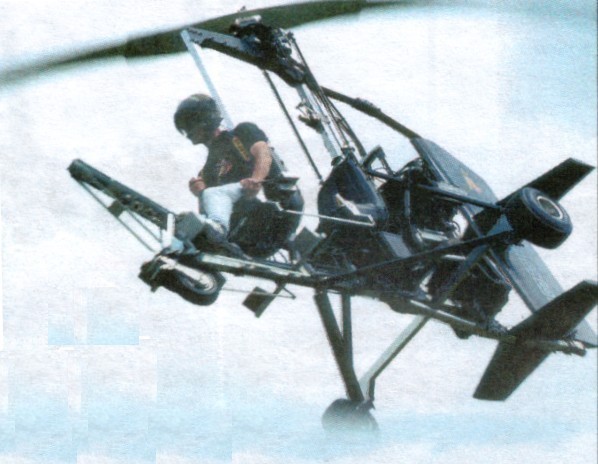
A single seat open frame autogyro. Engine: 52 hp Rotax 503, 65 hp Arrow 500, McCulloch, VW. Prop: 60” Warp Drive for Arrow or Rotax, Tennessee 52” for McCulloch. Rotor blades: 23-25’
Arrow 65hp Min speed: 20 mph Cruise: 60-65 mph Top speed: 80-85 mph Empty wt: 240 lbs Useful load: 360 lb Gross wt: 600 lb Width: 5 ft Height: 7 ft 6 in Length: 11 ft 3 in
In 1933 Harry Parso built the Parso Solo Sport single-place, high wing monoplane. Registered N12729, it was originally powered by a 60hp Velie engine, this was later changed to a 65hp Lambert.
One other appears as the Cardoza-Parso PC-1 N10414 c/n 1, which might be Mr Cardoza’s home-made version.
The German Naval Airship Division commissioned the PL19 on 17 September 1914 and the ‘ship made at least 21 flights, including one bombing raid, before it was lost in an accident on 25 January 1915.
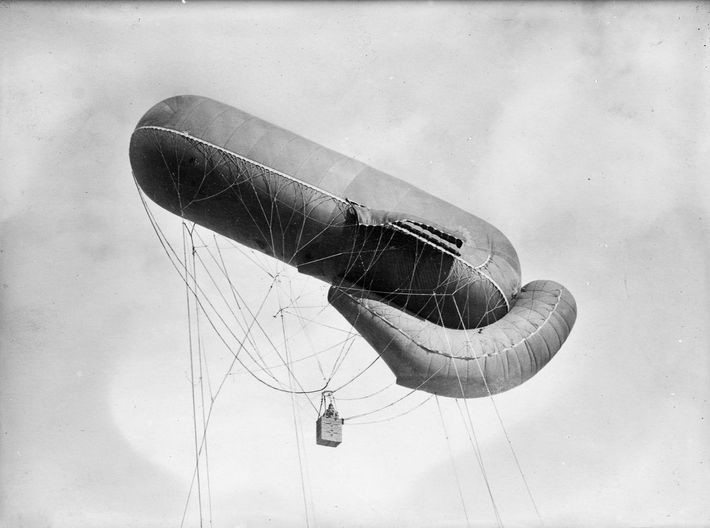
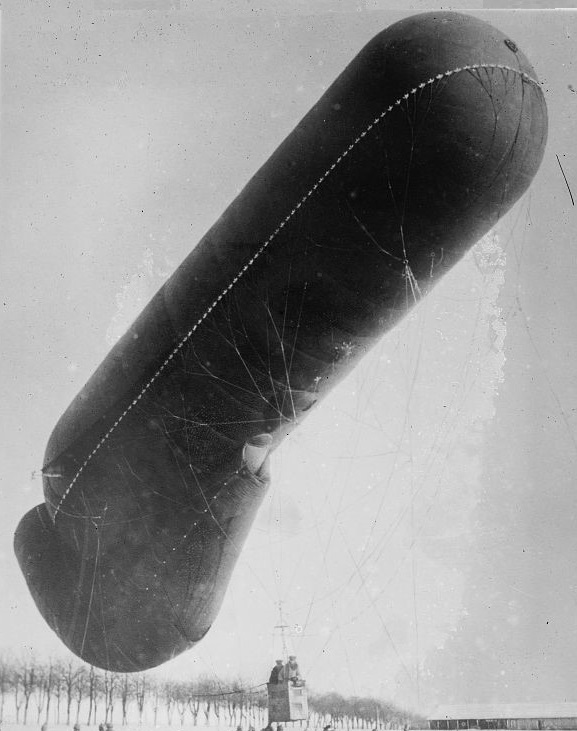
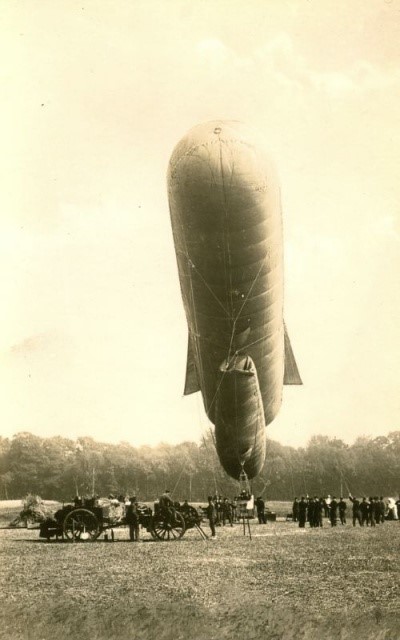
The Germans made excellent use of observation balloons in several configurations. An early variety made by Parseval-Sigsfeldand called “Drachen”, had a single fin, low centre, and was totally cylindrical, with rounded ends. The British called them sausages, for obvious reasons. The balloon’s shape gave it another nickname, “Nulle” or “Testicle”.
The drawback of military captive balloons was their unsteadiness in the air. This was remedied by two German officers, Major August von Parseval and Captain H. Bartsch von Sigsfeld, who set themselves the task of turning out an improved type of observation balloon. The outcome was the ‘Drachenballon’, or kite balloon, so called because it combines both balloon and kite principles. Theirs was not a new idea, but they improved on previous efforts. They created an oblong envelope which was partly supported by the wind when facing it at an inclined angle of 30 to 40 degrees. It was stabilised by means of a control surface, which was later replaced by a large air bag.
Beginning in 1893 they tried different combinations and various sizes of envelopes, from 600 cu.m (21,200 cu.ft) capacity to twice that size, and by 1898 von Parseval and von Sigsfeld had arrived at the type which gradually became the standard of most European armies. By now they had added a stabilising fin on the right and left sides of the envelope to prevent the captive balloon from twisting around its longitudinal axis and, like a kite, it was further provided with a long tail to which one to five parachute-like ‘umbrellas’ were attached. Combined with the stabilising bag, these devices held the balloon facing into the wind.
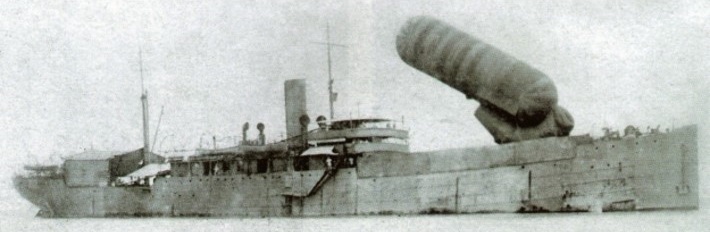
The August Riedinger balloon plant in Augsburg, Germany, began a regular production of this type of kite balloon, and also supplied various styles of engine-driven motor winches on which the observation balloons were raised into the air and later hauled down again to the ground. The cruisers in the navies of several countries were also equipped with kite balloons, to detect enemy submarines and protect the cruisers against their attacks. It soon became standard practice for the kite balloon to stay completely steady in the air at altitudes ranging from 1,000 to 2,000 m, even in winds of up to 65 km/hr (40 m.p.h.)
Kite balloons were used extensively in World War 1. They soon began to appear in great numbers on the western front, where the Germans employed them to direct their gunfire and report its effects. This, combined with the proclivity of the Germans for eating large quantities of sausages, explains why these kite balloon artillery observation platforms were soon nicknamed ‘sausages’ by the Allies, who in turn copied, built and used them extensively until the French came up with the improved ‘Caquot’ type balloon. Although the kite balloons were in fixed positions, the fighter pilots flying to attack them soon had driven home to them forcefully that this meant first running the gauntlet of a well-adjusted barrage of fire from anti-aircraft guns mounted to protect them. This meant that the kite balloons must be attacked very fast from above in a determined dive on them because they could be hauled down fast. The downing of a kite balloon therefore ranked on a par with a victory in any other air battle. The balloon observer was one up on the aeroplane pilot in one respect, in that he had a parachute hanging on the outside of the basket and could jump to save his life in case of an enemy air attack.
In 1896 Maj. August von Parseval and Hptm. Rudolf Hans Bartsch von Siegsfeld successfully floated the first Drachen (Dragon) balloon, an engineering advance that quickly replaced the older spherical balloon. The Drachen differed in several respects from its predecessor, with design refinements aimed at improving the stability of the observer’s platform. The most important—as well as the most visible—differences in the Drachen lay in the elongated shape of the balloon and in the addition of a stabilizing lobe to the rear of the craft. French construction of Drachen-type balloons began in October 1914 and completed balloons began arriving at the front that December. Germany had nine of the improved kite balloons in the field on the Western Front in February 1915 and by the end of the year the number of German balloon sections had increased to forty, each with two balloons.
Because the Parseval-Siegsfeld Drachen balloon had an extremely low ceiling—around 1,500 feet in an average wind—it offered limited usefulness as a reconnaissance and artillery-observation platform. German designers dealt with the low ceiling issue by making the balloon bigger, increasing its volume first to 800 cubic meters and later still to 1,000. Floating it higher in the sky did not entirely cure the Drachen’s problems. Contrary to its designer’s initial hopes, the addition of the lobe did not completely solve the stability issue and too many observers still became airsick as their craft pitched and yawed violently in moderate-to-high winds. This led to further fundamental improvement in observation balloon design, but the French engineer Albert Caquot beat the Germans to the next advance. Caquot tackled the pitch and yaw problem
The German approach to organizing its Balloonzüge (balloon sections) illustrates the strength of the partnership achieved between observation balloonists and ground units. As part of the reorganization of Germany’s aviation program in the last months of 1916, balloons became the joint responsibility of the Kommandierende General der Luftstreitkräfte (commanding general of the Air Force, abbreviated Kogenluft) and the Inspektion der Luftschiffertruppen (inspector of Airship Troops, abbreviated Iluft). Below this overall command structure, a Staboffizier der Luftschiffertruppen (staff officer of Airship Troops, abbreviated Stoluft) provided balloon staff support at each German Army headquarters. Within each army, balloon detachments at the division level managed three to five individual Balloonzüge, each with an active and a reserve balloon working with artillery units assigned to the corps.
There were several sizes (going from 600 m³ to 800 m³, for man-lifting ones, between 1909 and post-WWI. The form was held by an inside air-ballonnet, into the gas-balloon of 150 m³.
One was 750 m³ with diameter 6,5 m and lenght of 27 m.
There seems to have been 2 sizes of baskets, probably following the volume of the balloon.
In Spain, one was constructed following the plan drawings from Germany of 800 m³, 7 m diameter but only 18 m length.