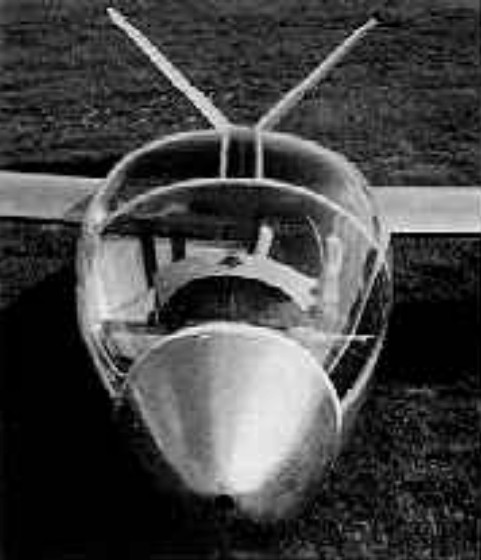
In 1966 Henry Preiss converted an all metal Schreder HP-14 into a 2-place ship with side-by-side seating (two sets of rudder pedals and a center control stick with a bar that swings from one side to the other) and a fixed landing wheel. The design used standard HP-14 wings with a 2-ft center section added in the fuselage.
Predappio sa, a division of the Caproni Group, produced two trainers in the late 1930s, the Ca.602 two-seat biplane and a single-seat aerobatic version, the Ca.603, both powered by Alfa-Romeo in-line engines.
Italy Predappio sa, a division of the Caproni Group, produced two trainers in the late 1930s, the Ca.602 two-seat biplane and a single-seat aerobatic version, the Ca.603, both powered by Alfa-Romeo in-line engines.
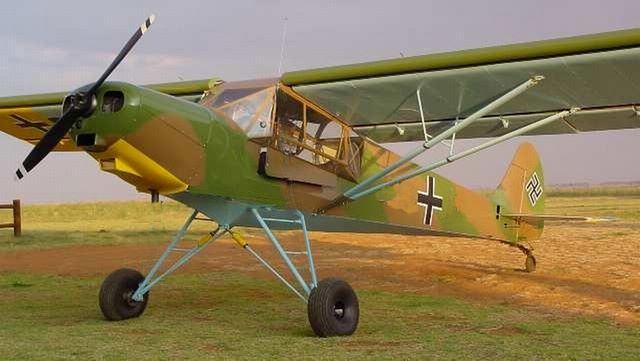
The LSA STOL King is of conventional tube and fabric design, approximately the size of a Cub, with a full glass enclosure and a tall stance for very rough field operation. Slow flights of 16 mph can be achieved and stall speeds of 15 mph let you land in some of the most remote areas of the world.
The construction material are 4130 steel tube & fabric and wing sub-kits come with ailerons, flaps, all hardware, brackets, fittings, fuel tanks, ribs, skins, spars and lift struts. No fabric.
Fuselage sub-kits come with stabilizers, elevators, rudder, landing gear, seat cusions, control systems, all glass, blank instrument panel, wheels and brakes, tailwheel, stringer formers, shock struts, brackets, fittings, firewall and all hardware and necessary accessories. No fabric or instruments.
Firewall forward package comes with engine, exhaust stacks, intake manifolds, carb heat, engine mount, prop, carburetor and hardware Engine prices will vary depending on model, horsepower and electrical option.
In 2009 the complete kit cost US$25,000 less engine, instruments, fabric, prop.
Engine: 75 hp Horsepower: 75 – 150 hp Propeller: 72 x 43 Overall length: 23 ft – 8 in Height: 7 ft – 3 in Wingspan: 31 ft – 6 in Wing area: 158 square feet Wing loading: 7.6 lb/sq.ft Empty weight: 600 lbs Gross weight: 1200 lbs Useful weight: 600 lbs Fuel capacity: 20 + US gallons Cabin width: 32.50 inches Ultimate “g” loading: +6.0 – 3.0 Best speed: 100 mph Cruise speed: 90 mph Stall Speed @ Gross w/Full Flaps: 15 mph Service ceiling: 12,000 Takeoff distance: 50 ft Landing distance: 50 ft Rate of Climb (gross): 1200 fpm Maximun range: up to 700 miles Landing gear: FG (Tailwheel) Seats: 2
Engine: 120 hp Horsepower: 75 – 150 hp Propeller: 72 x 43 Overall length: 23 ft – 8 in Height: 7 ft – 3 in Wingspan: 31 ft – 6 in Wing area: 158 square feet Wing loading: 7.6 lb/sq.ft Empty weight: 600 lbs Gross weight: 1200 lbs Useful weight: 600 lbs Fuel capacity: 20 + US gallons Cabin width: 32.50 inches Ultimate “g” loading: +6.0 – 3.0 Best speed: 130 mph Cruise speed: 100 mph Stall Speed @ Gross w/Full Flaps: 15 mph Service ceiling: 12,000 Takeoff distance: 50 ft Landing distance: 50 ft Rate of Climb (gross): 1200 fpm Maximun range: up to 700 miles Landing gear: FG (Tailwheel) Seats: 2
Engine: VW 50 hp HP range: 75-130 Length: 24 ft Wing span: 31.5 ft Wing area: 158 sq.ft Empty weight: 600 lb Gross weight: 1200 lb Fuel capacity: 20USG Cruise: 100 mph Stall: 15 mph Range: 520 sm Rate of climb: 1200 fpm Takeoff dist: 50 ft Landing dist: 50 ft Cockpit width: 33 in Seats: 2 tandem Landing gear: tailwheel
Markets plans and kits to build the N-3 Pup single-seat microlight representation of a Piper Cub, the Sport as a lighter version of Pup, the L-4 Super Pup as a more-powerful version of Pup, and the two-seat Ultra Pup, and kits for the Stinger single-seat parasol-wing monoplane (first flown 1995). Also produced the Storch Replica.
1995: 1230 Shepard St, Hendersonville, NC 28792, USA.
A never-completed 250 foot rigid airship, 24 feet in diameter, under construction during 1909-1910 by the Preble-Rekar Airship Company of Portland, Oregon.
Its dimensions were to have been 250 feet in length and 25 feet in diameter. Apparently bankrolled by Oregon investors, the Preble-Rekar Airship Company of C. H. Preble and J. J. Rekar (Rekar of San Francisco, CA), set up shop in Portland. The structure was made of spruce and no nails or bolts were used.
The Pratt & Whitney Canada PT6T Twin-Pac is a turboshaft engine designed for helicopters. Manufactured by Pratt & Whitney Canada, its first application was in the Bell 212 and UH-1N Twin Huey helicopter family. The PT6T Twin-Pac consists of two PT6 power turbines driving a common output reduction gearbox, producing up to 2,000 hp at 6,000 rpm. The engine is designated T400 by the U.S. military.
The U.S. military came very close to not procuring the UH-1N Twin Huey because of the PT6T. The purchase of the aircraft for U.S. military use was opposed by the Chairman of the House Armed Services Committee at the time, Mendel Rivers. Rivers took this position because the PT6T was produced in Canada. The Canadian government had not supported U.S. involvement in Vietnam, and had opposed U.S. policies in southeast Asia, as well as accepting U.S. draft dodgers. Rivers was also concerned that procurement of the engines would result in a negative trade deficit situation with Canada. Congress only approved the purchase when it was assured that a U.S. source would be found for the PT6T engines. This source was Pratt & Whitney Engine Services in Bridgeport, West Virginia, which was established in 1971 to assemble and test new T400-WV-402 engines. As a result, the U.S. military ordered 294 Bell 212s under the designation UH-1N, with deliveries commencing in 1970.
Variants: PT6T-3 Basic production model
PT6T-3A Same as the PT6T-3 but with aluminum (instead of magnesium) gearbox casting, No longer used.
PT6T-3B Same as the PT6T-3, except for the single power section contingency ratings and has PT6T-6 compressor turbine components.
PT6T-3BE Same as the PT6T-3B with the removal of the torque sharing function in the torque control and is a PT6T-3BE gearbox fitted with two PT6T-3B power sections.
PT6T-3BF Similar to the PT6T-3B, except 30-minute one engine inoperative (OEI) rating is equivalent to the 2½ minute OEI rating.
PT6T-3BG Similar to the PT6T-3BE, except 30 minute OEI rating is equivalent to the 2½ minute OEI rating.
PT6T-3D Same as the PT6T-3B, except for improved hot section hardware to allow for increased ratings.
PT6T-3DE Same as the PT6T-3D, except the continuous OEI rating is replaced by a 30 minutes rating.
PT6T-3DF Same as the PT6T-3DE, except for improved hot section hardware to allow for increased ratings.
PT6T-6 Same as the PT6T-3, except for the 2½ min rating and higher ratings and improved engine parts.
PT6T-6B Same as the PT6T-6 with the removal of the torque sharing function in the torque control and is a PT6T-6B gearbox with two PT6T-6 power sections.
PT6T-9 Similar to the PT6T-3DF, except for an improved hot section and it is equipped with an engine electronic control system.
T400-C-400 Military PT6T-3
T400-CP-401 Military variant used on the VH-1N variant of the UH-1N.
T400-WV-402 Military PT6T-6, assembled by Pratt & Whitney Engine Services, Inc. in West Virginia
Applications: AH-1J and AH-1T SeaCobra Bell 212 Bell 309 Bell 412 CH-146 Griffon UH-1N Twin Huey Sikorsky S-58T Sikorsky S-69
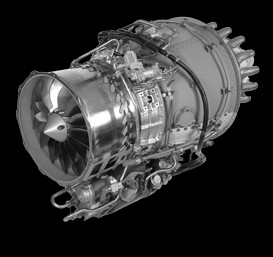
The Pratt & Whitney Canada PW600 series is a family of very small turbofan engines developed by Pratt & Whitney Canada for use in very light jets. Designed with scalability in mind, the engines can produce between 900 lbf (4,000 N) and 3,000 lbf (13,000 N) of take-off thrust.
First run of the 2,500 lbf (11,000 N) thrust PW625F demonstrator engine was on 31 October 2001. P&WC began work on the 900 lbf (4 kN) thrust PW610F engine, destined for the Eclipse 500, in 2002. The engine was certified by the Canadian authorities on the 27 July 2006. The first Eclipse 500 aircraft, powered by two PW610Fs, was delivered to a customer on 31 December 2006.
With a 14.5 inch (36.83 cm) diameter fan, the PW610F is one of the smallest turbofans to enter production. Little is known about the engine cycle, although the bypass ratio is believed to be about 1.83. Driven by a single-stage low pressure (LP) turbine, the single stage fan is an advanced snubberless design, with wide chord blades integral with the rotor hub. The newly patented high pressure (HP) compressor comprises a diagonal (i.e. mixed) flow stage, supercharging a conventional centrifugal blower, the whole being driven by a single stage HP turbine. A reverse flow combustor and forced mixer/common exhaust are also featured in the design. Dual lane Full Authority Digital Engine Control (FADEC), for smoother, more reliable, operation, is included in the specification. Hispano-Suiza Canada is currently designing and manufacturing the FADEC for this engine.
The larger, 1,350 lbf (6,000 N) thrust, PW615F has a 16 inch (40.64 cm) diameter fan and is aimed at the Cessna Citation Mustang. This engine was certified in December 2005, with first deliveries in March 2006. The Mustang aircraft was certified on 8 September 2006, and deliveries began in 2007. This engine will also be used in the upcoming Eclipse 400, but it will be limited to 1,200 lbf (5,300 N) thrust. Bypass ratio of PW615F amounts to 2.8.
PW610F-A
The PW610F achieved its rated takeoff thrust of 900 pounds after only five hours during the test run, which took place May 4, 2004. The first flight of the PW610F engine took place December 16, 2004 (on P&WC’s Boeing 720 flying test bed). During the 6-hour flight, a number of tests were performed, including performance characterization and an altitude re-light. The PW610F had previously completed more than 500 hours of ground testing. PW610Fs also meet Stage 3 noise requirements.
So far, the 1,615 lbf (7,180 N) thrust PW617F, with a 17.6 inch (44.7 cm) diameter fan and bypass ratio of 2.7, is the largest in the family and is designed to power the Embraer Phenom 100. The engine first ran on 29 June 2006, with certification expected in the 4th quarter of 2007. First delivery of a production model is expected in March 2008.
As of October 15, 2006, fifty PW610Fs and PW615Fs had been delivered by P&WC.
The Pratt & Whitney Canada PW300 series is a family of turbofan engines developed by Pratt & Whitney Canada specifically for business jet applications.
The basic configuration of the PW300 is as follows: single stage fan, driven by a three-stage low pressure turbine, supercharging a four-stage axial/single stage centrifugal high pressure compressor, driven by a two stage high pressure turbine. An annular combustor is featured. Some versions have an unmixed exhaust, but the PW306 and PW308 include a forced mixer. A Full Authority Digital Engine Control (FADEC) system is incorporated.
The PW307A is a new centre-line engine developed specifically for a tri-jet application on the Dassault Falcon 7X. The PW307 was certified by Transport Canada in March 2005.
The PW308A has been chosen to power the Scaled Composites White Knight Two, the launch aircraft for Virgin Galactic’s SpaceShipTwo.
Variants: PW305A 20.81kN variant used on the Bombardier Learjet 60
PW305B 23.41kN variant used on the Hawker 1000
PW306A 25.36kN variant used on the IAI Galaxy & Gulfstream G200
PW306BL variant used on the Dornier 328JET
PW306C 25.67kN variant used on the Cessna Citation Sovereign
PW307A 28.49kN variant used on the Dassault Falcon 7X
PW307B variant used on the Bombardier Learjet 85
PW308A 30.69kN (6900 lb) variant used on the Hawker 4000 & Scaled Composites White Knight Two
PW308C 31.14kN variant used on the Dassault Falcon 2000EX/DX/LX