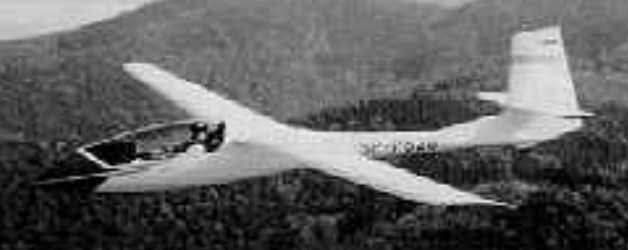
PZL Mielec TS-11 Iskra

Design of the P.Z.L. Mielec TS-11 Iskra (Spark) two-seat turbojet-powered primary and advanced trainer began in 1957, being intended as a replacement for the TS-8 Bies two-seat basic trainer. Four prototypes were built, and the first flight of the type was recorded on 5 February 1960.

PZL Mielec TS-11 Iskra Article

Following type approval during 1961 initial deliveries began in March 1963, and the TS-11 became operational with the Polish air force in 1964. Since that time well over 500 have been built, manufactured not only for use by the nation’s air force, but also for export to India, which procured 50. A cantilever mid-wing monoplane of all-metal construction, the TS-11 has retractable tricycle landing gear and is powered by a single turbojet mounted within the fuselage, aft of the cockpit.
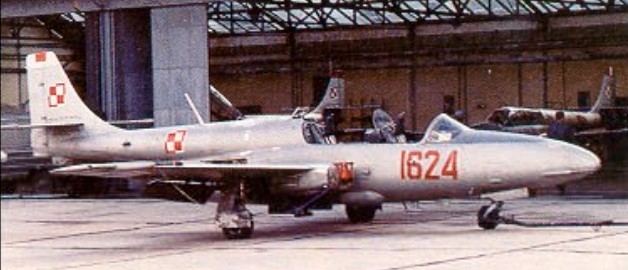
Early aircraft were powered by the Polish-designed HO-10 turbojet developing 780kg thrust, but from the mid-1960s TS-11s have been powered progressively by the 2,205 lb / 800kg thrust SO-1 turbojet, the similarly rated but improved SO-3, or the uprated SO-3W. The Iskra was being replaced in Polish air force service by the I-22 Iryda.
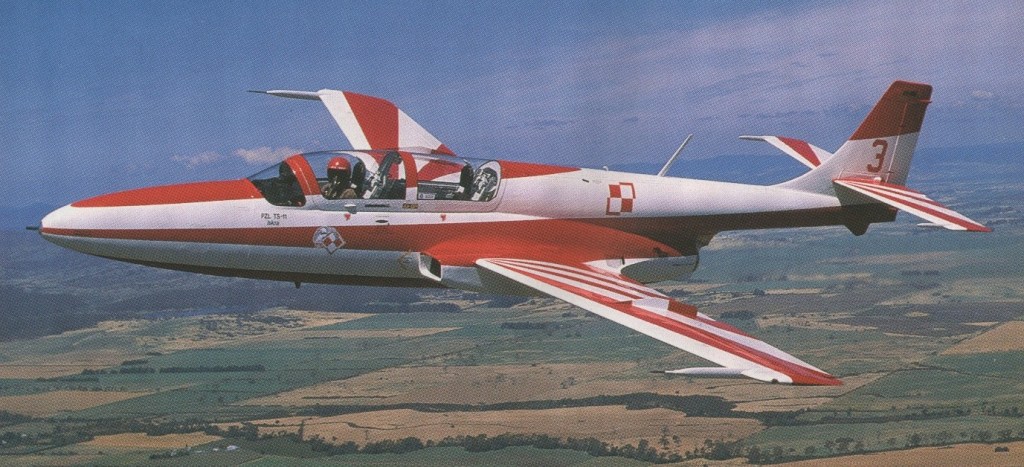
Later developments were the Iskra 100 with attack capability and the Iskra 200, built as single and two seaters. The Indian Air Force also operated the Iskra 100.

Limited production of the 1987 version of the TS-11, the Iskra-Bis DF, continued at Mielec. The Iskra-Bis DF is a tandem-seat combat and reconnaissance trainer powered by a single uprated 10.8kN SO-3W turbojet. It is equipped with a 23mm cannon in the forward fuselage, an S-13 camera gun, and four underwing hardpoints for 100kg of bombs, rockets, and gun pods. For recon¬naissance training three cameras may be carried, one in each intake fairing and one in the cockpit floor.

0823 PZL-Mielec TS-11 200bis(R) Iskra 1H08-23

Gallery

Engine: 1 x Narkiewicz turbojet, est 1,760 1,980 lbs.t. (800 900 kgp)
Max speed, 497 mph (800 kph)
Service ceiling 39,370 ft (12 000 m)
Loaded weight, 7,496 lb. (3 400 kg)
Span, 32 ft 9.5 in (10 m)
Length, 36 ft 1 in (11m)
Height, 10ft 10 in (3.3 m)

PZL-WSK TS 11 bis DF Iskra
Engine: 1 x SO-W3, 1100kg
Installed thrust: 10.8 kN
Span: 10.06 m / 33 ft 0 in
Length: 11.15 m / 37 ft 7 in
Wing area: 17.5 sq.m / 188.37 sq ft
Height: 12 ft 6 in / 3.500 m
Empty wt: 2560 kg / 5644 lb
MTOW: 3840 kg / 8466 lb
Max speed: 770 kph / 478 mph
Initial ROC: 1140 m / min
Ceiling: 37730 ft / 11,500 m
T/O run: 660 m
Ldg run: 720 m
Fuel internal: 1200 lt
Range: 675 nm / 1250 km
Armament: 1 x 23 mm
Hardpoints: 4
Bombload: 400kg
Crew: 2
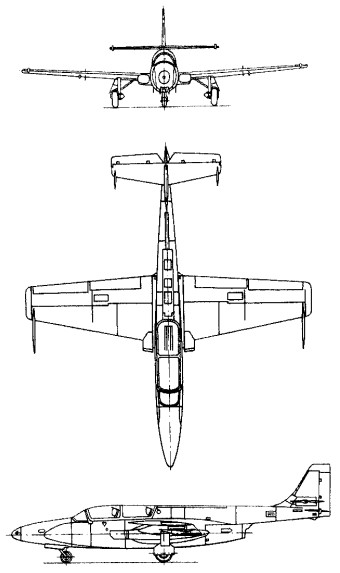
PZL Mielec TS-11 Iskra

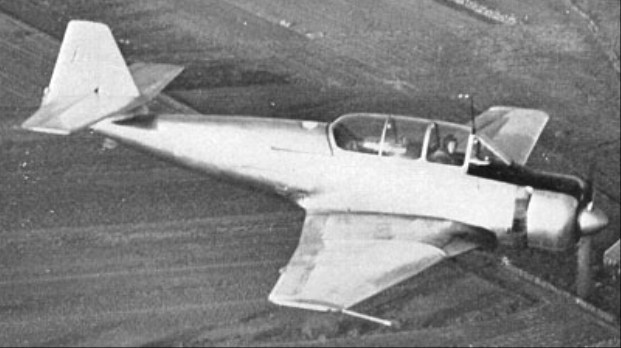
PZL Mielec TS-8 Bies

On 23 July 1955 the first prototype was flown of a two-seat basic trainer designated P.Z.L. TS-8 and later named Bies (Fiend). A cantilever low-wing monoplane with retractable tricycle landing gear, powered by a Narkiewicz WN-3 radial engine and accommodating two in tandem beneath a jettisonable transparent canopy, initial deliveries to the Polish air force began in 1958.

The type established several class speed records, and that set on 20 May 1957, of 320.362km/h over a 2000km closed circuit, remained unbeaten until August 1982.

Built until 1962, this fully aerobatic trainer remained in service for some six years, initial deliveries of the TS-11 Iskra which replaced it in service in the Polish air force beginning in 1964.

Engine: 340 hp / 246kW Narkiewicz WN 3
Span, 34 ft 5 in (10.5 m)
Length, 27 ft 10 in (8.5 m)
Wing area, 205.6 sq.ft (19.1 sq.m)
Height, 3.3 m (11 ft 10 in)
Empty weight, 2,359 lb (1070 kg)
Loaded weight, 5,417 lb (1550 kg)
Max speed, 194 mph (312 kph)
Cruise, 168 mph (270 kph)
Initial climb, 1340 fpm (6.8 m/sec)
Service ceiling, 19,685 ft (6000 m)
Range 497 mls (800 km)

PZL TS-8 Bies

PZL Mielec M-4 Tarpan

M 4P is a navigational trainer.

M 4 Tarpan
Engine: Narkiewicz WN 6, 180 hp
Max speed, 191 mph (307 kph)
Cruise, 155 mph (250 kph)
Initial climb, 1,260 fpm (6.4 m/sec)
Ceiling, 22,640 ft (6 900 m)
Range, 466 mls (750 km)
Empty weight, 1,671 lb (758 kg)
Loaded weight, 2,315 lb (1050 kg)
Span, 29 ft 0.5 in (8.85 m)
Length, 24 ft 1 in (7.33 m)
Wing area, 126.9 sq.ft (11.79 sq.m)

PZL Mielec LLP-M-15 Belphegor

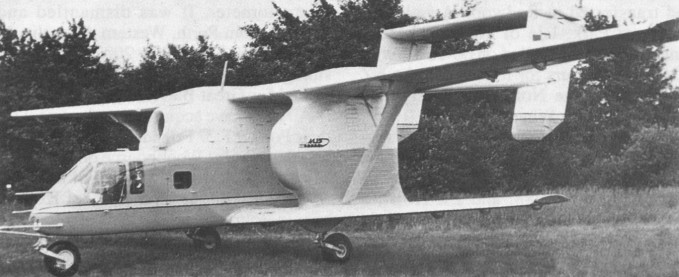
Following an agreement between the Polish and Soviet governments for the design and production of a new large agricultural aircraft, allocated the designation P.Z.L. Mielec M-15, design of this aircraft was initiated in late 1971 and the initial LLP-M15 prototype made its first flight on 30 May 1973. One M-15 prototype and five pre-production aircraft followed, and completion of the development programme was signified by the award of a full certificate of airworthiness on 4 April 1979.

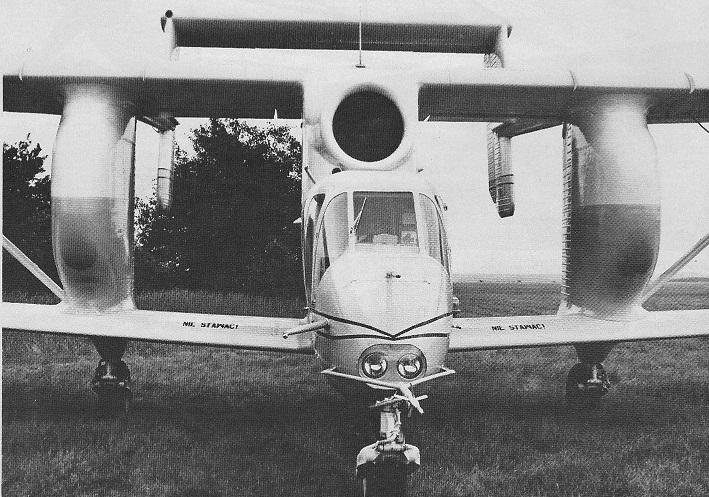
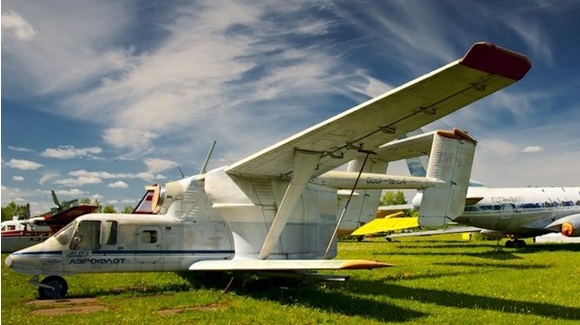
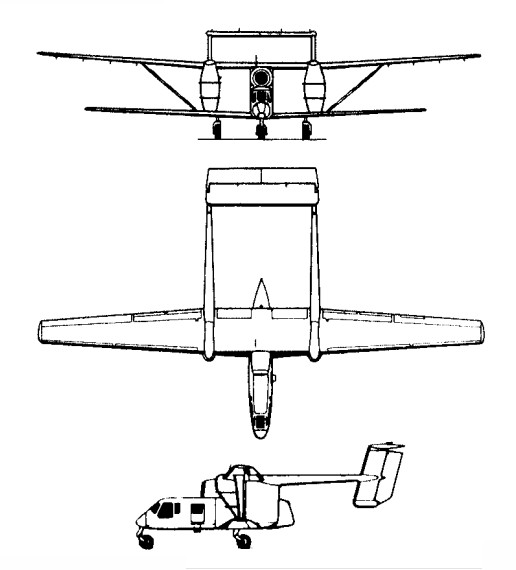
The M-15 had unequal-span biplane wings, twin tailbooms extending aft to twin fins and rudders united by a high-set tailplane and elevator, and fixed tricycle landing gear. A central fuselage nacelle provided accommodation for the pilot and, to his rear, had a cabin to seat two ground crew during ferry flights between operating areas. The single turbofan power-plant was mounted above the fuselage nacelle, and two streamlined chemical hoppers occupied the full gap between each wing, mounted directly beneath the tailbooms, their combined chemical capacity 2900 litres.

Powered by a 3,300-1b thrust Ivehenko AI-25 turbofan, it was also fitted with an Ivehenko AI-9 APU, which provides power for engine starts, refuelling and pumping chemicals into the two 1460-litre hoppers located between the wings. The cockpit was air-conditioned and behind was space for two ground crew and their gear, tools, spares, etc. The upper wing was equipped with a variety of high-lift devices, while the lower wing had nozzles for the dispensing of granular or liquid chemicals.

The cabin normally housed a mechanic or two, but could carry up to 21 passengers for ferry purposes.
Its usual working speed was 80 knots, but it could “dash” to the next job at over 140 knots.

Plans had been made to manufacture 3,000 M-15s, which had been given the name Belphegor during 1979, but production ended in 1981 after only 120 had been built because the aircraft was uneconomical in operation, P.Z.L. producing the turboprop An-3 instead.

Gallery

Engine: 1 x Ivchenko AI-25 turbofan, 1500kg / 3307 lb
Wing span: upper 72 ft (22 m); lower 49 ft (15 m)
Wing area: 67.9 sq.m / 730.87 sq ft
Length: 13.13 m / 43 ft 1 in
Height: 5.34 m / 18 ft 6 in
Max take off weight: 11686.5 lb / 5300.0 kg
Max. speed: 200 km/h / 124 mph
Cruise speed: 175 km/h / 109 mph
Range: 480 km / 298 miles
Crew: 1-2
Hopper cap: 2500kg

PZL Mielec M-15 Belphegor

PZL Mielec

Full name is Wytwomia Sprzetu Komunikacyjnego “PZLMielec” SA. The Transport Equipment Manufacturing Centre (WSK) at Mielec was the largest of the Polish pre-Second World War aircraft factories, having been founded in 1938.
Postwar, it built Soviet MiG-15 fighters under license until 1959. Decline in fighter orders led to development of the TS-8 Bies two-seat aerobatic trainer (first flown 1955) and the TS-11 Iskra jet trainer (1960). Nearly 12,000 Russian (now Ukrainian) Antonov-designed An-2 biplane transports built in several versions since 1960. Design office formed for M-15 Belphegor three-seat and turbofan-powered agricultural aircraft (1973) and M-17 two/three-seat light aircraft. I-22 Iryda advanced jet trainer and light attack aircraft first flew March 1985, and small number joined Polish Air Force, along with several M-93K derivatives, but production terminated in 1997; upgrade to modified M-96 standard was planned. Production of M18 Dromader agricultural aircraft continues, with some 700 production aircraft built in several versions since 1979. Production also continues of the M20 Mewa, first flown 1979 as development of U.S. Piper PA-34-200T Seneca II. Antonov An-28 transport built since 1984, more recently in M28 Skytruck form; larger development expected to be certificated in 1999 as M28.03 or 04 Skytruck Plus. M26 Iskierka piston trainer first flew in 1986 and entered production in 1995. Tampico Club TB 9 built under Socata contract.

Under political reorganization in 1956, the Polish aircraft industry was revived with production of Soviet aircraft and some indigenous types. In foreign markets most Polish aircraft subsequently appeared under the PZL title, such as the PZL-101 Gawron and PZL-104 Wilga utility aircraft of 1960 and 1962 respectively, the first being a development of the Yak-12. The Gawron was used extensively as an agricultural aircraft, along with the PZL-built An-2 biplane, but later purpose-built dusters and sprayers were built. PZL types are produced under three separate organizations: PZL “Warszawa-Okecie” SA, WSK “PZL-Mielec” SA, and PZL-Swidnik SA.

PZL Krosno KR-03A Puchatek

The tandem two place metal framed sailplane was designed by Jerzy Krawczyk and Eugeniusz Pelczar as a basic training glider and first flew in 1985. It has an oleo pneumatic sprung fixed main wheel, a tail wheel and a rubber sprung nose skid. Approach control is by top and bottom surface Schempp-Hirth type airbrakes.

KR-03A Puchatek
Wing span: 16.4 m / 53.8 ft
Wing area: 19.44 sq.m / 209.25 sq.ft
Aspect ratio: 13.9
Airfoil: Wortmann FX-S-01-158
Empty Weight: 350 kg / 771 lb
Payload: 190 kg / 419 lb
Gross Weight: 540 kg / 1190 lb
Wing Load: 27.78 kg/sq.m / 5.69 lb/sq.ft
L/DMax: 27 88 kph / 48 kt / 55 mph
MinSink: 0.78 m/s / 2.38 fps / 1.41 kt
Seats: 2

PZL Bielsko PW-5 Smyk

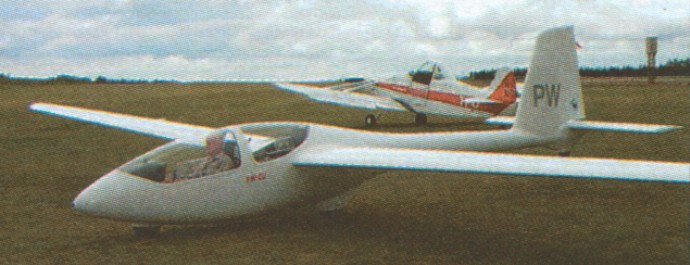
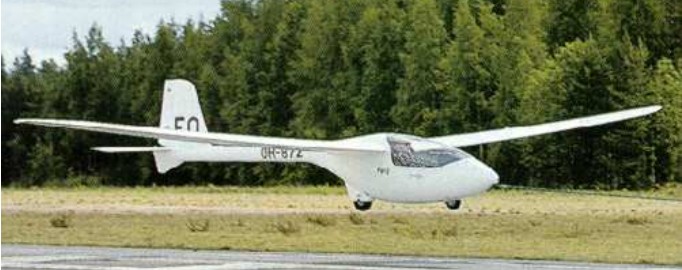
The PW-5 was the winning entry in the IGC/ OSTIV World Class design contest. The Polytechnika Warszawska design was available for license contruction both by manufacturers and homebuilders. PZL Swidnik is the first manufacturing licensee to reach production. It is flapless, has upper surface Schempp-Hirth airbrakes for approach control, and a fixed main wheel. PZL has announced that PW-5 production will be transferred to PZL Bielsko by the end of 1997. The structure is GFRP, with a fabric covered rudder.

Gallery

Wing span: 13.44 m / 44 ft
Wing area: 10.16 sq.m / 109.4 sq.ft
Aspect ratio: 17.8
Airfoil: Polytechnika Warszawska
Empty Weight: 190 kg / 418 lb
Payload: 110 kg / 242 lb
Gross Weight: 300 kg / 660 lb
Wing Load: 29.5 kg/sq.m / 6.03 lb/sq.ft
L/DMax: 32 88 kph / 48 kt / 55 mph
MinSink: 0.67 m/s / 2.2 fps / 1.30 kt
Seats: 1

PZL Bielsko SZD 59 Acro

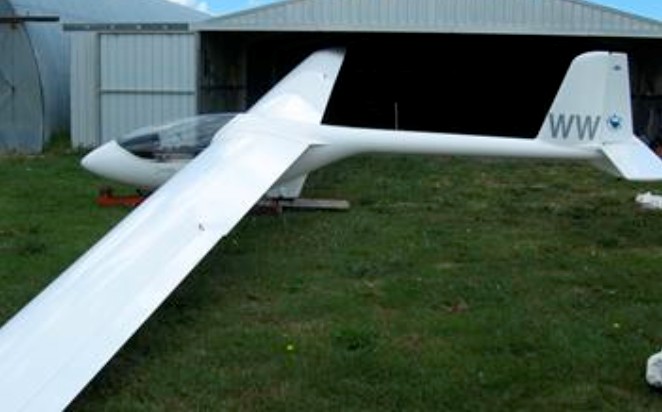
The SZD-59 was designed both as a contest aerobatic sailplane (+7/ -5 g) and, with wingtip extensions, as a 15 m. Standard Class sailplane. It has top and bottom surface Schempp-Hirth type airbrakes, retractable main wheel and provision for water ballast. The 15 m tip extensions come with optional winglets. Control connections are fully automatic.

Wing span: 13.2 m / 43.9 ft
Wing area: 9.8 sq.m / 105.49 sq.ft
Aspect ratio: 17.79
Airfoil: NN 8
Empty Weight: 265 kg / 584 lb
Payload: 115 kg / 235 lb
Gross Weight: 380 kg / 838 lb
Wing Load: 38.82 kg/sq.m / 7.96 lb/sq.ft
L/DMax: 36 115 kph / 62 kt / 71 mph
MinSink: 0.77 m/s / 2.53 fps / 1.50 kt
Seats: 1