Remos Aircraft Gmbh

Established 1987. Has produced the Gemini and Gemini Ultra two-seat monoplanes, now only built to order, and markets the G-3 Mirage as a composites-built, very light high-wing monoplane (first flown 1997). U.S. version of Gemini Ultra is Micro-Viper, distributed by Akro-Viper Inc.

1998:
Waldweg 1
D-85283 Eschelbach
Germany

2005: Bavaria, Germany.
Reissner Ente / Wellblech Ente

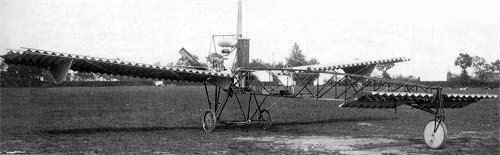
Prof. Dr. Hans Reißner built this canard in the experimental workshop of Junkers that was connected to the “Technische Hochschule Aachen”.

First flying on 23 May, 1912, in second form after having been rebuilt (in the third form, it got four fins under the mainplane).

According to G. Schmitt several versions were built and also flown. The Swiss Robert Gesell presented the machine over a few weeks in Johannisthal at the end of 1912.

Reinhard Cumulus

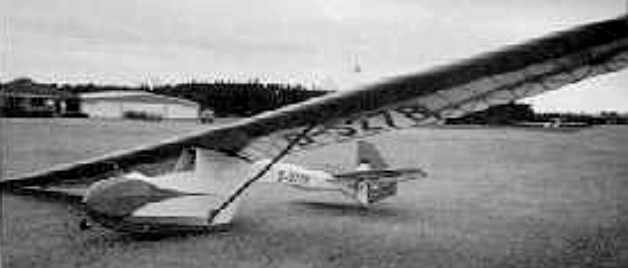
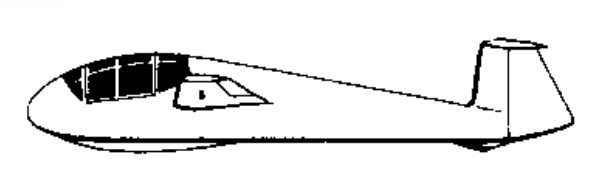
The Cumulus, which first flew in 1951, incorporated a wing very similar to that of the pre-World War II Schneider Grunau Baby with a new fuselage design reminiscent of the pod and boom Bowlus Baby Albatross. It was designed by Gerharf Reinhard with homebuilders in mind. Early models used a skid for takeoff and landing, while later models incorporated a small main wheel. The glider is constructed with wood wings and steel tube fuselage; both fabric covered.

Wing span: 13.57 m / 44.5 ft
Empty Weight: 159 kg / 350 lb.
Seats: 1
L/D max: 19
No. built: approx. 10

Reifschneider Eagle

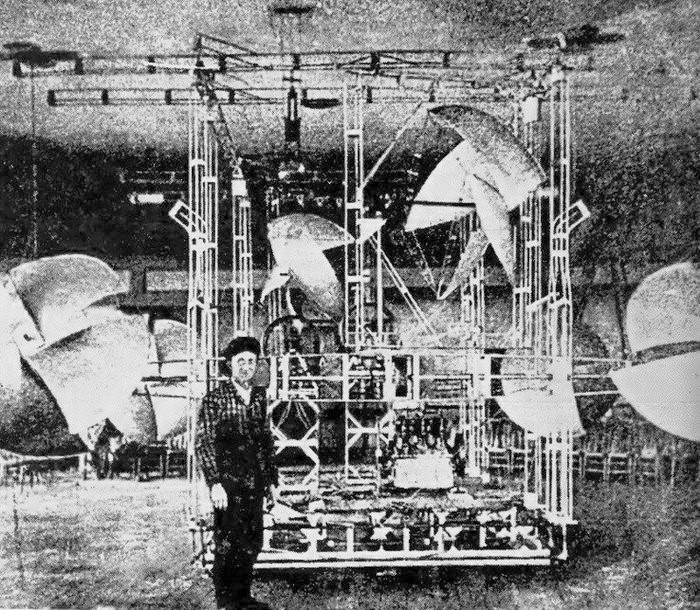
A contrivance consisting of two major parts, a cigar-shaped balloon, to which was attached a frame, on which were six propellers. Four propellers were used for ascending and two for steering. The power was supplied by a gasoline engine. The Streator, Illinois inventor declared that his ship could be driven from Chicago to New York at the rate of 100 miles an hour, and that it could be sailed around a tower with its side touching the structure at all times. It was planned to construct the machine at an expense of $ 10,000.