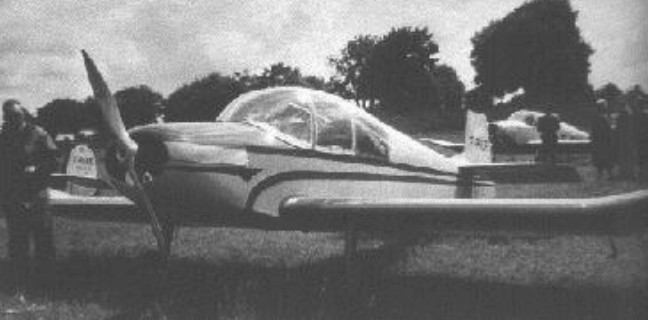
Pierre Robin, then a young flying instructor, wanted to build a 3 seater version of the D11 capable of carrying his wife and son. He found an unused Jodel D.10 glider wing lying in a hangar at a nearby airfield, bought the D10 wing from Delemontez for the price of the wood alone, and started building what became known as the Jodel-Robin. He built a fuselage, based on a scale-up version of the Jodel D.11, around this wing, resulting in the DR 10. After many refinements, the final production version an aircraft powered by a Continental C-90 and able to carry three people rolled out as the DR100.
The history of the Robin aircraft can be traced to the 1950s when Pierre Robin, then a young flying instructor, wanted to build an aircraft capable of carrying his wife and son. He found an unused Jodel D.10 glider wing lying in a hangar at a nearby airfield and built a fuselage, based on a scale-up version of the Jodel D.11, around this wing; resulting in the DR 10. After many refine¬ments, the final production version an aircraft powered by a Continental C-90 and able to carry three people rolled out as the DR100. This was the beginning of a successful aircraft business. Centre Est Aeronautique formed at Dijon October 1957 by Pierre Robin and Jean Delemontez (ex-Jodel) , at Darois Vil¬lage, near Dijon, Burgundy, as a privately owned company, and began production with the DR 100 Ambassadeur, a three-seat version of the Jodel D.11, designed by Robin and first flown July 1958; built also by Societe Aeronautique Normande. The basic design was constantly refined through a number of variants. Delivered 500th aircraft in June 1967.
Subsequent products also mainly two- to four-seat private-owner models. Name of company subsequently altered to Avions Pierre Robin (Centre Est Aeronautique); the latter part later dropped from marketing name.
Aircraft from Avions Robin include the Robin 200 two-seat lightplane and trainer (first flown 1971); DR 400 (first flown May 1972) that was offered in two-seat and 112 hp DR 400/100 Cadet form during 1980s later in 118 hp DR 400/120 Dauphin 2+2 two-plus-two seating form, 160 hp DR 400/140 B Dauphin 4 four-seat form, 160 hp DR 400/160 Major four-seat form with extra fuel capacity and increased wing area, 180 hp DR 400/180 Regent four-seat form, 180 hp 400/180 R Remo 180 four-seat form for glider towing and with reduced fuel, 200 hp DR 400/200 R Remo 200 four seat form for glider towing, and latest 200 hp DR 400/200i President four/five-seat form with larger fuselage to offer increased cabin space; Robin 2160 two-seat aerobatic lightplane (certificated 1978).
1983: Avions Pierre Robin SA, aerodrome de Dijon¬Val Suzon, 21121 Fontaine les Dijon, France.
Robin 3000 four-seat lightplane with T-tail (first flown 1988 in 3000/160 form). Robin 1180 Aiglon had first flown in 1976 as metal four-seater.
By 1998, Mudry had been bought out by the group which owns Robin Aircraft and as a result the Barouder became available through Bul Aéro.
Since its foundation it has continuously created light aircraft, producing over 3,500 in ten different aircraft ranges, and in 2001 the company was building about 60 aircraft a year, a third of which are for export.
UK Engineering company in Lincoln, Lincolnshire, which built Sopwith Gunbus and Farman Longhorn biplanes and Short 184 seaplanes to Admiralty orders in First World War, and also designed and built its own single-seat scout and two prototypes of a “Fighting Machine” with two manned gun positions in upper wing.
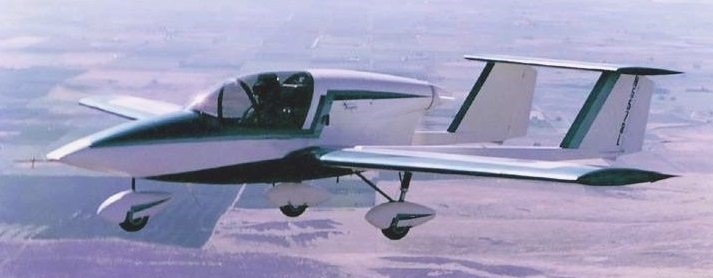
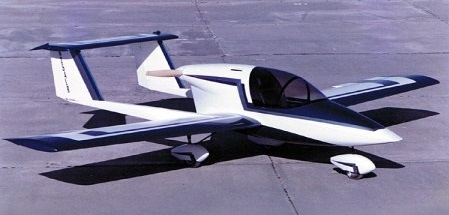
The Sceptre was an original design of Larry Roberts and his Roberts Sport Aircraft Co. The original plans called for production as a factory-built aircraft, but this was later changed to kit form.
The company initially built a first single-seat prototype with a 48 hp Rotax 503 two-stroke engine, designated Sceptre 1. Possibly up to three prototypes were completed and reportedly also the 52 hp Rotax 532 engine was tested, and the first was flown in November 1983, registered as N254LR, followed by the second in 1984.
Two years later the Sceptre 1 was followed by a side-by-side two-seat prototype named the Sceptre 2 and although dimensionally very similar, it had a wide cockpit and an 85 hp Limbach L2400 engine. Further development of the Sceptre was halted.
After WWII, George Robertson, worked for aircraft designer/builder John Thorp. Thorp had designed the Lockheed Model 33 Little Dipper also known as the Air Trooper in 1944. Only one example was built and flown before the program was cancelled.
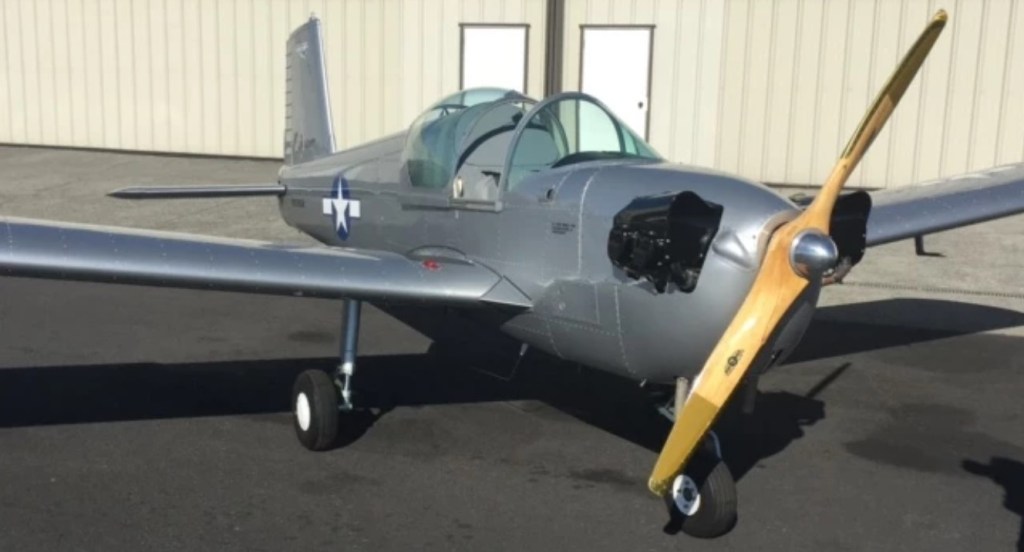
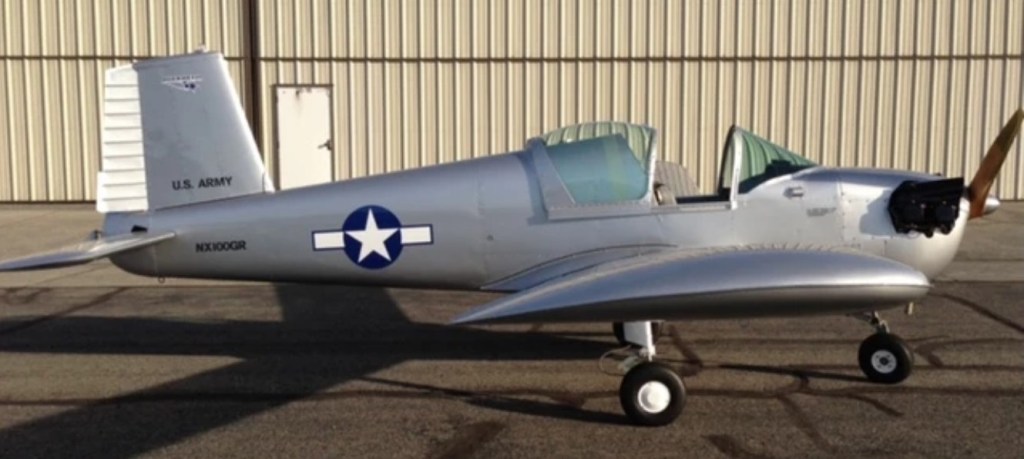
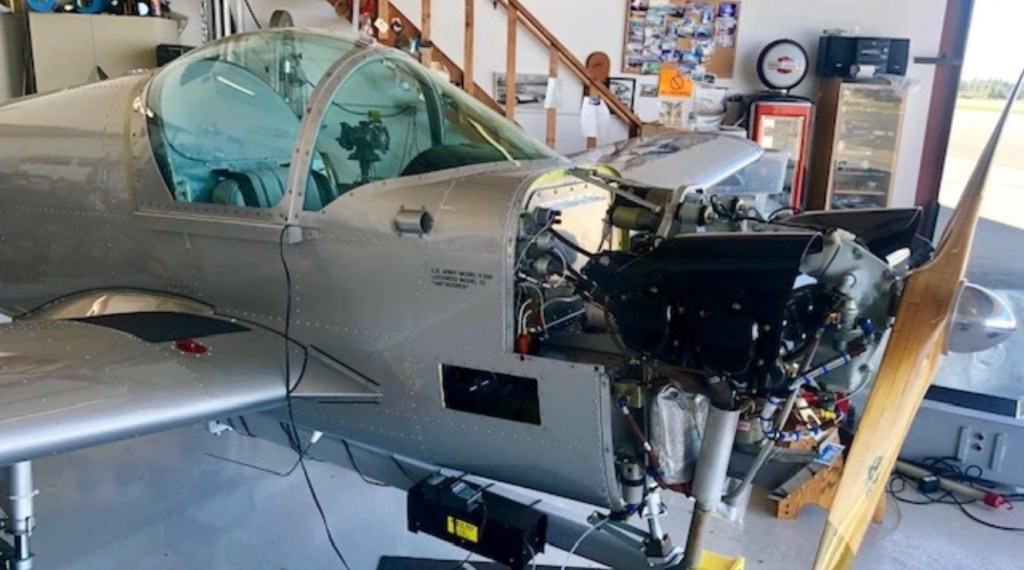
After WWII, Thorp designed the Thorp T-211 Sky Skooter and allowed his employee George Robertson to manufacture extra parts and convert a T-211 back into a single seat aircraft to replicate the original Lockheed Air Trooper. This aircraft is actually a Robertson Sky Skeeter.
Original powered by a Lycoming 0-145 engine, the aircraft was restoration by Sorrell Brothers in 2005 and the engine replaced with a TMX-O-200 Continental. A sliding canopy was installed at restoration.
The airframe had reached 129.5 hrs TTSN, 45 hrs since restoration.
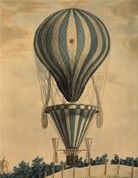
Eugène Robertson gas balloon, ascending from the Castle Garden at the Battery in New York, October 10, 1826. Eugène Robertson made many early ascensions in North America, with flights made at New York and New Orleans between 1825 and 1836.
In 1826, Eugène Robertson’s hot air balloon was snagged by Castle Garden’s flagpole, and he almost lost his life. One month later, he completed a second ascension without a hitch.
He also made early flights in the Antilles (1828 at La Havana) and in Mexico (1835 Mexico City and Veracruz). He died of yellow fever in Veracruz in 1838. His father and his brother Dimitri were also well-known balloonists.
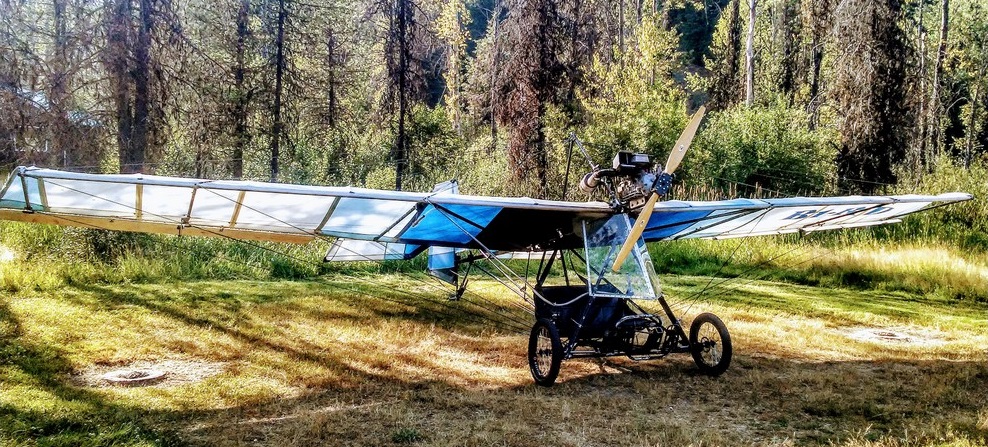
The B2 RD is the same as the B1-RD except: Side by-side two seater. Wing has swept back leading edge, swept forward trailing edge and tapering chord. Shown for the first time at Sun ‘n’ Fun in Lakeland, Florida in March 1983, the B2 RD is basically an extrapolation of the Bl RD concept, the principal differences between the two aircraft being the wing design and the power unit. The B2 RD wing uses a swept back leading edge and has a larger area and span than its single seat stablemate, while the Cuyuna engine is replaced by a Rotax 503. Being a two seater, the B2 RD is not classified as an ultralight in the US, and the company announced in April 1983 that the aircraft will only be sold to dealers.
Engine: Rotax 503, 42hp at 6200rpm Propeller diameter and pitch 72 x 36 inch, 1.83 x 0.91 m V belt reduction, ratio 2.7/1 Max static thrust 320 lb, 145 kg Power per unit area 4.8 hp/sq.ft, 2.4 hp/sq.m Fuel capacity 7.0 US gal, 5.8 Imp gal, 26.5 litre Length overall 18.4 ft, 5.61 m Height overall 8.0ft, 2.44m Wing span 32.6ft, 9.93m Chord at root 7.3 ft, 2.21 m Chord at tip 5.0ft, 1.52m Dihedral 3 deg Sweepback 0 deg Tailplane span 10.0ft, 3.05m Fin height 3.0 ft, 0.91 m Total wing area 190 sq.ft, 17.7 sq.m Total aileron area 18.0 sq.ft, 1.67 sq.m Fin area 3.0 sq.ft, 0.28 sq.m Rudder area 13.0 sq.ft, 1.21 sq.m Tailplane area 30.0 sq.ft, 2.79 sq.m Total elevator area 15.0 sq.ft, 1.39 sq.m Wing aspect ratio 5.6/1 Wheel track 5.0 ft, 1.52 m Wheelbase 16.0 ft, 4.87 m Tailwheel diameter overall 5 inch, 13 cm Main wheels diameter overall 16 inch, 41 cm Empty weight 325 lb, 147kg Max take off weight 725 lb, 328 kg Payload 400 lb, 181 kg Max wing loading 3.81 lb/sq.ft, 18.6 kg/sq.m Max power loading 17.3 lb/hp, 7.8 kg/hp Load factors +3.0, 2.0 design Max level speed 55 mph, 88 kph Never exceed speed 75 mph, 121 kph Max cruising speed 48 mph, 77 kph Economic cruising speed 35 mph, 56 kph Stalling speed 24 mph, 38 kph Max climb rate at sea level 450 ft/min, 2.3 m/s Min sink rate 300 ft/min at 30 mph, 1.5 m/s at 48 kph Best glide ratio with power off 5.5/1 at 30mph, 48 kph Take off distance 140 ft, 43 m Land¬ing distance 100ft, 30m Service ceiling 12,000 ft, 3660 m Range at average cruising speed 110 mile, 177 km
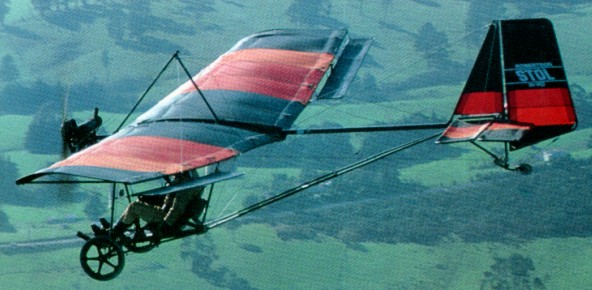
Single seat single engined high wing monoplane with conventional three axis control. Wing has unswept leading edge, swept forward trailing edge, and tapering chord; cruciform tail. Pitch control by elevator on tail; yaw control by fin mounted rudder; roll control by half span ailerons; control inputs through stick for pitch/roll and pedals for yaw. Wing braced from above by kingpost and cables, from below by cables; wing profile; single surface (double surface optional). Undercarriage has three wheels in tail dragger formation; nylon rope suspension on all wheels. Push right go right tailwheel steering connected to yaw control. No brakes. Aluminium tube/steel tube framework, with optional pod. Engine mounted at wing height driving tractor propeller.
The B1 RD was designed by Glenn and Bruce Bashforth and the first production models were delivered in June 1982, production having begun at one per day but scheduled to increase up to two aircraft per day. The single seater has a remarkably low stalling speed for a semi rigid winged microlight, and is sold ready to fly for $6595 or as a kit for $5995 in 1983. The B1 RD in standard form originally had the Cuyuna 215R 20 hp engine and was only fitted with the 430R as an option, but this was later standard and could be replaced by the new ULII 02 Cuyuna.
A number of options are offered including custom sails, remote starter and choke kit for $50, 20 inch (51 cm) wheels $35, windscreen $50, chrome fenders and hardware $40, chromed axle $40, tow hook with quick release $50, strobe light $200, double surface wing $500, electric start $350, instruments, floats, parachute and storage bags.
Engine: Cuyuna 430R, 30 hp at 5500 rpm Propeller diameter and pitch 72 x 36 inch, 1.83 x 0.91 m V belt reduction, ratio 3.1/1 Power per unit area 0.19 hp/sq.ft, 2.0 hp/sq.m Fuel capacity 4.0 US gal, 3.3 Imp gal, 15.1 litre Length overall 21.0 ft, 6.40 m Height overall 7.2ft, 2.18m Wing span 32.0ft, 9.75m Mean chord 5.1ft, 1.54m Dihedral 3 deg Sweepback 0 deg Tailplane span 10.0 ft, 3.05 m Total wing area 162 sq.ft, 15.1 sq.m Total aileron area 18.0sq.ft, 1.67 sq.m Fin area 3.0 sq.ft, 0.28 sq.m Rudder area 13.0 sq.ft, 1.21 sq.m Tailplane area 30.0 sq.ft, 2.79 sq.m Total elevator area 15.0 sq.ft, 1.39 sq.m Wing aspect ratio 6.3/1 Wheel track 5.0 ft, 1.52 m Wheelbase 16.0 ft, 4.87 m Tailwheel diameter overall 5 inch, 13 cm Main wheels diameter overall 16 inch, 40cm Empty weight 220 lb, 100kg Max take off weight 500 lb, 227kg Payload 280 lb, 127 kg Max wing loading 3.09 lb/sq.ft, 15.1kg/sq.m Max power loading 16.7 lb/hp, 7.6kg/hp Load factors +3.0, 2.0 design Max level speed 50 mph, 80 kph Never exceed speed 75 mph, 121 kph Max cruising speed 38 mph, 61 kph Stalling speed 15 mph, 24 kph Max climb rate at sea level 850 ft/min, 4.3 m/s Min sink rate 300 ft/min at 30 mph, 1.5 m/s at 48 kph Best glide ratio with power off 8.54 at 30 mph, 48 kph Take off distance 75 ft, 23 m Landing distance 50 ft, 15 m Service ceiling 14,000 ft, 4270 m Range at average cruising speed 125 mile, 201 km
Michele Davies lvpetech@gmail.com How do I get a hold of a Vintage B1RD two seater Trainer – manual so I can have all spec and how to build one. we have one that we need to check all specs on. 13 May 18
In the late 1950s Jim Robertson designed the Skyshark featuring many STOL features. The best of these features was then applied to the Cessna 182 airframe to produce the Wren 460.
Created in 1921 by the late James L Robertson, who was one of the pioneers of the development of STOL Aircraft (short take off and landing), Robertson Aircraft specialises in flap and slat systems adaptable to numerous aircraft, both single and multi engine (Cessna, Piper Beechcraft and Learjet mainly). Robertson also earned a place in the history books by being the principal sponsor of Charles Lindberg’s transatlantic flight of the 20 May 1927, Lindberg himself later being the chief pilot for this company. 1983: Robertson Aircraft Corp, Snohomish County Airport C 72, Everett, Washington 98204, USA.