1998:
Bombardier-Rotax
Postach 5
A 4623 Gunskirchen
Austria
Engine builder
1998:
Bombardier-Rotax
Postach 5
A 4623 Gunskirchen
Austria
Engine builder
Back to Rotary Air Force RAF 2000

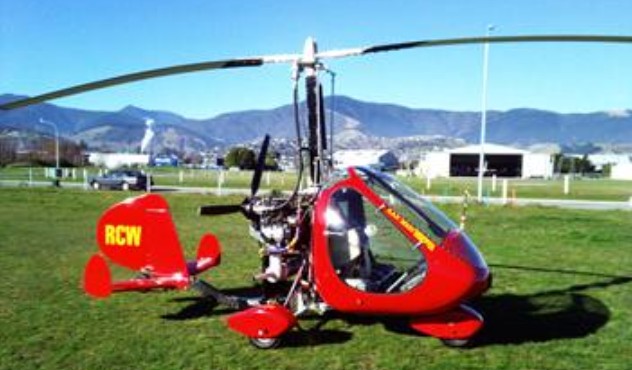
A Canadian-built two seat enclosed frame gyrocopter. Introduced in 1990, the RAF 2000 conforms to 51 per cent homebuilt rules. A conventional autogyro, the 2000 is suitable for training, crop-spraying, power line inspection, predator control, stock mustering and aerial photography. Quoted build time 150-250 hours.
The composites RAF rotor blade features 6061-T6 aluminium spar and foam filler, on a patented 5x10cm folding (two-part) rotor mast, with rubber mast bushing and adjustable CG. Removable doors.
The landing gear is tricycle configuration, fixed, with optional speed fairings.
Power is from one 97kW Subaru EJ22 16-valve four-cylinder liquid-cooled engine driving a ground-adjustable three-blade Warp Drive composites propeller through RAF cog belt reduction gear, ratio 2.10:1. Fuel capacity is 87 litres of premium unleaded Mogas, of which 79 litres are usable. Optional capacity 95 litres, of which 87 litres usable. Fuel consumption of the carburated version is 20.1 litres/h, and injected version 18.2 litres/h, both at 80% power.
A pilot and passenger sit side by side in an enclosed cabin. Can be flown with doors removed.
An agricultural version has a 114 litre tank, moulded to fit into the back and bottom of the cabin enclosure, supplying a 24-nozzle spraybar fitted behind and below the engine. Spray width is 6.7 to 7.3m.
Versions include:
2000 STD-SE: Basic version.
2000 GTX-SE: Top-of-range model; kit includes carbureted version of engine, rotor brake, heater, dual controls and adjustable pitch and roll trim assembly.
2000 GTX-SE FI: Fuel-injected version of GTX.
The 2-place rotorcraft is available in kit form. The GTX SE includes a variety of performance enhancing options. Standard engine is a 130 hp four cycle Subaru EJ22. Engine, propeller and instrument packages are included in RAF kits. The airframe is bolted square and round tube aluminium, with shock mounted landing gear.
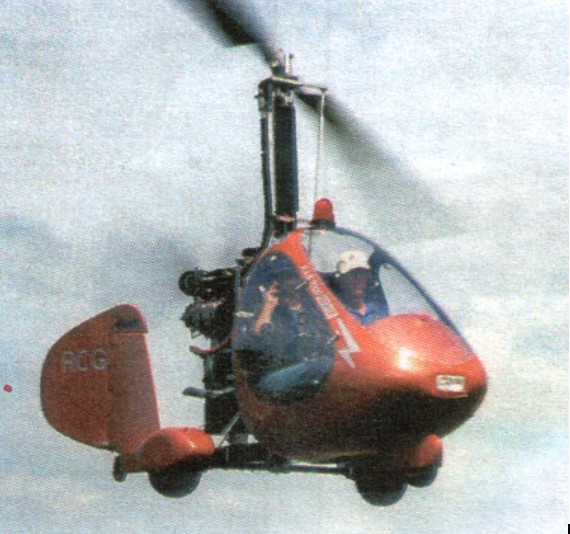
The RAF 2000 GTX SE has rough field gear and is powered by a standard Subaru Legacy EJ-22 fuel injected engine (running on avgas) rated at 130 hp. RAF manufacture their own blades with aluminium spars and foam cores covered with composite material. They include a 2 inch strip of Kevlar on the leading edge. The fibreglass rotors fitted to the RAF 2000 GTX-SE are lifed at 500 hours.
Standard features include a cockpit heating system, three point harness, removable doors, a fold down mast, and adjustable centre of gravity provision. The fold down mast reduces the height to 6 foot 6 inch.
At least 500 are believed completed and flown by the end of 2002. 88 were current on the Canadian register in 2002.
COSTS: 2000 STD-SF kit price US$20,615, including Subaru engine (carb version); 2000 GTX-SE US$22,500, including carburated Subaru; 2000 GTX-SE FI US$25,500, including fuel-injected Subaru (all 2003).
RAF 2000
Engine: 130 hp EA82 or EJ22 Subaru
Pre-rotator rpm: 350
Dry weight: 760 lb
Min. speed: 10-12 mph
Max. speed: 100 mph
Cruise: 80 mph
Take Off Roll: 0-75 ft
Landing Roll: 0-10 ft
Rate of Climb: 1200 fpm
RAF 2000 GTX
Speed max: 100 mph
Cruise: 80 mph
Range: 320 sm
ROC: 1200 fpm
Take-off dist: 250 ft
Landing dist: 1-10 ft
Engine: Subaru EA-82, 100 hp
HP range: 100-300
Fuel cap: 23 USG
Weight empty: 560 lb
Gross: 1125 lb
Height: 8.2 ft
Length: 13.6 ft
Disk span: 30 ft
Disk area: 706 sq.ft
Seats: 2
Landing gear: nose wheel
Prop: 60” x 13o Warp Drive 3 blade composite, 2-2.1 cog belt reduction
Rotor blades: 30’ x 8 5/8” RAF composite, aluminium spar.
RAF 2000 STD SE
Engine: Subaru EJ22, 130 hp
Propeller diameter: 1.73m
Height: 8.2 ft / 2.50m
Length: 13.6 ft / 4.11m
Disk span: 30 ft / 9.14m
Disk area: 706 sq.ft
Fuel capacity: 23 USG
Empty weight: 730 lb / 345kg
Gross weight: 1540 lb / 698kg
Max speed: 100 mph / 161km/h
Cruise: 70 mph / 113km/h
Min flying speed: 32-48km/h
Rate of climb: 1000 fpm
Takeoff dist: 73-350 ft / 23-107m
Landing dist: 0-10 ft / 3m
Service ceiling: 10,000 ft / 3,050m
Range with max fuel: 450km
Seats: 2
GTX SE
Engine: Subaru EJ22, 130 hp
Speed max: 100 mph
Cruise: 75 mph
Range: 225 sm
ROC: 1200 fpm
Take-off dist: 250 ft
Landing dist: 10 ft
Fuel cap: 23 USG
Weight empty: 730 lb
Gross: 1540 lb
Height: 8.2 ft
Length: 13.6 ft
Disk span: 30 ft
Seats: 2
Landing gear: nose wheel
Engine: Subaru, 100 hp
Rotor span: 9.14 m
MAUW: 510 kg
Empty weight: 254 kg
Fuel capacity: 87 lt
Max speed: 160 kph
Cruise speed: 110 kph
Minimum speed: 16 kph
Climb rate: 6 m/s
Seats: 2
Kit price (1998): US$21,500
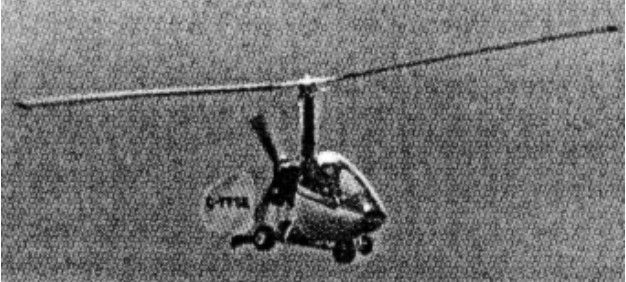
Bernard Haseloh holds the first Gyro Pilot’s License issued in Canada and is widely recognized as a
pioneer in the gyroplane industry. Mr. Haseloh is highly regarded by Federal Aviation Regulators
having for many years served as the designated gyroplane instructor for Alberta, Canada.
Bernard Haseloh served as a key technical advisor to the development, testing & design of the
RAF 2000
1987 the Group forms Rotary Air Force Marketing Inc, First aircraft to go into production is the RAF 1000,
recognizing the need for proper flight instruction and to meet the demand for a two place gyroplane the
Rotary Air Force team introduces the Two place Gyroplane in 1989.
A single seat enclosed gyrocopter. Engine: 130 hp EA82 or EJ22 Subaru. Pre-rotator spins up to 350 rpm. Airframe is bolted square and round tube aluminium. Shock mounted landing gear.
Engine: Subaru EA-82
HP range: 100-130
Prop: 60” x 13o Warp Drive 3 blade composite
Rotor blades: 28’ RAF composite.
Height: 8 ft
Length: 12.16 ft
Disk span: 25 ft
Disk area: 555.7 sq.ft
Fuel cap: 12 USG
Weight empty: 460 lb
Gross: 1125 lb
Speed max: 115 mph
Cruise: 80 mph
ROC: 1000 fpm
Take-off dist: 150 ft
Landing dist: 1-10 ft
Seats: 1
Landing gear: nose wheel
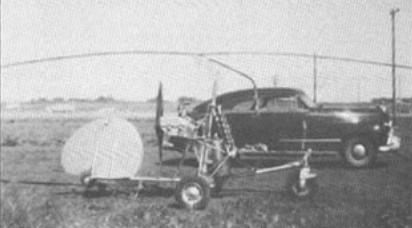
Mr. Haseloh has logged more than 2000 hours of flying time on his experimental “HASELOH” designed machines and has spent over 10,000 hours in the development of prototype gyroplanes of “ THE TYPE “ manufactured and sold by Rotary Air Force South Africa.
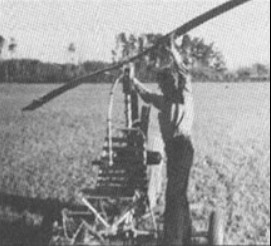
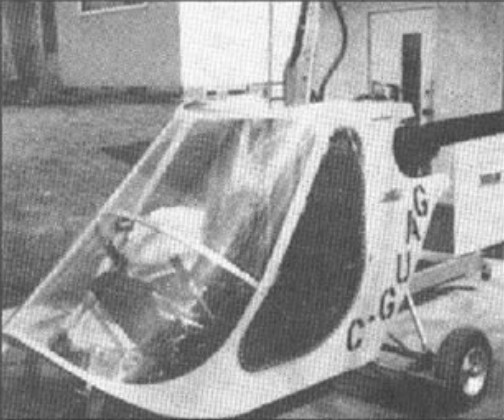
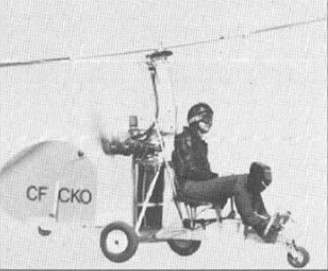
1970 protptype with two part mast, and CW mounted shock mounted cheek plates.
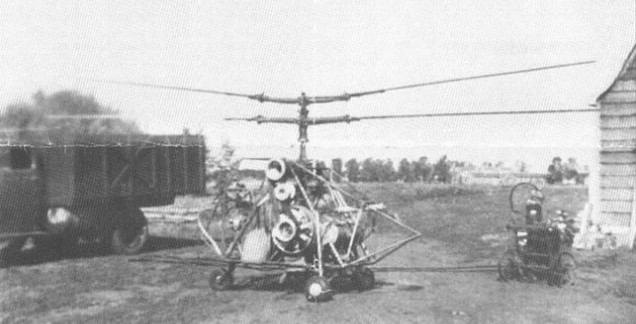
The origins of Rotary Air Force South Africa. date back to 1943 when Bernard J. Haseloh hovered his first experimental helicopter at his shop in Ponoka, Alberta , Canada.
Mr. Haseloh was discouraged from building and testing amateur/experimental built helicopters, by the Government who felt that the technology for the power driven rotor system was too complex for the private individual.
To further complicate matters, at that time the Government had no regulations in place for amateur/experimental built helicopters.
Haseloh did have an experimental helicopter hovering in 1943.
The origins of Rotary Air Force South Africa date back to 1943 when Bernard J. Haseloh hovered his first experimental helicopter at his shop in Ponoka, Alberta, Canada.
Mr. Haseloh was discouraged from building and testing amateur/experimental built helicopters, by the Government who felt that the technology for the power driven rotor system was too complex for the private individual.
To further complicate matters, at that time the Government had no regulations in place for amateur/experimental built helicopters. Therefore, his keen interest in Rotary Winged Aircraft turned toward the development of gyroplanes, the first of which was successfully completed in 1954
Over 30 years, Bernard Haseloh has developed and implemented numerous design and structural innovations for gyroplanes.
Mr. Haseloh has logged more than 2000 hours of flying time on his experimental “HASELOH” designed machines and has spent over 10,000 hours in the development of prototype gyroplanes of “ THE TYPE “ manufactured and sold by Rotary Air Force South Africa.
Bernard Haseloh holds the first Gyro Pilot’s License issued in Canada and is widely recognized as a pioneer in the gyroplane industry. Mr. Haseloh is highly regarded by Federal Aviation Regulators having for many years served as the designated gyroplane instructor for Alberta, Canada.
Bernard Haseloh served as a key technical advisor to the development, testing & design of the
RAF 2000
1987 the Group forms Rotary Air Force Marketing Inc, First aircraft to go into production is the RAF 1000,
recognizing the need for proper flight instruction and to meet the demand for a two place gyroplane the
Rotary Air Force team introduces the Two place Gyroplane in 1989.
Incorporated in 1987, Rotary Air Force employed 16 people in 2001.
1995-7: Box 1236, Kindersley, Saskatchewan S0L 1S0 Canada.
In May 2001, RAF announced that it would be expanding its activities into commercial applications, including agricultural spraying and paramilitary functions.
As of April 2, 2007, Rotary Air Force Marketing Inc. closes doors.

Originally designed by Outboard Marine Corporation (OMC) between 1974 and 1984, it was rumored that they spent hundreds of millions of dollars to develop this engine. OMC originally had a 530cc single rotor air cooled engine that was installed in 15,000 snowmobiles made by Johnson and Evinrude in the early 1970s.
OMC spent a small fortune developing a rotary engine. At one point they had a team of over 40 engineers working to develop the engine but about the time they were about to start production on the engine the snowmobile industry fell on hard times and the project was put on the back burners.
RotaMax purchased the design, and has reintroduced it to the market. RotaMax was marketing the engine for Recreational, OEM, Transportation, Aviation, Marine, Aftermarket and Xtreme applications, which is where the name RotaMax originates from.
The unit was available in two configurations a 650cc single rotor of 75 hp which weighs 90 lbs and a 1300cc twin rotor unit putting out 150 hp and weighing 140 lbs. The RotaMax engine is all aluminum.
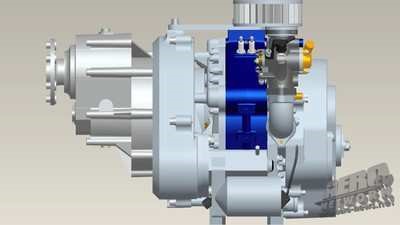
The ASTM LSA engines have a dual ignition system, and are fuel injected. The unit uses a spur gear reduction drive system with a 1.95 to 1 reduction ratio.
At Airventure Bill met Eric Barger of RotaMax Rotary Engines of Ohio, and he was so impressed with company and engine that he decided to use it in the Vampire. Since Airventure he has put over 40 hours of trouble free flying on the engine.
At Sebring he had the engine in his booth on static display. He also demonstrated the engine running in the Vampire. According to Bill the engine is very smooth, sounds a lot like a turbine, and is considerably more powerful than the Rotax 912 S.
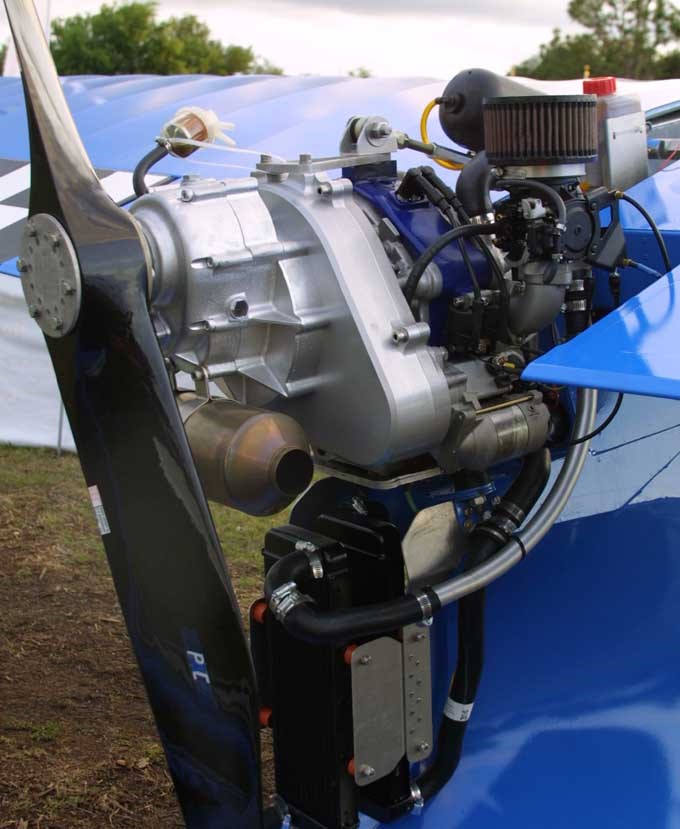
Eric Barger President of RotaMax was at Sun N Fun showing a number of aircraft installations that are currently using the RotaMax rotary engine. These included Higher Class Aviation and their Hornet, Sadler Aircraft and the Sadler Vampire.
The RotaMax single rotor 650 cc, 65 HP engine will use between 3 and 4 gallons of fuel an hour, while the twin cylinder 1300 cc engine uses 4 to 6 gallons per hour, again this will vary with the type of application the engine is being used in.
All of the RotaMax aircraft engines are equipped with dual ignition systems. The single cylinder engine was only available in a carbureted version, with the twin cylinder 1300 cc engine being fuel injected.
The RotaMax 1300 cc twin rotor engine has a top RPM of 4750, with cruise RPM being 4250.
A unique feature of the RotaMax engine is that it uses a “lost oil system.” Regular 30 weight oil is injected into the engine, and is burned off in the combustion cycle. This means you do not have an oil pan, you do not require any oil changes, no oil filter, and no waste oil to dispose of.
The RotaMax engines came with a standard charging system of 32 amps but an optional unit of 45 amps is available. The engine uses an oil bath spur gear reduction drive, with ratios from 1.9 to 2.7 available. RotaMax was developing belt drive systems to fit various applications. A number of exhaust systems were being developed, all of the systems are made from stainless steel due to the higher exhaust heat that the engine produces.
15152 TWP RD 190
Arlington OH 45814
OMC entered the snowmobile industry and spent a small fortune developing a rotary engine. At one point they had a team of over 40 engineers working to develop the engine.
Just about the time they were about to start production on the engine the snowmobile industry fell on hard times and the project was put on the back burners. A U.S. company RotaMax, purchased the design rights to the engine and using today’s technology has started producing and offering the engine for ultralight and light sport aircraft application.
Eric Barger President of RotaMax was at Sun N Fun showing a number of aircraft installations that were using the RotaMax rotary engine.

The first aeroplane of bicycle mechanic and dealer Gottlieb Rost and his brother, a conventional tractor monoplane, was tested in February 1910 at Scheinberg in Harburg near Hamburg, Germany. It was followed by refined versions later during the year, but although it was flown several times it was considered underpowered.

