Back to Salmson-Moineau SM-1


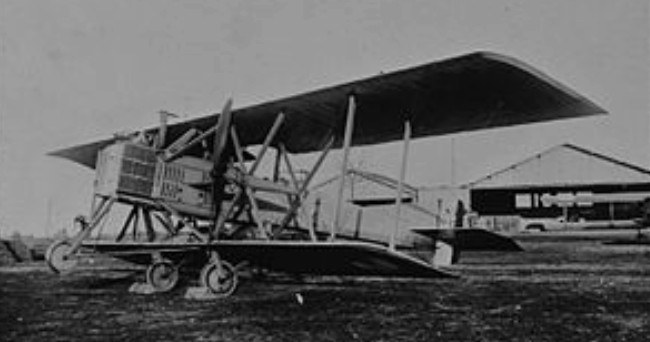
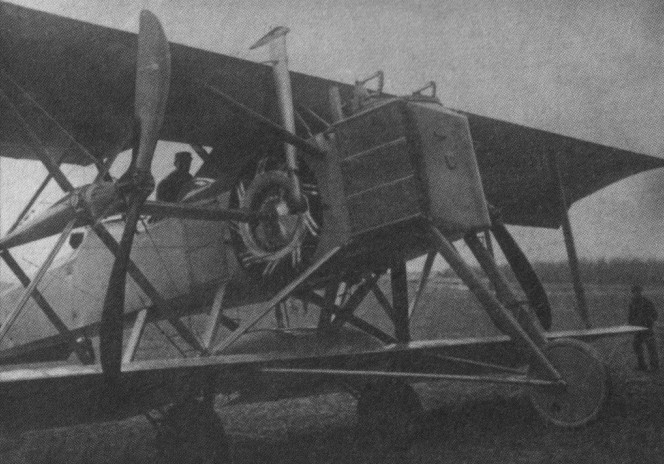
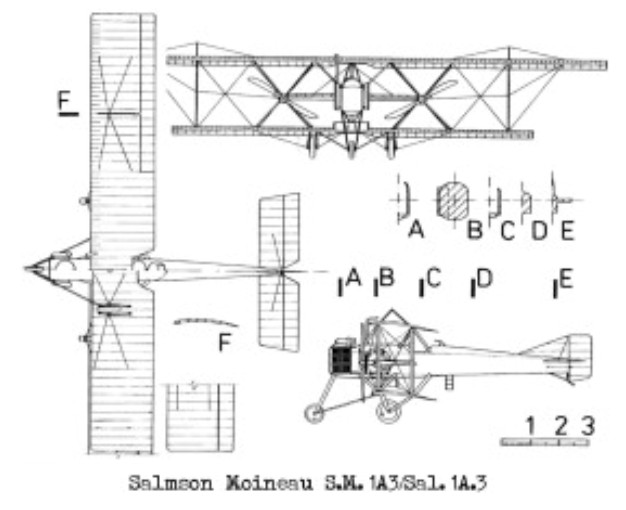
In late 1915 Salmson turned to airplane construction. The Salmson company’s first entry into aircraft design came with the 1916 Salmson-Moineau S.M. 1. The S.M.1 A3 (later re-designated Salmson Sal. 1 A3) was developed by René Moineau for the Salmson company from 1915 to meet the French military A3 specification, which called for a three-seat long range reconnaissance aircraft with strong defensive armament. The S.M.1 was unconventional, powered by a single Salmson 9A liquid-cooled radial engine mounted in the fuselage powering two airscrews mounted between the wings with a system of gears and drive shafts. This layout was chosen by Moineau to minimise drag. The twin airscrew layout allowed a wide field of fire for the two gunner-observers, one seated in the nose and one behind the pilot. Both gunners operated ring-mounted flexible 37 mm APX cannon built by Arsenal Puteaux. The airframe itself was relatively conventional, the boxy fuselage mounted on a system of struts between the wings. The undercarriage included a nose wheel, intended solely to prevent the aircraft nosing over, and a tail skid.
One aircraft may have been fitted experimentally with a Salmson (Canton-Unne) P.9 engine. A single S.M.2 S2 aircraft, with an additional Salmson 9A engine in the nose driving a conventional tractor airscrew, was tested with poor results, due to inadequate engine cooling, in 1918.
The aircraft was tested in early 1916 and was sufficiently successful to receive an order for 100 aircraft although the performance was inferior to the Sopwith 1½ Strutter. In service the S.M.1 was not successful. The nose-wheel undercarriage would collapse if misused and this caused many accidents. The complicated transmission system was difficult to service in the field and the performance of the aircraft was poor. It appears that around 155 S.M.1s were built in total. The type was largely withdrawn from service in 1917 but a small number of aircraft remained in use until late 1918. Some S.M.1s were supplied to the Imperial Russian Air Service, but they were no better liked in Russia.
Variants
S.M.1 A3
The production 3-seat reconnaissance aircraft, powered by a single Salmson 9A2c radial engine laterally mounted in the fuselage driving two propellers via shafts and gearboxes.
S.M.2 S2
An enlarged S.M.1, for the S2 2-seater ground attack role, with extended upper wings with additional bracing, reinforced undercarriage and a second Salmson 9A2c in the nose driving a 2-bladed tractor propeller directly.
Specifications:
S.M.1 A3
Engine: 1 × Salmson 9A2c, 180 kW (240 hp)
Propellers: 2-bladed fixed pitch propellers, one each side driven by shafts via gearboxes
Wingspan: 17.475 m (57 ft 4 in)
Wing area: 70 m2 (750 sq ft)
Length: 10 m (32 ft 10 in)
Height: 3.8 m (12 ft 6 in)
Gross weight: 2,050 kg (4,519 lb)
Crew: 3
Endurance: 3 hours
After their successful water-cooled radial engines, developed from 1908 to 1918, Salmson changed their focus to air-cooling to reduce weight and increase specific power (power per unit weight). The majority of the engines produced by Salmson were of radial type with a few other arrangements such as the Salmson T6.E. In common with other engines produced by this manufacturer, the air-cooled radial engines featured the unorthodox Canton-Unné internal arrangement that dispensed with a master rod in favour of a cage of epicyclic gears driving the crankpin. Built from 1920, production ended in 1951 with the liquidation of the manufacturing company.
In common with several other French aero-engine manufacturers Salmson named their engines with the number of cylinders then a series letter in capitals followed by variant letters in lower-case.
18 AB
Type: 18-cyl 2-row radial
Bore: 125 mm (4.921 in)
Stroke: 180 mm (7.087 in)
Capacity: 39.76 l (2,426.30 cu in)
Power: 410.1 kW (550 hp) at 1,700rpm
18 ABs
Type: 18-cyl 2-row radial
Bore: 125 mm (4.921 in)
Stroke: 180 mm (7.087 in)
Capacity: 39.76 l (2,426.30 cu in)
Power: 484.7 kW (650 hp) at 1,700rpm
18 Cm
18 Z
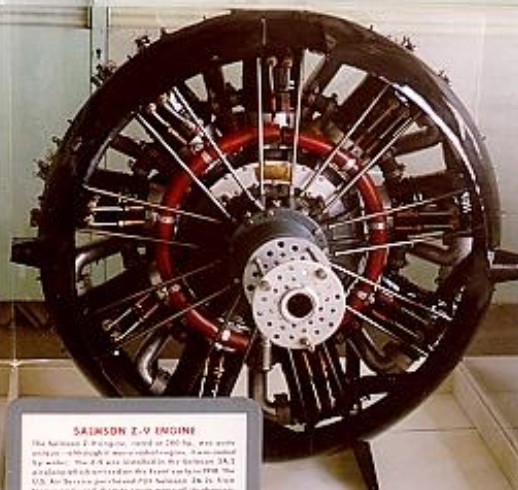
Henri Salmson, a manufacturer of water pumps, was engaged by Georges Marius Henri-Georges Canton and Pierre Unné, a pair of Swiss engineers, to produce engines to their design. First run in 1908, their initial efforts were on barrel engines, but these failed to meet expectations due to low reliability and high fuel consumption caused by internal friction.
A new design, a 7-cylinder water-cooled radial design, was then developed by Canton and Unné. This was expanded to produce 9-cylinder models, and also two-row 14-cylinder and 18-cylinder engines. By 1912 the Salmson A9 was producing around 120 brake horsepower; while competitive with rival designs from French companies, Salmson, Canton and Unné decided to develop more powerful engines as their rivals were concentrating on engines of lower power.
The engines were produced at Société des Moteurs Salmson’s factory at Billancourt, which was expanded during the First World War, and a second factory was opened at Villeurbanne. The Salmson-(Canton-Unne) series of water-cooled engines were also built by licensees in Russia and in Great Britain at the Dudbridge Iron Works Limited at Stroud in Gloucestershire between 1914 and 1918.
Salmson produced the series from 1908 until 1920.
Applications:
Aircraft powered by Salmson water cooled engines included:
Anatra DS
Besson H-5
Blackburn type L
Bréguet U2
Breguet 14 prototype
Caudron C.23
Farman HF.27
Farman 60
Hanriot HD.3
Hanriot H.26
Kennedy Giant
Lebed 12
Salmson-Moineau S.M.1
Salmson-Moineau S.M.2
Salmson-Moineau 2A2
Salmson 2 Berline
Salmson 2A2
Short S.74
Short type 135
Short type 166
Short type 830
Voisin Triplane
Voisin LA 3
Voisin LA 5
Sopwith Bat Boat II
Sopwith type C
Sopwith type 860
Vickers Vimy prototype
Wight Navyplane
Specifications:
Salmson A
Configuration: 2 x 7-cyl barrel
Year: 1908
Bore: 75 mm (2.953 in)
Stroke: 125 mm (4.921 in)
Capacity: 7.7 l (469.88 cu in)
Power: 37.285 kW (50 hp) at 800rpm
Barrel engine 1 built bench tests only
Salmson B
Configuration: 2 x 7-cyl barrel
Year: 1910
Bore: 75 mm (2.953 in)
Stroke: 125 mm (4.921 in)
Capacity: 7.7 l (469.88 cu in)
Power: 37.285 kW (50 hp) at 800rpm
1 built bench tests only -water cooled.
Salmson C
Configuration: 2 x 7-cyl barrel
Year: 1910
Bore: 85 mm (3.346 in)
Stroke: 95 mm (3.740 in)
Capacity: 8 l (488.19 cu in)
Power: 44.74 kW (60 hp) at 1100rpm
1 built with rotary inlet valves – water-cooled.
Salmson D
Configuration: 2 x 7-cyl barrel
Year: 1910
Bore: 85 mm (3.346 in)
Stroke: 95 mm (3.740 in)
Capacity: 8 l (488.19 cu in)
Power: 44.74 kW (60 hp) at 1100rpm
1 built with rotary inlet valves – water-cooled.
Salmson E
Configuration: 2 x 9-cyl barrel
Year: 1911
Bore: 110 mm (4.331 in)
Stroke: 130 mm (5.118 in)
Capacity: 22 l (1,342.52 cu in)
Power: 55.93 kW (75 hp)
1 built – timed valves – water cooled.
Salmson F
Configuration: 2 x 9-cyl barrel
Year: 1911
Bore: 110 mm (4.331 in)
Stroke: 130 mm (5.118 in)
Capacity: 22 l (1,342.52 cu in)
Power: 55.93 kW (75 hp) at 1200 rpm
1 built – timed valves – water cooled.
Salmson K
Configuration: 2 x 7-cyl barrel
Year: 1912
Bore: 85 mm (3.346 in)
Stroke: 105 mm (4.134 in)
Capacity: 11 l (671.26 cu in)
Power: 63.4 kW (85 hp) at 1200 rpm
1 built – automatic inlet valves – water cooled
Salmson A7
Configuration: 7-cyl radial
Year: 1911
Bore: 120 mm (4.724 in)
Stroke: 140 mm (5.512 in)
Capacity: 11 l (671.26 cu in)
Power: 59.65 kW (80 hp) – 74.57 kW (100 hp)
5 built for bench testing – water cooled
Salmson A9
Configuration: 9-cyl radial
Year: 1912
Bore: 122 mm (4.803 in)
Stroke: 140 mm (5.512 in)
Capacity: 14.73 l (898.88 cu in)
Power: 82 kW (110 hp) – 96 kW (130 hp)
30 built – certified to 47 hours running by 1914
Salmson C9
Configuration: 9-cyl radial
Year: 1912
Bore: 150 mm (5.906 in)
Stroke: 180 mm (7.087 in)
Capacity: 28.63 l (1,747.11 cu in)
Power: 223.7 kW (300 hp)
1 built for testing
Salmson M7
Configuration: 7-cyl radial
Year: 1913
Bore: 122 mm (4.803 in)
Stroke: 140 mm (5.512 in)
Capacity: 11.5 l (701.77 cu in)
Power: 74 kW (100 hp) – 85.75 kW (115 hp)
50 built for bench testing – water cooled
Salmson 2M7
Configuration: 14-cyl 2-row radial
Year: 1913
Bore: 122 mm (4.803 in)
Stroke: 140 mm (5.512 in)
Capacity: 23 l (1,403.55 cu in)
Power: 149.1 kW (200 hp) at 1300rpm
Water-cooled – 15 built in France 300 built in Great Britain.
Powered the Kennedy Giant, Short Type 166, Sopwith Bat Boat II, Sopwith Type C, Sopwith Type 860 and Wight Navyplane.
Salmson 2A9
Configuration: 18 cyl 2-row radial
Year: 1913
Bore: 122 mm (4.803 in)
Stroke: 140 mm (5.512 in)
Capacity: 29.46 l (1,797.76 cu in)
Power: 233.7 kW (313 hp) at 1500rpm
1 built for bench testing – water cooled
Salmson B9
Configuration: 9-cyl radial
Year: 1913
Bore: 122 mm (4.803 in)
Stroke: 140 mm (5.512 in)
Capacity: 14.73 l (898.88 cu in)
Power: 104.4 kW (140 hp)
Water cooled – 106 built in Great Britain, 300 built in France.
Powered the Short Type 135, Short S.74, Short Type 830 and Voisin LA 5
Salmson M9
Configuration: 9-cyl radial
Year: 1914
Bore: 122 mm (4.803 in)
Stroke: 140 mm (5.512 in)
Capacity: 14.73 l (898.88 cu in)
Power: 89.48 kW (120 hp) – 96.94 kW (130 hp)
Water cooled – 500 built in France.
Powered the Voisin LA 3, Bréguet U2, Blackburn Type L, Breguet 14 prototype.
Salmson P9
Configuration: 9-cyl radial
Year: 1915
Bore: 122 mm (4.803 in)
Stroke: 140 mm (5.512 in)
Capacity: 14.73 l (898.88 cu in)
Power: 111.85 kW (150 hp)
Water cooled – 300 built in France, 300 built in Russia.
Powered the Voisin type LA 5 and Farman HF.27
Salmson R9
Configuration: 9-cyl radial
Year: 1915
Bore: 125 mm (4.921 in)
Stroke: 140 mm (5.512 in)
Capacity: 15.46 l (943.43 cu in)
Power: 111.85 kW (150 hp) – 119.3 kW (160 hp) at 1300rpm
Water cooled – 50 built in France, 300 built in Russia.
Powered the Lebed 12, Anatra DS, and Salmson-Moineau (1917) prototype
Salmson 9Z
Configuration: 9-cyl radial
Year: 1917
Bore: 125 mm (4.921 in)
Stroke: 170 mm (6.693 in)
Capacity: 18.7 l (1,141.14 cu in)
Power: 186.4 kW (250 hp) at 1400rpm
Water cooled – 3000 built in France, 56 built in Great Britain.
Powered the Salmson 2A2, Farman 60, Voisin Triplane, Caudron C.23 and Vickers Vimy prototype
Salmson 9Za
Variant of the 9Z, powered the Hanriot HD.3
Salmson 9Zm
Variant of the 9Z
Salmson 9Zc
Variant of the 9Z
Salmson CM.9
Power: 194 kW (260 hp)
powered the Salmson 2 Berline
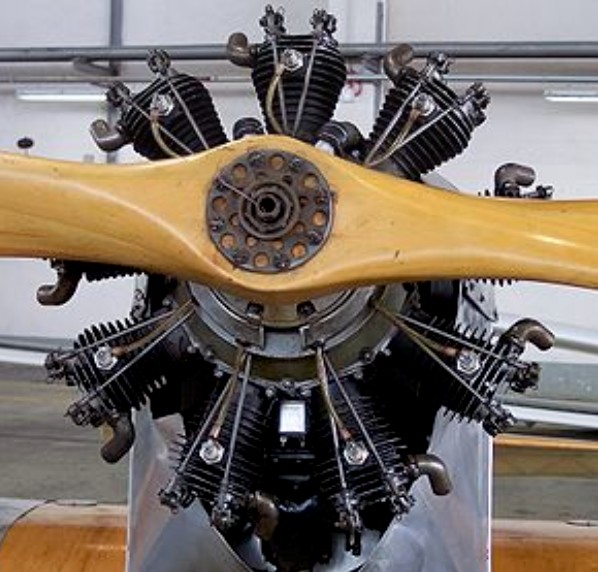
After their successful water-cooled radial engines, developed from 1908 to 1918, Salmson changed their focus to air-cooling to reduce weight and increase specific power (power per unit weight). The majority of the engines produced by Salmson were of radial type with a few other arrangements such as the Salmson T6.E. In common with other engines produced by this manufacturer, the air-cooled radial engines featured the unorthodox Canton-Unné internal arrangement that dispensed with a master rod in favour of a cage of epicyclic gears driving the crankpin. Built from 1920, production ended in 1951 with the liquidation of the manufacturing company.
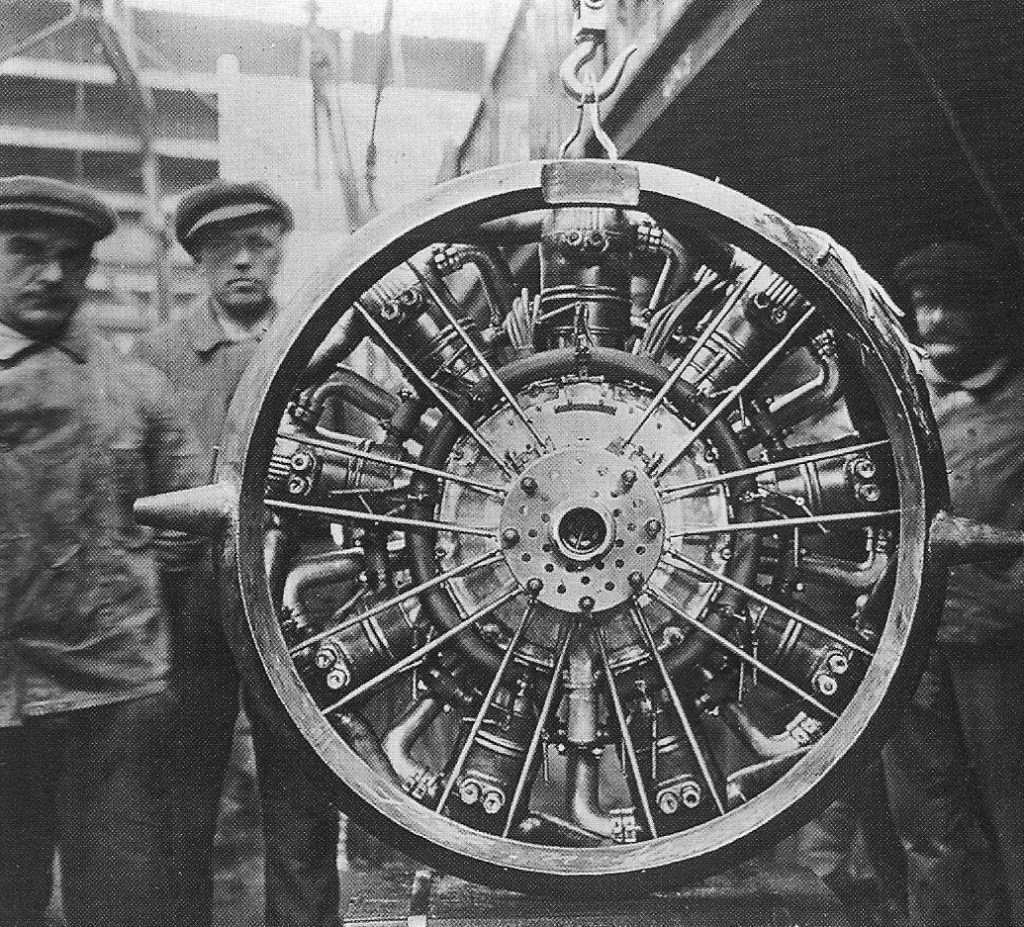
In common with several other French aero-engine manufacturers Salmson named their engines with the number of cylinders then a series letter in capitals followed by variant letters in lower-case.
The 3,7 and 9 cylinder Salmsons were license built in Great Britain, during the 1920s and 1930s, by the British Salmson engine company as the British Salmson AD.3, British Salmson AC.7, British Salmson AC.9, and British Salmson AD.9.
British Salmson aero-engines refers to a series of small French designed, air-cooled radial aero engine that were produced by British Salmson, under license from Société des Moteurs Salmson, in Great Britain during the late 1920s and 1930s.
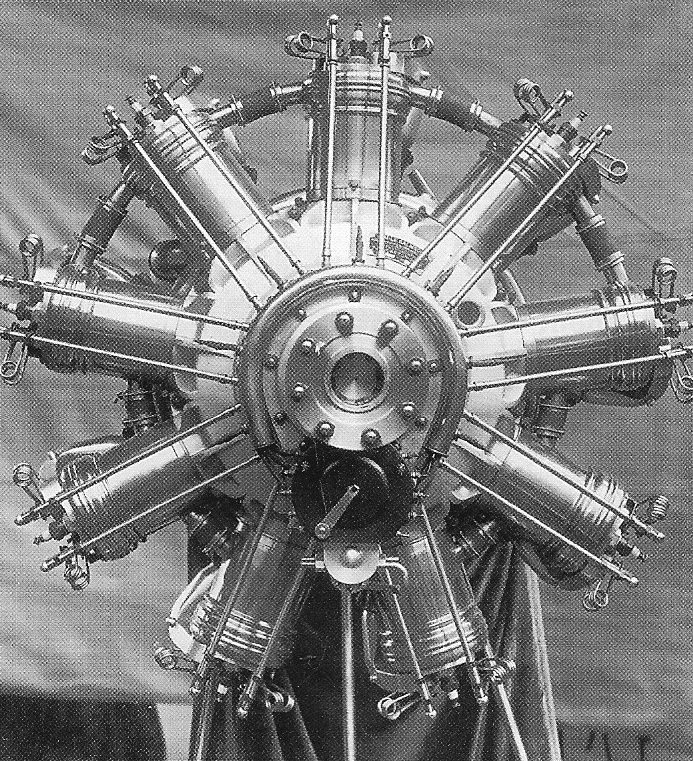
Due to the fact, that the relatively low power was divided among several cylinders, the running of the engines was particularly smooth, and the torque was very even. Adding to the smooth running of these engines was the use of the Canton-Unne system of planetary gears in a cage connecting pistons to crank-pin.

Unit price in 1929 was £175.
Variants:
AD.3
Three cylinder license production of the Salmson 3 Ad
AC.7
105 horsepower (78 kW) seven cylinder radial, capacity 7.15 litres (436 cu in)
AC.9
135 horsepower (101 kW) nine cylinder radial, capacity 9.2 litres (560 cu in)
AD.9
50 horsepower (37 kW) at 2000 rpm (normal power) or 55 horsepower (41 kW) at 2200 rpm (maximum power). Bore of 70 mm.
AD.9R
70 horsepower (52 kW), geared version of AD.9 with increased bore of 73 mm and increased compression ratio (6:1).
AD.9NG
203 horsepower (151 kW), increased bore and stroke. (100 x 140 mm, 10 L capacity).
9 AD
The standard production model with LH rotation direct drive.
9 ADb
British Salmson AD.9
Production of the Salmson 9AD in Great Britain by the British Salmson Company at New Malden, Surrey.
British Salmson A.D.9R srsIII
The A.D.9 with a 0.5:1 reduction gear
Applications:
AD.9
Angus Aquila
BA Swallow
Comper Swift
Boulton Paul P.41 Phoenix
General Aircraft Monospar
Hafner Revoplane
Hinkler Ibis
Parmentier Wee Mite
AD.9R
Arpin A-1
AD.9NG
Cierva C.40
Specifications:
9 AB
Type: Nine-cylinder single-row supercharged air-cooled radial engine
Bore: 125 mm (4.92 in)
Stroke: 170 mm (6.69 in)
Displacement: 18.765 l (1,145 cu.in)
Length: 1,000 mm (39.37 in)
Diameter: 1,180 mm (46.46 in)
Dry weight: 265 kg (584 lb)
Valvetrain: Two overhead valves per cylinder
Supercharger: Single-speed centrifugal type supercharger
Fuel system: Zenith 42D carburetor
Cooling system: Air-cooled
Power output: 191 kW (256 hp) at 1,780 rpm for takeoff
Specific power: 10.18 kW/l (0.22 hp/cu.in)
Compression ratio: 5:1
Specific fuel consumption: 328 g/(kW•h) (0.54 lb/(hp•h))
Oil consumption: 19 g/(kW•h) (0.49 oz/(hp•h))
Power-to-weight ratio: 0.72 kW/kg (0.44 hp/lb)
9 Aba
9 ABc
Power: 172 kW (230 hp)
9 AC
Type: 9-cyl radial
Bore: 100 mm (3.937 in)
Stroke: 130 mm (5.118 in)
Capacity: 9.189 l (560.75 cu in)
Power: 96.94 kW (130 hp) at 1,800rpm
9AD
Type: 9-cyl radial
Bore: 70 mm (2.756 in)
Stroke: 86 mm (3.386 in)
Capacity: 2.979 l (181.79 cu in)
Power: 33.56 kW (45 hp) at 2,000rpm
Dry weight: 68 kg (150 lb)
9 ADb
Type: 9-cyl radial
Bore: 70 mm (2.756 in)
Stroke: 86 mm (3.386 in)
Capacity: 2.979 l (181.79 cu in)
Power: 41 kW (55 hp) at 2,200rpm
9 ADr
Type: 9-cyl radial
Bore: 70 mm (2.756 in)
Stroke: 86 mm (3.386 in)
Capacity: 2.979 l (181.79 cu in)
Power: 48.5 kW (65 hp) at 2,700rpm
9 Az
9 A2c
9 M
9 NA
Type: 9-cyl radial
Bore: 140 mm (5.512 in)
Stroke: 160 mm (6.299 in)
Capacity: 22.140 l (1,351.07 cu in)
Power: 246 kW (330 hp) at 1,800rpm
9 NAs
Type: 9-cyl radial
Bore: 140 mm (5.512 in)
Stroke: 160 mm (6.299 in)
Capacity: 22.14 l (1,351.07 cu in)
Power: 41 kW (55 hp) at 1,800rpm
9 NC
Type: 9-cyl radial
Bore: 100 mm (3.937 in)
Stroke: 140 mm (5.512 in)
Capacity: 9.9 l (604.14 cu in)
Power: 111.85 kW (150 hp) at 1,800rpm
9 NCt
Type: 9-cyl radial
Bore: 100 mm (3.937 in)
Stroke: 140 mm (5.512 in)
Capacity: 9.9 l (604.14 cu in)
Power: 126.77 kW (170 hp) at 1,800rpm
9 Nd
131 kW (175 hp)
9 P
9 Y
British Salmson AD.9
Type: Nine-cylinder, single-row, air-cooled radial engine
Bore: 70 mm (2.8 in)
Stroke: 86 mm (3.4 in)
Displacement: 2,979 cm3 (181.8 cu in)
Diameter: 686 mm (27.0 in)
Dry weight: 70 kg (150 lb)
Valvetrain: Two overhead valves per cylinder, pushrod operated
Fuel system: Claudel carburettor
Oil system: Pressure lubrication
Cooling system: Air-cooled
Reduction gear: Direct drive
Power output: 37 kW (50 hp) at 2,000 rpm
Compression ratio: 5.6:1
Power-to-weight ratio: 0.42 kW/kg (0.26 hp/lb)
8 As
After their successful water-cooled radial engines, developed from 1908 to 1918, Salmson changed their focus to air-cooling to reduce weight and increase specific power (power per unit weight). The majority of the engines produced by Salmson were of radial type with a few other arrangements such as the Salmson T6.E. In common with other engines produced by this manufacturer, the air-cooled radial engines featured the unorthodox Canton-Unné internal arrangement that dispensed with a master rod in favour of a cage of epicyclic gears driving the crankpin. Built from 1920, production ended in 1951 with the liquidation of the manufacturing company.
The 3,7 and 9 cylinder Salmsons were license built in Great Britain, during the 1920s and 1930s, by the British Salmson engine company as the British Salmson AD.3, British Salmson AC.7, British Salmson AC.9, and British Salmson AD.9.
In common with several other French aero-engine manufacturers Salmson named their engines with the number of cylinders then a series letter in capitals followed by variant letters in lower-case.
7 AC
Type: 7-cyl radial
Bore: 100 mm (3.937 in)
Stroke: 130 mm (5.118 in)
Capacity: 7.150 l (436.32 cu in)
Power: 41 kW (55 hp) at 1,800rpm
7 Aca
7 Aq
7 M
7 Om
6 Ad
6 TE
6 TE.S
After their successful water-cooled radial engines, developed from 1908 to 1918, Salmson changed their focus to air-cooling to reduce weight and increase specific power (power per unit weight). The majority of the engines produced by Salmson were of radial type with a few other arrangements such as the Salmson T6.E. In common with other engines produced by this manufacturer, the air-cooled radial engines featured the unorthodox Canton-Unné internal arrangement that dispensed with a master rod in favour of a cage of epicyclic gears driving the crankpin. Built from 1920, production ended in 1951 with the liquidation of the manufacturing company.
In common with several other French aero-engine manufacturers Salmson named their engines with the number of cylinders then a series letter in capitals followed by variant letters in lower-case.
5 Ac
5 Ap-01
5Aq-01
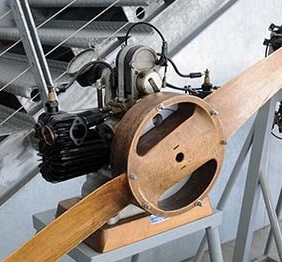
After their successful water-cooled radial engines, developed from 1908 to 1918, Salmson changed their focus to air-cooling to reduce weight and increase specific power (power per unit weight). The majority of the engines produced by Salmson were of radial type with a few other arrangements such as the Salmson T6.E. In common with other engines produced by this manufacturer, the air-cooled radial engines featured the unorthodox Canton-Unné internal arrangement that dispensed with a master rod in favour of a cage of epicyclic gears driving the crankpin. Built from 1920, production ended in 1951 with the liquidation of the manufacturing company.
The 3,7 and 9 cylinder Salmsons were license built in Great Britain, during the 1920s and 1930s, by the British Salmson engine company as the British Salmson AD.3, British Salmson AC.7, British Salmson AC.9, and British Salmson AD.9.
In common with several other French aero-engine manufacturers Salmson named their engines with the number of cylinders then a series letter in capitals followed by variant letters in lower-case.
3 Ad

