Schuass-Lampman Sport

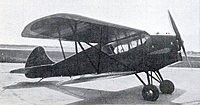
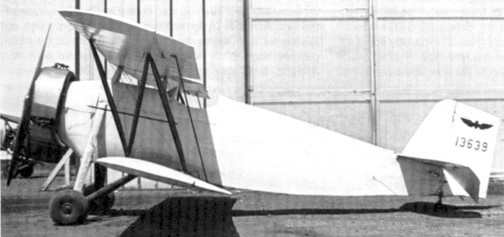
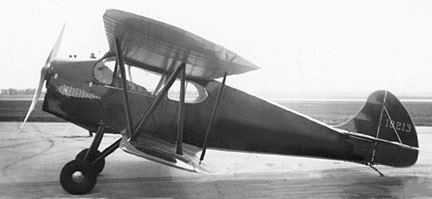
Schauss-Lampman Sport N18213

The 1935 Schauss-Lampman Sport was designed and built by Ed Lampman and Al Schauss as a two-place cabin biplane, powered by an 85hp Ford V-8 engine. Fitted with truss wing struts, it was registered N18213, the maximum speed was 120 mph and cruise was 105 mph.

There was a plan to put a few into production but the financial backer passed away and the plan stalled.

It was rebuilt in 1937 as a three-seater powered by an 85hp LeBlond engine.

It was destroyed in a fire by vandals.

Schuass 1931 Parasol monoplane

Designed and built by Al Schauss in 1931, the two place, open cockpit high wing monoplane was scratch-built with no prior knowledge or experience (even the hand-carved propeller).

This was also the parasol in which Schauss learned to fly (after its test flight by flight instructor Wally Neuman). Powered by a 120hp Salmson 9 engine and registered N10599, it was destroyed in a hangar fire.

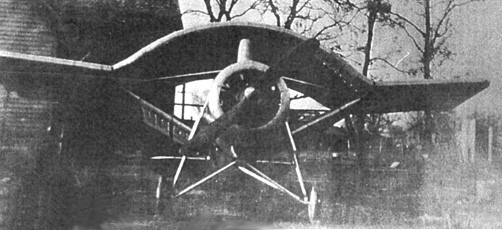
Schad 1927 monoplane

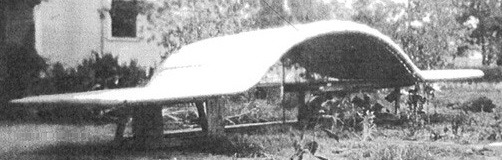
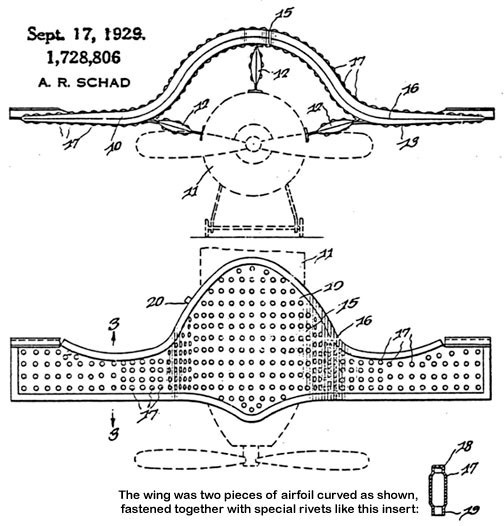
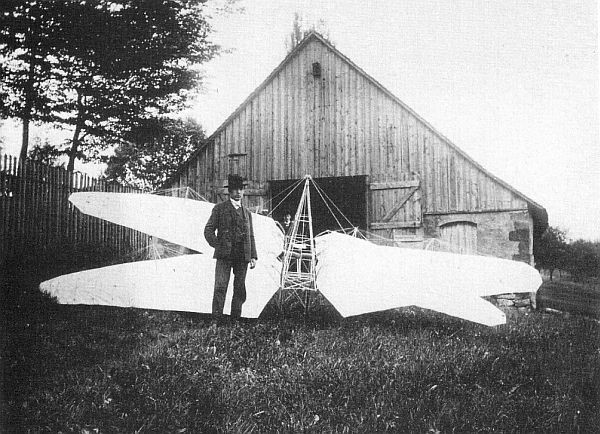
Built by German emigrate Schad, with partners Stacy Ashcraft, J C Bradley, Oscar Ford, Joe Kavecki, and (Mrs) A T Quattlebaum, to prove his unique, patented (#1,728,806) wing design based on Schad’s research, as a baker-turned-boilermaker, of tubular strengths.

Built circa 1927, the aircraft was a single-place with a steel-tube frame covered with dural, with a war-surplus 80hp Le Rhône rotary engine.

The construction site was Schad’s back yard and the date of the first flight is unknown, but the pilot was Cal Murray. It was flown successfully by Schad and others from Cleburne’s Bluebonnet golf course and, later, Meacham Field, where on its second flight there the tail was broken. Unable to afford a much-needed more powerful engine, no repair was made on the plane and it was stored on a farm, finally dismantled and sold for scrap in 1941.

In 1942 the US government purchased the 1929 patent for possible use in the war, but what if anything came from it is unknown, as are data and performance specs for the ship.
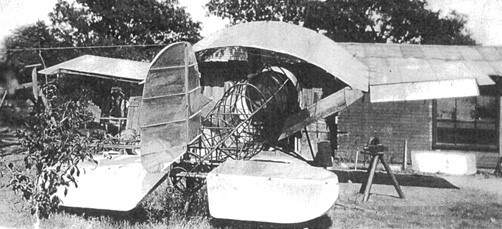
Scanlan SG-1

SG-1A

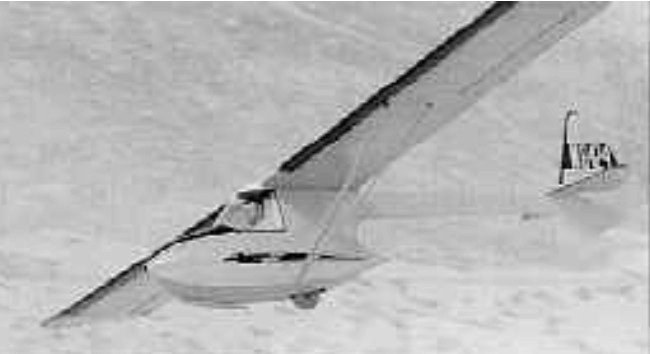
Designed by Thomas W. Scanlan, the SG-1A was designed and built in 1970 as an inexpensive, easy-to-build ship with gentle flight characteristics. No special jigs or tools are required other than a welding rig and common hand tools. The boom-and pod design, which has been static load tested to 9g without failure, features a strut-braced aluminum wing with upper- surface spoilers, a fixed wheel and a nose skid. While the prototype had constant chord, V-strutted wings; the A version has double-tapered wings with single struts. Structure: all-aluminum (spars, ribs and skin) wing; steel-tube, fabric-covered fuselage and tail.

Wing span: 12.19m / 40ft
Wing area: 11.61sq.m / 125sq.ft
Empty Weight: 136kg / 300lb
Payload: 113kg / 250lb
Gross Weight: 249kg / 550lb
Wing Load: 21.44kg /sq.m / 4.4lb/sq.ft
Aspect ratio: 15.4
Airfoil: Go 549 mod.
L/DMax:20 @ 89 kph / 48 kt / 55 mph
MinSink: 0.91 m/s / 3.0 fps / 1.78 kt
Seats: 1