Schmidtler Enduro

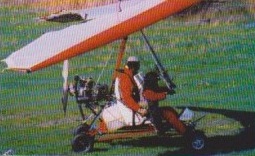
Enduro

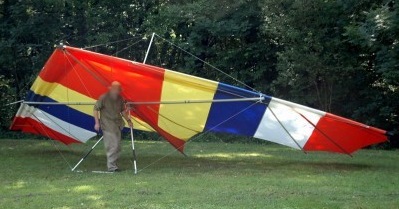
In 1998 Schmidtler was concentrating on trike production over hang gliders. The Enduro was flown mainly Air Creation wings.

The Enduro XC is a faired-in version for cross country flying.
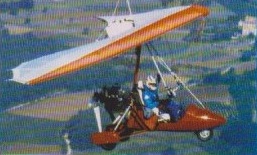
Enduro XC

Enduro
Empty weight: 155 kg
Wing span: 10 m
Wing area: 14 sq.m
Fuel capacity: 64 lt
Certification: Vz
Engine: Rotax 582, 65 hp
MAUW: 400 kg
Seats: 2
Max speed: 100 kph
Cruise speed: 65-95 kph
Minimum speed: 55 kph
Climb rate: 5 m/s
Fuel consumption: 10 lt/hr
Price (1998):

Enduro XC
Empty weight: 165 kg
Wing span: 10 m
Wing area: 14 sq.m
Fuel capacity: 64 lt
Certification: Vz
Engine: Rotax 582, 65 hp
MAUW: 400 kg
Seats: 2
Max speed: 100 kph
Cruise speed: 65-95 kph
Minimum speed: 55 kph
Climb rate: 5 m/s
Fuel consumption: 10 lt/hr

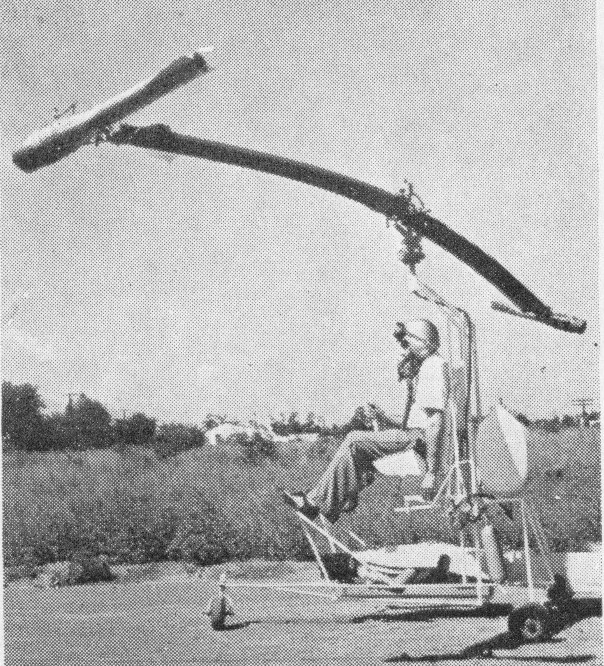
Schmidt Paracopter Model 2

A prototype built circa 1958 by George Schmidt, an engineer who was formerly with Focke-Achgelis in Germany. Designed primarily to rescue wounded from front-line areas: one stretcher can be carried beneath the pilot’s seat.

Power: 2 x 10⁵ lb Schmidt pulse-jets
Rotors: 2-blade tip-powered main
Rotor diameter: 17 ft 5 in
Loaded weight: 775 lb
Max. speed: 132 mph
Ceiling: 12,300 ft
Seats: 2

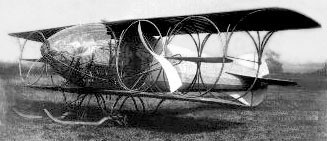
Schmidt / U S Aerial Navigation Co 1911 Biplane

A large, rounded, startlingly modern fuselage for its day, using what appears to be almost geodesic construction, with chain-driven twin tractor propellers.

During 1910 and 1911 this aircraft was built in a shop adjacent to Mineola Field NJ. The design was basically sound and the plane performed well beyond expectations. In Jan 1912, US Patent #596448 was granted to the aeroplane per notification from Munn & Co, Patent Attorneys, NYC.

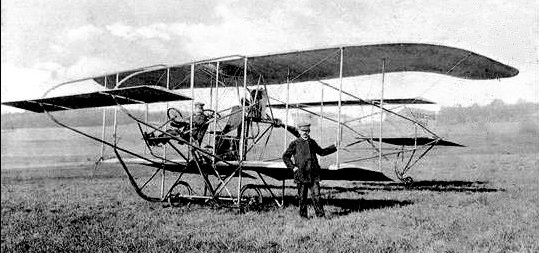
Schmelzenbach und Hollmann Halbdoppeldecker

This machine was tested in spring or summer 1911 at the flying ground Plauen-Reisig in Sachsen, Germany. It had a Taube-like top wing, a forward elevator, a chain driven pusher propeller and a small stabilizing plane on top the original tail-boom construction. According to Lange it was powered by a 65hp Hilz inline-4. There are thoughts that Schmelzenbach and Hollmann wanted to open a flying school and this plane was intended as a trainer, therefore being equipped with dual controls.

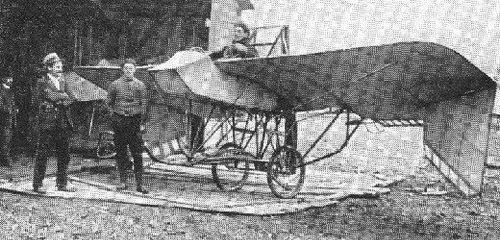
Schmaltz Eindecker

Ernst Schmalz, born 1879 in Nidau, Switzerland, in 1908 built with the help of Failloubaz, a pusher monoplane, powered by a 12 hp Anzani motor, with large ailerons he himself named “Stabiloklappen”. In flight tests at Thun he made jumps of up to a height of 6 meters. In 1909, Schmalz retired from flying. He sold his apparatus to a chauffeur, who collided with a tree top in flight tests on the Beundenfeld in Bern. Although the pilot remained intact, the aeroplane itself was a total loss.