C.L. Snyder’s flying-wing glider, Arup 1 Dirigiplane, was ultimately fitted with a Heath-Henderson motor.
Developed into the Arup S-2, or Snyder A-2
C.L. Snyder’s flying-wing glider, Arup 1 Dirigiplane, was ultimately fitted with a Heath-Henderson motor.
Developed into the Arup S-2, or Snyder A-2
1932:
Arup Inc
fdr: Cloyd L Snyder
231 Lincoln Way,
South Bend IN.
USA
Built the Arup S-2, S-3 and S-4 during 1933-35
Hilliard and Shoemaker bought the Herring-Burgess #3 in May 1910 as foundation for this company and modified it to an unknown extent as an exhibition craft.
This plane was most recently stored at NASM’s Silver Hill facility.
The company, as such, also flight-tested other Burgess airplanes, but no information was found about any specific production under the Arrowplane name.
1910:
Arrowplane Mfg Co / Arrowplane Co
fdrs: C F Dutch, William H Hilliard, Joseph Shoemaker, W E Timson)
Boston MA.
USA
Rebuilt the Herring-Burgess #3 in 1910
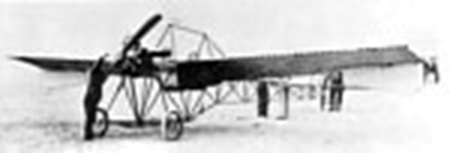
The 1911 Voisin-Bristol monoplane, designed and built by Freres Voisin in France, was all metal construction
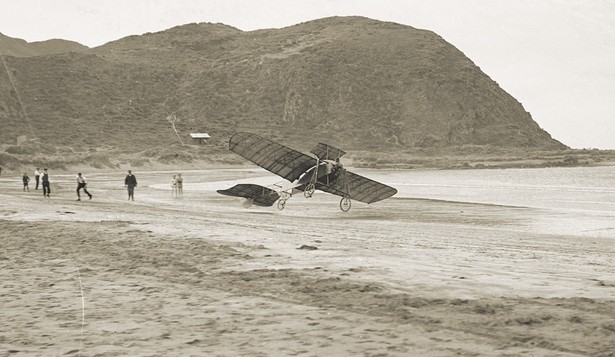
Arthur Schaef was a Wellington photographer who had a strong interest in machinery and motion. In 1909 he built a plane called Vogel, which is German for bird. But when he tried to take off the English engine lacked sufficient power.
Schaef’s friend, Percy Fisher, rebuilt the engine and finally, on 5 March 1911 at Lyall Bay, Wellington, New Zealand, Vogel flew.
Evening Post reporter, Charles Marris, was on hand to describe the historic moment:
“Schaef lifted the flier with his tailplane, and with graceful coordinated movement the main planes thrust upward, and the monoplane was afloat, about fifteen feet in the air. With wonderful stability the machine glided forward past the onlookers, who scattered when she rose, to settle down, bird-like, on the base some yards further on…”
Schaef’s flight was more of a long hop of 50 metres.
Back to Power Jets W.1
Back to EMBRAER EMB-121 Xingu

 All Aero