Back to Shorts SC-5/10 Belfast
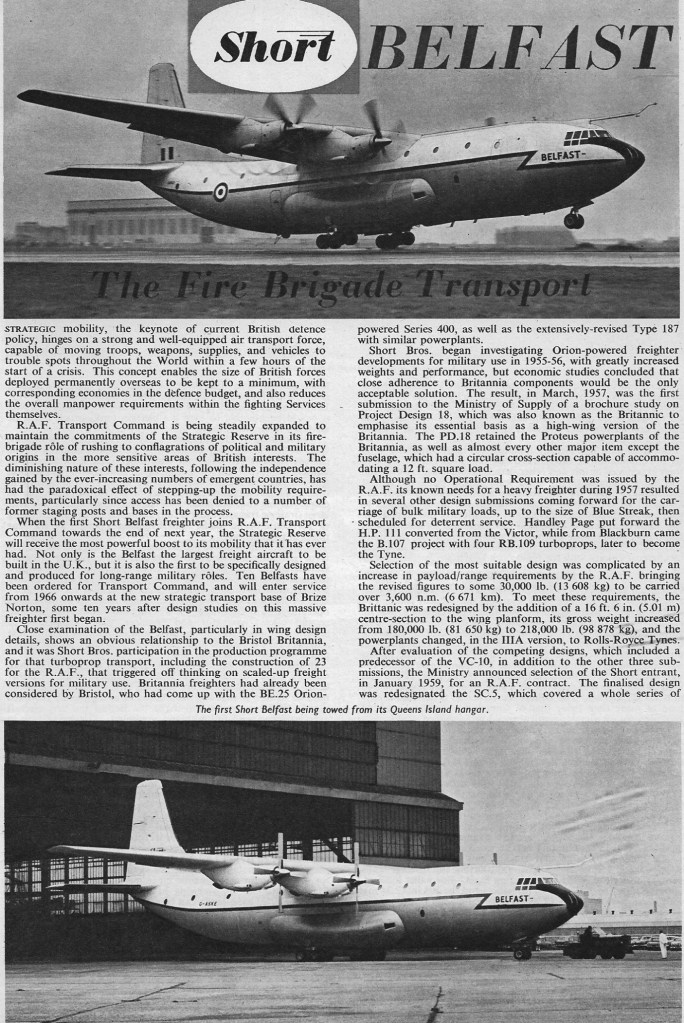
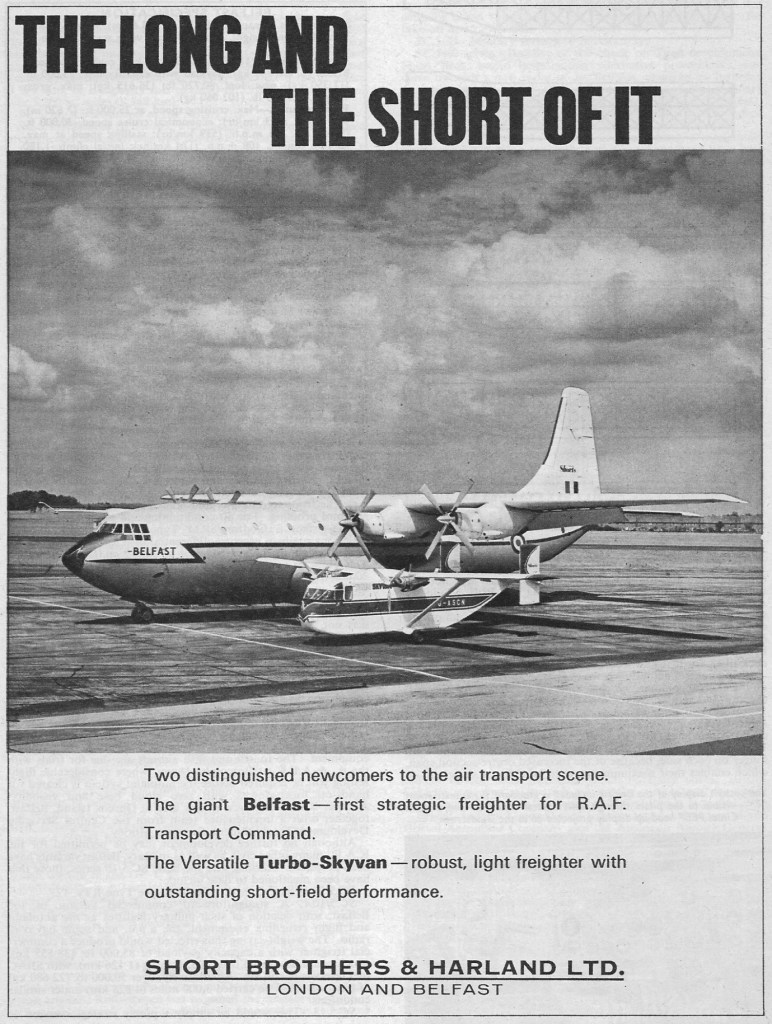


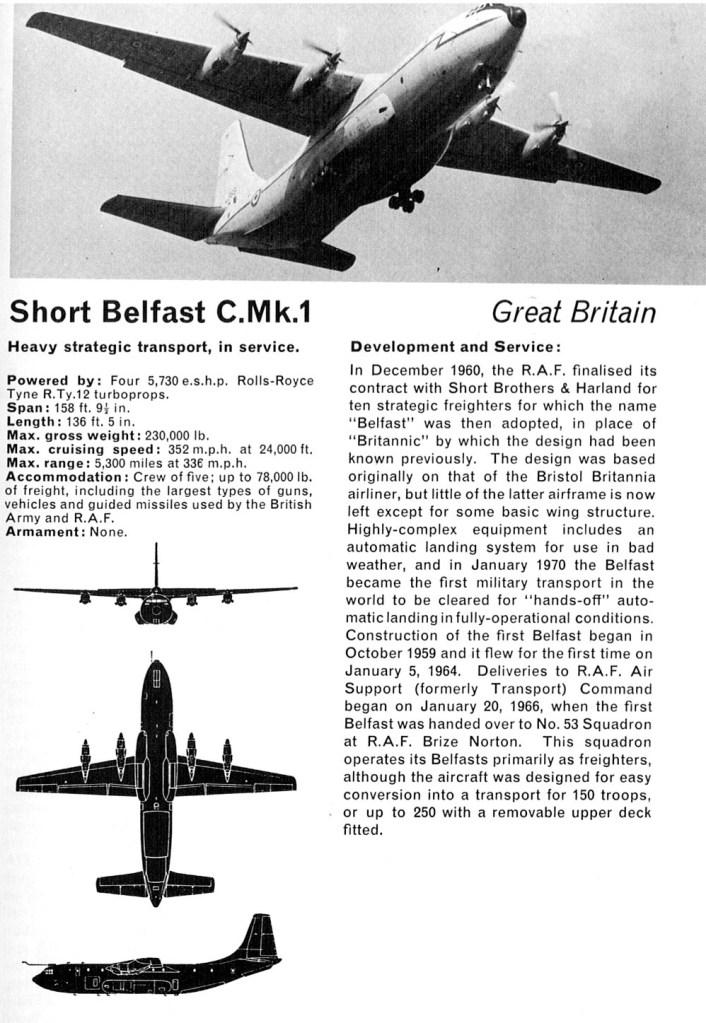
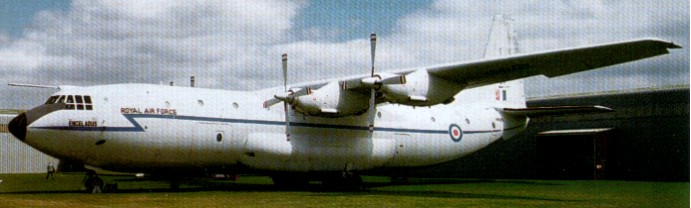
The Shorts Belfast was originally built for the RAF in the 1960s and although the manufacturer initiated a civil certification programme, of which approximately 65% was completed, this was cancelled due to apparent lack of interest displayed by commercial carriers at that time. The development of the Belfast was initially based upon that of the Bristol Britannia the design was for some time dubbed the Britannic, and the RAF finalised a contract for 10 of the type to serve in the strategic, heavy airlift role.
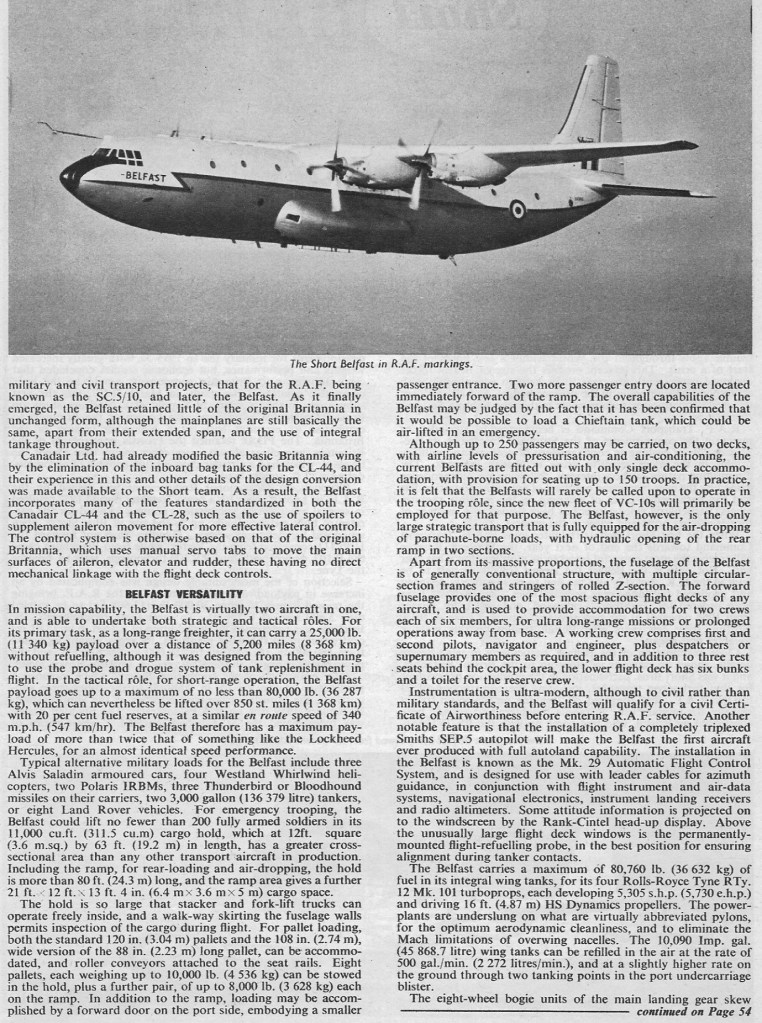
The aircraft eventually utilised only some of the Britannia’s basic wing structure. It was specifically designed for the carriage of heavy freight, including the largest types of guns, vehicles, guided missiles and other loads and had ‘beaver-tail’ rear loading doors capable of permitting the unhindered passage of any load that the fuselage could contain. As a troop transport it could carry 200 men, and was often used to carry helicopters overseas.
Following a development which spanned four years, the first Belfast made its maiden flight on 5 January 1964 and deliveries to the RAF commenced on 20 January 1966, when the first C.Mk l was handed over to No 53 Squadron at Brize Norton.
Shorts SC-5/10 Belfast Article
As a result of defence cuts at the end of 1976, the RAF phased out Belfast operations and, on 23 March 1977, Eurolatin Aviation concluded the purchase of the aircraft. At this stage in their career the Belfasts had flown 23 million nm without incident, averaging 8,000 flying hr/airframe. Of the original 10 aircraft, four were scrapped, one was destined for display with the RAF Museum and TAC HeavyLift had access to the other five.
On obtaining the aircraft, the airline completed an investigation to ascertain the outsanding conditions for Civil Aviation Authority (CAA) approval and following the go ahead decision for certification, they enrolled the aid of Marshalls of Cambridge to provide the design and flight test support for the Belfasts under the organisation’s existing CAA approvals. An independent engineering base at Southend airport was set up to carry out modifications required by the programme and to organise the management, identification, certifying and transport of spares for the fleet.
The Belfast civil certification programme involved a cost of over £4 million and included 120hr of flight testing; 20,000man/hr of design; 25,000man/hr of aircraft engineering; a complete assessment of all aircraft systems; civil certification of the Rolls Royce Tyne engine; production of civil maintenance schedules, flight operating and technical manuals; and design, manufacture and installation of modifications to the radio station, navigation equipment and the aircraft’s compulsory ‘black boxes’, cockpit voice recorder and flight data recorder. Additional tasks were the removal of both the Belfast’s RAF automatic landing system (the type became the first military transport in the World cleared for ‘hands¬off’ autolanding in fully operational conditions), and in flight refuelling equipment.
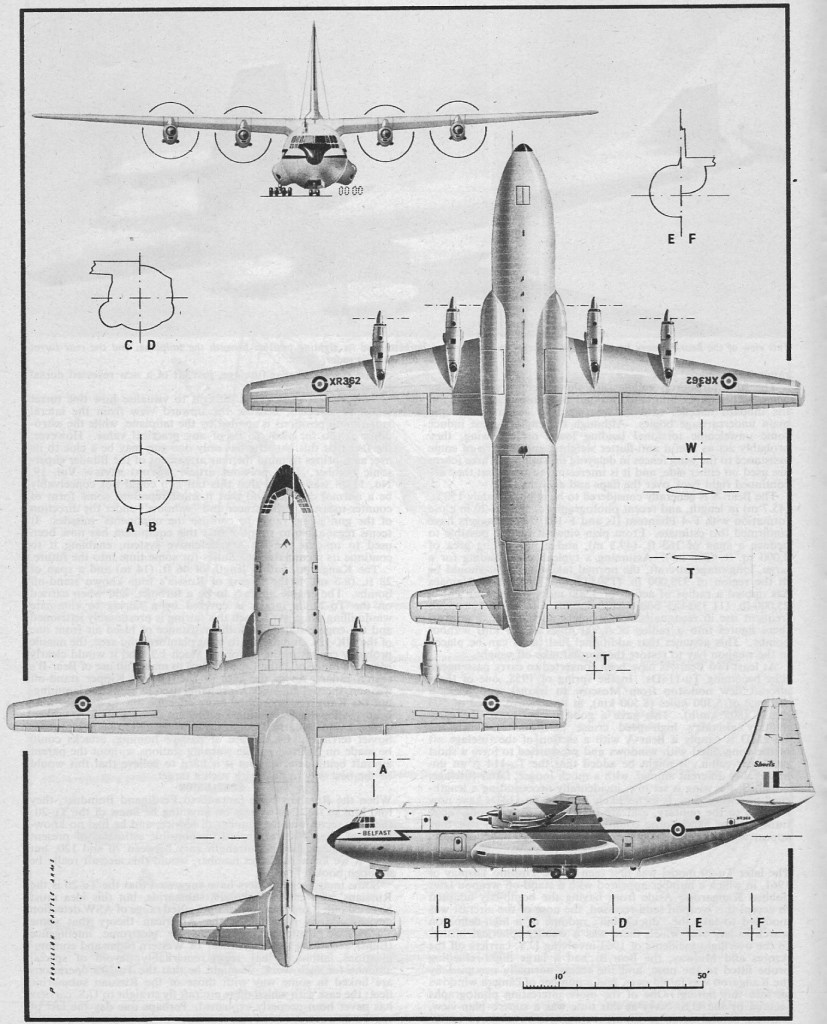
The dimensions and specifications of the Belfast are impressive and its hold has a volume of 11,000 cu.ft with a cross section minimum of 12ftx 12ft. It is capable of carrying up to 34 tons of freight although at this weight its range is a very limiting 700 800nm, and it has a cruising speed approaching 330mph.
Several aircraft operated with civil Heavylift Cargo Airlines at Stansted in Britain.
Short Belfast C 1
Engines: 4 x Rolls Royce Tyne RTy 12 Mk 101 turboprops, 5,730eshp / 4273kW
Length: 136ft 5in / 41.58 m
Height: 47ft / 14.33 m
Wing span: 158ft 10in / 48.4 m
Wing area: 2464.956 sq.ft / 229.0 sq.m
Max take off weight: 230050 lb / 104330.0 kg
Weight empty: 127023.4 lb / 57607.0 kg
Cruise with max payload: 275kts (510km/hr)
Service ceiling: 30003 ft / 9145 m
Cruising altitude: 23950 ft / 7300 m
Range w/max.fuel: 10200 km / 6338 miles
Range w/max.payload: 2000 km / 1243 miles
Max hold width: 16ft 1in
Max payload: 75,000 lb (34,000kg)
Capacity: 200 troops
Crew: 4-5

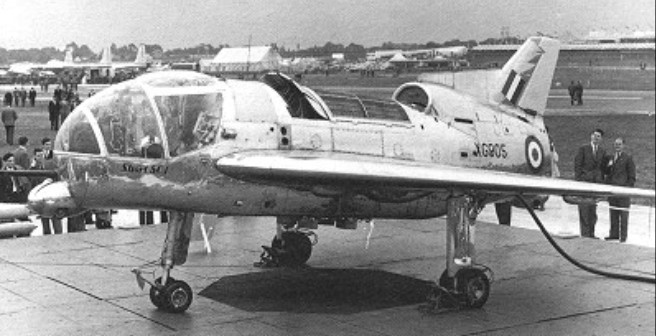
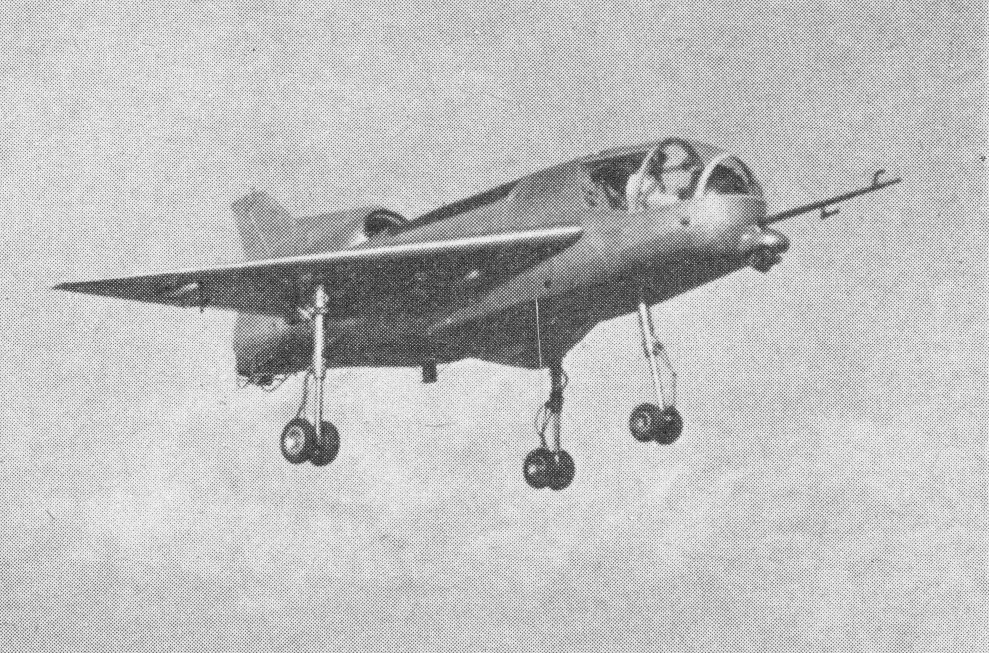
In 1953, the Ministry of Supply issued Specification ER.143 for a research aircraft which could take off vertically by jet lift, then accelerate forward into normal cruising flight.
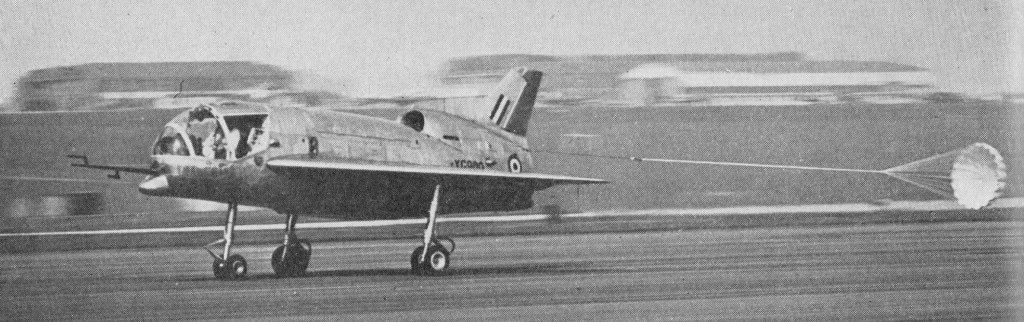
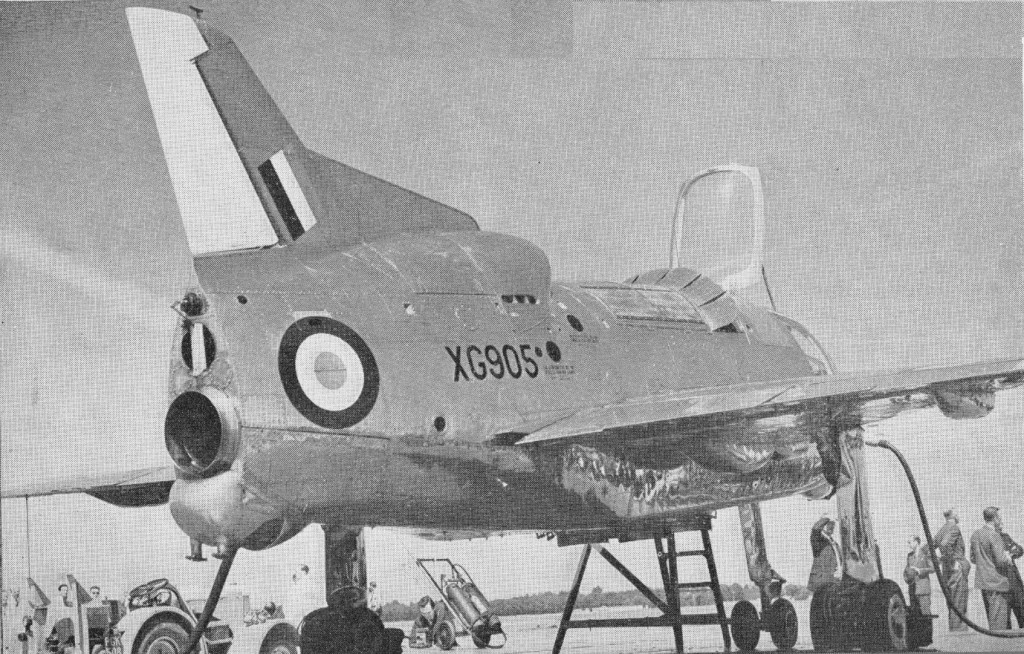
The SC. 1 was designed to study hover, transition and low-speed flight, and had a fixed landing gear. The Short SC. 1 was powered by four RB.108 lift engines vertically mounted on gimbals in the centre fuselage and one RB.108 cruise engine in the rear for forward flight. Bleeds from the four lift engines powered nose, tail and wing-tip reaction jets for control at low speeds.
The first conventional flight was made on 2 April 1957, first tethered vertical flight was on 26 May 1958, and first free vertical flight was on 25 October 1958. The first transition was on 6 April 1960.
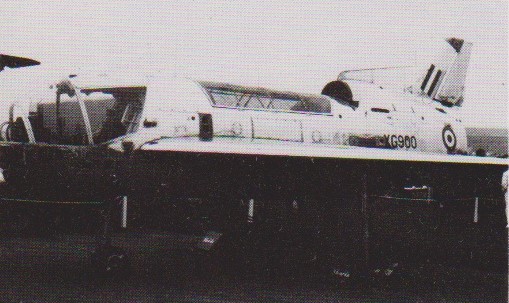
The SC.1 appeared at the Farnborough air show in 1960 and Paris air show in 1961 (for the latter it flew the English Channel both ways).
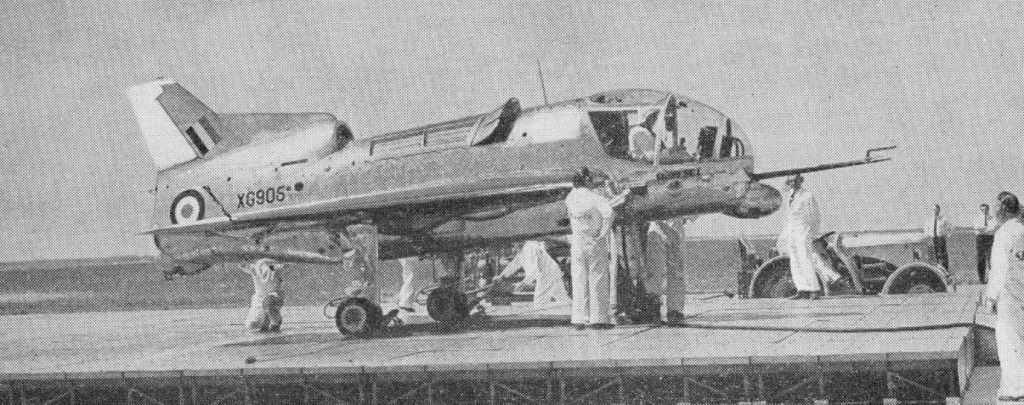
After first flying May 1958, the second Short SC.1 VTOL research aircraft (XG905) crashed at Sydenham airfield, Belfast, on October 2nd, 1960, the pilot, John R. Green, being killed. Equipped with a new auto stabiliser system with which it had begun tests on August 2nd, the SC.1 was hovering at an altitude of 50 ft (15.2 m) when control was lost, the aircraft turning over on hitting the ground. It was rebuilt and the two aircraft continued to fly.

James M. Patton, Jr was a research pilot at NASA Langley, and a guest of the Royal Aircraft Establishment at Bedford in August & September, 1971. He conducted 10 flights in SC-1 XG905 to obtain data pertinent to NASA VTOL research.
One was on display at the Ulster Folk and Transport Museum.
Engines: 4 x 965kg Rolls-Royce RB.108 lift engines and 1 x RB.108 cruise engine
Max take-off weight: 3650 kg / 8047 lb
Wingspan: 7.16 m / 24 ft 6 in
Length: 9.10 m / 30 ft 10 in
Max. speed: 396 km/h / 246 mph
Range: 240 km / 149 miles
Crew: 1

Back to Short SB.5
Back to Short SB.5
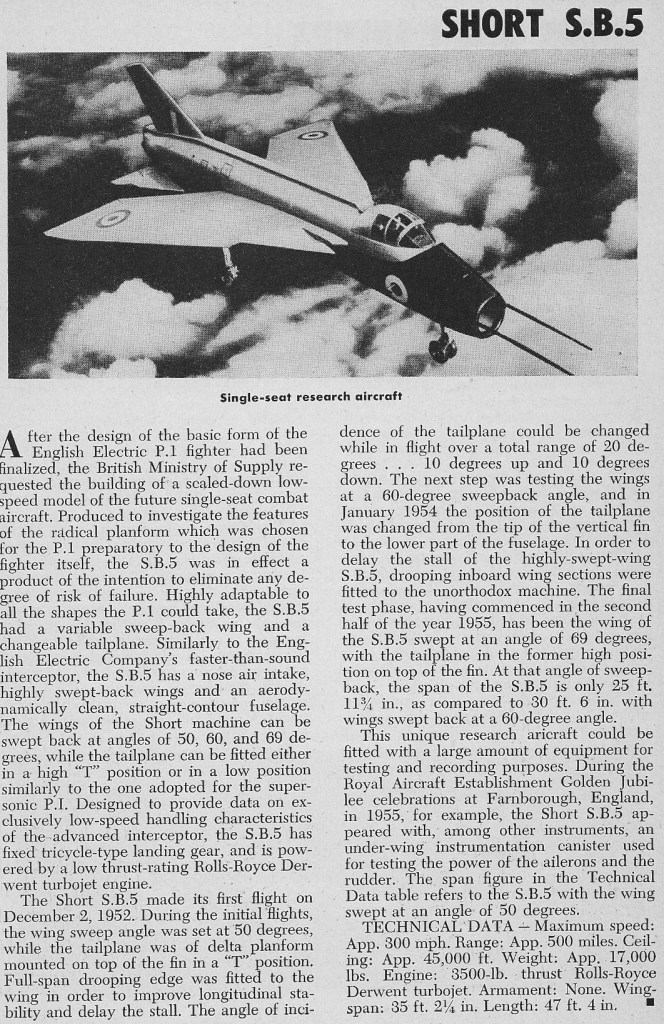
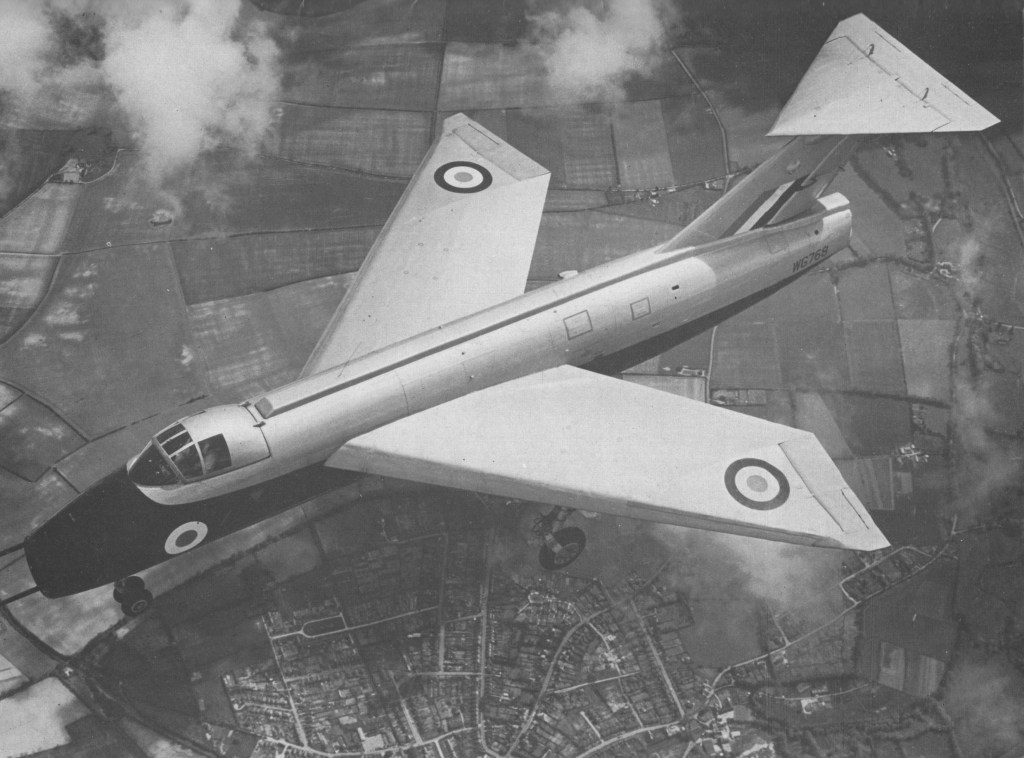
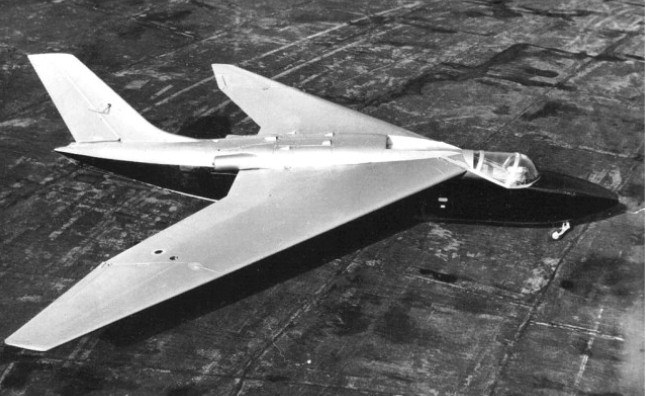
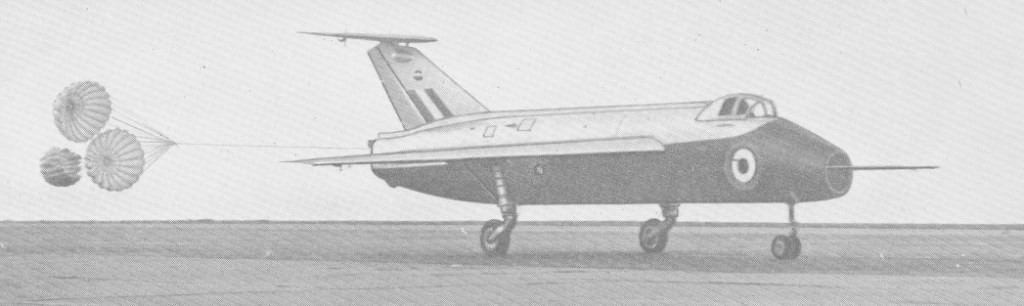
The S.B.5 was a test bed to examine flight characteristics using highly swept wings. The single example S.B.5 (WG768) first flew in December 1952 on the 3500lb (1588-kg) thrust of its Derwent turbojet, and piloted by Roland Beaumont. Though modelled aerodynamically on the Mach 2 English Electric P.l., was intended to investigate the low-speed handling qualities of swept wings. The aeroplane was fitted with wings whose sweep could be adjusted on the ground at angles of 50 degrees for use with a T-tail, 60 degrees for use with a conventional tail or a T-tail, and 69 degrees for use with a T-tail.
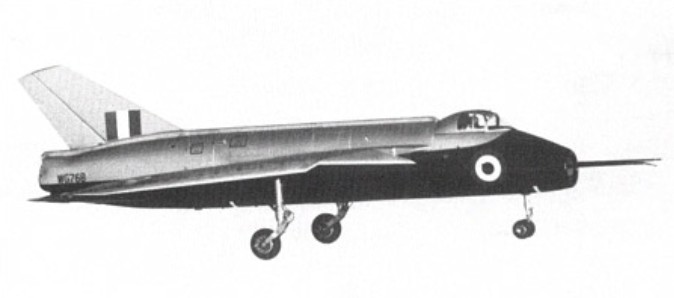
The variable incidence tailplane was later set at the bottom of the fuselage, as on the P.1.
On the S.B.5 wing there is an unusual fixed “droop snoot” on a small portion of the centre section leading edge.
1958 tests included a 69 degree sweepback and a Bristol Orpheus engine.
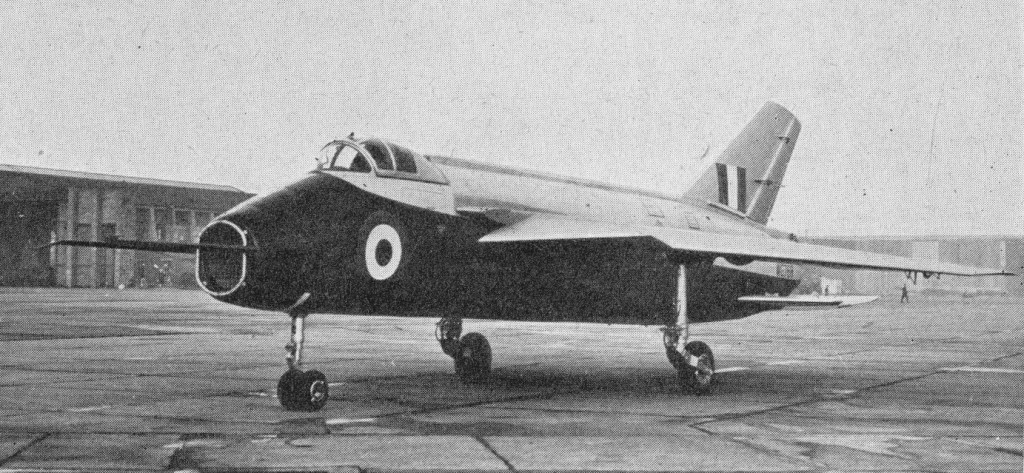
Short SB.5
RR Derwent
Span 30 ft 6 in
Sweep 60 deg
Length 45 ft 9 in
Back to Short SB.4 Sherpa


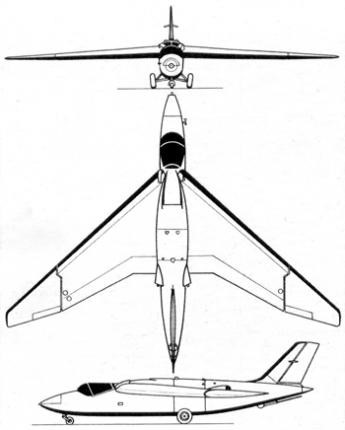
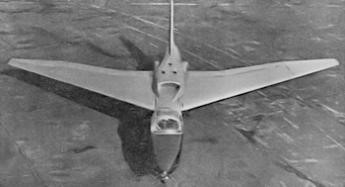
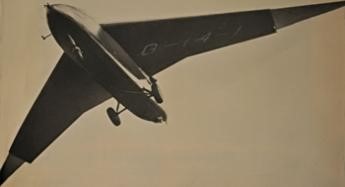
The Short SB-1 experimental glider was constructed mainly of wood, and was used for research into the aero-isoclinic wing concept.
The particularity of this flying wing, designed by David Keith-Lucas, the arrow leading edge reaching 42 deg 22 min isoclinic developed from the theory of Major Hll, which had also been tested on a series of flying wings (Pterodactyl), built before the war by Westland. This demanded a flexible rather than stiff wing structure with the tips hinged to serve collectively as elevators and differentially as ailerons.
Following a serious incident occurred during a towed takeoff flight, it was found that this method was too dangerous. As Blackburn had acquired the license to manufacture small French Turbomeca engines, it was decided to redesign the system with two Blackburn-built Turbomeca Palas of 330-1b (150-kg) thrust, as the SB.4 Sherpa. The engines are placed side by side on the back of the fuselage in a compartment isolated from the rest of the cell by firewalls. The air inlet is located on the back.
The ejection of the burnt gases is done by two independent nozzles. It is slightly divergent. Compared with SB-1, the airfoil has been enhanced so as to allow a significant increase in the weight, primarily due to the increased presence of engines, their components and the fuel.
The SB.4 Sherpa first flew on 4 October 1953 from the airfield near Sydenham, piloted by Tom Brooke -Smith, chief pilot of Short.

Only one was produced.
The aircraft was recovered and partially restored (the wings are missing) by the Medway Aircraft Preservation Society Rochester, Maidstone Road.
It is now in possession of the Ulster Aviation Society. This association had recovered two Palas engines (Nos. 53 and 54), and considering a static display, based on the former Long Kesh in Northern Ireland.
Short SB.4 Sherpa
Engines: 2 x Blackburn Turbomecca Palas
Length: 9.70 m (31 ft 10 in.)
Wingspan: 11.58 m (38 ft)
Height: 2.77 m (9 ft 1.12 in.)
Wing area: 21.40 m² (230 ft ²)
Empty weight: 1400 kg (3,000 lb.)
Max speed: 275 km / h (150knts)
Cruise speed: 188 km / h (102 knts)
Service ceiling: 1500 m (5,000 ft.)
Endurance: 45-50 min