Simmonds Aircraft Ltd / Spartan Aircraft Ltd

Simmonds Aircraft Ltd was formed September 1928, in which year O. E. (later Sir Oliver) Simmonds designed and built the Spartan two-seat biplane. Outwardly conventional, but planned for “Spartan” economy (e.g. interchangeable wings and ailerons, and rudder interchangeable with elevator). At Southampton, Hampshire, produced 49 examples, mostly for export, but some for National Flying Services Ltd. One made many Arctic flights.

Early in 1930 Simmonds Aircraft Ltd., which had made the Spartan biplane, was reconstituted under the name Spartan Aircraft Ltd. Made altered version of Simmonds Spartan called Spartan Arrow. Spartan Three-Seater built at East Cowes, Isle of Wight, where company moved early 1931. Spartan Cruiser was development of Saro-Percival (later Spartan) Mailplane of 1931, and the refined Cruiser III ended production in May 1935.
Simera

South Africa
Previously a separate division of Denel (Pty) Ltd.’s Aerospace Group, undertaking civil activities that included maintenance, refurbishment and upgrade of aircraft, engines and components. Agreement of 1994 with Deutsche Airbus covered conversion of A300s and A310s into freighters. Merged with Atlas Aviation division in April 1996 under new name Denel Aviation

Silver Wing Aircraft Co 1928 monoplane

In 1928 the Silver Wing Aircraft Co built a two-place, open cockpit, high-wing monoplane, designed by H C King. It utilized a Curtiss JN-4 fuselage and gear. Spin-proof, the company claimed, with a heavy, laminated spar that would withstand dives up to 175mph. Only one was built, registered N5268 c/n SWM-100.

First flown on 15 April 1928, piloted by Edward Euler, it was powered by a 90hp Curtiss OX-5, later changed to a 50hp Wright-Hisso engine.

Press releases told of two cabin versions under construction, but were apparently unfinished.

90hp Curtiss OX-5
Wingspan: 41’3″
Length: 26’9″
Useful load: 682 lb
Max speed: 110 mph
Cruise: 90 mph
Stall: 32 mph
Seats: 2

150hp Wright-Hisso
Wingspan: 41’3″
Useful load: 968 lb
Seats: 2

Silverston Vacu-Aerial / Flying Machine No. 2 / Milwaukee Flying Machine No. 2

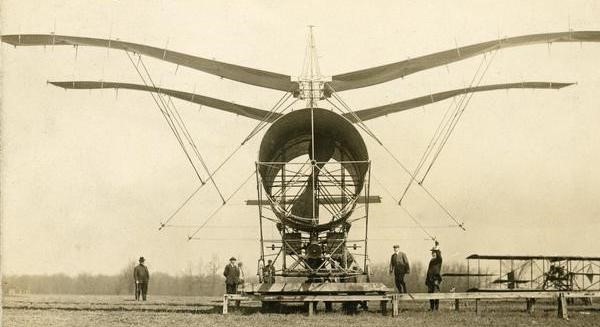
Silverston Vacu-Aerial” Flying Machine No. 2 of 1912 was also known as Dr. Rudolph Silverston’s Milwaukee Flying Machine No. 2. The photo caption reads “Pendulum system 120hp engine.”

According to historical reports, the good doctor had a school of aviation in Milwaukee, and persuaded a number of local investors to support construction of a machine of his devising, which seems to have been an early ducted fan type. The first was a failure; the second (shown) likewise refused to fly, whereupon Dr. Silverston left town with no forwarding address.

Silvercraft SpA

Italy
Formed early 1962. In October 1963 flew XY prototype light helicopter, further developed with financial and technical assistance of shareholder SIAI-Marchetti. SH-4 (flown 1963 in XY prototype form and 1965 as SH-4) was first helicopter of all-Italian design and construction to receive both Italian and U.S. certification. By late 1960s serious production had begun as SIAI-Marchetti/Silvercraft SH-4, but under name Silvercraft alone deliveries began 1970. Production ceased 1977, as single example of SH-200 two-seater first appeared.

Silvaire Aircraft Co

At end of Second World War production tooling for Model 8 Silvaire was moved by Luscombe Airplane Corporation to Dallas, Texas. In 1949 Luscombe company was brought by Temco Aircraft Corporation which built about 50 Silvaires. In 1955 the above-named company acquired rights and equipment for Model 8 Silvaire, inaugurated production at Fort Collins, Colorado, and flew first aircraft off line September 1956.

In 1962 Alaska International Corp acquired from Silvaire Aircraft Company all rights to the Luscombe Silvaire two-seat all-metal light aircraft.