Skysports Kestrel

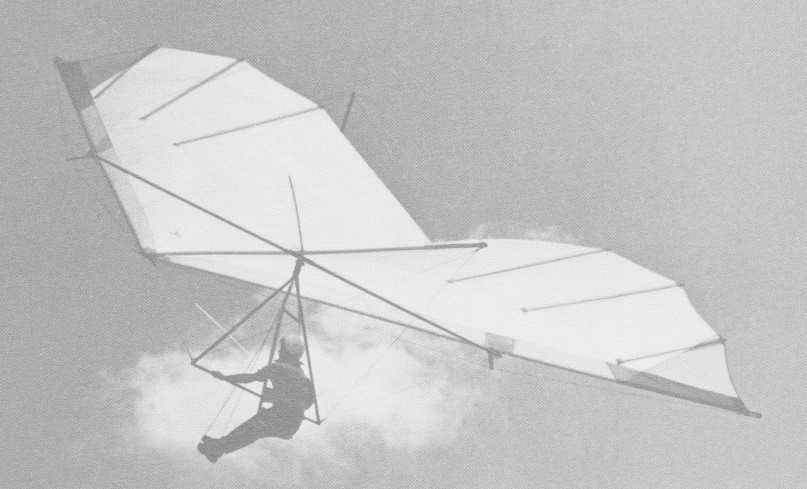
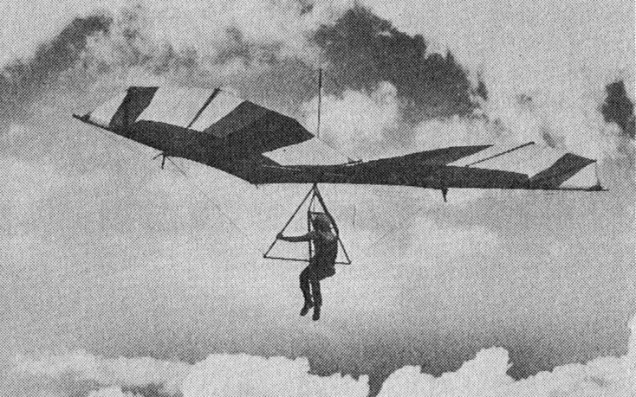
Kestrel B – Grand Mountain, NC. 1975 US National Hang Gliding Championships

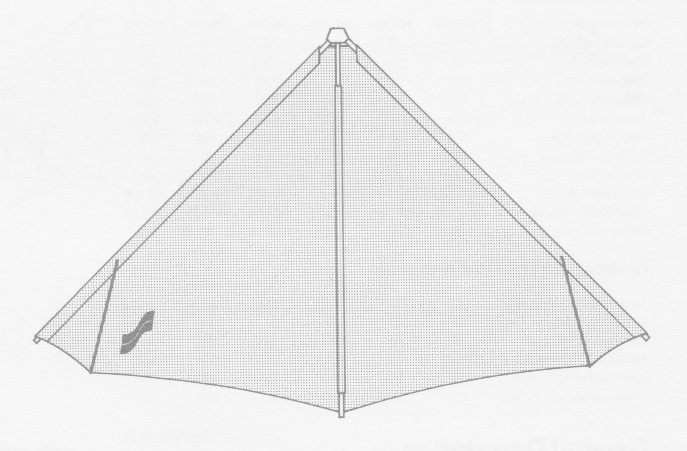
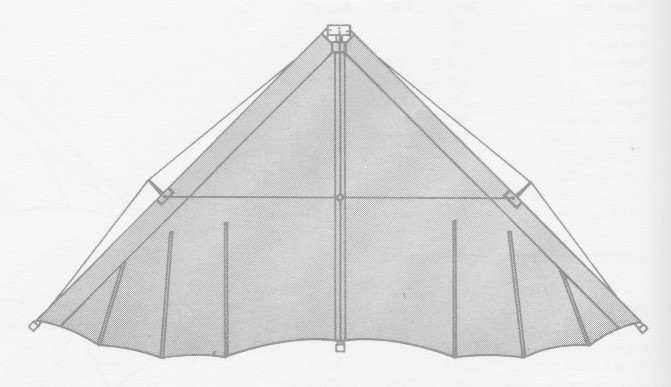
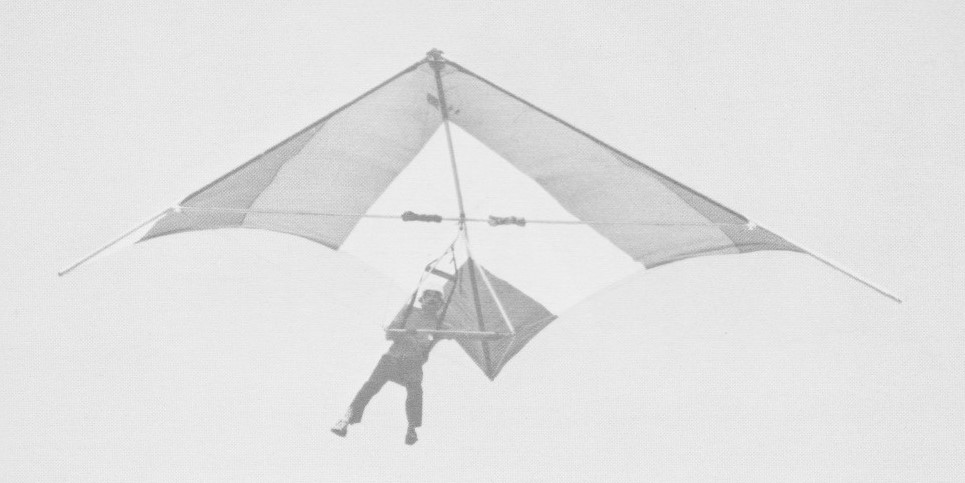
The Kestrel is a high-aspect ratio Rogallo hybrid with a unique ram-air, flight-inflated, Airfoil-shaped ‘bubble’ over the centre section leading edge. The forward third of the wing is covered by a second sail which inflates in flight. This forms an Airfoil which is claimed to improve efficiency and give mellow flight characteristics. Battens, located from the bubble leading edge back to the trailing edge, improve sail efficiency and stability.

Like other high-aspect ratio hang gliders with short keels, the quarter chord sweepback angle is greater than a standard’s, which contributes to the Kestrel’s pitch response and stability. The sail-roach patern and battens eliminate the need for finite tip extensions. A double deflexer system is used on each leading edge to limit airframe deformation.

It is controlled solely by weight shifting. Take down / setup times should be less than 10 minutes and the Kestrel may be transported like a standard. It can be flown either seated or prone.

The Kestrel B was the first glider to employ a double surface sail. The forward third of the wing is covered by a second sail which inflates dynamically in flight. The second surface includes a semi-rigid, non-deflatable, airfoil-shaped center section, giving one of the largest flying speed ranges. Because of the semi-rigid centre section and trailing edge batten features, the Kestrel B’s sail cannot be put into a full-luff streamering mode, further aiding dive recoverability. The Kestrel B was recommended for class III or IV pilots due to the relatively high L/D.

A rounded nose plate helps prevent sudden stops during landing. The rigging can be adjusted easily for either prone or seated flight, and there is an adjustable centre of gravity. It is capable of being packed to about half the leading edge length.

The airframe is made from aircraft quality 6063-T832 in both model sizes. Dowelling is not used, for lighter weight. Strength instead comes from stainless steel bushings and inside sleeving. Deflexers help keep the leading edges straight.

The rigging is marine stainless steel 3/32in 7×7 throughout with protective coating on the bottom wires. Quick links and pins are used so the rigging and control frame can be easily removed.

All hardware is of stainless steel or aircraft quality aluminium. Nuts, washers, bolts, and turnbuckles are aircraft grade.
The sail is made from 3.8oz stabilised dacron with double zig-zag stitching. Threre are three battens on each side from the trailing edge to the double surfaced section. The centre section includes a removeable rib and Velcro/snap closure.

There were five standard colour patterns from one to five colours.

Either a swing seat or supine harness were available.

Kestrel
Wing span: 30 ft 6 in
Wing area: 185 sq.ft
Aspect ratio: 5.0
Keel length: 11 ft
Leading edge length: 19 ft 6 in
Nose angle: 102 degrees
Empty weight: 40 lb
Max flying weight: 225 lb
Useful load: 185 lb
Best L/D: 7 – 1
Min sink: 250 fpm
Stall: 15 mph
Cruise: 25 mph

Kestrel B 19×11
Leading edge: 19.5 ft
Keel length: 11 ft
Wing span: 30 ft
Wing area: 190 sq,ft
Aspect ratio: 5
Nose angle: 102˚
Weight: 40 lb
Pilot weight: 135-185 lb
Stall speed: 15 mph
Best glide ratio (L/D): 7-1
Min sink: 250 fpm

Kestrel B 20×12
Leading edge: 20.5 ft
Keel length: 12 ft
Wing span: 31.5 ft
Wing area: 220 sq,ft
Aspect ratio: 5
Nose angle: 102˚
Weight: 43 lb
Pilot weight: 170-240 lb
Stall speed: 15 mph
Best glide ratio (L/D): 7-1
Min sink: 250 fpm

Kestrel B

Skysports Lark

Lark II

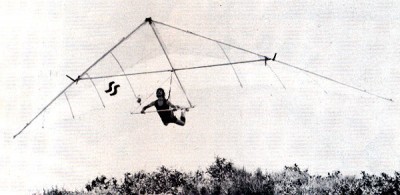
The Lark II is an improved version of the standard Rogallo. A nose angle of 90 degrees, slightly cut keel, roach tips and two battens, giving better glide and soaring performance plus much improved stability and handling over standard Rogallos. It also has stronger than usual tubing.

Breakdown capability for shipping at about half the leading edge/keel length. Rounded nose plate help prevent sudden stops and rigging can be easily adjusted for either prone or seated flight. Options included harness and storge cover. An owner’s manual was included.

The airframe is made from aircraft grade 6063-T832. Sizes varies from 1½ x .049 in to 1 7/8 x .058 in. Dowelling is not used for lighter weight. Strength comes from stainless steel bushings and inside sleeving.

Marine stainless steel 3/32in 7×7 is used throughout with protective coating on bottom wires. Quick links and pins are used so rigging and control frame can be quickly removed. All hardware is of stainless steel or aircraft quality aluminium. Nuts, washers, bolts and turnbuckles are aircraft grade.

The sail is 3.0 oz dacron with double zig-zag stiching and was available in seven standard colour patterns from one to five colours.

Either a “bikini” harness, swing seat, or supine harness were available.

16 x 15
Leading edge: 16 ft
Keel length: 15 ft
Wing span: 22.5 ft
Wing area: 179 sq,ft
Aspect ratio: 2.88
Nose angle: 90˚
Sail billow: 4˚
Weight: 37 lb
Pilot weight: 110-160 lb
Stall speed: 17 mph
Best glide ratio (L/D): 4.5/1
Min sink: 400 fpm

17 x 16
Leading edge: 17 ft
Keel length: 15.9 ft
Wing span: 24 ft
Wing area: 202 sq,ft
Aspect ratio: 2.88
Nose angle: 90˚
Sail billow: 4˚
Weight: 38 lb
Pilot weight: 130-180 lb
Stall speed: 17 mph
Best glide ratio (L/D): 4.5/1
Min sink: 400 fpm

18 x 17
Leading edge: 18 ft
Keel length: 16.8 ft
Wing span: 25.5 ft
Wing area: 226 sq,ft
Aspect ratio: 2.88
Nose angle: 90˚
Sail billow: 4˚
Weight: 39 lb
Pilot weight: 150-210 lb
Stall speed: 17 mph
Best glide ratio (L/D): 4.5/1
Min sink: 400 fpm

20 x 18
Leading edge: 20 ft
Keel length: 18.4 ft
Wing span: 28.3 ft
Wing area: 280 sq,ft
Aspect ratio: 2.88
Nose angle: 90˚
Sail billow: 4˚
Weight: 41 lb
Pilot weight: 200-270 lb
Stall speed: 17 mph
Best glide ratio (L/D): 4.5/1
Min sink: 400 fpm

Sky Sports USA Bobcat

Bobcat II

Circa 1972, the Bobcat II was suitable for beginners ad advanced pilots, built with strong construction for training. It met USHGA and Harker World Cup rules and, with deflexers folded, met FAI/CIVL rules. The Bobcat II has two nose angle settings.

The airframe is made from 6063-T832 1.75 x .058 in tubing in both model sizes. Dowelling is not used, strength coming from stainless steel bushings and inside sleeving. Deflexers are used normally, but may be left folded.

Marine stainless steel 3/32 in 7×7 rigging is used throughout with protective vinyl coating on the bottom wires. Quick links and pins are used.

All hardware is of stainless steel or aircraft quality aluminium. Nuts, washers, bolts and turnbuckles are aircraft grade. The sail is 3.8oz stabilised dacron with double zig-zag stiching with five colour choices.

Either a ‘bikini’ training harness, a swing seat, or supine harness were available.

Two nose angle positions are available for selecting billow. One for the best L/D and one for the minimum sink. Rounded nose plate helps prevent sudden stops during landing. Rigging can be adjusted easily for either prone or seated flying. The centre of gravity is adjustable. It can be packed down to about half the leading edge lengths.

Bobcat II 19×14
Leading edge: 19 ft
Keel length: 14 ft
Wing span: 26.8 ft
Wing area: 204 sq,ft
Aspect ratio: 3.48 / 3.4
Nose angle: 90˚ / 89˚
Sail billow: 3.0˚ / 3.5˚
Weight: 42 lb
Pilot weight: 125-165 lb
Stall speed: 16.5 mph
Best glide ratio (L/D): 6.1
Min sink: 330 fpm

20×15
Leading edge: 20 ft
Keel length: 15 ft
Wing span: 28.3 ft
Wing area: 230 sq,ft
Aspect ratio: 3.48 / 3.4
Nose angle: 90˚ / 89˚
Sail billow: 3.0˚ / 3.5˚
Weight: 44 lb
Pilot weight: 150-210 lb
Stall speed: 16.5 mph
Best glide ratio (L/D): 6.1
Min sink: 330 fpm

Sky Sports Humbug

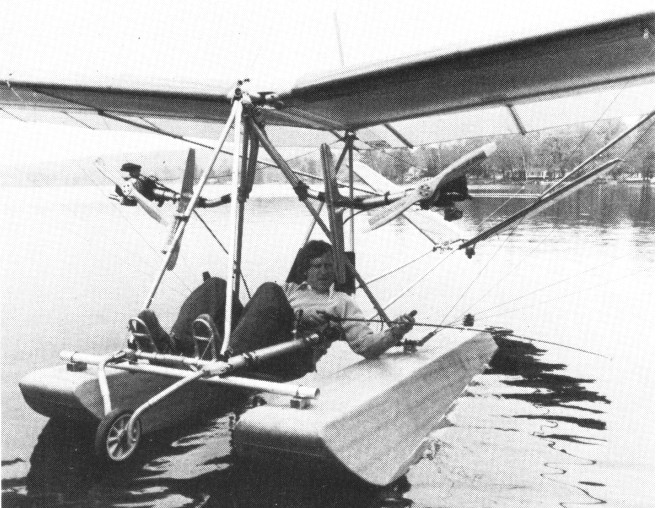
While the Humbug is foot-launchable and foot-recoverable, “auxiliary” wheels are available as well as floats, skis, ice skates or dune buggy wheels. The convenient mixer stick operates three-axis controls, and foot pedals operate the rudder. Construction, for the most part, consists of aluminum tubes and channel fittings, plastic end caps, nylon cable eyes, stainless cables and 3.8-ounce Dacron envelopes for the tail and wings. Power for the Humbug can come from several options; the most popular to this point is a twin-engine Gemini power system that uses a Partner (Swedish chain saw) engine which can be modified to develop from five to nine hp. Chrysler engines which are rated at 10 hp each are also available. Setting up the Humbug for flight requires only 20 minutes. It was available as a finished, test-flown airplane or as a kit.

Skyseeker Aircraft Skyseeker Mk.III

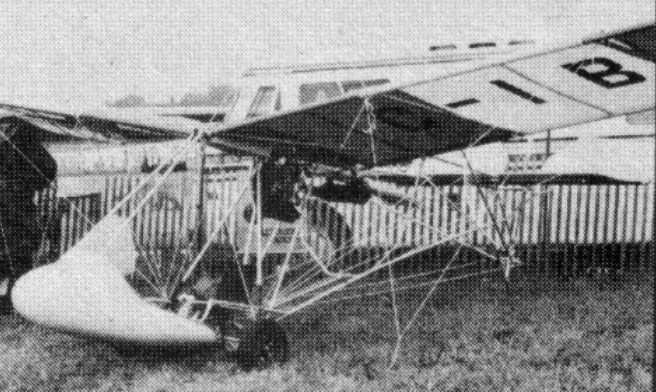
  1. Centre mounted joy stick, rudder pedals, tailwheel steerable through rudder pedals.

Empty wt: 252 lbs
Wing span: 32 ft
Wing area: 160 sq.ft
Height: 9 ft 9 in
Length: 19 ft
Fuel cap; 5 USG
Construction: Aluminium, Dacron
Engine: Rotax 277 (268 cc) 28 hp
Static thrust: 180 lbs
Max wt: 496 lbs
Stall: 20 mph
Max speed: 60 mph
Vne: 75 mph
Climb rate: 750 fpm @ 30 mph
Design limit: +4, -2g
Glide ratio: 6-1
Wing loading: 3.1 lbs/sq.ft
Power loading: 17.71 lbs/hp