New Castle DE.
USA
Built a major modification of 1928 Cirigliano SC-1 in 1950.
New Castle DE.
USA
Built a major modification of 1928 Cirigliano SC-1 in 1950.
The 1937 S-1 built by Everett A Smith was a two-place, open cockpit monoplane, registered N13391 and powered by a 120hp LeRhône engine.
Everett A Smith,
Missoula MT.
USA
Built the Smith S-1 in 1937.
Eugene OR.
USA
Modified the White 25 aircraft in 1933 as the Smith 1933 biplane.
Built by Edward F Smith in 1928, the Smith S-1 was a two-place, open cockpit, parasol wing monoplane with slab sides.
Registered N987H c/n 22 and powered by an Anzani engine, it was used by Ivan Gates in exhibition work.
Built by Edward F Smith circa 1929, the Smith ES-5 was a two-place, open cockpit, parasol wing monoplane with rounded sides.
Powered by an Anzani engine, it was sold to J E Brown of Camden, who apparently repowered with a Hisso.
Edward F Smith,
354 W Anderson St,
Hackensack NJ.
USA
Built the Smith S-1 and ES-5 during 1928-29.

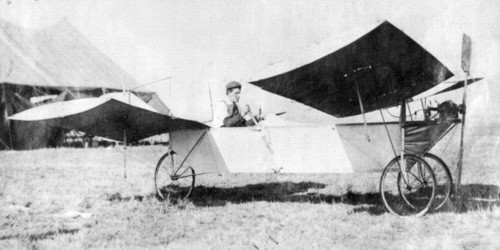
Built by Edgar Smith, a tandem monoplane with variable-incidence wings for pitch control. The self-built opposed two-cylinder engine proved to be too weak to enable flights at the January 1910 Los Angeles meeting, where Smith was lucky to survive, being hit in the head by its spinning propeller.
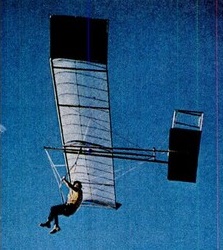
Dean Smith built the 1974 Fly Me II from scrap and surplus aluminium tubing, covering wing and tail with polyethylene sheeting.
Wingspan: 29 ft 4 in
Weight: 65 lb
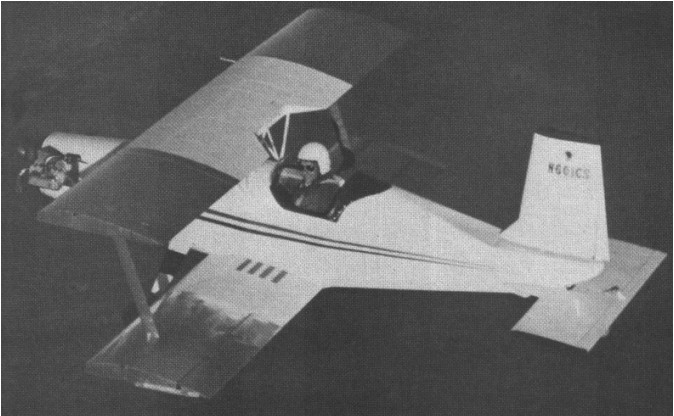
Der Kricket, an original bipe design by Cyril Smith, was built in 857 man hours, and finds that it flies fine from mile-high airports. The philosophy of design simplicity for Der Kricket began with selection of basic materials, and the construction concept developed requires only two sizes of 2024-13 aluminum angle. The spar for the horizontal stabilator is 2-inch square 6063 tubing, requiring a minimum of work. A 2-inch diameter 6063-15 tube spar for the rudder becomes self-hinging with two nylon, teflon or phenolic bushings. All ribs are constructed with a unique self-jigging tab to insure ac¬curate alignment dpring attachment to the various spars. Fuselage is semi-monocoque construction, built upside down on a flat surface, and tricks bor¬rowed from model-airplane building days are employed in assembling the fuselage. A 2 x 11-foot “pin board” on sawhorse supports is used for the fuselage layout. Longerons are tacked to the layout, then four bulkheads added to assure simple, accurate alignment. The “poor man’s deco,” (1/8th-inch soft aluminum pop rivets) are used when necessary for positioning, then are drilled out and replaced with monel or stainless steel pop rivets during final assembly. Full-flying tail surfaces, both vertical and horizontal, are easily constructed and attached, and provide effective control at low airspeeds, with ample rudder movement for takeoff and land¬ing rolls. A good-sized antiservo tab was chosen to provide ample control feel and reasonable sensitivity at cruise speeds. Smith elected to utilize as many pre¬fabricated items as possible in building Der Kricket – landing gear legs from the VP-1 Volksplane; aircraft-style Go Kart wheels and brakes; low-pressure aircraft tires for the mains; and a modified 5-inch caster for a tailwheel. The wing is a NACA 4412.
First flying on 19 September 1978, the prototype N501CS, flew for 25 years before Smith donated it to the Mid-America Air Museum.
Gross weight 750 lbs
Empty weight 500 lbs
Fuel capacity 8-10 Usgal
Wing¬span (biplane) 16’
Length 15’
Engine 1500cc-1835cc VW
Prop: 54 x 30
Vmax 138 mph
Cruise speed 90 mph
Climb rate 500 fpm
Range 200 nm
Wing loading: 7.3 lb/sq.ft
Pwr loading: 14 lb/hp

