Solar Aircraft Corp Solar 7

Solar 7

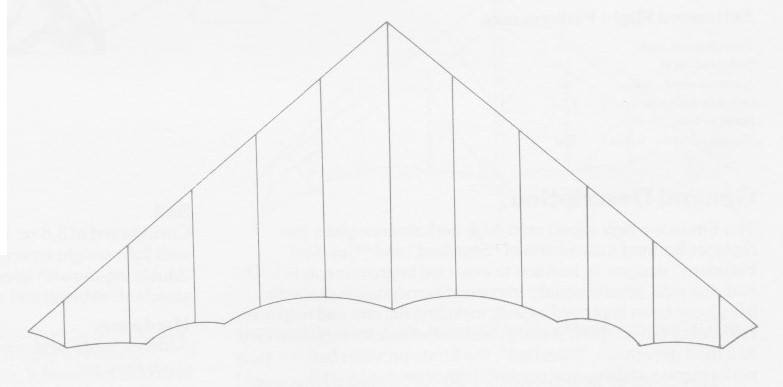
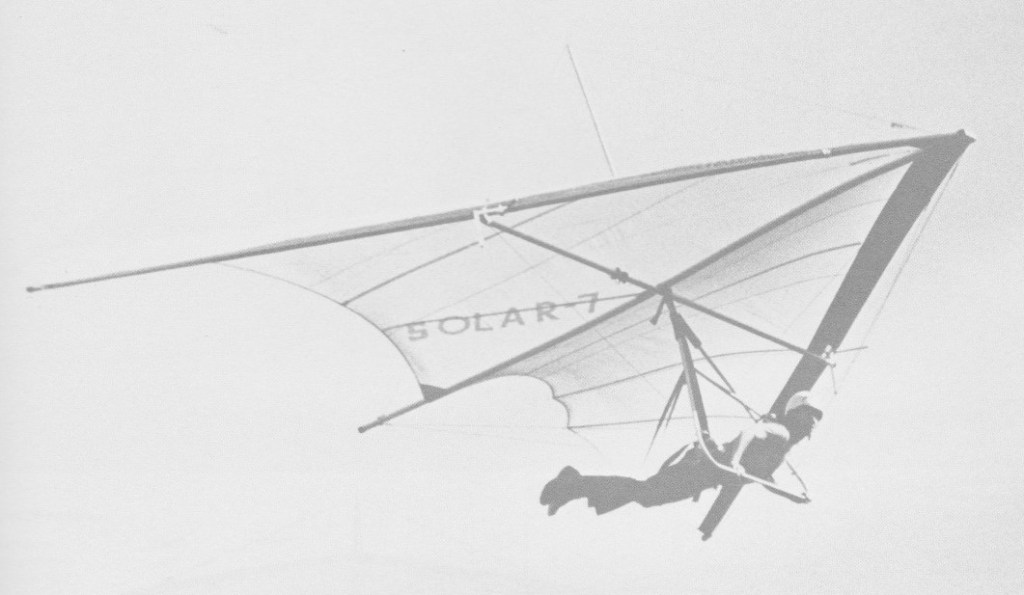
The Solar 7 is a high performance Rogallo designed for Hang 3 pilots or above. The Solar 7 features three sets of wires for negative G loadings, the first to incorporate this type of rigging. Three wing posts give camber and suppor to the leading edges for turbulence encountered in thermal flying. Quick locking tensioners are fitted.

The airframe is made from 2024-T3 1.75in x .058, 1 5/8in x .058 and 1.5in x .049 aluminium tubing. Rigging cable is 3/32in 7 x 7 stainless steel. All hardware is aircraft quality. The sail is 3.8oz Howe and Bainbridge stabilised dacron. It was available in 11 colours, and fully battened. A seated or prone harness were options.

20 x 12
Leading edge: 20 ft
Keel length: 12.5 ft
Wing span: 31.7 ft
Wing area: 190 sq,ft
Aspect ratio: 5.27
Nose angle: 97˚
Sail billow: 1.5˚
Weight: 39 lb
Pilot weight: 100-150 lb
Takeoff speed: 18 mph
Stall speed: 16 mph
Max speed: 45 mph
Best glide ratio (L/D): 7-1
Best L/D speed: 23 mph

21 x 13
Leading edge: 21 ft
Keel length: 13.5 ft
Wing span: 32 ft
Wing area: 195 sq,ft
Aspect ratio: 5.25
Nose angle: 97˚
Sail billow: 1.5˚
Weight: 42 lb
Pilot weight: 140-190 lb
Takeoff speed: 18 mph
Stall speed: 16 mph
Max speed: 45 mph
Best glide ratio (L/D): 7-1
Best L/D speed: 23 mph

22 x 14
Leading edge: 22 ft
Keel length: 14.5 ft
Wing span: 32.3 ft
Wing area: 200 sq,ft
Aspect ratio: 5.23
Nose angle: 97˚
Sail billow: 1.5˚
Weight: 180-240 lb
Pilot weight: 180-240 lb
Takeoff speed: 18 mph
Stall speed: 16 mph
Max speed: 45 mph
Best glide ratio (L/D): 7-1
Best L/D speed: 23 mph

Solar T62

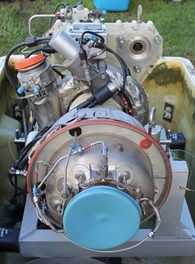
The Solar T62 is a family of compact auxiliary power units (APUs) installed in ground power units and aircraft. The T62T32 variant has also been successfully adapted as the power plant for small single seat and two seat home-build helicopters.

The T62T32 adopts a classic small gas turbine design featuring a centrifugal compressor and radial inflow turbine. The two are mounted back to back and supported on a common shaft with outboard bearings. The bearings hold the shaft in a cantilever fashion, this arrangement has a clear advantage – both bearings are outside the hot section of the engine and so run cooler in operation.

The combustion system fitted to the Solar T62 consists of an annular reverse-flow chamber with six vaporising burners. The operation of vaporising burners requires the presence of heat in the compositor in initiate the vaporisation process, this is provided a special small atomising burner and igniter plug.

The T62T32 version carries a heavy duty reduction gearbox that can carry a 60Kva 400Hz generator turning at 6,000 rpm. The usual accessories are also driven form the gearbox and also a heavy duty pre-engaged starter motor. Other versions of the T62 generally carry smaller lighter gearboxes and may make use of electrical starter generators or hydraulic starters.

The T62 is unusual in carrying a hybrid fuel control system. Fuel is supplied to the engine by a small gear pump, up to running speed the fuel flow is controlled by a mechanical pneumatically operated valve pressurised from the compressor delivery (P2). This arrangement ensures smooth surge free acceleration after starting. When full speed is reached an electronic governor takes over by means of a rotary solenoid actuator and fuel metering valve. The governor arrangement is not dissimilar to many diesel governors fitted to generator sets running at constant speed.

The USAF EMU30 transportable generator set was fitted with the T62T32 model, a number of these units can be found surplus from time to time in the USA. Demand for these units is likely to have been stimulated by the use of the engine as a powerplant in small kit built helicopters. Some modifications are carried out to reduce the weight of the substantial gearbox housing.

Gallery

Variants:

T62 Titan
The direct drive main production version.

T62T-2
80 hp (60 kW) at 56,700 turbine rpm for Boeing-Vertol CH-47A Chinook helicopters.

T62T-2A
95 hp (71 kW) at 56,700 turbine rpm for Boeing-Vertol CH-47B / C Chinook helicopters.

T62T-11
80 hp (60 kW) at 56,700 turbine rpm for Boeing-Vertol CH-46A Sea Knight helicopters.

T62T-12
105 hp (78 kW) at 61,240 turbine rpm

T62T-16 / -16A1
95 hp (71 kW) for Sikorsky CH-3, Sikorsky SH-3 and Sikorsky CH-54A Skycrane helicopters at 56,700 turbine rpm, with 8,000 and 8,100 rpm outputs.

T62T-25
Turboshaft – 80 hp (60 kW) at 56,700 turbine rpm

T62T-27
Turboshaft – 150 hp (110 kW) at 61,250 turbine rpm, with 1x 8,000 and 1x 8,216 rpm outputs.

T62T-29
Turboshaft – 95 hp (71 kW) at 56,700 turbine rpm, for Lockheed Jetstar and Pan American Falcon business Jets at 56,700 turbine rpm, with 1x 8,000 and 1x 8,100 rpm outputs.

T62T-32
Power Output: 150HP @ 60,000rpm
Compressor: single stage centrifugal
Combustor: annular reverse flow with 6 vaporising burners
Turbine: single stage radial inflow
Layout: overhung rotor single shaft with reduction gearbox
Fuel system: gear pump, part hydro mechanical/part electronic governor
Ignition System: high energy plug torch igniter
Starting System: electric starter
Oil system: return system wet sump reservoir
Accessories: Brush-less Alternator
Application: 400Hz EMU30 Military Generator set

T62T-32A
150 hp (110 kW) at 61,250 rpm. Military Ground Power Unit (GPU) often used by US Navy and Air Force.

T62T-39

T66
A free power turbine version for the US military.
Solar Aircraft MS-1

Solar MS-1 NX258V

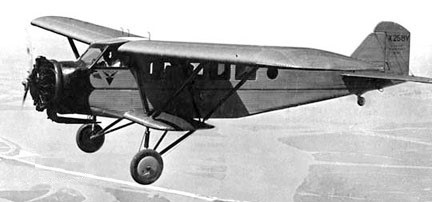
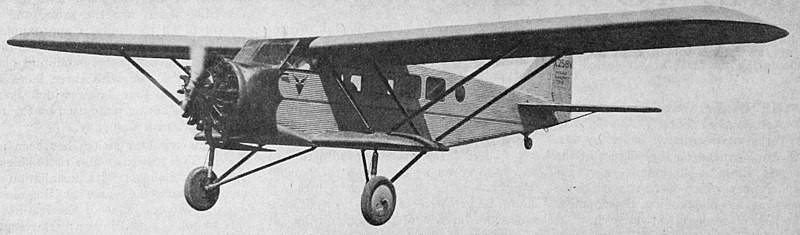
Designed by William L. Lewis, the 1930 Solar MS-1 (ATC 2-252) was a sesquiplane all-metal eight-passenger transport aircraft evolution of Prudden SE-1.

Its wings were braced to each other with warren truss-style struts. The lower stub wings carried the well separated legs of the fixed undercarriage. The fuselage was of rectangular cross-section and featured a fully enclosed flight deck and passenger cabin. The tail was of conventional design with strut-braced stabilizers and carrying a fixed tailwheel. Construction was of metal throughout with corrugated skins, and was powered by a single 420 hp (310 kW) Pratt & Whitney Wasp radial engine in the nose.

First flying on 21 January 1930, piloted by Doug Kelly, the one built was registered NX/NC258V. Kelly described it as “one of the finest closed planes I have ever flown”, and Charles Lindbergh also praised the MS-1 when he flew it a few days later. Despite this, the airlines did not order the type, although Northwest Airways and ten other airlines considered, and rejected buying examples due to the effect that the onset of the Great Depression was having on their traffic volumes.

A 6,000 mi (9,700 km) record flight from Los Angeles, California to Tokyo was planned, but never happened. The high point was a 7,000 mi (11,000 km) transcontinental flight over 25 states that the president of Solar took with his entire family, including his wife and three children, aged 9, 7 and 3, which attracted considerable interest from the media who dubbed it the “flying nursery”. A purchasing agent for a major airline then promised a substantial order, but dropped dead of a heart attack the day the order was to be signed, and his replacement called off the deal.

Solar made the prototype available for charter flights for a while, but in 1931 sold it to an operator in Mexico who used it to transport coffee beans. On the Mexican register as XB-AFK, the MS-1 was destroyed in a crash in 1936.

Solar would never build another aircraft after the MS-1, turning to saucepans to survive the depression, and later stainless-steel exhaust shrouds.

Solar MS-1
Powerplant: 1 × Pratt & Whitney R-1340 Wasp, 420 hp (310 kW)
Propeller: 2-bladed fixed pitch metal
Upper wingspan: 56 ft 6 in (17.22 m)
Upper wing chord: 100 in (2.54 m)
Upper wing dihedral: 2°
Lower wingspan: 18 ft 0 in (5.49 m)
Lower wing chord: 70 in (1.78 m)
Lower wing dihedral: 0°
Wing area: 496.5 sq ft (46.13 sq.m)
Airfoil: Göttingen 398
Length: 35 ft 11 in (10.95 m)
Height: 10 ft 2 in (3.10 m)
Empty weight: 3,650 lb (1,656 kg)
Gross weight: 7,000 lb (3,175 kg)
Fuel capacity: 135 US gal (112 imp gal; 510 l)
Oil Capacity: 8 US gal (30 l; 6.7 imp gal)
Maximum speed: 130 mph (210 km/h, 110 kn)
Cruise speed: 115 mph (185 km/h, 100 kn)
Landing speed: 60 mph (52 kn; 97 km/h)
Service ceiling: 15,000 ft (4,600 m)
Absolute ceiling: 18,400 ft (5,600 m)
Rate of climb: 750 ft/min (3.8 m/s) initial
Wing loading: 14 lb/sq ft (68 kg/sq.m)
Power/mass: 16.4 lb/hp (10.0 kg/kW)
Crew: Two
Capacity: Eight passengers
Undercarriage track: 9 ft 6 in (2.90 m)

Sol Hoops

A dedicated glider for “Freestyle” and aerobatics, the Hoops is aimed at pilots experienced in maneuvers who will know how to use its agility. The aspect ratio is 5,81; with 54 cells and an area of only 18,55 square meters.

The sail is made of Gelvenor cloth (49 g/sq.m), with profiles of Porcher Marine 9092, and Cousin dyneema lines. Other construction features include diagonal V-tabs to reduce lines and weight, Mylar/Carbon reinforcement, and a clean layout.

The result is a glider with high inner pressure, showing strong reactions in extreme maneuvers and offering direct and sensitive piloting. It has a short and precise brake “which allows little use of the brake during the flight”, say at Sol. The Hoops is a fast machine that can reach a top speed of 68 k/h, and a minimum speed of 30 k/h, according to the manufacturer.

Like all Sol gliders, the Hoops is covered by a 3-years/300-hours warranty. It is available in one size to suit pilots of 70 to 100 kg. Hoops is a non certified glider.

Sol Prymus

Prymus 2

The new Prymus 2 (DHV1) was one of the gliders tested during the 2005 Northeast Expedition in Brazil, to obtain a model not only to be used by schools and beginners, but a glider that would allow the pilot to feel “the magic of flying” and stay for hours in the air, achieve distance flights and start free style flights.

The Prymus 2 has an elliptical planform with a lightly positive arrow shape, and 39 cells for an “extra straight side, exactness in the airfoil and a consolidated stability” according to the manufacturer. The Prymus 2 also features a higher projected aspect ratio; a new profile chosen for maximum stability, and a more refined construction for this class. Other characteristics include easy inflation and takeoff; long and tolerant brake length; precise handling; high internal pressure; stability even in high speed; light reactions during extreme maneuvers; good passive safety; and “great behavior” in thermals. The Prymus 2 is made in Gelvenor cloth with Cousin lines, it has a 3-years/300 hours warranty, and it was available in 4 sizes.

The SOL Prymus 4 EN-A Size L is described as a beginner wing, and an anywhere all rounder wing – from coastal ridge soaring to inland thermals. Very stable in all conditions.

SOL Prymus 4

Prymus 4 S
Zoom: 0.91
Cells: 39
Projected span: 8.65 m
Real wingspan: 10.99 m
Projected surface: 18.41 sq.m
Real surface: 23.41 sq.m
Projected AR: 4.06
Real AR: 5.16
Line diameter: 1, 1.5, 2.1
Height: 670 cm
Takeoff weight: 70-90 kg
Max Profil: 2.64 m
Min Profil: 0.87 m
Weight: 5 kg
Places: 1
Certification EN/LTF: A

Prymus 4 M
Zoom: 0.96
Cells: 39
Projected span: 9.12 m
Real wingspan: 11.6 m
Projected surface: 20.49 sq.m
Real surface: 26.05 sq.m
Projected AR: 4.06
Real AR: 5.16
Line diameter: 1, 1.5, 2.1
Height: 707 cm
Takeoff weight: 80-100 kg
Max Profil: 2.78 m
Min Profil: 0.92 m
Weight: 5.4 kg
Places: 1
Certification EN/LTF: A

Prymus 4 L
Zoom: 1
Cells: 39
Projected span: 9.5 m
Real wingspan: 12.08 m
Projected surface: 22.23 sq.m
Real surface: 28.27 sq.m
Projected AR: 4.06
Real AR: 5.16
Line diameter: 1, 1.5, 2.1
Height: 760 cm
Takeoff weight: 85-110 kg
Max Profil: 2.9 m
Min Profil: 0.96 m
Weight: 5.8 kg
Places: 1
Certification EN/LTF: A

Prymus 4 XL
Zoom: 1.04
Cells: 39
Projected span: 9.88 m
Real wingspan: 12.56 m
Projected surface: 24.05 sq.m
Real surface: 30.58 sq.m
Projected AR: 4.06
Real AR: 5.16
Line diameter: 1, 1.5, 2.1
Height: 790 cm
Takeoff weight: 100-125kg
Max Profil: 3.01 m
Min Profil: 1 m
Weight: 6.2 kg
Places: 1
Certification EN/LTF: A

Soko / CNIAR J-22 Orao / IAR-93

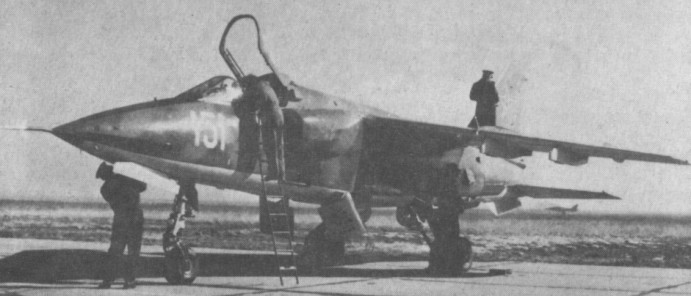
Built in Yugoslavia as the Soko Orao (eagle) and in Romania as the CNIAR (Centrul National al industriei Aeronautica Române) IAR-93, the aircraft was designed by a joint team and developed under a programme known as YuRom, the name indicating the partner countries. Prototypes assembled by Soko and CNIAR made their first flights within minutes of each other on 31 October 1974, and these were followed by a pair of two-seat variants, both of which flew on 29 January 1977. During 1978, deliveries began of a pre-production batch of 15 to each country, after which the initial series model, known in Romania as the IAR-93A, entered service. This was fitted with a pair of non-afterburning Viper Mk 632 engines, but after a short run of single and two-seat aircraft to this standard (20 of them for Romania) manufacture began of the definitive IAR-93B which features a licence-built afterburner and structural changes such as integral wing fuel tanks and a honeycomb rudder and tailplane.

Soko / CNIAR J-22 Orao / IAR-93 Article

The uprated Orao 2/IAR-93B flew in Jugoslavia in October 1983, and in Romania in 1985. The principal difference from the earlier Orao 1/IAR-93A is the introduction of a licence-built Viper 633 with reheat, giving improved performance and weapons carrying capability. The Orao 2 has a Thomson-CSF headup display, and four underwing and one underfuselage stores pylons. Optical and infrared reconnaissance pods are available for carriage on the centreline station.

Romania required 165 IAR-93Bs, including some two-seat models, with similar operational capability to the main version, for advanced training and weapons instruction. Yugoslav plans were believed to be similar. The Orao/lAR-93 is limited to the close support role by its lack of radar or inertial navigation, but low-level interception is a secondary duty.

The J-22 Orao/IAR-93 attack aircraft was out of production before all deliveries made, due to regional conflict.

Orao 2/IAR-93B
Engine: 2 x Rolls-Royce Viper Mk 633-47 afterburning turbojets
Installed thrust (dry / reheat): 37.7 / 44.8 kN, 2268-kg (5,000-1b)
Span: 9.62 m (31 ft 6.75 in)
Length excluding probe: 13.96 m (45 ft 9.5 in)
Height 4.45 m (14 ft 7.25 in)
Wing area: 26 sq.m (279.86 sq ft)
Empty equipped wt: 5900 kg (13,007 lb)
MTOW: 10,097 kg (22,260 lb)
Warload: 2800 kg
Max speed: 1160 kph (721 mph) at sea level
Initial ROC: 5.5 min to 13,000 m / 3960 m (12,990 ft) per min
Service ceiling 12500 m (41,010 ft)
T/O run: 690 m
Ldg run: 1050 m
Combat radius hi-lo-hi: 360 km
Fuel internal: 2600 lt
Air refuel: No
Armament: two 23-mm GSh-231, twin-barrel cannon (with 200 rpg) in front fuselage
four wing pylons and one centreline pylon carrying five x 250-kg (551-1b)

SOKO J 22 Orao 2
Engine: 2 x Rolls Royce Viper 633 41, 17462 N
Length: 45.932 ft / 14.0 m
Height: 14.764 ft / 4.5 m
Wingspan: 31.496 ft / 9.6 m
Wing area: 279.864 sq.ft / 26.0 sq.m
Max take off weight: 24806.3 lb / 11250.0 kg
Weight empty: 12678.8 lb / 5750.0 kg
Max. payload weight: 12127.5 lb / 5500.0 kg
Max. speed: 626 kts / 1160 km/h
Landing speed: 148 kts / 274 km/h
Cruising speed: 394 kts / 730 km/h
Initial climb rate: 13779.53 ft/min / 70.0 m/s
Service ceiling: 44291 ft / 13500 m
Wing loading: 88.77 lb/sq.ft / 433.0 kg/sq.m
Range: 572 nm / 1060 km
Crew: 1
Armament: 2800kg ext 5pods