(S W) Sorrenti Aviation Corp
San Francisco Bay Airdrome
Alameda CA.
USA
Operating in 1930.
(S W) Sorrenti Aviation Corp
San Francisco Bay Airdrome
Alameda CA.
USA
Operating in 1930.
Built by Otto Sorrell circa 1950, the Sorrell Bathtub was a single-place, open cockpit, high wing monoplane, inspired by 1924 Dormoy Bathtub.
An “ultra-ultralight” powered by a geared-down chain-saw motor and tricycle gear, it was further developed by Michael Kimbrel, of Oakville WA, who in 1978 flew a tail-wheel version with a VW engine, then promptly sold 400 sets of drawings to home-builders.
Built by Otto Sorrell, probably in the 1950s, the Sorrell Colt was a single-place, open cockpit biplane, powered by a 65hp Continental A-65.
Rochester WA.
USA
Otto Sorrell built the Sorrell Colt and Sorrell Bathtub in the 1950s and 50s.
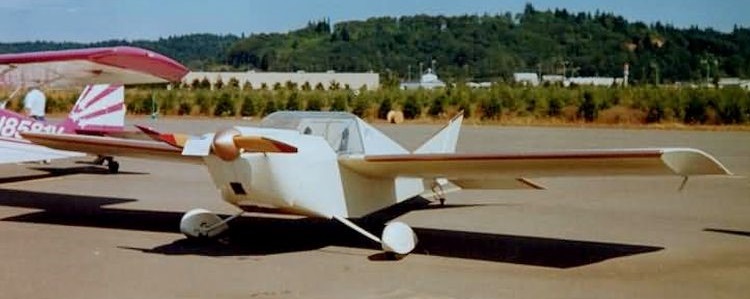
The Sorrell-Robinson Wenoso was built by Hobart “Hobie” C. Sorrell, in the mid-1960’s.
Registered N1041, the plane spent some time in the Puyallup, Washington, USA, area and was rebuilt in 1990.
The plane was destroyed in a fatal accident on December 7, 1990.
Engine: 65hp Continental
Wingspan: 25’0″
Length: 19’0″
Cruise: 125 mph
Seats: 1
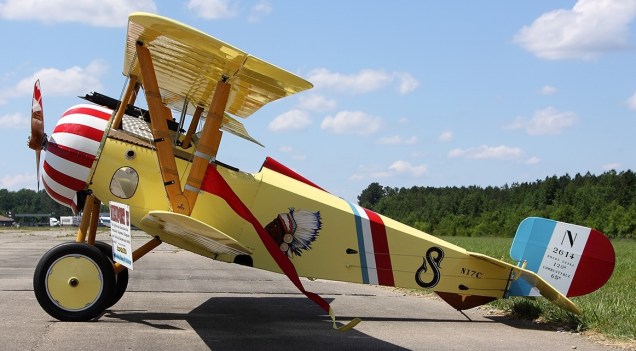
The 1961 Sorrell Nieuport 17C, N17C Serial Number 1, is a three-quarter scale replica of WW1 Nieuport 17C.
The single-seat aircraft received an Airworthiness Certificate on 26 May 1964.
It was later registered to Wild Blue Aero Squadron LLC, Indianapolis, IN, USA.
Engine: 40hp Salmson AD-9
Wingspan: 21’9″
Length: 15’3″
Useful load: 325 lb
Max speed: 99 mph
Cruise: 75 mph
Seats: 1
The Sorrell family seems to have constructed the homebuilt Intruder aircraft but little is known.
The Sorrell family seems to have constructed the homebuilt Golden Condor aircraft but little is known.
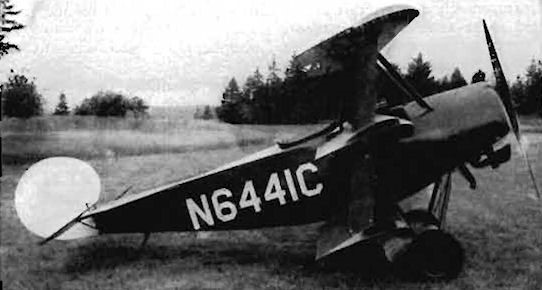
The 1957 Sorrell Triplane N6441C is a three-quarter scale replica of the WW1 Fokker triplane. Painted red, with silver rudder and white lettering, the single-seat Sorrell Triplane has a span of approximately 17 ft. 8 in., and is powered by a 65-hp Continental A65 flat-four.
The owner-constructor flew it from a private airstrip at Rochester (Washington State).
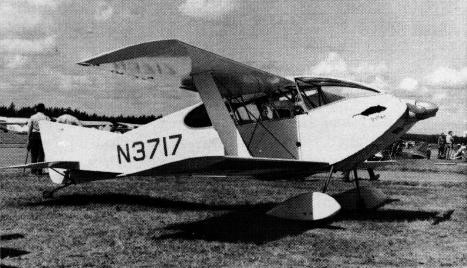
Satisfied with the lightweights, the Sorrells in 1967 constructed a sturdier negative-stagger single-place biplane powered with a converted 125 hp GPU by Lycoming. It had a streamlined fuselage profile with the windshield fairing right down to the spinner and no tapering of the side frames at the tail. Unusual was the method of mounting up – lift the rear portion of the skylight, climb up on top of the fuselage and slide down into the single seat.

Registered N3717 and named “Biggy Rat” by a younger Sorrell with an artistic bent, with the 125 hp and a very thin (10%) airfoil, “Biggy Rat” could cruise at 130 mph indicated – and could still operate with relative ease out of their 900 ft. cul-de-sac airport.
With a beefier structure and adequate power, John and Mark were able to indulge themselves in some aerobatics. “Biggy Rat” is very light on the controls – even touchy – and has done with ease all that has been asked of it in its 160+ hours of flying time.

