A double surfaced, internal crossbar hang glider design followed the Aolus, called the Sonic.
Author: Terry
Spectra Aircraft Aolus

The 1981 Aolus was the first version of this planform from Spectra Aircraft, by design engineer Carlos Moralles. It had a wide 150 degree nose angle to minimize spanwise flow and maximize span efficiency. The tail was added to provide for pitch stability which would be lost due to the minimal sweep in the wings.
The Aolus was available in three sizes: 150, 170, and 190.
It has been described as “pitch weird and yaw funky. Tests had shown the washout tubes to have no needed pitch effect, but that they were put on for pilot expectations. Assembly was flat on the ground, with tricky ways of getting that high tension sweep cable/bow sprit in place.
In 1981 Carlos Miralles taught flying on the second prototype off Cuesta Ridge in San Luis Obispo, California, and sold it for $500.
It was a superb thermalling machine. In a strong, smooth core, you could push out past stall and flat-spin at 2000 fps. With that reflexed tail, it gave you a very secure feeling that it would recover from going over the falls in violent thermals. And fast landings in high-altitude-density air were helped by that bowsprit. When it dropped, you’d fly through the bars and hit the sail (no crossbar). But the thing that made the Aolus such a great thermalling machine, that huge tail, may have kept it from attaining the best l/d between thermals.
Specter Aircraft Specter II
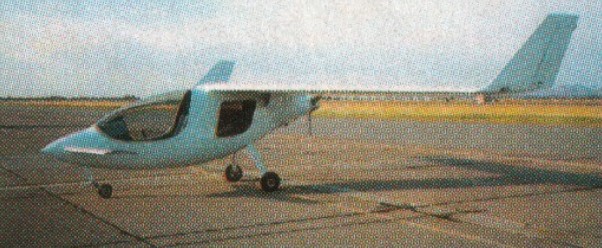
First flown in May 1997.
Top speed: 170 mph
Cruise: 140 mph
Stall: 54 mph
Range: 546 sm
Engine: Subaru EA81, 118 hp
Fuel capacity: 22 USG
Empty weight: 900 lb
Gross weight: 1600 lb
Height: 10 ft
Length: 16.5 ft
Wing span: 34 ft
Wing area: 147 sq.ft
Seats: 2
Landing gear: nose wheel
Specter Aircraft Inc
1997: 12 South 100 East, PO Box 87, Bancroft, ID 83217, USA.
UL builder
Specialized Aircraft Co Tri Turbo-3
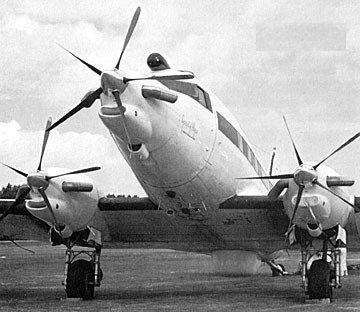
The 1977 Specialized Aircraft Co Tri Turbo-3 is a tri-motor conversion of Conroy-Douglas DC-3, built by Aircraft Technical Services Corp.
First flying on 2 November 1977 (N23SA), it features a swing-tail for loading and five-bladed props.
Engines: 3 x 1175hp P&W-Canada PT6A-45
Wingspan: 95’0″
Useful load: 12,000 lb
Cruise speed: 225 mph
Range: 2700 mi
Specialized Aircraft Co
USA
Produced Tri Turbo-3 as triple-turboprop conversion of DC-3.
Spearman S-1
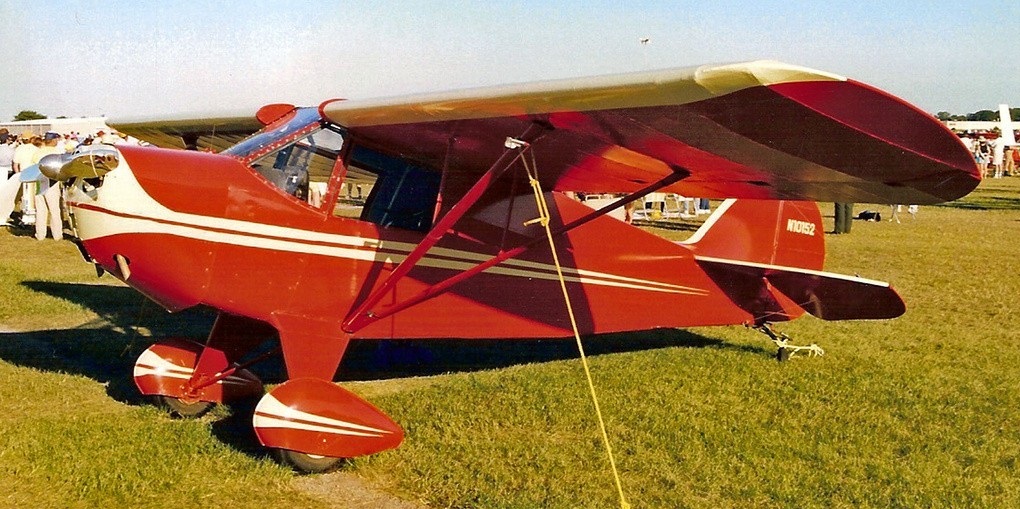
Built by Sam Spearman in 1959, the Spearman S-1 was a single-place cabin highwing monoplane registered N10152.
S-1
Engine: 55hp Lycoming
Wingspan: 24’0″
Length: 17’0″
Useful load: 235 lb
Max speed: 110 mph
Cruise: 95 mph
Stall: 40 mph
Range: 225 mi
Seats: 1
Spearman, Sam
Dunkirk OH.
USA
In 1959 Sam Spearman built the Spearman S-1.
Spear Aircraft Corp 1929
In 1929 the Spear Aircraft Corp built an aircraft of some kind but details are unknown.
Spartan Aircraft S.5 Clipper
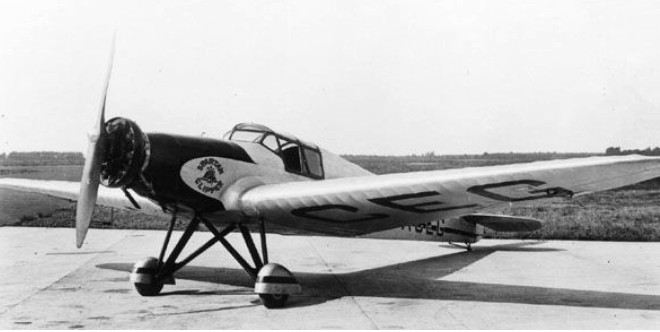
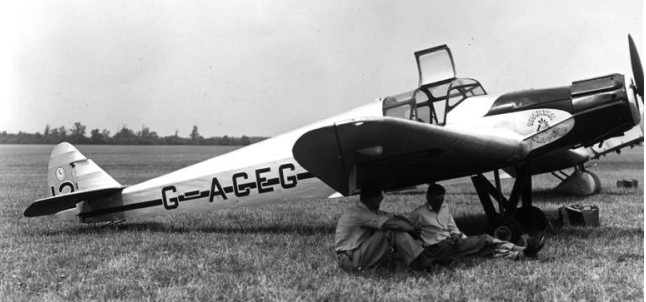
H.E. Broadsmith designed the Clipper as a two-seater; he employed the outer wings of the Monospar ST-4. Spartan Aircraft Limited built one example at their East Cowes works in 1932. The aeroplane was initially fitted with a 75-hp Pobjoy R motor. Registered G-ACEG it flew for the first time on 14 December 1932. After modification to undercarriage, cabin glazing and cowling, it received a Certificate of Airworthiness on 29 June 1933.
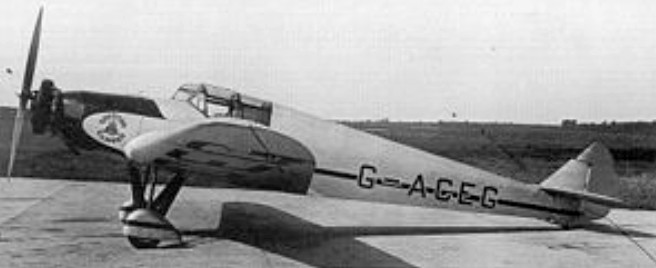
In 1933 the Clipper was raced in the King’s Cup Race.
In 1938, it was re-engined with a Pobjoy Niagara III of 90-hp, after which it was used as a company hack until 4 May 1942, when it was destroyed in an air raid on Cowes.
Engine: 1 × Pobjoy R, 75 hp (56 kW)
Wingspan: 34 ft 0 in (10.36 m)
Wing area: 150 sq.ft (13.94 sq.m)
Length: 28 ft 2 in (8.58 m)
Empty weight: 770 lb (350 kg)
Loaded weight: 1,300 lb (591 kg)
Maximum speed: 110 mph (96 knots, 177 km/h)
Rate of climb: 800 ft/min (4.1 m/s)
Crew: 2

