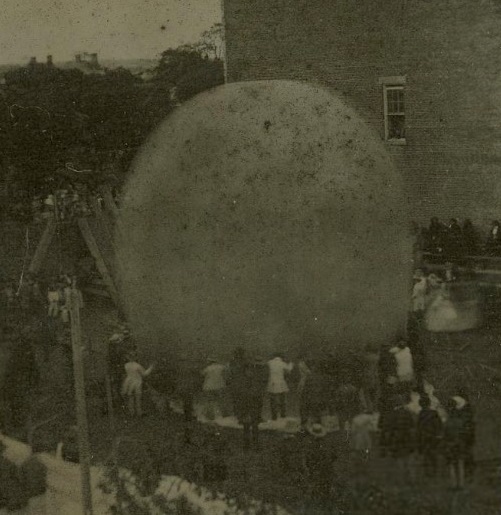
Inflated outdoors on 18 June 1857, John Steiner at Erie, Pennsylvania, began the first attempt to fly to Canada across Lake Erie.
Inflated outdoors on 18 June 1857, John Steiner at Erie, Pennsylvania, began the first attempt to fly to Canada across Lake Erie.
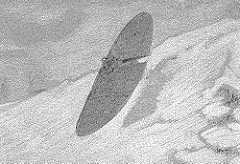
Swiss pioneer Carl Steiger-Kirchhofer (1856-1946) made some flights with this parabolic wing tail-less glider in 1891.
Swiss pioneer Carl Steiger-Kirchhofer (1856-1946) made some flights with this parabolic wing tail-less glider in 1891. In the same year he published the booklet “Vogelflug und Flugmaschine”, in which he proposed several very designs with surprisingly modern-looking features. He continued with other projects, such as a 1908 underpowered biplane and several studies of bird flight and bird models, including wind tunnel experiments.
The Steger Hornet was a 1982 hang glider.
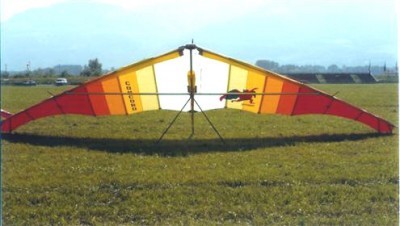
The Concord was followed by the 1981 Concord 2.
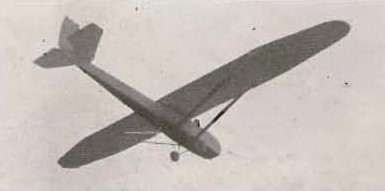
The Stedman TS-1 City of Leeds was a two-seat tandem sailplane designed and built by R.F. Stedman in Leeds, UK, in 1932. It was first flown on 21 July 1934 at Baildon, UK. It became BGA.213 and survived the war.
.
Wingspan: 50 ft
Wing chord: 6 ft
Wing area: 295 sq.ft
Weight: 424 lb
Wing loading: 2-2.48 lb/sq.ft
Seats: 2
In 1930 Charles T Stedman of South Bend IN., USA, built a three-place, open cockpit biplane, powered by a 110hp Warner Scarab engine.
In 1929 a two-place cabin biplane was the concept of Capt Charles R Bowers. Design work was done by Harold L Scholl, formerly of McCook Field, and J W Van Cleve. Money was put up by insurance broker Stedman plus Howard and Hugh Woolverton. They bought out (Clyde W) Shockley Flying Service and incorporated as Rainbow Flying Service and Rainbow Aircraft Corp.
Built at South Bend IN., USA, the biplane was registered NX294V c/n 1 and powered by a 75hp Rover engine.
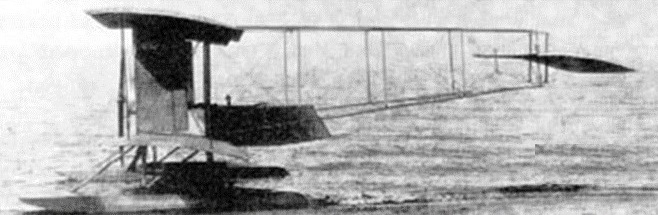
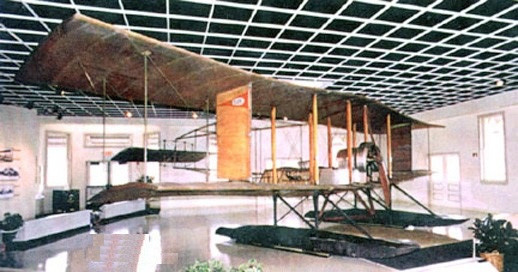
The (James S & Ralph C) Stephens Engineering Co Aerohydroplane of 1911 was designed by James Stephens as an open biplane on wheel or floats. Interplane stabilizer panels were non-controllable—for a right turn, the right panel stayed in place and the left panel swung free, and vice-versa. This prevented the aircraft (wings) from sideslipping or stalling. Turning was accomplished by the empennage flight control steering system (not wing-warp) which gimbaled 360 degrees. These was no elevator, rudder, or ailerons. 1915 US aircraft patent #1,127,105.
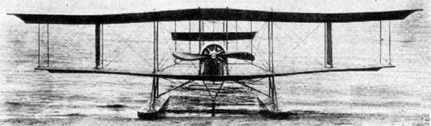
Tricycle gear or all known pictures show two 16′ Burgess pontoons.
Stored in 1914, it was recovered in 1990 to the American Wings Air Museum at Blaine MN, where reassembly began in Feb 2002. It was to be fitted with the tricycle landing gear, which incorporates pneumatic shock absorbers, independent main gear brakes, and has nosewheel steering.
Engine: 50hp Gnôme Omega
Span: (upper) 41’8″
Span: (lower) 36’0″
Length: 31’0″
Speed: 50 mph
Seats: 1
Chicago IL.
USA
In 1911 the Stephens Engineering Co built the Aerohydroplane.

