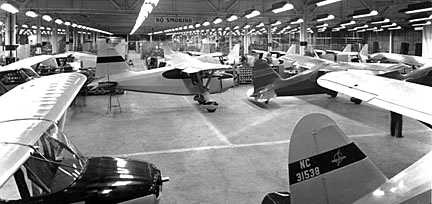
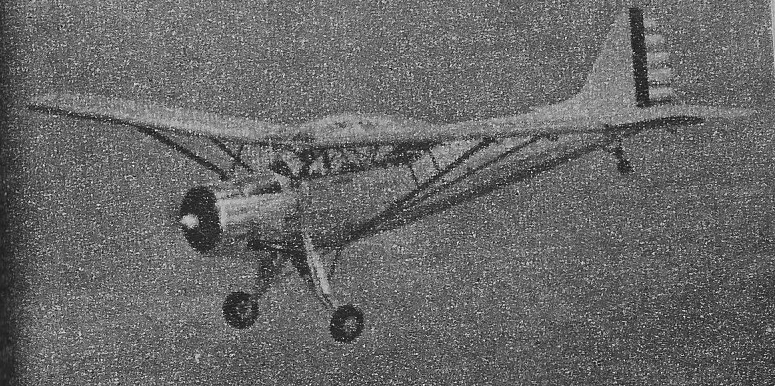
Stinson A

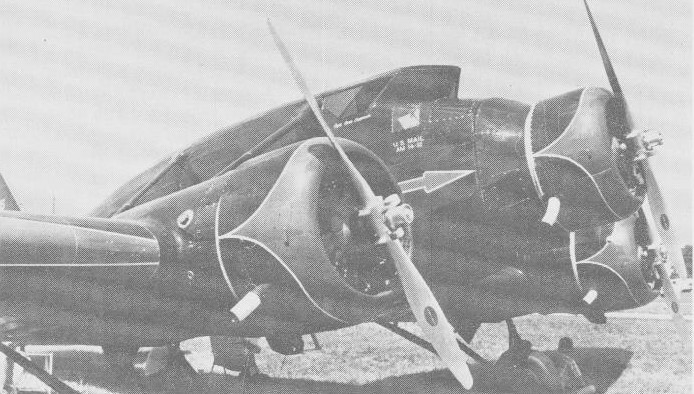
Stinson A in front of the Stinson-Northville hangar 1934

The Stinson Model A was a moderately successful airliner of the mid-1930s. It was one of the last commercial airliners designed in the United States with a fabric-covered steel tube fuselage.

Designed by Robert Ayer and first flying on 27 April 1924, a total of 31 Stinson Model As were built (ATC 556) until production ceased in 1936, cut short by the introduction of the stressed-skin Boeing 247 and Douglas DC-2. With partially retracting gear, they were priced at $37,500.
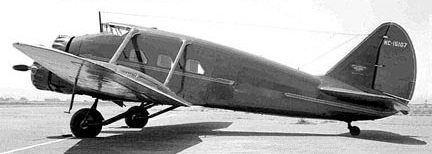
Stinson A NC14141

The registrations were NC14141, NC14566, NC14597 to NC14599, NC15105 to NC15110, NC15134, NC15152 to NC15165, and NC16110. Of those, 16 went to American Airlines and 3 to Delta Air Lines; 4 to Australia [VH-UGG, VH-UHH, VH-UKK, and VH-UYY].

Three had 245hp R-680, and two were converted in 1943 to twin-engine.

Because the waiting lists for either the new Boeing or Douglas aircraft were already too long Airlines of Australia (AOA) ordered three Stinson Model As in January 1936. These aircraft were VH-UGG Lismore (arrived per s.s. City of Winchester on 27 March), VH-UHH Brisbane (arrived per s.s. Wichita on 22 June) and VH-UKK Townsville (arrived 22 July in the s.s. City of Manilla). All three were quickly reassembled and entered the Sydney – Brisbane service, proving so successful that in August AOA ordered a fourth example VH-UYY Grafton – the very last Stinson Model A to be built – which arrived at Sydney on board s.s. Port Alma on 14 December.

With posturing from both AOA and Australian National Airways (ANA) to cut into each other’s turf by late 1936, early efforts by ANA to gain a controlling interest in AOA failed, until the losses of VH-UHH Brisbane in the McPherson Ranges on 19 February 1937 and VH-UGG Lismore on 28 March halved AOA’s main-line fleet. A merger took effect in March 1937, although the two companies retained separate identities until AOA was formally absorbed into ANA on 1 July 1942. The two surviving Stinsons were then renamed VH-UKK Binana and VH-UYY Tokana, in conformity with ANA nomenclature.

During the Second World War spare parts for the Stinsons’ aging Lycoming R-680 engines were impossible to obtain in Australia and it was decided to re-engine both aircraft with a Pratt & Whitney R-1340 Wasp engine on each wing and eliminate the engine on the nose. The additional power allowed both aircraft to fly faster and carry heavier loads, although fuel dumps had to be fitted to allow them to remain under their maximum landing weight of 10,750 lb (4,876 kg), in case of an emergency necessitating landing shortly after take-off.

On completion at Essendon, Victoria in May 1943, Binana returned to the Brisbane-Cairns, Queensland run, while Tokana was similarly converted and re-entered service in October on the run between Melbourne (Essendon), Kerang, Victoria, Mildura, Victoria and Broken Hill, New South Wales. Binana was later transferred to the Melbourne-Tasmania service.

On the morning of 31 January 1945 Tokana was on the Essendon to Kerang leg of its regular service when the port wing separated in flight between Redesdale and Heathcote, fifty miles north of Melbourne. The aircraft then plunged to the ground, killing both crew and the full load of eight passengers. An investigation revealed that metal fatigue had developed in the wing’s lower main spar boom attachment socket, the actual failure possibly being instigated by the aircraft encountering a particularly heavy gust of wind. It was the first known occurrence of this type of accident in an aircraft anywhere in the world, but it was to become a problem all too common in later years where progressively larger aircraft would be built from light-weight alloys that were more susceptible to the underlying metallurgical phenomenon. It being assumed that the same problems could occur in Binana, its certificate of airworthiness was cancelled, and the old aircraft was subsequently broken up.

A non-flying scale replica was built for a 1987 television movie account of the 1937 McPherson Ranges disaster, The Riddle of the Stinson, in which two survivors of the crash were rescued by Bernard O’Reilly.

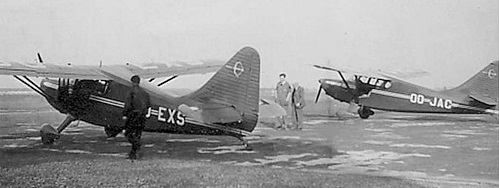
Outside Australia, examples of the Stinson Model A remained in service including Korea and Alaska for some years. Other operators included Tata Airlines in India, and in the USA American Airlines, Central Airlines, and Delta Air Lines.

DL operated three purchased new from Stinson at $34,000 each first delivered on June 22, 1935. These flew Fort Worth, Texas, to Charleston, South Carolina (Air Mail Route 24) from July 2, 1935, the last retiring on March 31, 1938.
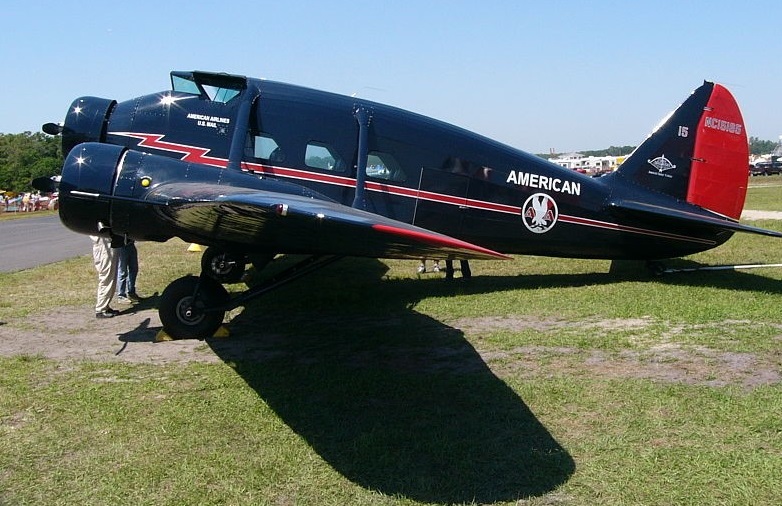
One example, N15165, still survives, having crashed in Alaska in 1947, recovered and rebuilt in 1979, it passed to the Alaska Aviation Heritage Museum in 1988 and then to Greg Herrick’s Golden Wings Flying Museum in Minneapolis, Minnesota. The aircraft was then located at the Mid America Flight Museum-Ohio Wing in Urbana, Ohio.
Gallery

Engines: 3 × Lycoming R-680-5, 260 hp (194 kW) each
Wingspan: 60 ft 0 in (18.29 m)
Height: 11 ft 6 in (3.51 m)
Wing area: 500 sq.ft (46.5 sq.m)
Length: 36 ft 10 in (11.22 m)
Empty weight: 7,200 lb (3,370 kg)
Loaded weight: 10,200 lb (4,636 kg)
Maximum speed: 180 mph (157 knots, 290 km/h)
Cruise speed: 163 mph (142 knots, 262 km/h) at 5,000 m (16,000 ft)
Range: 490 miles (426 nmi, 790 km)
Service ceiling: 17,000 ft (5,180 m)
Rate of climb: 980 ft/min (5.0 m/s)
Crew: Two (pilot and co-pilot)
Capacity: 8 passengers
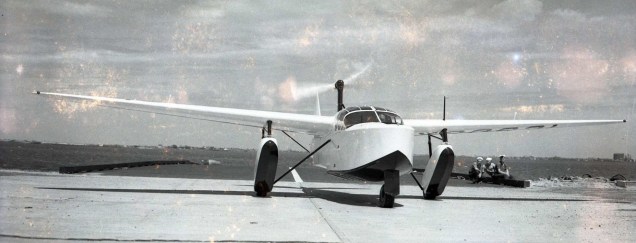
Stinson L-13 Grasshopper / Consolidated L-13 Grasshopper / Vultee L-13 Grasshopper / Convair L-13 Grasshopper / Acme Centaur / Caribbean Traders Husky / Servicair Loadmaster

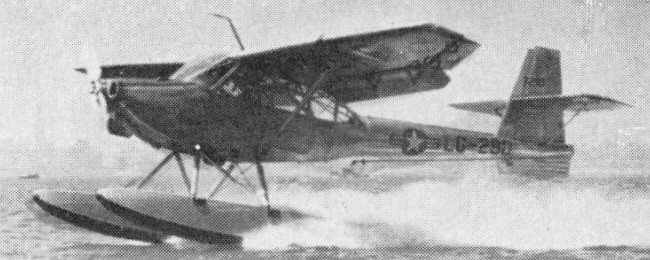
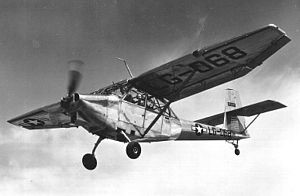
The Stinson XL-13 AAF liaison plane had a 240 hp Franklin engine.
Stinson XL-13

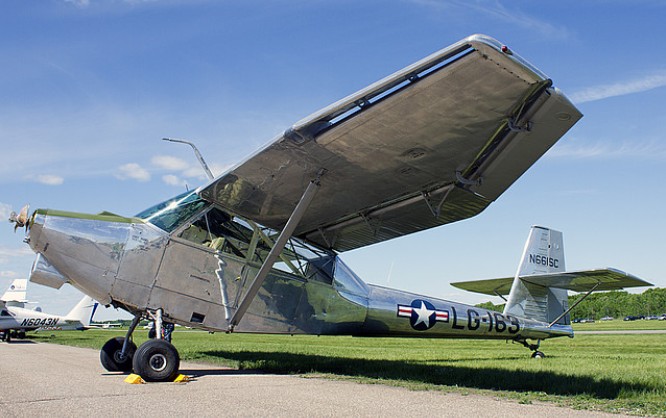
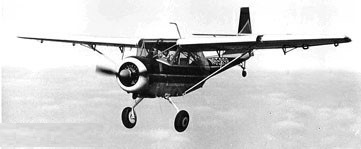
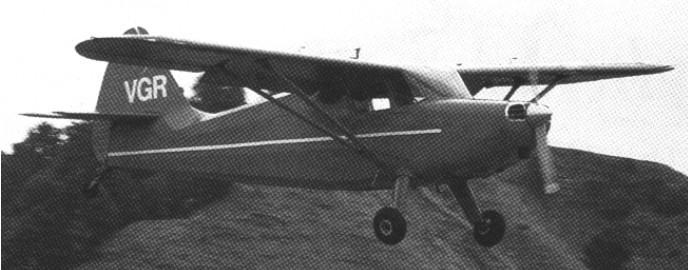
The Stinson L-13 (sometimes known as the Grasshopper) was a conventional high-wing tailwheel monoplane used for observation, liaison, and air ambulance duties first flown in 1945.

L-13A

Developed when Stinson was a subsidiary of Consolidated Vultee, rights to it were not included in the 1948 sale of Stinson to Piper. Mass production was therefore undertaken by Convair, which built 302 of them.

Convair L-13A

A 2-3 seat liaison and ambulance aircraft built for the USAF, power was a 245 h.p. Franklin O-425-9 engine. The L-13 has folding wings, interchangeable wheel, float or ski undercarriage, and can be towed as a glider. Two stretchers can be carried, as well as the pilot and medical attendant.

The United States Army received 43 ex-Air Force L-13As following the outbreak of the Korean War, serving in the Continental United States to free up aircraft for active service overseas. Some were still operated in 1955.

The L-13B were modified to operate in sub-zero temperatures.

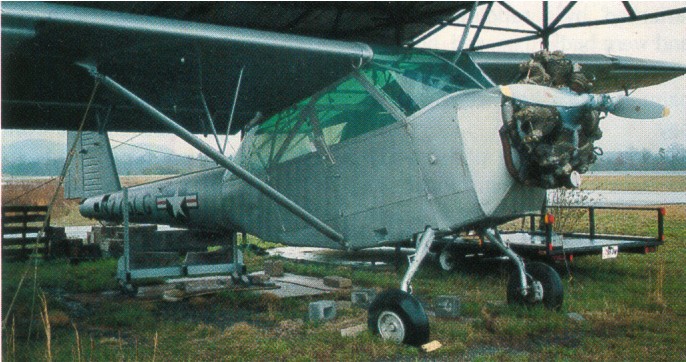
Following their military service, some were converted for civil bush flying use, fitting a radial engine by Acme Aircraft Company as the Centaur, while others underwent similar conversions by Caribbean Traders Inc, as the Husky.

L-13A converted to Caribbean Traders Husky III standard with a 450 h.p. Wright R-975 engine
L-13A

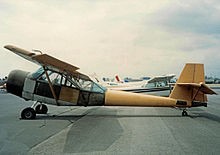
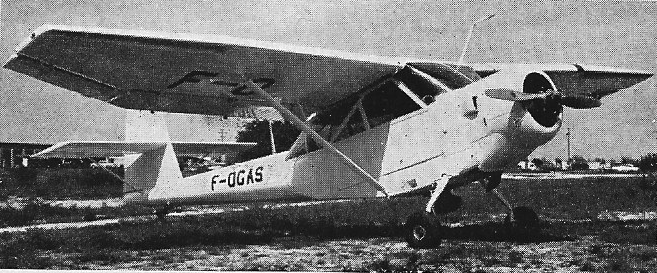
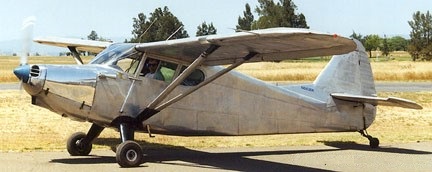
The Acme Aircraft Centaur 101 and 102 circa 1953 were six-place conversions of surplus Stinson/Convair L-13A for bush flying, based on a prototype by Longren Aircraft Co, Torrance CA (N4901V). The Centaur 101 had a 300hp Lycoming R-680-E3, and Centaur 102 with 300hp Jacobs R-755-A2. Reportedly only a few were converted.

Acme Aircraft Centaur 101
Acme Aircraft Centaur 1 April 1975 at Watsonville Airport– courtesy Thomas John Crowhurst

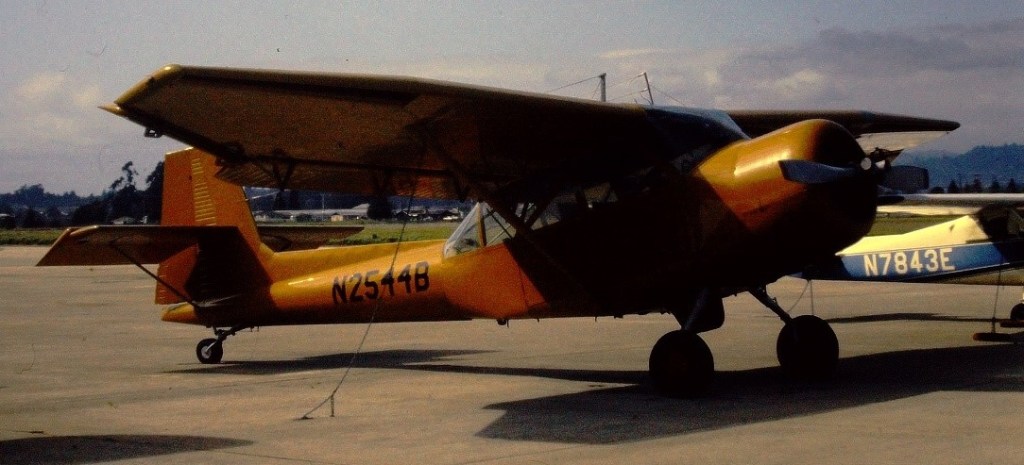
Servicair Co of Glendale CA, USA, converted Convair L-13 to Servicair Loadmaster circa 1960. One converted was N2544B and maybe others.

Conversion – Lycoming R-680 – 8 seat

Variants:

XL-13
Prototype aircraft. Two built.
Engine: Franklin O-425-6, 245 hp (183 kW)
MTOW: 2900 lb
Top speed: 115 mph
Stall: 40 mph

L-13A
Production aircraft, 300 built.
Engine: 1 × Franklin O-425-9, 250 hp (187 kW)
Wingspan: 40 ft 5½ in (12.33 m)
Wing area: 270 sq ft (25.1 m²)
Length: 31 ft 9 in (9.68 m)
Height: 8 ft 5 in (2.57 m)
Empty weight: 2,070 lb (941 kg)
Loaded weight: 3,185lb (1,448 kg)
Maximum speed: 115 mph (100 knots, 185 km/h)
Cruise speed: 92 mph (80 knots, 148 km/h)
Range: 368 miles (320 nmi, 592 km)
Service ceiling: 15,000 ft (4,570 m)
Rate of climb: 830 ft/min (4.2 m/s)
Crew: one
Capacity: two passengers
L-13B
Conversion of L-13A for cold weather operation, capable of operating from wheels, skis or floats. 28 converted.

Acme Centaur 101
Conversion of L-13 as six-seat bush aircraft. Powered by 300 hp (224 kW) Lycoming R-680-E3.

Acme Centaur 102
Similar to Acme Centaur 101, with Jacobs R-755-A2 radial.

Caribbean Traders Husky I
Civil conversion of L-13A. Retained O-425 engine.

Caribbean Traders Husky II
Civil conversion of L-13A. Powered by 300 hp R-680-13 engine on modified engine mount capable of swinging out for easy maintenance.

Caribbean Traders Husky III
Similar to Husky II, but powered by 450 hp (338 kW) Wright R-975-7 radial engine.

Servicair Loadmaster
Engine: P&W R-985, 450hp
Wingspan: 40’6″
Length: 31’7″
Useful load: 2160 lb
Cruise speed: 115 mph
Stall: 50 mph
Seats: 4

Stinson Twin Stinson

Introduced in 1952, a metal covered twin rudder tail and a fabric covered fuselage, four-seater. It was powered by twin 125-hp Lycoming engines. The Twin Stinson design acquired by Piper in 1949, evolved into the Apache, Piper’s first all metal product. The PA 23 Apache 4/5 seat light twin first flew in March 1952.

Engines: 2 x Lycoming O-290-D-2, 135 hp
Cruise: 150 mph @ SL

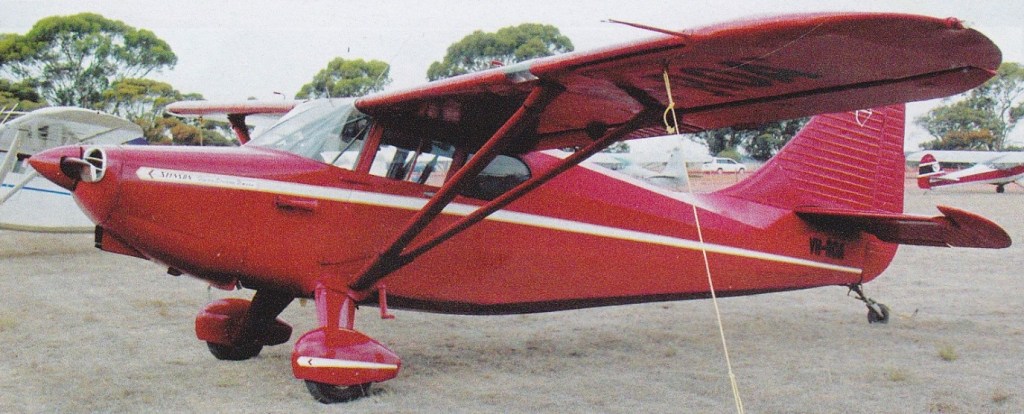
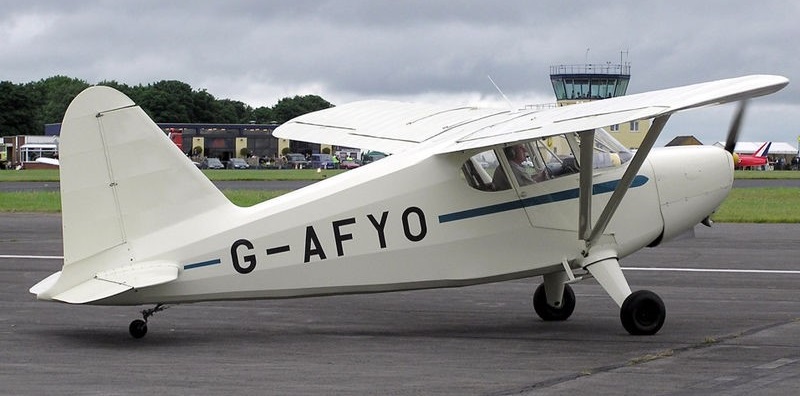
Stinson 108 Voyager / Univair Stinson 108-5

The model 108 Voyager was a post-war production version of the model 105 Voyager (90 hp Franklin) of 1939. Designed by B J Simmons the 108 Voyager first flew on 1 December 1944. The prototype NX31519 was powered by a 125hp Lycoming.

When introduced in August 1945 (ATC 767), the model 108 Voyager accounted for almost half of all four-place aircraft sold at $5,000, $5,489 in 1946. By the end of 1947, Stinson Aircraft had built over 5200 Voyagers, including a Station Wagon version.

Two versions powered by a 165 hp Franklin 6A4-150-B3 engine were produced in quantity by the Stinson division of Consolidated Vultee, the Standard Voyager and the externally similar Station Wagon.

The two-place Station Wagon sold for $5,745. The model 10-A was an enlarged version.

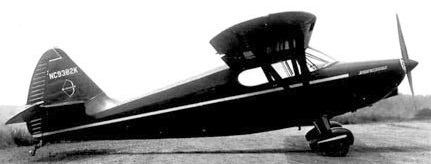
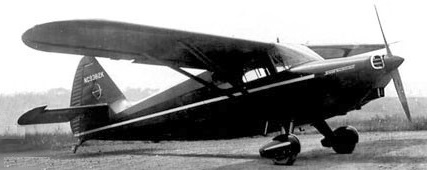
Stinson Station Wagon NC9382K

By then the boom had ended and 200 unsold Voyagers were parked at Willow Run Airport after 742 were built.
Stinson 108-1 N8436K

In 1947 the model 108-1 appeared with cosmetic improvements. 1,508 were built.

The 108-2, powered by a 165hp 6A4-B3 engine, was priced at $6,250 and 1,250 were built.

Stinson 108-2 N9368K

The 1948 108-3, renamed Piper-Stinson, enlarged tail and fuel tanks. 1,760 were built, including 125 built by Piper, some with a smaller, Piper-designed vertical tail. 18 wee exports to Spain.

Stinson 108-3 NC9382K
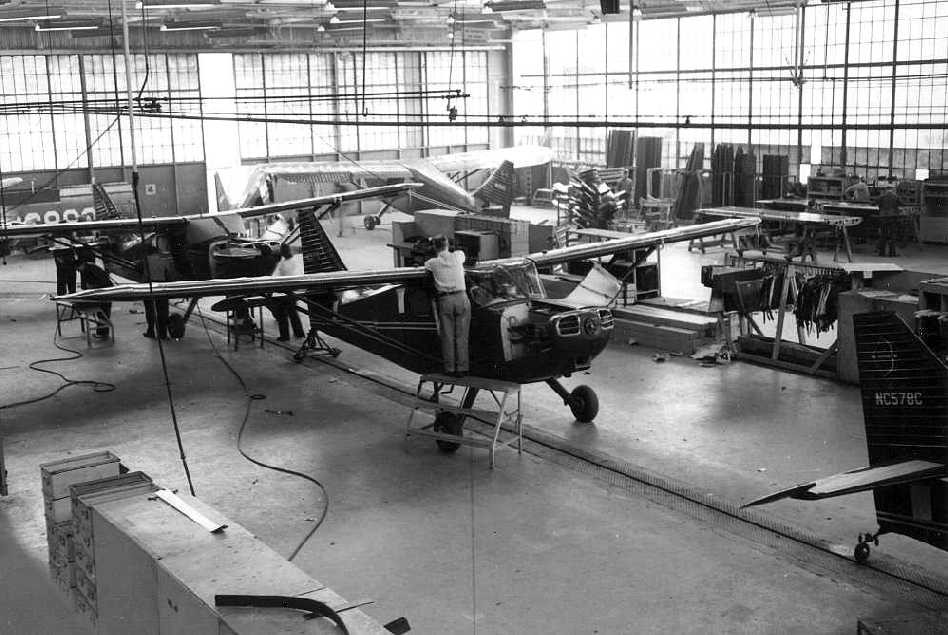
Wayne Stinson Factory building Stinson 108-3 Flying Station Wagons late September / early October 1947.
NC578C is shown on the production line, with 4 other 108-3s in various stages of construction.
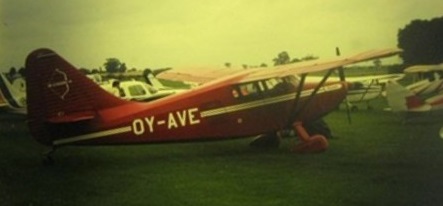
Stinson 108-3 Voyager OY-AVE

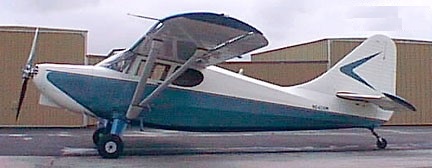
In 1964 Universal Aircraft Industries, Denver, re-certificated the Stinson 108-3 Voyager as the Model 108-5, powered by a 180 hp Franklin. First flying on 21 April 1964, N5565V, it was licenced in both utility and normal category and gross weights were 2000 lb and 2400 lb respectively. Cruising speed was 126 mph.

Univair also marketed kit for modifying the 108-3 to -5.

In the 1960s Chambers Aircraft Co of Greenville TX offered tricycle-gear conversions for Voyagers.

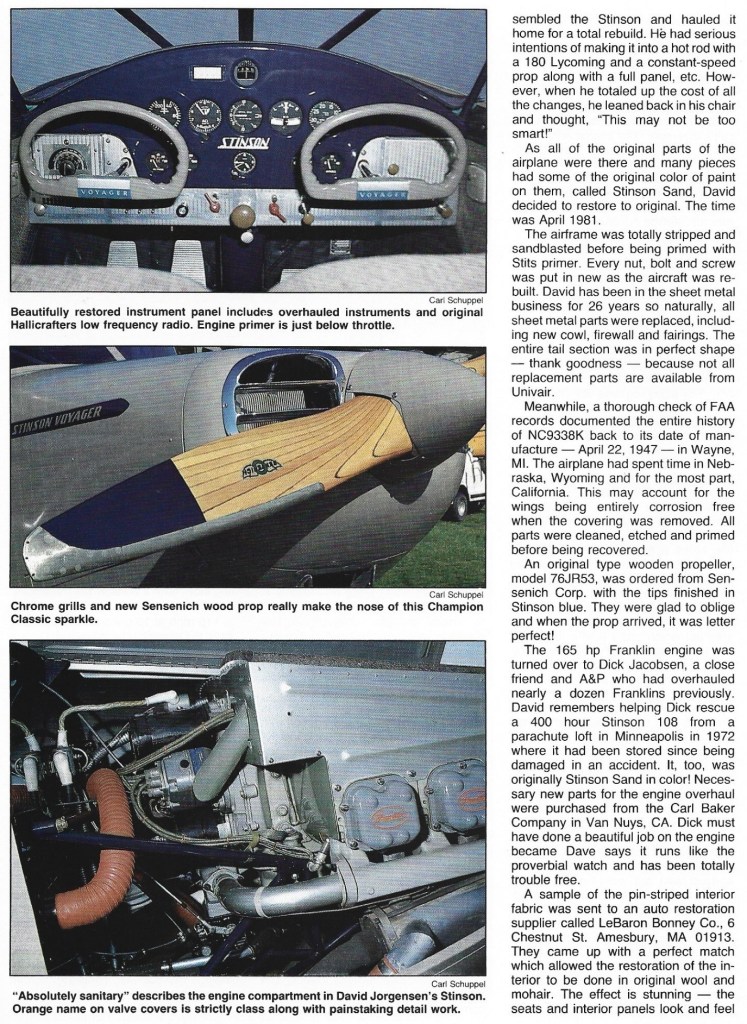
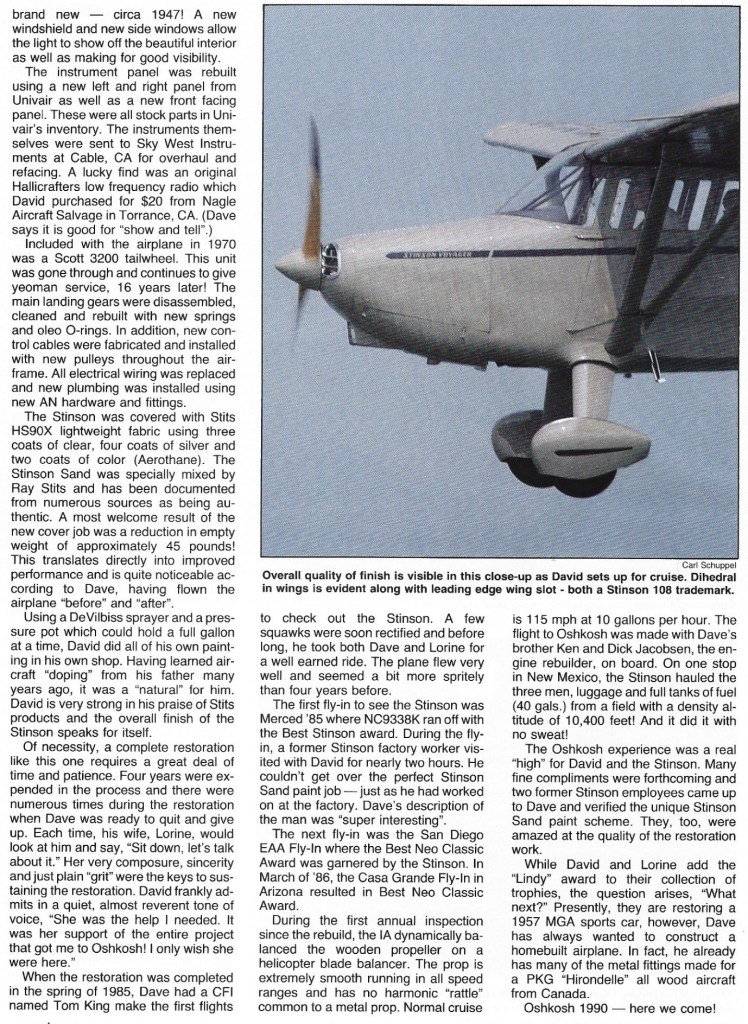
1986 Stinson 108 Voyager Grand Champion

Gallery

108-2
Engine: 165hp 6A4-B3
Cruise: 130 mph
Stall: 50 mph

Voyager 150
Engine: 150hp Franklin 6A4-B31
Wingspan: 34’0″
Length: 25’3″
Seats: 3-4

Stinson Station Wagon 108-3
Price: US$6,484 (new)
Engine: Franklin 6A4-165-B3, 165 hp
Fuel type: 80/100LL
Propeller: Sensenich, Fixed
Landing gear type: Conventional
Max ramp weight: 2400 lb
Gross weight: 2400 lb
Max landing weight: 2400 lb
Empty weight: 1320 lb
Useful load: 50 lb
Oil capacity: 8 qt
Wingspan: 34 ft
Overall length: 24 ft. 6 in
Height: 6 ft. 10 in
Wing area: 155 sq. ft
Wing loading: 15.5 lbs./sq. ft
Power loading: 14.5 lbs./hp
Wheel track: 84 in
Wheel size: 6 in
Seating capacity: 4
Cabin doors: 2
Cabin width: 39 in
Cabin height: 46 in
Baggage capacity: 100 lb
Max level speed: 108 knots
Cruise speed 75% power: 104 knots
Fuel consumption 75% power: 10.0 USgph
Stall speed (flaps up): 54 knots
Stall speed (flaps down): 48 knots
Best rate of climb: 550 to 650 fpm
Service ceiling: 16,500 ft
Takeoff ground roll: 980 ft
Landing ground roll: 940 ft

Stinson 108-3 on Edo 2425 Float
Engine: Continental O-470, 230 hp
Gross weight: 2500 lb
Max ramp weight: 2500 lb
Useful load, std: 800 lb
Power loading: 10.9 lbs./hp
Seating capacity: 4
Climb rate: 750 fpm
Max certified altitude: 14,000 ft
Max cruise range, 75%: 110 nm
Takeoff distance, wheels: 600 ft
Landing distance, wheels: 550 ft

Universal Stinson 108-5
Engine: Franklin 6A-335-B1, 180hp
Wingspan: 33’11”
Length: 25’2″
Useful load: 1100 lb
Max speed: 152 mph
Cruise speed: 132 mph
Stall: 65 mph
Range: 475 mi
Seats: 4

Stinson 108 Voyager

Stinson 105 / 10-A / Voyager / YO-54 / O-62

Stinson 105

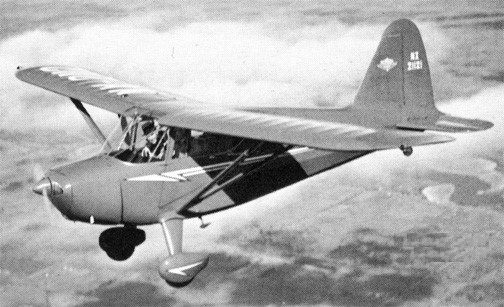
The pre-war civilian Stinson HW-75 (ATC 709) was a 75-horsepower civilian high-wing design built by Peter Altman, William Mara, Maurice A Mills, and Lewis E Reisner at the Stinson Aircraft Company at Wayne, Michigan and marketed as the Model 105. The “105” designation was unofficial, indicating cruising speed and used for publicity when first introduced at NY World’s Fair, priced at $2,995. The prototype HW-75, NC21121 c/n 7000, first flew on 3 February 1939 (piloted by Al Schramm) with a 50 hp engine but the production Model 105 airplanes were fitted with either the standard 75 hp engine, or an optional 80 hp Continental for $3,375. The Stinson 105 featured two side-by-side seats up front and a third “jumpseat” in the rear of the small cabin on which a child or small adult small could sit sideways. Featuring aerodynamic Handley-Page style slots on the outer third of the wings, the design was easy to fly, difficult to stall aerodynamically, and nearly impossible to spin.

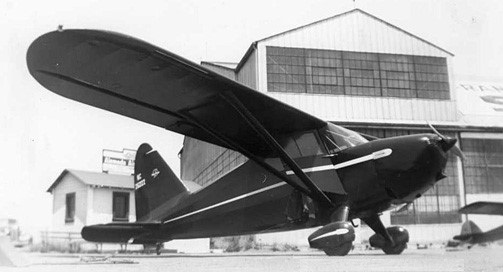
Stinson HW-75 NC26222

275 HW-75 were built, including 20 to the RCAF. The design was modified in 1941 as the Stinson-Vultee V76 with a 185hp Lycoming O-435 engine.

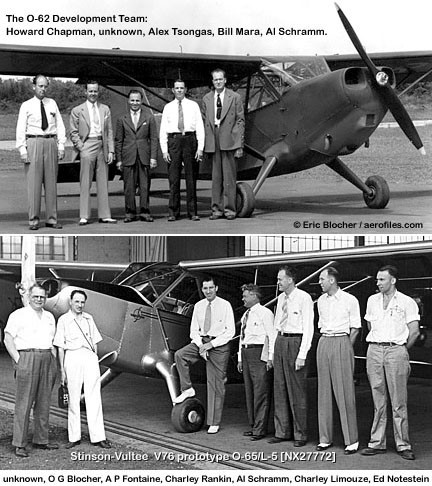
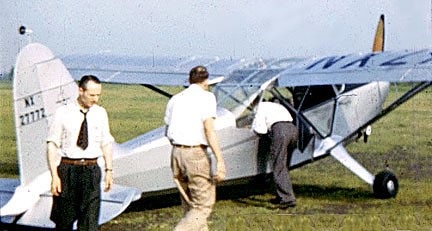
Stinson V76 First flight NX27772

The Model 76, NX27772, first flew on 28 June 1941, piloted by Al Schramm.

In 1940, the Model 105 saw some minor improvements and was marketed as the “New 105”. Four months later, in keeping with the automobile industry practice of introducing a new model in the spring each year, Stinson came out with the Model 10 Voyager that had a slightly wider cabin and some cosmetic changes but was essentially still a Model 105 with a new look. The engineering designation was HW-80, but the 75 hp engine was also offered as a cheaper option. The 80 hp engine was now standard and they called it the “Voyager”. In early 1940, Stinson moved production from Michigan to a new factory built in Nashville, Tennessee where the Model 10’s were built. Shortly after this move, the company became a subsidiary of the Vultee Aircraft Corporation.

For the 1941 model year, more cosmetic changes and interior refinements were made and a 90 hp Franklin 4-cylinder engine was fitted. This version was sold as the Model 10A Voyager. In the postwar era, the fuselage of the 10A was enlarged to accommodate four seats, and the four-cylinder powerplant was replaced with a Franklin 125 hp six-cylinder engine, and eventually a 150hp and 165 hp “heavy case” version. This 4-seat conversion became the Stinson Model 108 Voyager and was the only civilian plane commercially produced by Stinson after WWII. The prototype first flew in December 1944.

Six examples of the Model 10 Voyager equipped with 80 horsepower Continental A-80 engines, Lear radios and wind-driven electric generators were purchased by the military for testing under the experimental designation YO-54 41-143 to 41-148.

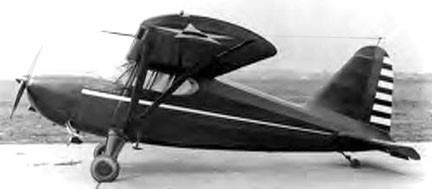
Stinson YO-54

The Stinson 75, or Vultee-Stinson V75, of 1940 was the first prototype of L-5, militarized from the Model 10 with a 100hp Lycoming engine. Designed by A P Fontaine, it was first flown on 19 June 1940, piloted by Al Schramm. Evaluated in September 1940 by the Air Corps for potential use as a low-cost off-the-shelf replacement for the complex, expensive and much larger O-49 Vigilant that Stinson had designed in 1939, the YO-54 failed to meet performance requirements and other military criteria. The only addition not found on the stock Model 10 was a wind generator used to run a radio set specified in the contract. Four of the six were passed to the Civil Air Patrol. The other two were scavenged for parts.

The sole 75C, NX27711, was a 75B modified with a 125hp Franklin engine.

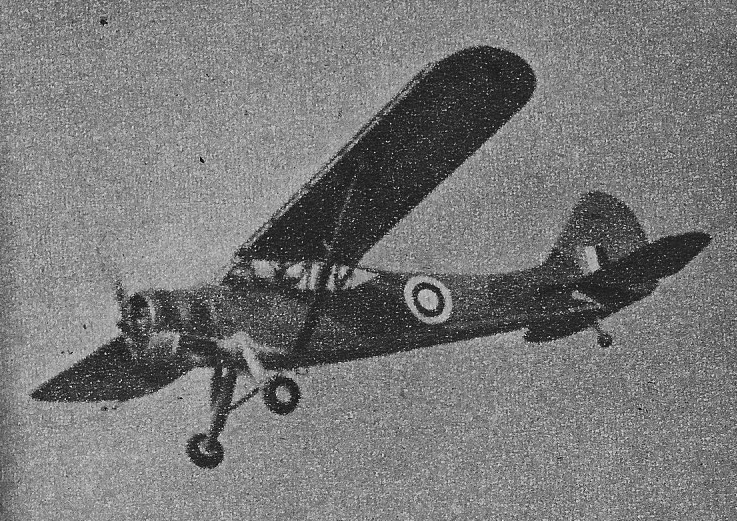
The US Army Air Corps used at least six 1940 V-75 for observation and liaison in 1942. They were 10-A (Model HW-90 ATC 738) powered by 90 hp Franklin O-200 engines and designated L-9A and YO-54. About 500 of the 10A were built, priced at $3,355. Eight civilian Model 10-A with 90 hp Franklin 4AC engines were used designated O-49/L-9B with Franklin O-200 engines. A few of 600 ordered by France were operated in France. One went to the RAF. One -75B was modified with a 125hp Franklin as the -75C, NX27711.

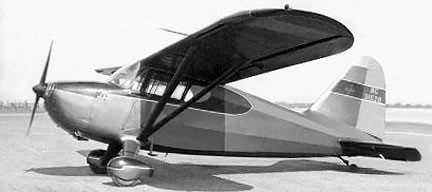
Stinson 10 NC26222
Stinson 10-A

The Stinson 10-A, also known as the Voyager 90, was a three place high wing monoplane, powered by a four cylinder, 90 hp Franklin 4AC engine, with a fixed pitch, wooden propeller. It received ATC #738 in early March 1941. The Voyager was a new version of the Model 105. It had improved attributes and performance, the cowling had been redesigned and shortened, and along with a newly contoured windshield, provided better visibility. Over 700 of those Voyagers were built in 1941.

The 10-A was equipped with ball-bearing mounted flight controls and leading edge slots. Three position flaps, shock absorbing oleo spring gear struts, 48 inch tread main gear, hydraulic brakes and a steerable tail wheel suited short field work.

The 10-A wings had spruce spars, and the fuselage was welded steel tube. A 20 USG fuel tank was installed in the right wing and another 20 USG tank could be installed in the left wing. The vertical stabiliser was steel, while the horizontal stabiliser was built up from spruce and covered with poplar plywood.

The aircraft had a fly away price of US$3355. The plane was available as a Standard or Deluxe model. The Deluxe having navigation lights, an electric starter and a generator, and bonding for a radio that could be later mounted in its walnut finished instrument panel.

Stinson 10As on the assembly line 6 March 1941

The 10-B of 1941 (ATC 738) was a conversion of 10-A NC27714 c/n 7761 to 75hp Lycoming GO-145-C3 engine.

In 1948 Piper took over the Stinson Division of Consolidated Vultee Aircraft Corporation and acquired the Stinson Voyager production rights, but production of this type was soon halted.

Gallery

HW-75 1
Engine: 50hp Lycoming
Seats: 3

HW-75 / 105 Voyager
Engine: 75hp Continental A-75-3
Wingspan: 34’0″
Length: 22’2″
Useful load: 657 lb
Max speed: 105 mph
Cruise: 100 mph
Stall: 43 mph
Range: 350 mi
Ceiling: 10,500′
Seats: 3

10 Voyager / HW-80
Engine: 90hp Franklin 4AC-199
Wingspan: 34’0″
Length: 21’8″
Useful load: 677 lb
Max speed: 115 mph
Cruise: 108 mph
Stall: 47 mph
Range: 330 mi
Ceiling: 13,000′
Seats: 3

10-A Voyager / L-9B
Engine: Franklin 4AC, 90 hp
Height: 6 ft 6 in
TO dist: 550 ft
ROC: 600 fpm
Max speed: 115 mph
Cruise range; 330 miles
Landing speed: 47 mph
Landing roll; 150 ft

L-9A
Engine: 90 hp Franklin O-200