Back to Stratos Aircraft Stratos




Back to Stratos Aircraft Stratos

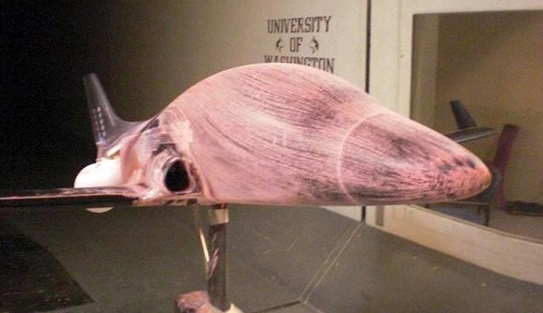
The existence of the Stratos 714 project was announced on 16 July 2008 by Stratos Aircraft of Redmond, Oregon and a cabin mock-up was shown at AirVenture in July 2009. At that time the company predicted the jet would sell for about US$2M. The company was seeking US$12M to build two prototypes and a further US$100M to complete certification and commence production. In November 2016 the company indicated it had no firm schedule for certification.
The company was accepting refundable customer deposits of US$50,000 to be held in interest-bearing escrow in 2009. The first deposit was made by Cascade Air Charter, of Bend, Oregon in October 2009.
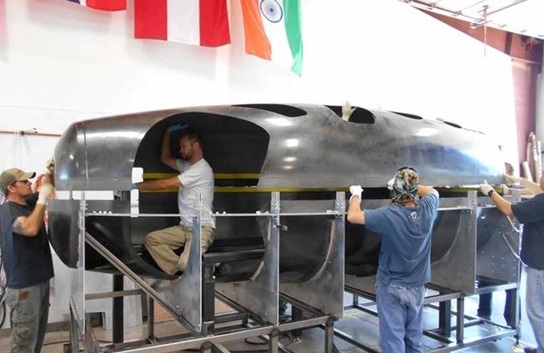
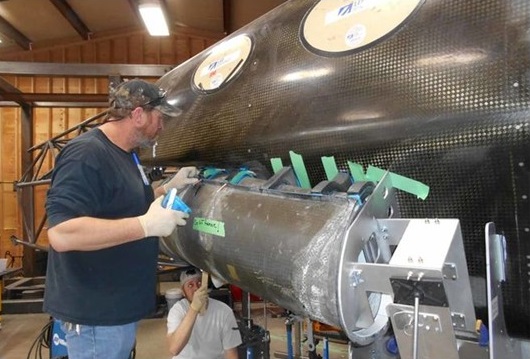
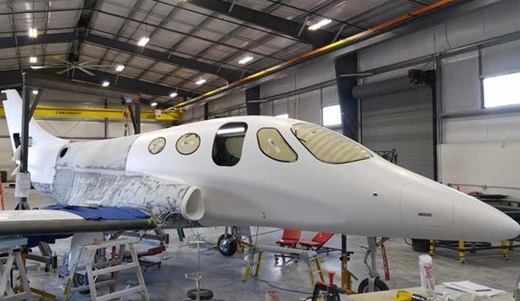
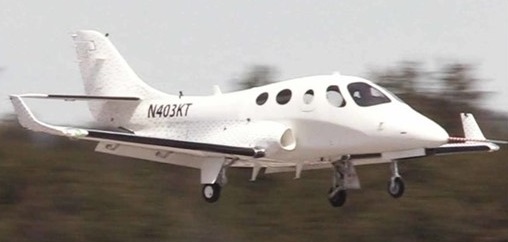
The aircraft features a cantilever low-wing with winglets, a cruciform tail, a four-seat cabin pressurized to 10.0 psi (69 kPa), retractable tricycle landing gear and a single Pratt & Whitney Canada JT15D-5 jet engine. The airframe is made predominately from carbon fiber reinforced polymer. Initial design goals included a 400 kn (741 km/h) cruise speed and 1,500 nmi (2,778 km) range, with NBAA IFR reserves.

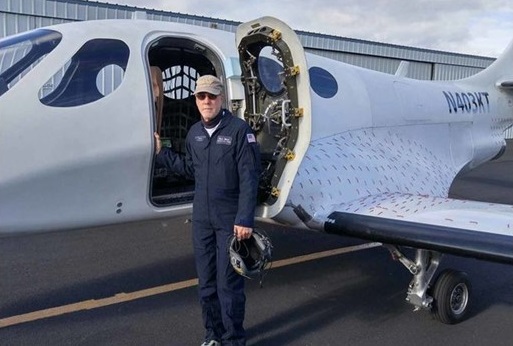
First flight of a proof of concept aircraft, registered N403KT, was achieved on 21 November 2016. The initial flight of the 714 was limited to 128 knots and 3,700 feet agl with the gear extended and flaps at 24 degrees.
The company intended to make a public introduction of this aircraft at AirVenture in July 2017. The test pilots logged 52 hours on 33 flights. The aircraft topped out at 320 ktas and 17,000 feet, with a max test weight of 8,300 pounds.
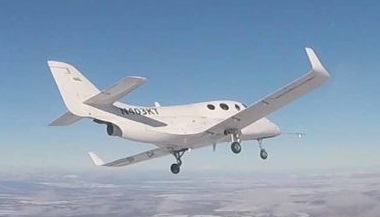
In February 2017 prototype flight testing continued. The company did not have the funding to complete certification, and was no longer accepting deposits from customers. Stratos CEO Michael Lemaire indicated at that time, “we are privately funded for the prototype phase, during which we are planning to explore the full flight envelope and draw conclusions for the certification stage. We are not yet funded for the certification phase. At present, we have no plan to take deposits towards deliveries, which are still many years away.”
Stratos 714
Engine: 1 × Pratt & Whitney Canada JT15D-5, 2,900 lbf (13 kN) thrust
Wingspan: 40.5 ft (12.3 m)
Length: 35.8 ft (10.9 m)
Height: 9.8 ft (3.0 m)
Empty weight: 4,367 lb (1,981 kg)
Gross weight: 7,213 lb (3,272 kg) maximum take-off weight
Fuel capacity: 2,605 lb (1,182 kg)
Maximum speed: Mach 0.7
Cruise speed: 415 kn (478 mph; 769 km/h)
Stall speed: 63 kn (72 mph; 117 km/h)
Range: 1,500 nmi (1,726 mi; 2,778 km) with NBAA IFR reserves
Service ceiling: 41,000 ft (12,000 m)
Time to altitude: 17 minutes to FL370
Crew: one
Capacity: three passengers
A company founded by Microsoft co-founder Paul Allen. Allen founded the company in 2011 as part of a plan to make travel to low Earth orbit more accessible.
CEO of Stratolaunch, Jean Floyd
The 1949 Strat, four-place cabin, low-wing monoplane NR74106 was designed by Mischa Kantor as an all-metal entry in a depressed market. Priced at $4,000, only one was built.
Engine: 150hp Franklin
Wingspan: 35’0″
Length: 23’6″
Cruise: 135 mph
Range: 600 mi
Seats: 4
W.P.A. Straith of Norwood (outside Winnipeg, Canada), is said to have dismantled his 1911 Wright Model B, and built a new aircraft from it in 1912. Examining photos in; Canadian Aircraft Since 1909 (pp 437-438), it is clear that this aircraft was either a Williams Model 2, or was built along the lines of the Model 2. A different four-wheel Wright-type undercarriage is fitted (possibly taken from the Model B), as is a different engine, but the airframe is distinctly quite similar to the Model 2, including the radiator type, which was fitted to one Model 2. The engine bearers have been lengthened, apparently due to the use of a smaller (but heavy), 100 hp six-cylinder, two-stroke inline Emerson engine. Straith, used the aircraft until 1915, when it was destroyed in a crash. While it is dubious that the dimensions of the Straith were the same as those of the Williams Model 2, the span is given as 42′, the length is listed as 22′, and the height was 9′ (the figures may have been rounded-off, according to the aforementioned book).
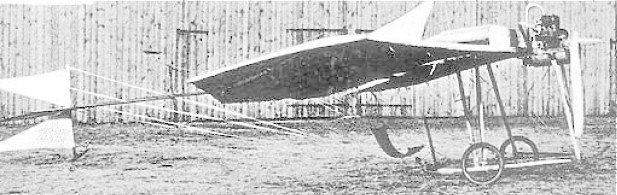
Karl Strack built his first Eindecker in 1910. It was somewhat inspired by the Grade Eindecker and powered by a 25 hp Hilz Type 1 engine. Brief flights were made in June 1910 on a grass field around Duisberg, Germany.
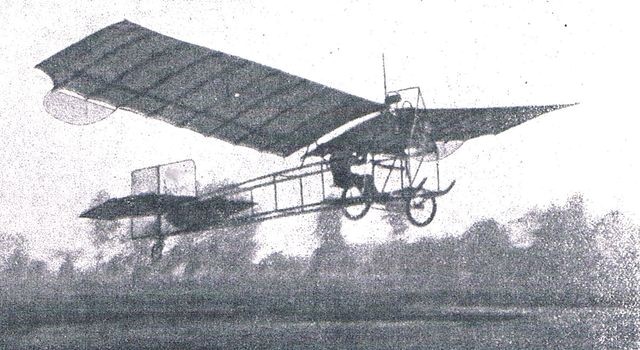
The Strack Hochdecker of 1911 is a high-wing monoplane built by the Strack Flugzeugwerke of Duisburg; a completely open model of tubular metal construction, fitted with a two-cylinder rotary engine which drove two counter-rotating propellers.

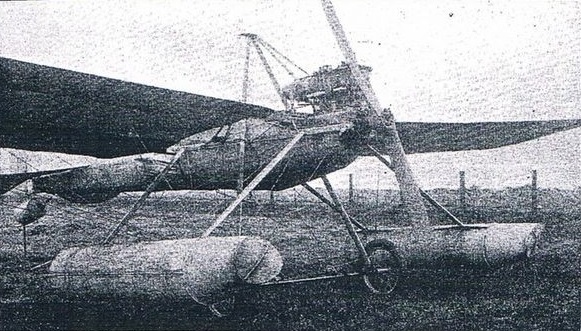
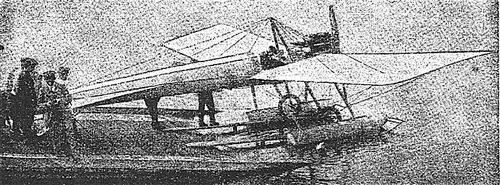
Amphibian monoplane entered by the builder Strack Flugzeugwerke (Duisburg) into the Bodensee-Wasserflug 1913. The machine had a unique amphibian construction which worked such that the land undercarriage was fixed but the floats could be moved up and down. When landing on the water the floats were set in the down position, so that the fixed land undercarriage cleared the water.
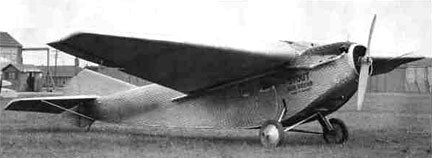
Designed by William Stout and George Prudden, the 1923 1-AS Air Sedan was all-metal construction with corrugated skin. First all-metal commercial airplane in the US and basis for the 2-AT.
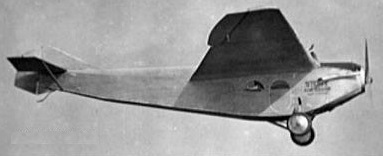
Test-flown by Eddie Stinson, it was powered by a 90hp Curtiss OX-5, replaced by a 150hp Hisso when it was apparent only 3 passengers could be carried with the OX-5. With the Hisso engine. Five could be carried.
One 1-AS Air Sedan was built, plus another as 1925 model TT single-place for evaluation by USPO as a “flying mail truck”.
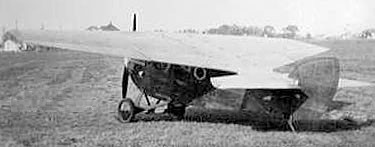
The 1920 Stout Batwing Limousine was a five-place cabin high wing monoplane. A thick cantilever wing, similar to 1918 Batwing, was married to a wide fuselage.
It was test-flown by Bert Acosta at Selfridge Field in late 1920. The one built went to the to USN.
Engine: 200hp Packard
Wingspan 36’0″
Useful load: 1170 lb
Max speed: 120 mph
Stall: 40 mph
Seats: 5

