Back to Sukhoi Su-25


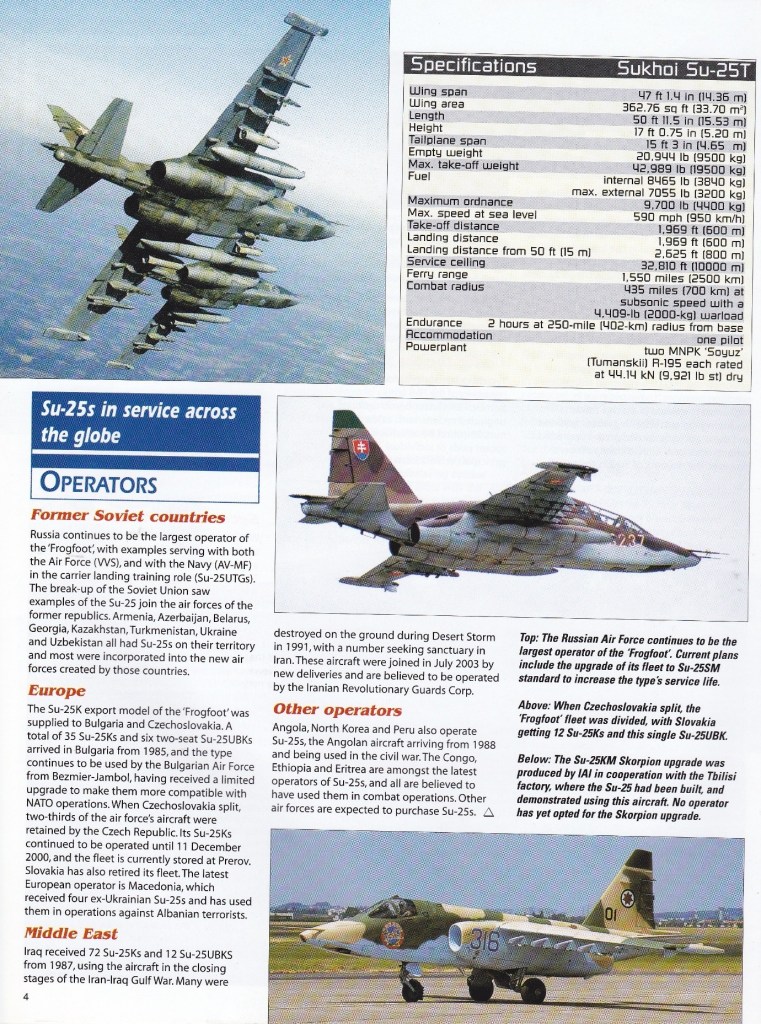
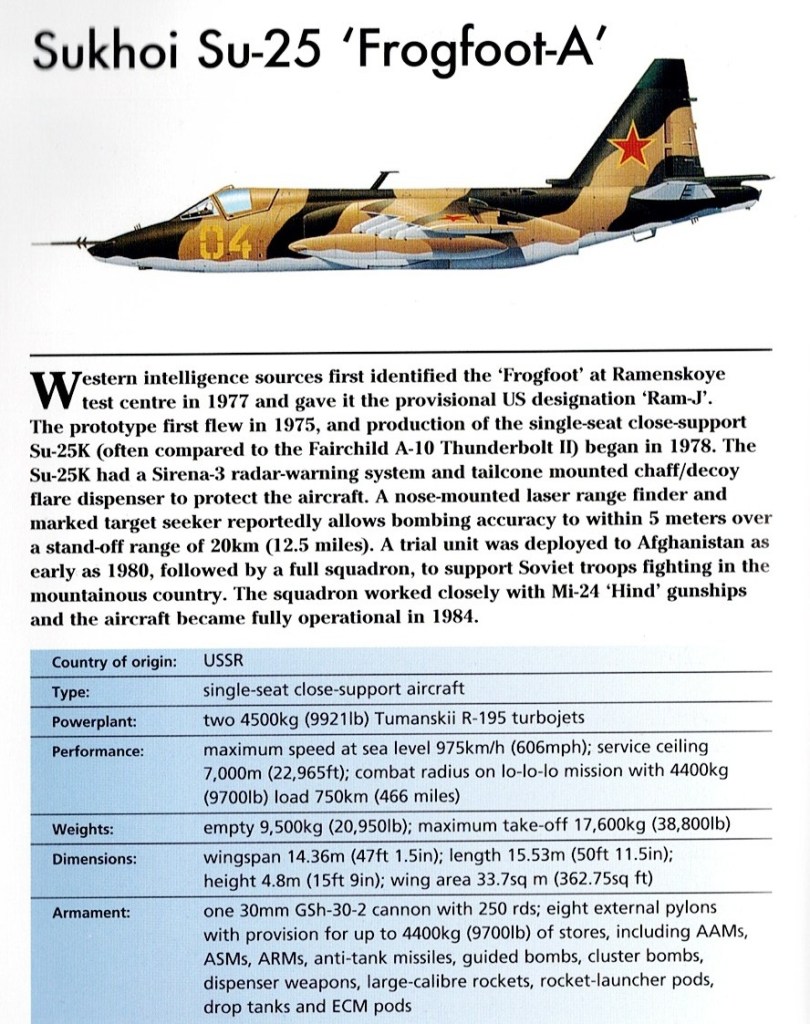


Originally known to NATO as the Ram-J (tenth new type seen at Ramenskoye), it was identified subsequently as the Sukhoi Su-25. The Su-25 ‘Grach’ (Rook), NATO callsigned ‘Frogfoot’, is a dedicated strike attack aircraft designed for the Close Air Support and Anti-Tank roles from Tbilisi Aerospace Manufacturing (TAM). The Su-25 is designed to withstand heavy enemy fire relying on the heavily armoured airframe and cockpit, seperated engine bays and foamed internal fuel tanks. The design sacrifised speed for low-level maneuvrability, low-speed handling and weapons accuracy. A special design feature are the wingtips which split at the rear to form airbrakes, this to furthur improve low-speed handling. The nose houses a laser rangefinder which also acts as target designator. Above the tailcone at the back of the aircraft is a Sirena-3 radar warning system located.
The aircraft may be operated from high mountain runaways (at 3000 m above sea level). The rear cockpit is equipped with a periscope to improve the vision of the front during takeoff, landing and flight. The rear cockpit of an instructor is additionally equipped with a failure simulator of the aviation instruments and systems in the front cockpit and flight controls with the priority action.
The Su-25 carries stores on ten underwing pylons. The inner pair are plumbed for external tanks, and the outer pair are for Atoll or Aphid air-to-air missiles. Armament includes an internal 30mm cannon, and equipment fitted includes a headup display and a laser range-finder. The Su-25 also features unusual wing-tip split-flap speedbrakes and a split rudder.
By 1982, a trials squadron was operating in Afghanistan against tribesmen opposing the Soviet occupation. This opportunity has been taken to develop operational techniques, including co-ordinated low-level attacks by Mil Mi-24 Hind helicopter gunships and Su-25s in support of ground troops.
Deployment of the single-seat close-support Su-25K began in 1978, and it saw considerable operational service during the former Soviet Union’s involvement in Afghanistan (the first machines to be deployed being pre-production aircraft, designated T-8) and the ruggedness of the design was revealed in dramatic fashion on numerous occasions. One particular aircraft, flown by Colonel Alexander V. Rutskoi, was actually heavily damaged on two occasions, once by anti-aircraft fire, then by Sidewinder air-to-air missiles launched by Pakistani Air Force F-16s. On each occasion the pilot managed to return to his base. The aircraft was repaired, repainted and returned to service. Rutskoi was less lucky – while flying a second Su-25 on a combat mission, his aircraft was hit by anti-aircraft fire and a Blowpipe shoulder-launched missile, which exploded in the starboard engine. The aircraft still flew, but another burst of AA brought it down. Rutskoi ejected and spent some time as a prisoner of the Pakistani authorities before being repatriated. However, operations in Afghanistan also revealed a number of serious shortcomings. For example, the close positioning of the Su-25’s engines meant that if one took a hit and caught fire, the other was likely to catch fire, too. When the ‘Frogfoot’ first encountered the Stinger shoulder-launched missile, four aircraft were shot down in two days, with the loss of two pilots; it was found that missile fragments shredded the rear fuselage fuel tank, which was situated directly above the jet exhaust.
First production variant was the Su-25 (NATO Frogfoot-A), the Su-25K being the first export variant of the type. While Warsaw Pact Su-25Ks resembled early Su-25 models both externally and internally, the Su-25Ks exported to Iraq and North Korea had downgraded avionics and fire control systems. The Su-25BM (Su-25BMK for export) is a modified variant of the Su-25 (Frogfoot-A) capable of towing aerial targets for air-to-air and ground-to-air gunnery training. The internal cannon was deleted.

The Su-25 Frogfoot subsonic ground-attack aircraft entered service with the Czech Air Force in 1984, having become fully operational in the Soviet Union in 1983.
The Su-25UB Frogfoot-B (Su-25UBK for export) is the two-seat trainer variant developed as a combat transition trainer for the Russian Air Force. The Su-25UB/UBK is equipped with the same avionics and systems as the Su-25 Frogfoot-A and is fully combat capable and able to use the same ordnance. Again Su-25UBKs exported to non-Warsaw Pact countries were equipped with downgraded avionics and fire control systems.
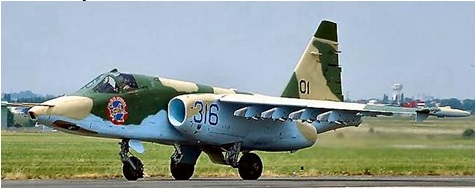
Development of the Su-25UB as an advanced trainer for the Russian Air Force led to the unarmed Su-25UT two-seat trainer, which is also known as Su-28. The cannon, armor, fire control systems, ECM systems and all other combat equipment was deleted, as well as five of the hardpoints and the chaff/flare dispensers. Although intended to replace the L-29 Delfin and L-39 Albatros trainers it never did. Only one aircraft was flown in August 1985, appearing in the colours of DOSAAF, the Soviet Union’s paramilitary ‘private flying’ organization, which provided students with basic flight training. The aircraft, which actually outperformed the L-39, appeared in many aerobatic displays.
The Su-25UTG is a navilized version of the Su-25UT trainer, with a strengthened undercarriage and arrester gear, which was used to familiarize Navy pilots with carrier procedures. One Su-25UT was converted to Su-25UTG, the major change being the braking parachute being replaced by the arrester hook. No more were built.
As a result of lessons learned during the Afghan conflict an upgraded version known as the Su-25T was produced, with improved defensive systems to counter weapons such as the Stinger. The improvements included the insertion of steel plates several millimetres thick between the engine bays and below the fuel cell. Following this modification no further Su-25s were lost to shoulder-launched missiles. In total, 22 Su-25s and eight pilots were lost in the nine years of the Afghan conflict.
The Su-25TM, also known as Su-39, is improved version of the Frogfoot based on the Su-25UB combat trainer. Avionics and systems were considerably upgraded, making the aircraft capable of conducting missions at night and under all weather conditions. The main role of this variant is the Anti-Tank role. The weapons systems also allow the Su-25TM or Su-39 to be used in the Anti-Ship role and has a limited air-to-air combat capability against helicopters and other low speed aerial targets. Survivability is increased using additional armor, reduced infrared signature, chaff/flare dispensers, IR jammer and more RWR antennas. System upgrades include auto pilot, better nav/attack systems and sensors, Low Light Level Television/Forward Looking Infra Red (LLTV/FLIR) pod, cockpit displays, wide-angle HUD. Production will depend on export orders. The Su-25TK and Su-34 were proposed designations used for the export version of the Su-25TM. The Su-34 designation was later re-used for the Su-27IB Flanker.
The Su-25SM is the designation used for upgraded standard production Su-25 single-seat aircraft, and Su-25UBM the designation for a similar upgrade for the Su-25UB. The upgrade is carried out by the 121 ARZ plant at Kubinka Air Base. In 2001, the first Su-25SM was completed followed by a second aircraft in 2003. The test programme was completed in 2005, and the 121 ARZ started series upgrade of the Russian Air Force Su-25 fleet. The first six aircraft were completed in 2006 and handed over to the Russian Air Force on December 28, 2006. They received new serials; side number 01 thru 06. Six more Su-25SMs are scheduled for delivery in 2007, and eight for 2008. Two attack regiments will convert to the Su-25SM, starting with the 368th Attack Aircraft Regiment at Budyonnovsk.
Main element of the Su-25SM upgrade is the new PrNK-25SM nav/attack system with satnav receiver, colour multi-purpose LCD, and SUO-39 fire control system. The upgrade is claimed to offer two to three times greater accuracy in weapons delivery and up to ten times in navigation accuracy. The upgrade also replaced the obsolete RWR with the L-150 electronic intelligence station and enables the use of R-73 advanced IR guided air-to-air missiles and KAB-500Kr TV-guided bombs.

Work on the upgrade of the first Su-25UB two-seat combat trainer to Su-25UBM standard in a similar upgrade started in May 2005 according to AFM, but recently it is reported it is planned for 2007.
The Su-25KM ‘Skorpion’ is a Su-25K upgrade offered by the collaboration between Elbit Systems and Georgia’s TAM (Tbilisi Aerospace Manufacturing). Improvements include Multi Function Color Displays, new HUD, Elbit Mission Computer, and an optional Helmet Mounted Display. On 27 October 2004, the first Su-25KM Skorpion was delivered to the Turkmenistan Air Force. This makes the Turkmenistan Air Force the first customer for the new variant. Georgia had already overhauled 43 standard Su-25s for Turkmenistan as a part payment for Georgian debts for the supply of gas, which is also believed to be the payment for the Su-25KM delivery.
The Russian Air Force took delivery of its first six upgraded SU-25SM Frogfoots in late December 2006.
Five Iraqi Su-25K and two Su-25UBK Frogfoots fled to Iran during Operation Desert Storm in 1991. Two of these Su-25Ks entered service with the Islamic Revolutionary Guards Corps Air Force (IRGCAF), after having been refurbished with help from Georgian technicians. The IRGCAF also has about 30 Su-25UBK two-seat combat trainers on order from Russia’s Ulan-Ude Aviation Plant.
Images of Ukrainian Su-25 carrying two fuel tanks and four five-tube B-13L rocket pods for firing 13 122mm unguided rockets that appeared on social media on 10 May 2023 confirmed that Ukraine managed to restore at least one of the four Su-25s that North Macedonia donated to Kyiv in 2022 to an airworthy, combat capable condition. The single-seat aircraft (Bort No ‘Blue 51) – complete with full Ukrainian Air Force (UkAF) markings – was spotted wearing the factory construction number ‘09015’, which identifies the airframe as North ex-Maceedonia Air Force Su-25v(formally registered as ‘121’) of 101 Aviation Squadron and previously based at Petrover Air Base (AB), near Skopje. This aircraft, together with three more Frogfoots – single-seat Su-25s ‘122’ and ‘123’, and dual-seat Su-25UB ‘120’ – and related spare parts, tools and weapons were donated to Kyiv, together with a variety of other military equipment of Soviet origin, by Skopje.
The freshly restored Su-25 passed a general overhaul and was upgraded to the Su-25M1(K)-standard before it joined the UkrAF’s 299th Tactical Aviation Brigade (BrTA ‘Lt.Gen. Vasyl nikiforov’. That unit was tasked with providing close air support for Ukranian ground forces and the Ukrain Navy.
Operators:
Russia, Angola, Armenia, Azerbaijan, Belarus, Bulgaria, Congo, Czech Republic, Eritrea, Ethiopia, Gambia, Georgia, Iran, Iraq, Ivory Coast, Kazakhstan, Macedonia, North Korea, Peru, Slovakia, Turkmenistan, Ukraine, Uzbekistan
Variants:
Su-25K (Frogfoot-A)
Engines: 2x Soyuz/Tumanski R-195 turbojet
Max Thrust: 9,920 lb.
Military Thrust: 9,920 lb.
Wing Span: 47.11 ft. / 14.36 M
Length: 50.95 ft. / 15.53 M
Height: 15.75 ft. / 4.80 M
Wing Area: 362.74 Sq ft. / 33.70 Sq M
Weight Empty: 20,944 lb. / 9,500 Kg
Max. Takeoff Weight: 45,195 lb. / 20,500 Kg
Power & Performance
Max. Thrust Loading: 0.44
Maximum Wing Loading: 124.59 lb. per Sq. ft.; 608.31 Kg / Sq. M
Max Speed at sea level 975 km/h: 526 knots, 604.9 mph, 974.152 km/h
Operational Ceiling: 22,950 ft. / 6,995 M
Armament: one AO-17A 30 mm twin-barrel gun 250 rounds
Bombload 4400 kg (9,700 lb)
External hardpoints 10 or 11
Su-25BM/BMK (Frogfoot-A)
Su-25UB/UBK (Frogfoot-B)
Engines: 2 x 2 ТРД Р-195, 4500 kg
Wingspan: 14,36 m
Length: 15,53 m
Height: 5,20 m
Wing area: 30,10 sq.m
Empty weight: 10050 kg
Normal TO weight: 15100 kg
Maximum TO weight: 18500 kg
Normal landing weight: 11825 kg
Maximum landing weight: 13200 kg
Maximum military load: 4000 kg
Internal fuel: 3430 lt
External fuel: 4 x ПТБ-800, 820 lt each or 2 x ПТБ-1150, 1160 lt each
Practical ceiling: 7000 m
Maximum speed SL: 940 km/h
Maximum speed at altitude: М=0.82
Range SL: 495 km
Range at altitude: 1000 km
Range with 4хПТБ-800: 1980 km
Takeoff roll normal mass: 500 m
Takeoff roll maximum takeoff mass: 1050 m
Landing roll normal landing mass: 550 m
Landing roll maximum landing mass: 750
Maximum loading: +6,5/-2,0
Armament: ВПУ-17А, double-tube with 30-mm gun ГШ-30, 250 bullets
Hardpoints: 10
Crew: 2
Su-25UT (Su-28, Frogfoot-B)
Su-25UTG (Frogfoot-B)
Su-25T/TM (Su-39)
Su-25TK (Su-34)
Su-25SM
Su-25UBM
Su-25
Engines: 2 x R-195, 44.1kN
Wingspan: 14.4 m / 47 ft 3 in
Length: 15.5 m / 51 ft 10 in
Height: 4.8 m / 16 ft 9 in
Wing area: 33.7 sq.m / 362.74 sq ft
Weight empty: 20947.5 lb / 9500.0 kg
Max take-off weight: 17600 kg / 38802 lb
Max. payload weight: 19183.5 lb / 8700.0 kg
Max. speed: 526 kt / 975 km/h / 606 mph
Ceiling: 7000 m / 22950 ft
Range w/max.fuel: 1250 km / 777 miles
Range w/max.payload: 375 km / 233 miles
Landing speed: 116 kt / 215 km/h
Initial climb rate: 16732.28 ft/min / 85.0 m/s
Armament: 1 x 30mm cannon, 4000kg
Hardpoints: 10
Crew: 1
Su-25 ‘Frogfoot’
Engine: 2 x Tumansky R-13
Installed thrust (dry): 83 kN
Empty wt: 9500 kg
MTOW: 19,200 kg
Wingspan: 15.50 m (50 ft 10 in)
Length 14.50 m (47 ft 6 in)
Wing area: 34 sq.m
Fuel internal: 5000 lt. Air refuel: No
Armament: one multi-barrel cannon beneath the centre fuselage
10 hardpoints for some 4000 kg (8,818 lb)

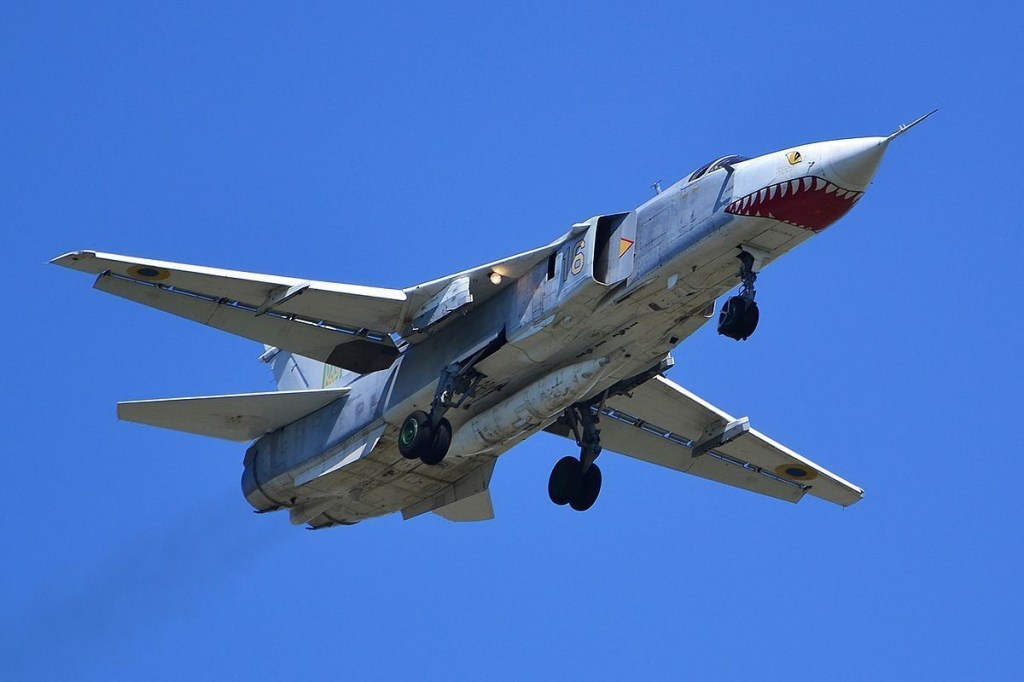
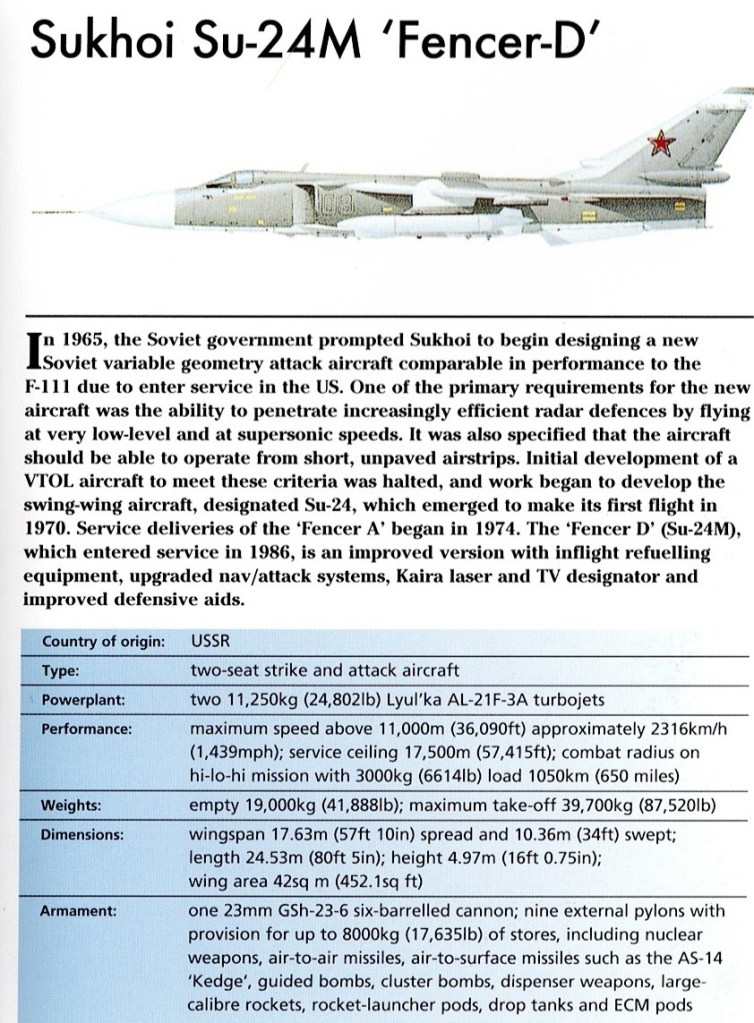
In 1965, the Soviet government instructed the Sukhoi design bureau to begin design studies of a new variable-geometry strike aircraft in the same class as the General Dynamics F- 111. One criteria was that the new aircraft must be able to fly at very low level in order to penetrate increasingly effective air defence systems. Conceived as a replacement for the Su-17/20/22 Fitter series fighter-bomber, the Su-24 Fencer was the first Soviet aircraft to incorporate an integrated combat avionics system combining a computer bombsight, weapons control system and anavigation/terrain avoidance system. In order to survive on the modern SAM infested battlefield, bombers would need to be capable of high speed (Mach 1 plus) low level penetrations in all weather conditions, depending on terrain masking, electronic jamming and precision weapons delivery to accomplish their mission. Lastly, in order to meet Soviet multi mission capabilities, the new aircraft would have to be adaptable to tactical reconnaissance and air interceptor missions.
An early test aircraft incorporating a delta wing VTOL (Vertical Take Off and Landing) design with separate lift and cruising engines was abandoned because of poor low level handling characteristics. Successes with the variable geometry wings of the MiG-23 Flogger interceptor and Su-17 Fitter offered another option; variable geometry allowed for acceptable performance at all altitudes and airspeeds. The first successful flight test of the Fencer-A occurred in 1970.
Initial Fencer-A production aircraft were equipped with variable aperture intakes on the engines, which allowed for a high altitude maximum speed above Mach 2, but since the Su-24 wouldn’t be spending much of it’s life at high altitude, and such speeds were not possible at low altitude, the actuators were later dropped to save weight and reduce maintenance requirements. Deliveries of the first production version, the ‘Fencer-A’, began in 1974.
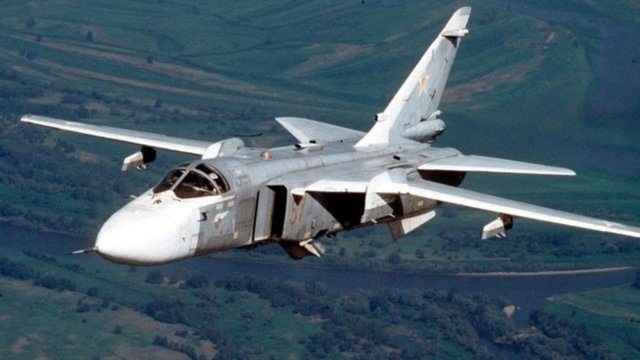
Several variants were produced, culminating in the Su-24M ‘Fencer-D’, which entered service in 1986. This variant has in-flight refuelling equipment, upgraded nav/attack systems, and laser/TV designators. The Su-24MR is a tactical reconnaissance version. The Su-24 is known to NATO by the reporting name ‘Fencer’.

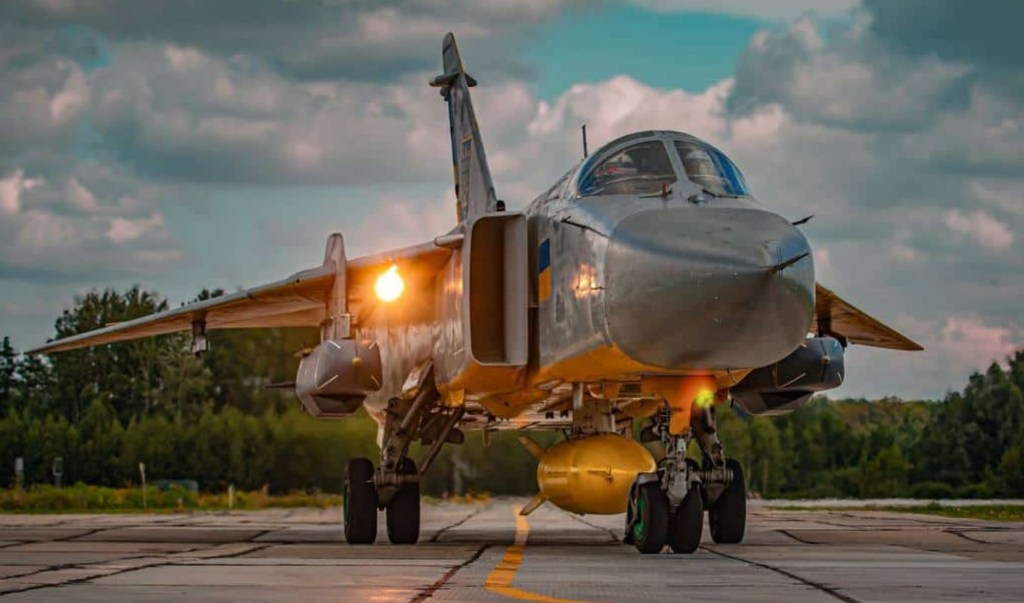
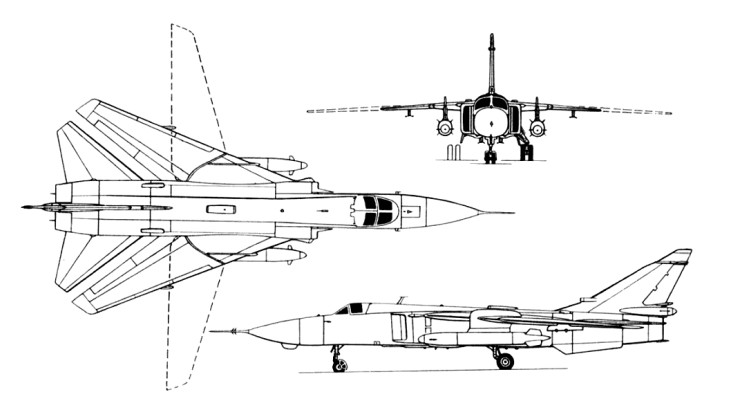
The Sukhoi Su-24 ‘Fencer’ is a Russian frontline bomber. It is capable of delivering nuclear and conventional weapons in all-weather conditions day and night. The two powerful AL-21F turbojets combined with the variable-geometry wing and a terrain avoidance system or TFR enables the Su-24 to fly low-level at supersonic speeds. The variable-geometry wing has the following settings: 16 degrees (take-off and landing), 35 degrees (cruise), 45 degrees (high speed manouvering), 60 degrees (supersonic flight). Its crew consists of a pilot and a navigator/weapons station officer which are seated side by side in the cockpit cabin (pilot port-side). Apart from the nav/attack system radar and the TFR the nose also contains a second radar scanner for ranging airborne targets.
Early production variants of the Su-24 were limited to a weapon load of 7000 kg with six hardpoints. But design changes during production soon introduced two additional under-wing pylons and another one on the centre-line under the fuselage. Now with a total of nine hardpoints the Su-24 is able to carry up to 8000 kg (17,637 lb). Two R-60 AAMs can be carried for self-defense.
The most important bomber variant of the Su-24 was the Su-24M. Also known as Fencer-D by NATO designation, this upgraded Su-24 is equipped with more advanced systems. It features an advanced nav/attack targeting system which combined with the Kaira-24 laser ranger/designator enables the use of laser-guided and TV-guided weapons. Navigation and radio communication systems were also upgraded. The addition of an in-flight refuelling system greatly improved the aircraft’s range and flexibility.
The Su-24MR is a dedicated tactical reconnaissance version of the Su-24M. All weapon systems were removed to make space for the recce equipment. The Su-24MR is equipped with a complex system of sensors and cameras. It has radar-tracking equipment, infra red and television cameras, panoramic and perspective photo cameras, but also laser and radiation detection systems. The systems can be operated manually or automatically.
The Su-24MP is another variant based on the Su-24M upgrade. The Su-24MP is a electronic warfare (EW) platform. The jamming equipment is situated in a container on the centre-line below the fuselage. Just like the Su-24MR it has lost its Air-to-Ground capability, but can be equipped with 2 or 4 R-60 IR-guided missiles for self defense.
Su-24MK is the export variant of the Su-24M which was developed for friendly Arabian nations. There are almost no differences between the Su-24MK and the original Su-24M. Reportedly 20 aircraft were exported to Syria, 15 to Libya, and 24 (some say 25) to Iraq. During 1990 Russia delivered 12 Su-24MK Fencers to the the Islamic Republic of Iran Air Force (IRIAF). The IRIAF has modified these aircraft to use Western weapons, such as the C-802 Noor anti-ship cruise missile. After Operation Desert Storm began, Saddam sent 24 Iraqi Su-24MKs to Iran. These have since been integrated in the IRIAF Su-24 fleet. In 2002 all Iranian Su-24s were modified with inflight refuelling probes to receive fuel from the IRIAF KC-707 tankers.
Su-24M2 is an upgrade of the baseline Su-24M model by Russia’s Gefest company. The Su-24M2 is equipped with a new advanced SVP-24 computer plus the latest software, which improves navigational accuracy and non-guided weapon delivery precision. The 4th Combat and Conversion Training Centre (CCTC) based at Lipetsk has been running the operational evaluation program for the new upgrade since a few years. At least five Russian Air Force aircraft have been upgraded to Su-24M2 standard and reportedly also seven Su-24MK aircraft delivered to Algeria have been upgraded.
The Fencer entered service in 1974. Four versions have been identified, the latest in 1983. Fencer B differs from Fencer A in having a brake parachute bullet fairing at the base of the fin. Fencer C, introduced in 1981, has this feature as well as radar homing and warning receiver antennas on the fin and intakes. Fencer D has detail differences, including an under-fuselage reconnaissance sensor and in-flight refuelling capability.
There are some 835 Su-24 Fencer variable-geometry interdictor/strike aircraft in Soviet service in 1987, and production continued until 1992. The aircraft equipping Soviet strategic, tactical, and naval air forces.
Operators: Russia, Algeria, Azerbaijan, Belarus, Iran, Iraq, Kazakhstan, Libya, Syria, Ukraine.
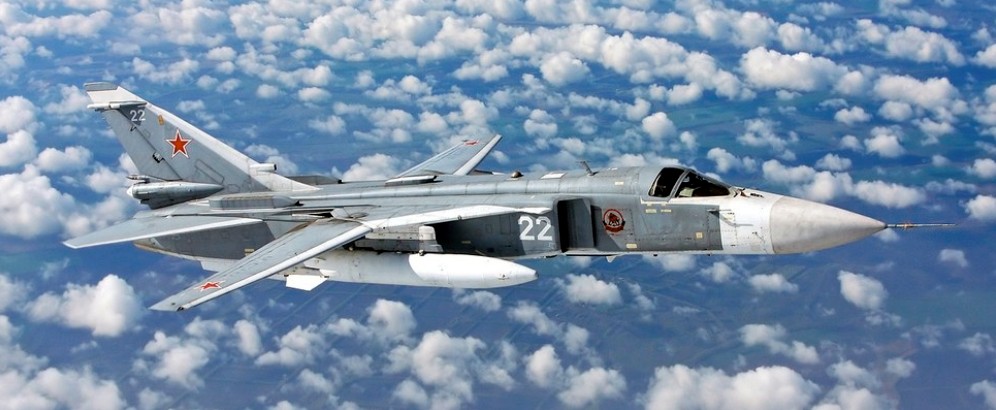
Su-24 (Fencer-A)
Engine: 2 x turbojet. Installed thrust (dry / reheat): 150 / 215 kN
Span: 17.5 m / 10.5 m
Length: 21.3 m
Wing area: 42 sq.m
Empty wt: 19,000 kg
MTOW: 41,000 kg
Warload: 11,000 kg
Max speed: 1.2 Mach
Ceiling: 17,500 m
Combat radius: 950 km
Su-24 (Fencer-C)
Engine: 2 x turbojet. Installed thrust (dry / reheat): 150 / 215 kN
Span: 17.5 m / 10.5 m
Length: 21.3 m
Wing area: 42 sq.m
Empty wt: 19,000 kg
MTOW: 41,000 kg
Warload: 11,000 kg
Max speed: 1.2 Mach
Ceiling: 17,500 m
Combat radius: 950 km
Su-24M (Fencer-D)
Powerplant: two 109.8 kN (24,690 lb st) Saturn/Lyulka AL-21F-3A afterburning turbofans
Length 24.59m (80 ft 8.25 in)
Height 6.19m (20 ft 3.75 in)
Wing span fully swept 10.36m (34 ft 0 in)
Wingspan fully spread 17.64m (57 ft 10.5 in)
Wing area: 51.0-55.2 sq.m / 548.96594.17 sq ft
Take-off (‘clean’) 19.000 kg (41,885 lb)
Max Take-Off Weight 39,700 kg (87,520 lb)
Max level speed at 11,000m (36,090 ft) Mach 2.2 / 2.320 km/h / 1,441 mph
Ceiling 17,500m (57,415 ft)
Range w/max.fuel: 2500 km / 1553 miles
Range w/max.payload: 560 km / 348 miles
Armament: one 23 mm GSh-6-23 six barrel gun or one 30 mm GSh-6N-30 six barrel cannon in later versions
Bombload: 8000 kg (17,637 lb)
Hardpoints: 8
Crew: 2
Su-24M2 (Fencer-D)
Su-24MR (Fencer-E)
Su-24MP (Fencer-F)
Su-24MK (Fencer-D)
Back to Sukhoi Su-17 / Su-20 / Su-22
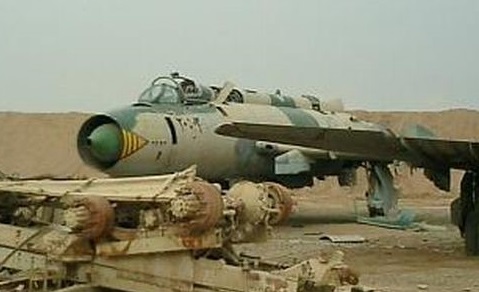
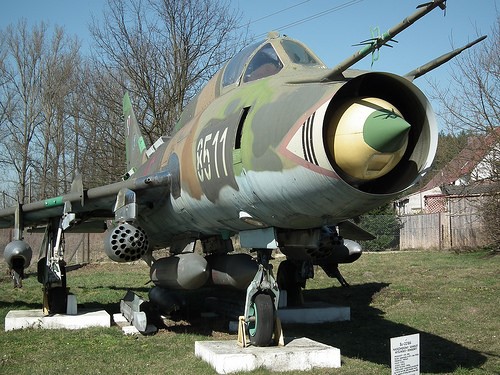
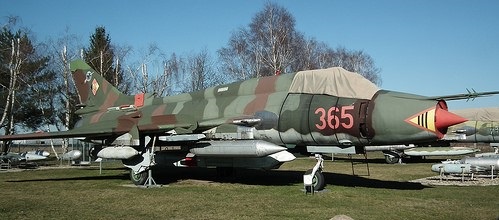
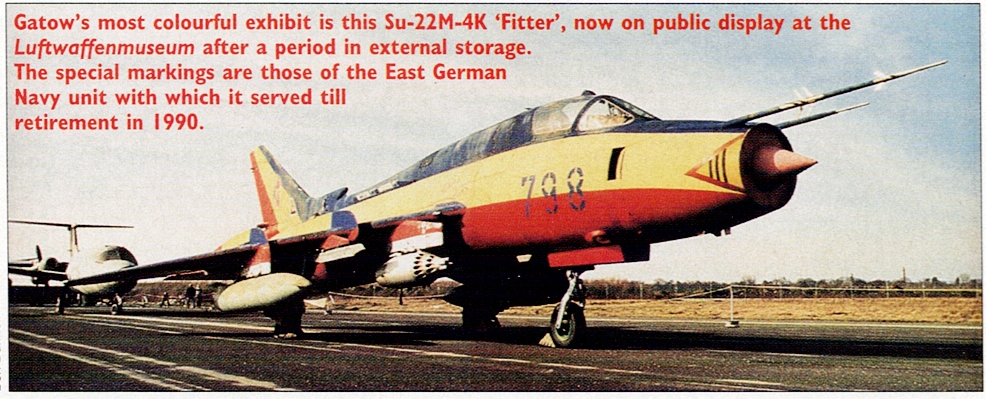
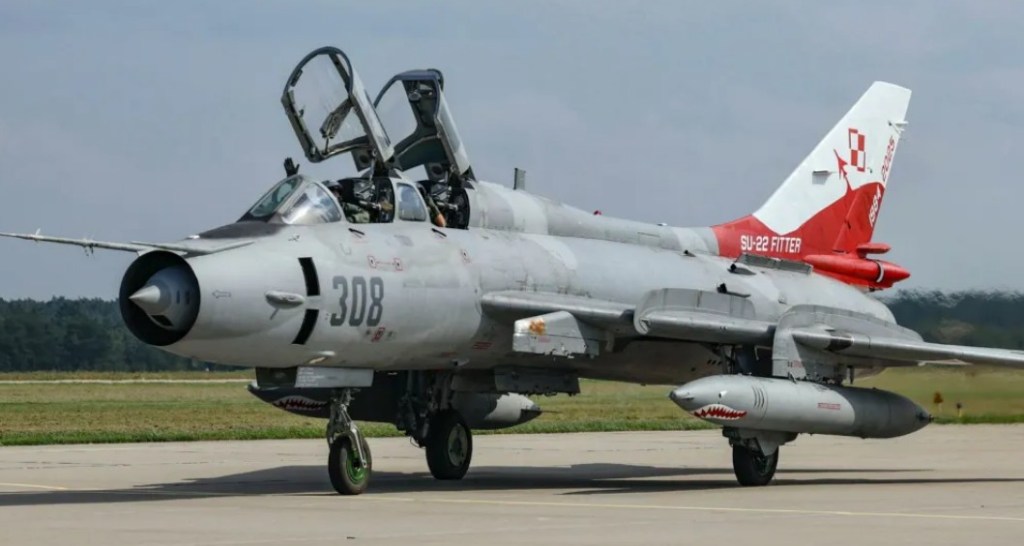
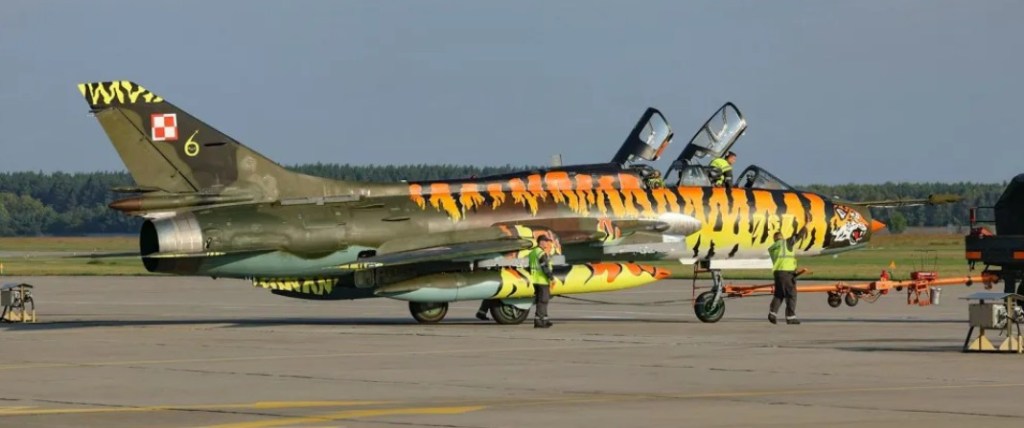

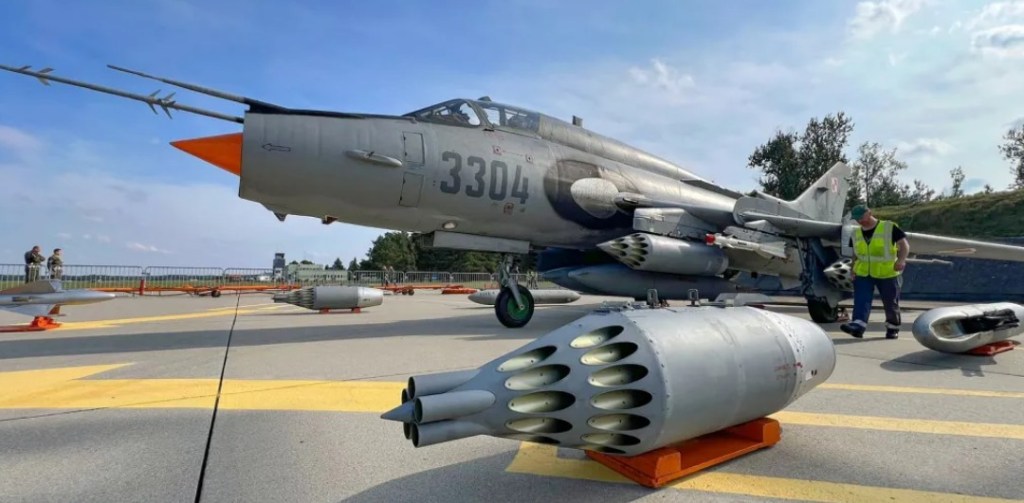
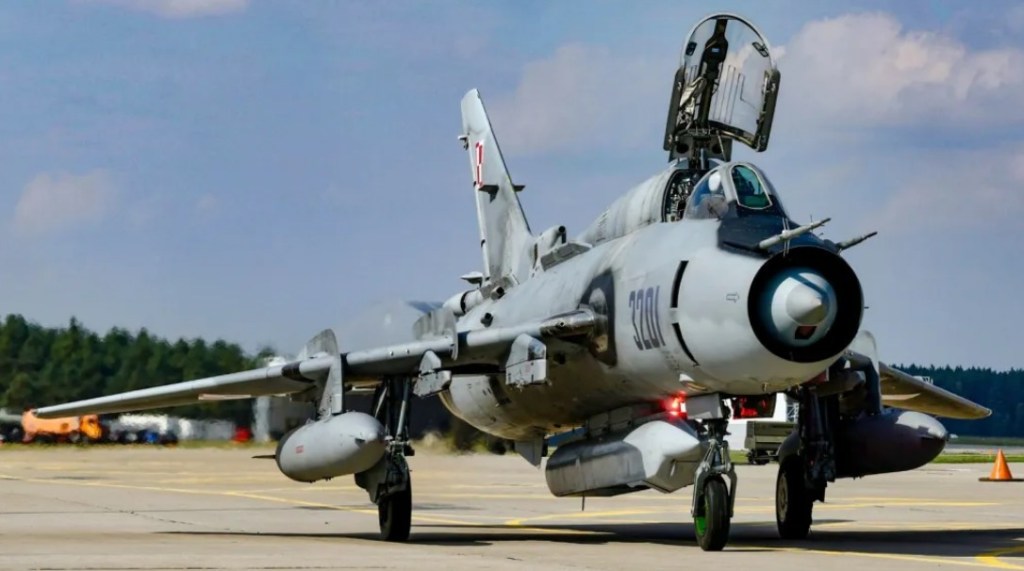
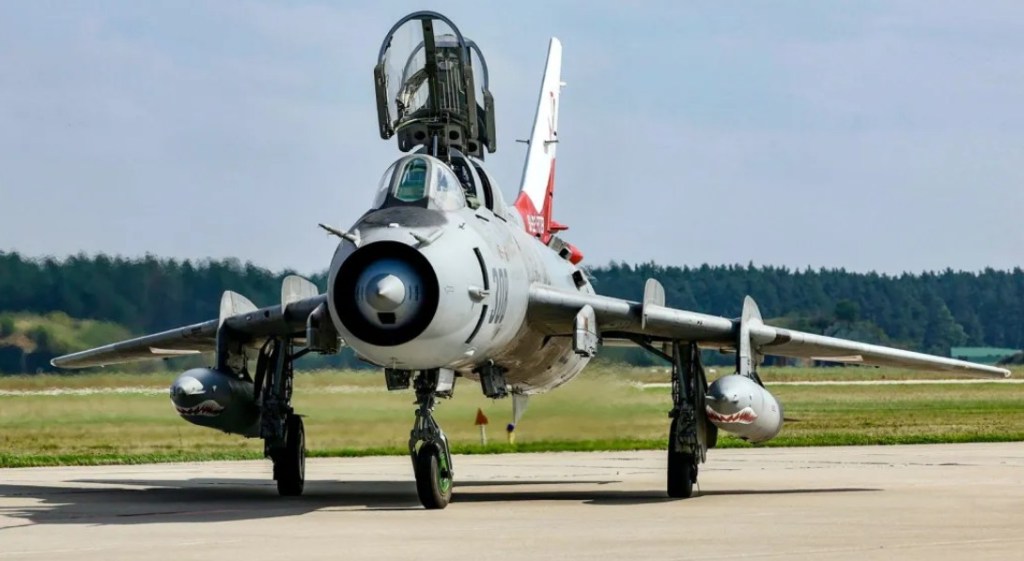
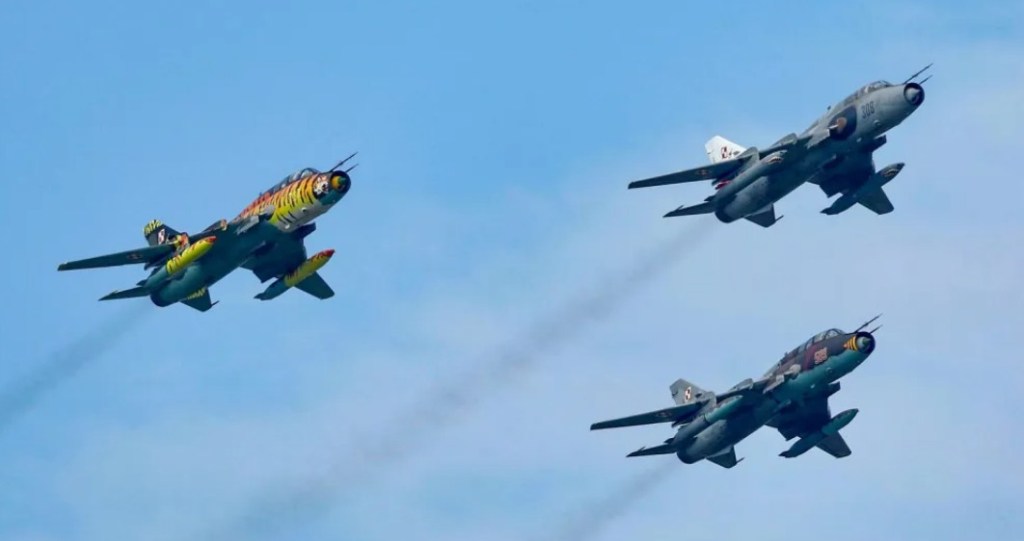
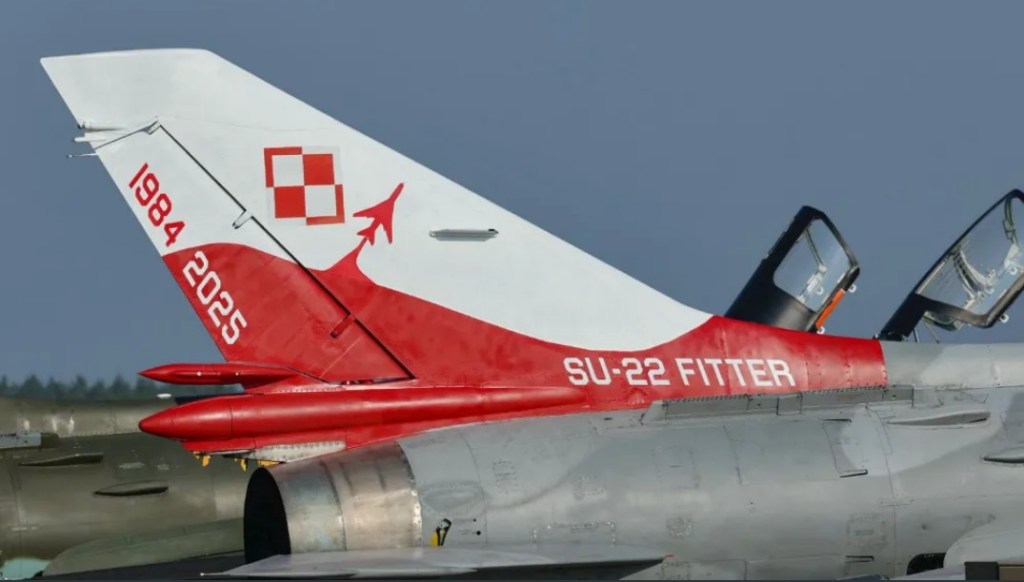
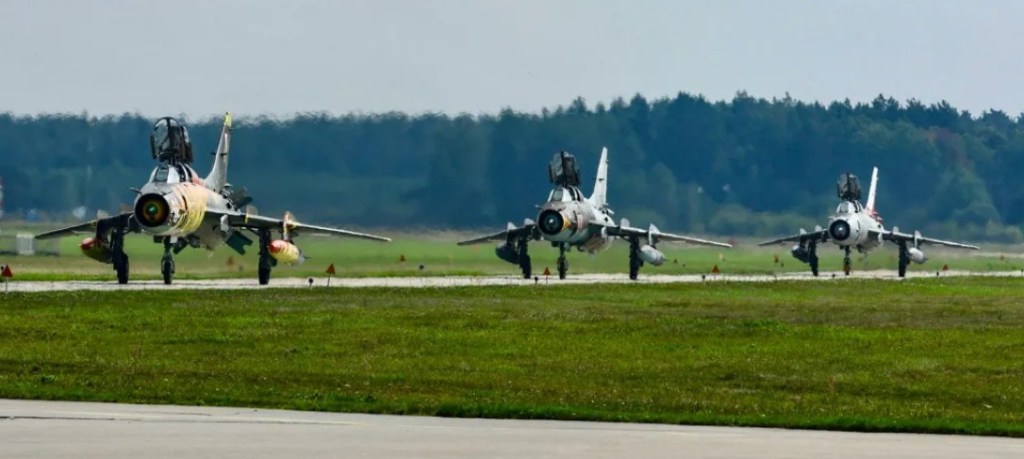
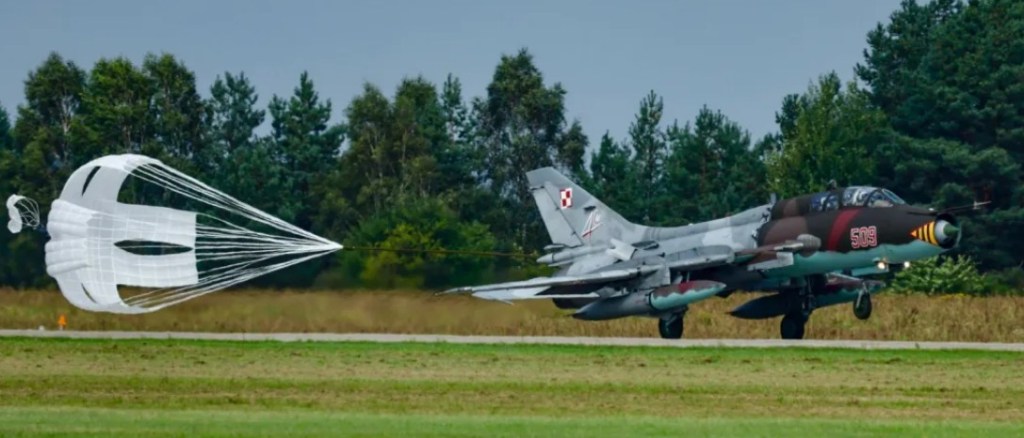
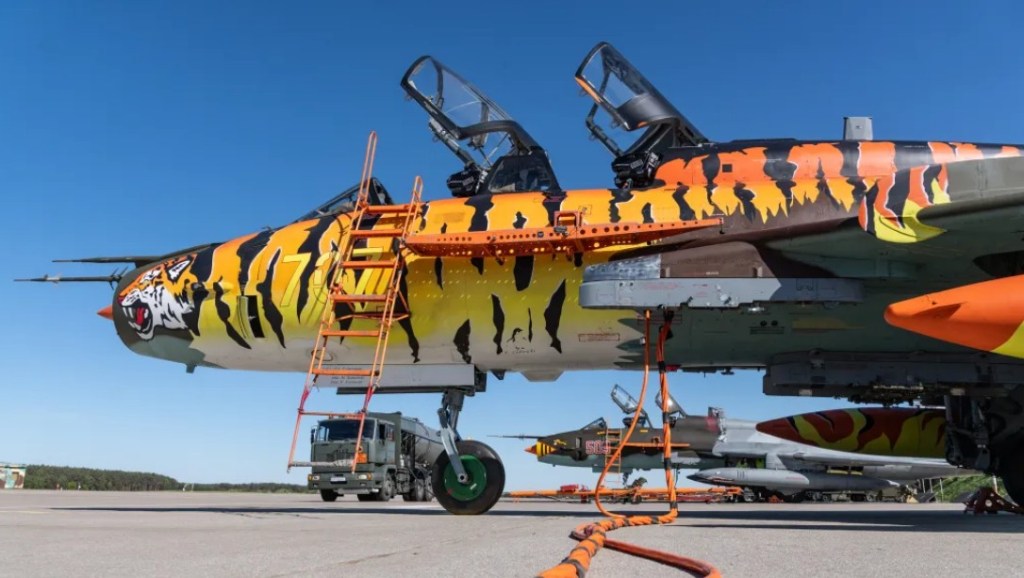
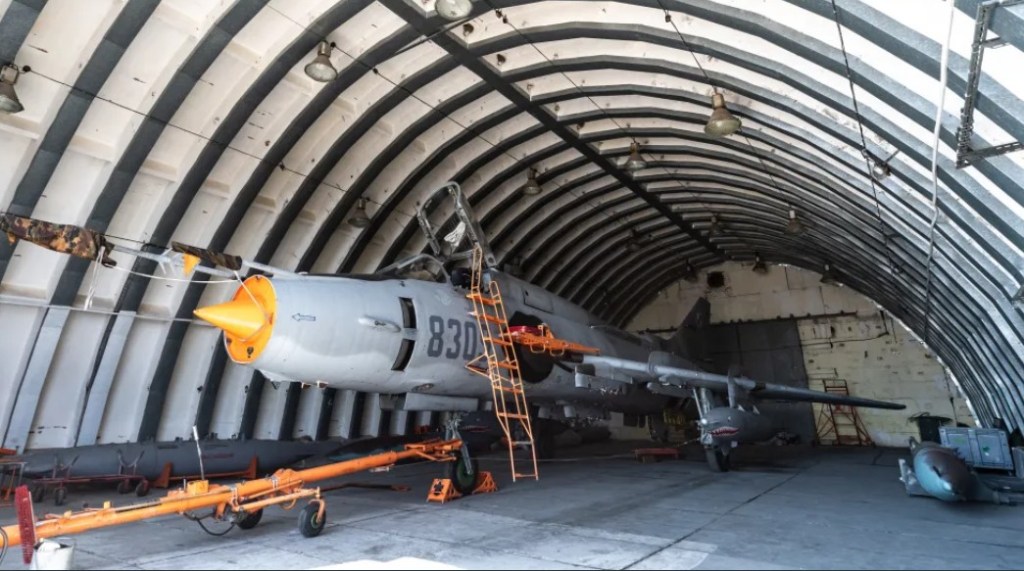
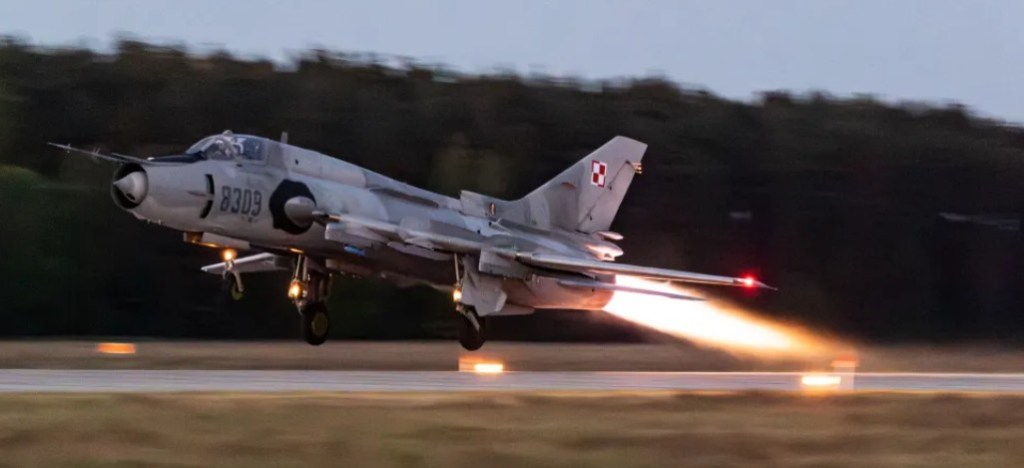
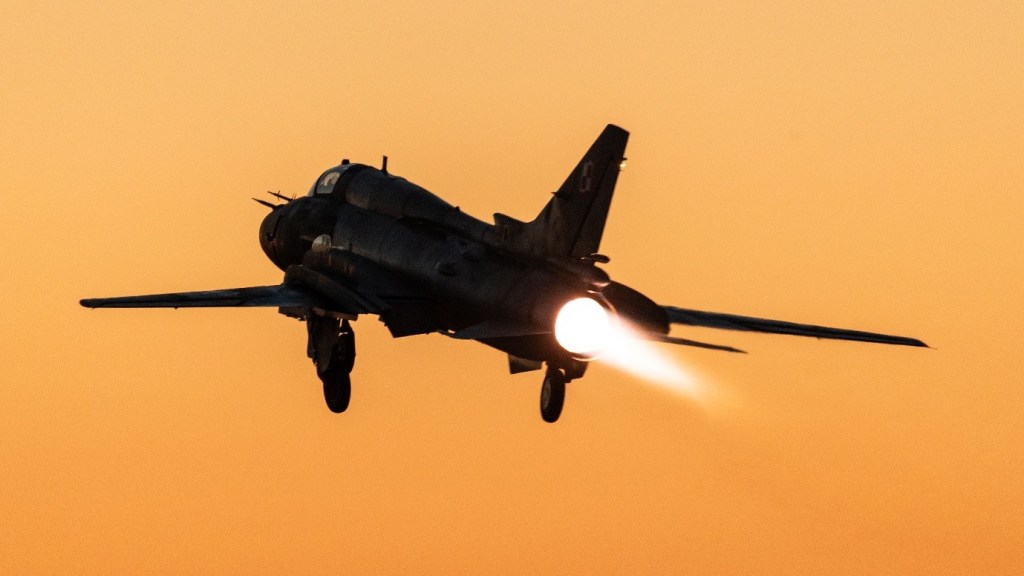
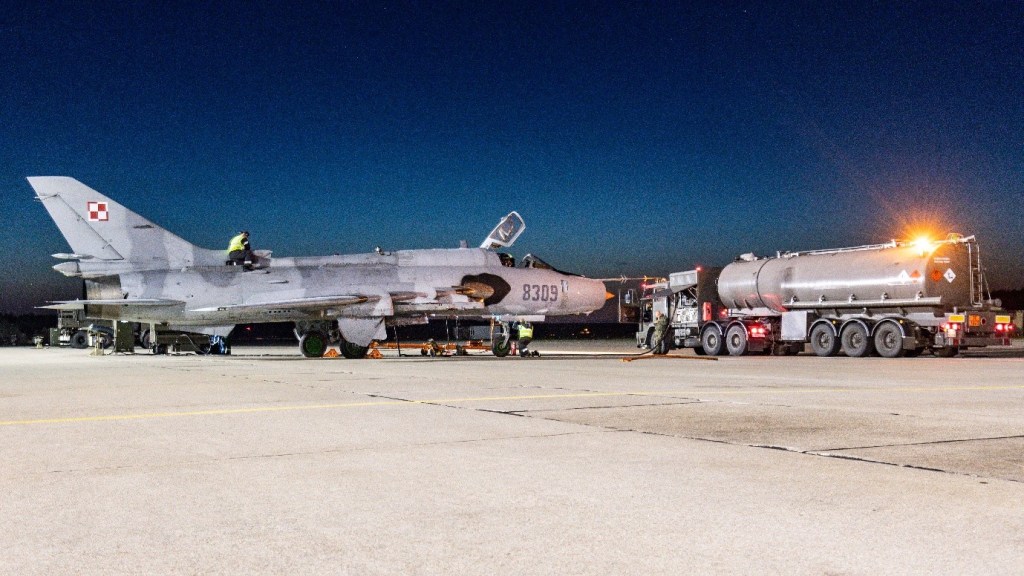
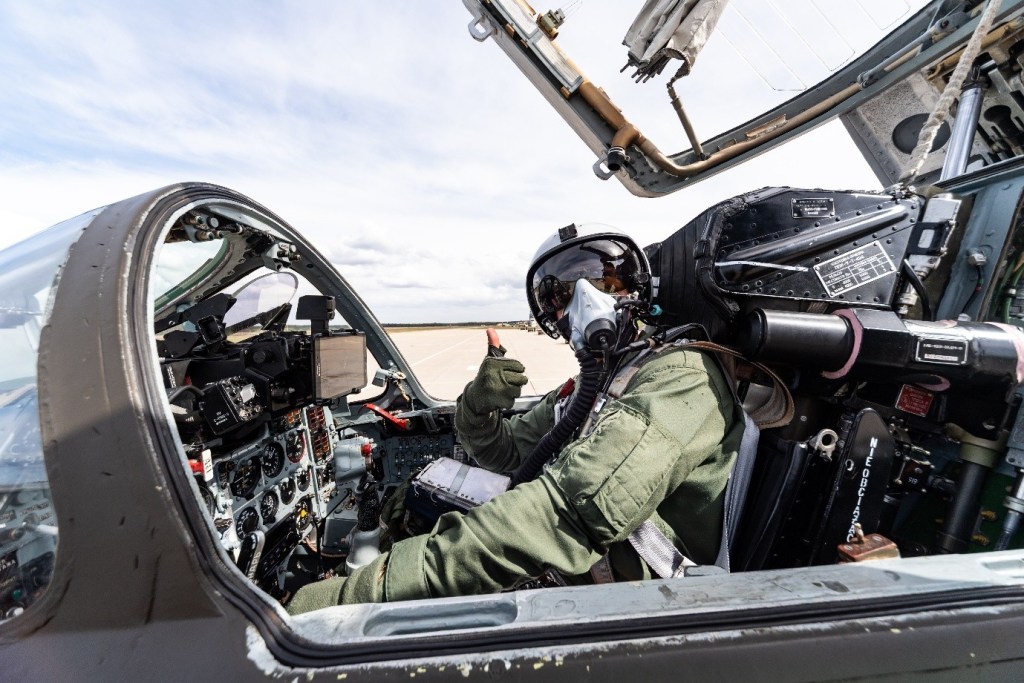
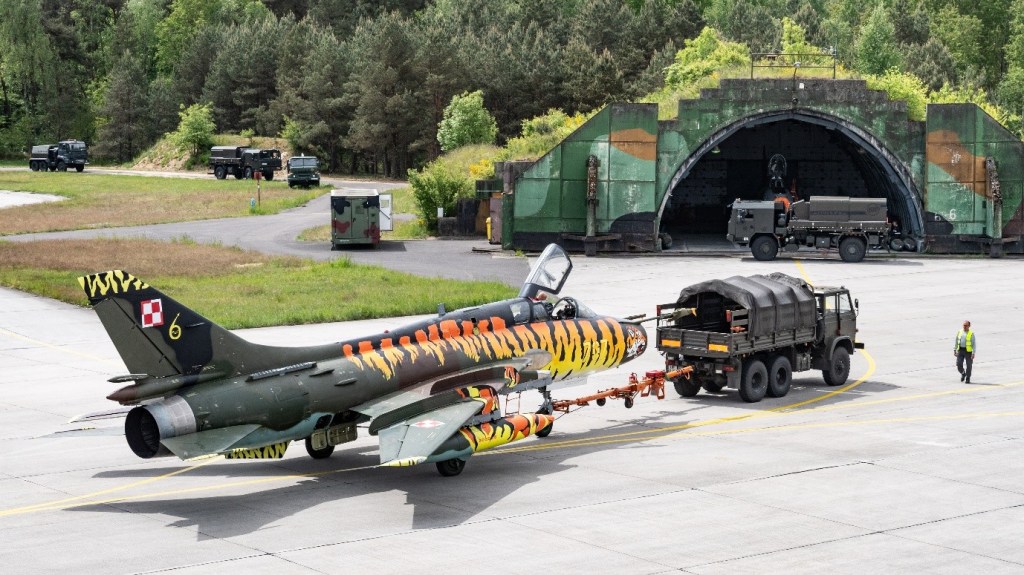
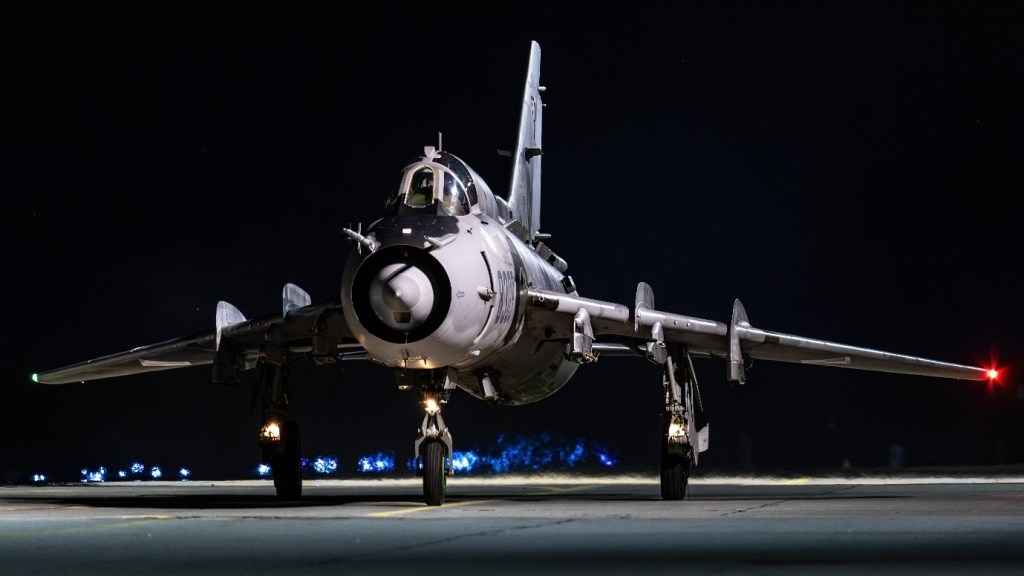
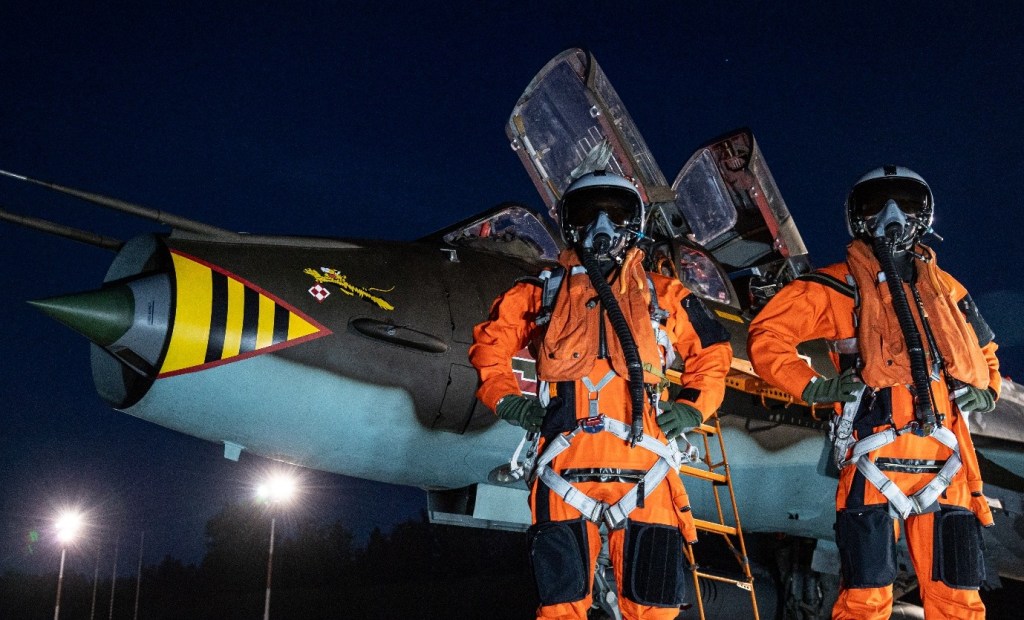
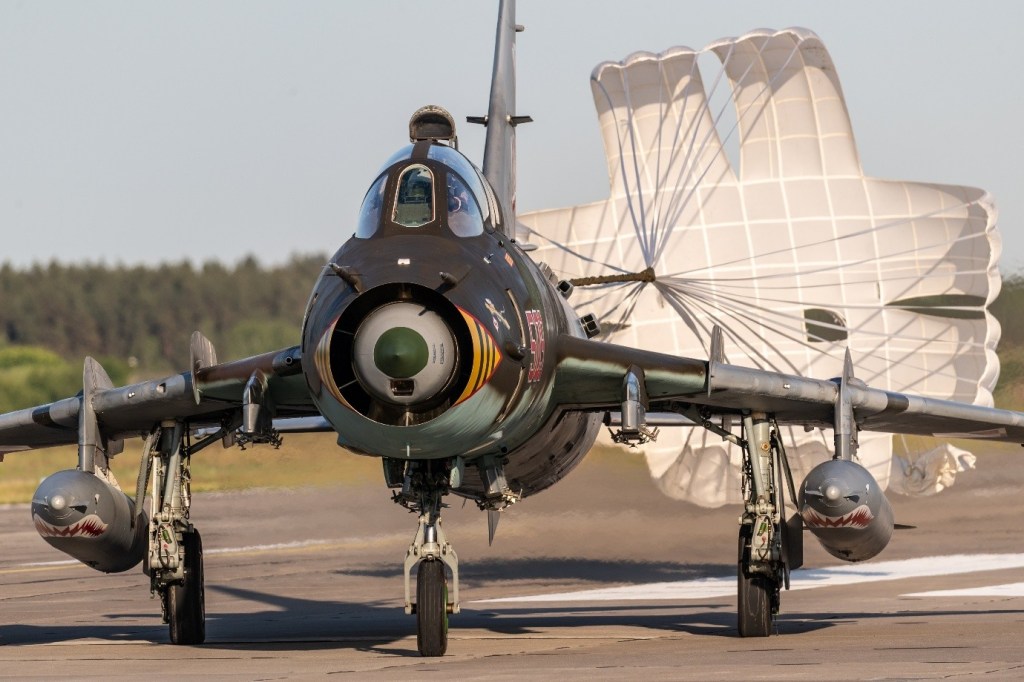

The Su-17 (S-32) single-seat ground attack fighter was the product of a process of incremental redesign of the Su-7B (S-22).
Sukhoi S-32 / Su-7IG / S-22I / Su-17 / Su-20 / Su-22 Article
Derived from the swept-wing Su-7 Fitter A (NATO code name), essentially by fitting variable-sweep outboard wing panels, the Su-17 was first revealed in 1967, and labelled ‘Fitter-B’ by NATO but dismissed as a research version.
Under the leadership of Nikolai Zyrin, the Sukhoi OKB adapted an Su-7BMK as a low risk, low cost variable wing geometry demonstrator. Mid-span pivot points were introduced so that the outer wing panels could be sweptback from 28 degrees to 45 degrees and 62 degrees positions. As the Su-7IG (Izmenyaemaya Geometriya, or variable geometry), or S-22I, the demonstrator flew on 8 August 1966, proving the efficacy of the variable-geometry arrangement and providing the basis for a production aircraft, the Su-17. This entered the VVS-FA inventory in 1970.
The Su-17 was powered by the Lyulka AL-21F-3 turbojet with a military power of 7800kg and 11200kg with afterburning. Maximum external stores load was 4000kg distributed between nine external stations, and built-in armament comprised two 30mm cannon.
Not until the mid-1970s did it dawn on the West that the modification, together with a more powerful but fuel efficient engine and new avionics, had resulted in a vastly improved aircraft with doubled weapon load, 30 per cent greater range and substantially better short-held take-off characteristics. So successful has been the aircraft that numerous versions are in service with Frontal Aviation, the Soviet naval air arm, Warsaw Pact and left-leaning countries abroad.
An upgraded version, the Su-17M (S-32M), entered production in 1974, this having a drooped and lengthened – by 38cm –fuselage nose with ventral Doppler navaid pod. This, like the preceding Su-17, was exported as the Su-20 (S-32MK), recipients including Algeria, Egypt, Iraq, North Korea, Vietnam and Poland.
By 1972 the initial Fitter B version was in limited service. Sukhoi Su-17 variants based in eastern Europe and the USSR have been progressively improved from the basic Fitter-C.
Whereas the Fitter B had been a straightforward adaptation of the Fitter A airframe, the Fitter C took the process of incremental design development a stage further. The wing remained basically similar to that of the v g prototype but was now mated with a derivative engine of the original AL 7F series turbojets. This, the similarly dimensioned AL 21F, offered a respectable increase in power and a modest improvement in SFC. A nominal increase in internal fuel capacity was acquired by adopting the deeper fuel housing dorsal spine that had been introduced by the two seat Su 7U as a means of compensating for some of the ill afforded loss in tankage that had inevitably accompanied the introduction of a second seat in a dimensionally barely lengthened (by 12 in/30cm) fuselage.
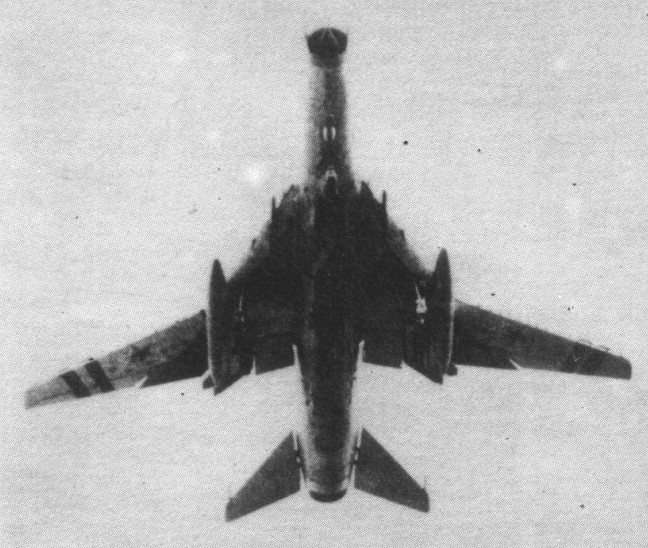
The result was a tactical fighter capable of lifting from much shorter airstrips almost double the ordnance load and carrying it some 25 30 per cent further. A multi role warplane toting respectable payloads over reasonable radii. This was more than could be claimed for the preceding fixed geometry Fitter¬ A, the good low level gust resistance and manoeuvrability, and highly regarded handling qualities of which the Fitter C reputedly retained. Within little more than two years of its FA debut, Fitter C was being exported to WarPac countries and Middle Eastern recipients of Soviet military aid.
The export version of Fitter C was referred to by its recipients as the Su 20, and there is some evidence to suggest that this designation is also used by the V VS. Su 20s were in service with the air forces of Algeria, Czechoslovakia, Egypt, Iraq, Libya, Syria and Poland.

Fitter C was the first series production model, with the Lyulka AJ-21F engine. The Fitter C was supplied to Warsaw Pact and other allies as the Su-20. Replacing the Fitter C was the ‘Fitter D’, appearing in 1976, with its undernose terrain avoidance radar and a marked-target seeker in the inlet centre-body. The laser ranger was accommo¬dated within the lower half of the intake centrebody and the fuselage nose was lengthened 1.25 ft (38 cm) to permit a flat, elongated lozenge shaped avionics housing to be mounted beneath the nose, ahead of the nosewheel bay, the aft end of this housing apparently accommodating doppler. No attempt would seem to have been made on Fitter D to compensate for the inevitable destabilising effect resulting from this longer and deeper forebody.
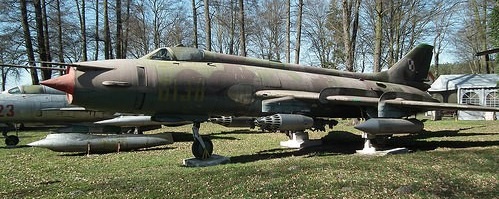
A design change introduced with Fitter F and to be retained by succeeding variants of the Sukhoi ground attack fighter was an increase in the diameter of the rear fuselage, this increase being vertically asymmetric. A conversion trainer, the ‘Fitter-E’, parallels the Fitter-G except for a slightly drooped forward fuselage and lack of a port wing root gun, whilst the ‘FitterG’ operational trainer has a taller, straight-topped fin and a marked-target seeker. Newest of the single-seat variants is the ‘Fitter-H’ which has the revised fin and a deep dorsal fairing behind the canopy, presumably for extra fuel tanks.
A further export derivative using the basic Su-17M airframe, but re-engined with a Tumansky R-29BS-300 augmented turbojet with a max thrust of 11500kg, received the designation Su-22 and was supplied to Angola, Libya and Peru. Featuring a deeper forward fuselage and enlarged spine, and a redesigned tail to restore yawing stability, yet a further single-seat version, the Su-17M-1, appeared in mid-1979. The Su-17M-2, which appeared almost simultaneously, differed in equipment fit, with the export version, the Su-22M-2, supplied to both Libya and Peru, having the Tumansky engine. The definitive single-seat production versions were the Su-17M-3 and M-4, the former supplied to Hungary as the Su-22M-3 and the latter to Afghanistan, Czechoslovakia, East Germany and Poland as the Su-22M-4. These AL-21F-powered models embodied much improved avionics and introduced extra stations for R-60 or R-73 close range AAMs.

Export versions of the Su-17 ‘Fitter-C have a reduced avionics fit and are designated Su-20, but when the Su-22 ‘Fitter-F’ appeared as a ‘Fitter-D’ counterpart, its bulged rear fuselage revealed a change of engine to the 11500-kg (25,353-lb) thrust Turnansky R-29B afterburning turbojet for even better performance. A ‘Fitter H’ counterpart, the Su-22 ‘Fitter-J’, is similarly powered and identified by a more angular dorsal fin. Su-22s are also employed as interceptors with AA-2 ‘Atoll’ AAMs. A Tumansky-powered two-seater has been noted in Soviet service, the Fitter E is a two-seat Su-17 with a drooped nose, a feature retained by the Fitter G trainer, which also introduced a deeper fuselage spine. Fitter H, a single-seater distinguished by its dorsal fairing and drooped nose, can carry two AS-7 Kerry radio-command air-to-surface missiles. The twin wing root mounted 30 mm NR 30 cannon are retained by Fitter H, which, like preceding variable geometry Fitters, has four fuselage and four wing stores stations. Two of the fuselage stations – at least, on export examples (eg, Libya) – are “wired” for Atoll IR homing AAMs, providing some defence capability. The inboard wing and the fuselage stores stations can each lift “iron” bombs of up to 1,102 lb (500 kg), and the former and two of the latter may be fitted with adaptor shoes for radio command guidance AS 7 Kerry ASMs, or the various anti radiation missiles, such as AS 9.
Peru purchased its first Su-22s in 1976, comprising 32 single seat Su-22s and 4 two seat Su-22Us.
The latest version of the Su-17 ground-attack aircraft appeared in 1984. The Fitter K is distinguished by an intake extending forward of the fin root.
With more than 3,000 built, including two-seat training variants, production of the Su-17 terminated in 1984.
Poland received a total of 90 single-seat Su-22M4s and 20 two-seat Su-22UM3Ks, which were deployed within four tactical bomber regiments based at Piła, Powidz, Mirosławiec, and Swidwin. The first example arrived in Poland in August 1984.

After Poland joined NATO in 1999, its Su-22s underwent limited upgrades, the air force deciding to continue flying the Soviet-type, as well as the MiG-29 Fulcrum fighter. Among others, the Fitters received NATO-standard avionics and more modern VHF/UHF communication systems. Also, service life was extended by 10 years on 18 of the aircraft, with work performed in-country, at Bydgoszcz, from 2014. In the process of modernization, the jets traded their former green and brown camouflage for a low-visibility two-tone gray scheme.
While the Su-22’s original role was as a low-level strike specialist, with a secondary reconnaissance mission, toward the end of its Polish service, it was also used for adversary work.
The retirement of the last Polish Su-22s was finally enabled by the arrival of the Korea Aerospace Industries FA-50 light combat aircraft, acquired as part of a multi-million-dollar South Korean arms package. The initial 12 FA-50GFs (representing the initial Block 10 configuration) were delivered to Poland between July and December 2023. Another 36 of the more advanced FA-50PL (Block 20) aircraft were also on order.
In terms of crewed combat aircraft, the Polish Air Force donated 14 of its MiG-29s to Ukraine, leaving 14 more based at Malbork, where they are expected to serve until 2027.
Su-17 Fitter C
Engine: 1 x Lyuika AL-21F-3, 11,200 kg / 24,691 lb thrust
Installed thrust (dry / reheat): 76.5 / 110 kN
Span: 14.0 m / 45 ft 11.25 in spread
Span: 10.60 m / 34 ft 9.5 in swept
Length: 19.2 m / 63 ft 0 in
Height: 5.35 m / 12 ft 6.5 in
Wing area: 40.10 sq.m / 431.65 sq.ft spread
Wing area: 37.20 sq.m / 400.4 sq.ft swept
Empty wt: 10,900 kg / 24,030 lb
MTOW: 17,700 kg / 39,020 lb
Max speed: 2305 kph / 1432 mph
Initial ROC: 13,800 m / min
Ceiling: 18,000 m / 59,055 ft
T/O run: 1000 m
Ldg run: 600 m
Range: 1255 km / 780 mi
Combat radius: 700 km
Fuel internal: 4000 lt
Air refuel: no
Armament: 2 x 30 mm NR-30 cannon
Hard points: 8
Bombload: 4000 kg / 8818 lb
Seats: 1
Su 17M Fitter D
Su-17M-4 Fitter K
Max take-off weight: 19500 kg / 42990 lb
Wingspan: 10.04-13.66 m / 33 ft 11 in-45 ft 10 in
Length: 19.10 m / 63 ft 8 in
Height: 4.86 m / 16 ft 11 in
Max. speed: 2220 km/h / 1379 mph
Range: 2300 km / 1429 miles
Crew: 1
Su-17 ‘Fitter-G’
Type: single-seat variable-geometry ground-attack fighter
Armament: two 30-mm NR-30 cannon (with 70 rpg) in wing roots
Hardpoints: four underwing and four underfuselage weapon pylons for up to 4000 kg (8,818 lb)
Powerplant: one 11200-kg (24,691-lb) thrust Lyulka AL-21F-3 afterburning turbojet
Maximum speed 2300 km/h (1,429 mph) or Mach 2.17 at altitude
Maximum speed 1285 km/h (798 mph) or Mach 1.05 at sea level
Initial climb rate 13,800 m (45,275 ft per minute)
Service ceiling 18000 m (59,055 ft)
Combat radius with 2000 kg (4,409 lb) of stores 630 km (391 miles) on a hi-lo-hi mission
Combat radius with 2000 kg (4,409 lb) of stores 360 km (224 miles) on a lo-lo-lo mission
Wingspan, extended (28 deg sweep) 14. 00 m (45 ft 11 in), fullyswept (62 deg) 10. 60 m (34 ft 9.5 in)
Length 18.75 m (61 ft 6.25 in)
Height 4.75 m (15 ft 7 in)
Wing area, extended 40.1sq.m (432 sq ft)
Su 20 Fitter H
Su 20U Fitter G
Su-22 Fitter F
Engine: Tumansky R-29
Su-22 Fitter J
Engine: Tumansky R-29
Su 22U Fitter E
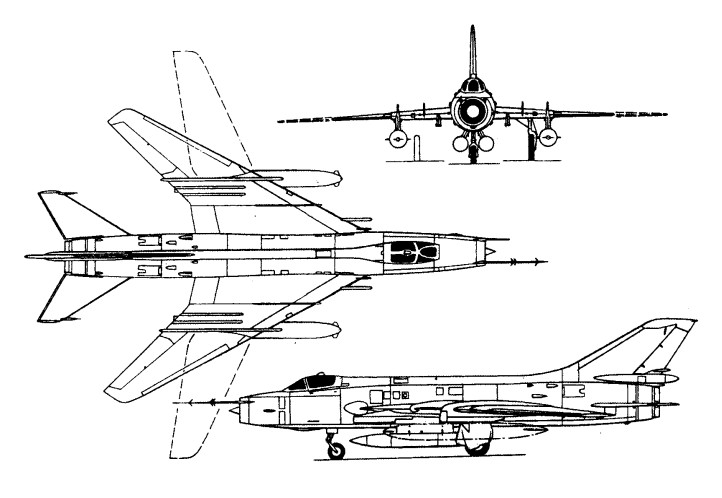

A forward swept wing research aircraft. The S-37 uses some Su-27 parts, including the undercarriage and vertical tails. Sukhoi uses up to 90 percent composite materials in the wing’s structure, and these have proven able to cope with the considerable bending and structural loading on this type of wing during close-in maneuvering across a wide speed range.

The first prototype flew on September 25, 1997 at the Russian experimental base at Zhukovsky near Moscow. The S-37 fighter is intended to be more than just a technology demonstrator, as OKB Sukhoi is pushing this aircraft to become Russia’s fifth generation fighter.

S-37
Engines: 2 x Aviadvigatel (Perm) D-30F6 turbofans, 34,177 lbs thrust
Max take-off weight: 26000 kg / 57320 lb
Wingspan: 15.16 m / 50 ft 9 in
Length: 22.20 m / 73 ft 10 in
Height: 6.36 m / 21 ft 10 in
Max. speed: 2500 km/h / 1553 mph
Range w/max.fuel: 3880 km / 2411 miles
Armament: 1 x 30mm cannon
Crew: 1
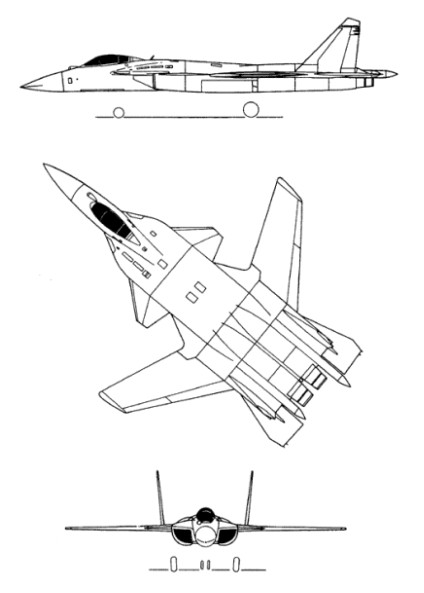
At much the same time the bureau produced its T-37 prototype meeting the requirement filled by the Ye-266. The T-37 was flown in 1960, but was not designed as anything but a research type.