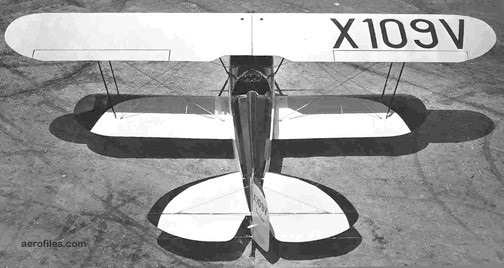
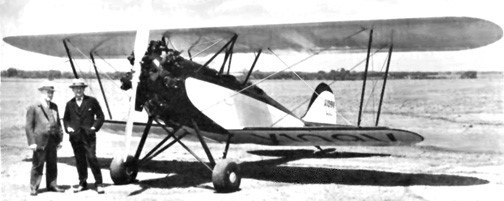
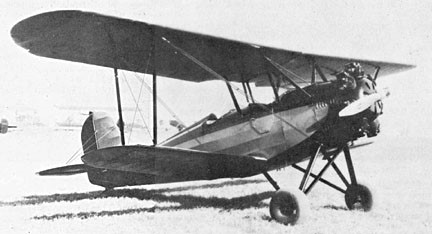
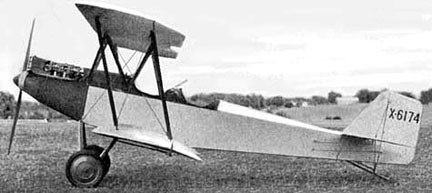
The 1929 Swallow H was a three-place open cockpit biplane designed by Dan Lake. One prototype was built, registered NX/NC108V c/n 101, powered by a 100hp Kinner K-5 engine.
The Swallow H was converted to the HA Sport in 1930 (ATC 341), still registered X/NC109V but with c/n 102. It was priced at $4,250 and powered by a 150hp Axelson-Floco B engine.
Swallow HA NX109V
The Swallow HA was later converted to a HW model with a new c/n.
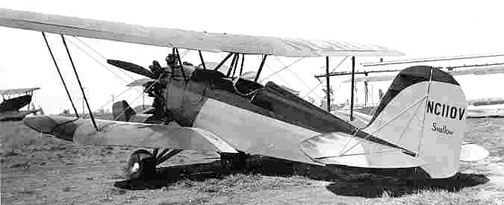
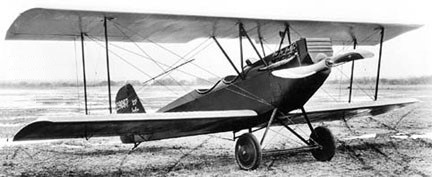
The HC Sport three-place open cockpit biplane of 1929 was powered by a 160hp Continental A-70 and registered NC110V c/n 2003.
Swallow HC NC110V
The 1930 HW Sport (ATC 379) registered NC109V c/n 2002 was the HA refitted with a 165hp Wright J-6 engine.
Swallow HW NC109V
H Engine: 100hp Kinner K-5 Wingspan: 31’0″ Seats: 3
HA Sport Engine: 150hp Axelson-Floco B Wingspan: 31’0″ Length: 22’2″ Useful load: 784 lb Max speed: 130 mph Cruise: 110 mph Stall: 42 mph Range: 435 mi Seats: 3
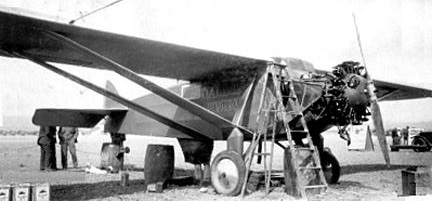
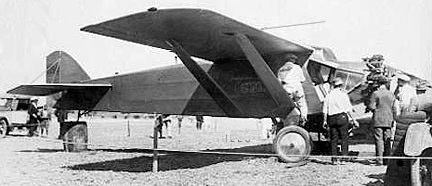
In 1927 Swallow built the Irl Beach designed two-place Dallas Spirit NX941 for the Dole Race, piloted by William P Erwin. It failed to compete, but took-off two days later as a search plane and was itself lost at sea.
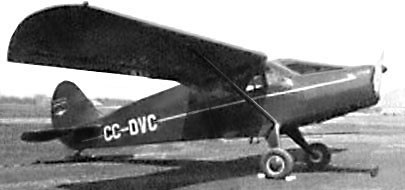
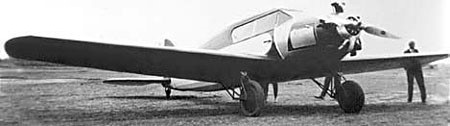
Designed by Sam Bloomfield (ex-Fairchild Corp) in 1936, the Swallow Aircraft Co C Coupe (ATC 2-538 issued in 1937) sold for $3,990.
Three were built; NC15818, NC18586, and NC19540, of which one crashed in a fog, killing company president E B Christopher, and one went to Chile as CC-DVC.
C Coupe Engine: 125hp Menasco C-4 Wingspan: 36’8″ Length: 24’4″ Useful load: 530 lb Max speed: 145 mph Cruise: 135 mph Stall: 43 mph Range: 500 mi Ceiling: 18,000′ Seats: 2
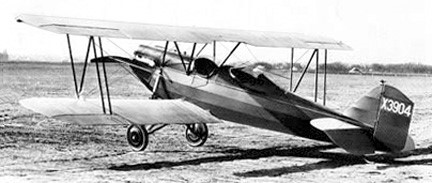
The 1928 Swallow Aircraft Co T-29 was a three-place open cockpit biplane powered by a 120hp Quick (static LeRhône) engine. The one built, registered NX/NC3904 c/n B-1, was later refitted with a 150hp Hisso A engine.
The 1929 Swallow TP (ATC 105) was designed by Amos Payne. Priced at $1,725 less motor, about 200 were built. Strengthened construction, wider cockpits.
Swallow TP C9097
The 1929 TP-K (ATC 186, 2-500) was priced at $4,123. Twenty to twenty-five were built.
Three TP-W (ATC 253) were built in 1929, priced at $4,250.
Designed by Dan Lake, and built Oct 1929 by Swallow as a monoplane with a 165hp Wright as C-165 NX431N c/n 1, and relicensed as N431N in October 1930.
Sold to Dan Lake in October 1933 by the receivers of Swallow. The company name could not be used, so Lake used his own name and changed the model to C-1 as a four place cabin biplane after switching to the 150hp Hisso engine.
Sold in May 1935 to Stanley Ball of Wichita and the registration was cancelled on 1 June 1936.
In one last desperate gamble, Jake Moellendick committed all the company’s resources to building a Swallow monoplane, the Dallas Spirit, to win the $35,000 1927 Dole Prize for the first civilian flight from California to Hawaii. The Swallow monoplane was one of two that turned back, but a couple of days later during a second attempt to reach Hawaii, the plane was lost nine hours out over the sea. The Swallow Company went down with the Dallas Spirit.
Walter Beech had made a name for himself in the early 1920s racing a Laird Swallow aircraft and became a principal of the Swallow Aircraft Co in 1923.
1923: E M Laird Aviation Co Inc, Wichita KS.
1923: Swallow Airplane Mfg Co (Jacob M “Jake” Moellendick, Charles L Laird, Walter Beech, Lloyd Stearman, others), 29 St and Hillside, reorganized from Laird partnership.
The Winstead Special was derived by the Winstead brothers from an initial metal fuselage frame developed at Swallow by Stearman and Walter Beech, and subsequently discarded by Swallow. The rejection of the metal frame concept, by Swallow president Jake Moellendick, triggered the departure of Stearman and Beech, and the creation of Travel Air. Beech resigned in 1924 to form the Travel Air Manufacturing Co with Lloyd Stearman and Clyde Cessna (who also became well known aircraft manufacturers in later years).
First product of the Swallow Aircraft Co was Model 1924 Swallow Commercial three seater (a refined Laird Swallow). Type was successful, especially in Middle West, and improved progressively. On April 6,1926 a Swallow biplane (modified New Swallow type, called Swallow Mail plane) made inaugural flight for Varney Air Lines (later part of United Air Lines) marking significant advance in U.S. air transport. Swallow Commercial of 1928 offered with various engines; Swallow Special 3-seater had Axelson engine.
1927: Swallow Airplane Co.
1927: Receivership, but with some refinancing in 1933 (E B Christopher), remained operational as an aircraft mechanic school and subcontractor for B-29 and B-47 components until 1956.
In 1930s company developed Swallow Coupe light cabin monoplane. As Swallow Aircraft Company Inc was developing two-seat low wing types in 1941, but their production inhibited by Second World War.
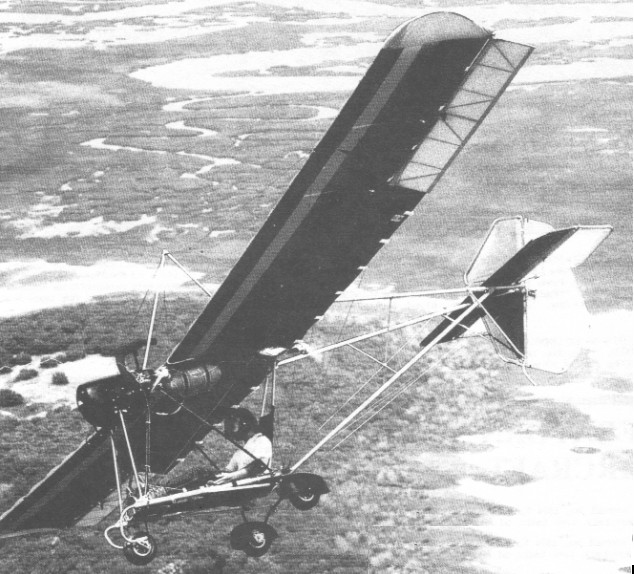
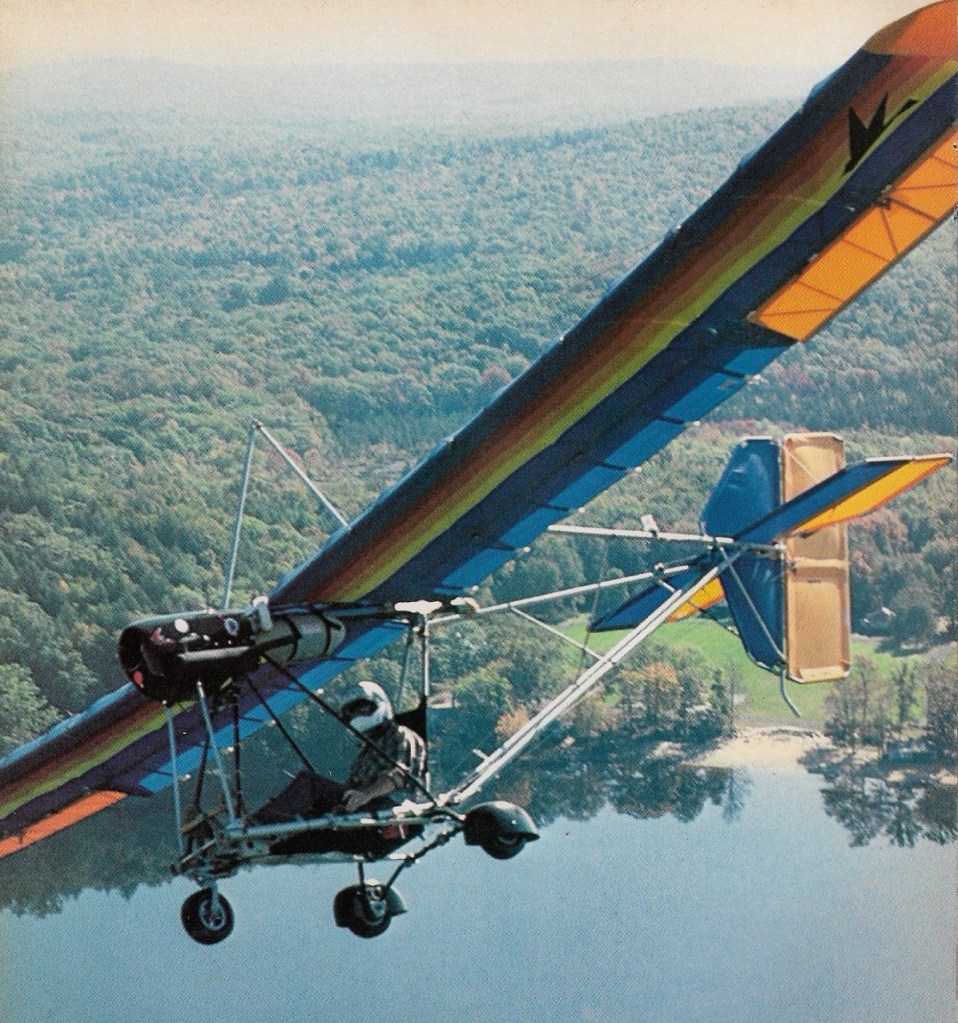
Single seat single engined high wing monoplane with conventional three axis control. Wing has unswept leading and trailing edges, and constant chord; cruciform tail. Pitch control by elevator on tail; yaw control by fin mounted rudder; roll control by one third span ailerons; control inputs through stick for pitch/roll and pedals for yaw. Wing braced from above by kingpost and cables, from below by cables; wing profile; double surface. Undercarriage has three wheels in tricycle formation with additional tailskid; steel spring suspension on nosewheel and glass fibre suspension on main wheels. Push-right go right nosewheel steering connected to yaw control. No brakes. Aluminium tube framework, with optional pod. Engine mounted at wing height driving pusher propeller.
Chet Fudge, the creator of the Swallow, named it in memory of the 1928 American biplane. Swallow AeroPlane Company (earlier called Aeroplane Marketing), originally sold two versions of this single seater, the Swallow bi-motor, which is classified as an ultralight in the United States and the Swallow B with single engine, classed as an experimental homebuilt aircraft. The twin engined ultralight used two single cylinder Yamaha KT100S engines giving 15 hp each and driving through a common reduction drive with separate clutch¬es for single engine operation in case of failure.
The company introduced another ultralight variant, this time with one engine, called the Swallow A. It uses a Rotax 277 engine.
The Yamaha engined machine was avail¬able for $5475 in kit form in 1983. Nosewheel steering, previously optional, has been stan¬dardised for the Swallow A and for the first time in the Swallow range a pod is available as an option. Other options include floats and a strobe.
The Swallow B is the same as Swallow A except: No ground steering (optional: push right go right nose-wheel steering connected to yaw control). Optional brakes on main wheels. No pod option.
In the US the Swallow B is too heavy to be classified as an ultralight, but it could come into the microlight category in some countries. It is basically the same aircraft as the original twin engined Swallow, but with a Cuyuna 430 engine substituted, developing 30 hp.
The engine is shrouded behind a distinctive glass fibre fairing, which also improves its cooling. According to the prices given at Sun ‘n’ Fun in Lakeland in March 1983, the Swallow B sells for $5790 including the engine cowling. Options: wheel fairings for the main wheels $115, steerable nosewheel $360, hydraulic brakes $388, float mountings $456.
Swallow A Engine: Rotax 277, 28 hp at 6200 rpm Propeller diameter and pitch 52 x 34 inch, 1.32 x 0.86 m Toothed belt reduction, ratio 2.0/1 Max static thrust 170 lb, 77 kg Power per unit area 0.20 hp/sq.ft, 2.2 hp/sq.m Fuel capacity 3.8 US gal, 3.2 Imp gal, 14.3 litre Length overall 18.1 ft, 5.51 m Height overall 8.0ft, 2.44m Wing span 34.4ft, 10.49m Constant chord 4.0 ft, 1.22 m Sweepback 0 deg Total wing area 138 sq.ft, 12.8 sq.m Wing aspect ratio 8.6/1 Empty weight 253 lb, 115kg Load factors +4.0, 3.0 design Never exceed speed 60 mph, 97 kph Best glide ratio with power off 8/1
Swallow B Engine: Cuyuna 430R engine Max power 30 hp at 5500 rpm Propeller diameter and pitch 52 x 34 inch, 1.32 x 0.86 m Toothed belt reduction Power per unit area 0.21 hp/sq.ft, 2.3 hp/sq.m Fuel capacity 3.8 US gal, 3.2 Imp gal, 14.3 litre Length overall 18.1 ft, 5.51 m Height overall 8.0ft, 2.44m Wing span 34.4ft, 10.49m Constant chord 4.0 ft, 1.22 m Sweepback 0 deg Total wing area 138 sq.ft, 12.8 sq.m Wing aspect ratio 8.6/1 Nosewheel diameter overall 10 inch, 25 cm Main wheels diameter overall 10 inch, 25 cm Empty weight 290 lb, 131 kg Max take off weight 585 lb, 265 kg Payload 295 lb, 134 kg Max wing loading 4.23 lb/sq.ft, 20.7kg/sq.m Max power loading 19.5 lb/hp, 8.8kg/hp Max level speed 70 mph, 113 kph Max cruising speed 60 mph, 97kph Stalling speed 28mph, 45kph Max climb rate at sea level 780 ft/min, 4.0 m/s Min sink rate 550ft/min at 45mph, 2.8m/s at 72 kph Take off distance 75 ft, 23 m Landing distance 125 ft, 38 m Range at average cruis¬ing speed 137 mile, 220km