Back to Swing Europe Astral
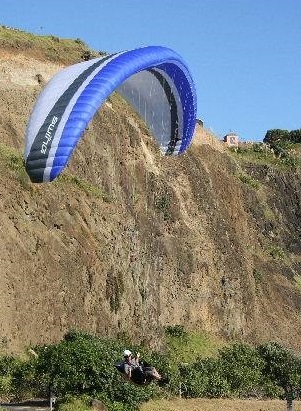
Back to Swing Europe Astral
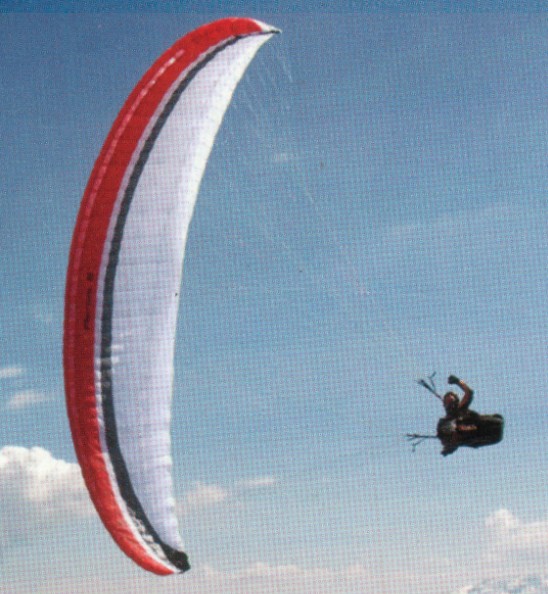
The team of Günther Worl and Manfred Kistler introduced the Astral for 1998.
Dedicated work on proven profiles (Astral and Arcus) as well as unconventional methods with Research and Development (Inboard Camera) have resulted in the Astral 2.
The goal was for improvement in climb and glide ratio, as well as improved stability, for ambitious recreational pilots. A result is dampened reaction from the glider in turbulence and extreme situations. This puts the Astral 2 at the bottom end of the DHV 2 class. Diagonal ribs (cross tapes) over three cells on the Astral 2 without line attachments results in increased performance in all respects. In addition, a 5 riser system and split A´s allows a most efficient speed system (excellent glide at speed with maximum stability) and split A´s makes the glider extremely user friendly.
The Astral 2 is the most stable accelerated glider Swing has ever produced. The lines are now Betech for the best possible quality. The main reason for this change is better characteristics in overall performance and stability, particularly regarding its resistance to stretch. A 3-year/300 flight hours guarantee is offered by Swing.
The Swing Astral is aimed at pilots who want top performance from their wing but still retain the pure flying fun and uncomplicated handling. The Astral is fitted with V-tapes, and the number of cells, the line geometry and profile place the Astral very close to our performance wing Ventus. An extremely easy glider to launch combined with a very direct handling, the Astral is very stable in flight and has a large speed range.
The Astral 3 was intended for all pilots, ranging from the motivated social pilot to the serious but safety-conscious. As performance is concerned, the Astral 3 is positioned at the top of the intermediate gliders.
The Astral 3 is the first product from the design and development team of Michael Hartmann and Dr. Stefan Müller. The simulation software used to develop this wing is unique in the paraglider business and attention can be directed to distortions in the canopy right from the paraglider’s development phase.
Following intensive development work, a new combination of materials is used on the Astral 3 for the first time.
It uses a 44 g/m light nylon fabric with a special silicone and polyurethane coating from Perseverance for the top surface. WT 7 from Toray I is used for the bottom surface. This combination of materials allows moisture to escape from the inside of the paraglider by diffusion, despite a good porosity reading for the top surface.
Compared with its predecessor, the Astral 3 has improved thermic flight characteristics and new, very direct handling where there is low control pressure. The precise, defined handling allows gentle turning in weak thermic conditions and easy turns with good banking in strong conditions.
The Astral 4 is the third coup for Swing’s test team made up of Michael Hartmann, Manuel Croci and Christian Amon. The successful concept of the Mistral 3 was further developed and optimised for a DHV-2 glider as the Astral 4.
The Astral 4’s can be stabilised very easily in turbulent conditions, it has almost no tendency to shoot forward and can be precisely centred in thermals. After it has begun to turn, it follows the desired path with precision.
On launch, the glider can be steered very well and it rises evenly above the pilot even in difficult conditions, and there is little tendency to overshoot.
The top surface of the Astral 4 is made from a highly UV resistant double-layer siliconised fabric, cell construction is from diagonal segments, and a system of load-bearing tapes in the bottom surface help the wing to maintain its profile. The load-bearing tapes allow ideal energy transfer from the lines to the wing, so as to avoid unnecessary hesitation and wrinkling in the bottom surface.
The canopy has 57 cells and an aspect ratio of 5.55. The design allows the lines to be reduced to two levels, i.e. main lines and top lines which reduces the overall resistance of the wing and increases glide performance.
Swing presented the Astral 5 in the sport class (up to DHV 2) and features an aspect ratio of 5.7, with direct and well-balanced handling, it uses the same profile as the Stratus 7 competition glider. The Astral 5 was in production in 2008.
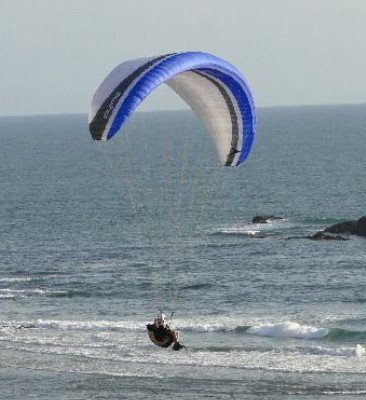
The Astral 6 intermediate has an aspect ratio of 6.4 and a very impressive glide angle. At all times, the Astral 6 progresses comfortably and reliably and minimal steering adjustment is needed to maintain the desired bank angle.
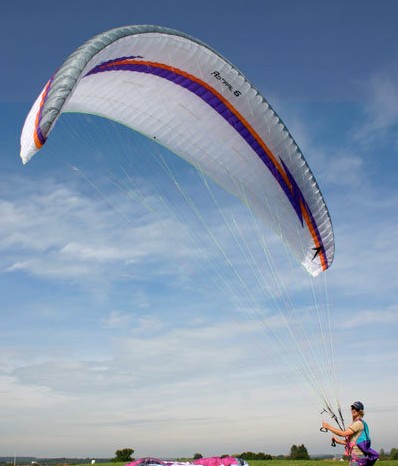
High Arc Technology (high aspect ratio with strong canopy curvature) was successfully transferred from the competition scene to an intermediate glider. In addition to the measurable performance and aeronautical advantages, it gives the Astral 6 its distinctive and elegant high-performance appearance. The new HAT concept allowed Michael Hartmann’s development team not only to make it as ideal as possible for competition and XC, but also to satisfy all LTF 2 manoeuvres.
The Astral 6 featrew Flex Sticks: lightweight leading edge reinforcements with high form stability. The use of lighter materials has reduced the canopy weight to just 5.6kg for a size 24 glider, and yet it has 57 cells. The Riser – completely reworked, new shackle form, and brake handle –with soft neoprene cover and four possible levels of stiffness plus swivel.
Astral (Polare) S
All up starting weight: 65-85 kg
Pilot weight without eq: 45-70 kg
Recommendet Pilot weight: 50-65 kg
Number of cells: 51
Number of add. Ribs: 64
Surface area flat: 26,7 sq.m
Surface area projected: 22,8 sq.m
Wingspan flat: 11,6 m
Wingspan projected: 9,8 m
Aspect ratio flat: 5,05
Aspect ratio projected: 4,2
Weight of glider: 6 kg
Minimum sink: 1,05 m/s
VMin / Vmax: 22 – 48 km/h
Trim Speed: 36 km/h
DHV 2 GH
Price (1998) 5450 DM
Astral (Polare) M
All up starting weight: 75-105 kg
Pilot weight without eq: 55-90 kg
Recommendet Pilot weight: 65-82 kg
Number of cells: 54
Number of add. Ribs: 82
Surface area flat: 29,2 sq.m
Surface area projected: 25,1 sq.m
Wingspan flat: 12,3 m
Wingspan projected: 10,3 m
Aspect ratio flat: 5,15
Aspect ratio projected: 4,2
Weight of glider: 6,2 kg
Minimum sink: 1,05 m/s
VMin / Vmax: 22 – 48 km/h
Trim Speed: 36 km/h
DHV 2 GH
ACPUL Standard
Price (1998) 5650 DM
Astral (Polare) L
All up starting weight: 95 – 120 kg
Pilot weight without eq: 75-105 kg
Recommendet Pilot weight: 82 – 100 kg
Number of cells: 54
Number of add. Ribs: 82
Surface area flat: 31,9 sq.m
Surface area projected: 27,6 sq.m
Wingspan flat: 12,9 m
Wingspan projected: 10,9 m
Aspect ratio flat: 5,15
Aspect ratio projected: 4,3
Weight of glider: 6,5 kg
Minimum sink: 1,05 m/s
VMin / Vmax: 22 – 48 km/h
Trim Speed: 36 km/h
DHV 2 GH
ACPUL Standard
Price (1998) 5850 DM
Astral (Polare) TWIN
All up starting weight: 150-230 kg
Pilot weight without eq: 120-200 kg
Recommendet Pilot weight: 120-200 kg
Number of cells: 54
Number of add. Ribs: 82
Surface area flat: 43,7 sq.m
Surface area projected: 39,5 sq.m
Wingspan flat: 14,9 m
Wingspan projected: 12,8 m
Aspect ratio flat: 5,05
Aspect ratio projected: 4,2
Weight of glider: 9,5 kg
Minimum sink: 1,05 m/s
VMin / Vmax: 22-42 km/h
Trim Speed: 42 / 48 km/h
DHV-certification Astral Twin: DHV 1-2
DHV-certification Astral Twin Trim: DHV 2
Astral 2 24
All up starting weight: 70 – 90 kg
Pilot weight without eq: 50 – 70 kg
Number of cells: 58
Surface area flat: 26,3 sq.m
Surface area projected: 23,3 sq.m
Wingspan flat: 11,8 m
Wingspan projected: 9,9 m
Aspect ratio flat: 5,3
Aspect ratio projected: 4,25
Weight of glider: 6 kg
Minimum sink: 1,05 m/s
VMin / Vmax: 23 – 52 km/h
Trim Speed: 37 km/h
Certification: DHV 2 GH
Astral 2 26
All up starting weight: 80 – 105 kg
Pilot weight without eq: 65 – 90 kg
Number of cells: 58
Surface area flat: 28,7 sq.m
Surface area projected: 25,2 sq.m
Wingspan flat: 12,3 m
Wingspan projected: 10,3 m
Aspect ratio flat: 5,3
Aspect ratio projected: 4,25
Weight of glider: 6,3 kg
Minimum sink: 1,05 m/s
VMin / Vmax: 23 – 53 km/h
Trim Speed: 37 km/h
Certification: DHV 2 GH
Astral 2 28
All up starting weight: 100 – 125 kg
Pilot weight without eq: 80 – 110 kg
Number of cells: 61
Surface area flat: 31,1 sq.m
Surface area projected: 27,5 sq.m
Wingspan flat: 13,1 m
Wingspan projected: 10,9 m
Aspect ratio flat: 5,45
Aspect ratio projected: 4,3
Weight of glider: 6,7 kg
Minimum sink: 1,05 m/s
VMin / Vmax: 21 – 53 km/h
Trim Speed: 37 km/h
Certification: DHV 2 GH
Astral 2 Twin
All up starting weight: 150 – 230 kg
Pilot weight without eq: 120 – 200 kg
Number of cells: 54
Surface area flat: 43,7 sq.m
Surface area projected: 39,5 sq.m
Wingspan flat: 14,9 m
Wingspan projected: 12,8 m
Aspect ratio flat: 5,05
Aspect ratio projected: 4,2
Weight of glider: 9,5 kg
Minimum sink: 1,05 m/s
VMin / Vmax: 22 – 42 km/h
Trim Speed: 42 / 48 km/h
Certification: DHV 1-2/2
Astral 3 3.22
Take-off weight incl. Equipment: 55-80 kg
No. of cells: 66
Area flat: 27,0 sq.m
Area projected: 21,6 sq.m
Span flat: 11,6 m
Span projected: 9,7 m
Aspect ratio: 5,5
Glider weight: 5,6 kg
Trim speed approx: 36 km/h
Max. speed approx: 50 km/h
LTF-certification: DHV 2
Astral 3 3.24
Take-off weight incl. Equipment: 65-90 kg
No. of cells: 66
Area projected: 23,6 sq.m
Span flat: 12,2 m
Span projected: 10,1 m
Aspect ratio: 5,5
Glider weight: 5,9 kg
Trim speed approx: 36 km/h
Max. speed approx: 50 km/h
LTF-certification: DHV 2
Astral 3 3.26
Take-off weight incl. Equipment: 80-105 kg
No. of cells: 66
Area flat: 28,5 sq.m
Area projected: 25,6 sq.m
Span flat: 12,5 m
Span projected: 10,6 m
Aspect ratio: 5,5
Glider weight: 6,2 kg
Trim speed approx: 36 km/h
Max. speed approx: 50 km/h
LTF-certification: DHV 2
Cost New: $5500
Astral 3 3.28
Take-off weight incl. Equipment: 100-130 kg
No. of cells: 66
Area flat: 30,5 sq.m
Area projected: 27,5 sq.m
Span flat: 13,0 m
Span projected: 11,3 m
Aspect ratio: 5,5
Glider weight: 6,5 kg
Trim speed approx: 36 km/h
Max. speed approx: 50 km/h
LTF-certification: DHV 2
Astral 4 4.22
Take-off weight incl. Equipment: 55-80 kg
No. of cells: 57
Area flat: 26 sq.m
Area projected: 22,6 sq.m
Span flat: 12 m
Span projected: 9,6 m
Aspect ratio: 5,55
Aspect ratio projected: 4,04
Glider weight: 6,1 kg
Min. sink rate approx: 1,05 m/s
Trim speed approx: 38 km/h
Max. speed approx: 53 km/h
LTF-certification: DHV 2
Astral 4 4.24
Take-off weight incl. Equipment: 70-95 kg
No. of cells: 57
Area flat: 27,0 sq.m
Area projected: 23,5 sq.m
Span flat: 12,25 m
Span projected: 9,75 m
Aspect ratio: 5,55
Aspect ratio projected: 4,04
Glider weight: 6,4 kg
Min. sink rate approx: 1,05 m/s
Trim speed approx: 38 km/h
Max. speed approx: 53 km/h
LTF-certification: DHV 2
Astral 4 4.26
Take-off weight incl. Equipment: 85-110 kg
No. of cells: 57
Area flat: 28,4 sq.m
Area projected: 24,8 sq.m
Span flat: 12,55 m
Span projected: 10 m
Aspect ratio: 5,55
Aspect ratio projected: 4,04
Glider weight: 6,7 kg
Min. sink rate approx: 1,05 m/s
Trim speed approx: 38 km/h
Max. speed approx: 53 km/h
LTF-certification: DHV 2
Astral 4 4.28
Take-off weight incl. Equipment: 100-125 kg
No. of cells: 57
Area flat: 29,8 sq.m
Area projected: 25,9 sq.m
Span flat: 12,85 m
Span projected: 10,25 m
Aspect ratio: 5,55
Aspect ratio projected: 4,04
Glider weight: 7 kg
Min. sink rate approx: 1,05 m/s
Trim speed approx: 38 km/h
Max. speed approx: 53 km/h
LTF-certification: DHV 2
Astral 5 5.22
Take-off weight incl. Equipment: 55-80 kg
No. of cells: 53
Area flat: 26 sq.m
Area projected: 22,5 sq.m
Span flat: 12,1 m
Span projected: 9,6 m
Aspect ratio: 5,7
Aspect ratio projected: 4,15
Glider weight: 5,8 kg
Min. sink rate approx: 1,05 m/s
Trim speed approx: 38 km/h
Max. speed approx: 52 km/h
LTF-certification: DHV 2
Astral 5 5.24
Take-off weight incl. Equipment: 70-95 kg
No. of cells: 53
Area flat: 27,0 sq.m
Area projected: 23,5 sq.m
Span flat: 12,4 m
Span projected: 9,8 m
Aspect ratio: 5,7
Aspect ratio projected: 4,15
Glider weight: 6,0 kg
Min. sink rate approx: 1,05 m/s
Trim speed approx: 38 km/h
Max. speed approx: 52 km/h
LTF-certification: DHV 2
Astral 5 5.26
Take-off weight incl. Equipment: 85-105 kg
No. of cells: 53
Area flat: 28,5 sq.m
Area projected: 24,6 sq.m
Span flat: 12,7 m
Span projected: 10,1 m
Aspect ratio: 5,7
Aspect ratio projected: 4,15
Glider weight: 6,3 kg
Min. sink rate approx: 1,05 m/s
Trim speed approx: 38 km/h
Max. speed approx: 52 km/h
LTF-certification: DHV 2
Astral 5 5.28
Take-off weight incl. Equipment: 100-125 kg
No. of cells: 53
Area flat: 30 sq.m
Area projected: 25,9 sq.m
Span flat: 13 m
Span projected: 10,3 m
Aspect ratio: 5,7
Aspect ratio projected: 4,15
Glider weight: 6,6 kg
Min. sink rate approx: 1,05 m/s
Trim speed approx: 38 km/h
Max. speed approx: 52 km/h
LTF-certification: DHV 2
Astral 6 6.22
Take-off weight incl. Equipment: 60-80 kg
No. of cells: 57
Area flat: 24 sq.m
Area projected: 20,2 sq.m
Span flat: 12,39 m
Span projected: 9,53 m
Aspect ratio: 6,4
Aspect ratio projected: 4,5
Glider weight: 5,10 kg
Min. sink rate approx: 1,05 m/s
Trim speed approx: 39 km/h
Max. speed approx: 53 km/h
CEN Certification: EN C
LTF-certification: LTF2
Astral 6 6.24
Take-off weight incl. Equipment: 70-95 kg
No. of cells: 57
Area flat: 25,5 sq.m
Area projected: 21,2 sq.m
Span flat: 12,77 m
Span projected: 9,78 m
Aspect ratio: 6,4
Aspect ratio projected: 4,5
Glider weight: 5,4 kg
Min. sink rate approx: 1,05 m/s
Trim speed approx: 39 km/h
Max. speed approx: 53 km/h
CEN Certification: EN C
LTF-certification: LTF2
Astral 6 6.26
Take-off weight incl. Equipment: 85-110 kg
No. of cells: 57
Area flat: 27 sq.m
Area projected: 22,5 sq.m
Span flat: 13,15 m
Span projected: 10,06 m
Aspect ratio: 6,4
Aspect ratio projected: 4,5
Glider weight: 5,75 kg
Min. sink rate approx: 1,05 m/s
Trim speed approx: 39 km/h
Max. speed approx: 53 km/h
Astral 6 6.28
Take-off weight incl. Equipment: 100-130 kg
No. of cells: 57
Area flat: 28,5 sq.m
Area projected: 23,7 sq.m
Span flat: 13,5 m
Span projected: 10,32 m
Aspect ratio: 6,4
Aspect ratio projected: 4,5
Glider weight: 6,05 kg
Min. sink rate approx: 1,05 m/s
Trim speed approx: 39 km/h
Max. speed approx: 53 km/h
CEN Certification: EN C
LTF-certification: LTF2
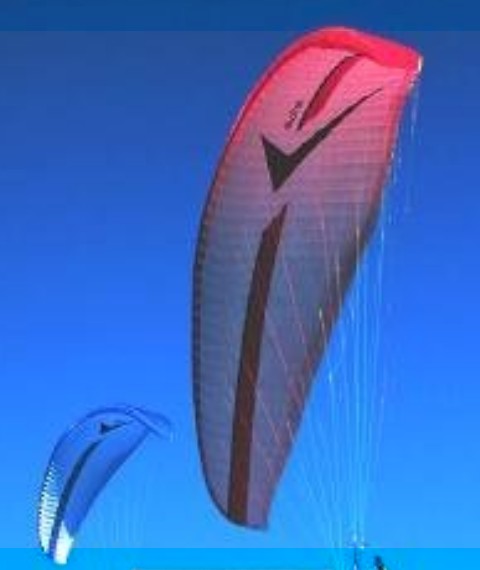
The 2002 Arcus 3 keeps many of the characteristics of its predecessor, but Swing has given special attention to the handling, the launching behaviour, and the performance throughout the speed range. Development work has given the Arcus 3 defined and more sensitive handling, a reduced tendency to overshoot on launch and increased performance at higher speeds. The 3 sizes of the Arcus 3 (24, 26 and 28) are DHV certified 1-2, with weight ranges that go from 60 to 115 kg.
The manufacture of this intermediate glider includes silicone-coated Perseverance PN 6 (44g/sq.m) fabric for the top surface, a light material highly resistant to UV rays, and lines from Liros. The glider has 46 cells and a max speed of more than 50 k/h, according to Swing.
Designed as a pure Intermediate (with 46 cells and an aspect ratio of 5) the Arcus uses diagonal tape construction, load-bearing tape on the D-risers, split A-risers, stabiliser breaks etc. Swing give a 3 year (or 300 flight hours) warranty for the complete package, in particular the fabric.
The Arcus 4 has a DHV 1/1-2 (accelerated) classification and good damping, making it first-rate for thermal flying. The Arcus 4 is an ideal glider for a very wide range of pilots, from beginners and social pilots to cross-country pilots. The launch behaviour is perfectly tuned particularly for beginners with no tendency to overshoot. The canopy rises quickly and evenly above the pilot with low momentum. Despite its excellent performance (Vmax 50 km/h) the development team has placed great importance on good-natured behaviour in extreme flight.
Drawing on the profile of the Mistral 3 for the Arcus 4, the challenge was to modify the profile of a high-performance intermediate glider in such a way that the glider had uncompromising good-natured flight behaviour. The main difficulties lay in optimising the way it turns after an asymmetric tuck. Swing went through a few prototypes before the Arcus 4 result.
Swing decided to refine the Arcus 4 further. The design differences are not immediately apparent, but they are clearly noticeable when it comes to handling. In the air, the Arcus 5 has a generally more compact feeling. The thinner material used for the A and B lines has put its speed and liveliness up a notch, without having any impact on its usual good-natured handling. With its DHV 1/1-2 (accelerated) rating, the Arcus 5 is suited to cross-country flying, and has a very good safety margin, which make it suitable for learners. The Arcus 5 and the Arcus 4 both far exceed all other gliders with DHV 1 rating when it comes to performance and speed. Nevertheless the Arcus 5 has clearly more good-natured flight behaviour than pure DHV 1-2 gliders.
The Arcus 6 is designed with a 44g/sq.m fabric so that it will also withstand the demanding use in flying schools. In addition, Swing have been offering the Arcus 6 in the “Compact” version as well, for pilots who have completed their training.
The only difference between the two versions is the fabric used. The Arcus 6 Compact has used Techtex WT 3020 fabric (40g/sq.m) since July 2010. This was first used for the Mistral 6, Astral 6 and Twin 4. The canopy weight is somewhat less, which means that the glider rises even more easily in the inflation phase and the pack size is much more compact. However, the Compact is not a lightweight glider as such. The glider’s longevity takes priority.
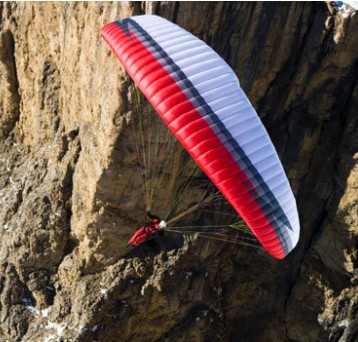
Demand for the Compact version increased considerably since mid-2010 and as a result, Swing only produced the Compact version from January 2011. Customers have the option to place a special order for the original Arcus 6 version with the 44g/sq.m material (delivery time of 3 weeks).
A completely new design, the Arcus 6 Compact (unaccelerated) complies with the requirements for the LTF 1 class (German airworthiness standards). It is ultimately up to the pilot to decide when to treat the glider as an LTF 1-2. Nevertheless, pilots need not go without the handling and high trim speed of the LTF 1-2 in unaccelerated flight.
More than 10,000 Arcus gliders had been sold around the world before the Arcus 6. A total of 18 prototypes were fine-tuned until the flight behaviour satisfied the team led by Michael Hartmann ironed out any remaining imperfections were. The vast majority of pilots fly unaccelerated most of the time and this is what makes the Arcus 6 Compact a suitable glider for beginners. Reduced sail tension in combination with the oval air-entrances made it possible to design a canopy which is extremely smooth.
Arcus 6 Compact vs. Arcus 5 – how do they differ in flight?
a) better glide
b) more direct handling, greater agility
c) higher trim speed
d) greater control pressure towards the end of the control travel (stall point very easy to recognise)
e) greater canopy stability
f) greater speed range on flare
g) size 32 can be used as both a tandem and a solo glider (up to 150 kg)
Arcus 6 Compact vs. Arcus 5 – how do they differ in design?
a) oval air entrances
b) higher aspect ratio
c) a more swept-back plan form
d) new profile
e) no E line level
Arcus 6.32 – Compact is for “larger” pilots and can also be used as a tandem glider. It includes the 120 – 150kg weight group and can at any stage be converted into a small tandem glider. The 32 Compact can be converted into a tandem by using a second hangpoint higher on the solo riser. It is ideally suited for lighter pilots and social pilots who would like to take their children or friends flying. Because of the greater demand, the 32 Compact is delivered with a tandem riser which has just one hang point. The spreader bar is not included in the parts delivered.
Technical Data
Swing Arcus (polare) S
Take-off weight incl. Equipment: 65-85 kg
No. of cells: 43
Area flat: 27 sq.m m
Area projected: 22,6 sq.m
Span flat: 11,4 m
Span projected: 9,4 m
Aspect ratio: 4,85
Glider weight: 5,9 kg
Trim speed approx: 33-34 km/h
Max. speed approx: 46 km/h
LTF-certification: DHV 1-2 GH
LTF-certification accelerated: DHV 1-2 GH
Swing Arcus (polare) M
Take-off weight incl. Equipment: 80-105 kg
No. of cells: 46
Area flat: 29,5 sq.m
Area projected: 25,1 sq.m
Span flat: 12,1 m
Span projected: 9,8 m
Aspect ratio: 5,0
Glider weight: 6,1 kg
Trim speed approx: 35-36 km/h
Max. speed approx: 49 km/h
LTF-certification: DHV 1 GH
LTF-certification accelerated: DHV 1-2 GH
Swing Arcus (polare) L
Take-off weight incl. Equipment: 95-125 kg
No. of cells: 46
Area flat: 32,5 sq.m
Area projected: 27,4 sq.m
Span flat: 12,8 m
Span projected: 10,6 m
Aspect ratio: 5,0
Glider weight: 6,5 kg
Trim speed approx: 34-36 km/h
Max. speed approx: 48 km/h
LTF-certification: DHV 1 GH
LTF-certification accelerated: DHV 1-2 GH
Swing Arcus (polare) XL
Take-off weight incl. Equipment: 105-140 kg Mono / 105-170 kg Tandem
No. of cells: 48
Area flat: 34,7 sq.m
Area projected: 29,4 sq.m
Span flat: 13,3 m
Span projected: 11,1 m
Aspect ratio: 5,1
Glider weight: 6,9 kg
Trim speed approx: 33-36 km/h
Max. speed approx: 44 km/h
LTF-certification: DHV 1-2 GH
LTF-certification accelerated: DHV 1-2 GH
Swing Arcus 3 3.22
Take-off weight incl. Equipment: 55-75 kg
No. of cells: 46
Area flat: 25 sq.m
Area projected: 22,6 sq.m
Span flat: 11,4 m
Span projected: 9,2 m
Aspect ratio: 5,17
Aspect ratio projected: 3,7
Glider weight: 6,00 kg
Min. sink rate approx: 1,1 m/s
Max. speed approx: 51 km/h
Trim speed approx: 36 km/h
LTF-certification: 1
Swing Arcus 3 3.24
Take-off weight incl. Equipment: 60-85 kg
No. of cells: 46
Area flat: 26,5 sq.m
Area projected: 24,1 sq.m
Span flat: 11,8 m
Span projected: 9,45 m
Aspect ratio: 5,17
Aspect ratio projected: 3,7
Glider weight: 6,25 kg
Min. sink rate approx: 1,1 m/s
Max. speed approx: 52 km/h
Trim speed approx: 35-36 km/h
LTF-certification: 1/1-2
Swing Arcus 3 3.26
Take-off weight incl. Equipment: 75-100 kg
No. of cells: 46
Area flat: 28,5 sq.m
Area projected: 25,8 sq.m
Span flat: 12,2 m
Span projected: 9,8 m
Aspect ratio: 5,17
Aspect ratio projected: 3,7
Glider weight: 6,5 kg
Min. sink rate approx: 1,1 m/s
Max. speed approx: 52 km/h
Trim speed approx: 34-36 km/h
LTF-certification: 1/1-2
Swing Arcus 3 3.28
Take-off weight incl. Equipment: 90-115 kg
No. of cells: 46
Area flat: 30,5 sq.m
Area projected: 27,6 sq.m
Span flat: 12,6 m
Span projected: 10,1 m
Aspect ratio: 5,17
Aspect ratio projected: 3,7
Glider weight: 7,0 kg
Min. sink rate approx: 1,1 m/s
Max. speed approx: 52 km/h
Trim speed approx: 36 km/h
LTF-certification: 1/ 1-2
Swing Arcus 3 3.30
Take-off weight incl. Equipment: 105-140 kg
No. of cells: 46
Area flat: 32,5 sq.m
Area projected: 29,2 sq.m
Span flat: 13 m
Span projected: 10,4 m
Aspect ratio: 5,17
Aspect ratio projected: 3,7
Glider weight: 7,3 kg
Min. sink rate approx: 1,1 m/s
Max. speed approx: 50 km/h
Trim speed approx: 36 km/h
LTF-certification: 1
Swing Arcus 4 4.22
Take-off weight incl. Equipment: 55-80 kg
No. of cells: 44
Area flat: 26,0 sq.m
Area projected: 22,8 sq.m
Span flat: 11,6 m
Span projected: 9,2 m
Aspect ratio: 5,2
Aspect ratio projected: 3,71
Glider weight: 6 kg
Min. sink rate approx: 1,05 m/s
Trim speed approx: 37 km/h
Max. speed approx: 50 km/h
LTF-certification: 1/1-2
Swing Arcus 4 4.24
Take-off weight incl. Equipment: 65-90 kg
No. of cells: 44
Area flat: 28,0 sq.m m
Area projected: 23,8 sq.m
Span flat: 12,1 m
Span projected: 9,45 m
Aspect ratio: 5,2
Aspect ratio projected: 3,71
Glider weight: 6,25 kg
Min. sink rate approx: 1,05 m/s
Trim speed approx: 37 km/h
Max. speed approx: 50 km/h
LTF-certification: 1/1-2
Swing Arcus 4 4.26
Take-off weight incl. Equipment: 80-105 kg
No. of cells: 44
Area flat: 30,0 sq.m
Area projected: 25,6 sq.m
Span flat: 12,5 m
Span projected: 9,75 m
Aspect ratio: 5,2
Aspect ratio projected: 3,71
Glider weight: 6,55 kg
Min. sink rate approx: 1,05 m/s
Trim speed approx: 37 km/h
Max. speed approx: 50 km/h
LTF-certification: 1/1-2
Swing Arcus 4 4.28
Take-off weight incl. Equipment: 90-115 kg
No. of cells: 44
Area flat: 31,5 sq.m
Area projected: 26,8 sq.m
Span flat: 12,8 m
Span projected: 10 m
Aspect ratio: 5,2
Aspect ratio projected: 3,71
Glider weight: 6,9 kg
Min. sink rate approx: 1,05 m/s
Trim speed approx: 37 km/h
Max. speed approx: 50 km/h
LTF-certification: 1/1-2
Swing Arcus 4 4.30
Take-off weight incl. Equipment: 105-130 kg
No. of cells: 44
Area flat: 33,5 sq.m
Area projected: 28,5 sq.m
Span flat: 13,2 m
Span projected: 10,3 m
Aspect ratio: 5,2
Aspect ratio projected: 3,71
Glider weight: 7,3 kg
Min. sink rate approx: 1,05 m/s
Trim speed approx: 37 km/h
Max. speed approx: 50 km/h
LTF-certification: 1/1-2
Swing Arcus 5 5.22
Take-off weight incl. Equipment: 55-80 kg
No. of cells: 44
Area flat: 26,0 sq.m
Area projected: 22,8 sq.m
Span flat: 11,6 m
Span projected: 9,2 m
Aspect ratio: 5,2
Aspect ratio projected: 3,71
Glider weight: 6 kg
Min. sink rate approx: 1,05 m/s
Trim speed approx: 37 km/h
Max. speed approx: 50 km/h
LTF-certification: 1/1-2
Swing Arcus 5 5.24
Take-off weight incl. Equipment: 65-90 kg
No. of cells: 44
Area flat: 28,0 sq.m
Area projected: 23,8 sq.m
Span flat: 12,1 m
Span projected: 9,45 m
Aspect ratio: 5,2
Aspect ratio projected: 3,71
Glider weight: 6,25 kg
Min. sink rate approx: 1,05 m/s
Trim speed approx: 37 km/h
Max. speed approx: 50 km/h
LTF-certification: 1/1-2
Swing Arcus 5 5.26
Take-off weight incl. Equipment: 80-105 kg
No. of cells: 44
Area flat: 30,0 sq.m
Area projected: 25,6 sq.m
Span flat: 12,5 m
Span projected: 9,75 m
Aspect ratio: 5,2
Aspect ratio projected: 3,71
Glider weight: 6,55 kg
Min. sink rate approx: 1,05 m/s
Trim speed approx: 37 km/h
Max. speed approx: 50 km/h
LTF-certification: 1/1-2
Swing Arcus 5 5.28
Take-off weight incl. Equipment: 90-115 kg
No. of cells: 44
Area flat: 31,5 sq.m
Area projected: 26,8 sq.m
Span flat: 12,8 m
Span projected: 10 m
Aspect ratio: 5,2
Aspect ratio projected: 3,71
Glider weight: 6,9 kg
Min. sink rate approx: 1,05 m/s
Trim speed approx: 37 km/h
Max. speed approx: 50 km/h
LTF-certification: 1/1-2
Swing Arcus 5 5.30
Take-off weight incl. Equipment: 105-130 kg
No. of cells: 44
Area flat: 33,5 sq.m
Area projected: 28,5 sq.m
Span flat: 13,2 m
Span projected: 10,3 m
Aspect ratio: 5,2
Aspect ratio projected: 3,71
Glider weight: 7,3 kg
Min. sink rate approx: 1,05 m/s
Trim speed approx: 37 km/h
Max. speed approx: 50 km/h
LTF-certification: 1/1-2
Arcus 6 6.22
Glider weight: 6 kg
Take-off weight incl. Equipment: 60-80 kg
No. of cells: 44
Area flat: 25,7 sq.m
Area projected: 22 sq.m
Span flat: 11,6 m
Span projected: 9 m
Aspect ratio: 5,25
Aspect ratio projected: 3,73
Min. sink rate approx: 1,05 m/s
Trim speed approx: 38 km/h
Max. speed approx: 50 km/h
CEN Certification: B
LTF-certification: 1/1-2
Arcus 6 6.24
Glider weight: 6 kg
Take-off weight incl. Equipment: 65-90 kg
No. of cells: 44
Area flat: 28,0 sq.m
Area projected: 23,9 sq.m
Span flat: 12,1 m
Span projected: 9,46 m
Aspect ratio: 5,25
Aspect ratio projected: 3,73
Min. sink rate approx: 1,05 m/s
Trim speed approx: 38 km/h
Max. speed approx: 50 km/h
CEN Certification: B
LTF-certification: 1/1-2
Arcus 6 6.26
Glider weight: 6,30 kg
Take-off weight incl. Equipment: 80-105 kg
No. of cells: 44
Area flat: 29,7 sq.m
Area projected: 25,4 sq.m
Span flat: 12,5 m m
Span projected: 9,75 m
Aspect ratio: 5,25
Aspect ratio projected: 3,73
Min. sink rate approx: 1,05 m/s
Trim speed approx: 38 km/h
Max. speed approx: 50 km/h
CEN Certification: B
LTF-certification: 1/1-2
Arcus 6 6.28
Glider weight: 6,55 kg
Take-off weight incl. Equipment: 90-115 kg
No. of cells: 44
Area flat: 30,7 sq.m
Area projected: 26,3 sq.m
Span flat: 12,7 m
Span projected: 9,9 m
Aspect ratio: 5,25
Aspect ratio projected: 3,73
Min. sink rate approx: 1,05 m/s
Trim speed approx: 38 km/h
Max. speed approx: 50 km/h
CEN Certification: B
LTF-certification: 1/1-2
Arcus 6 6.30
Glider weight: 6,9 kg
Take-off weight incl. Equipment: 105-130 kg
No. of cells: 44
Area flat: 33,5 sq.m
Area projected: 28,6 sq.m
Span flat: 13,2 m 13,6 m
Span projected: 10,3 m
Aspect ratio: 5,25
Aspect ratio projected: 3,73
Min. sink rate approx: 1,05 m/s
Trim speed approx: 38 km/h
Max. speed approx: 50 km/h
CEN Certification: B
LTF-certification: 1/1-2
Arcus 6 6.32
Glider weight: 7,3 kg
Take-off weight incl. Equipment: 120-150 kg
No. of cells: 44
Area flat: 35,0 sq.m
Area projected: 29,9 sq.m
Span flat: 13,6 m
Span projected: 10,6 m
Aspect ratio: 5,25
Aspect ratio projected: 3,73
Min. sink rate approx: 1,05 m/s
Trim speed approx: 38 km/h
Max. speed approx: 50 km/h
CEN Certification: B
LTF-certification: 1/1-2
Arcus 6 Compact 6.22
Glider weight: 5,55 kg
Take-off weight incl. Equipment: 60-80 kg
No. of cells: 44
Area flat: 25,7 sq.m
Area projected: 22 sq.m
Span flat: 11,6 m
Span projected: 9 m
Aspect ratio: 5,25
Aspect ratio projected: 3,73
Min. sink rate approx: 1,05 m/s
Trim speed approx: 38 km/h
Max. speed approx: 50 km/h
CEN Certification: B
LTF-certification: 1/1-2
Arcus 6 Compact 6.24
Glider weight: 5,80 kg
Take-off weight incl. Equipment: 65-90 kg
No. of cells: 44
Area flat: 28,0 sq.m
Area projected: 23,9 sq.m
Span flat: 12,1 m
Span projected: 9,46 m
Aspect ratio: 5,25
Aspect ratio projected: 3,73
Min. sink rate approx: 1,05 m/s
Trim speed approx: 38 km/h
Max. speed approx: 50 km/h
CEN Certification: B
LTF-certification: 1/1-2
Arcus 6 Compact 6.26
Glider weight: 6,15 kg
Take-off weight incl. Equipment: 80-105 kg
No. of cells: 44
Area flat: 29,7 sq.m
Area projected: 25,4 sq.m
Span flat: 12,5 m
Span projected: 9,75 m
Aspect ratio: 5,25
Aspect ratio projected: 3,73
Min. sink rate approx: 1,05 m/s
Trim speed approx: 38 km/h
Max. speed approx: 50 km/h
CEN Certification: B
LTF-certification: 1/1-2
Arcus 6 Compact 6.28
Glider weight: 6,35 kg
Take-off weight incl. Equipment: 90-115 kg
No. of cells: 44
Area flat: 30,7 sq.m
Area projected: 26,3 sq.m
Span flat: 12,7 m
Span projected: 9,9 m
Aspect ratio: 5,25
Aspect ratio projected: 3,73
Min. sink rate approx: 1,05 m/s
Trim speed approx: 38 km/h
Max. speed approx: 50 km/h
CEN Certification: B
LTF-certification: 1/1-2
Arcus 6 Compact 6.30
Glider weight: 6,7 kg
Take-off weight incl. Equipment: 105-130 kg
No. of cells: 44
Area flat: 33,5 sq.m
Area projected: 28,6 sq.m
Span flat: 13,2 m
Span projected: 10,3 m
Aspect ratio: 5,25
Aspect ratio projected: 3,73
Min. sink rate approx: 1,05 m/s
Trim speed approx: 38 km/h
Max. speed approx: 50 km/h
CEN Certification: B
LTF-certification: 1/1-2
Arcus 6 Compact 6.32
Glider weight: 6,85 kg
Take-off weight incl. Equipment: 120-150 kg
No. of cells: 44
Area flat: 35,0 sq.m
Area projected: 29,9 sq.m
Span flat: 13,6 m
Span projected: 10,6 m
Aspect ratio: 5,25
Aspect ratio projected: 3,73
Min. sink rate approx: 1,05 m/s
Trim speed approx: 38 km/h
Max. speed approx: 50 km/h
CEN Certification: B
LTF-certification: 1/1-2
The Sinus replaced the Mistral as the sport wing in 1998.
Sinus L
Paraglider circa 1998.
Wing area: 31.8 sq.m
Certification: DHV 1-2GH
Pilot weight: 90-135 kg
No. of cells: 36
Wing span: 12.4 m
Aspect ratio: 4.7
Min sink: 1.2 m/s
Max speed: 45 kph
Price (1998) 5290 DM
Sinus M
Paraglider circa 1998.
Wing area: 28.8 sq.m
Certification: DHV 1-2GH
Pilot weight: 80-105 kg
No. of cells: 36
Wing span: 11.7 m
Aspect ratio: 4.7
Min sink: 1.2 m/s
Max speed: 45 kph
Price (1998) 5090 DM
Sinus S
Paraglider circa 1998.
Wing area: 26 sq.m
Pilot weight: 60-85 kg
No. of cells: 36
Wing span: 11.1 m
Aspect ratio: 4.7
Min sink: 1.2 m/s
Max speed: 45 kph
Price (1998) 4890 DM
Sinus XL
Paraglider circa 1998.
Wing area: 33.9 sq.m
Pilot weight: 100-140 kg
No. of cells: 38
Wing span: 13.1 m
Aspect ratio: 4.75
Min sink: 1.2 m/s
Max speed: 45 kph
Price (1998) 5390 DM
Paraglider
Sinos M
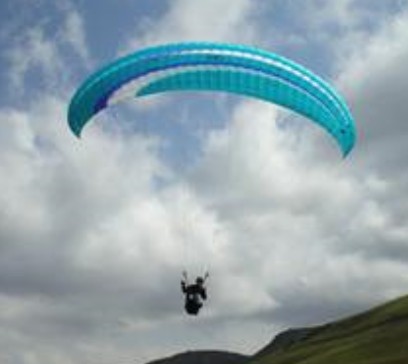
The origins of the Axis 3 go back to the Arcus 3. When realising the new designs, the Swing development team relied on a proven backup design system. Along with the Arcus 3, a second prototype proved to be particularly promising.
The Axis 3 is the ideal glider for beginner pilots. The low canopy weight and the small packing size mean that the Axis 3 is also well suited for long mountain trips. The “classic” construction of the Axis 3 means that its canopy is light and it has a small pack size. The 4 point riser system is retained because of the more even change in the angle of attack on acceleration. Even an inexperienced pilot will have no problem in carrying out rapid descent methods such as “big ears” and B-stalls.
Development of the computer programmes used allows images to be more and more exact and this ensures high profile accuracy and precisely defined tension distribution. The Axis 3 is finished off with details such as the Ergo Grip – brake handle and the stabiliser openings (which can be closed) which allow dirt and debris to be cleaned from the inside of the glider.
The Axis 3 has a slightly modified form of the Arcus 3 profile. The distinctive features of the profile are its very low tendency to shoot forward, its particularly balanced launch behaviour as well as its excellent thermal characteristics. The long control travel and the progressive control pressure give the Axis 3 particularly forgiving behaviour when the brakes are used (which makes it suitable for beginners) but without creating a sluggish feeling.
The DHV 1 Axis 4 offers more than a pure training glider. It has even simpler handling and higher safety margins than its predecessor. It also has a longer life expectancy.
A notable feature of the profile is its very low tendency to pitch forward. It has particularly simple and good-natured launch behaviour and excellent properties in thermal flying. The late stall point and the progressive control pressure make the Axis 4 a particularly forgiving glider. This makes it perfect for beginners who are getting familiar with the control lines. Notwithstanding its DHV 1 rating, pilots can very quickly experience the pleasure of their first thermal and cross-country flying, given the AXIS 4’s relatively high level of agility.
The canopy structure of the Axis 4 has been completely redefined. The rounded openings on the bottom surface allow pilots to launch very easily even if conditions are somewhat unfavourable. The overall line length has been reduced by using a thinner material for the lines and adopting a new line geometry. This reduces drag and increases performance.
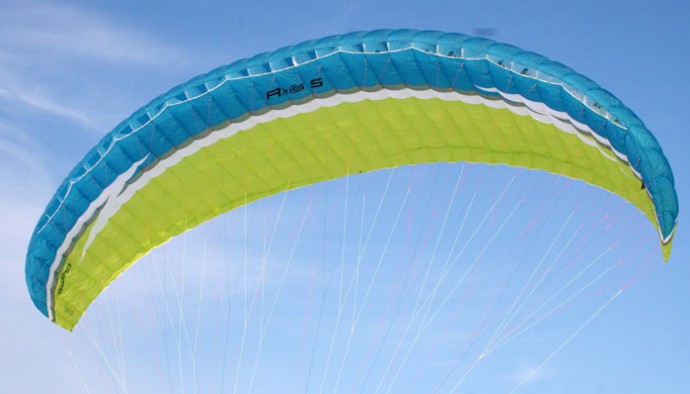
The Axis 5 for beginners, offers flying enjoyment meaning an easy launch, simple handling, a good glide and maximum passive safety. With forgiving characteristics, it has an EN-A classification.
The AXIS 5 offers:
Technical Data
Swing AXIS 3 3.22
Take-off weight incl. Equipment: 55-80 kg
No. of cells: 37
Area flat: 25,4 sq.m
Area projected: 22,9 sq.m
Span flat: 11,45 m
Span projected: 9,20 m
Aspect ratio: 5,15
Aspect ratio projected: 3,65
Glider weight: 5,5 kg
Min. sink rate approx: 1,1 m/s
Max. speed approx: 45 km/h
Trim speed approx: 36 km/h
LTF-certification: DHV 1
Swing AXIS 3 3.24
Take-off weight incl. Equipment: 65-90 kg
No. of cells: 37
Area flat: 27,3 sq.m
Area projected: 24,7 sq.m
Span flat: 11,85 m
Span projected: 9,51 m
Aspect ratio: 5,1
Aspect ratio projected: 3,65
Glider weight: 5,9 kg
Min. sink rate approx: 1,1 m/s
Max. speed approx: 45 km/h
Trim speed approx: 36 km/h
LTF-certification: DHV 1
Swing AXIS 3 3.26
Take-off weight incl. Equipment: 80-105 kg
No. of cells: 37
Area flat: 29,2 sq.m
Area projected: 26,53 sq.m
Span flat: 12,25 m
Span projected: 9,83 m
Aspect ratio: 5,1
Aspect ratio projected: 3,65
Glider weight: 6,3 kg
Min. sink rate approx: 1,1 m/s
Max. speed approx: 45 km/h
Trim speed approx: 37 km/h
LTF-certification: DHV 1
Swing AXIS 3 3.28
Take-off weight incl. Equipment: 95-130 kg
No. of cells: 37
Area flat: 31,1 sq.m
Area projected: 28,2 sq.m
Span flat: 12,65 m
Span projected: 10,15 m
Aspect ratio: 5,1 5,15
Aspect ratio projected: 3,65
Glider weight: 6,7 kg
Min. sink rate approx: 1,1 m/s
Max. speed approx: 45 km/h
Trim speed approx: 36 km/h
LTF-certification: DHV 1
Swing AXIS 3 3.30
Take-off weight incl. Equipment: 105-140 kg(Mono) / 105-170 kg(Tandem)
No. of cells: 37
Area flat: 33,0 sq.m
Area projected: 29,9 sq.m
Span flat: 13,05 m
Span projected: 10,47 m
Aspect ratio: 5,15
Aspect ratio projected: 3,65
Glider weight: 7,3 kg
Min. sink rate approx: 1,1 m/s
Max. speed approx: 45 km/h
Trim speed approx: 36 km/h
LTF-certification: DHV 1 <140kg: DHV 1 / >140kg: DHV1-2
Swing AXIS 4 4.22
Take-off weight incl. Equipment: 55-80 kg
No. of cells: 37
Area flat: 25,4 sq.m
Area projected: 22,7 sq.m
Span flat: 11,5 m
Span projected: 9,15 m
Aspect ratio: 5,15
Aspect ratio projected: 3,6
Glider weight: 5,45 kg
Min. sink rate approx: 1,1 m/s
Max. speed approx: 45 km/h
Trim speed approx: 37 km/h
LTF-certification: DHV 1
Swing AXIS 4 4.24
Take-off weight incl. Equipment: 75-95 kg
No. of cells: 37
Area flat: 27,3 sq.m
Area projected: 24,5 sq.m
Span flat: 11,9 m
Span projected: 9,35 m
Aspect ratio: 5,15
Aspect ratio projected: 3,6
Glider weight: 5,9 kg
Min. sink rate approx: 1,1 m/s
Max. speed approx: 45 km/h
Trim speed approx: 37 km/h
LTF-certification: DHV 1
Swing AXIS 4 4.26
Take-off weight incl. Equipment: 85-110 kg
No. of cells: 37
Area flat: 29,2 sq.m
Area projected: 26,3 sq.m
Span flat: 12,3 m
Span projected: 9,7 m
Aspect ratio: 5,15
Aspect ratio projected: 3,6
Glider weight: 6,25 kg
Min. sink rate approx: 1,1 m/s
Max. speed approx: 45 km/h
Trim speed approx: 37 km/h
LTF-certification: DHV 1
Swing AXIS 4 4.28
Take-off weight incl. Equipment: 100-125 kg
No. of cells: 37
Area flat: 31,1 sq.m
Area projected: 28 sq.m
Span flat: 12,7 m
Span projected: 10,1 m
Aspect ratio: 5,15
Aspect ratio projected: 3,6
Glider weight: 6,55 kg
Min. sink rate approx: 1,1 m/s
Max. speed approx: 45 km/h
Trim speed approx: 37 km/h
LTF-certification: DHV 1
Swing AXIS 4 4.30
Take-off weight incl. Equipment: 115-140 kg
No. of cells: 37
Area flat: 33,0 sq.m
Area projected: 29,7 sq.m
Span flat: 13,1 m
Span projected: 10,4 m
Aspect ratio: 5,15
Aspect ratio projected: 3,6
Glider weight: 6,9 kg
Min. sink rate approx: 1,1 m/s
Max. speed approx: 45 km/h
Trim speed approx: 37 km/h
LTF-certification: DHV 1
Swing AXIS 5 5.22
Take-off weight incl. Equipment: 65 – 85 kg
No. of cells: 37
Area flat: 26,0 sq.m
Area projected: 22,05 sq.m
Span flat: 11,57 m
Span projected: 9,04 m
Aspect ratio: 5,15
Aspect ratio projected: 3,71
Glider weight: 5,6 kg
Min. sink rate approx: 1,1 m/s
Max. speed approx: 47 km/h
Trim speed approx: 38 km/h
Swing AXIS 5 5.24
Take-off weight incl. Equipment: 75 – 100 kg
No. of cells: 37
Area flat: 28,0 sq.m
Area projected: 23,75 sq.m
Span flat: 12,01 m
Span projected: 9,38 m
Aspect ratio: 5,15
Aspect ratio projected: 3,71
Glider weight: 5,8 kg
Min. sink rate approx: 1,1 m/s
Max. speed approx: 47 km/h
Trim speed approx: 38 km/h
Swing AXIS 5 5.26
Take-off weight incl. Equipment: 90 – 115 kg
No. of cells: 37
Area flat: 30,0 sq.m
Area projected: 25,45 sq.m
Span flat: 12,43 m
Span projected: 9,71 m
Aspect ratio: 5,15
Aspect ratio projected: 3,71
Glider weight: 6,15 kg
Min. sink rate approx: 1,1 m/s
Max. speed approx: 47 km/h
Trim speed approx: 38 km/h
Swing AXIS 5 5.28
Take-off weight incl. Equipment: 105 – 130 kg
No. of cells: 37
Area flat: 32,0 sq.m
Area projected: 27,14 sq.m
Span flat: 12,84 m
Span projected: 10,03 m
Aspect ratio: 5,15
Aspect ratio projected: 3,71
Glider weight: 6,6 kg
Min. sink rate approx: 1,1 m/s
Max. speed approx: 47 km/h
Trim speed approx: 38 km/h
Swing AXIS 5 5.30
Take-off weight incl. Equipment: 115 – 140 kg
No. of cells: 37
Area flat: 34,0 sq.m
Area projected: 28,84 sq.m
Span flat: 13,23 m
Span projected: 10,34 m
Aspect ratio: 5,15
Aspect ratio projected: 3,71
Glider weight: 6,95 kg
Min. sink rate approx: 1,1 m/s
Max. speed approx: 47 km/h
Trim speed approx: 38 km/h
Swing has been successfully developing paragliders since 1986 and is one of the pioneer manufacturers in the paragliding scene.
1998: Bad Feldring 25, d-82290 Landsberied, Germany.
1998: Bȁderstraβe 27a. D65321 Heidenrod-Kemel, Germany
In 1999, Swing Europe was working with 170 distributors in more than 48 countries. Swing is located 30 km west of Munich, near the Bavarian Alps, giving it an ideal base.
In 1999, Swing has 7 models (a total of 33 gliders in various sizes). The development team creates more than 50 prototypes each year.
The 1929 Swift Aircraft Corp Trainer was a two-place open cockpit biplane.
Engine: 90hp Curtiss OX-5
Wingspan: 33’0″
Length: 24’8″
Useful load: 340 lb
Max speed: 89 mph
Cruise: 75 mph
Stall: 38 mph
Seats: 2
One Swift Aircraft Corp Sport was built, in 1929, registered NX4647 c/n 1000. It was a two-place open cockpit biplane.
Engine: 100hp Kinner K-5
Wingspan: 29’0″
Length: 21’3″
Useful load: 618 lb
Max speed: 115 mph
Cruise: 100 mph
Stall: 38 mph
Range: 620 mi
Engine: Wright J-5
Useful load: 620 lb
Max speed: 132 mph
Cruise: 115 mph
Stall: 41 mph
Range: 600 mi
Seats: 2
The 1928 Swift Aircraft Corp Special was a single-place, open cockpit biplane. Power was a Siemens and Warner engine.

