Mexico
National Aircraft Manufacturing Workshops, established November 1915 at Valbuena, near Mexico City. Began by building Bleriot, Morane-Saulnier and other foreign types under license. Own first products were the Microplane Veloz single-seat fighter biplane of 1918 and the Series A two-seat general-purpose biplane. Followed in late 1920s by the Azcarate-E training and reconnaissance sesquiplane. Aircraft design halted by Government 1930, but shortly afterwards built Chance Vought O2U Corsairs under license. Later products included Teziutlan primary trainers in 1942 and, in late 1940s, the prototype TTS-5 six-seat twin-engined general-purpose transport.
Author: Terry
Take Off 1100
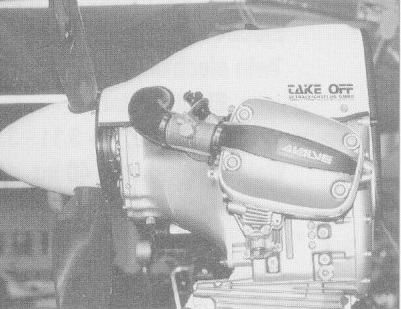
Based on an 1100cc BMW motorcycle engine.
1100
Cycle: 4 stroke
No cylinders: 2
Bore: 99 mm
Stroke: 70.5 mm
Compression: 10.7
Displacement: 1085 cc
Cooling: air/oil
Ignition: electronic
Reduction: 3.5:1 mechanical
Dimension: 540 x 740 x 90 mm
Weight: 74 kg
Max pwr: 90 hp at 7250 rpm
Max torque: 95 at 5000 rpm
Fuel consumption: 240 G/hp/hr
Price 1998: 13 000 DM
Take Off Merlin

Take Off made its name with BMW conversions on what was basically Drachenstudio Kecur trikes as the Merlin KX.
The 1998 version created by Wilfried Bloidiesel was the Merlin 1100 trike, made in Slovenia and powered by a BMW 1100 cc boxer. Equipped with an airfoil cooling system and electronic injection, the engine is fitted with a catalyst.

The Take Off Merlin is a German ultralight trike, designed and produced by Take Off GmbH of Hamm. The aircraft is supplied as a complete ready-to-fly-aircraft.
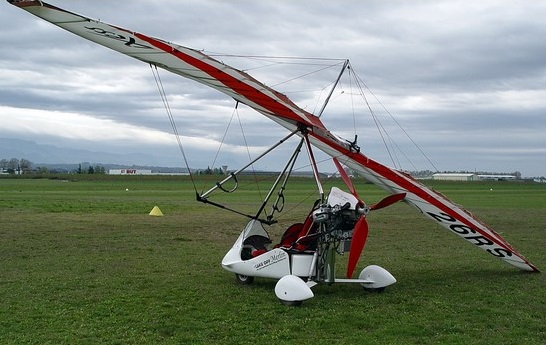
Merlin KX
Empty weight: 190 kg
Wing span: 10.60 m
Wing area: 13.8 sq.m
Fuel capacity: 60 lt
Certification: Vz
Engine: BMW 1100, 63 hp
MAUW: 400 kg
Seats: 2
Max speed: 125 kph
Cruise speed: 70-100 kph
Minimum speed: 55 kph
Climb rate: 2.5 m/s
Fuel consumption: 8 lt/hr
Price (1998): 29 300 DM
Merlin 1100
Empty weight: 190 kg
Wing span: 10.5 m
Wing area: 15.2 sq.m
Fuel capacity: 60 lt
Engine: BMW 1100 RS, 90 hp
MAUW: 400 kg
Seats: 2
Max speed: 130 kph
Cruise speed: 70 kph
Minimum speed: 60 kph
Climb rate: 4 m/s
Fuel consumption: 6.5 lt/hr
Price (1998): 34 000 DM
Take Off Ultraleicht Flug GmbH
1998:
Christinenweg 15
D-59069 Hamm 1
Germany
Trike and engine builder
Takács No.4
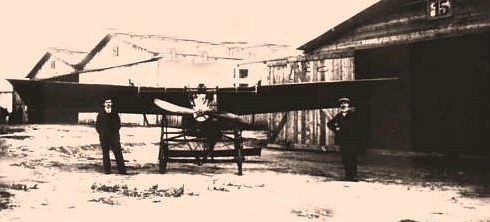
The fourth design of Hungarian Sándor Takács, built in 1911, was a single engined tractor monoplane, powered by a 60 hp 5-cylinder radial engine.
Takács, Sándor
Hungarian Sándor Takács (1886 – 1912) designed and built four different designs, all of them single engined tractor monoplanes.
His career ended when he crashed fatally on 13 October 1912.
Tairov OKO-1
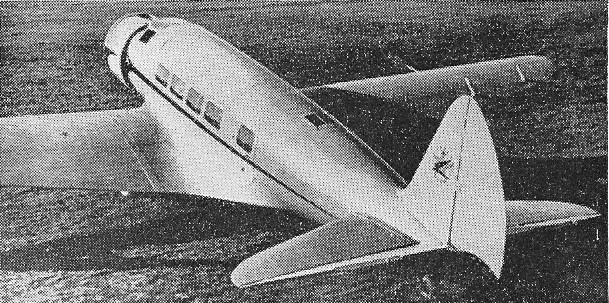
Designed by V.K. Tairov, the OKO-1 had a 750 hp M-25 giving a max speed of 230 mph with an AUW of 7293 lb. Span: 50 ft 6 in
Tainan F-5 / TN-1
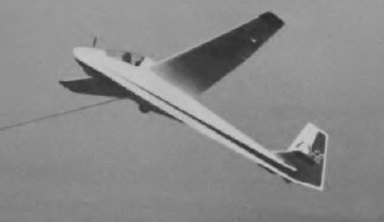
Also known by the manufucturers’ designation F5, the TN-1 single-seater was designed by Yukio Tanaka and construction of the prototype began in August 1974; this made its first flight in December 1976. The Japan Civil Airworthiness Board was conducting certification trials in the spring of 1978 and it was hoped to begin production in the summer of that year.
Of conventional wood and fabric construction very similar to the Mita III, the TN-1 had cantilever single-spar high wings of spruce and plywood, with fabric covering and a forward sweep of 2″ 4′ at the quarter-chord line; the wooden ailerons are ply-covered and there are Schempp-Hirth air brakes. The steel tube fuselage framework has fabric covering over wooden stringers, and the nose is of glassfibre. The wooden tail unit has fabric covered elevators and rudder, and there is a trim tab in the starboard elevator. There is a non-retractable unsprung monowheel mounted at the cg with a band brake, plus a tailskid.
Span: 50 ft 10.5 in
Length: 25 ft 0.75 in
Height: 7 ft 2.75 in
Wing area: 172.0 sqft
Aspect ratio: 15.03
Empty weight: 595 lb
Max weight: 837 1b
Max speed: 81 mph (in smooth air)
Max aero-tow speed: 81 mph
Min sinking speed: 2.59 ft/sec
Best glide ratio: 26:1 at 49 mph
Tainan Mita III / LADCO / Light Aircraft Development Co Mita III
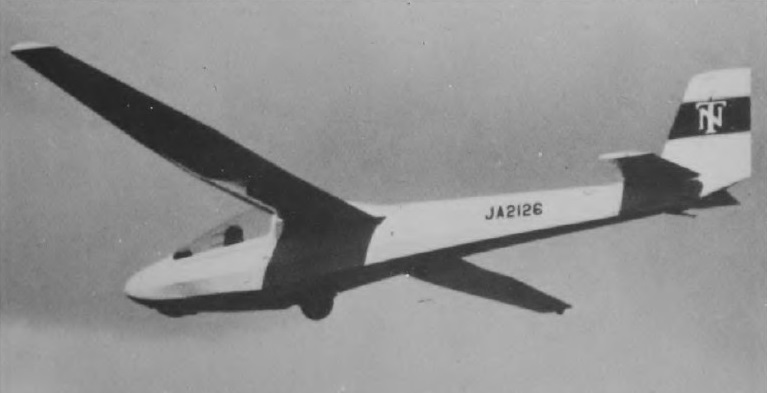
Japanese sailplanes of indigenous design often represent, as does the Mita III tandem two-seater training and sporting glider, an essentially conventional design philosophy. The Mita was built by LADCO – the Light Aircraft Development Co of Tokyo, whose designer was Mr Asahi Miyahara, and its production has been continued under licence by the Tainan Industry Co Ltd (Tainan Kogyo KK) after the latter took over the manufacture of sailplanes from LADCO; by 1 January 1979 a total of 37 Mita IIIs had been built.
Of conventional wood and fabric construction, the Mita has cantilever shoulder wings of constant chord centre section with tapered outer panels, of all-wood single box spar construction with plywood covering. The ailerons are fabric-covered and there are Schempp-Hirth air brakes in the wing upper surfaces. The fuselage is a steel tube framework with wooden stringers and fabric covering; the nose and forward section are of glassfibre, and there is an aero-tow release in the nose as well as a winch release at the cg. The wooden tail unit has a fabric covered rudder and elevators, and the landing gear consists of a rubber-sprung non-retractable monowheel with brake, plus a tailskid. The pilots sit under a flush-fitting two-piece blown canopy that hinges sideways to starboard for entry and exit.
Mita 3
Span: 16.0 m / 52 ft 5 in
Length: 7.96 m / 26 ft 1.5 in
Height: 1.28 m / 4 ft 2.5 in
Wing area: 15.87 sq.m / 170.82 sq.ft
Aspect ratio: 16.13
Wing section: NACA 633/618
Empty weight: 300 kg / 661 lb
Max weight: 450 kg / 992 lb
Water ballast: None
Max wing loading: 28.4 kg/sq.m / 5.81 lb/sq.ft
Max speed: 118 mph / 103 kt / 190 km/h (in smooth air)
Max aero-tow speed: 81 mph
Stalling speed: 33.5 kt / 62 km/h
Min sinking speed: 0.72 m/sec / 2.36 ft/sec at 47 mph / 40.5 kt / 75 km/h
Best glide ratio: 30:1 at 51 mph / 44 kt / 82 km/h
Taina Mid-Wing
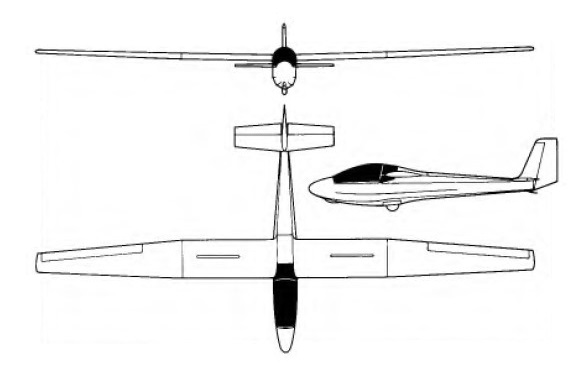
The Mid-wing was built in 1968, registered N930MB.

