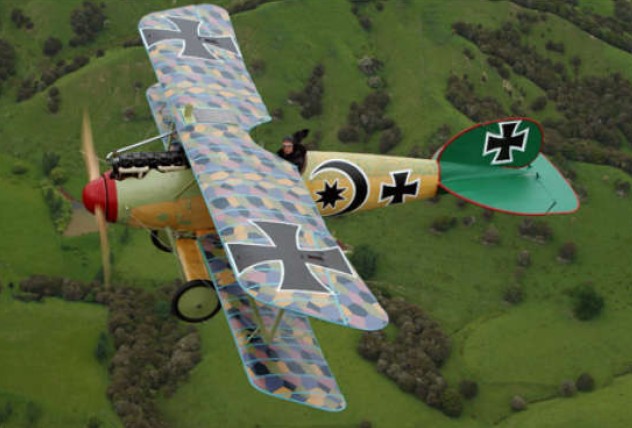
THK THK-1

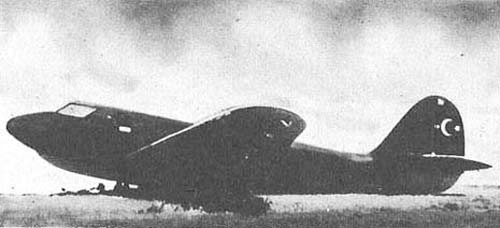
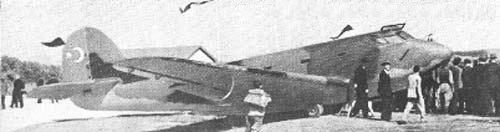
The Turk Hava Kurumu TNK-1 transport glider, built in 1943 was intended for military.

A 12-seat troop transport glider of wooden construction, the need for mass production was considered redundant and TNK-1 remained only a prototype.

THK-1
Wingspan: 26.00 m
Length: 12.50 m
Height: 4.60 m
Wing area: 56.00 sq.m
Weight empty equipped: 1100 kg
Maximum take-off weight: 2260 kg

THK / Turk Hava Kurumu Ucak Fabrikasi

As a forerunner of the nowadays Turkish Aeronautical Association, the Turkish Aircraft Foundation was founded on 16.02.1925. In accordance with the statute, the TTaC was to collect donations to buy new aircraft for the Turkish Air Force. In the years 1925-1935, 250 new aircraft could be procured by the actions of the TTaC. Some aircraft (like e.g. the Bréguet XIX B-2) was TTaC. In 1935 the statute of the foundation was modified. From that time it was supposed to function not as procurement organ for the Air Force, but rather execute sports activities in civilian aviation.

Upon reorganisation, the civil flying school, Turkish Bird (Türkkusu), was founded on 03.05.1935. Finally the association assumed its new name Türk Hava Kurumu (THK) on 24.05.1935. In 1936 the THK began to manufacture gliders for internal demand. Therefore a carpenter plant was built at Akköprü near Ankara. Then in 1939, when World War II began, some German and Polish aircraft designers were able to save themselves by detouring into Turkey. As the Turkish Government was also pressed badly in distress because of the world-political situation, it was decided that aircraft under license be manufactured, with the help of the experienced foreign designers. As a result a new aircraft plant was built at Etimesgut near Ankara in 1941.

Aircraft factory of the Turkish Air League formed 1941 at Etimesgut, near Ankara. At first the Miles Magister 1A Mk.I primary training aircraft was manufactured under license. Later Turkish designed aircraft were added. Built several gliders, including the THK-1 12-seat troop transport glider, and five types of light aircraft: the THK-2 single-seat aerobatic trainer; THK-5/5A twin-engined light transport/ambulance; THK-11 three-seat pusher-engined twin-boom light tourer; THK-15 tandem two-seat primary trainer; and THK-16 twin-jet trainer. Also built about 100 Miles M.14s under license, Turkish Air League control ceased 1952.

After World War II, the Turkish Government’s interest in its own aircraft production program, rapidly decreased. In addition, enormous aircraft supplies had come from the USA. Therefore it is not surprising that at the beginning of the fifties the THK aircraft plants were experiencing great difficulties. In order to prevent the worst of it, the government decided to transfer the available plants to the Mechanical and Chemical Industries Corporation (Makine ve Kimya Endüstrisi Kurumu, MKEK).

In 1952 Makina ve Kimya Endustrisi Kurumu / MKEK / Mechanical and Chemical Industry Corporation took over THK factory at Ankara, together with existing designs. THK-15 became the MKEK Model 1, THK-16 the Model 2, THK-5 and 5A the Models 5 and 5A, THK Prototype 14 the Model 6 and THK-2 the Model 7.

Türk Hava Kurumu Uçak Fabrikası – Turkish Air Agency Aircraft Factory

Numbered THK Uçak Fabrikası aircraft designations were applied only to original designs. So, for example, the licensed THK-Miles 14 Magister bears no relationship to the THK-14 (a 2-seat training glider).

Designations may be rendered as T.H.K.1 or THK.1 but the most common style seen in modern Turkish publications is THK-1.

THK designs were taken over by MKE with added ‘MKEK’ designations.
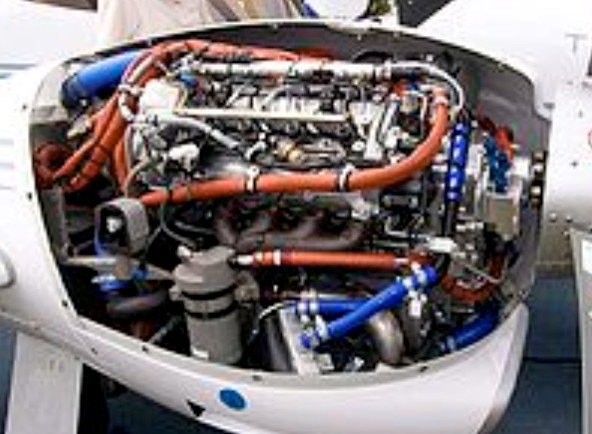
Thielert Centurion 4.0

Thielert Centurion 4.0

The Thielert Centurion is a series of Diesel cycle aircraft engines for general aviation built by Thielert. They are based on heavily modified Mercedes-Benz automotive engines.

All Centurion engines are water-cooled, turbocharged and employ a single-lever digital engine management system (FADEC). This simplifies engine management for the pilot, as well as improving reliability, as it prevents the engine being operated improperly. The series utilizes either jet fuel or diesel fuel. The high compression ratio of the engine combined with the digitally controlled fuel injection system mirrors similar advances in automotive technology.

Centurion series engines are always fitted with constant speed propellers driven through a reduction gearbox. The constant speed propeller and reduction gear result in a propeller tip speed that is 10-15% lower than comparable conventional avgas engines, reducing propeller noise.

The Diesel engine’s high compression results in better fuel efficiency and the higher operating rpm of the Centurion allows higher power to be developed from a smaller displacement, in comparison to conventional aircraft piston engines.

A Centurion engine complete with CSU, reduction gearbox, turbocharger and FADEC engine management system is considerably heavier than the more conventional Continental and Lycoming engines with which it competes, but this weight disadvantage is compensated for by the Centurion’s lower fuel consumption. Even though it lacks the magnetos and spark plugs of the conventional piston engines, the Centurion engines are considerably more complex.

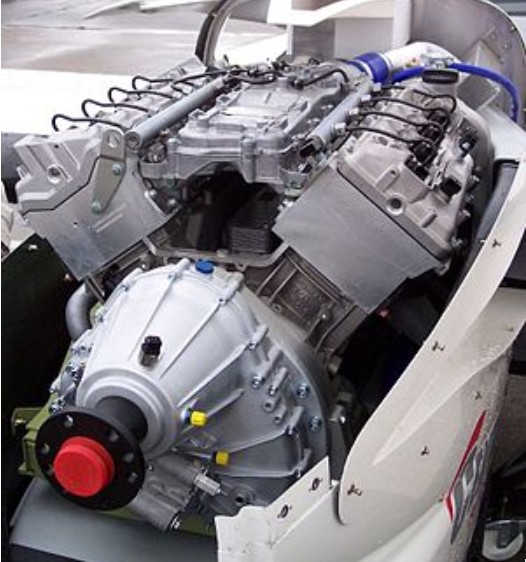
The Centurion 4.0 was designed as a larger engine to replace the 300 hp (224 kW) gasoline engines, this new V8 design produces 350 hp (261 kW) and was developed from the Mercedes-Benz OM629 automobile engine. Initially equipped with two turbochargers, later changed to a larger single turbocharger. Certified only for Jet A & A1. After the insolvency of Thielert in April 2008 all work on the Centurion 4.0 was frozen.

Applications:
Cirrus SR-22 (STC)
Cessna 206 (STC)

Thielert Centurion 2.0

The Thielert Centurion is a series of Diesel cycle aircraft engines for general aviation built by Thielert. They are based on heavily modified Mercedes-Benz automotive engines.

All Centurion engines are water-cooled, turbocharged and employ a single-lever digital engine management system (FADEC). This simplifies engine management for the pilot, as well as improving reliability, as it prevents the engine being operated improperly. The series utilizes either jet fuel or diesel fuel. The high compression ratio of the engine combined with the digitally controlled fuel injection system mirrors similar advances in automotive technology.

Centurion series engines are always fitted with constant speed propellers driven through a reduction gearbox. The constant speed propeller and reduction gear result in a propeller tip speed that is 10-15% lower than comparable conventional avgas engines, reducing propeller noise.

The Diesel engine’s high compression results in better fuel efficiency and the higher operating rpm of the Centurion allows higher power to be developed from a smaller displacement, in comparison to conventional aircraft piston engines.

A Centurion engine complete with CSU, reduction gearbox, turbocharger and FADEC engine management system is considerably heavier than the more conventional Continental and Lycoming engines with which it competes, but this weight disadvantage is compensated for by the Centurion’s lower fuel consumption. Even though it lacks the magnetos and spark plugs of the conventional piston engines, the Centurion engines are considerably more complex.

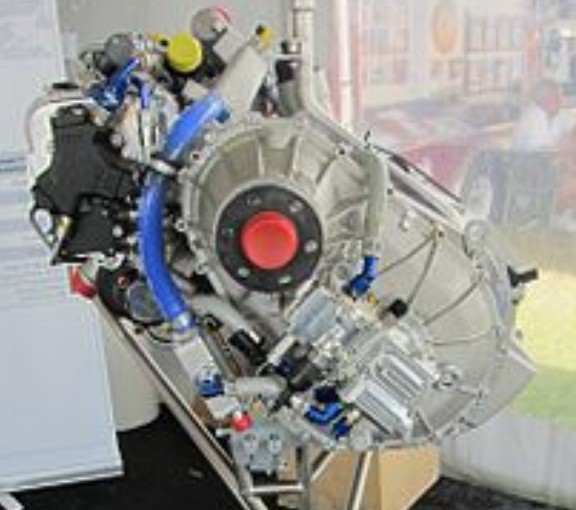
The Centurion 2.0 introduced in late 2006. The main difference is a new Mercedes-Benz OM640 engine cylinder block from the Mercedes-Benz A 200 CDI (W169) with a displacement of 1991 cc (83 x 92 mm). Other improvements include a more compact FADEC, a lighter cast gearbox housing, interfaces for glass cockpits and a new service tool that allows the FADEC to be programmed in the field. Dimensions of the Centurion 2.0 and 1.7 are nearly identical and the install kits are compatible, so a 1.7 at the end of its life can be replaced with a 2.0. The Centurion 2.0 is rated for a power output of 135 hp (101 kW), the same as the 1.7, but is EASA and FAA certified for 155 hp (116 kW). It has accumulated more than 1,000,000 flight hours without mechanical failures as of April 2008.

The Centurion 2.0 S 4-cylinder turbodiesel with common rail direct injection and redundant FADEC control offers 155 hp (116 kW), thus providing a clearly perceptible increase in performance compared with the 135 hp (101 kW) Centurion 2.0. Despite of improved performance Centurion 2.0s weighs as much as the Centurion 2.0

Applications:
Diamond DA42 Twin Star
Diamond DA40
Cessna 172 (“F” and later models, modified under a Supplemental Type Certificate)
Robin DR400 Ecoflyer
Piper PA-28 Cherokee

Thielert Centurion 1.7

The Thielert Centurion is a series of Diesel cycle aircraft engines for general aviation built by Thielert. They are based on heavily modified Mercedes-Benz automotive engines.

All Centurion engines are water-cooled, turbocharged and employ a single-lever digital engine management system (FADEC). This simplifies engine management for the pilot, as well as improving reliability, as it prevents the engine being operated improperly. The series utilizes either jet fuel or diesel fuel. The high compression ratio of the engine combined with the digitally controlled fuel injection system mirrors similar advances in automotive technology.

Centurion series engines are always fitted with constant speed propellers driven through a reduction gearbox. The constant speed propeller and reduction gear result in a propeller tip speed that is 10-15% lower than comparable conventional avgas engines, reducing propeller noise.

The Diesel engine’s high compression results in better fuel efficiency and the higher operating rpm of the Centurion allows higher power to be developed from a smaller displacement, in comparison to conventional aircraft piston engines.

A Centurion engine complete with CSU, reduction gearbox, turbocharger and FADEC engine management system is considerably heavier than the more conventional Continental and Lycoming engines with which it competes, but this weight disadvantage is compensated for by the Centurion’s lower fuel consumption. Even though it lacks the magnetos and spark plugs of the conventional piston engines, the Centurion engines are considerably more complex.

The first product introduced by Thielert, the Centurion 1.7 is a 1689 cc (103 cu.in) engine producing 135 hp (101 kW) is based on the Mercedes-Benz OM668 engine from Mercedes-Benz A-Class A 170 CDI (W168) with 80 mm bore and 84 mm stroke. Until the end of 2006, when production ceased in favor of the Centurion 2.0, more than 1,500 Centurion 1.7 had been built. The in-service record of the 1.7 has been poor, with a combination of design, service and support issues causing widespread customer dissatisfaction, and resulting in Diamond designing its own engines to compete with Thielert.

Applications:
Diamond DA40-TDI Star
Diamond DA42 Twin Star
Apex Aircraft Robin DR400 135 CDI Ecoflyer
Cessna 172 (“F” and later models, modified under a Supplemental Type Certificate)
General Atomics MQ-1C Grey Eagle

Thiele 1910 biplane

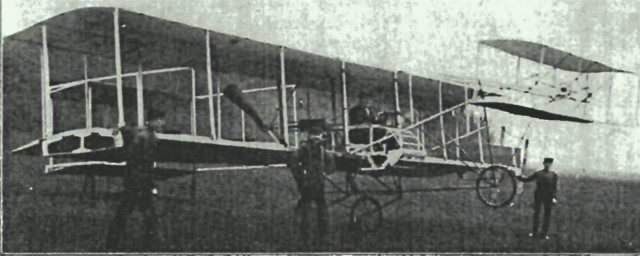
Little is known about this machine, except that it was designed by Ingenieur Erich Thiele, who made some flight tests in with it in 1910, and that “Flugsport” erroneously attributed it to Stefano Amerigo. Early in 1911, Thiele created the “Sächsische Flugzeugwerke” which in November 1911 became the famous Deutsche Flugzeugwerke.

TVAL Sopwith Pup

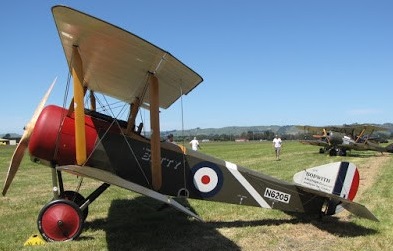
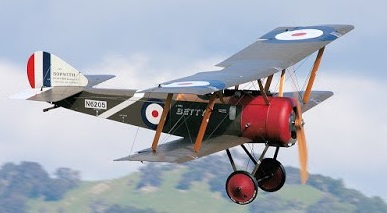
The Vintage Aviator has built a series of Sopwith Pup reproductions and their first example was ZK-PPY which was first registered on 9 May 2012 and is painted as N6205 of the RNAS from 1917.

The original N6205 was the mount of FSLT J. S. T. Fall in April/May 1917. He named his aircraft “Betty” after his sister. The above photo was taken at Masterton, New Zealand, on 12 Novembber 2011.

ZK-PPY was originally named “Betty” on both the port and starboard sides.

Somewhere along the line the Fall family became aware of TVAL’s Pup and contacted them to advise that J.S.T Fall had two sisters and he actually painted his other sister’s name on the starboard side of the aircraft. So TVAL changed it and it now bears the name “Phyllis” on the starboard side, as in the above photo taken at Masterton on 23 November 1917.