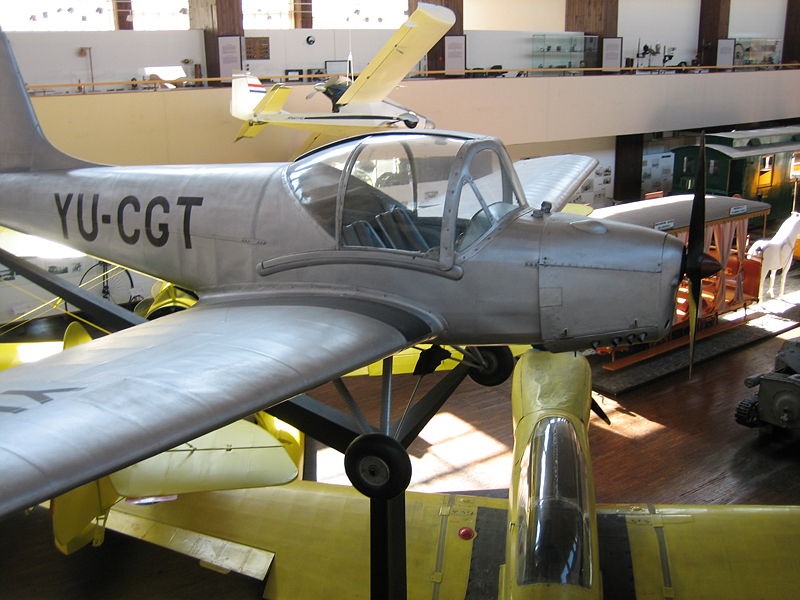
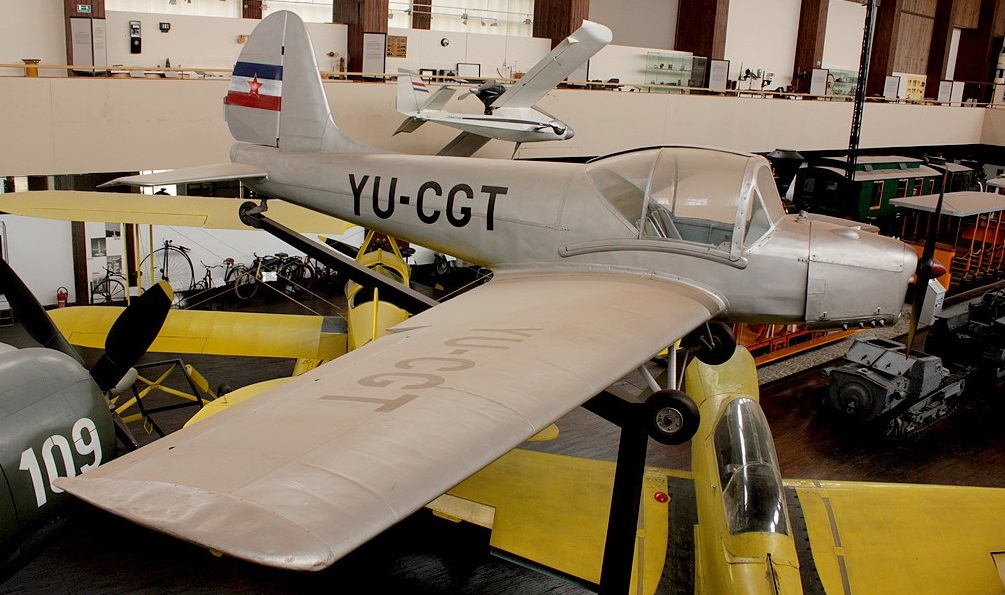
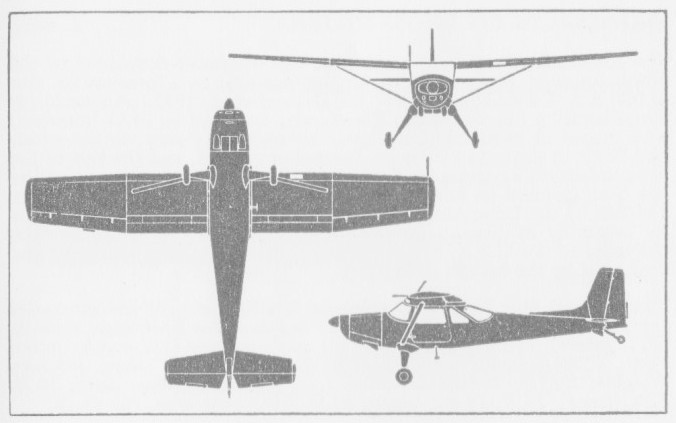
UTVA U60

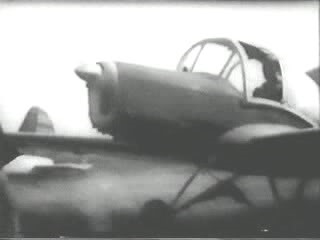
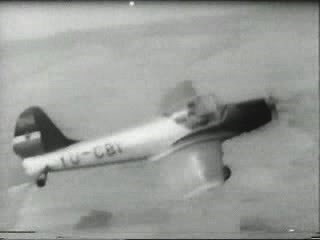
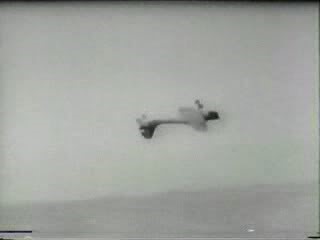
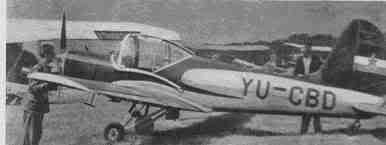
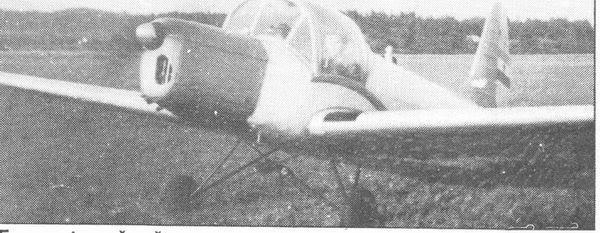
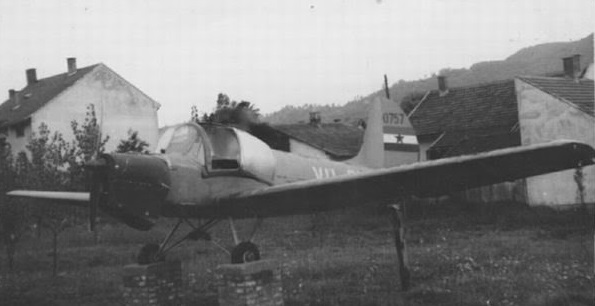
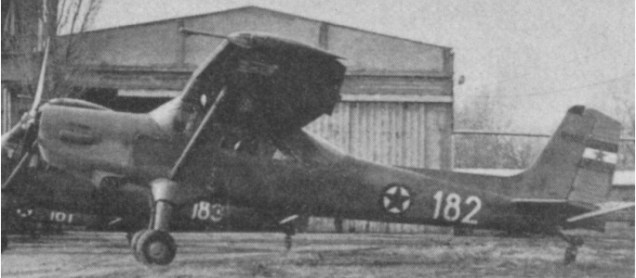
Utva produced light utility aircraft, including the Utva 56 four-seater, first flown in 1956, and thereafter developed through a number of U60 air-taxi/tourer/freight/agricultural/ ambulance and floatplane versions.

UTVA U60 Article

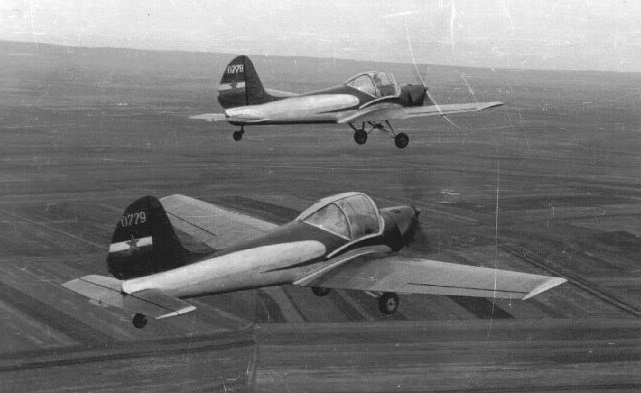
Derived from the UTVA-56 of 1959, the UTVA-60 differs primarily in having a Lycoming GO-480 engine in place of the GO-435.

Five versions of the basic aircraft were developed.

U60-ATI
four seat utility aircraft
Engine: 270 hp Lycoming GO-480-B1A6
Wingspan: 37 ft 5 in
Length: 26 ft 11.5 in
Height: 8 ft 11 in
Empty weight: 2100 lb
Normal loaded weight: 3192 lb
MTOW: 3571 lb
Wing area: 194.5 sq.ft
Max speed: 157 mph
Max cruise: 143 mph
ROC: 1260 fpm
Service ceiling: 17,060 ft
Range: 485 mi

AT2
dual control

U-60-AG
equipped for agricultural roles

U-60-AM
Ambulance – 2 stretchers and attendant

U-60-H
twin float seaplane
Engine: 296 hp Lycoming GO-480-G1H6

UTVA 56

Utva produced light utility aircraft, including the Utva 56 four-seater, first flown on 22 April 1959, and thereafter developed through a number of U60 air-taxi/tourer/freight/agricultural/ ambulance and floatplane versions.

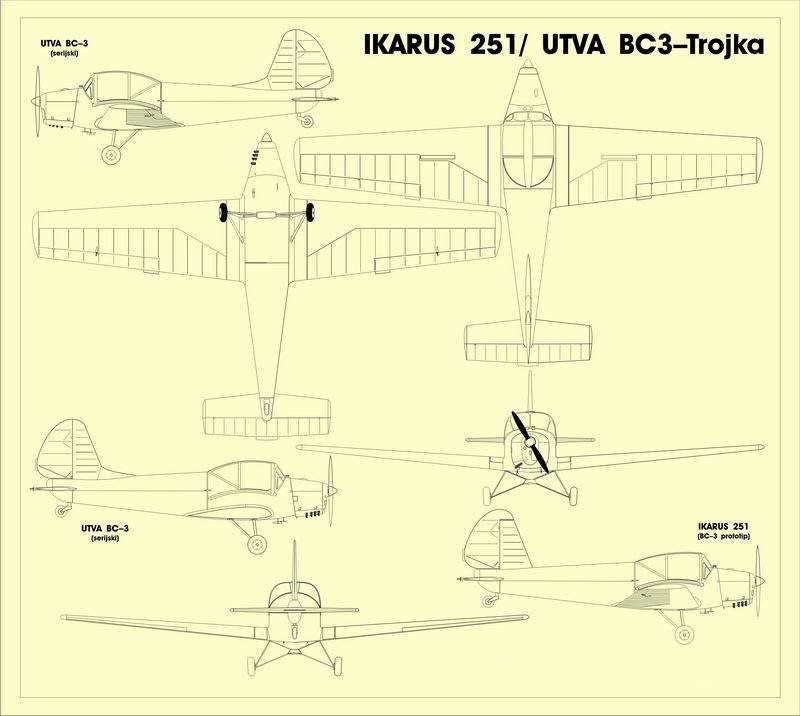
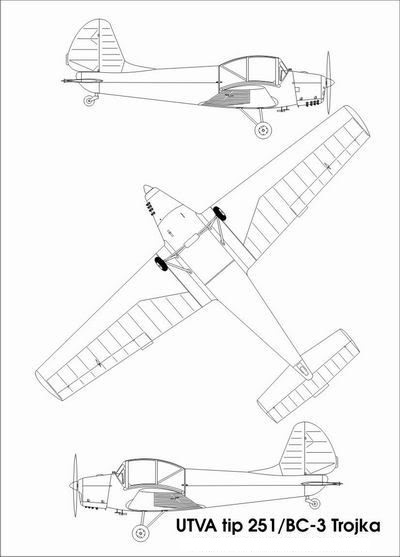
UTVA C-3 Trojka / BC-3 / Ikarus 251 / Cijan C-3 Trojka

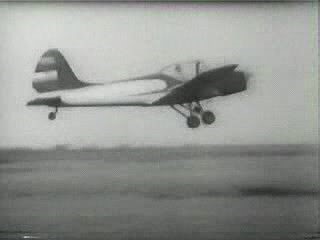
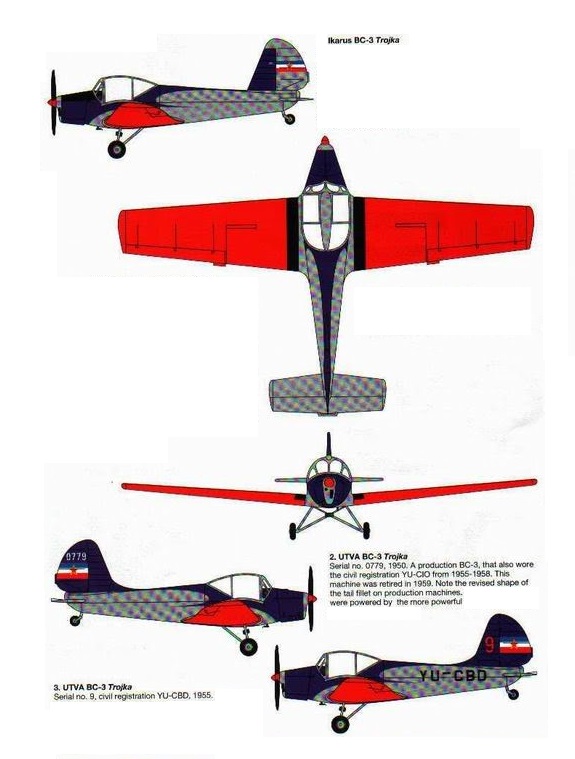
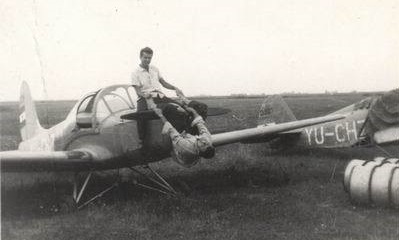
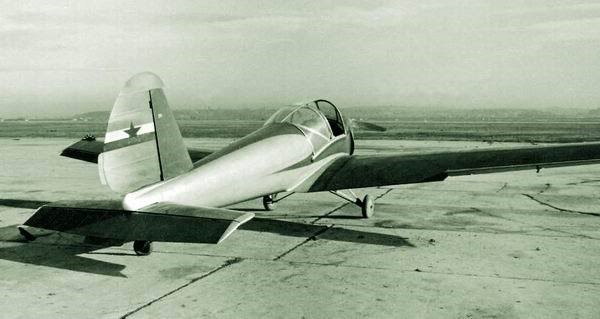
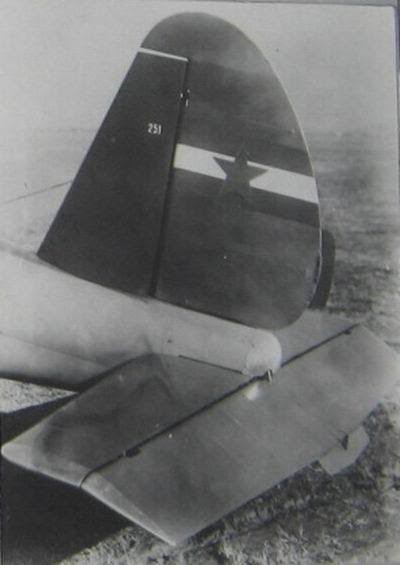
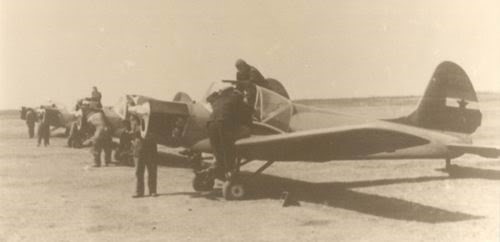
The Utva C-3 Trojka (Trey) was a light aircraft built in Yugoslavia shortly after World War II as a result of a government competition to develop a new, domestically built aircraft with which to equip the country’s flying clubs. The winning design was submitted by Boris Cijan and Dragoslav Petkovic and the prototype was built by Ikarus as the Ikarus 251.

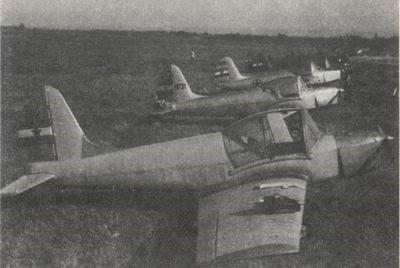
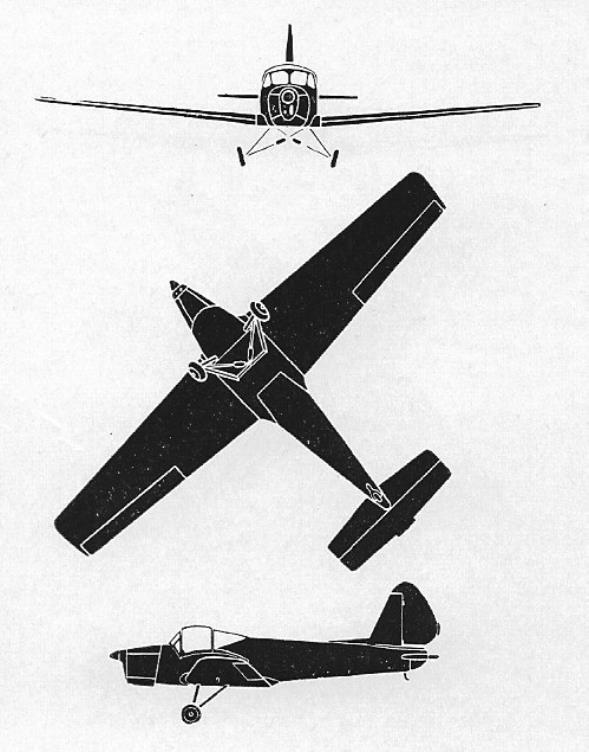
The prototype first flew towards the end of 1946. Series production took place at Utva as the C-3 and the first production Trojka were delivered in 1949. It was a conventional, low-wing cantilever monoplane with fixed tailwheel undercarriage. The pilot and instructor sat side by side under an expansive canopy.

The type remained in production until the mid-1950s. Later examples were powered by a 105 hp Walter Minor 4-III engine from 1953. About eighty were built.

The type was operated by the Yugoslav Air Force.

Gallery

Engine: 1 × Walter Mikron III, 49 kW (65 hp)
Wingspan: 10.49 m (34 ft 5 in)
Wing area: 15.5 m2 (16.7 ft2)
Length: 8.84 m (29 ft 0 in)
Height: 2.08 m (6 ft 10 in)
Empty weight: 374 kg (824 lb)
Gross weight: 602 kg (1,328 lb)
Maximum speed: 166 km/h (103 mph)
Cruise speed: 90 mph
Range: 605 km (376 miles)
Service ceiling: 3,900 m (12,800 ft)
Crew: Two, pilot and instructor

UTVA

UTVA, Fabrica Aviona

Jugoslavia / Serbia

Utva Aircraft Industry (commonly known as UTVA) is a manufacturer of general aviation aircraft, located in Pančevo, Serbia. Utva in Serbian is the Ruddy Shelduck.

Utva was founded on 5 June 1937 in Zemun (a small town in former Austrohungarian empire), and produced simple gliders. In 1939 Utva began manufacturing light piston engine aircraft.

Four out of five Yugoslav aircraft plants were in close proximity to each other, built in and around Belgrade: Ikarus, Rogožarski, Zmaj and Utva. The fifth one was DFA (Državna Fabrika Aviona – State Aircraft Factory) which was located in Kraljevo. The plant was relocated to Pančevo (a town a few kilometers away from Belgrade, in Vojvodina autonomous province) in 1940. Until the April war, it mainly produced light gliders but it also produced 148 Bucker Jungmann Bu-131D-2 training planes and one acrobatic Bucker Jungmaister Bu-133. The plant escaped the devastation of the other aircraft plants (Ikarus, Rogožarski and Zmaj) and began producing it’s prewar gliders Čavka (Daw) and Ždral (Crane – the bird) and school airplanes Trojka (Three) and Aero 3. Utva also built a lot of Ikarus designs, notably the 212 and 213 models.

Utva produced light utility aircraft, including the Utva 56 four-seater, first flown in 1956, and thereafter developed through a number of U60 air-taxi/tourer/freight/agricultural/ ambulance and floatplane versions. The Utva 65 was originally an agricultural aircraft, developed as the U66 to serve various utility roles and including the armed U66V version. The Utva 75 two-seat trainer/glider-tug/agricultural aircraft entered production in late 1970s. Lasta 1 tandem two-seat piston-engined trainer first flew September 1985 but was superseded before production by the design of the refined Lasta 2. Development started of Utva 95 agricultural aircraft, probably based on Utva 75. Formerly fabricated components for the IAR-93/J-22 Orao and Super Galeb programmes, and produced items for various Boeing airliners.

During the NATO bombing of Yugoslavia in 1999, the factory was bombed several times and severely damaged.

The factory was heavily bombarded in 1999 and certain parts of it were still off limits due to the unexploded ordnance in 2012. All five original lasta 95 prototypes were destroyed in the factory and the only existing Supergaleb G4MD prototype was lightly damaged. 2012 was back to the basics for Utva. The plant produced Lasta 95 basic trainer and was developing Kobac (sparrow hawk) light COIN aircraft (first flight is expected in 2013).

In 2011, Utva Pančevo was a public company with the headquaters in Pančevo, Serbia, serving 301 employees.
U-Turn Butane

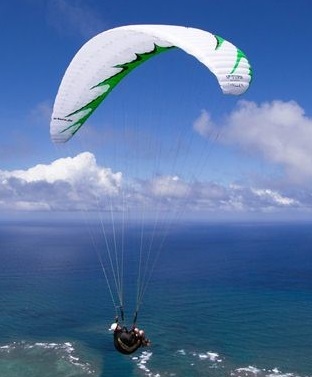
The Butane paraglider from U-Turns sits in between the Nitro all out race kite and the Oxigen intermediate. Many people will remember that U-Turn’s head designer, Ernst Stroble, was responsible for the much-loved Airea Raptor (I & II) well, the Butane is the Raptor III by any other name.

The kite is supplied in a simple stuff sack as per U-Turn’s other kites but it’s a posher one with a mesh insert to let the sand out and promote drying.

The U-Turn Claw design is on both sides of the kite.

Construction is up to the usual standard, with multiple internal bracing on its 28 cells. The leading edge vents are reinforced with mylar and extend to the majority of the cells.

It doesn’t have power rings or turn-assist brake eyelets like the Oxigen but this doesn’t make any difference to the Butane. This kite turns fast.

Upwind performance is usually one of the key performance criteria in a race kite and the Butane doesn’t disappoint.

U-Turn Free Force

U-Turn Freeforce 22

A freestyle and acro wing. Good as a ground handler trainer and then a glider you can immediately begin to fly in suitable, stronger, coastal conditions.

U-Turn Free Force II

FreeForce 22
Pilot weight: 55-95 kg
Glide ratio: 8:1
DHV 2
Span projected: 22 m
Span flat: 24 m

U-Turn Flat Top

The Flat Top paramotor fixed has an incredibly strong and well designed cage & frame. Not a single cage strike has ever occurred with a Flat Top. The cage can’t be flexed into the prop unless you fold it in half with a major crash.
The Flat Top paramotor has also set the world records for speed, distance and altitude. 18,182 ft without assistance from thermals, 280 miles on only 3.5 gallons of gas and a cruise speed of 50 mph.

Flat Top 160 (Simonini Mini 4) Price 2009: US$6,900.00
Flat Top 200 (Simonini Mini 2 plus) Price 2009: US$6,900.00