
17 November 2013 was the first flight of the two-seat Volocopter VC200 aircraft. The VC200 was able to hover indoors and by February 2014 the VC200 transitioned to forward flight.
17 November 2013 was the first flight of the two-seat Volocopter VC200 aircraft. The VC200 was able to hover indoors and by February 2014 the VC200 transitioned to forward flight.

The Volocopter VC1 would conduct the first manned flight of an electric multicopter according to the Guinness Book of World Records. The VC1 was flown by Volocopter co-founder, primary designer, inventor and builder, Thomas Senkel on 21 October 2011.
Multicopter builder
On Dec. 30, Volocopter announced that it was filing for bankruptcy in German courts in order to receive the financial protection necessary to stay operational and still launch in 2025 as planned.
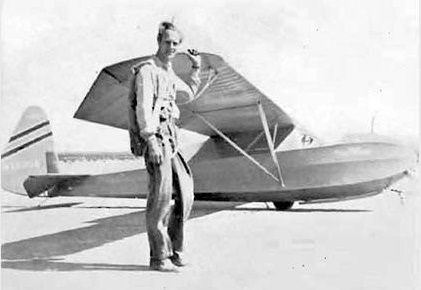
The 1943 Volmer VJ-14 Skyhawk or J-14, was a training glider.
The 1971 Volmer Jensen VJ-12 was a hang glider conventionally controlled from aileron to elevator.
The VJ-10 high-performance sailplane, the first two-place, side-by-side sailplane, was purchased by the military for the assault glider training program as the TG-29 42-65553.
It was designed and built by Volmer Jensen while at Bowlus, in 1939.

Jim Martin contracted Volmer Jensen to design and built him a glider for contest flying just before the Second World War.
The aircraft was constructed with a wooden structure and covered in doped aircraft fabric covering. The cantilever gull-style wing employed a NACA 4400 series airfoil. The tail was a conventional low-tail design and featured strut-bracing. The M-1 was registered as an Experimental – Amateur-built aircraft and was not type certified.
Jensen completed the aircraft in 1939.
Martin flew the aircraft in a number of US Nationals, as did a later owner of the M-1, Emil Lehecka. While Lehecka owned it the aircraft picked up the nickname of the Whatsit. By the 1970s the aircraft was owned by Francis Kalinowsky and was based at the Circle X airport in Florida. At that time it was reportedly in good repair and was well maintained.
The aircraft was removed from the Federal Aviation Administration registry and its whereabouts are unknown.
M-1
Wingspan: 48 ft 0 in (14.63 m)
Wing area: 180 sq ft (17 m2)
Aspect ratio: 12.8:1
Airfoil: NACA 4400 series
Empty weight: 438 lb (199 kg)
Gross weight: 631 lb (286 kg)
Maximum glide ratio: 28 at 50 mph (80 km/h)
Rate of sink: 132 ft/min (0.67 m/s) at 40 mph (64 km/h)
Crew: one
Volmer Jensens’ VJ-8 enclosed glider was built circa 1933.
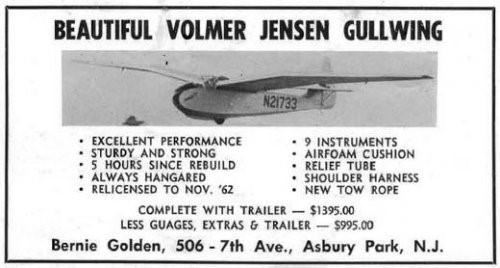
The 1928 VJ-4 cantilever wing glider was Jensen’s first original design, for a wealthy sportsman named Thomas Stimson.
Volmer S. Jensen was born in Milwaukee in 1909. He began to design and build sailplanes in 1925 at age 16. using plans published in the Boy Mechanic Magazine. He built a second one the following year from additional plans from the same source, and in 1927 he built his first glider with aerodynamic controls, an enclosed cockpit and a wheeled landing gear. It was based on the MIT glider Eddie Allen had taken to Europe in the mid-20s to compete against the Germans.

