Germany
Joseph Wagner of Friedrichshafen began developing a helicopter in 1960, as a basic, torque-free vehicle to which specialized equipment and accommodation could be added. Rotorcar III was roadable; main development vehicle was Sky-trac. Aerocar and three Sky-trac 1 s were completed in mid-1960s.
Author: Terry
Wagener Dracula
A 1977 hang glider.
Wagener HW4A
Hans Wagener of Hamburg produced his first aircraft, the HW4A, in 1933. Used as test-bed for an experimental two stroke engine.
Wagener WR3 Rotocar
Experimental helicopter, Germany, 1969
Wagener, Flugzeugbau
Germany
Hans Wagener of Hamburg produced his first aircraft, the HW4A, in 1933. Used as test-bed for anexperimental two stroke engine.
Wag-Aero Wag-a-Bond / Traveller
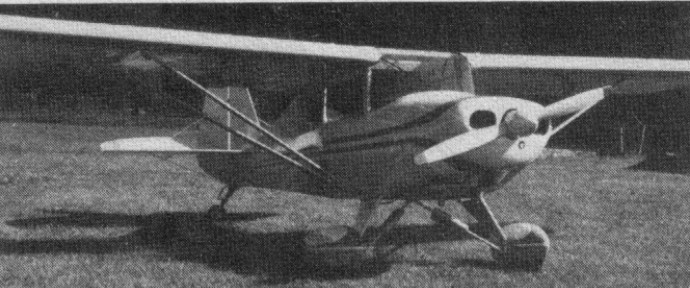
The Wag-A-Bond can be built in either of two versions — the Classic or the Traveler. The Classic is a replica of the Piper PA-15 Vagabond, and the Traveler is a modified and up¬dated version of the Vagabond with port and starboard doors, overhead skylight window, extended sleeping deck, extended bag¬gage area and provisions for engines up to 115 hp. The wings are strut-braced, high-wing, all-wood structures covered with fabric. The spar and ribs are spruce with mahogany plywood gussets. The ailerons are fabric-covered aluminum. The fuselage is welded steel tube.
The Wag-A-Bond Builder’s kits includes drawings for both options, with many parts preformed and many assemblies pre-welded. The Builder kits feature predrilled spars and precut nose ribs in the wing kit. This same detailing follows through to all of the other kits with items such as the tail group, including elevators, and stabilizers and the rudder and vertical fin finish welded. The landing gear is available completely finished, ready to attach to the fuselage structure.
When Dick Wagner developed his Cuby, Wagabond and 2+2 kits, all were fitted with J-3 rudders. Reason: Dick had purchased all the J-3 inventory left at Piper’s old Ponca City, OK plant, which included a barn full of J-3 elevators, stabilizers, gear legs and rudders.
Engine: Lycoming O-235, 115 hp
Wing span: 8.93 m
Wing area: 13.57 sq.m
MAUW: 658 kg
Empty weight: 329 kg
Fuel capacity: 98 lt
Max speed: 217 kph
Cruise speed: 169 kph
Minimum speed: 88 kph
Climb rate: 3 m/s
Seats: 2
Fuel consumption: 25 lt/hr
Plan price (1998): $65
Classic
Engine from 65 hp to 100 hp
Top speed 105 mph
Cruising speed 95 mph
Stalling speed 45 mph
Rate of climb 625 fpm
Gross Weight 1250 lb
Empty weight 700 lb
Wing Span 29 ft 3.5 in
Wing area 147.5 sq. ft
Length overall 18 ft 8.5 in
Height overall 6.0 ft
Baggage capacity 40 lb
Fuel capacity 12 Usgal
Seats: 2
LSA: yes
Traveler
Engine Lycoming 108 hp
Top speed 122 mph
Cruising speed 115 mph
Stalling speed 45 mph
Rate of climb 850 fpm
Gross weight 1450 lb
Empty weight 800 lb
Wing Span 29.3 ft
Wing area 147.5 sq. ft
Length overall 18.7 ft
Height overall 6.0 ft
Baggage capacity 60 lb
Fual capacity 26 USgal
LSA: yes
Traveler
Engine: Lycoming O-235, 115 hp
Speed max: 136 mph
Cruise: 124 mph
Range: 620 sm
ROC: 850 fpm
Take-off dist: 390 ft
Landing dist: 760 ft
Service ceiling: 14,000 ft
Fuel cap: 26 USG
Weight empty: 725 lbs
Gross: 1450 lbs
Height: 6 ft
Length: 18.7 ft
Wing span: 29.3 ft
Wing area: 147.5 sq.ft
Seats: 2
Landing gear: tail wheel
Cockpit width: 40 in
LSA: yes
Wing span: 35’9″
Length: 23’5″
Useful load: 1120 lb
Max speed: 129 mph
Cruise speed: 124 mph
Stall: 38 mph
Range: 670 mi
Seats: 4
Wag-Aero Sportsman 2+2
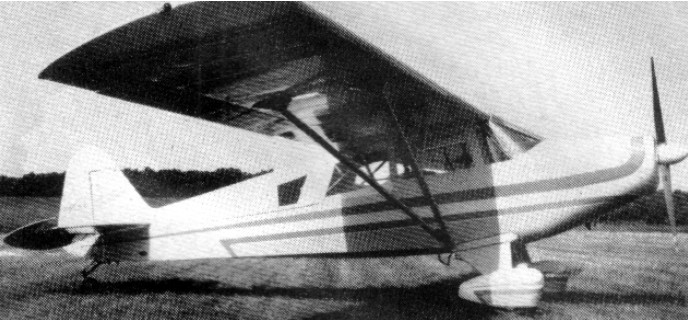
The Sportsman 2 + 2 is a replica of the PA-14 family Cruiser. This is a four-place aircraft designed for the recreational pilot. It has extended wings and such features as extra baggage area and additional fuel. Utilizes large tires for off-airport operation. Accepts engines from 125 to 200 hp
When Dick Wagner developed his Cuby, Wagabond and 2+2 kits, all were fitted with J-3 rudders. Reason: Dick had purchased all the J-3 inventory left at Piper’s old Ponca City, OK plant, which included a barn full of J-3 elevators, stabilizers, gear legs and rudders.
Engine: Lycoming O-320, 150 hp
HP range: 125-200
Height: 6.75 ft
Length: 23.36 ft
Wing span: 35.9 ft
Weight empty: 1080 lb
Gross: 2200 lb
Fuel cap: 39 USG
Speed max: 129 mph
Cruise: 124 mph
Range: 670 sm
ROC: 800 fpm
Take-off dist: 230 ft
Landing dist: 340 ft
Service ceiling: 14,800 ft
Seats: 4
Landing gear: tail wheel
Cockpit width: 39 in
Wag-Aero CUBy / Sport Trainer / Acro Trainer
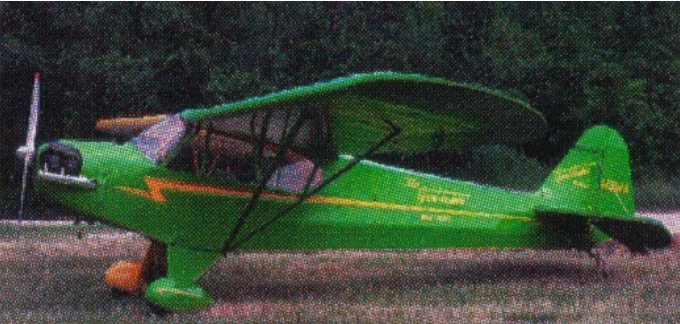
The CUBy is a replica of the Piper J-3 Cub with numerous design improvements – Higher gross with more useful load, increased cruise speed, and utilizing Continental engines from 65 thru 100 hp. It was designed by Dick Wagner, president of Wag-Aero of Lyons, Wisconsin. There is very little difference between the CUBy and the original J-3, except for a crank-operated elevator trim tab instead of the jackscrew adjustment that moved the stabilizer plane. When Dick Wagner developed his Cuby, Wagabond and 2+2 kits, all were fitted with J-3 rudders. Reason: Dick had purchased all the J-3 inventory left at Piper’s old Ponca City, OK plant, which included a barn full of J-3 elevators, stabilizers, gear legs and rudders.
First flown on 12 May 1975.
The CUBy can be made in four different versions: Standard CUBy, Super CUBy (a replica of the PA-18 allowing for larger engine). CUBy Observer (replica of the L-4), and the Acro Trainer (which is a special shortened-wing version for aerobatics).
Later marketed as the Wag-Aero Sport Trainer.
The Quick Build Kit will produce a complete aircraft less the engine, propeller, and finish paint. Fits the Light Sport Aircraft category and will only take a Builder 700-1000 hours to complete with a fully welded fuselage.

Engine: Continental, 85 hp
HP range: 65-150
Length: 22.3 ft
Wing span: 35.2 ft
Weight empty: 720 lb
Gross: 1400 lb
Fuel cap: 12 USG
Speed max: 102 mph
Cruise: 94 mph
Range: 270 sm
ROC: 220 fpm
Take-off dist: 375 ft
Landing dist: 420 ft
Service ceiling: 12,000 ft
Seats: 2
Landing gear: tail wheel
Sport Trainer
Cruise: 85 mph
Stall: 38 mph
Range: 310 sm
Rate of climb: 450 fpm
Takeoff dist: 375 ft
Landing dist: 420 ft
Engine: Continental C-85, 85 hp
HP range: 68-85
Fuel capacity: 12 USG
Empty weight: 720 lb
Gross weight: 1220 lb
Length: 22.3 ft
Wing span: 35.2 ft
Seats: 2 tandem
Cockpit width: 24 in
Landing gear: tailwheel
LSA: yes
Engine: 150 hp
Wing span: 35’3″
Length: 22’3″
Useful load: 680 lb
Cruise speed: 94 mph
Stall: 39 mph
Wag-Aero
Wag-Aero was founded by Dick and Bobbie Wagner in the basement of their house in Lyons in the early 1960s. By 1965, Wag-Aero printed its first catalogue and continued to expand. In 1971, the company moved from Wagner’s basement to North Road. The original warehouse and manufacturing facility has been expanded by three additions. The airstrip was built at the top of the hill for the convenience of fly-in customers.
Wag-Aero’s first kit aircraft, the Sport Trainer, is a replica of the Piper J-3 Cub. Home builders can build this aircraft by ordering many required parts through Wag-Aero. Later, the Wag-A-Bond and the Sportsman 2+2 were added. The Sportsman 2+2 was one of the first four-place homebuilt aircraft which could be purchased via kit.
Aero Fabricators, was formed in the mid – 1970s. There are three departments within Aero Fabricators: welding, sheet metal fabrication, and seat belt manufacturing. The welding department remanufactures aircraft mufflers and engine mounts to FAA standards. They also produce many new manufactured aircraft exhaust systems, as well as structural components. The sheet metal department manufactures gas tanks, leading edges and metal skins and cowlings for many different aircraft, including our own kit aircraft. Both departments work together on the prefabrication of different items for our kit aircraft, including complete pre-welded fuselages. The seat belt division manufactures and repairs FAA approved seat belts and shoulder harnesses in many styles and colors and has been a leader in the industry in designing and manufacturing shoulder harness installation kits. In all, Aero Fabricators produces approximately 850 various components.
1995-8: 1216 North Rd, Box 181, Lyons, WI 53148, USA.
On September 1, 1995, Dick and Bobbie Wagner sold The Wag-Aero Group of companies to Bill Read and Mary Myers. In April 1997 Wag-Aero acquired the assets of Viking Aero Manufacturing to expand the product and manufacturing lines.
In October 2002 Wag-Aero acquired the assets of Ground Support Manufacturing, Inc. which further expanded our product and manufacturing lines into aircraft and airport related equipment. All products are now all manufactured in the facility in Lyons.
Wadsworth Flying Fish

In 1911, Detroit industrialist and boat tycoon Frederick Elliott Wadsworth built a hydro-aeroplane named the Flying Fish which debuted at the New York Boat Show. The vehicle was designed to skim on top of the water at speeds of up to 65 mph, with the ‘skipper-pilot’ seated in a wicker chair at the rear of its canoe-like hull. The Flying Fish was successfully tested on the ice of Lake St. Clair but no further development occurred.

