France
Charles Weymann designed and built in 1916 an all-metal biplane with conventional fuselage. In 1929 joined with lePere, and Weymann-lePere was formed from the remains of a separate company called Avimeta which had closed in 1928. Weymann-lePere held a Cierva license; when lePere left in 1930 Weymann reverted to original name.
Author: Terry
Weybridge Man Powered Aircraft Group Dumbo
Financed by the Royal Aeronautical Society, the Weybridge Man Powered Aircraft Group’s Dumbo, which took 10,000 man hours to build and had wings which spanned 36.6 m (120 ft) and drooped down at rest. It has a structure of metal tube covered in see-through ‘Melinex’. All the flying surfaces are capable of being warped to act as control surfaces.
The aircraft has a bullet-shaped fuselage with a four-unit tailplane mounted at the extreme ear with a pusher propeller behind that. The pilot sits in the nose.
The wing is internally braced and set low on the fuselage.
It first flew at Weybridge on 18 September 1971.
Wingspan: 120.00 ft
Wing area: 480 sq.ft
Aspect ratio: 30-1
Empty weight: 125 lb
Weybridge Man Powered Aircraft Group
The Weybridge Man Powered Aircraft Group consisted of British Aircraft Corporation employees who built the MPA Dumbo.
Westward Airways Fairey Flycatcher
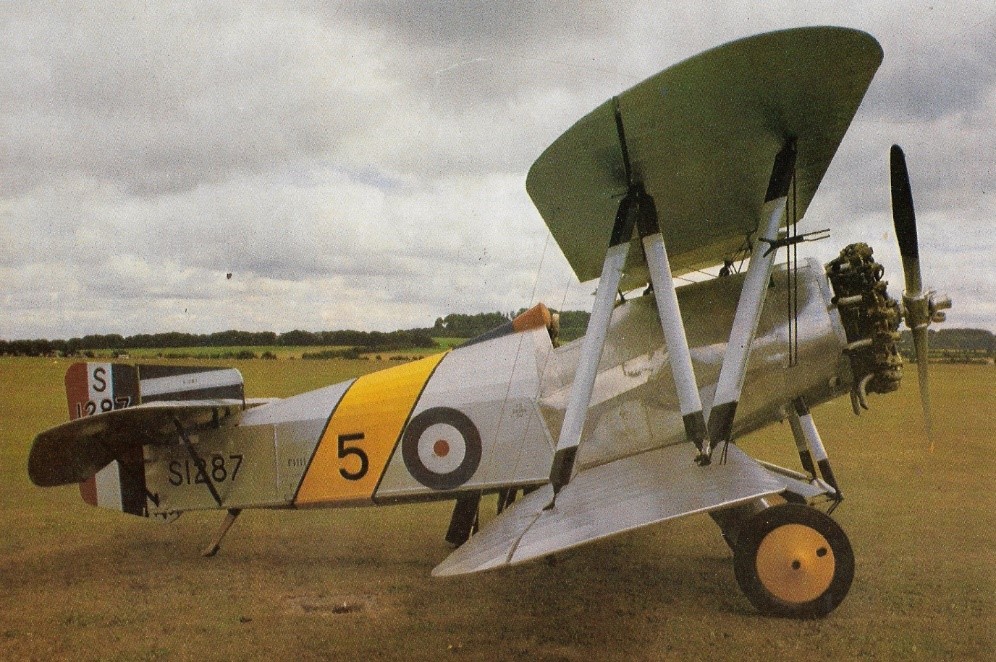
In January 1977 construction of Fairey Flycatcher replica S1287 was started by Robinson Aircraft at Blackbushe, later transferred to Rod Bellamy, whereas the CAA Aircraft Register states Westward Airways, Lands End, England as the manufacturer
On 17 July 1977 it was registered as G-BEYB to John Fairey, and powered by a Pratt & Whitney R-985-AN-14B engine, making its first flight, at Middle Wallop, on 23 July 1979. The first public display was at the Middle Wallop Air Show on 28 July 1979.

It was damaged following a take-off accident on 4 October 1980, flying again following repair on 23 July 1981.
On 01 September 1995 it was flown to Lee-on-Solent for a static role at the Fleet Air Arm Officers Association reunion, the last public function before sale to FAAM.

On 05 June 1996 it was flown to RNAS Yeovilton by John Fairey and put into 12 hanger (FSAIU).
In July 1996 it moved into the FAAM and onto public display.
By 2012 it was in the Reserve Collection at Cobham Hall Store.
West Virginia Aircraft Co C-3
Reportedly at least one of the 1919 West Virginia C-3 were built. A three-place, open triplane, power was a 150hp Wright-Hispano A engine.
West Virginia Aircraft Co 1918 Biplane
The West Virginia Aircraft Co biplane, built circa 1918, was a twin-tail, headless Wright-type design, with trailing-edge ailerons on upper wing.
A single-place open cockpit, it was powered by a pusher motor.
West Virginia Aircraft Co 1917 Biplane
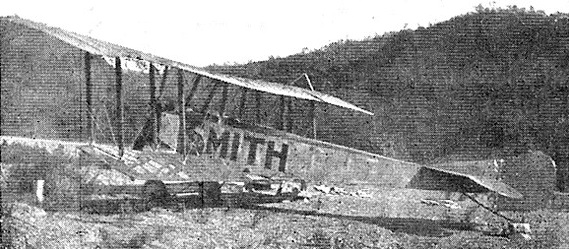
A two-place, open cockpit biplane built in 1917.
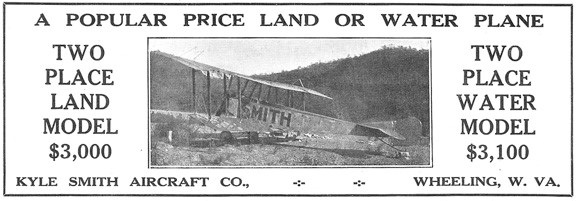
West Virginia Aircraft Co
Kyle Smith Aircraft Co,
Kyle Smith Aircraft Co,
Wheeling WV.
USA
1919: West Virginia Aircraft Co.
This company was established at Wheeling, West Virginia, and produced a three-seat triplane during 1919-1920.
Westphal 1914 Eindecker
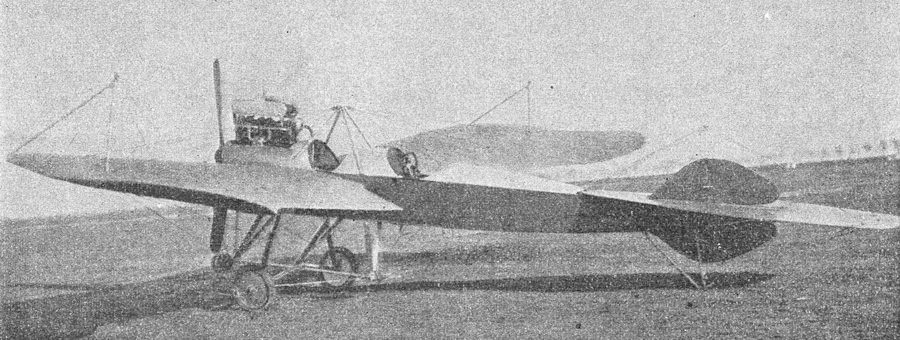
Paul Westphal built his second design “Taube” after the guidelines of the army. It passed the tests easily, but was not bought. He then gave up his own attempts.
Westphal, Paul
Paul Westphal was one of the constructors at the “Alte Startplatz” of the Berlin-Johannisthal airfield.
He was a co-designer of the early Geest planes and set up his own “business” when he rented shed #8 at Johannisthal in 1911. In 1912 he completed his first monoplane.
His “Taube” second design was not bought so he gave up his own attempts and went to the Kondor Flugzeugwerke GmbH at Essen, Rhineland before summer 1914 where he became chief engineer then.

