Back to Aeronca C-3
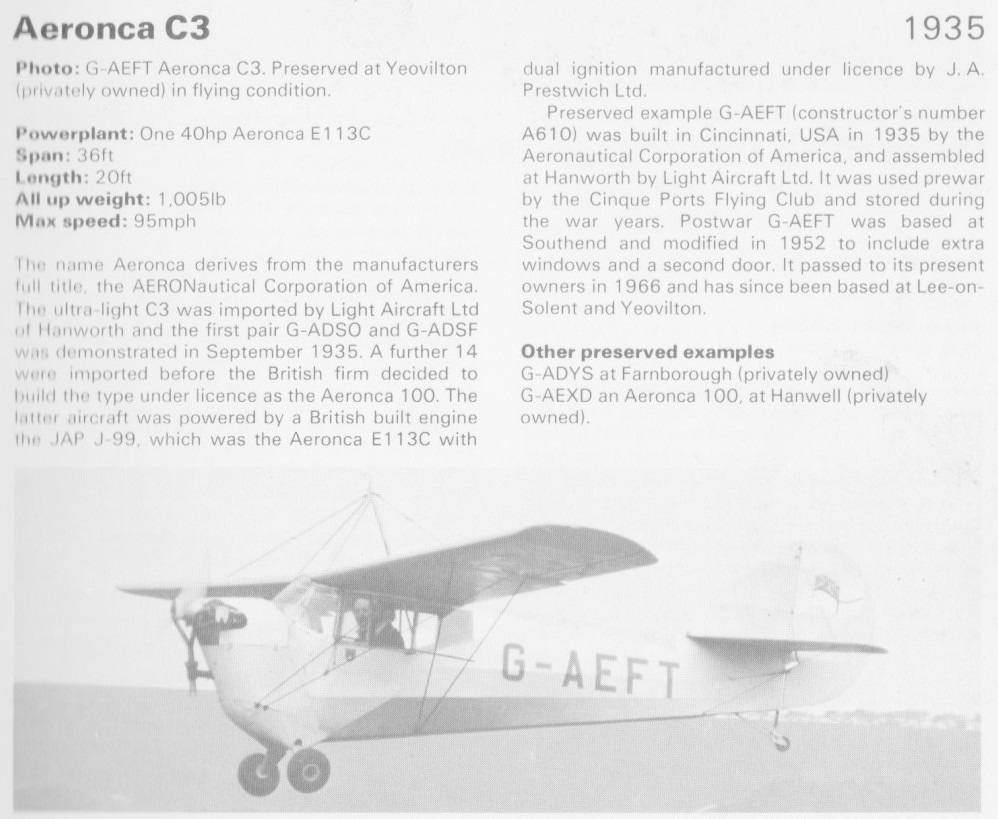
Back to Aeronca C-3
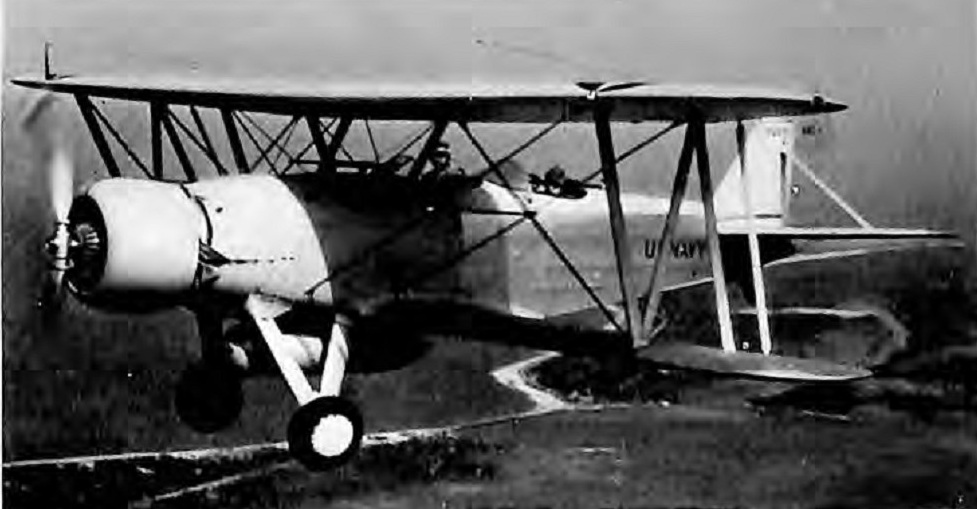
The Curtiss CS (or Model 31) was a reconnaissance and torpedo bomber aircraft used by the United States Navy during the 1920s. It was a large single-engine biplane with single-bay unstaggered wings, the design conventional in all respects other than that the lower wing was of greater span than the upper. The CS was built to allow its undercarriage to be quickly and easily interchangeable between wheeled, tailskid undercarriage, and twin pontoons for operation from water. Provision for the carriage of a torpedo was semi-recessed into the underside of the fuselage, blended in behind an aerodynamic fairing. The pilot and gunner sat in tandem open cockpits, while accommodation inside the fuselage was provided for a third crewmember who served as bombardier and radio operator. This station was also provided with a dorsal hatch aft of the gunner’s position, and a ventral blister aft of the torpedo recess, which was used for aiming bombs or torpedoes.
Curtiss produced six CS-1 prototypes for the Navy in 1923, which were mostly used for engine tests. Two examples of the improved CS-2 were built the following year and set a number of world speed, distance, and endurance records for seaplanes in its class. The Navy ordered both the CS-1 and CS-2 into production, but when Curtiss tendered with a price of $32,000 per aircraft, Martin undercut them with a tender of $25,200 for each CS-1 and $19,863 for each CS-2 and won the contract. Curtiss refused to provide full sets of drawings and data to Martin, so Martin-built machines were in part reverse-engineered from a Curtiss-built CS-1 provided by the Navy. By the time the Martin-produced aircraft were delivered in 1925–26, the Navy’s designation system had changed, and they entered service as the SC-1 and SC-2. Martin-built SC-2s suffered from poor handling characteristics and soon earned the nickname “Sea Cow”. Meanwhile, the Naval Aircraft Factory made extensive modifications to the two Curtiss CS-2s leading them to be redesignated CS-3. Further development of the design was carried out by Martin as the T3M and T4M, and eventually by Great Lakes as the TG.
In 1924, the CS-2 was used to break numerous world records for seaplanes in its class in three long-range flights. The first of these took place overnight between 22 and 23 June, when Lt Frank Wead and Lt John D. Price set five records – distance (963.123 mi, 1,544.753 km), duration (13 hours, 23 minutes, 15 seconds), speed over 500 km (73.41 mph, 117.74 km/h), speed over 1,000 km (74.27 mph, 119.12 km/h) and speed over 1,500 km (74.17 mph/118.96 km/h). Between 11 and 12 July, the same pilots broke the distance and duration records again (994.19 mi/1,594.58 km over 14 hours, 53 minutes, 44 seconds). On October 10, these same two records were exceeded by Lt Andrew Crinkley and Lt Rossmore Lyon in a flight of 1,460 miles (2,350 km) in 20 hours, 28 minutes. While these would have been new world records, the flight was not officially timed and was therefore not recognized as such.
On 23 October 1925, the U.S. Navy brought 23 CS-1 floatplanes to Bay Shore Park on the Chesapeake Bay, 14 miles (23 km) from Baltimore, Maryland, with the intention of flying them in an air show demonstration before the 1925 Schneider Cup Race on 24 October. Due to bad weather, the race was postponed until 26 October, and the CS-1s remained at the park to await the postponed race. While they waited, a storm with 80-mile-per-hour (129 km/h) winds struck the area early on 25 October. The gale-force winds broke 3-inch (76 mm) mooring and anchor ropes on 17 of the biplanes, which were blown onto shore or dashed against seawalls, destroying seven and damaging 10 of them. The 26 October afternoon edition of the Baltimore Evening Sun had the headline “Plane Disaster in Harbor Called Hard Blow to Navy” and quoted United States Army Air Service Brigadier General William “Billy” Mitchell, who called the loss of the CS-1s “staggering” and blamed it on U.S. Navy mismanagement of its aviation program.
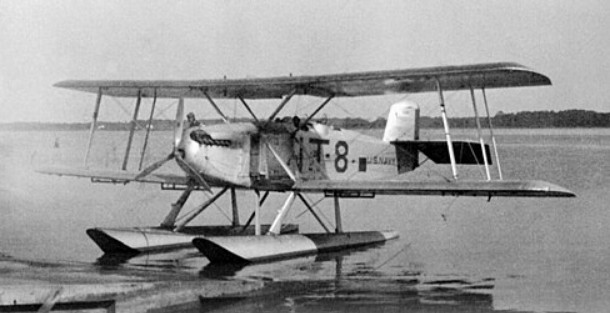
Variants
Curtiss CS-1
Initial prototypes/production, powered by 530 hp (395 kW) Wright T-2 engine. Six built by Curtiss.
Curtiss CS-2
Improved version with 600 hp (448 kW) Wright T-3 engine and more fuel. One converted from CS-1 and two new-built aircraft by Curtiss.
Curtiss CS-3
Modified CS-2, with geared engine. One converted. Formed basis of Martin T3M
Martin SC-1
Martin built production version of CS-1. 35 built.
Martin SC-2
Martin built production version of CS-2. 40 built.
Martin T2M
Alternative designation for the Martin built SC series.
Martin XSC-6
Conversion of SC-1 with 730 hp (545 kW) Packard 1A-2500 engine.
Martin SC-6
SC-1 fitted with 1A-2500 engine.
XSC-7
Conversion of CS-1 with T-3A engine and increased gross weight.
Specifications
SC-2 landplane
Powerplant: 1 × Wright T-3, 585 hp (436 kW)
Wingspan: 56 ft 7 in (17.25 m)
Wing area: 856 sq ft (79.5 m2)
Length: 37 ft 9 in (11.51 m)
Height: 14 ft 8 in (4.47 m)
Empty weight: 5,007 lb (2,271 kg)
Gross weight: 8,422 lb (3,820 kg)
Maximum speed: 103 mph (166 km/h, 90 kn) at sea level
Range: 1,018 mi (1,638 km, 885 nmi)
Service ceiling: 8,000 ft (2,400 m)
Time to altitude: 10 minutes to 2,000 ft (610 m)
Guns: 1 × rearward-firing machine gun in ring mount
Bombs: 1 × 1,618 lb (734 kg) torpedo
Crew: three
Back to de Havilland DH 85 Leopard Moth
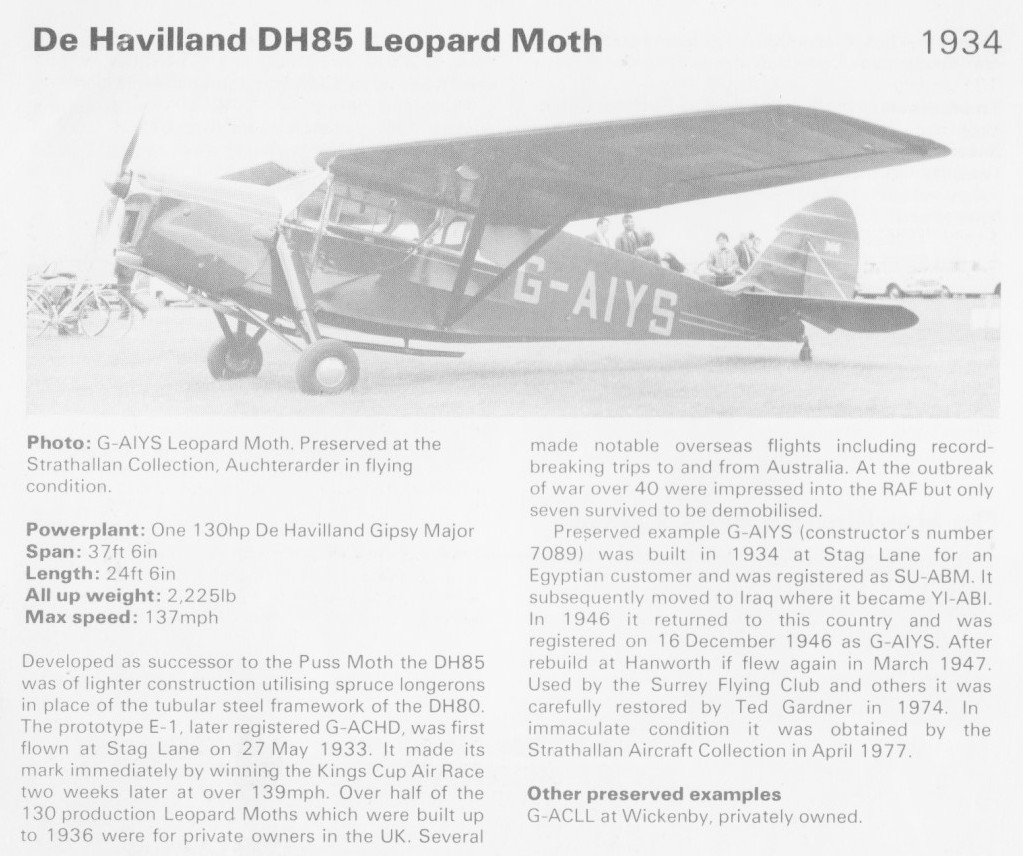
Back to de Havilland DH 83 Fox Moth
Back to Douglas DC-3
Basler BT-67 Delivery
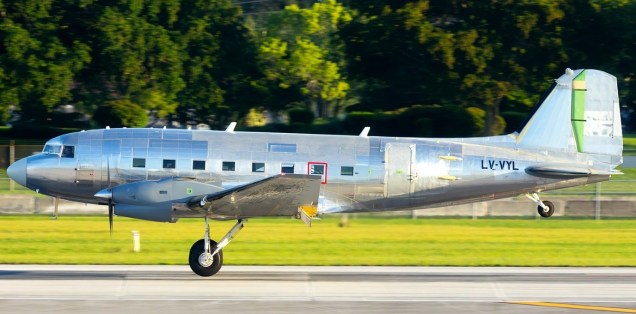
On August 11th, 2025, at 11:19 local time, a Douglas DC-3, converted and modernized into a Basler BT-67, departed from Wittman Regional Airport in Oshkosh on its delivery flight to South America to join Mirgor, an Argentine company which will use this aircraft for cargo operations in Argentina, and flights to Antarctica during the South American summer, under an agreement with the Argentine Air Force.
This veteran aircraft was built in 1943 as a Douglas C47-A-10-DK and began operating for the US Army Air Force in February 1944 with the registration number 42-108859. A few weeks later, the aircraft joined the Royal Air Force and was re-registered as KG403. In the 1970s, it commenced civilian operations for Canadian and US airlines, carrying the registrations CF-BKP, N107AD, and N700CA.
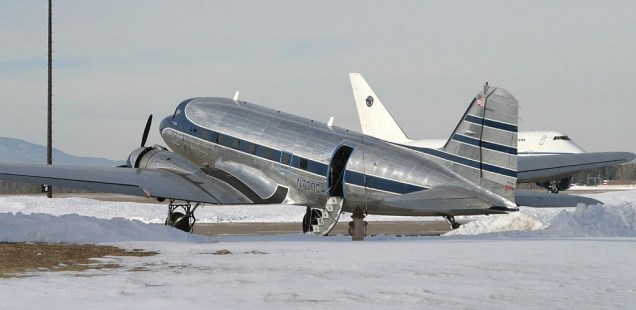
In July 2013, the DC-3 was acquired by Basler Turbo Conversions, a U.S. company based at Wittman Regional Airport in Oshkosh, which retrofits and upgrades Douglas DC-3/Douglas C-47 aircraft using state-of-the-art equipment, transforming them into Basler BT-67 aircraft.
Basler Turbo Conversions takes the DC-3 and puts it through an extensive remanufacturing process. The BT-67 modernization includes a complete airframe overhaul, aerodynamic improvements, structural modifications that increase strength and improve performance, and new systems that improve reliability.
Prior to its arrival in Argentina, the Basler BT-67 with serial number 12438, performed several test flights during June 2025 and July 2025. These flights were carried out with the US registry N700CA, which it had held since 1992 when it began operating for Champlain Enterprises Inc, a company based in Plattsburgh, New York.
The delivery flight of the Basler BT-67, registered with the Argentine registration LV-VYL, started on 11 August 2025.
The aircraft landed at Rio Grande Airport in Argentina on August 18th at 12:06 local time from Puerto Montt after a 4-hour flight, the shortest trip of the long journey. Oshkosh – Fort Lauderdale – Panama City – Trujillo – Antofagasta – Puerto Montt – Río Grande was the delivery flight, covering approximately 11,280 kilometers and being more than 33 hours of flight time.
The BT-67 reached a maximum altitude of 13,000 feet and a speed of approximately 250 knots, 460 kilometers per hour.
Mirgor, the private owner who acquired this aircraft, announced that it will base the Basler BT-67 in the province of Tierra del Fuego, using Río Grande (RGA/SAWE) and Ushuaia (USH/SAWH) as its bases. If operations to Antarctica begin in December, flights will depart from Ushuaia, Argentina’s southernmost airport. The flights would be between Ushuaia and Marambio Base (QAB/SAWB), the Argentine base in Antarctica.
BT-67 operations
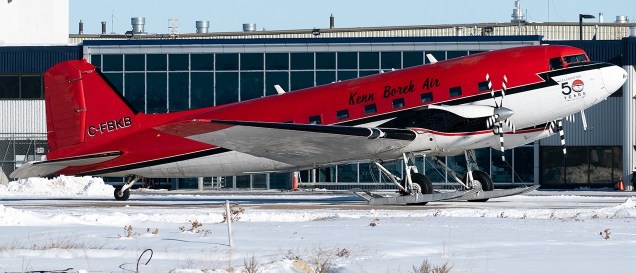
In accordance with Basler BT-67 Conversions, several companies in the United States and Canada operate Basler BT-67 aircraft, as do air forces from various countries around the world. In addition, Alfred Wegener Institute, Enterprise Aviation, and Polar Research Institute of China conduct flights from/to Antarctica or the North Pole with these aircraft.
Airtec, Airborne Support, Bell Geospace, and Triangle Aviation have Basler BT-67s based in the United States, headquartered in California (Maryland), Houston (Texas), Houma (Louisiana), and Smithfield (North Carolina), respectively. On the other hand, Cargo North and Kenn Borek Air operate Basler BT-67s in Canada and Spectrum Air Surveys in South Africa.
The Mauritanian Air Force, the Malian Air Force, the Colombian Air Force, the Colombian National Police, the El Salvador Air Force, the Guatemalan Air Force, and the Royal Thai Air Force also operate Basler BT-67s, mainly for personnel and cargo flights.
The 1991 Avid Explorer N3760T was built for French polar aviator Hubert de Chevigny.
It was a five-place cabin high wing monoplane amphibian first flown in April 1991.
Engines: two 235hp Lycoming
Wingspan: 65’0″
Length: 40’0″
Useful load: 3200 lb
Cruise: 99 mph
Stall: 49 mph
Seats: 5
The Arrow Sedan built by Arrow Aircraft & Motors Corp was a two-place cabin monoplane powered by an Anzani engine and registered N4496.
The 1926 Arrow Five built by Arrow Aircraft & Motors Corp was a five-place open cockpit biplane. The front cockpit accommodated two passengers facing forward and two rearward.
Engine: 150hp Hisso A
Wingspan: 40’0″
Length: 27’0″
Useful load: 950 lb
Max speed: 94 mph
Stall: 45 mph
Seats: 5

 All Aero