Airship, France, 1913
Engine : 2 x Dansette-Gilette, 197 hp
Length : 308.399 ft / 94.0 m
Width of hull : 45.276 ft / 13.8 m
Contained volume : 335540 cu.ft / 9500 cu.m
Max. speed : 32 kts / 60 km/h
Airship, France, 1913
Engine : 2 x Dansette-Gilette, 197 hp
Length : 308.399 ft / 94.0 m
Width of hull : 45.276 ft / 13.8 m
Contained volume : 335540 cu.ft / 9500 cu.m
Max. speed : 32 kts / 60 km/h
A two-seat biplane of 1912.

The Zodiac IX was purchased in France in 1910 by Russia and renamed “Kite”. It was sent to the Far East but not used.

Engine: 1 x 59 hp
Volume: 2,140 cu.m
Length: 47 m
Diameter: 9 m
Max.speed: 47 km/h
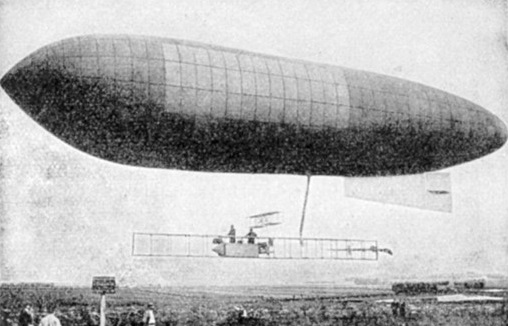
The 1910-built non-rigid Zodiac VIII was purchased in France in 1910 by Russia and renamed Tchajka / Seagull. It was used for training.
Engine: 1 x 59 hp
Length: 47 m
Width: 9 m
Envelope volume: 2140 cu.m
Max speed: 47 kph
First established in 1896, this company produced the Zodiac S2 two-seat biplane in 1912.
The Zoche aero-diesels are a trio of German prototype Diesel radial aero-engines intended for light aircraft. The Zoche ZO range comprises three radial engines, namely: the ZO 01A, a “cross-4”; the ZO 02A, a twin-row “cross-8”; and the ZO 03A, a V-twin. Power outputs are 150 hp (112 kW), 300 hp (224 kW) and 70 hp (52 kW) (respectively).
The founder of the project is Michael Zoche, who claimed that the ZO engines will have the following advantages: they will be lightweight, compact and perfectly smooth; low fuel consumption; high power-to-weight ratio; the lubrication system will allow aerobatics; diesel fuel injection, so no carburetor icing; direct driven generator, so no drive-belts; good reliability through a low part count and absence of poppet valves; pneumatic starting obviates both electric starter motor and heavy starter battery; complete absence of rubber hoses; cheaper parts through modularity; reduced fire risk compared to avgas; good power output, even at altitudes up to 9,000 feet (3,000 m). The engines will also have the “classic” appearance that is suitable for some aircraft types.
The AOPA website explains the “cross-4” ZO 01A as follows: “The radial design was chosen for its ability to be effectively aircooled and 100% balanced at all rpm with a simple counterweight system. All four connecting rods are attached to a single crankshaft throw. This prevents any crankshaft twisting, which is hard to balance out in opposed-configuration engines. Zoche engines use a pneumatic starting system that does away with the need for a heavy-duty starter and battery system”.
Zoche ZO engines are modular and are all direct-drive, air-cooled, radial two-stroke Diesels with up to four cylinders per row. They feature two-stage charging (turbocharger and supercharger), direct fuel-injection and intercooling. Propeller rotation is clockwise (viewed from the cockpit). Engine weights (below) include: starter-generator, hydraulic propeller-governor, turbocharger and supercharger, and oil- and fuel-filters. Engine mountings are attached to the cylinder heads. Engines are to be certified to JAR-E and FAR 33, and a TBO of 2,000 hours is anticipated.
A Zoche engine has run effectively in wind tunnel tests, but Zoche seem barely any closer to production than they were a decade earlier. The Zoche engine gestation period has lasted some 20 years; and whether or when production may start is unknown.
The Lambert Mission 212, a kit-build 4-seat aircraft from Belgium that was nearing completion of pre-production testing, was initially designed around the Zoche ZO1A motor; but, with the non-appearance of the Zoche, Lambert have been obliged to select other engines, the DeltaHawk® DH200A4 (or DH180A4), or the XP-360 engine.
Variants:
ZO 01A
Single-row cross-4, 2,660 cc (162 cu in), (max) 150 hp (112 kW) @ 2500 rpm, 84 kg (185 lb)), fuel consumption 21 litres/h @ 75% power.
ZO 02A
Double-row cross-8, 5,330 cc (325 cu in), (max) 300 hp (224 kW) @ 2500 rpm, 123 kg (271 lb)), fuel consumption 42 litres/h @ 75% power.
ZO 03A
V-twin, 1,330 cc (81 cu in), (max) 70 hp (52 kW) @ 2500 rpm, 55 kg (121 lb)), fuel consumption 10 litres/h @ 75% power.
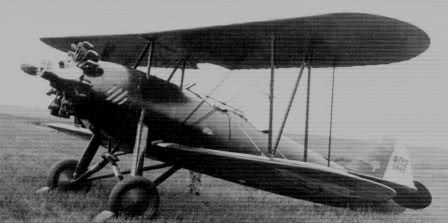
In 1933, the command of the Yugoslav Royal Air Force (YRAF) decided to replace outdated planes with modern school aircraft, for transitional training from basic training to combat.
The designers, R. Fizir and D. Stankov, opted for a biplane concept, although the YRAF preferred a low wing (due to the development of modern combat aircraft). The Zmaj Factory designed a prototype Fizir FP-1, in 1993, but it did not satisfy all the requirements set by the YRAF. As a result, Rudolf Fizir and Dusan Stankov, made adjustments to the Fizir FP-1 and so the plane became the Fizir FP-2. In the end, the concept accepted.
A prototype Fizir FP-2 (Fizir Prelazni) with a Gnome-Rhone K-7 engine of 308 kW power was completed and test flown at the end of 1933. More test flights followed, and by 1934 the plane showed good results.
The Zmaj modified the FP-2 during 1934 using a Walter Pollux 2 engine of 235 kW power, but the results were not satisfactory.
Engine: 1 × Gnome-Rhone K7, 313 kW (420 hp)
Propeller: 2-blade
Wingspan: 10.80 m (35 ft 5 in)
Wing area: 28.80 sq.m (310.0 sq ft)
Length: 7.90 m (25 ft 11 in)
Height: 2.90 m (9 ft 6 in)
Empty weight: 740 kg (1,631 lb)
Gross weight: 1,450 kg (3,197 lb)
Maximum speed: 200 km/h (120 mph; 110 kn) 238 km/h at sea level
Range: 580 km (360 mi; 313 nmi)
Service ceiling: 6,800 m (22,310 ft)
Crew: 2

In the first half of the 1930s. In Yugoslavia, the development of aircraft of its own design has become more active. The activities of Yugoslav designers could be seen in 1938 at the Belgrade Aviation Exhibition. Among the other planes there was a prototype of the R-1 bomber from Zmaj.
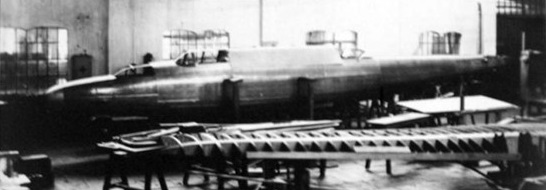
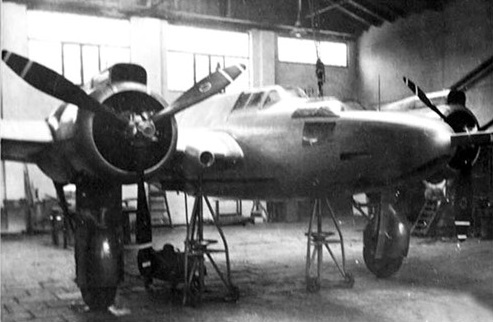
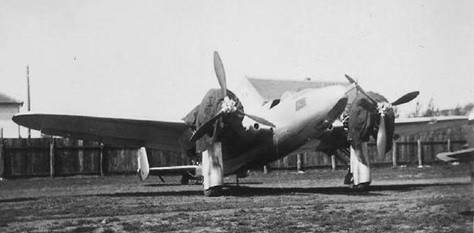
During 1936 at the Zmaj factory, Dušan Stankov, then technical manager, and George Dukic initiated the design and construction of a reconnaissance-bomber. After tests in the wind tunnel at Warsaw and acceptance by the Yugoslavian Air Force, the project was designated Zmaj R-1 (Serbian Cyrillic: Змај Р-1). The contract for the construction of the prototype was signed in 1937. The team of designers joining Eng. Djordje Ducić and a few young engineers who worked on the design completed the prototype before the beginning of a large aerospace workers strike in April 1940, with final assembly at the military part of the airport in Zemun.
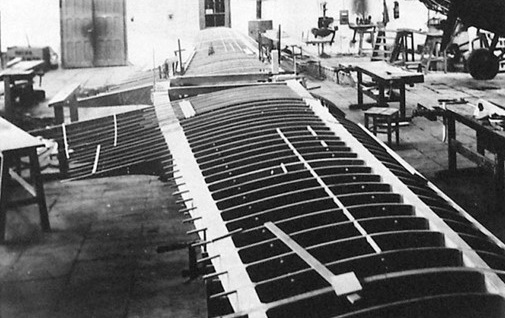
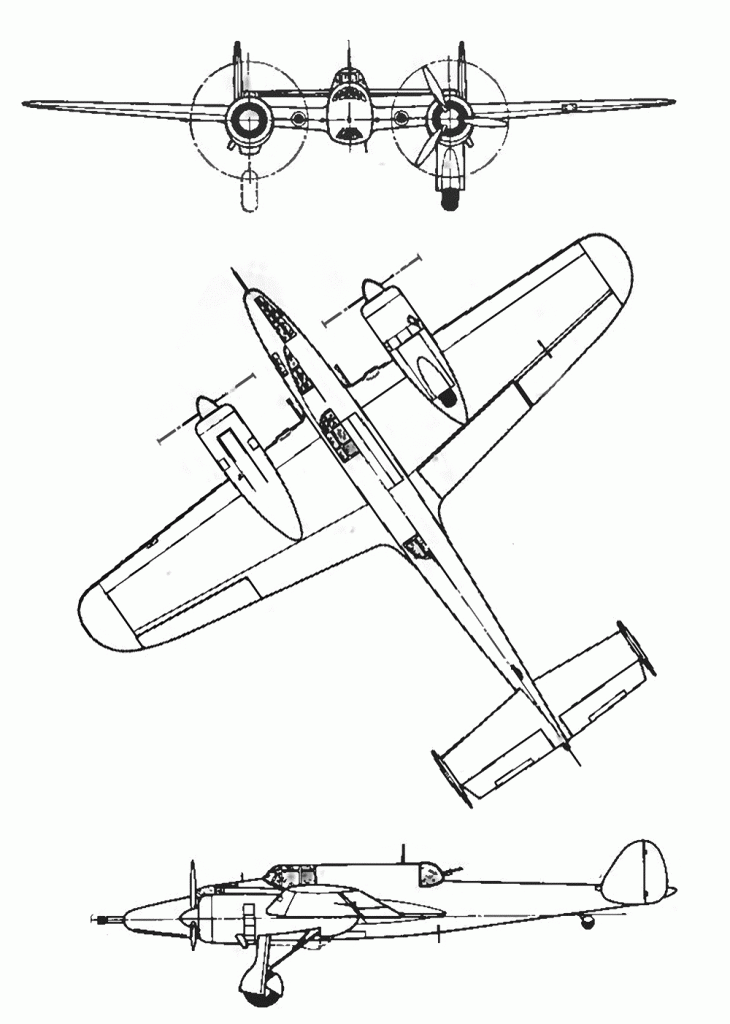
Its design was mixed – Alclad monocoque fuselage and wooden wings and tail, metal construction rudders with fabric cover. The R-1 was equipped with Hispano-Suiza 14AB engines of French production, placed in gondolas under the wing. Flaps and landing gear was hydraulically operated. The composition of the crew varied depending on the purpose of the aircraft. In the version of the bomber R-1, the crew consisted of 4 people, in the variant of the attack aircraft – 3 people. The crew of three was accommodated in separate cockpits. Aiming and firing of the armament was made from the top cockpit while the bombing were performing from the front cockpit. The plane could take on board up to 1600 kg of bombs, and one large-caliber bomb could be placed on a special device in the fuselage for attack from a dive. The attack aircraft carried a smaller bomb load, but its small arms of two 20-mm guns and two 12.7-mm machine guns were much better suited for storming enemy troops. The two Oerlikon 20 mm cannon were in the fuselage sides but this was later changed and repositioned in to the wing roots. Two more 7.9 mm machine guns were placed in the nose top and one machine gun was placed in the rear fuselage for the defense.
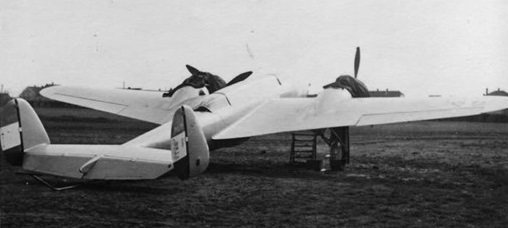
The first flight was on 24 April 1940, pilotted by reserve Lieutenant Đura E. Đaković, a transport pilot with Aeroput. The initial testing justified all expectations in terms of aerodynamic characteristics and performance, unfortunately on the third flight the pilot was unable to lower the landing gear and had to land with the undercarriage extended, damaging the propellers and engines. Replacement parts for the propeller and landing gear were imported from Germany and France delaying repairs considerably.
The aircraft was rebuilt so that testing could be resumed at the end of March 1941, but in early April the bombing of Zemun airport damaged the prototype Zmaj R-1 again. In late June 1941 the Germans scrapped the aircraft.

Enngines: 2 × Hispano-Suiza 14AB, 552 kW (740 hp) each
Propellers: 3-bladed
Wingspan: 14.40 m (47 ft 3 in)
Wing area: 33.80 sq.m (363.8 sq ft)
Height: 2.50 m (8 ft 2 in)
Length: 12.78 m (41 ft 11 in)
Empty weight: 2,600 kg (5,732 lb)
Gross weight: 5,094 kg (11,230 lb)
Max takeoff weight: 5,664 kg (12,487 lb)
Maximum speed: 450 km/h (280 mph; 243 kn)
Cruise speed: 320 km/h (199 mph; 173 kn)
Range: 1,000 km (621 mi; 540 nmi)
Service ceiling: 10,000 m (33,000 ft)
Rate of climb: 5.55 m/s (1,093 ft/min)
Guns: 2x 20 mm (0.787 in) Oerlikon cannon, and 4x 7.9 mm (0.311 in) machine guns
Bombload: 1,600 kg (3,500 lb) of bombs carried internally
Crew: 3-4
A two-seat amphibian