three-crew/ten-passenger A 38 airliner
Author: Terry
Focke-Wulf A 29
The A 29 airliner was powered by a 650 hp BMW Vl.
Focke-Wulf A 17
eight/nine-seat commercial transport
Focke-Wulf A.16
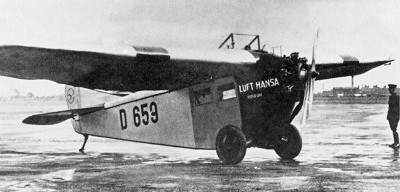
A three/four-seat commercial transport.
Engine; 1 x Siemens Sh.11 7-cylinder radial, 56kW
Wingspan; 13.90 m / 45 ft 7 in
Length; 8.50 m / 27 ft 11 in
Height; 2.30 m / 7 ft 7 in
Max take-off weight; 970 kg / 2138 lb
Max. speed; 135 km/h / 84 mph
Ceiling; 2500 m / 8200 ft
Range; 550 km / 342 miles
Crew; 1
Passengers; 4
Focke-Wulf A 7 Storch
Financial support followed success of A 7 Storch two-seater, flown November 1921.
Focke-Wulf Flugzeugbau GmbH
An association between Heinrich Focke and Georg Wulf was formalized January 1,1924 with formation of Focke-Wulf Flugzeugbau AG. at Bremen. Financial support followed success of A 7 Storch two-seater, flown November 1921.
First company design was A16 three/four-seat commercial transport, followed by the eight/nine-seat A17, the more powerful 650 hp BMW Vl-powered A 29 and the three-crew/ten-passenger A 38 airliners.
In 1931 acquired license to build Cierva C.19 Mk IV autogiro. Focke concentrated on rotary-wing activities, fixed-wing design was entrusted to Kurt Tank, formerly of BFW and of Rohrbach Metallflugzeug GmbH. Albatros Flugzeugwerke GmbH, Berlin, amalgamated with Focke- Wulf. On Focke’s resignation to form Focke-Achgelis, Tank appointed technical director. Reorganized June 1936 as GmbH under control of AEG. Ceased operations 1945, reformed 1951 and combined with Weser Flugzeugbau to form Vereinigte Flugzeugtechnische Werke.
S 24 Kiebitz two-seat trainer won 1931 German Aerobatic Championship flown by Gerd Achgelis, who conducted maiden flight of Fw 44 Stieglitz trainer late summer 1932, widely used by embryo Luftwaffe and in European and South American countries. First Tank design produced in any numbers (approximately 1,000) was Fw 56 Stosser fighter/dive-bomber advanced trainer, followed in 1935 by Fw 58 Weihe communications aircraft/crew trainer and in 1938 by Fw 189 reconnaissance aircraft. Fw 200 Condor airliner flown July 1937, developed into Fw 200C long-range reconnaissance aircraft. With production total of more than 19,000, Fw 190 fighter was the most notable of Focke-Wulf’s designs; after the first flight on June 1,1939, entered squadron service August 1941. High-altitude version, with revised high aspect ratio wing, designated Ta 152.
Focke-Wulf joined VFW in 1964.
Focke-Kolthoff-Wulf A.V / A.IV
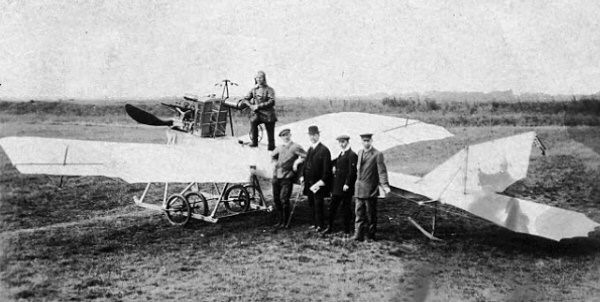
This monoplane with Taube-like wings tips and a big rudder (sometimes identified as the A.V) was built in 1912 in Bremen (Germany). The engine was a 50 hp Argus, and it flew for the first time on July 28th, 1912.
Focke-Kirchhoff-Tiemann hang glider / Focke A II
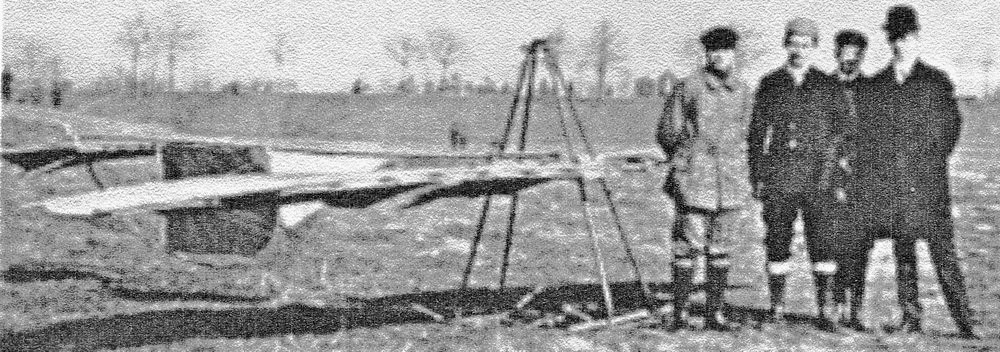
This glider, which was later designated Focke A II, was actually built by three high school students: Henrich Focke, Frido Kirchhoff and Carl Tiemann. It was flown in late 1909 at the Osterdeich in Bremen.
Focke-Borgward BFK.1 Kolibri
Experimental Helicopter, Germany, 1958
The automobile manufaturer Borgward in Bremen tried to expand its operations with helicopters and the Kolibri was designed together with Prof. Heinrich Focke.
The project was shut down because of economical problems of the Borgward factories.
Engine: Lycoming, 237 hp
Rotor diameter: 30.84 ft / 9.4 m
Max take off weight: 2646.0 lb / 1200.0 kg
Crew: 1+2
Focke-Achgelis Fa.336
After termination of the work on the Fa.330 “Wagtail” it was next decided to transform the Fa.330 into a helicopter with engine. It was soon determined as unfeasible. Instead the Focke Achgelis engineers developed a new helicopter, which received the designation Fa.336. It was a single-seat device with outside features, reminiscent of the Fa.330.
Like the Fa.330, the Fa.336 could be stowed away and dismantled in a similar manor. Instead of a swash plate, a new design was applied to increase blade angle. This new design was developed for Focke Achgelis by Mr. Wewoloschky, an engineer who was conscripted to help solve this problem.
Deviating from Focke’s building principle, the Fa.336 had a tail rotor with horizontal drive shaft. The construction from steel tube corresponded to that of the Fa.330. The Fa.336 remained only a design, because there were very few specialists in the whole design engineering department, and those were divided and indispensable for the care of the Fa.223 and its development.
Engine: Zuendapp Z9-92, 60hp / 45kW
Total length: 6.8m
Marin rotor: three-blade
Rotor diameter: 7.5m
Tail rotor: 1.5m
Crew: 1

