The 1910 Graf “Napoli 1” monoplane was designed and built by Emilio Graf in Italy.
Author: Terry
Grady Curtiss P-40
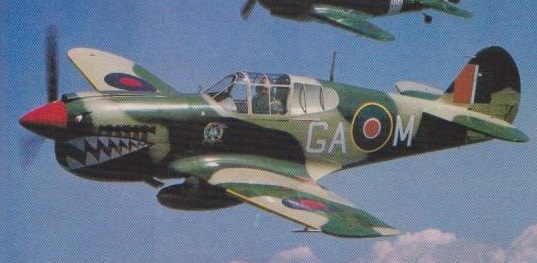
In 1988 two homebuilders from Edmonton, Alberta, Canada, attended the EAA Fly-in with their replica fighters. Ross Grady had his P-40 and Bob Tessori had his Regianne 2002.
Grady intended to build a replica that could be mistaken for the real thing. He was selling plans in 1988 for $400.
Grady, Ross
1988
Grady Construction and Engineering Ltd
11717 78th St
Edmonton
Alberta
Canada T5B 2J2
Built a P-40 replica
Gradient BiOnyx
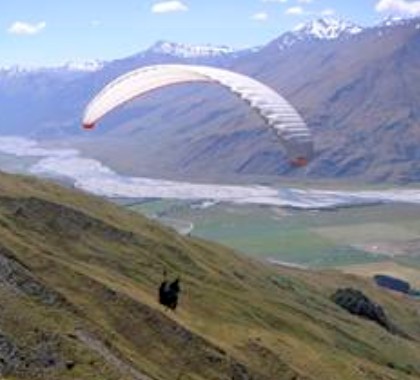
Tandem Paragliding circa 2000.
A New Zealand pilot flew a BiOnyx to a world tandem height record (7544m / 25,000ft) in the Himalayas.
Pilot weight: 140-210kg
Gradient Golden
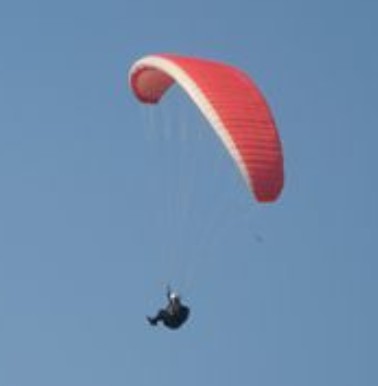
A beginner-intermediate paraglider DHV 1-2. 60 to 80 kg weight range.
Very safe glider. Proving to be safe in turbulence. Excellent recovery from collapses etc. While keeping up with the Higher performance rigs.
Gradient Topaz
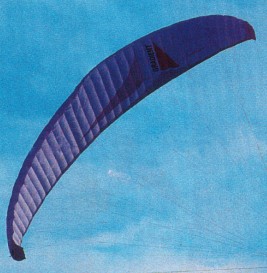
Paraglider circa 1998.
Topaz 24
Wing area: 24.56 sq.m
Certification: Afnor
Pilot weight: 70-80 kg
No. of cells: 37
Wing span: 10-83 m
Aspect ratio: 4.8
Min sink: 1.2 m/s
Max speed: 45 kph
Price (1998) 1850 £
Topaz 26
Wing area: 27.34 sq.m
Certification: Afnor
Pilot weight: 75-95 kg
No. of cells: 40
Wing span: 11.8 m
Aspect ratio: 5.1
Min sink: 1.1 m/s
Max speed: 45 kph
Price (1998) 1880 £
Topaz 28
Wing area: 30-14 sq.m
Certification: Afnor
Pilot weight: 85-110 kg
No. of cells: 40
Wing span: 12.4 m
Aspect ratio: 5.1
Min sink: 1.1 m/s
Max speed: 45 kph
Price (1998) 1950 £
Gradient Saphir
Paraglider circa 1998.
Sapir 24
Wing area: 25.07 sq.m
Certification: Afnor
Pilot weight: 70-85 kg
No. of cells: 47
Wing span: 11.45 m
Aspect ratio: 5.2
Min sink: 1.1 m/s
Max speed: 50 kph
Price (1998) 1999 £
Sapir 26
Wing area: 27.25 sq.m
Certification: Afnor
Pilot weight: 75-95 kg
No. of cells: 50
Wing span: 12.25 m
Aspect ratio: 5.5
Min sink: 1 m/s
Max speed: 50 kph
Price (1998) 2050 £
Saphir 28
Wing area: 29.88 sq.m
Certification: Afnor
Pilot weight: 85-110 kg
No. of cells: 50
Wing span: 12.83 m
Aspect ratio: 5.5
Min sink: 1 m/s
Max speed: 50 kph
Price (1998) 2150 £
Gradient Avax
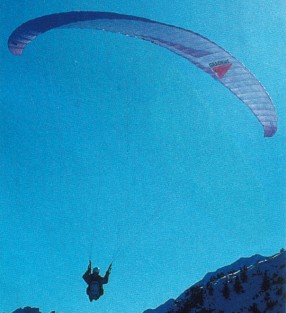
Paraglider circa 1998.
RSF is a 95-120kg competition paraglider
Avax 24
Wing area: 23.68 sq.m
Pilot weight: 70-85 kg
No. of cells: 73
Wing span: 11.93 m
Aspect ratio: 6
Min sink: 1 m/s
Max speed: 55 kph
Price (1998) 2400 £
Avax 26
Paraglider circa 1998.
Wing area: 25.97 sq.m
Certification: Afnor
Pilot weight: 75-95 kg
No. of cells: 73
Wing span: 12.49 m
Aspect ratio: 6
Min sink: 1 m/s
Max speed: 55 kph
Price (1998) 2400 £
Avax 28
Paraglider circa 1998.
Wing area: 28.48 sq.m
Certification: Afnor
Pilot weight: 85-110 kg
No. of cells: 73
Wing span: 13.08 m
Aspect ratio: 6
Min sink: 1 m/s
Max speed: 55 kph
Price (1998) 2400 £
Gradient Aspen
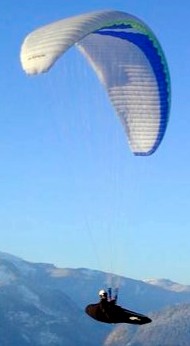
The Aspen XC / performance glider offered a step up from the Onyx. In the design, Gradient used a new shape and position for the cell openings. Attention was given to the relationship between the tension in the leading edge and trailing edge. When the tension in the leading edge and trailing edge of the canopy is well balanced, the glider feels compact, has very good performance and gives perfect feedback to the pilot. The Aspen is also said to have a unique sink ratio, a “perfect manoeuvrability” and good recovery from accelerated asymmetric tuck. The Aspen was available in DHV 2 sizes 26-28.
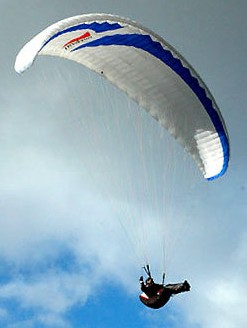
The DHV 2 Aspen II has a new airfoil section and canopy curves, and is made with new materials, including Edelrid 7443 series lines, and narrower webbing for the riser system. The upper sail is made of Porcher Marine Skytex S 9092 water repellent (45g/sq.m) with Porcher Marine Skytex S 9017 (40g/sq.m) for the lower surface, and Porcher Marine Skytex for the ribs. Gradient ‘s objective was to create “an even better glider” than the first Aspen, keeping its flying characteristics but increasing the high performance and safety. New in the Aspen 2 is the attention paid to the leading edge, and the position, area and shaping of the air entry ports for “high stability over a very wide speed range (angle of attack)”. The glider also features new low drag micro attachment points on the wing tips. The Aspen 2 was available in 5 sizes and 5 color schemes.
Medium
Pilot wt: 80-105 kg.
DHV2
Gradiant
1998: Motol Plzenska 221/130, CZ-15000 Praha 5, Czech Republic
The company has its roots in the Junkers Profly operation, which Czechs Vaclac Sykora and Ondrej Dupal bought from Germany.
Supair, the French manufacturer which was initially known for its harnesses, then its reserves, has bought the Czech brand Gradient. Gradient is one of the best known makes of paraglider wings, but for some time now they seem to have been economically stifled.
Laurent Chiabaut was on his own at the helm of Supair since the loss of Pierre Bouilloux.
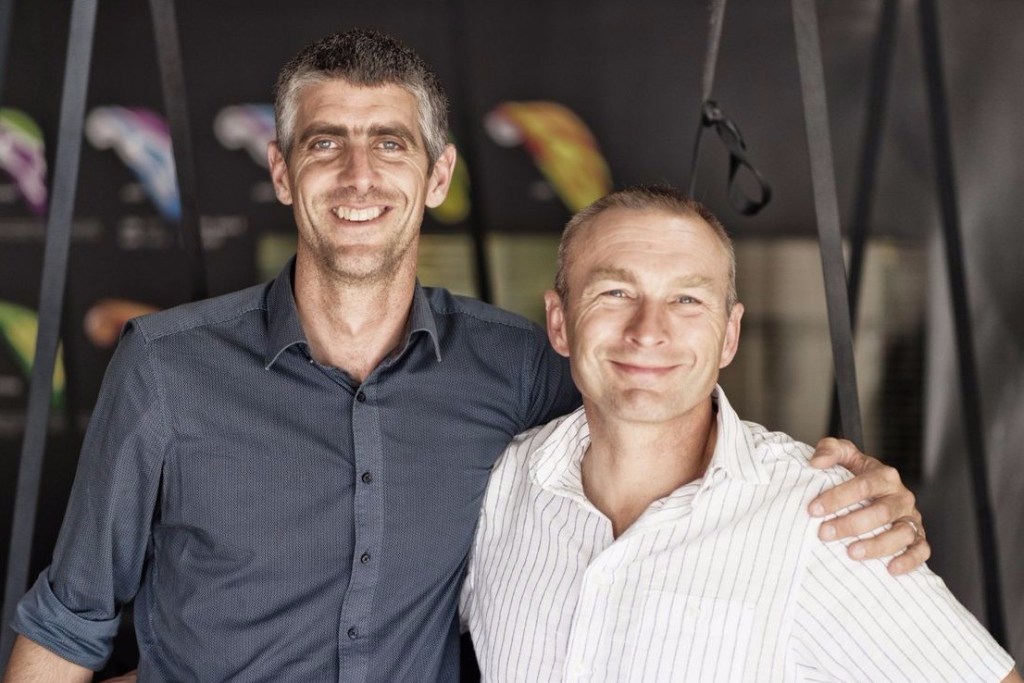
The Gradient brand and models will continue to be developed in parallel to the Supair wings and Ondrej Dupal will remain fully active.

