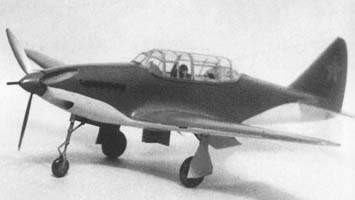
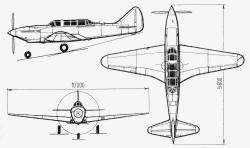
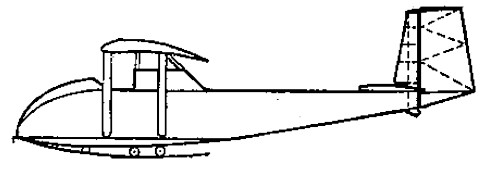
Developed in the late 1930s by the Moscow Aviation Institute in the OKB-1 led by PD Grushin, was a ground attack aircraft and light bomber that received the designation MAI/Grushin BB-MAI (Russian: МАИ/Грушин ББ-МАИ).
The BB-MAI was designed as a classic monoplane layout airplane with a 1050 hp M-105 powerplant and was designed during 1938 and 1939.
The BB-MAI introduced the use of bakelite plywood construction, introduced with the help of a group of specialists from VIAM, the engine used a compressor that worked with exhaust gases, developed by TsIAM, for the first time in the USSR, a nose Wheel undercarriage, and a movable turret.
The double-spar wing was made up of three C-sections made of Bakelite plywood. When these sections were joined together, the “back” formed the spar wall and its base became the wing covering. The sections were glued with VIAM B-3 glue during assembly, producing a structure of considerable rigidity. The wing area was small at 15.2 m², therefore, with a takeoff weight close to 3,500 kg, the wing loading reached 210 kg/m². The wing also had automatic slats.
The coating on the base of the wing reached 5 mm and on the tail section 3 mm. The walls of the stringers were 25 mm. The fuselage was of the monocoque type made of bakelite plywood glued with the same glue. This construction achieved such strength that the internal structure could be lightened. As in the case of the Grushin Sh-Tandem, the surface was highly polished.
The main wheels were retracted towards the wing, to the sides of the fuselage, with a 90º turn of the wheels. Behind the front wheel was the radiator.
Construction of the prototype began in 1939 and it was completed in 1940 at KBMAI. The main builder of the prototype was AA Lebiedinski and AA Manucharov was appointed as the main test engineer. The BB-MAI was tested by MAI graduate AN Grinchik, a Soviet test pilot who would die in a crash in the USSR’s first turbojet aircraft.
Construction delays led to the first flight taking place in December 1941. By that time the interest of the VVS for an aircraft with these characteristics had already disappeared. Grushin himself had been appointed KB ‘s main builder at Kharkiv Aviation Factory (JAZ) No.135 and KB MAI was soon shut down for a few years.
Only one prototype was built and flown in the December 1941. The proximity of the war led to the end of the project. The BB-MAI was never armed.
Powerplant: 1 x 1050 hp М-105 Wing span: 10.00 m Wing area: 16.80 m² Length: 9.60m Empty weight: 2965 kg Normal takeoff weight: 3490 kg Wing loading: 208 kg/m² Power load: 3.3 kg/hp Maximum speed at sea level: 508 km/h Maximum speed at altitude: 550 km/h Ascent time to 5000 m: 9.2 min. Practical range: 500 km Practical ceiling: 9000 m Accommodation: 2
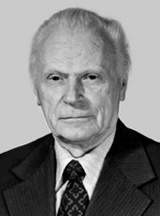
Pyotr Dmitrievich Grushin (Russian: Петр Дмитриевич Грушин) was born in Volsk, Saratov Governorate, Russian Empire on January 2 (15), 1906.
He began his aeronautical construction activity while still a student at the Moscow Aviation Institute (MAI) with the Stal-MAI model that was developed between 1931 and 1934. His diploma work consisted of the project of a light aircraft, developed in 1932 jointly with Dmitr Babad and Afanasiev Marakazov and named ” Brigadny “. This project was presented in the contest developed by the OSOAVIAJIM on October 13, 1932, obtaining the first prize.
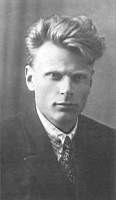
Grushin in 1932 as a student at the MAI.
After graduating as a mechanical engineer in aeronautical construction, Grushin remained at the MAI, being appointed from 1933 as main builder of the KB MAI.
Between 1934 and 1940 he worked on various developments including the Oktyabrionok light aircraft, the development of a “blind” cockpit for training flights, an experimental steam engine for the Polikarpov U-2, the ground attack aircraft Sh -Tandem and the BB-MAI light bomber.
In 1940 Grushin was transferred to Factory No.135 in Kharkov as the main builder of the OKB JAZ. The IDS escort aircraft project, also known as Gr-1 (Grushin – 1), stands out in this period.
After the evacuation of 1941 Grushin went to work at Factory No.21 as a senior engineer in Semyon Lavochkin ‘s construction bureau, later being appointed as his replacement.
At the end of 1953 Grushin became head of the Special Construction Bureau No.2 (OKB-2) which since 1967 has been renamed KB “Fakel”. The first major work of this bureau was the development of the 1D (V-750) missile. for the S-75 anti-aircraft system developed by the OKB-1, which entered service with the PVO in December 1957. For the development of this missile on June 25, 1958, Grushin was awarded the title of Hero of Socialist Labor and the Order of Lenin.
Anti-aircraft systems developed by Grushin saw service in Vietnam, Egypt, Syria, and Cuba.
Piotr Grushin died in Moscow on November 29, 1993, at the age of 87.
The former OKB-2, which since 1967 was called KB Fakel today bears the name of Grushin: OAO Bureau of Machine-Building Fakel academician PD Grushin.
In 1987 Grushin gave 140,000 rubles from his private funds to build the “Comprehensive” House of Young Technicians in the city of Khimki, Moscow district, where he lived and worked from 1953 until his death.
A bust of Grushin was erected in his hometown of Volsk, in the Saratov District.
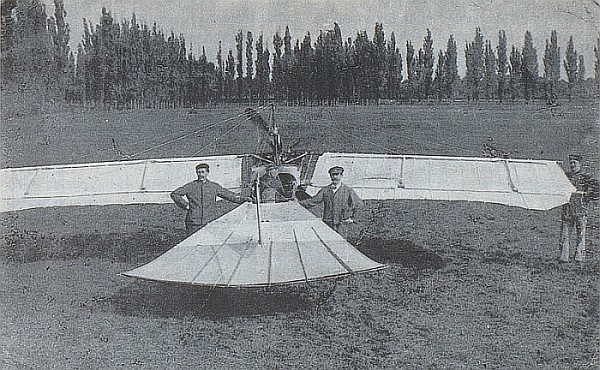
The first aeroplane built in Speyer (Pfalz), by a Leutnant Grundner with assistance of the officers of the Kgl. II Bayerische II. Pionierbataillon, which was stationed at Speyer. Details of its flying capabilities (if there were any) and other facts are missing. Flat wings without airfoil and exposed structure on the upper wing surface were for 1912 unusual features and not helpful to get the monoplane in the air.
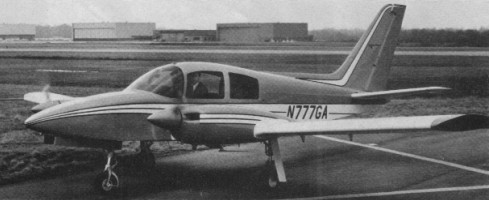
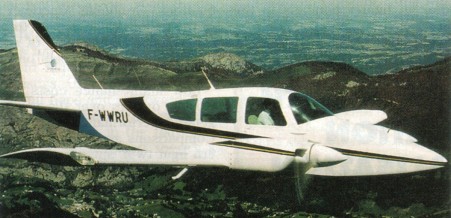
Right on schedule, in December 1974, Grum¬man American got its new light twin, the Cougar, into the air on its first test flight.
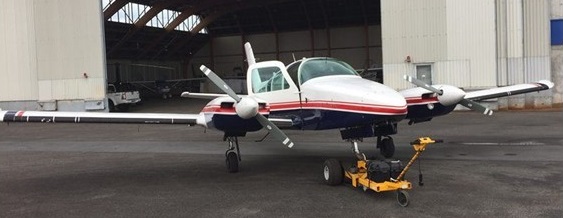
The Cougar had a lengthy development period – nearly three years – between the prototype’s first flight on December 20 1974 and certification in September 1877. During that time the aircraft was modified considerably in detail. First flown with a sliding canopy and two cabin windows per side. A third window had been added by the time the aircraft entered production and the sliding canopy replaced by a conventional solid cabin roof and starboard side entry door.
The cabin itself was made a little larger while a two spar wing helped form the structure for an integral wet wing fuel tank. On the prototype the main undercarriage units retracted inwards but on the production models they retracted outwards. The first production standard Cougar flew in January 1977.
Two models were offered for the 1978 model year, the basic GA-7 and the better equipped Cougar with improved fittings, a basic avionics pack and gyro system as standard.
In service, the Cougar’s single engine performance on only 160 hp / 119 kW a side proved to be not as great as early published figures indicated and the numbers were subsequently revised downwards by nearly 30%. Gulfstream responded by proposing two new variants, one with turbocharged 160 hp / 119 kW engines and another with 180 hp / 134 kW normally aspirated engines.
Neither proposal eventuated as Gulfstream ended production of all light aircraft in 1979.
In 1995 plans were made for SOCATA to licence build the Grumman GA-7 Cougar as the TB320 Tangara.
SOCATA TB 360 Tangara
Socata acquired the design and manufacturing rights to the Cougar in 1995. Socata announced plans to produce the aircraft as the TB 320 Tangara and then as the TB 360 with 180 hp / 134 kW Lycoming O-360 engines. Three modified Cougars were built as prototypes, the first (as a TB 320) in mid 1996 and the second (as a TB 360) in February 1997. Planned production was then delayed.
Grumman GA-7 Cougar Engines: Lycoming 0 320 D1D, 160 hp / 119 kW TBO: 2,000 hrs. Props: two blade, constant speed, 73 inch dia. Length: 29 ft. 10 in. Height: 10 ft. 4 in. Wingspan: 36 ft. 10 in. Wing area: 184 sq.ft. Wing loading: 20.67 lb/sq.ft. Power loading: 11.88 lb/hp. Seats: 4. Empty weight: 2,569 lb (1,165 kg) Useful load: 1,155 lbs. Payload with full fuel: 459 lbs. Gross weight: 3,800 lb (1,724 kg) Usable fuel capacity: 116 USG/696 lbs. Service ceiling: 17,400 ft (5,300 m) Rate of climb: 1,150 ft/min (5.8 m/s)Single engine rate of climb: 280 fpm. Single engine climb gradient at 85 knots (Vyse): 197 ft. per nm. Single engine service ceiling: 4,500 ft. Maximum speed: 117 kts. Max cruise, 75% power (2,700 rpm) at 8,500 ft: 165 kts. Range: 1,170 nmi (max econ no res) Duration at maximum cruise: 6.7 hrs. Duration at economy cruise: 9.2 hrs. Stalling speed, clean: 68 kts. Stalling speed, full flaps: 61 kts.
Socata TB 360 Tangara Engines: 2 x Lycoming O-360-A1G6, 180 hp / 134 kW Wing span: 36 ft 11 in / 11.24 m Length: 29 ft 10 in / 9.09 m Height; 10 ft 4 in / 3.15 m Wing area: 184 sq.ft / 17.1 sq.m MTOW: 3800 lb / 1724 kg Max speed: 174 kt / 322 kph Max cruise; 165 kt / 306 kph Long range cruise: 120 kt / 222 kph Initial ROC: 1400 fpm / 427 m/min Service ceiling; 20,000 ft / 6096 m Range at max cruise (45 min res): 800 nm / 1480 kg Max range w/res: 1140 nm / 2110 km
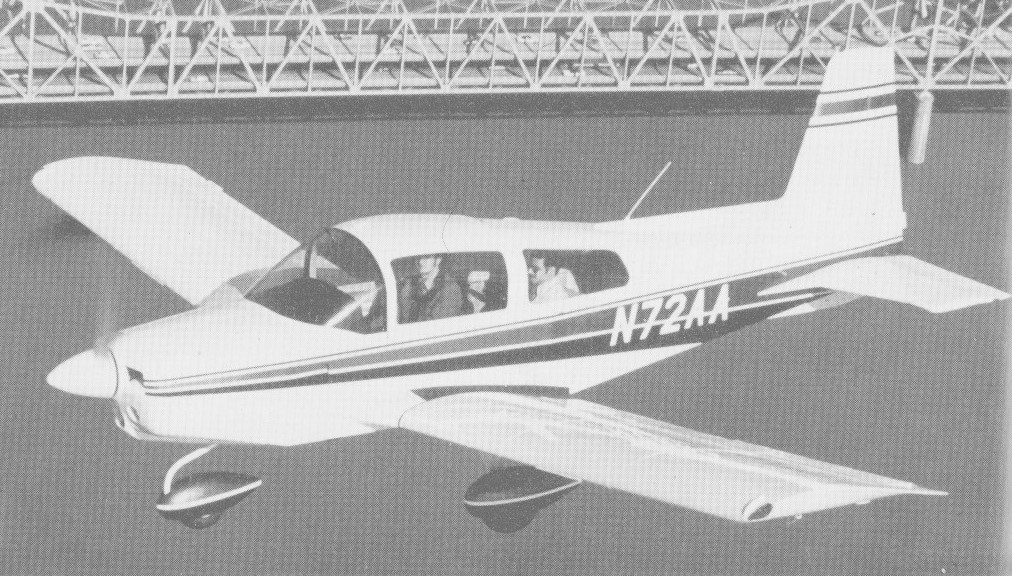
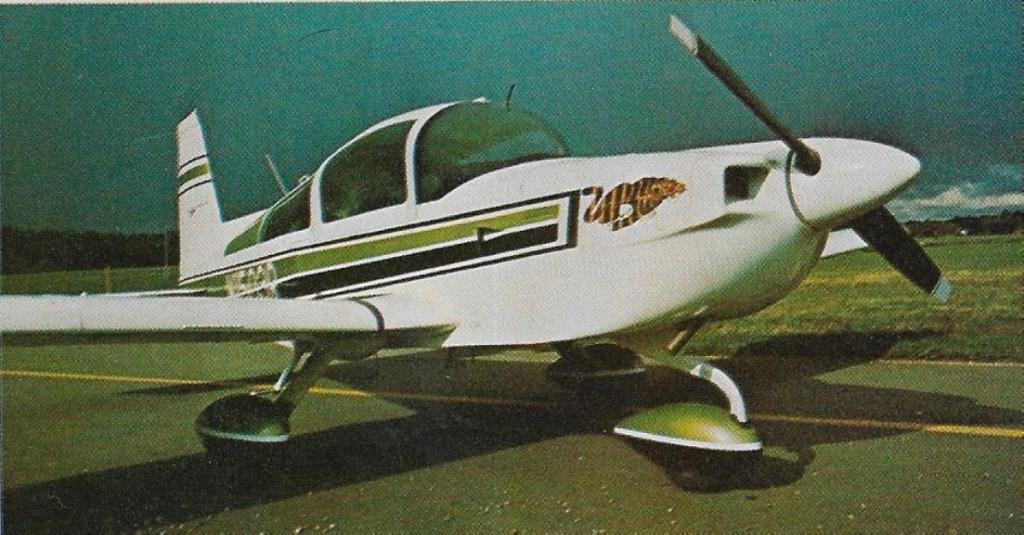
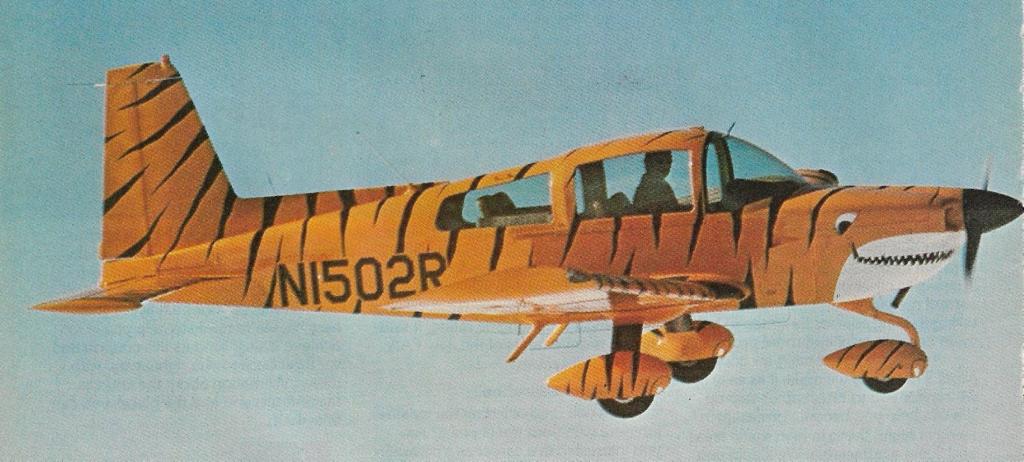
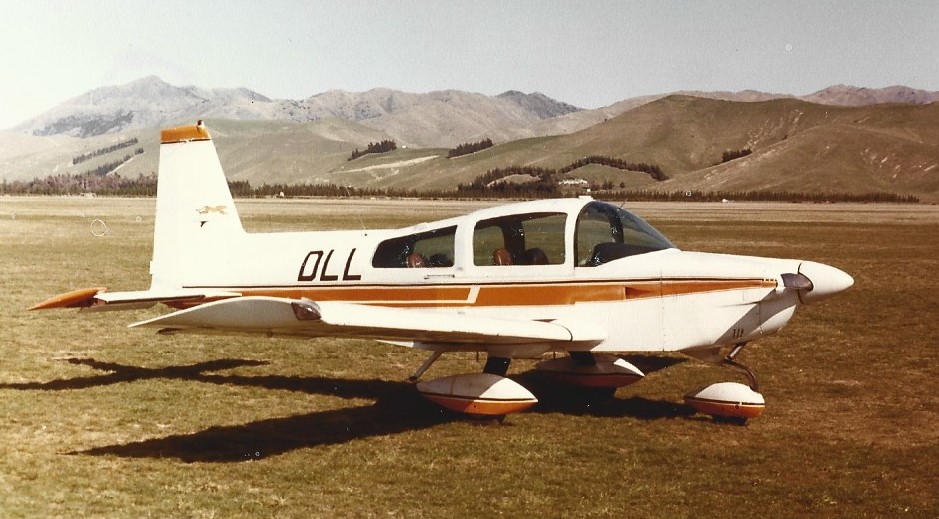
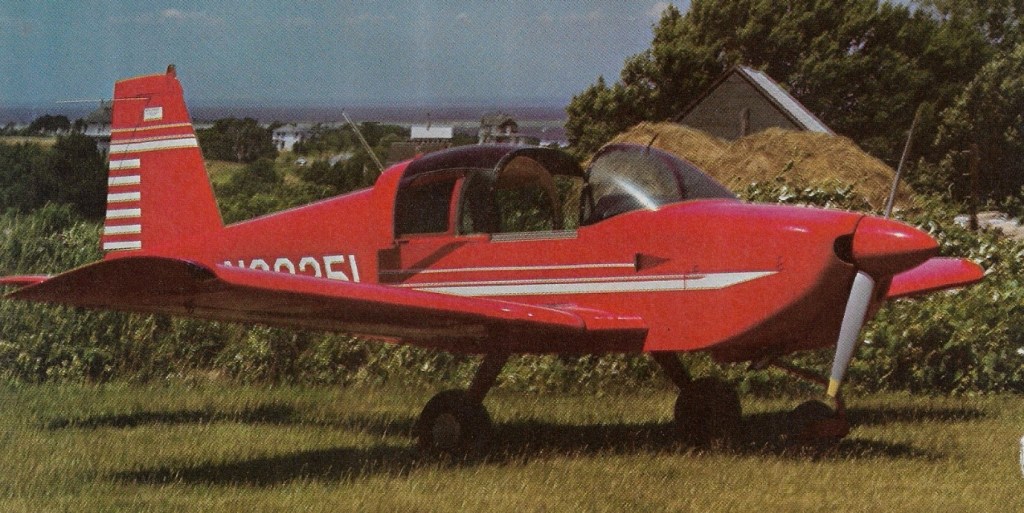
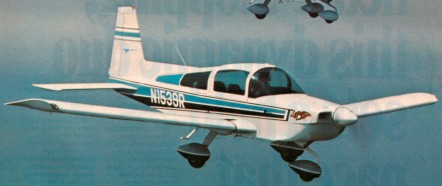
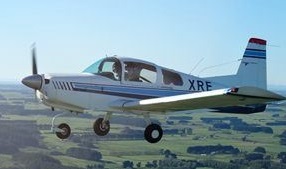
The production 4-seaters were the AA-5 Traveller introduced in 1971, the AA-5A Cheetah and AA-5B Tiger. First introduced in 1972 as the AA-5 Traveler, with 150 horsepower, this four-seater resembled an enlarged AA-1 and also utilised the bonded metal and tubular spar construction of the AA-1. In 1975 Grumman American introduced a major airframe clean up and the more powerful 180 hp AA-5B Tiger. The Tiger features an enlarged and redesigned tailplane (from the AA-5), fixed pitch prop and undercarriage. The modified airframe was reunited with 150 hp in 1976, and the new AA-5A Cheetah replaced the Traveler. All these airplanes share key features. Entrance is through a sliding canopy, which can be left open during flight. Rear seat backs are removable, and the rest of the rear seat folds flat to form a cavernous cargo area, station wagon style. All three airplanes have fixed gear and fixed pitch propellers. And the airframes of the little airplanes are made partially of an aluminum honeycomb material; most of the skins are bonded rather than riveted together. This skin bonding process has had its troubled moments. Problems occurred when Grumman American moved its light¬plane manufacturing from the Cleveland, Ohio area to Savannah, Georgia. The new plant’s bonding process went through a shakedown period during which, occasionally, an airplane control surface would delaminate. But this never happened suddenly, so there was no safety problem, and the factory made good the airplanes that were affected. Fuel is drawn from one wing or the other, and a pointer, activated by the selector, indicates which fuel gauge to read. Taxiing is with the full-swiveling nose wheel dictating that you guide with the toe-brakes. In addition to their basic clean up modifications, the Tiger and Cheetah also have horizontal and vertical stabilizers that differ from those on the Traveler. The changes offer more balance and more responsive control and eliminate the need for the Traveler’s dorsal fin. The Grummans share a free castoring nosewheel. Trying to keep the airplane simple, the makers of the Grumman American lightplanes decided to have no steering on the front wheel. Diffeeential braking on the mains swings the nose in the desired direction, and the free turning nosegear follows.
Traveler AA5
For the 1977 model cabin noise is way down from the 1976 model, thanks to a windshield that’s twice as thick and the firewall’s being raised and extended to meet the top of the cowl deck; formerly, there had been a crescent shaped opening that allowed engine noise to pass. The aft skirt of the canopy has a new, redesigned seal, and the forward edge now has two bladder like seals that meet an opposing rubber strip instead of the bare metal of the windshield bow. Because people had complained about the airplane’s tendency to pitch like a rocking horse on rough surfaces, sometimes leading to prop clings, there’s a new shock absorber for the nosewheel made up of a pair of oleos at the top of the strut, to absorb fore and aft jolts.
Traveler AA5
The rubber seal that covers the attach ¬point gap at the wing roots has been widened. The propeller spinner bulkhead has been beefed up in response to frequent replacements necessitated by cracking. Fuel tank sealing has been im¬proved, as has access to the tanks. Primary airspeed indication is in knots.
The GA Tiger, announced late in 1974, has the same airframe as the Cheetah nee Traveler, but is powered with the Lycoming O-360-A4K of 180-hp, and sold, new, for $5,000 more than the Cheetah. The Tiger has excellent performance, but we’ll deal lightly with it here, because it will be rare in the used market for a while, and priced close to the new ones. The 1976 Tiger’s basic price wasUS$24,170, which may easily go above $30,000 fully equipped.
By 1975, GA was building 200 Travelers per year, along with an equal number of Grumman American Tigers (the 180-hp model) and, following a move from Cleveland to Savannah, programmed for 500 of their four-placers in 1976. Late in 1975, GA gave the Traveler more stabilizer and flap and rechristened it the “Cheetah”. The 1976 Cheetah’s basic price is $19,094.
AA-5 Traveller Engine: Lycoming O-320-E2G, 150 hp Wingspan: 31 ft 6 in / 9.60 m Length: 22 ft 0 in / 6.71 m Empty weight: 1200 lb / 544 kg MTOW: 2200 lb / 998 kg Max cruise 75% 8500ft/2600m: 122 kt / 140 mph / 225 kph Max ROC SL: 660 fpm / 201 m/min Service ceiling: 12,650 ft / 3855 m Range max cruise 45 min res: 390 nm / 450 mi / 724 km Cabin length: 6 ft 6 in / 1.98 m Cabin width: 3 ft 5 in / 1.04 m Cabin height: 4 ft 0.25 in / 1.23 m Baggage space: 12 cu.ft / 0.34 cu.m Baggage space w/rear seat area: 41.5 cu.ft / 1.19 cu.m Max baggage: 120 lb / 54.4 kg Seats: 4
AA-5A Cheetah Engine: Lycoming 0-320-E2G, 150 hp. TBO: 2,000 hr. Prop: McCauley fixed pitch, 73 in. Length: 22 ft. Height: 8ft. Wingspan: 31 ft 6 in. Airfoil: NACA 642415 (mod). Aspect ratio: 7.1. Wing area: 140 sq. ft. Wing loading: 15.7 lbs/sq.ft. Empty weight: 1,262 lbs. Useful load: 938 lbs. Payload with full optional fuel: 626 lbs. Gross weight: 2,200 lbs. Power loading: 14.7 lbs/hp. Fuel cap (standard): 38 USG/1228 lbs. Fuel cap (opt): 52 USG/1312 lbs. Baggage cap: 120 lbs. Seats: 4. Stall speed (clean): 54 kts. Stall speed (flaps down): 50 kts. Minimum runway requirement: 1,600 ft. ROC: 660fpm. Service ceiling: 12,650 ft. Max speed: 137 kts. Cruise (75% @ 8,500 ft.): 128 kt. Economy cruise (55% @ 4,500 ft.): 103 kts. Range @ max cruise (45 min res, std tanks): 461 nm. Range @ max cruise (45 min res, opt tanks): 672 nm. Range @ economy cruise (45 min res, std tanks): 537 nm. Range @ economy cruise (45 min res, opt tanks): 770 nm. Duration @ max cruise (no res, std tanks): 4.4 hrs. Endurance 65%: 6.9 hr. Landing gear: Tri/Fixed Cabin width: 41 in Cabin height: 48 in Takeoff ground roll: 880 ft Landing ground roll: 380 ft
AA-5B Tiger Engine: Lycoming 0 360 A4K, 180 hp. TBO: 2,000 hrs. Prop: McCauley 75in, fixed pitch. Length: 22 ft. Height: 7 ft. 8 in. Wingspan: 31 ft. 6 in. Airfoil: NACA642415 mod. Aspect ratio: 7.1. Wing area: 140.35 sq.ft. Wing loading: 17.1 lb/sq.ft. Seats: 4. Empty weight: 1,410 lbs. Useful load: 989 lbs. Payload with full fuel: 668 lbs. Gross weight: 2,400 lbs. Power loading: 13.3 lbs./hp. Fuel capacity (standard): 51 USG./306 lbs (opt 51 US Gal). Baggage capacity: 120 lbs. Baggage area: 15 cu. ft. Rate of climb: 850 fpm @ 79 kts. Service ceiling: 13,800 ft. Maximum speed: 147 knots. Cruise (75 % @ 8,500 ft): 139 knots. Economy cruise (55 % @ 8,500 ft): 112 knots. Range @ max cruise (45 minute reserve): 512 nm. Range @ economy cruise (45 minute reserve): 567 nm. Duration @ max cruise (no reserve): 4.5 hrs. Stall speed (clean): 56 knots. Stall speed (flaps down): 53 knots. T/O 50ft: 1550 ft. Landing dist 50ft: 1120 ft. Max canopy open speed: 113 kts. Max X-wind: 11 kts.
Grumman American 1976 AA5B Tiger Engine: Lycoming O-360-A4K, 180 TBO: 2000 hr Propeller: Const. spd. Landing gear: Tri/Fixed Gross weight: 2400 lb Empty weight, std: 1294 lb Useful load, std: 1106 lb Fuel: 51 USgal Wingspan: 31 ft. 6 in. Overall length: 22 ft. Height: 8 ft. Wing area:140 sq. ft Seating capacity: 4 Cabin width: 40 in Cabin height: 45 in Baggage capacity:120 lb Cruise speed 75% power: 139kt Cruise speed 65% power: 131 kt Max range (w/ reserve) 75% power: 552 nm Max range (w/ reserve) 65% power: 578 nm Fuel consumption 75% power: 10.8 USgph Fuel consumption 65% power: 9.7 USgph Stall speed (gear, flaps down) : 53 kt Best rate of climb: 850 fpm Service ceiling: 13,850 ft Takeoff ground roll: 865 ft Landing ground roll: 410 ft
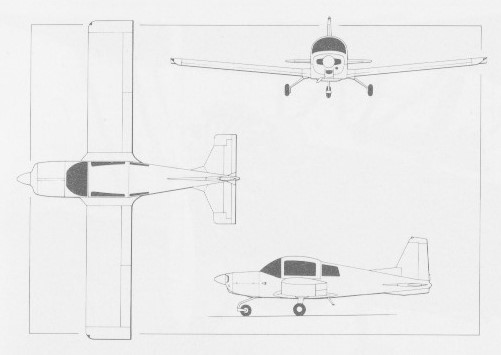
After the market success of the AA-1 Yankee Clipper American Aviation turned their attention to developing a four-seat aircraft in 1970-71. The American Aviation engineers started with a “clean sheet of paper” and designed a new aircraft. This aircraft was intended to be produced as the American Aviation AA-2 Patriot.
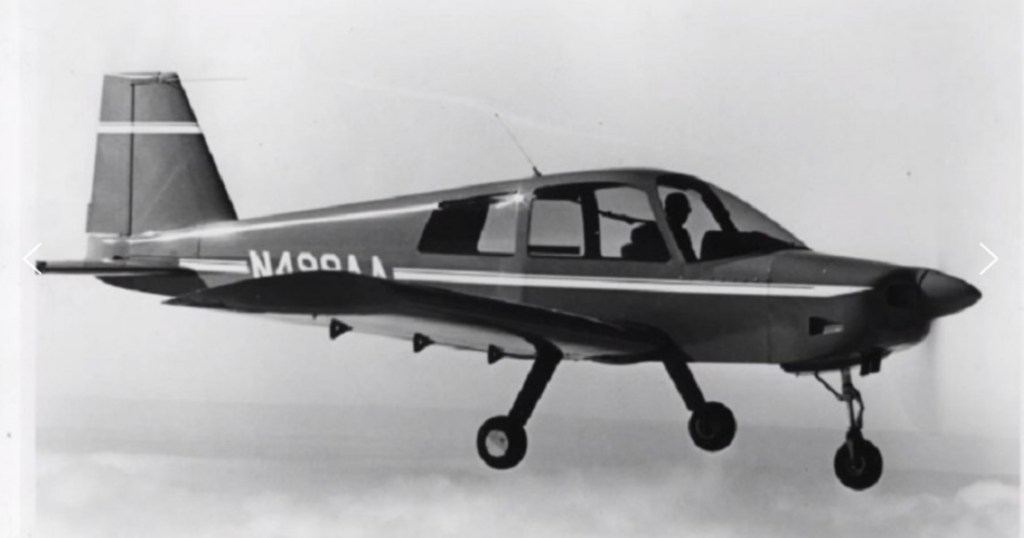
The resulting prototype bore very little family resemblance to the AA-1. The AA-2 was different from the AA-1 in that it had doors instead of the Yankee’s trademark sliding canopy and an oleo strut in place of the Yankee’s spring steel tube nose gear. The aircraft had provisions for retractable gear to be installed on a later version, although the prototype had fixed landing gear. The AA-2 was powered by a 180 hp (134 kW) Lycoming engine.
The prototype, registered “N488AA”, was completed in 1970 and test flying was commenced early in that same year. Aircraft performance during the test flying process fell far short of the design goals so the project was abandoned and the manufacturer eventually disassembled the prototype.
American Aviation made the decision to develop a stretched version of the AA-1 Yankee Clipper instead of pursuing the AA-2. This aircraft eventually was produced as the AA-5 Traveler and was later developed into the AA-5A Cheetah and the AA-5B Tiger.
The prototype has been recovered by members of the American Yankee Association.
Powerplant: 1 × Lycoming O-360-A1A, 180 hp (130 kW) Wingspan: 30 ft 0 in (9.14 m) Length: 23 ft 3 in (7.09 m) Max takeoff weight: 2,400 lb (1,089 kg) Useful load: 1100 lb Maximum speed: 135 kn (155 mph, 249 km/h) Cruise: 145 mph Range: 613 nmi (705 mi, 1,135 km) Crew: One Capacity: Three passengers