Back to Handley Page Hampden
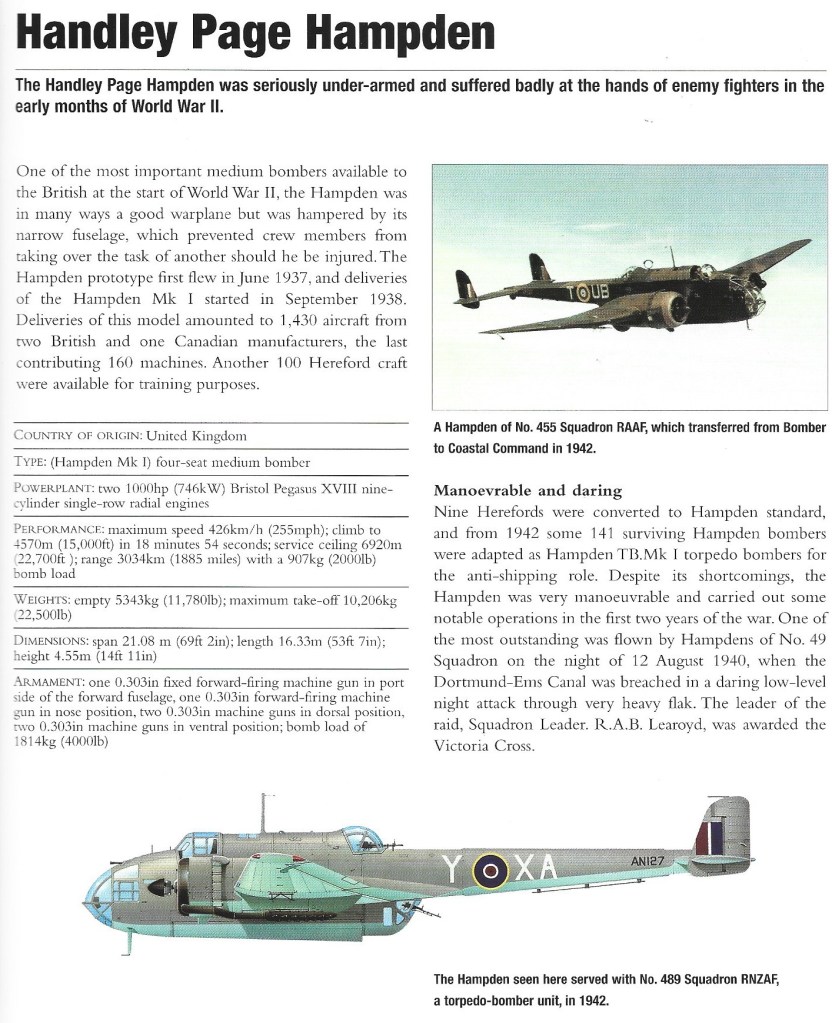

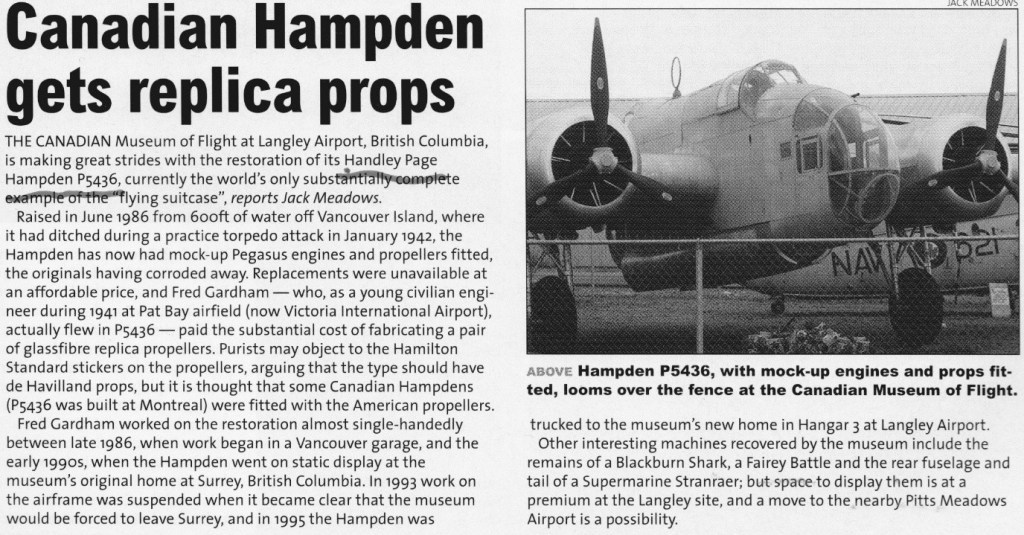
Gustav Lachmann took on the technical development of modern methods of aerodynamics and metal construction. His ideas were also incorporated into the H.P.52 Hampden.
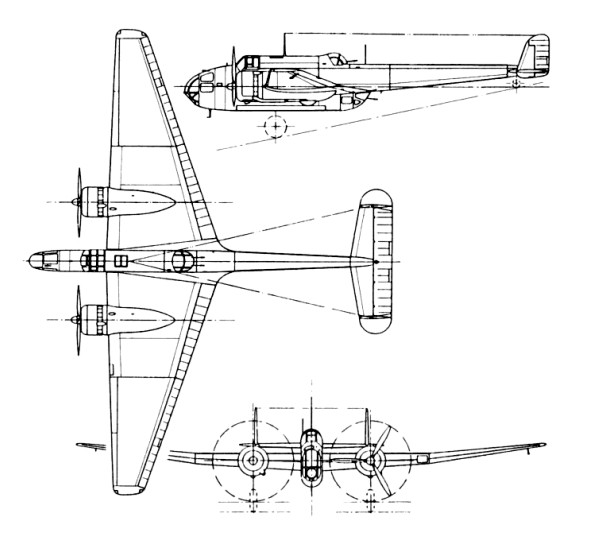
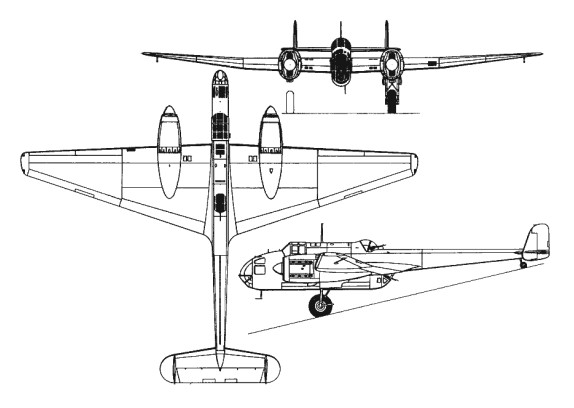
Built initially to Air Ministry Specification B.9/32, the Handley Page HP52 prototype, K4240, made its first flight on June 21, 1936.
Of conventional all-metal stressed-skin construction, the Hampden’s thick-section mid-set monoplane wings tapered both in chord and thickness. Handley Page slots on the leading edge of the wing outer panels, plus trailing-edge flaps, made possible a low landing speed. Accommodation was provided for a crew of four. Accommodation was provided for a crew of four. The fuselage was on 36in wide at its widest point.
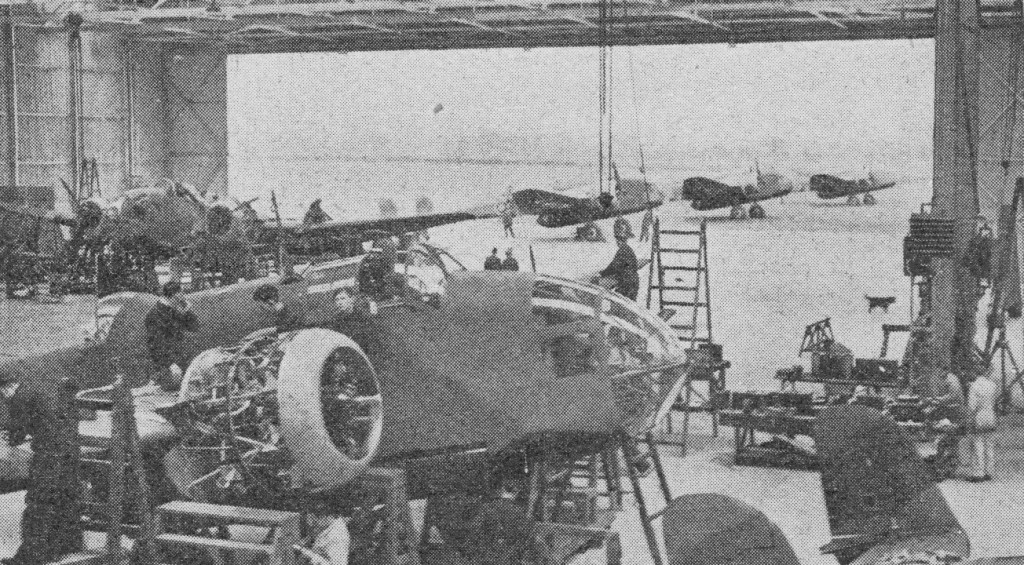
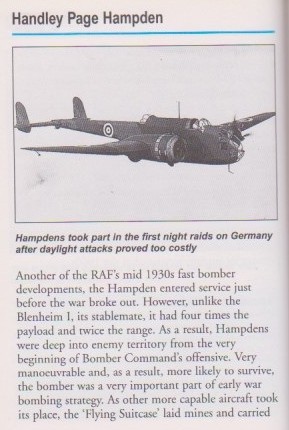
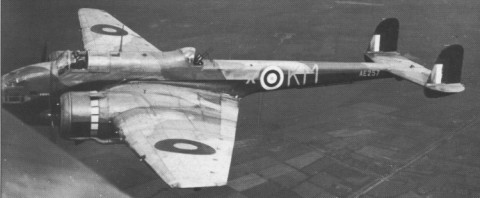
Seven weeks after the first flight, the design was put into production, and the first examples entered RAF service in the autumn of 1938, 49 Squadron being the first unit to fully reequip with the type. By September 3, 1939, the RAF possessed a total of 212 Hampdens (ten squadrons, including reserves) which represented almost 25% of Bomber Command’s offensive first-line bomber strength. Hampdens flew on operational sorties from the first day of the war, and during the first few months suffered high casualties in unescorted daylight bombing attacks against naval targets along the German coastline.
During operations, the Hampden proved to have serious deficiencies, particularly in its defensive armament, which consisted of five 0.303 inch machine guns. The fixed forward firing gun proved almost useless and the single guns in the nose, dorsal and ventral positions had limited transverse, leaving a number of blind spots. In addition, the cramped conditions led to crew fatigue on long flights, and it was almost impossible for crew members to gain access to each others cockpit in an emergency. Losses during early daylight raids were very heavy.
To improve the defensive armament, the dorsal and ventral positions were each fitted with twin Vickers K machine-guns. In addition, armor plate was installed and flame-damping exhaust pipes were fitted for night flying. Thus modified, the Hampden did useful work in Bomber Command’s night offensive from 1940 to 1942, taking part in the RAF’s first raid on Berlin and in the 1,000-bomber raid on Cologne.
Switching mainly to night bombing by early 1940, Hampdens became the chief exponent of ‘gardening’ sorties-sowing sea mines in enemy waters but continued to participate in Bomber Command’s nightly assault on Germany. In 1940 two Hampden crew members, Flight Lieutenant R A B Learoyd of 49 Squadron, and Sergeant John Harmah of 83 Squadron, were each awarded a Victoria Cross for valour during bombing operations.
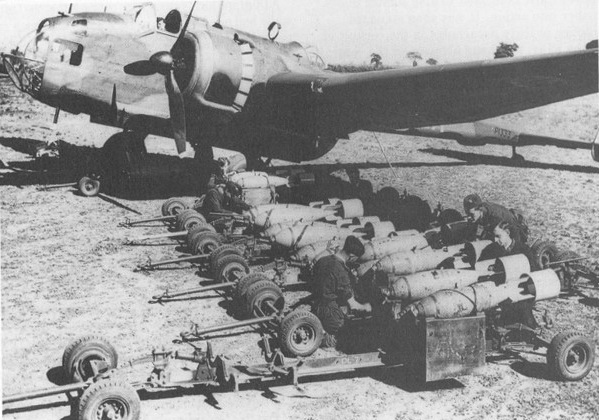
Though obsolescent for its intended role as a medium day bomber, and poorly armed for self defence against more modern enemy fighters, the Hampden continued in first line operational service with RAF Bomber Command until September 1942. In three years of operations as a pure bomber, Hampdens flew a grand total of 16541 individual sorties, dropping almost 10000 tons of bombs on German targets. In the same period, however, 413 Hampdens and their crews were lost in action. On February 1, 1942, a total of eight Hampden squadrons, all in No 5 Group, Bomber Command, were operational, though by the end of the year they had all converted to Avro Manchesters or Avro Lancasters. Retired as a bomber, the Hampden saw a further year’s first line service as a torpedo bomber with Coastal Command, equipping at least four squadrons before finally being withdrawn from operational roles in December 1943.
A total of 1584 Hampdens and its stablemate, the Hereford, was built and delivered to the RAF, equipping a total of 21 squadrons at some period of the war. A further 160 were built in Canada.
Hampdens were produced by The English Electric Co.
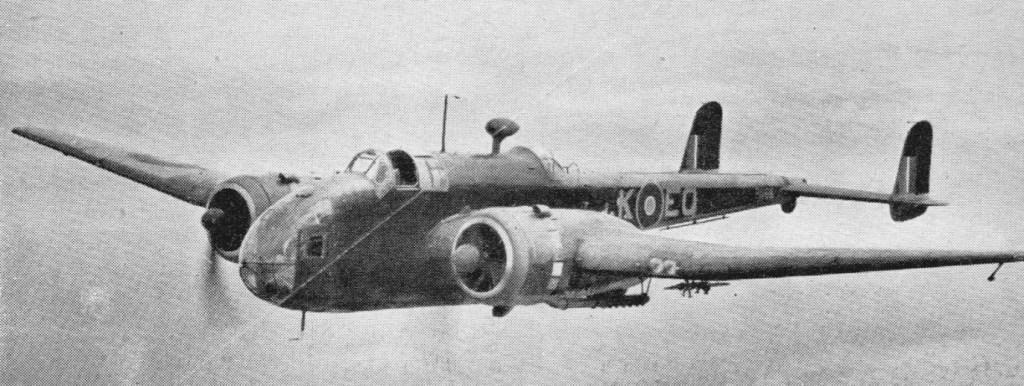
Nicknamed variously as ‘Hambone’, ‘Flying Suitcase’ and ‘Ferocious Frying Pan’, the Hampden was nevertheless popular with its pilots, due to its near fighter manoeuvrability and excellent all round vision field from the high forward cockpit. Internally, its very restricted space created no little discomfort for other crew members, while its poor defensive armament, comprising a single hand held machine gun in the nose and single or twin machine guns in ventral and dorsal positions, belied the original description of the design in 1936 as a ‘fighting bomber’. Nevertheless, the Hampden and its contemporaries, the Bristol Blenheim, Vickers Wellington and Armstrong Whitworth Whitley, all outdated for modern warfare by 1940, had to soldier on as Bomber Command’s only weapons during the first three years of the 1939 45 war, until heavier, four engined replacements became available in ample quantities in late 1943.
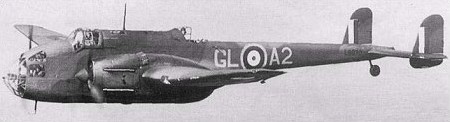
The Hereford bomber was a Napier Dagger-engined version of the Hampden, ordered as a back-up at the same time as the first Hampden production contracts. The noisy new inline engines overheated on the ground and cooled too quickly and seized in the air. Even routine maintenance was more complicated than that required for the Hampden’s Pegasus radials. There were no performance advantages from the new engines. Only a very small number of Herefords saw action (in Hampden squadrons). The rest were relegated to training units, soon followed by the marginally better Hampen.
The Hereford was distinguishable from the Hampden by its longer engine cowlings and greater dihedral on the outer wings.
The Hereford and Hampden had a single-pilot cockpit with a sliding canopy, which was sometimes left open in flight for the ‘wind-in-the-hair’ feel.
A total of 1,432 Hampdens were built, 502 of them by Handley Page, 770 by English Electric and 160 in Canada by the Victory Aircraft consortium. Of the 160 built, 84 were shipped by sea to Britain, while the remainder came to Patricia Bay (Victoria Airport) B.C., to set up No.32 OTU (RAF). Due to heavy attrition from accidents, a number of “war weary” Hampdens were later flown from the U.K. to Pat Bay as replacements.
Victory Aircraft Hampden
Engines: Two 1000 hp Bristol Pegasus XVIII engines
Maximum speed: 254 mph (409 km/h)
Empty weight: 11,780 lb (5,345 kg)
Loaded weight: 18,756 lb (8,505 kg)
Span: 69 ft 2 in (21.1 m)
Length: 53 ft 7 in (16.3 m)
Height: 14 ft 11 in (4.5 m)
Wing area: 668 sq ft (62.1 sq m)
HP 52 Hampden
Engines: 2 x Bristol Pegasus XVII, 746kW / 1000 hp
Wingspan: 21.1 m / 69 ft 3 in
Length: 17.0 m / 55 ft 9 in
Height: 4.6 m / 15 ft 1 in
Wing area: 62.0 sq.m / 667.36 sq ft
Max take-off weight: 8510 kg / 18761 lb
Empty weight: 5340 kg / 11773 lb
Max. speed: 408 km/h / 254 mph
Cruise speed: 350 km/h / 217 mph
Ceiling: 6900 m / 22650 ft
Range w/max.fuel: 3200 km / 1988 miles
Range w/max.payload: 1400 km / 870 miles
Armament: 4 x 7.7mm / 0.303 in machine-guns, 1800kg of bombs
Crew: 4
Hampden B.Mk I
Span: 21.08 m (69 ft 2 in)
Length: 16.33 m (53 ft 7 in)
Gross weight: 8508 kg (18760 lb)
Maximum speed: 426 km/h (265 mph)
Hampden TB.1
Handley Page HP 53 Hereford
Engines: 2 x Napier Dagger VIII, 986 hp / 746kW
Length: 53 ft 7 in / 16.33 m
Height: 14 ft 11 in / 4.55 m
Wing span: 69 ft 2 in / 21.08 m
Wing area: 668.014 sq.ft / 62.06 sq.m
Max take off weight: 17803.2 lb / 8074.0 kg
Weight empty: 11701.9 lb / 5307.0 kg
Max. speed : 230 kts / 426 kph / 265 mph
Cruising speed: 150 kts / 277 kph / 172 mph
Service ceiling : 19,000 ft / 5790 m
Wing load : 26.65 lb/sq.ft / 130.0 kg/sq.m
Range w/max.payload: 1043 nm / 1931 km
Crew : 4
Armament : 6x cal.303 MG (7,7mm), 1814kg Bomb.
Gustav Lachmann took on the technical development of modern methods of aerodynamics and metal construction, and went on to convert the H.P.43 biplane into the H.P.51, with a modern monoplane wing and aircooled engine nacelles. This led to the order for 100 of a production version, the H.P.54 Harrow.
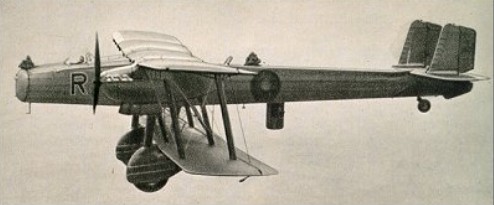
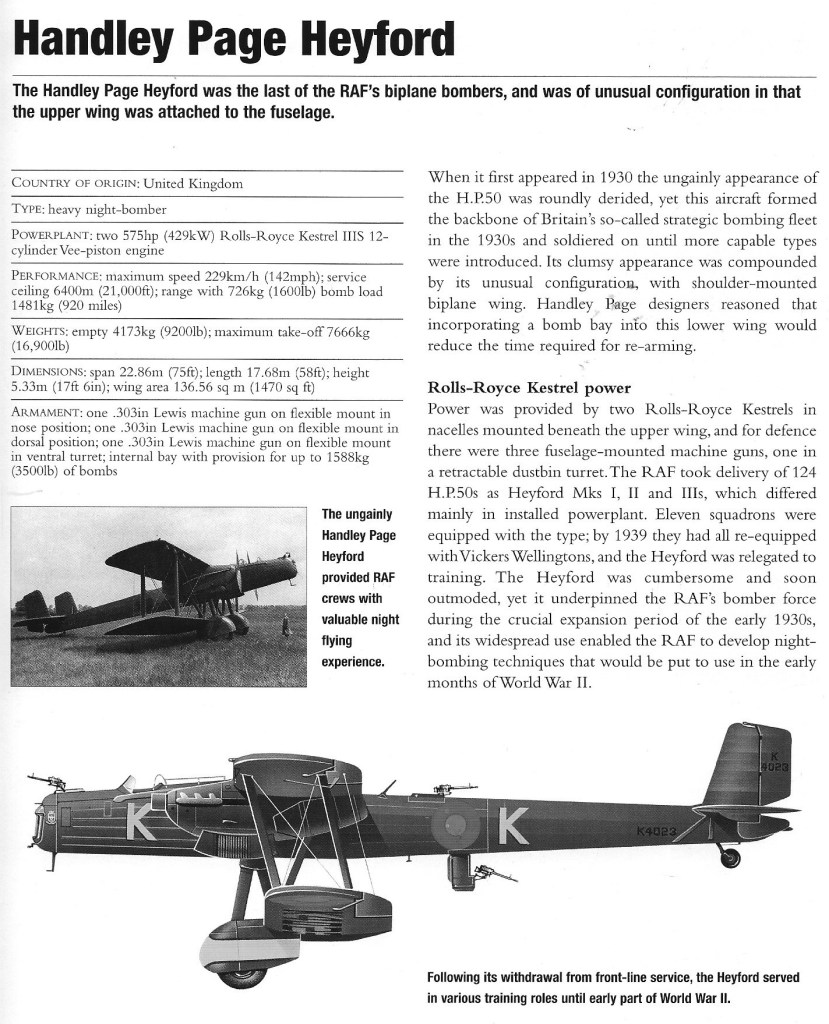
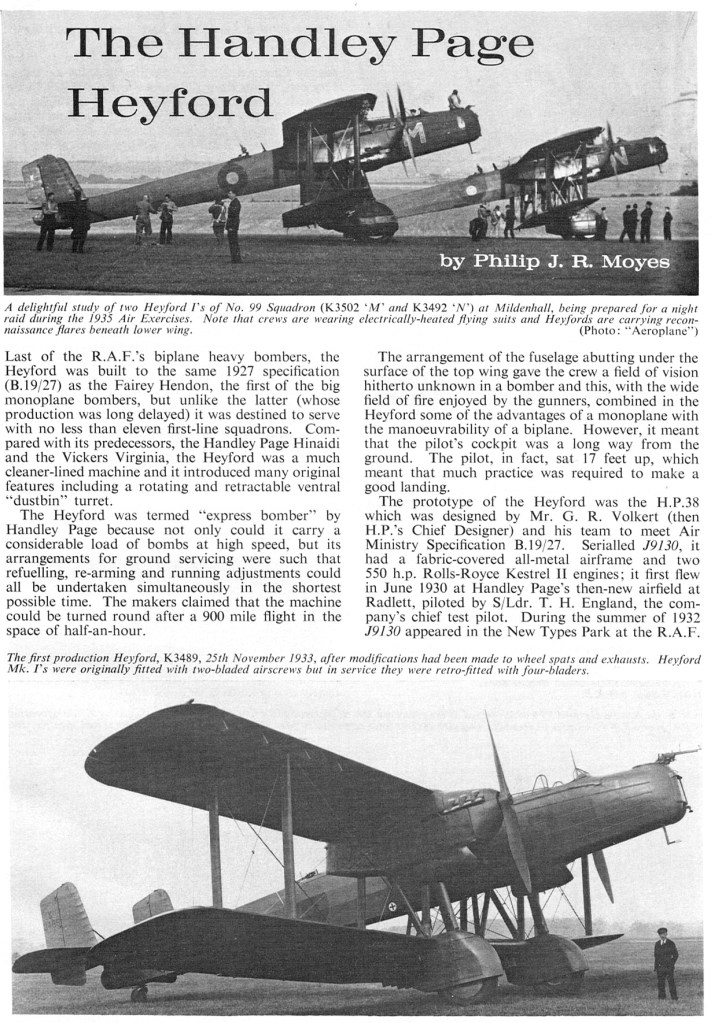
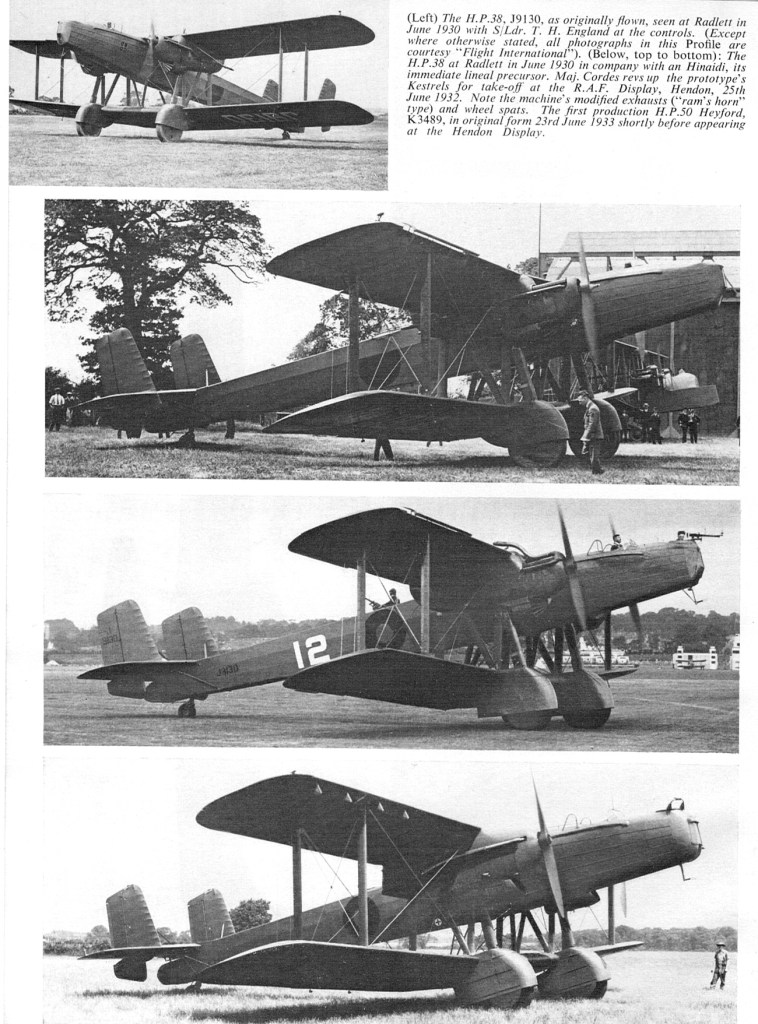
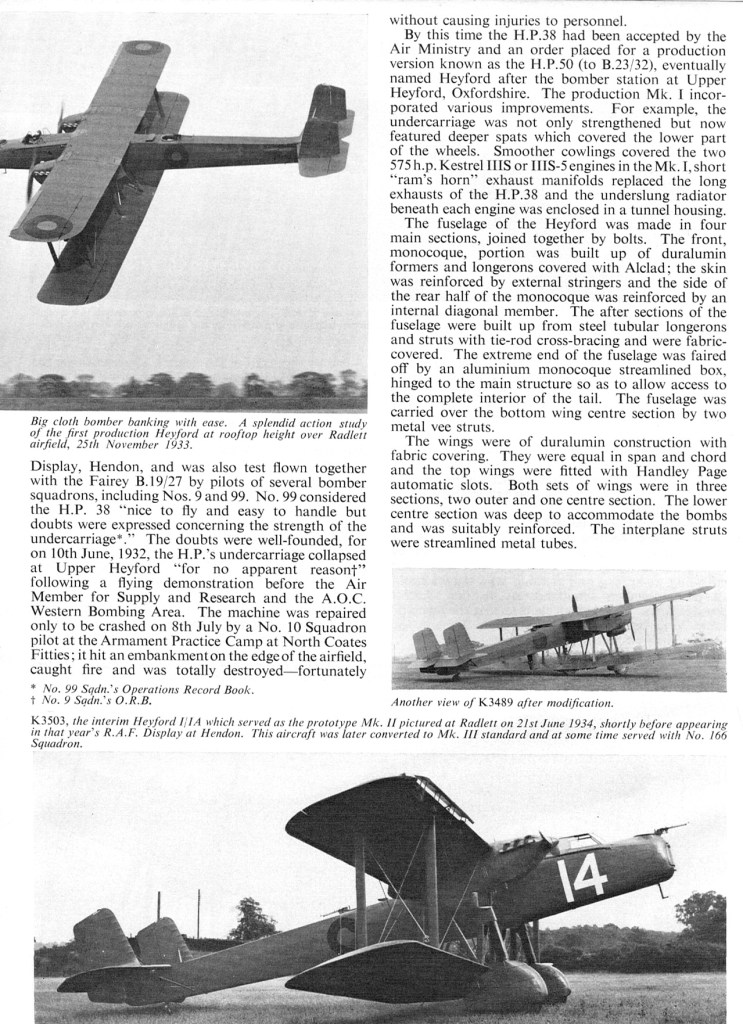
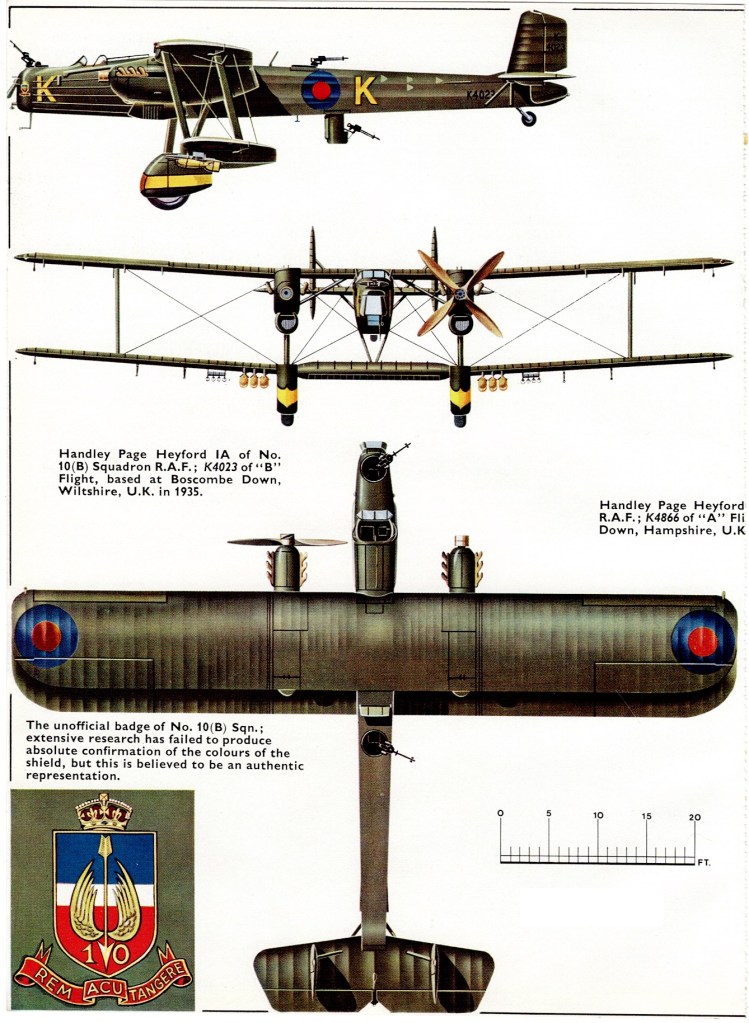
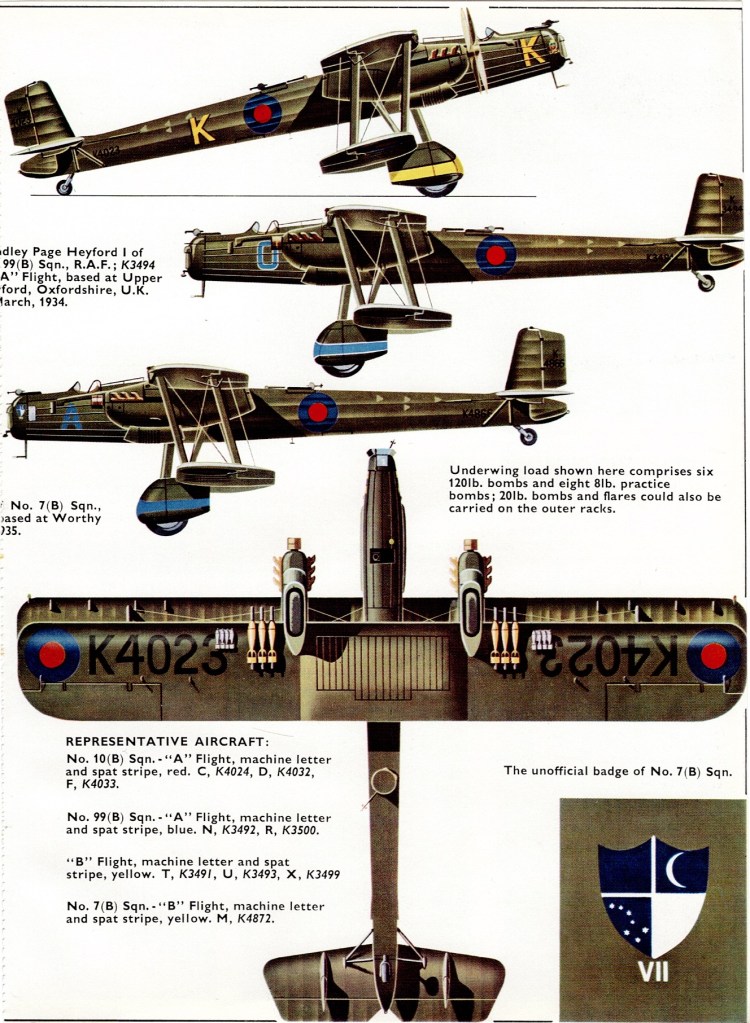
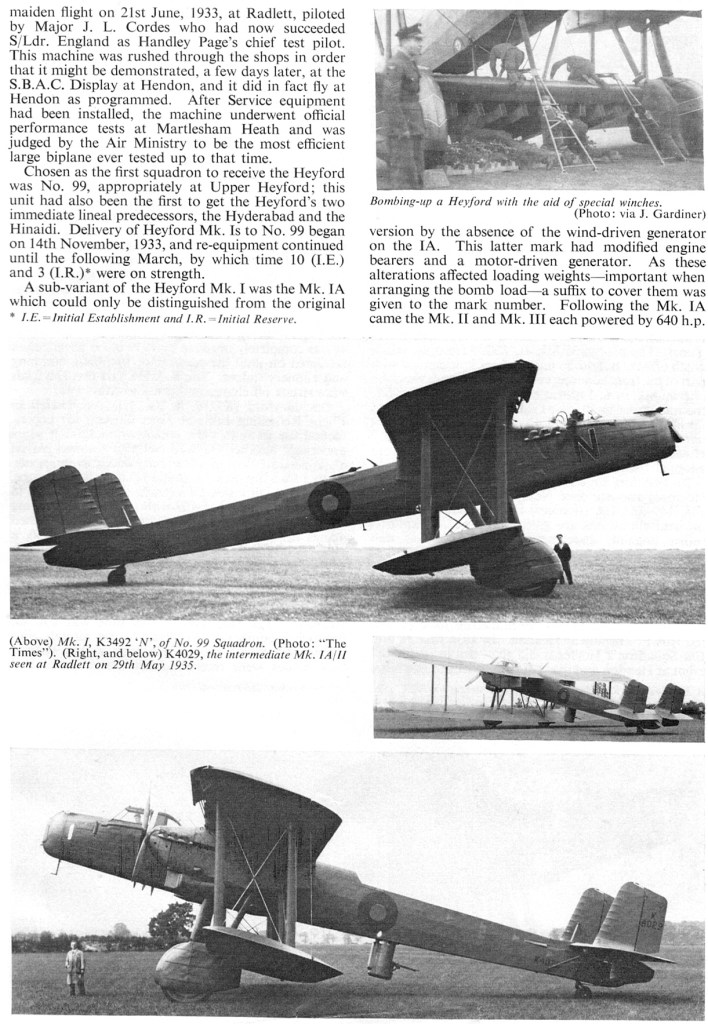
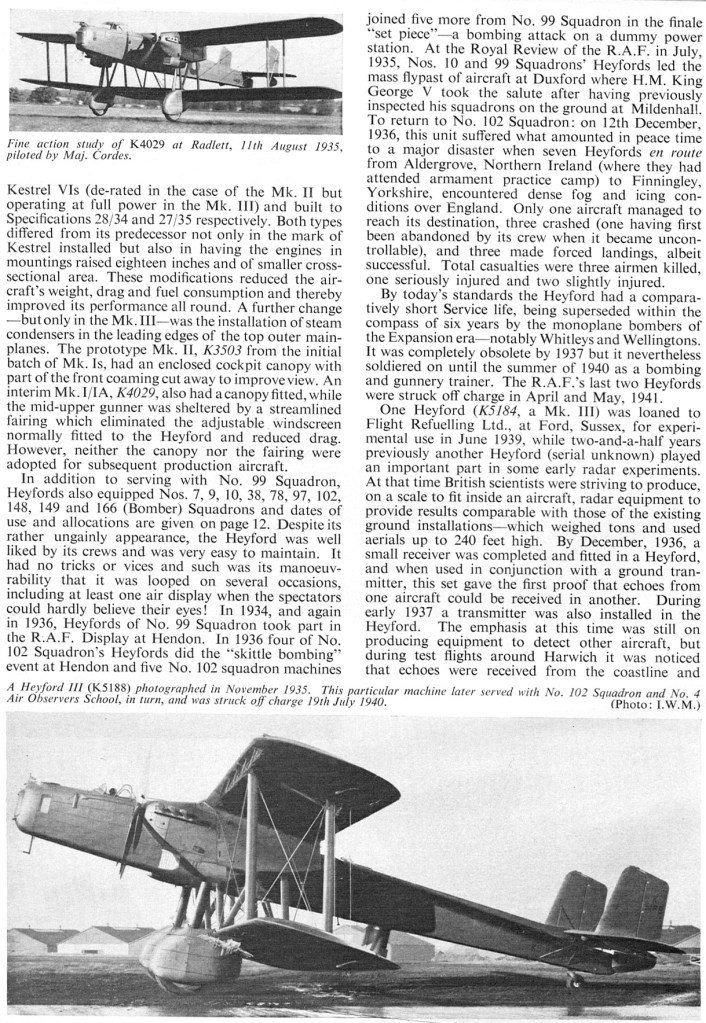
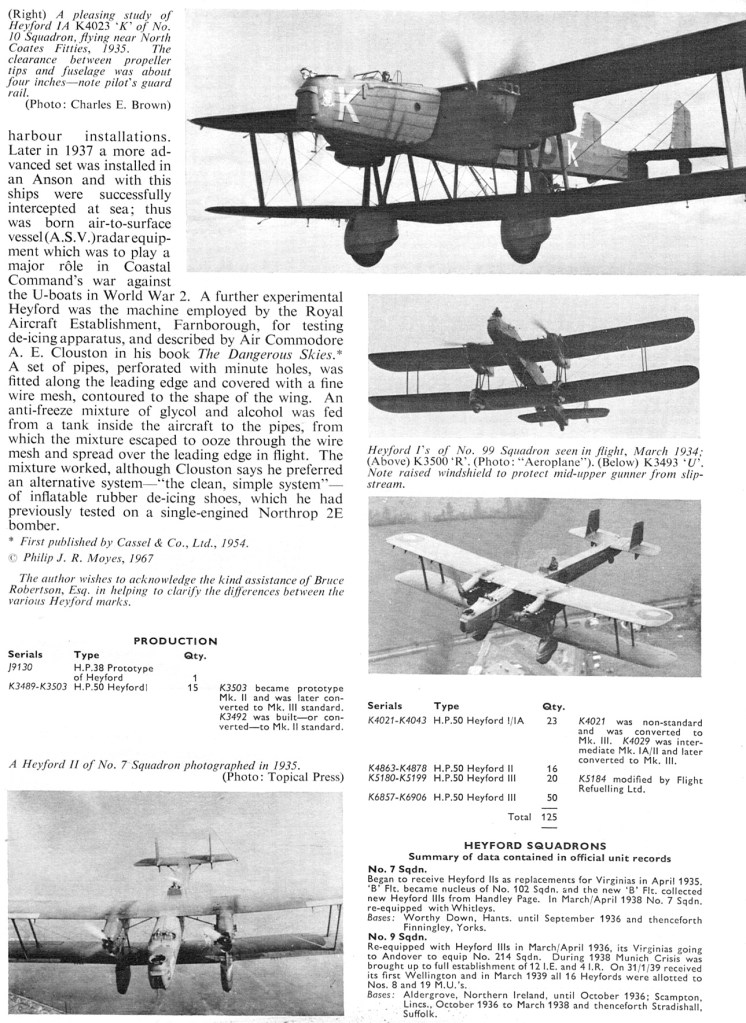
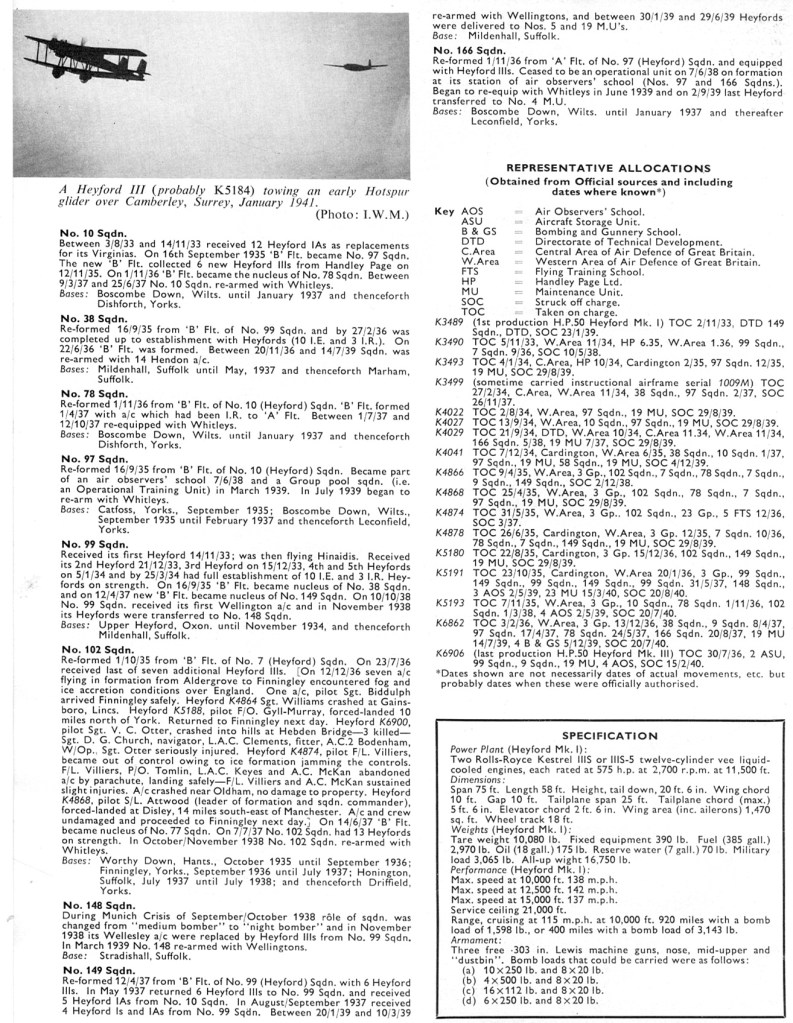
The Heyford was the RAFs last biplane heavy bomber, an unusual type with the fuselage attached to the undersurface of the upper wing and the centre section of the lower wing thickened for internal carriage of the bombload. The long main landing gear units were attached at their upper ends to the engine nacelles, while the wheel spats were attached at their rear to the lower-wing centre section. The Heyford prototype flew in June 1930, and production of 124 aircraft up to July 1936 comprised 38 Mk Is and Mk lAs, 16 Mk Is with de¬rated 391.2kW Rolls-Royce Kestrel VI engines, and Mk IIs and 70 Mk IIIs with fully rated 428.5kW Kestrel VI engines and four-blade propellers.
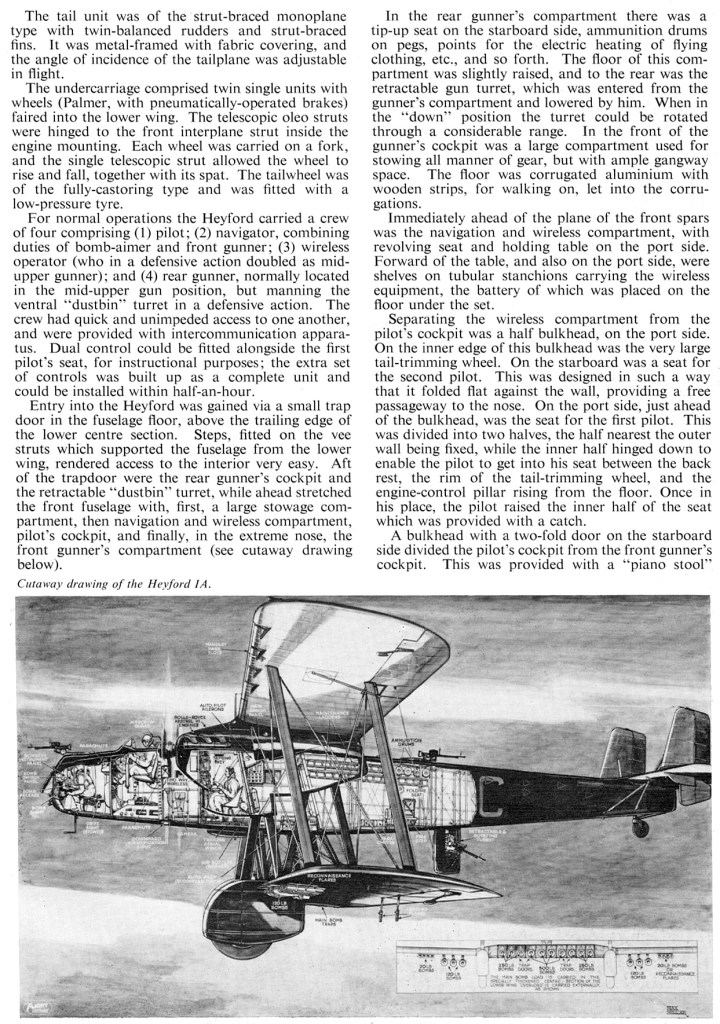
The Heyford was an equal-span biplane with staggered wings: the upper wing centre-section rested on top of the fuselage, while the lower was positioned well below the fuselage, connected to the under-fuselage by N-type struts. The inner interplane struts supported the engine mountings.
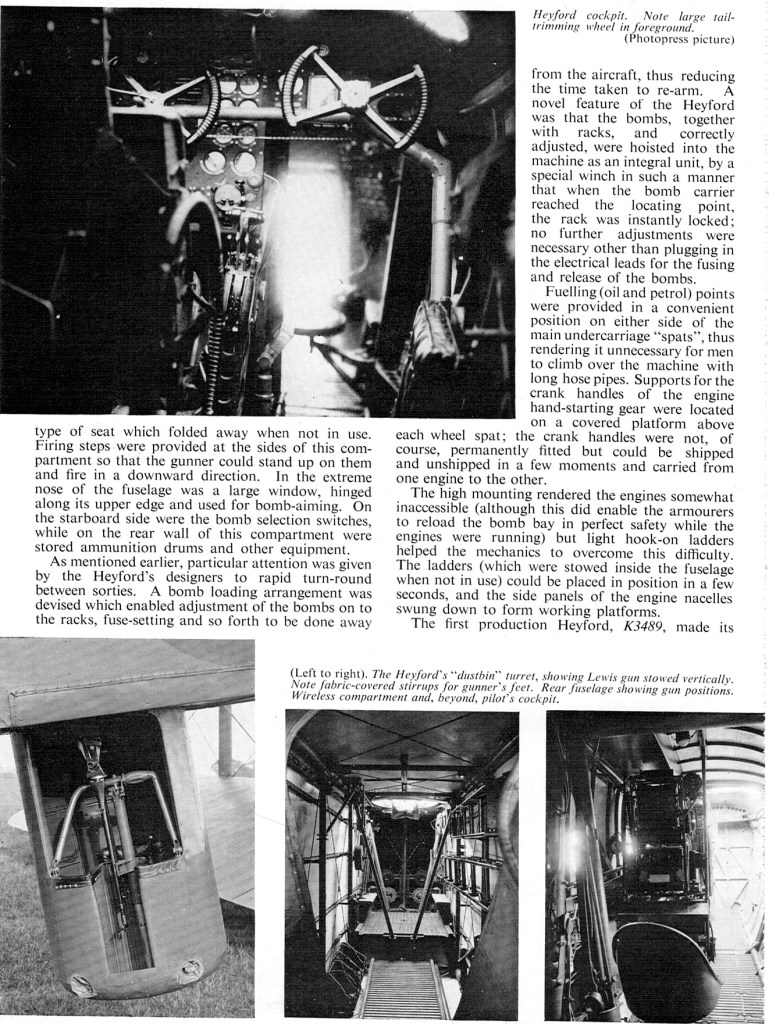
Bombs of various sizes were carried inside the thickened centre-section of the lower wing, each bomb being carried in a separate cell closed by spring doors. The fixed landing gear comprised two large wheels faired into the lower wing.
The nose and dorsal gun positions of the Heyford were equipped with Scarff mountings for their 0.303 in (7,7 mm) Lewis or Vickers guns.
Of the three versions of the Heyford, the Mks I, II and III, the visible differences are primarily in detail, including such items as alternative wheel pants, three and four bladed propellers, and varying radiator intake designs. The main bomb load was housed in the thickened centre section of the lower wing. Additional bombs were carried on external racks.
A total of 124 Heyfords were built, made up of 38 Mk I and IA, 1 intermediate Mk IA/II, 16 Mk II and 71 Mk III – including changes made from the original production orders.
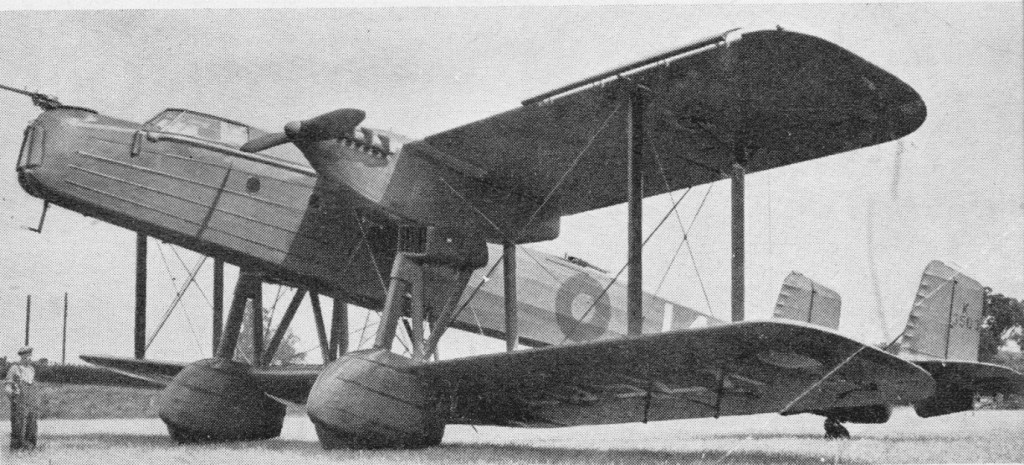
The type entered service in November 1933 with No 99 Sqn at Upper Heyford, and equipped a total of 11 squadrons before being phased out from 1937, removed from first-line service in 1939 and finally declared obsolete in July 1941.
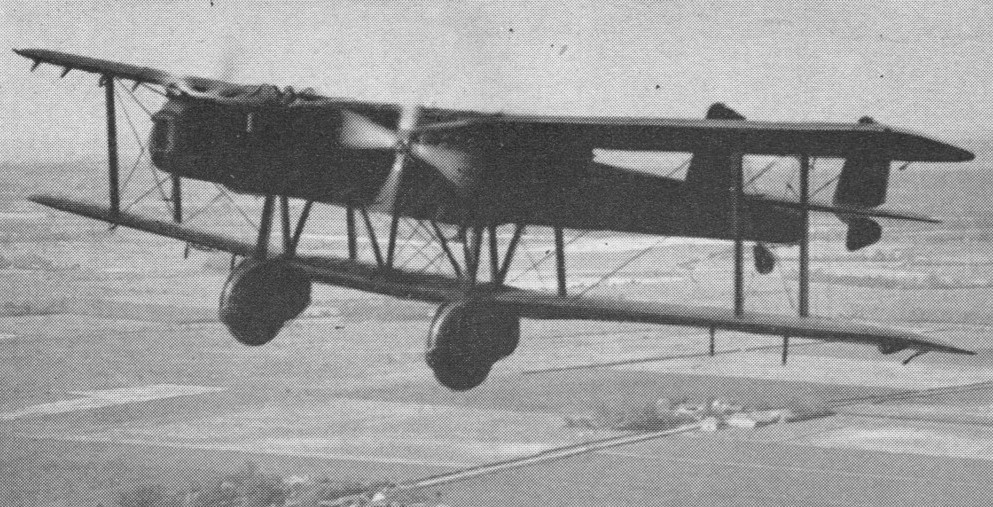
Heyford Mk IA
Engines: 2 x Rolls-Royce Kestrel IIIS, 429kW/ 575 hp
Span: 22.86m / 75 ft
Length: 17.68m / 58 ft
Height: 5.3 m / 17 ft 5 in
Wing area: 136.6 sq.m / 1470.35 sq ft
Empty weight: 4580 kg / 10097 lb
Max T/O weight: 7666 kg / 16,900 lb
Max. speed: 229 km/h / 142 mph at 13,000 ft
Ceiling: 6400 m / 21000 ft
Range: 1480 km / 920 miles with 726-kg (1,600-lb) bombload
Armament: 3 x 7.7-mm (0.303-in) mg, 1588 kg (3,500 lb) bombs
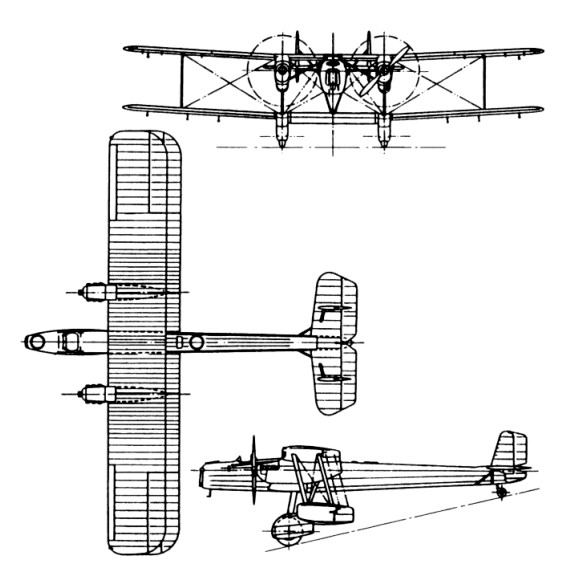
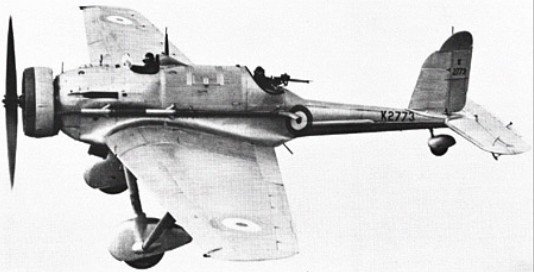
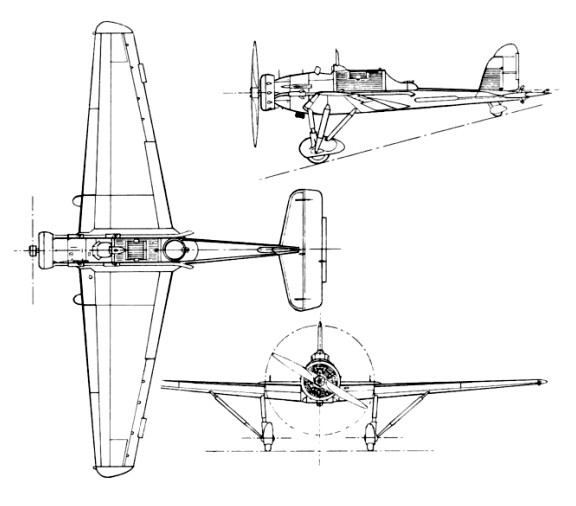
Air Ministry Specification G.4/31 called for a General Purpose aircraft, capable of level bombing, army co-operation, dive bombing, reconnaissance, casualty evacuation and torpedo bombing. The Vickers Type 253 won against the Fairey G.4/31, Westland PV-7, Handley Page HP.47, Armstrong Whitworth AW.19, Blackburn B-7, Hawker PV-4 and the Parnell G.4/31.
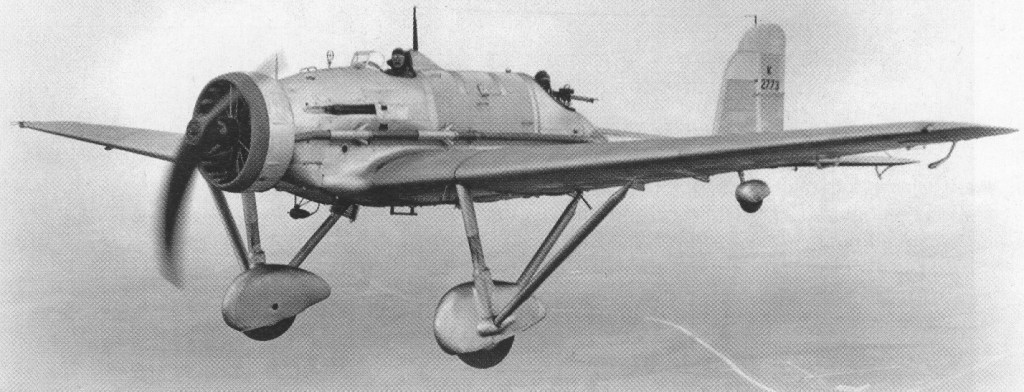
Gustav Lachmann took on the technical development of modern methods of aerodynamics and metal construction, resulting in the building and testing of the H.P.47. One prototype was built, first flown on 27 November 1933. No production was undertaken.
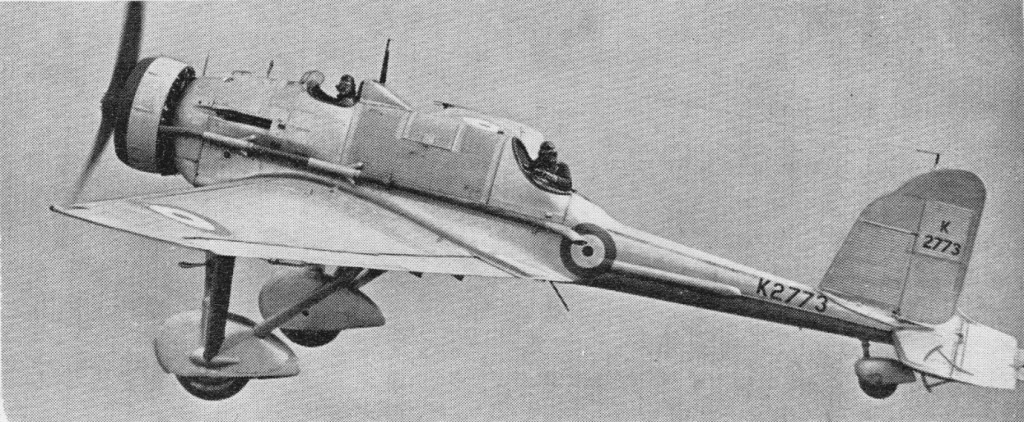
Engine: 1 x 660hp Bristol Pegasus III.M3
Max take-off weight: 4197 kg / 9253 lb
Empty weight: 2434 kg / 5366 lb
Wingspan: 17.68 m / 58 ft 0 in
Length: 11.46 m / 37 ft 7 in
Wing area: 40.69 sq.m / 437.98 sq ft
Max. speed: 259 km/h / 161 mph
Ceiling: 6066 m / 19900 ft
Range: 886 km / 551 miles
Armament: 2 x 7.7mm machine-guns, 2 x 227kg bombs or a torpedo
Crew: 2
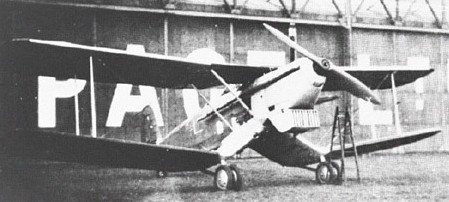
The HP46 was designed to specification M.1/30 for a two seat shipborne torpedo bomber. Powered by an 825 hp Rolls Royce Buzzard III, the HP 46 first flew on 25 October 1932.
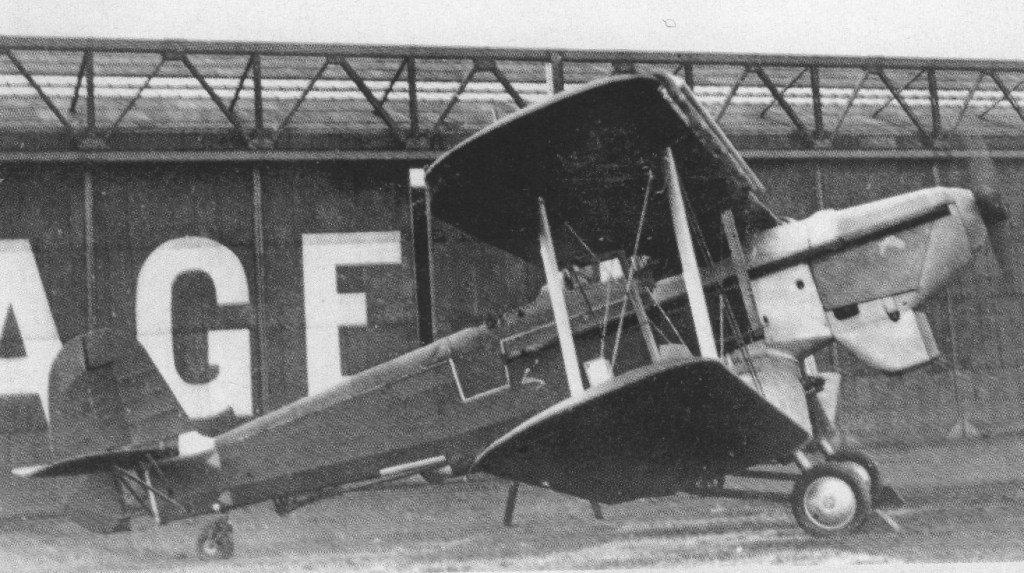
The company spent more than £36,000, on the HP46, nearly twice the contract price, but it only flew 5 hr 30 min and was condemned as too dangerous for deck flying. In April 1936 it left Radlett by road for farnborough and was never seen again.
Engine: 1 x 825hp Rolls-Royce Buzzard IIIS
Wingspan: 15.24 m / 50 ft 0 in
Length: 12.01 m / 39 ft 5 in
Wing area: 60.94 sq.m / 655.95 sq ft
Max take-off weight: 4812 kg / 10609 lb
Empty weight: 2838 kg / 6257 lb
Max. speed: 225 km/h / 140 mph
Armament: 2 x 7.7mm machine-guns, 1000kg of bombs or a torpedo
Crew: 2

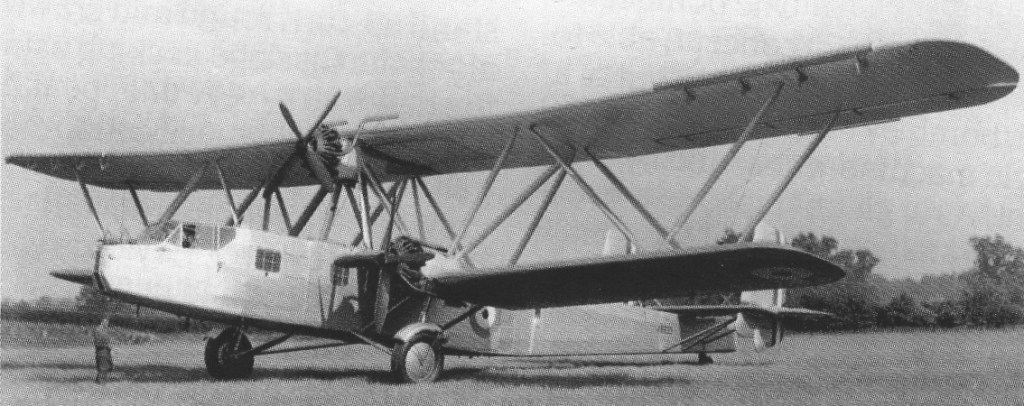
The HP.43 was tendered to specification C.16/28 for a three engined bomber / transport. Only one was built, J9833, with three uncowled Bristol Pegasus IM3 radial engines, and it first flew on 21 June 1932.
It had heavy and badly harmonised controls and poor performance, and was converted into the HP.51 twin engined monoplane to C.26/31.
Derived from the Hanibal, it had the same wings, with a new fuselage.
Gustav Lachmann took on the technical development of modern methods of aerodynamics and metal construction, and went on to convert the H.P.43 biplane into the H.P.51, with a modern monoplane wing and aircooled engine nacelles. This led to the order for 100 of a production version, the H.P.54 Harrow.
Back to Handley Page HP.42 / HP.45