Back to Handley Page (Reading) HPR-3 Herald / HPR-7 Herald


Back to Handley Page (Reading) HPR-3 Herald / HPR-7 Herald

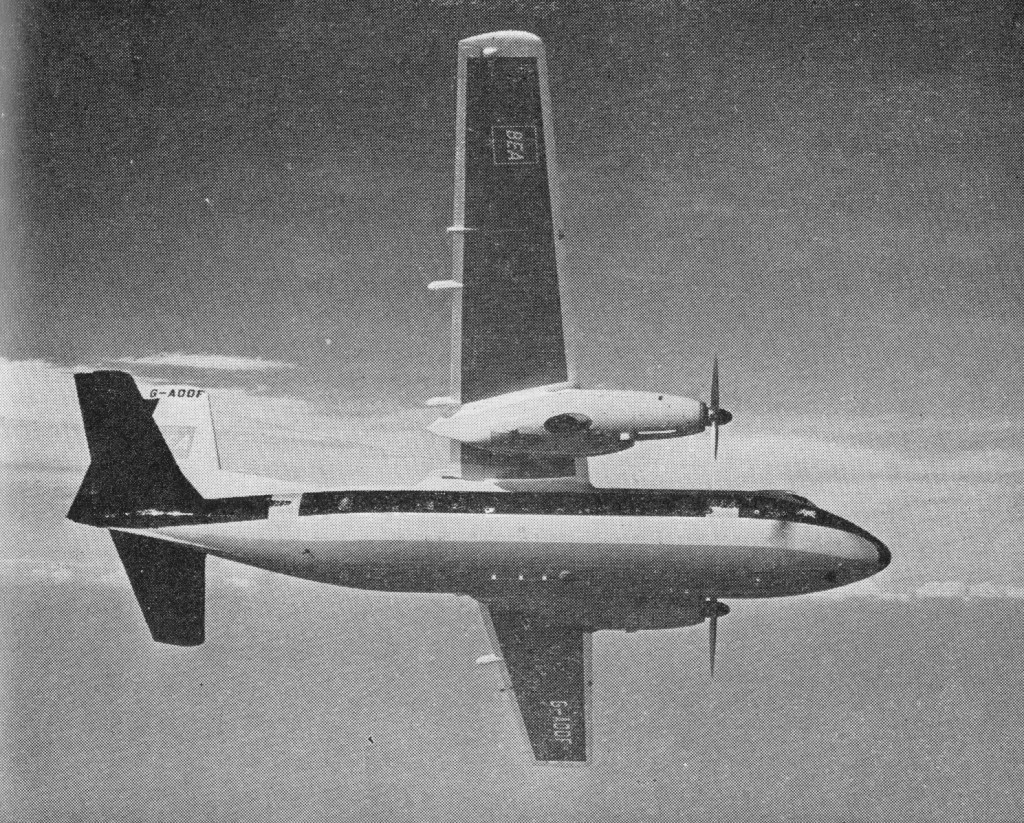
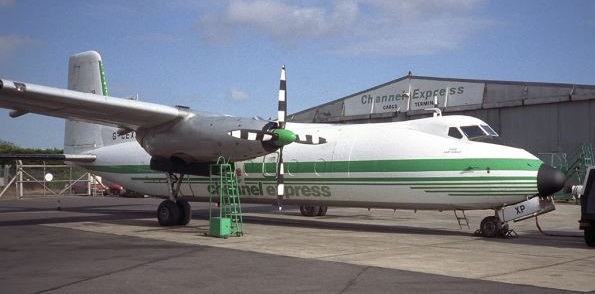
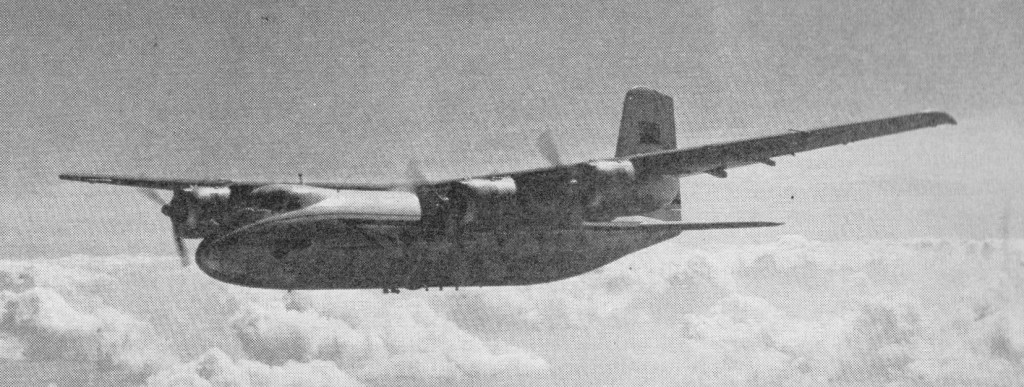
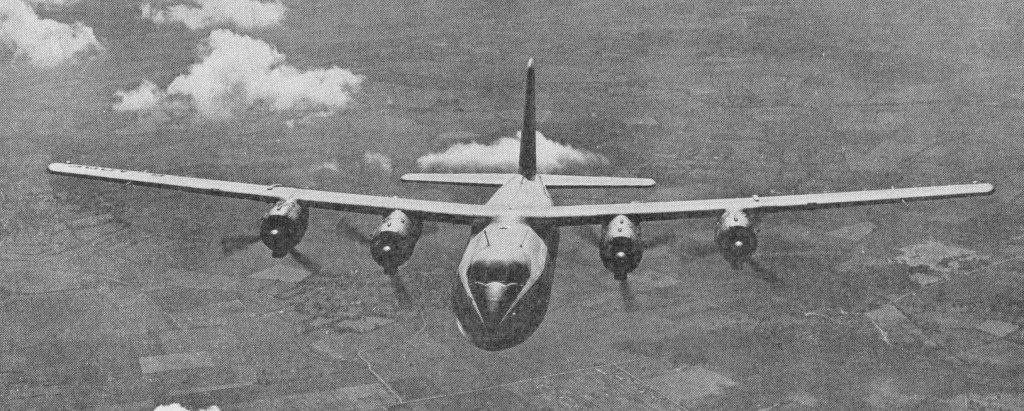
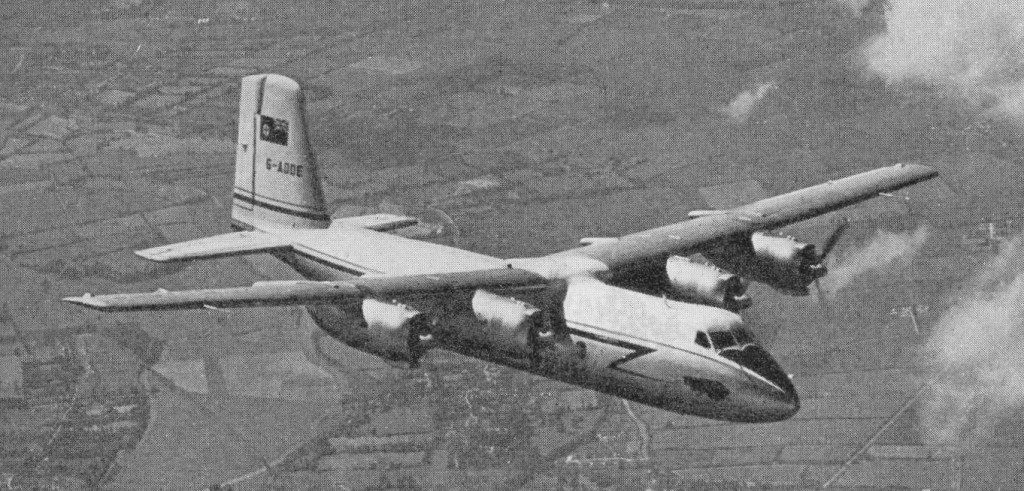
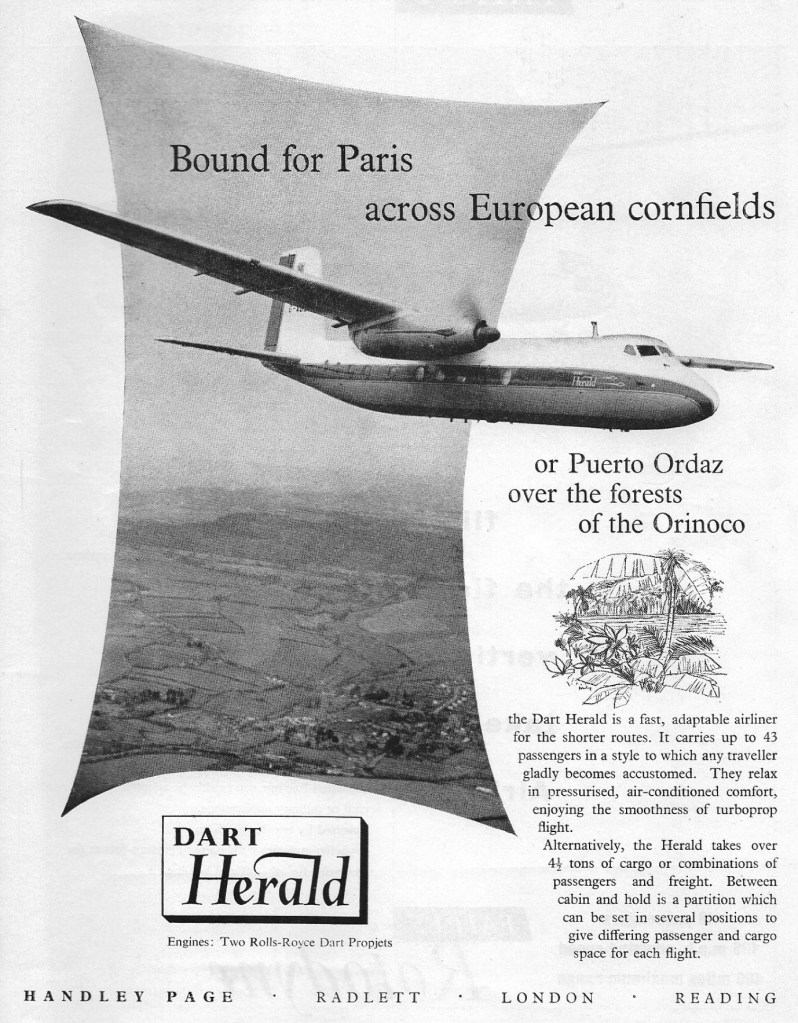
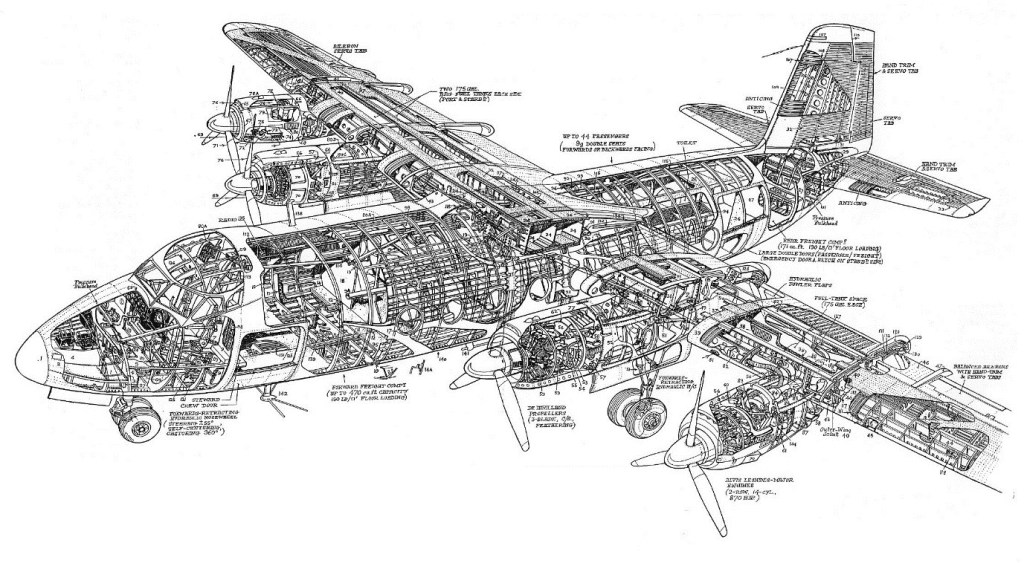
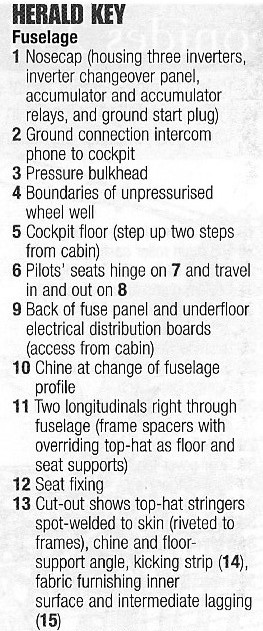
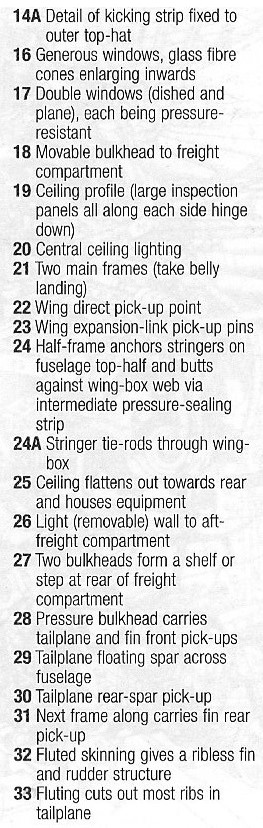
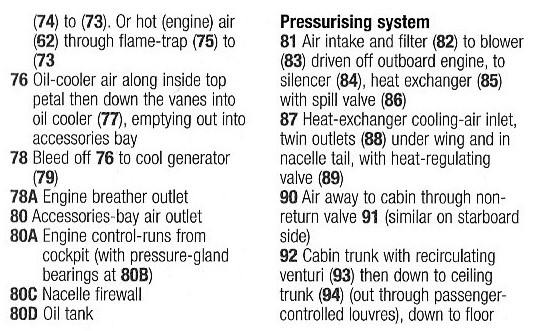
A medium sized transport designed to take the place of the DC 3, the Handley Page HPR 3 Herald design shows an essentially straight forward approach ¬with four piston engines, a high wing layout and a fuselage designed to carry 44 passengers, freight, or mixed loads. It is to be pressurized to a relatively low differential, and will carry a full payload of 10,705 lb. for a no reserve range of 350 st. miles, or 4,650 lb. for a full tank range of 2,050 miles.
Two prototypes were being built in 1954.
Handley Page (Reading) HPR-3 Herald / HPR-7 Herald Article
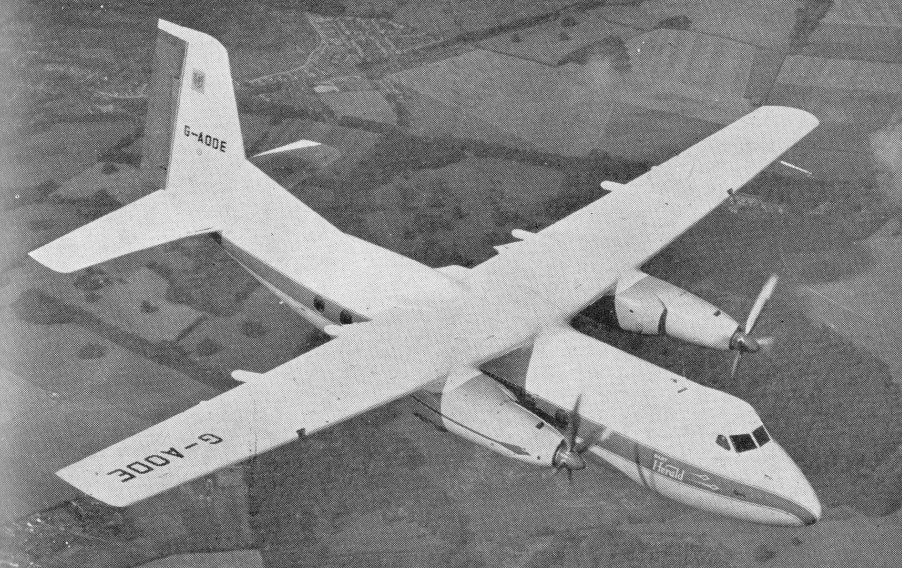
The first Herald, G-AODE, flew on 25 August 1955 from Radlett, powered by four Alvis Leonides piston engines. Airborne for 30 minutes, the pilot was H.G.Hazelden. It appeared at that years SBAC Display.

The first Handley Page Herald completed 125 hours flying in a year and received a Special Category of C of A in 1956.
By 1956 the Herald had been ordered by Queensland Airlines, Australian National Airways, Lloyd Aereo Colombiano and Air Kruise.
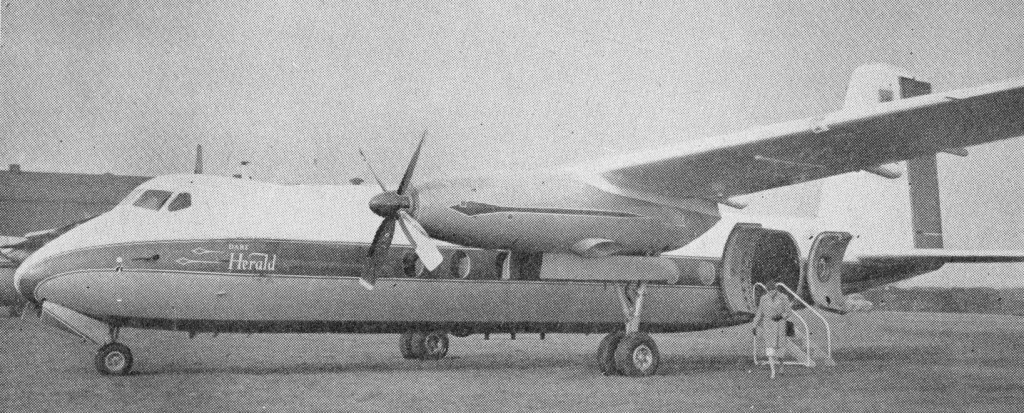
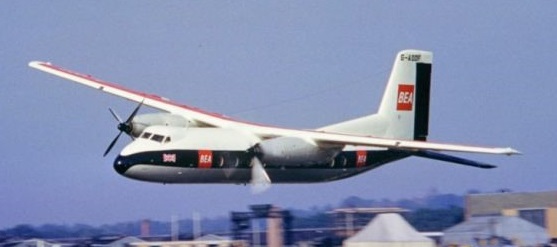
The prototype Dart-engined Herald made its first flight on 11 March 1958 and the first production Herald Series 100 flew on 30 October 1959. The Series 100 accommodated between 38 and 47 passengers. The Series 200 was the main production version with a forward fuselage 1.07m longer than that of the Series 100. Accommodation was provided for 50-56 passengers. Powered by two Rolls-Royce Dart 527 turboprops of 2,150 shaft hp, its maximum cruise speed is 274 mph.
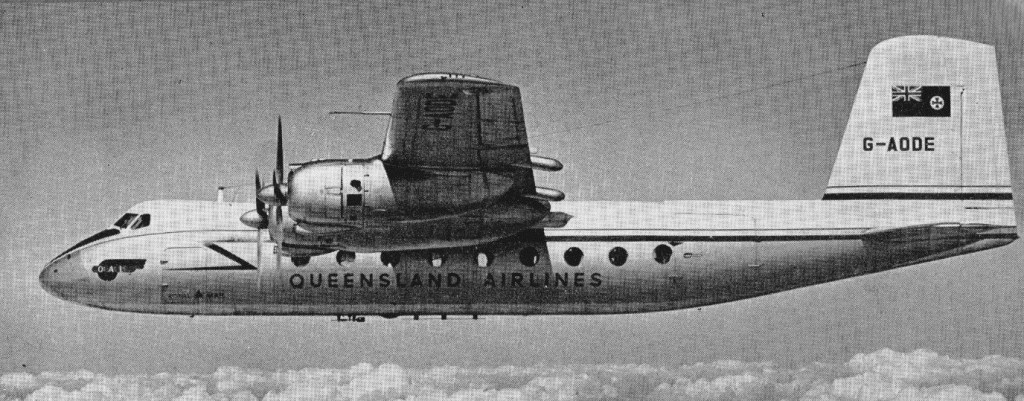
In 1960 Handley Page were offering both the Leonides Major and Dart powered versions.
The Series 300 (a modified Series 200 developed to meet US airworthiness requirements) was followed by the Series 400 military transport with a side loading door and accommodation for 50 troops, paratroops, 24 stretchers or freight, eight of which went to the Royal Malaysian Air Force. The projected Series 500 was followed by the Dart 532/9 turboprop-engined Series 600.
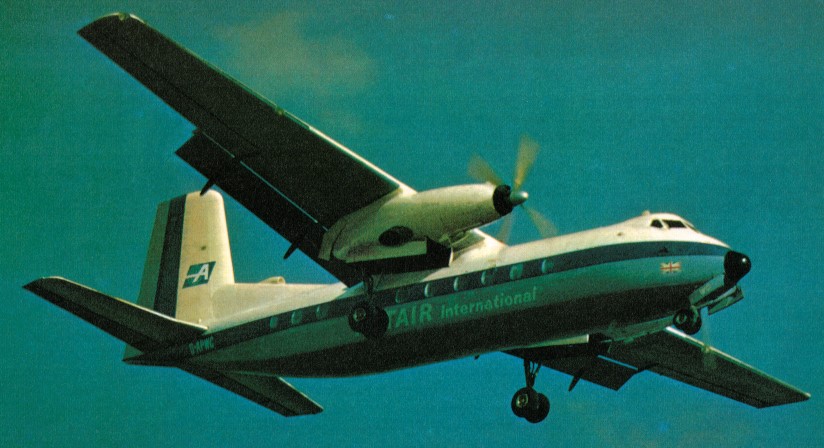
The final two versions were the Series 700 long-range version of the Series 600, accommodating up to 60 passengers or 52 passengers and baggage over 1,980km stages, and the Series 800 military version of the 700.
By 1958, when they offered an alternative version powered by Rolls-Royce Dart turboprops, the Fokker F 27 had cornered the market. Only 48 aircraft were produced.
HP(R) HP.3 Herald
Engines: 4 x Alvis Leonides Major, 850 bhp
Wingspan: 95 ft
Length: 70 ft 3 in
Mauw: 34,000 lb
Max speed: 263 mph
HP Herald Srs 200
Powerplant: two Rolls-Royce Dart RDa.7 M1k. 527 turboprops, 1570kW / 2105 ehp
Propellers: Rotol four-blade, fully feathering 12 ft 6 in diameter
Wingspan, 94 ft 9 in / 28.88 m
Length, 75 ft 6 in / 23.01 m
Height, 24 ft 1 in / 7.34 m
Gross wing area, 82.31 sq.m / 886 sq.ft
Max. usable floor area, 283 sq.ft
Max. usable volume, 1802 cu.ft
Max. cabin length, 54 ft 0 in
Max. width, 8 ft 8.25 in
Max. height, 6 ft 3.75 in
Accommodation: 50 passengers at 30.5 in pitch; 56 at 30 in pitch.
Basic operational 25,758 lb
Total fuel, 8640 1b
Max. take-off with 5 deg flap, 41000 lb
Max. landing, 39,500 lb
Max. payload, 11,242 lb
Max. zero fuel, 37,500 lb
Power loading (max. take-off weight), 10.2 lb/ehp
Wing loading (max. take-off weight), 48.5 lb/sq.ft
Wing loading (max. landing weight), 44.5 lb/sq.ft
Max level speed: 275 mph / 443 kph
High-speed cruise, 237 kt. at 15,000 ft
Long-range cruise, 230 kt. at 23,000 ft
Approach speed, 89 kt
Ceiling: 8500 m / 27900 ft
Take-off field length, ISA at sea level, 5000 ft
Landing field length, ISA at sea level, 3575 ft
Range, no reserves, ISA with max fuel, 8602 lb payload, 1 500 nm
Range w/max.payload: 1786 km / 1110 miles
Crew: 2
Passengers: 50-56




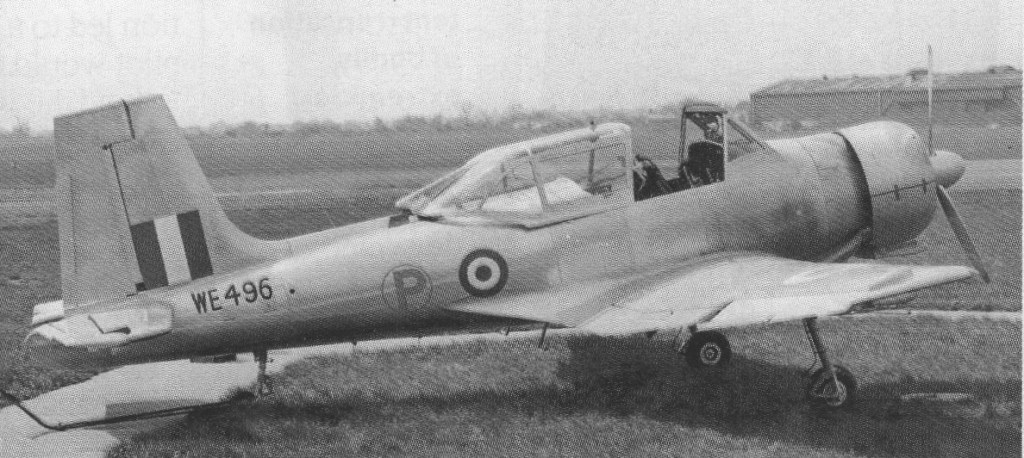
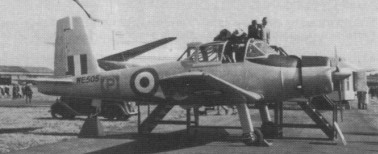
Competing with the Percival Provost for an RAF order circa 1950, two HPR-2 basic trainers were built. Seating two side by sice and powered by an Armstrong Siddeley Cheetah 17 radial, the original canopy generated too much turbulence and had to be replaced.

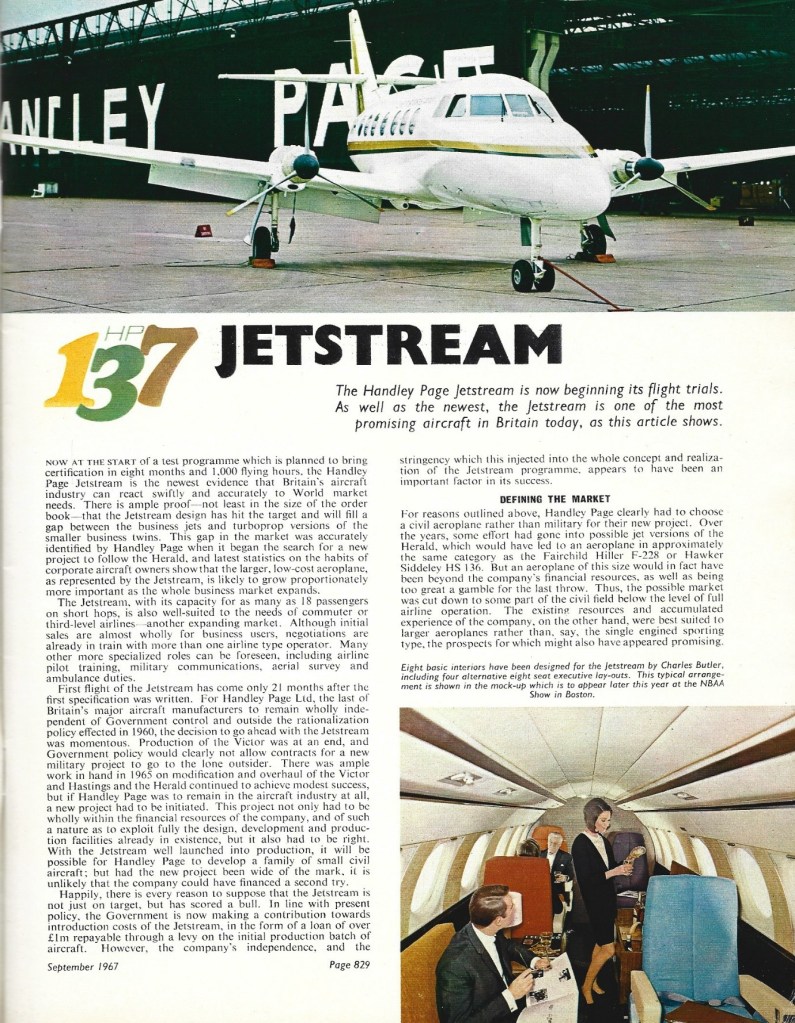
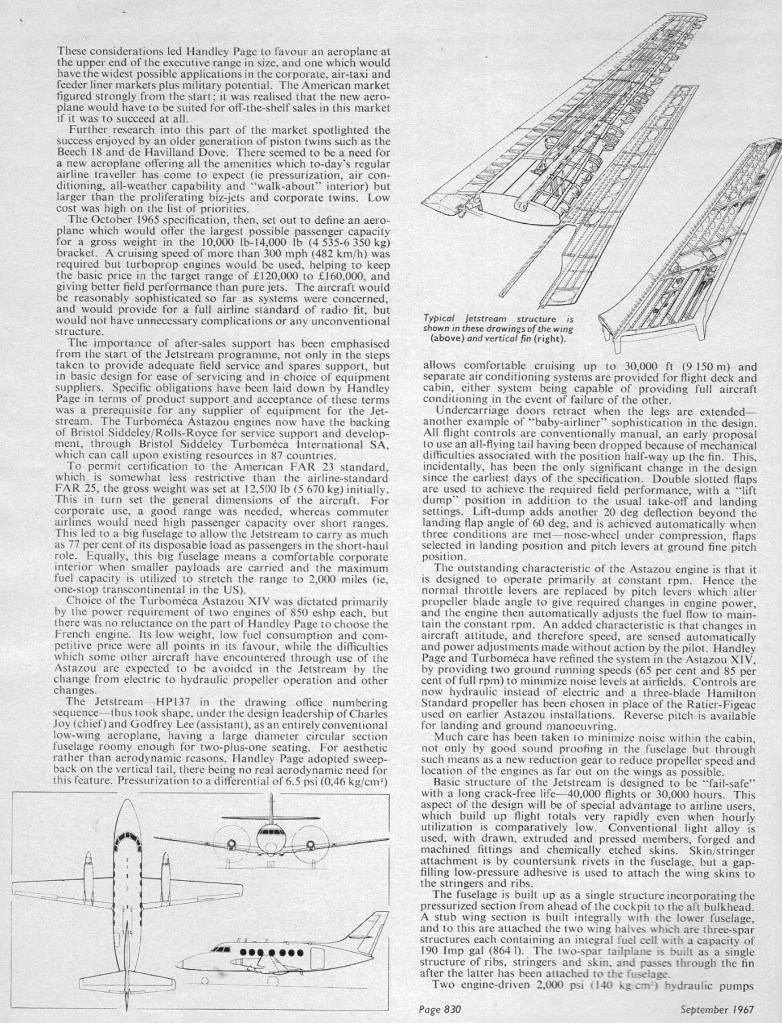
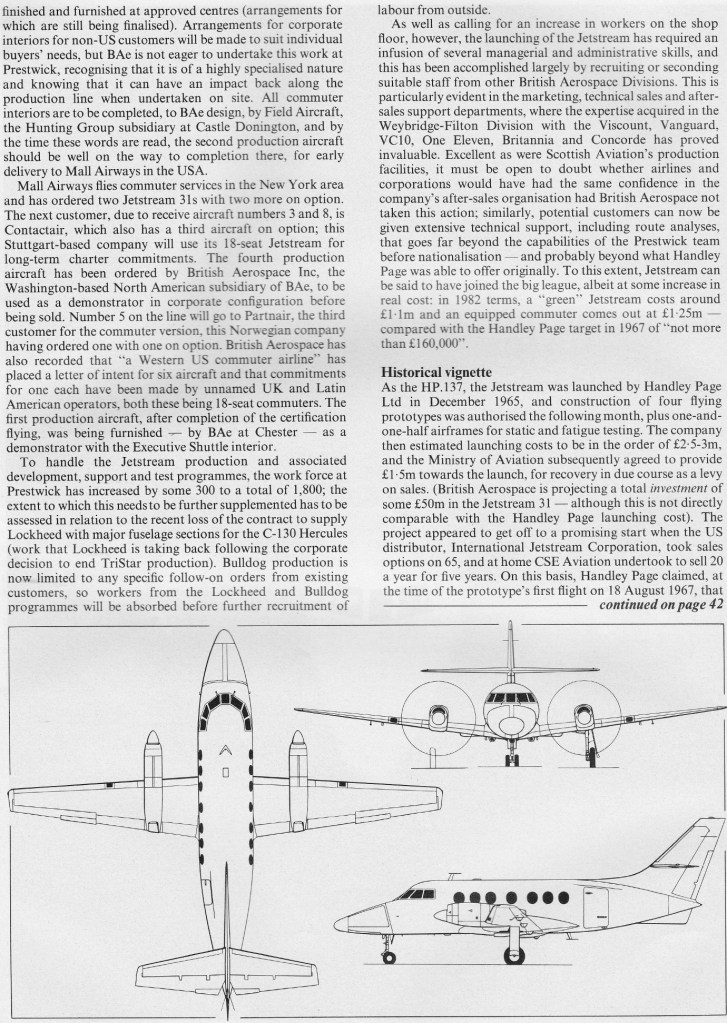
In 1966 feasibility and market studies revealed a definite market for a medium-sized turboprop mini-airliner for commuter and executive use. The H.P.137 Jetstrearn was launched, attracting nearly 200 orders and options in the first year. It even won the United States Air Force contest for the C- 10A transport. But it was a difficult aircraft for a firm used to large and expensive military designs, and development was prolonged. Its airworthiness category imposed a nominal limit in all-up weight which severely affected range/load performance. This was improved with the advent of higher-power engines and a change in category, which allowed take-off weight to rise to the level for which the Jetstream was designed.
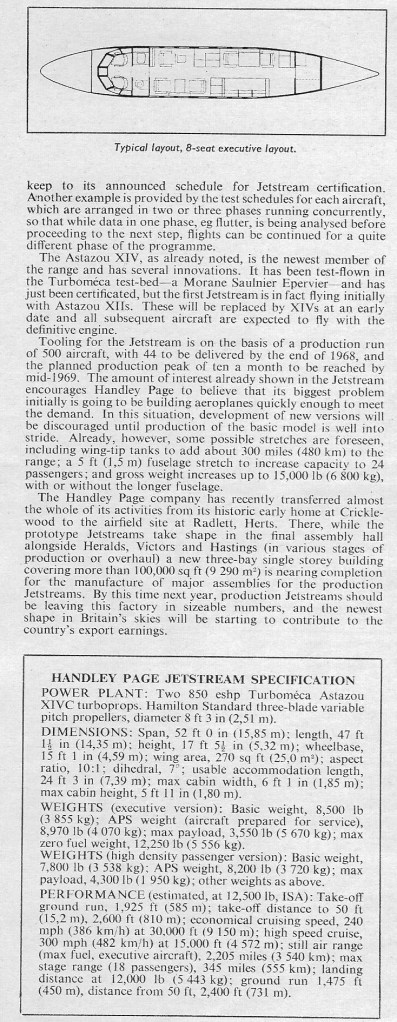
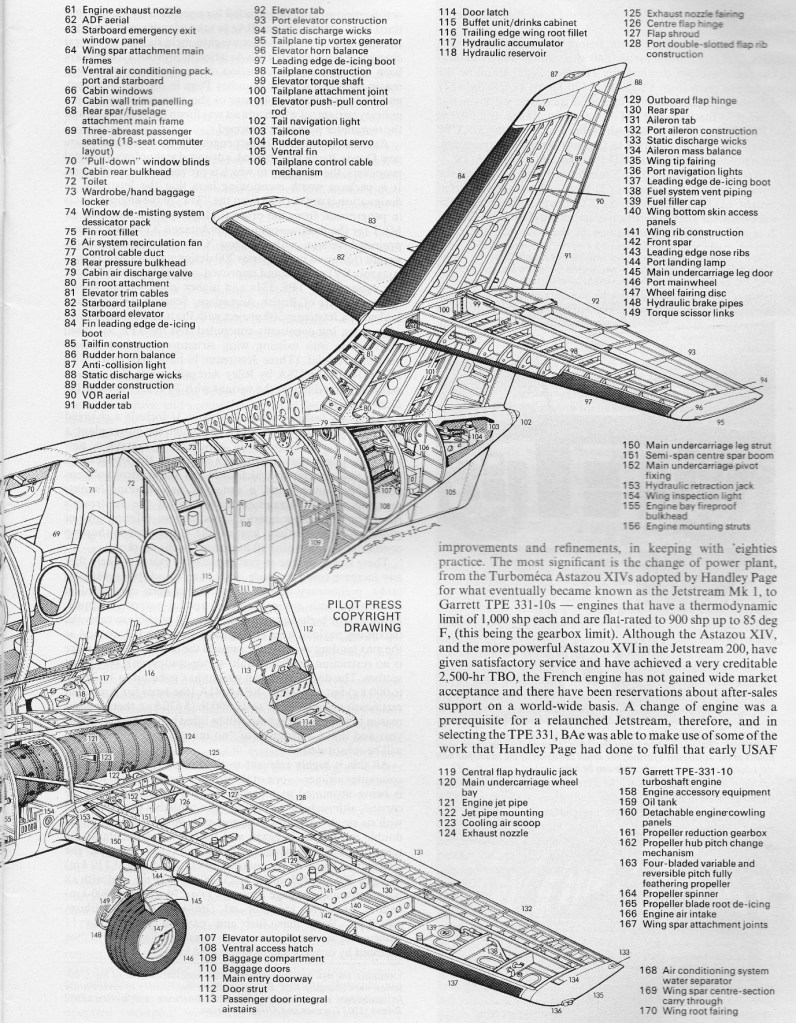
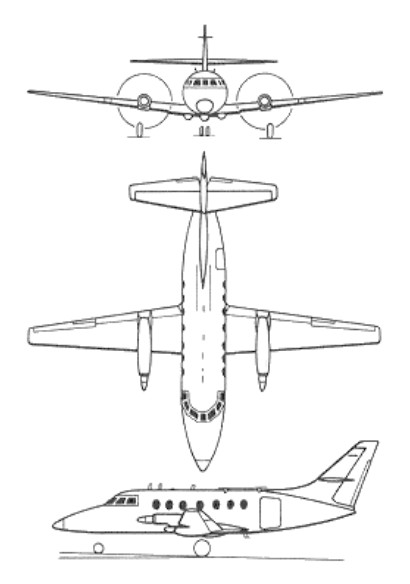
The Jetstream had accommodations for a crew of two plus flight attendant and 4-18 passengers. With a diameter of 6 feet, a length of 24 feet, and 613 cu. ft. of usable cabin space, the Jetstream has the largest interior in its class. There is stand-up headroom, ample walkaround space, and 14 windows.
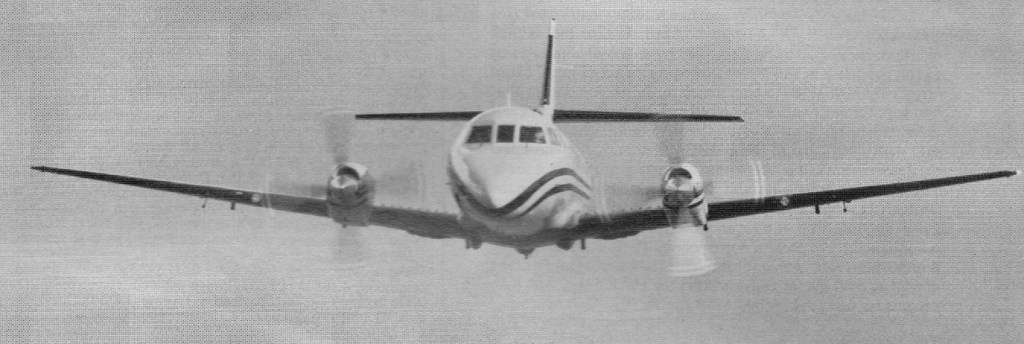
The HP.137 Jetstream was a pressurized 12/18 seat low-wing monoplane with a retractable undercarriage, powered by a pair of 840 hp Turbomeca Astazou XIV turboprops. Before the drawings were complete, Riley placed an order for 20 for the United States feeder liner market.
Handley Page HP.137 Jetstream Article
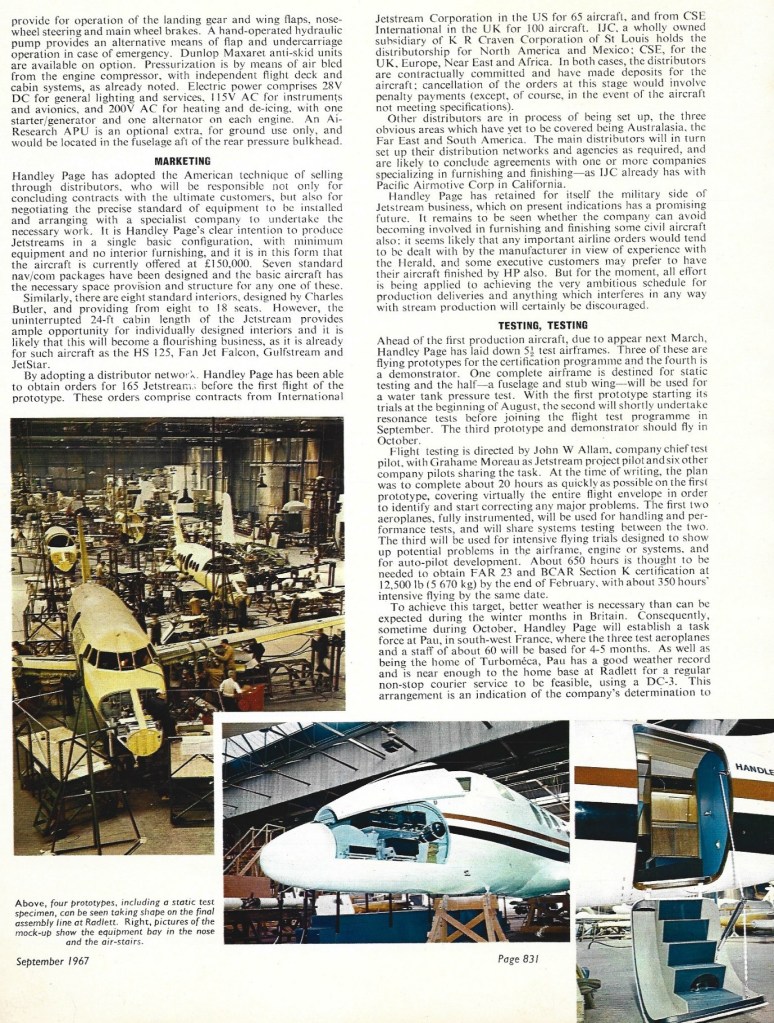
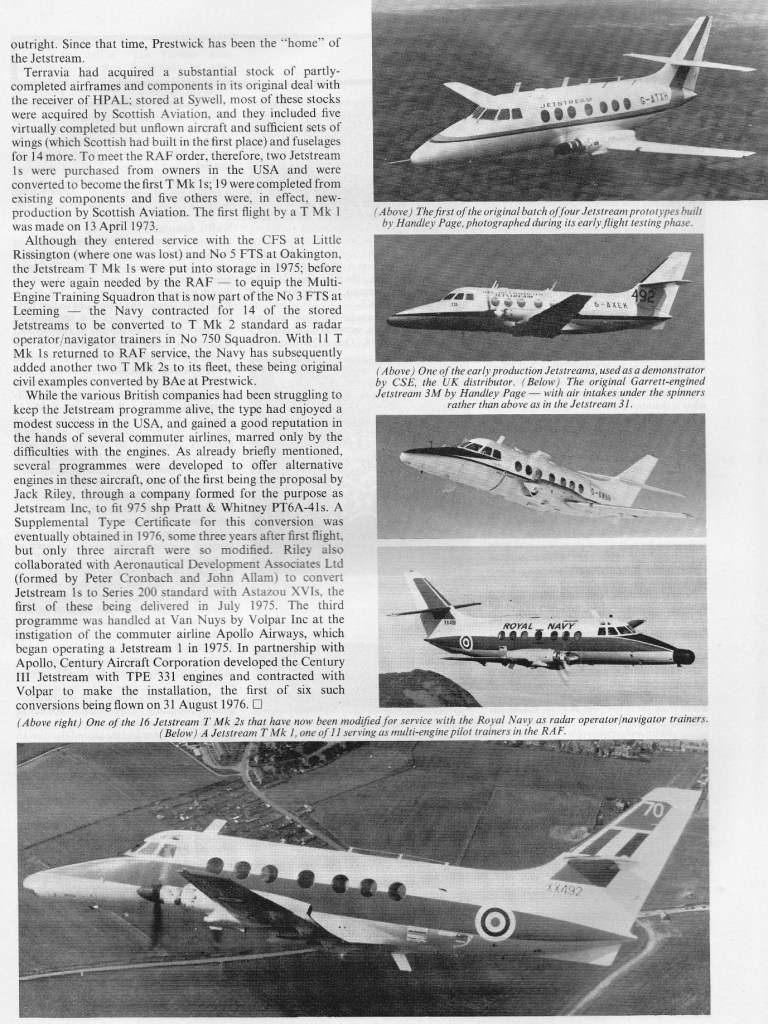
The prototype H.P.137 (G-ATXH c/n 198) flew first on 18 August 1967 powered by the Astazou XII. The first four aircraft were powered by the French Astazou, the fifth aircraft was fitted with the US-built Garrett AiResearch TPE-331 instead to improve sales prospects in the US. This re-engining lead to an order by the US Air Force for 11 Jetstream 3M or C-10A as a mission support transport aircraft. Early 1969 however this order was cancelled on the grounds of late delivery.
The Jetstream 1 had entered production by this time; with the first production model Jetstream 1 flying on 6 December 1968. Over the next year 36 would be delivered. The Astazou XIV engines however proved to be generally underpowered for the design. Due to these engine problems the Jetstream 1 was re-designed as the Jetstream 2 with more powerful 1073 hp Astazou XIVCs, starting deliveries in late 1969. By this point the late delivery and engine problems had driven costs to £13 million and Handley Page ran into serious financial difficulties. Only three Jetstream 2’s would be completed before Handley Page went bankrupt, and the production line eventually shut down in 1970. Only 39 aircraft had been completed by the time of Handley Page’s collapse in 1970.
Although Handley Page was wound up as a company, the Jetstream lived on. Ten further aircraft were completed, five by Jetstream Aircraft and five by Scottish Aviation. In 1971 Scottish Jetstream Ltd was the name of a new company formed by Scottish Aviation and Jetstream Aircraft for the manufacture of the Jetstream twin turboprop transport. Scottish Aviation continued production of the Jetstream 2 although they referred to it as the Jetstream 200.

The Royal Air Force ordered twenty-six Jetstream 200’s as navigation and multi-engine trainers known as the Jetstream T.1. The Royal Navy later subsequently took over some of these as T.2’s. In 1977, Scottish Aviation was nationalized along with the British Aircraft Corp. and Hawker Siddeley Aviation to form British Aerospace.
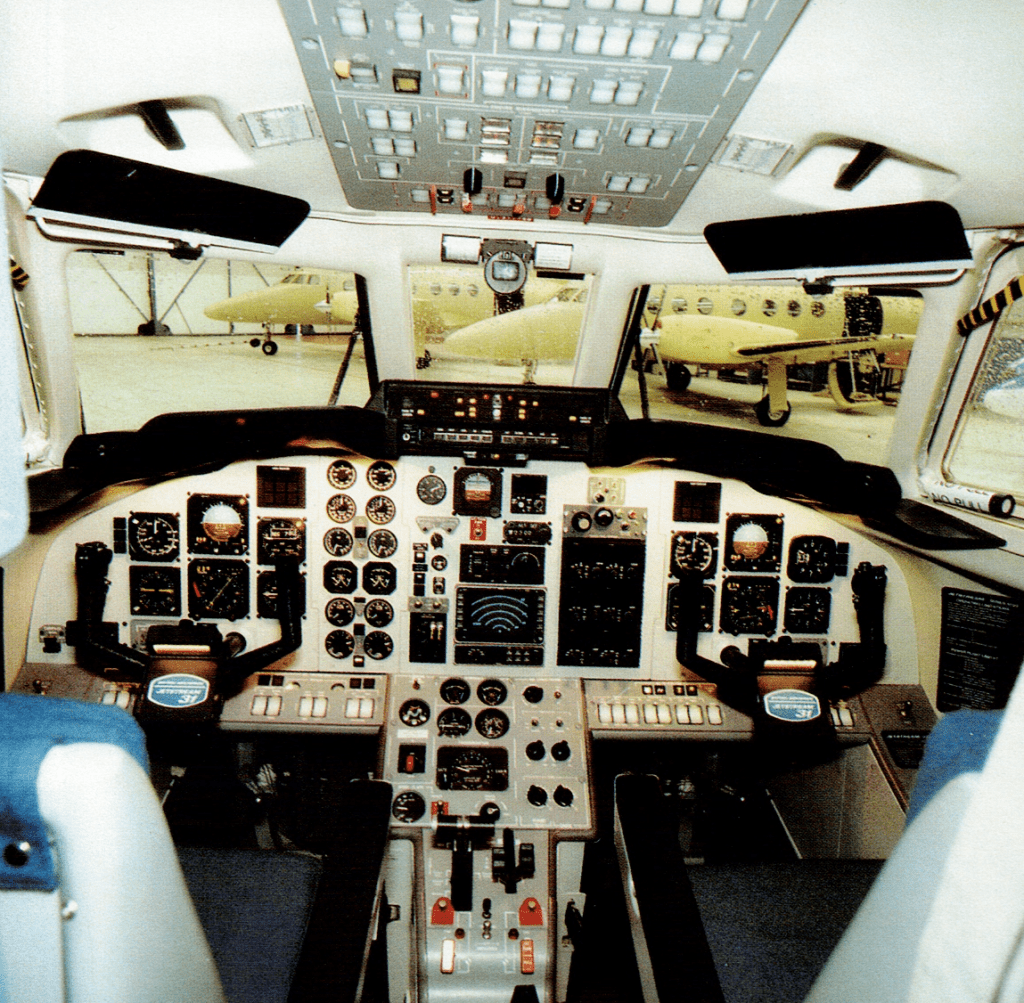
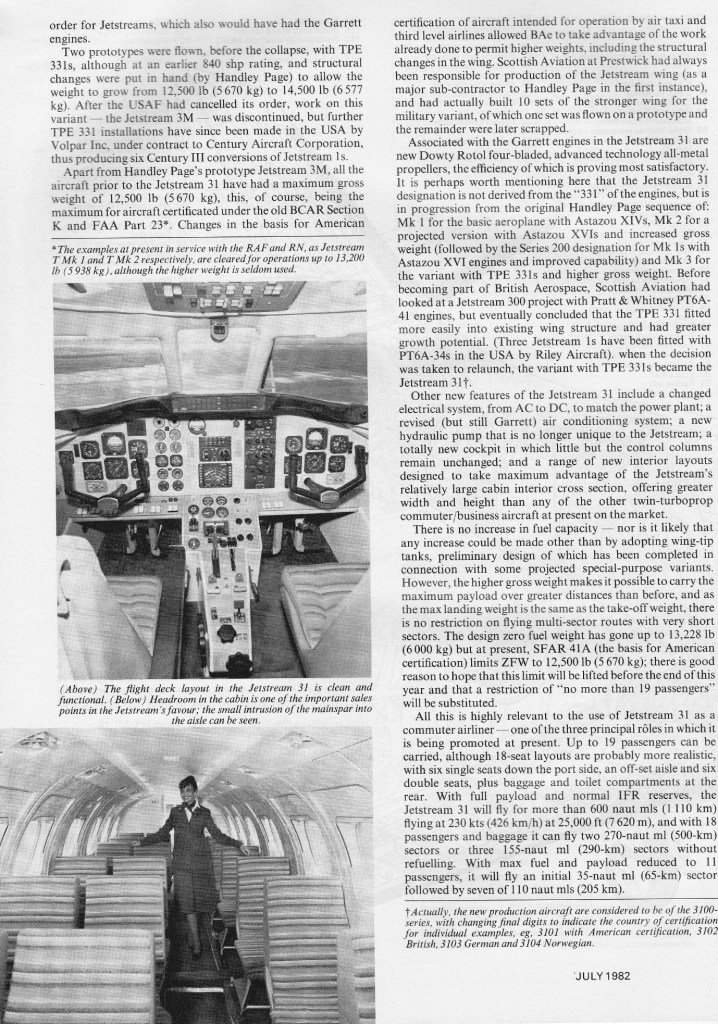
BAe decided the design was worth further development, and started work on a “Mark 3” Jetstream. The new version was re-engined with two 1020 hp Garrett TPE331-12UAR turboprops that offered significant advantages over the Turbomeca units. This allowed the aircraft the ability to operate at maximum load from a much greater range of airfields.
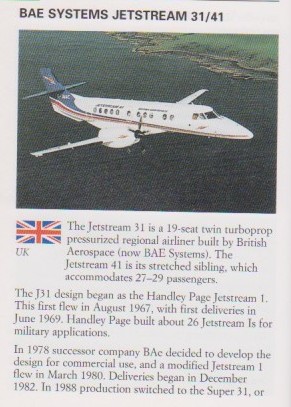
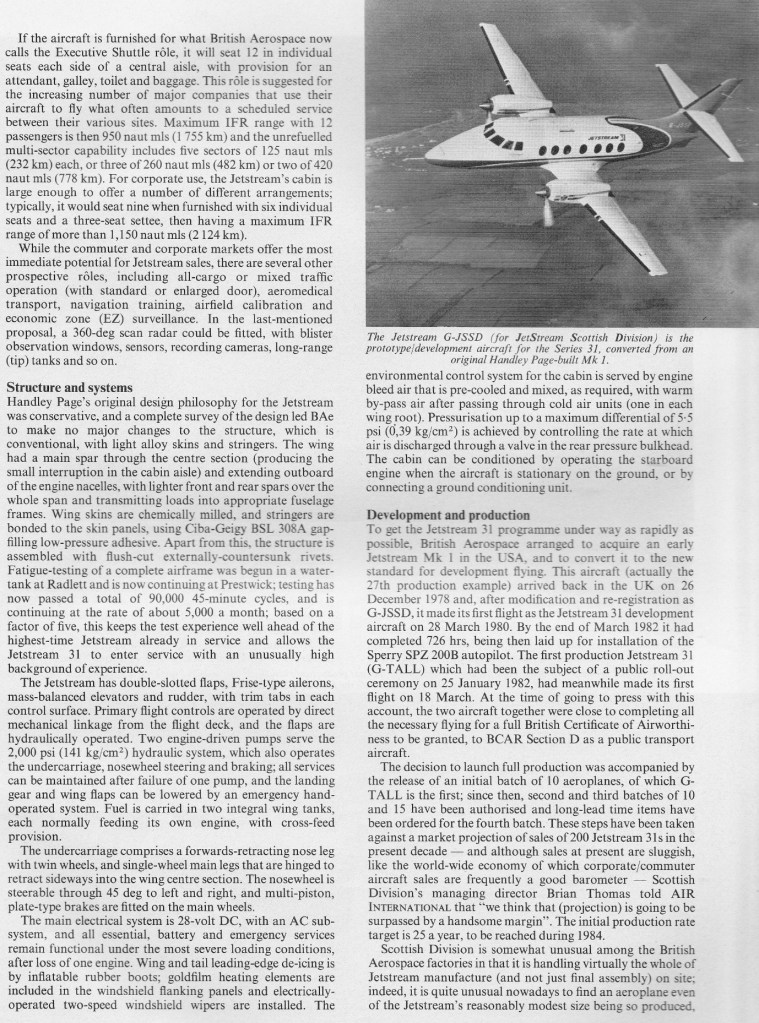
The prototype of the BAe Jetstream 31, converted from an original HP137 airframe to suit revised FAR requirements for 19-seat commuter aircraft, made its maiden flight on 28 March 1980 (G JSSD) from Prestwick Airport, Scotland and was airborne for 1hr 22min. Aboard on the flight were BAe test pilots Angus McVittie and J. L. S. ‘Len’ Houston, J. R. ‘Bob’ Baker from Garrett-AiResearch and BAe flight test engineer Andrew Eldred.
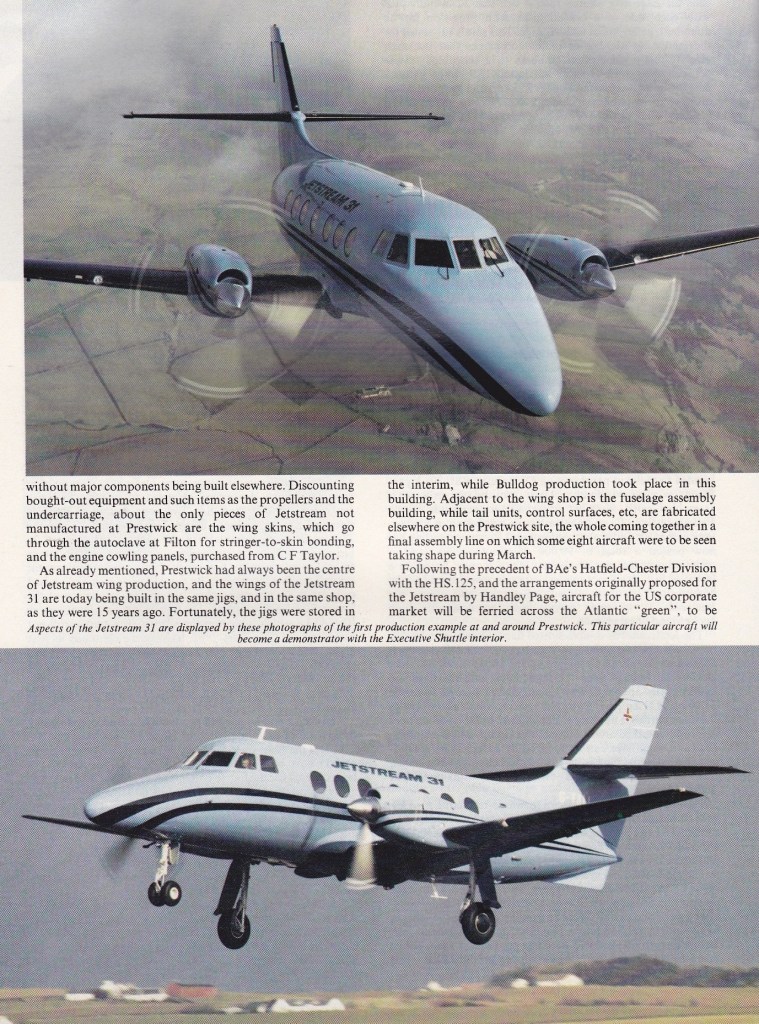
The new British Aerospace Jetstream 31 entered production 28 March 1980 and is powered by two Garrett AiResearch TPE331 IOU engines and also features advanced technology propellers and new electrical, air conditioning and cockpit systems.
By 1994 some 380 had been delivered, 320 of those to the USA.
The Royal Navy received four Jetstream 31 twin turboprops, designated T.3, which are used for observer training. These aircraft join 16 Astazou-powered T.2s which are used in similar roles. The T.3s differ not only in having Garrett TPE331 engines, but also in having an underfuselage Racal ASR360 search radar in place of the nose-mounted MEL E90 unit of the T.2. The RAF also used 11 Astazou powered Jetstream T.ls for multi-engine pilot training. Saudi Arabia has bought two Jetstream 31s for tornado crew training.
In 1985, development of a further upgrade started resulting in the Jetstream Super 31, also known as the Jetstream 32, with more powerful engines that flew in 1988.
The Jetstream 32EP (also known as Jetstream Super 31) was designed to increase the payload and range of the Jetstream 32 in extreme climatic conditions. It provides significant improvements in performance, derived from the use of two upgraded Garrett TPE331-12 turboprop engines flat-rated at 1,020 shp (760 k)XD and driving four-bladed advanced technology propellers.
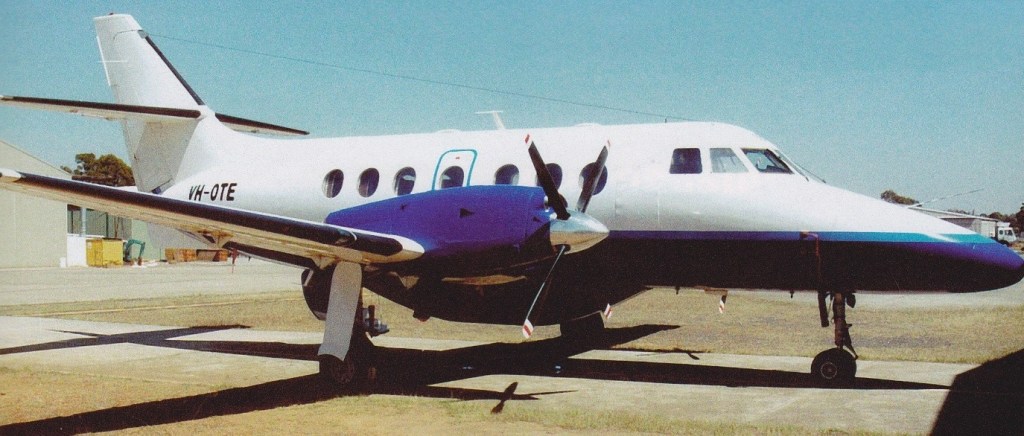
More than 310 Jetstream 31s and Super 31s had been ordered by 1987.
In 1991, the 29-seat Jetstream 41 was introduced. Production of the Jetstream 31/32 ended in 1993, while the production of the Jetstream 41 ended in 1997.
The Handley Page Jetstream came back for another round, as the newly certi¬ficated Century Jetstream III, with 904 shp Garrett AiResearch TPE 331 turboprops in place of the French Astazous.
Century Aircraft Corp. of Amarillo, Texas, Jetstream III is air-conditioned and pressurized at 6.5 psi. The conversion to Garrett engines allows a range of 1,920 miles out of a 426-gallon fuel capacity. The engine conversions were performed by Volpar, Inc. in Van Nuys, California.
Jetstreams built since the early start in 1965 until the production ended in 1997 are: 38 H.P.137 Jetstream by Handley Page Ltd; 5 H.P.137 Jetstream by Jetstream Aircraft Ltd; 5 H.P.137 Jetstream by Scottish Aviation Ltd; 26 Jetstream T.1 by Scottish Aviation; 220 Jetstream 31 by British Aerospace; 161 Jetstream Super 31 by British Aerospace; 100 Jetstream 41 by British Aerospace.
Variation:
Riley Jetstream
HP 137 Jetstream
Powerplant: two Turbomeca Astazou XIV, 850 shp / 625kW
Propellers: Hamilton Standard three-bladed 8 ft 3 in diameter
Wingspan: 15.9 m / 52 ft 2 in
Length: 14.7 m / 48 ft 3 in
Height: 5.1 m / 16 ft 9 in
Wing area: 25.1 sq.m / 270.17 sq ft
Max. usable floor area, 85.5 sq.ft
Max. usable cabin volume, 564 cu.ft
Max. cabin length, 24 ft 3 in
Max. width, 6 ft 1 in
Max. height, 5 ft 11 in
Accommodation: max. high density 18 passengers at 30 in pitch.
Basic operational (gross less usable fuel and payload), 8200 lb or 8530 lb / 3869 kg
Total fuel, 3120 lb / 456 USG
Max take-off weight: 5657 kg / 12472 lb
Max. landing, 12,250 lb
Max. payload (volume limited), 4000 lb
Power loading, 7.76 lb/shp
Wing loading (max. take-off weight), 45.4 lb/sq.ft
Wing loading (max. landing weight), 45.4 lb/sq.ft
Top speed 345 mph.
High-speed cruise, 265 kt at 15,000 ft
Long-range cruise, 217 kt. at 30,000 ft
Stall 84 mph.
Take-off field length to 50 ft, ISA at sea level, 2550 ft
Landing field length, ISA at sea level, 2130 ft
Range with allowances, max. fuel, 1000 lb payload at 217 kt. at 30,000 ft, 1910 nm
Range with allowances, max. payload 18 passengers, at 265 kt. at 15,000 ft, 220 nm
Initial climb rate 2,100 fpm.
Ceiling 30,000 ft.
Jetstream III
Engines two 902 shp Garrett AiResearch turboprops
Gross wt. 12,500 lb
Empty wt. 8,200 lb
Fuel capacity 426 USG
Cruise mph 300+
Range 1,920 miles
Takeoff distance (50′) 2,500 ft
Landing distance (50′) 1,000 ft
Seats 4-18.
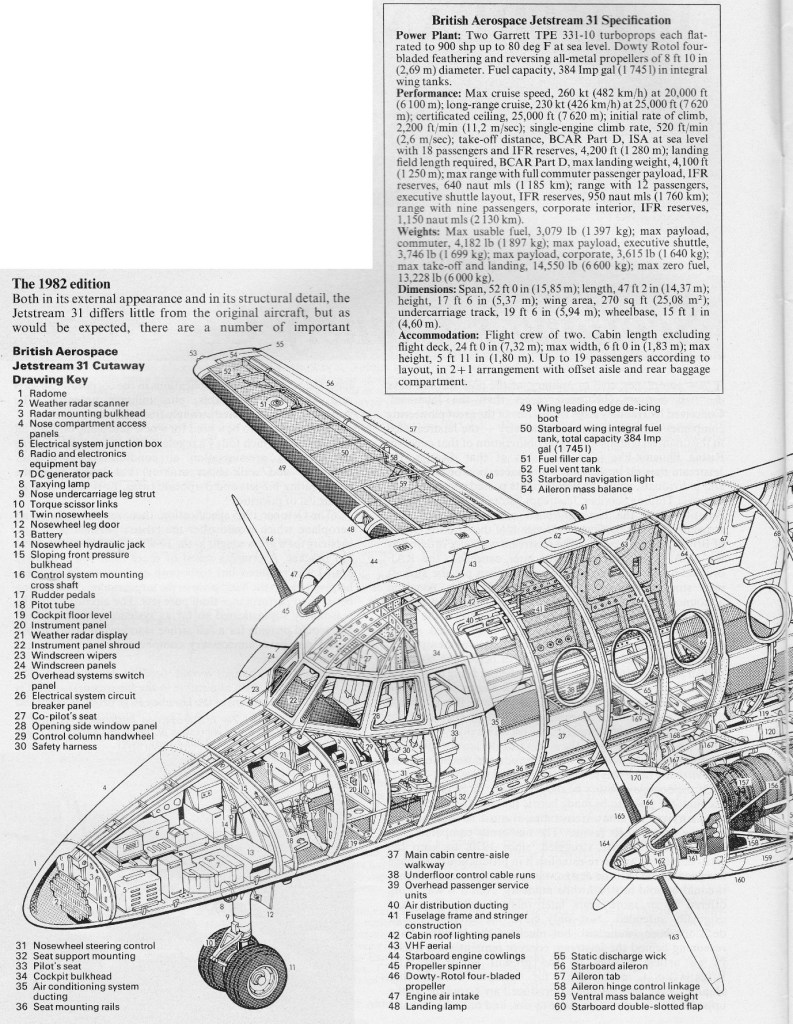
British Aerospace Jetstream 31
Engine : 2 x Garrett TPE 331-10UG, 691 shp
Length : 47.146 ft / 14.37 m
Height: 17.388 ft / 5.3 m
Wingspan : 52.001 ft / 15.85 m
Wing area : 271.253 sq.ft / 25.2 sq.m
Max take off weight : 15324.8 lb / 6950.0 kg
Weight empty : 9613.8 lb / 4360.0 kg
Max. weight carried : 5711.0 lb / 2590.0 kg
Max. speed : 264 kts / 488 km/h
Landing speed : 86 kts / 159 km/h
Cruising speed : 230 kts / 426 km/h
Initial climb rate : 2066.93 ft/min / 10.50 m/s
Service ceiling : 25000 ft / 7620 m
Wing load : 56.58 lb/sq.ft / 276.0 kg/sq.m
Range : 675 nm / 1250 km
Crew : 2
Payload : 19PAX / 1805kg
BAe Jetstream 3100
First built: 1982.
Engines: 2 x Garrett TPE 331-10V-501H, 940 shp.
Props: Dowty-Rotol 4-blade, 106-in.
Seats: 9/18.
Length: 47.1 ft.
Height: 17.5 ft.
Wingspan: 52 ft.
Wing area: 271.3 sq.ft.
Wing aspect ratio: 10.
Maximum ramp weight: 14,660 lbs.
Maximum takeoff weight: 14,550 lbs.
Standard empty weight: 9046 lbs.
Maximum useful load: 5614 lbs.
Maximum landing weight: 14,550 lbs.
Wing loading: 53.6 lbs/sq.ft.
Power loading: 8.1 lbs/hp.
Maximum usable fuel: 3079 lbs.
Best rate of climb: 2200 fpm.
Service ceiling: 25,000 ft.
Max pressurisation differential: 5.5 psi.
8000 ft cabin alt @: 25,000 ft.
Maximum single-engine rate of climb: 520 fpm @ 109 kts.
Single-engine climb gradient: 286 ft/nm.
Single-engine ceiling: 15300 ft.
Maximum speed: 267 kts.
Normal cruise @ 25,000ft: 230 kts.
Fuel flow @ normal cruise: 460 pph.
Endurance at normal cruise: 6.1 hrs:
Stalling speed clean: 98 kts.
Stalling speed gear/flaps down: 86 kts.
Turbulent-air penetration speed: 180 kts.
HP Jetstream Mk.1 / Century Jetstream III
Engines: 2 x Garrett TPE 331-3U-303, 904 hp.
Seats: 10/20.
Wing loading: 47 lb/sq.ft.
Pwr loading: 6.9 lb/shp.
Max TO wt: 12,500 lb.
Empty wt: 8,600 lb.
Equipped useful load: 3600 lb.
Payload max fuel: 528 lb.
Max cruise: 489 kt.
ROC: 2000 fpm.
Min field length: 2310 ft.
Cabin press: 6.5 psi.
Fuel cap: 3072 lb.
Godfrey Lee supervised the H.P.130 (modified D.H.125).

First flown on August 17, 1961, the HP.115 was designed to study the low speed qualities of the ‘slim delta’ wing proposed for the Concorde, at low speeds.
It had a Viper 11 for some of the early testing that was borrowed from Huntings Jet Provost 3. The nosegear was from a Jet Provost 3 and the main gear from a Piston Provost. In the cockpit the parking brake lever came from the local Ford dealers for an Anglia car.

At nose, tail and wingtips there were some detachable steel weights for test, which came from the jig scrapyard and were made into aircraft material under duress from the AID.

H.P.115
Engine: 1 x Bristol Siddeley “Viper 9” turbojet, 860kg
Max take-off weight: 2290 kg / 5049 lb
Wingspan: 6.1 m / 20 ft 0 in
Length: 13.7 m / 44 ft 11 in
Wing area: 40.0 sq.m / 430.56 sq ft
Max. speed: 400 km/h / 249 mph
Range: 500 km / 311 miles
Crew: 1

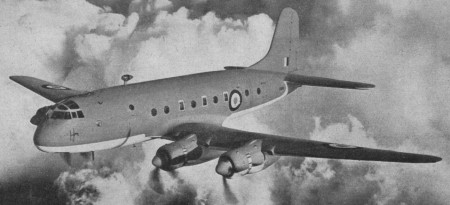
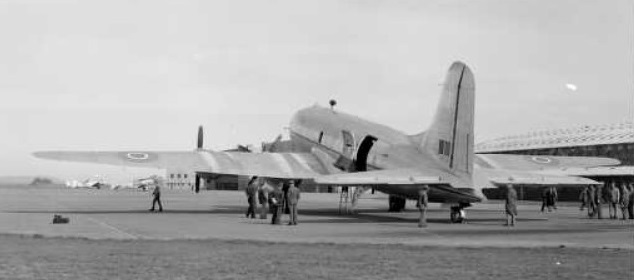
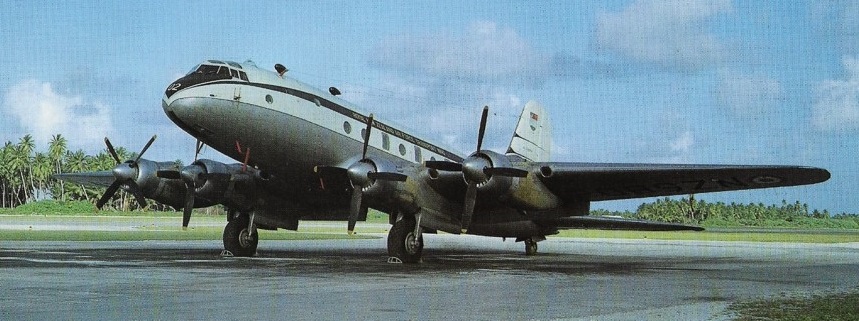
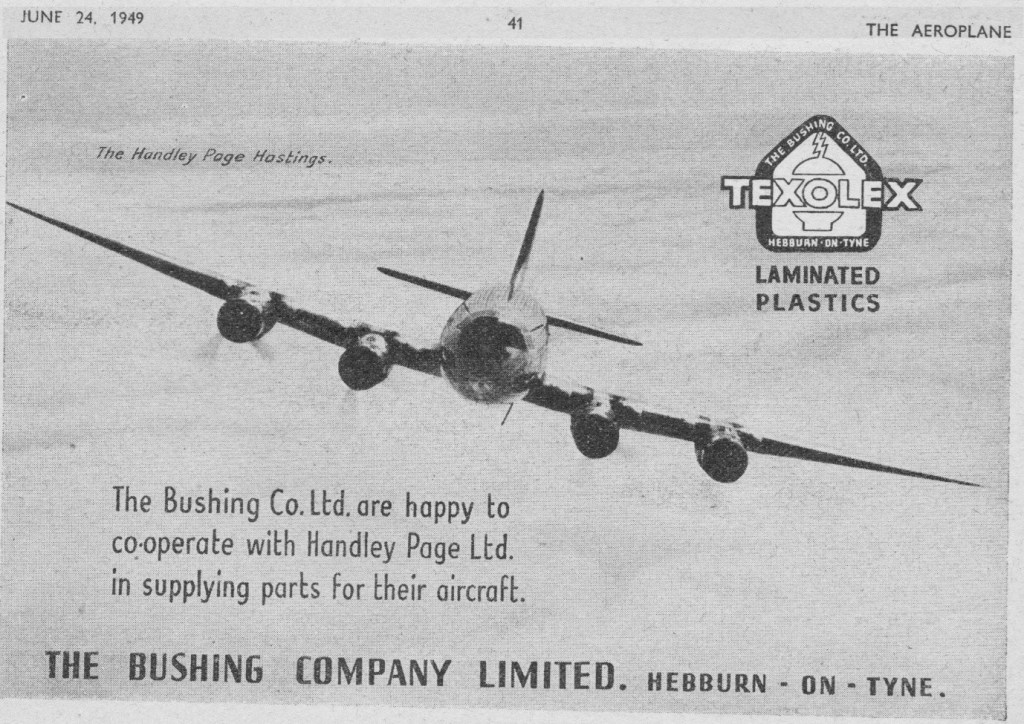
The Hastings was a general-purpose long-range transport flown by the RAF and RNZAF. Its roles included those of freighter, paratroop-transport, ambulance, troop-carrier, supply-dropper, jeep-carrier and glider-tug, first flown on May 7, 1946.
Handley Page HP.95 Hastings Article
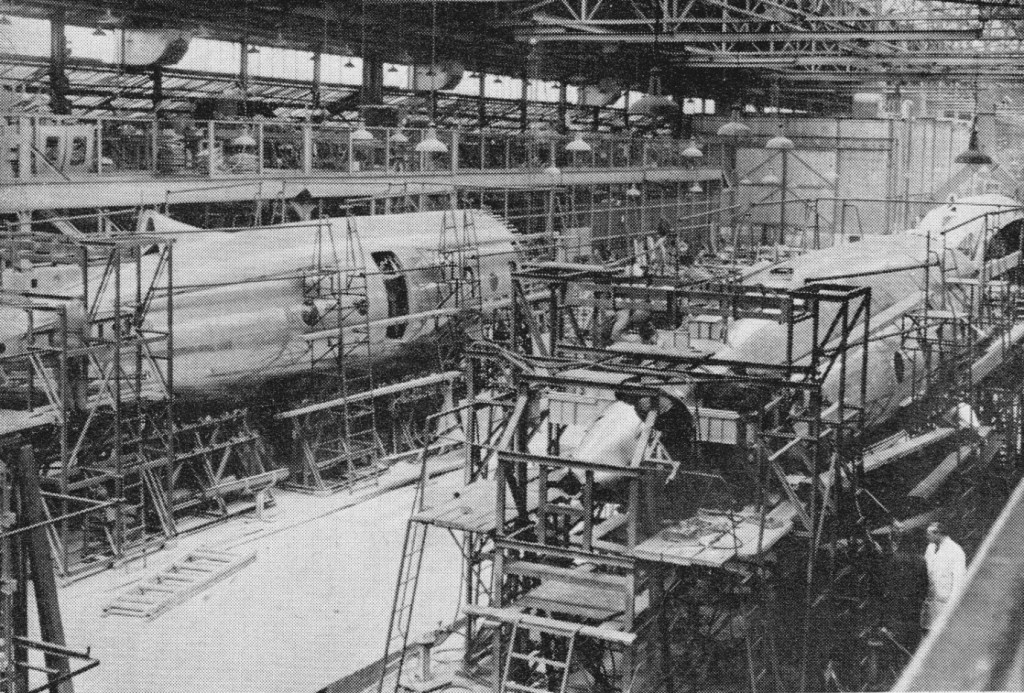
The initial production version was the C.1, first flown on 25 April 1947 and powered by four Bristol Hercules 101 engines. All C.1s were subsequently modified to Mk 2 standard and redesignated C.1As. The C.2 was powered by four Hercules 106 engines, had the tailplane lowered to the centreline of the fuselage and increased in area, extra fuel tanks, and the crew rest station replaced by an air-quartermaster post. The Hercules 737-powered C.3 was similar to the Mk 2 – and four were supplied to the RNZAF.
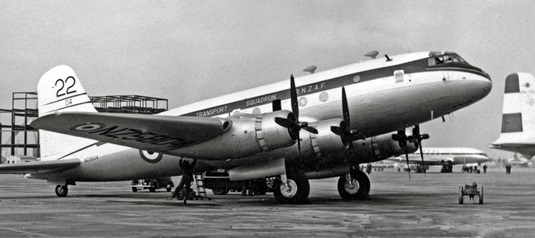
Two RAF squadrons of eight aircraft each went into service on the Berlin Airlift.
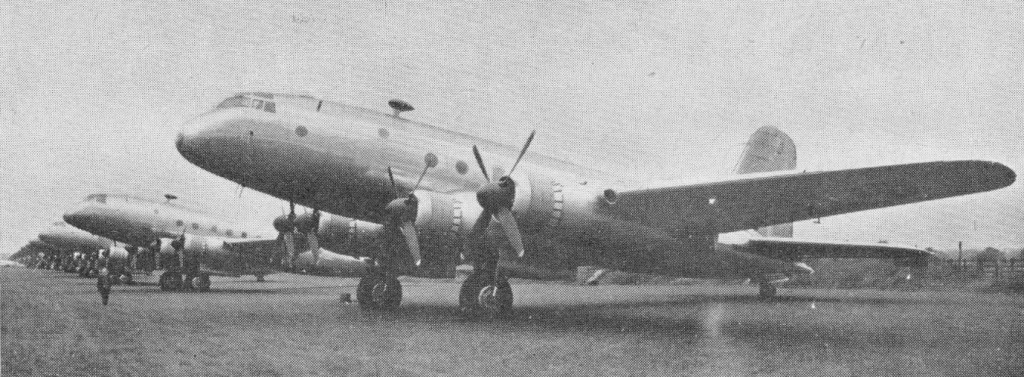
The final version was the C.4, a VIP version of the Mk 2 with accommodation for four VIPs and staff. Four were delivered to RAF Transport Command, bringing the total number of Hastings operated by the RAF up to 147. The last Hastings were withdrawn from service in 1968.
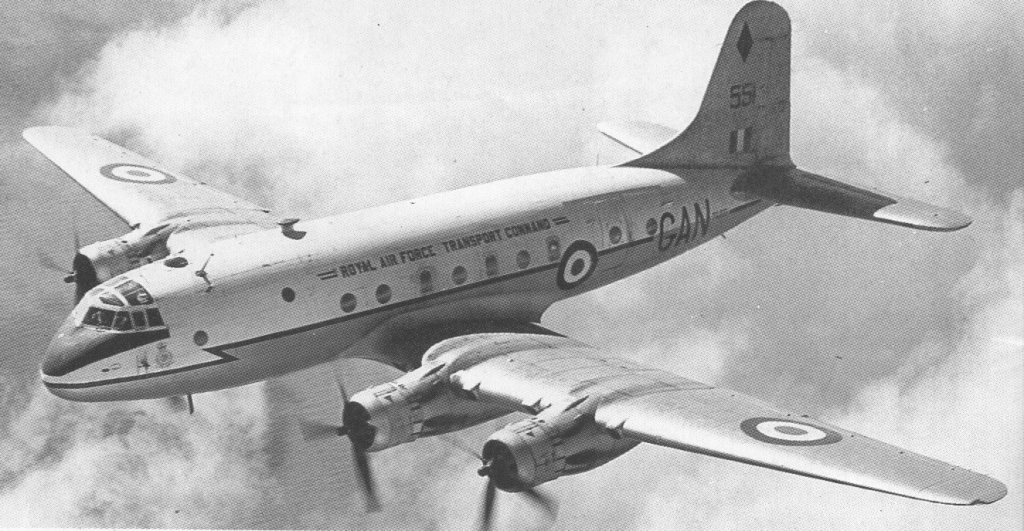
C.1
C.2
Hastings C.2
Engines: 4 x Bristol Hercules 106, 1249kW
Max take-off weight: 36280 kg / 79984 lb
Empty weight: 21960 kg / 48414 lb
Wingspan: 34.44 m / 112 ft 12 in
Length: 25.20 m / 82 ft 8 in
Height: 6.86 m / 22 ft 6 in
Wing area: 130.80 sq.m / 1407.92 sq ft
Max. speed: 560 km/h / 348 mph
Cruise speed: 486 km/h / 302 mph
Ceiling: 8075 m / 26500 ft
Range: 2720 km / 1690 miles
C.3
Engines: 4 x Bristol Hercules 737, 2040 hp.
MAUW: 83,000 lbs.
Max speed: 350 mph.
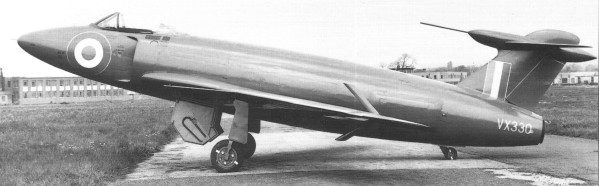
To assess the H.P.80 configuration, H.P. proposed a piloted flying scale model aerodynamic prototype based on a Supermarine Attacker fuselage with Swift wing roots, fuel system and instruments, to test the crescent wing and T-tail, together with side-mounted airbrakes. Given design number 88, it was designed by General Aircraft at Feitham, but following the company’s merger with Blackburn the H.P.88 was built, to Specification E.6/48 of March 12,1948, at Brough, North Yorkshire, where it was called the YB.2.
The wing was of an early planform, before the outer kink had been modified, and there was an all-moving tail on top of the swept fin. Serialled VX330, the H.P.88 made its first f light at Carnaby on June 21,1951, powered by a Rolls-Royce Nene turbojet. The pilot reported that it was very sensitive in pitch.
Late in the construction stage the RAE had insisted that, to limit the inadvertent application of g, a bob-weight be incorporated in the control system, to increase stick forces as extra G was pulled. This should have been located in the aircraft’s nose, near the control column, but it was too late to incorporate it on the H.P.88, so it was decided to change the control tube which passed up through the fin to the tail from light alloy to steel to have the same action. Unfortunately, fuselage flexibility was not taken into account. During a high-speed low-level test run at Stansted on August 26,1951, the rear fuselage motion coupled with the control rods and the aircraft developed a divergent oscillation in pitch which exceeded 12g before the H.P.88 broke up, killing Handley Page pilot Douglas Bloomfield. Very little was learned in the comparatively few flights it had made.