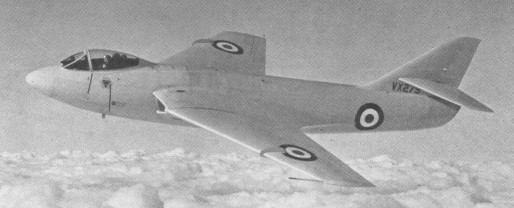
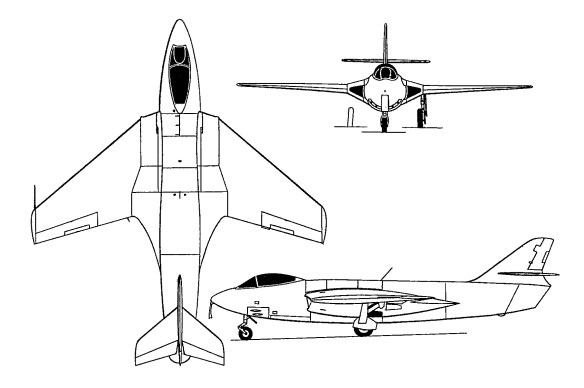
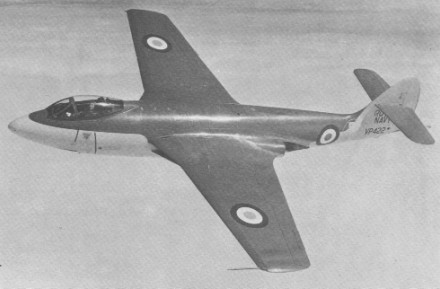
Developed as a result of Australian interest in an operational fighter version of the P.1052 swept-wing research aircraft, the P.1081 was a rebuild of the second P.1052 incorporating a straight-through jet pipe, using a jet pipe adapted from that of the Supermarine Attacker, and a new all-swept tail. Non-availability of the Rolls-Royce Tay turbojet proposed for installation resulted in retention of the original 2268kg Nene R.N.2. With this power plant, the P.1081 was flown on 19 June 1950. Consideration was given to building a second, fully representative prototype with a four 20mm cannon armament and an afterburning Tay engine, but, on 14 November 1950, further work on the Australian project was cancelled. The sole P.1081 was subsequently transferred to the RAE, but was destroyed in an accident on 3 April 1951.
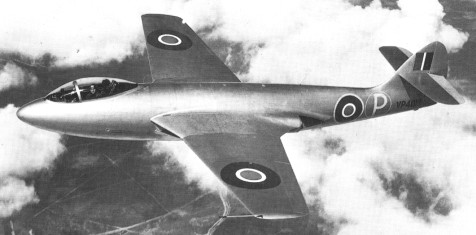
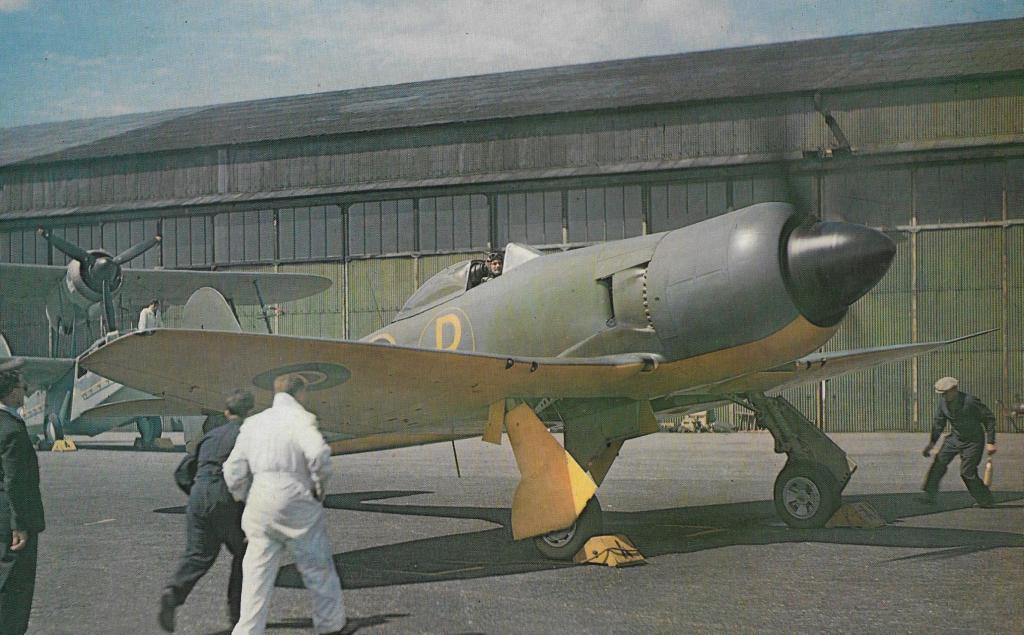
While work was proceeding with the P 1052 and the P1081, Hawker tried out the Snarler rocket on the P1040 which, with this addition, became the P1072. The Snarler was an Armstrong Siddeley rocket installation fitted to the tail of the aircraft, but powered by a Rolls-Royce Nene turbojet exhausting via bifurcated ducts in the wing roots, the idea being to get the rocket airborne for experimental engine development. After a conventional first flight in November 1950, the rocket was successfully used four days later. Six flights were made with the Snarler, taking off normally on the jet engine, and lighting the rocket at a fairly low altitude, putting the aircraft into a climb. With the Nene jet engine working at full power, together with the thrust of the rocket, the aircraft went up not beyond 40,000 feet the, aircraft had no pressurized cabin.
Engines: Rolls-Royce Nene turbojet, 5000 lb (2268 kg) and Armstrong Siddeley Snarler rocket, 2000 lb (907 kg) thrust.
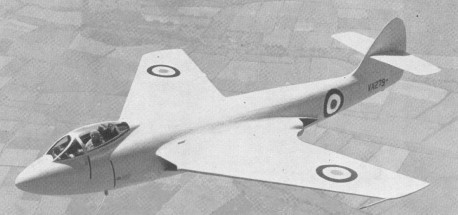
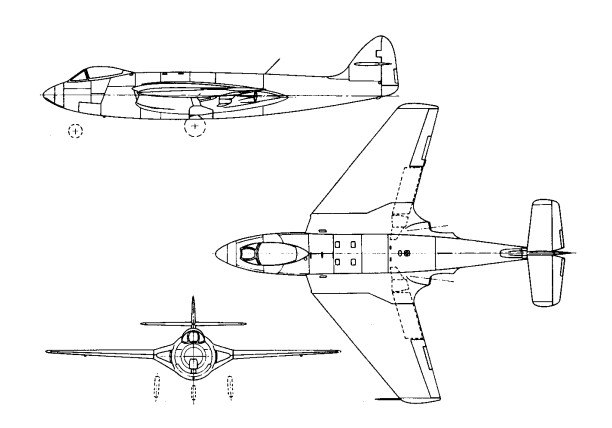
N7/46 P1040 was the swept wing version of the N7, the P1052. Two of these aircraft were built for research purposes, with thirty five degree swept back wings the first used by Hawker’s to investigate the controllability and stability of sweptback wings at low speeds and much the same engine lay out as the P1040. First flown on 19 November 1948. After some development work, one of the P1052’s was converted into the P1081. This was fully swept back on all surfaces, and the engine lay out was changed: instead of the split or bifurcated jet pipe, the engine had a straight through jet pipe, exhausting in a single pipe under the tail. A prototype first flew in November 1948.
Hawker produced their first jet fighter, the P1040, to the specifications of the Air Ministry, designed by the team headed by Sir Sydney Camm. In certain respects the P1040 was an unorthodox aircraft. Although fitted with a single Rolls Royce Nene engine with twin intakes at the wing roots, it had a split jet pipe with two exhausts at the wing root trailing edge on either side of the fuselage; it also had straight wings, a straight tail and a normal fin. It was a beautiful aircraft to fly with spring tab ailerons, and it attracted the attention of the Admiralty. The Royal Navy took it over, converted it for deck landings with the addition of a hook, and gave it folding wings and other nautical refinements. This version of the P1040 became known as the N7/46, and was later produced as the Seahawk for the Fleet Air Arm. After the P1040 came the P1052, with a number of important changes in design.
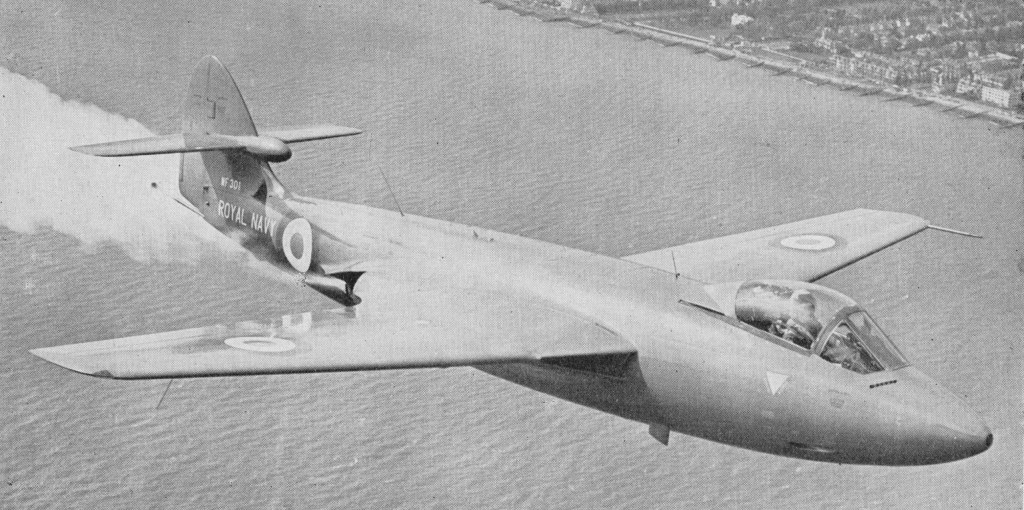
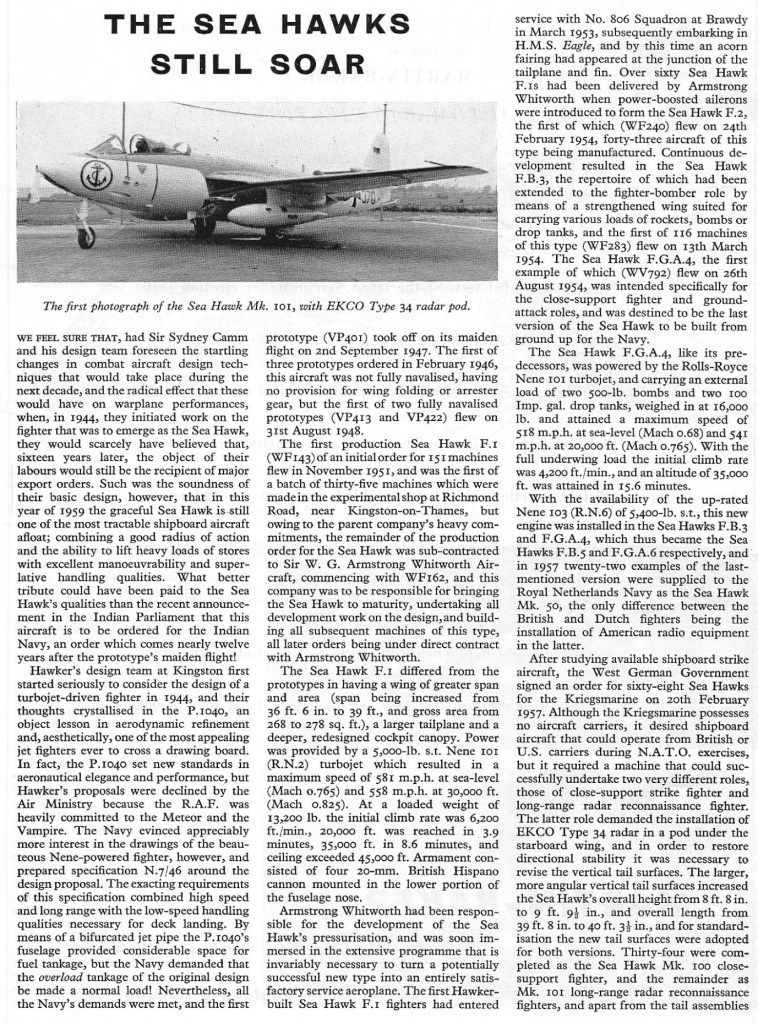
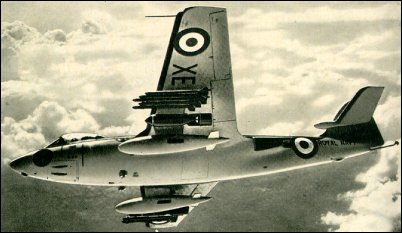
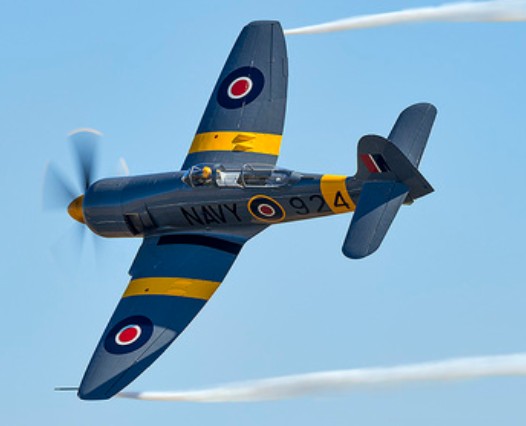
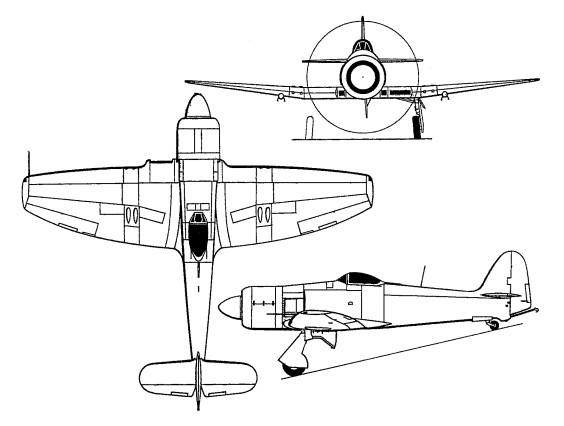
Arising from the P.1040 single-seat land-based interceptor prototype, the Hawker Sea Hawk first flew in prototype form on 2 September 1947. A novel feature was the tail jet pipe which divided and exhausted in the wing roots. This made it exceptionally manoeuvrable and allowed a large internal fuel capacity giving the fighter a relatively long range. In addition to the fuselage mounted guns, bombs and rockets could be carried under the wings.
A tricycle undercarriage had single wheels on each unit. The main wheels retract inward into the fuselage. The nose wheel retracts forward. The wings fold upward and inward.
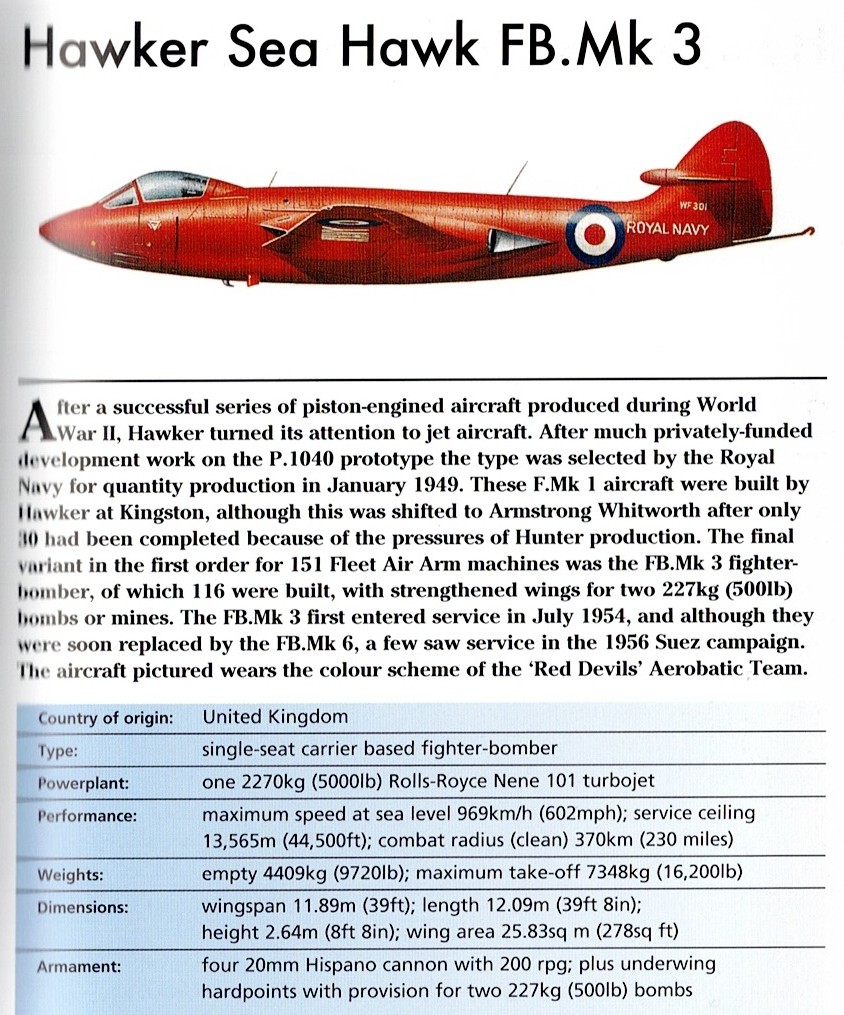
It was eventually followed by the Rolls-Royce Nene 101-powered Sea Hawk F.I, 35 of which were built for the Royal Navy by Hawker and 60 by Armstrong Whitworth.
This being a pure fighter variant. It was not until 1953 that it began to enter service with the Fleet Air Arm. Used operationally from the carriers Albion, Bulwark and Eagle in 1956, in support of Anglo French landings in Egypt, the type remained in service until 1960.
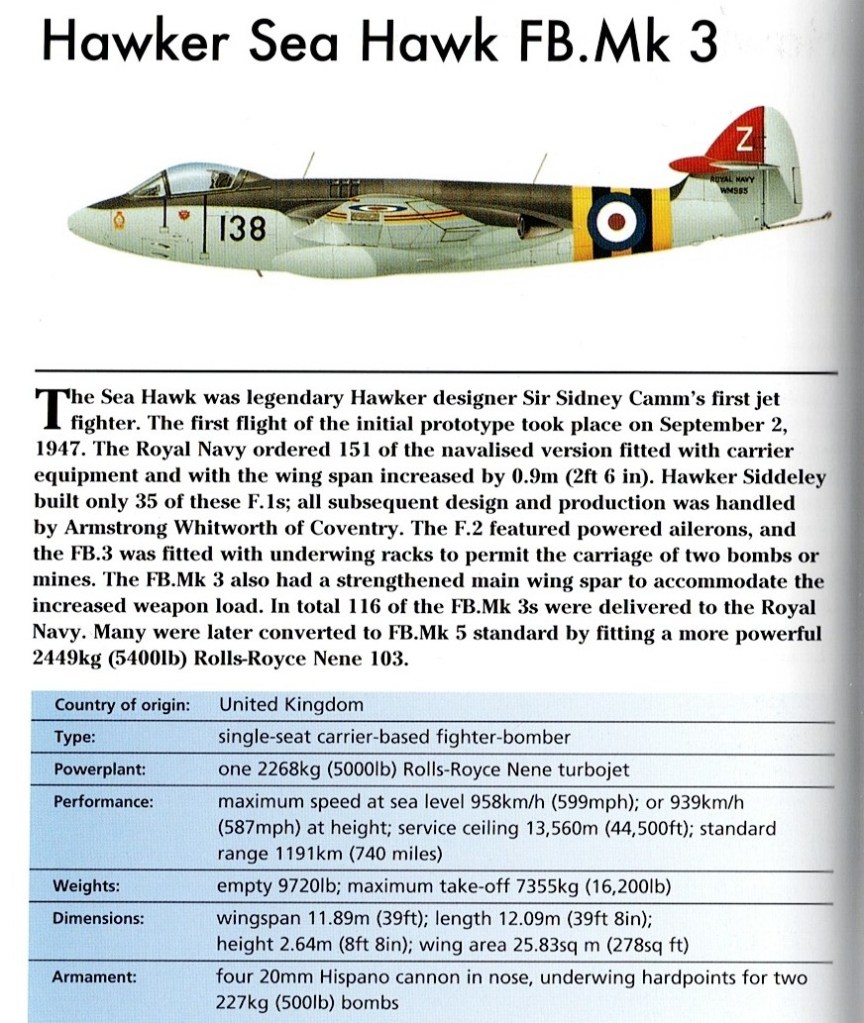
Sea Hawk production being entrusted to Armstrong Whitworth Aircraft from the Sea Hawk F.Mk 2 version onwards from 1953. The Mk 2 version was similar to the F.I but had powered ailerons. It was first flown in February 1954 and 40 were delivered. Progressive development of the basic design led to the appearance of rather more versatile variants, the first of these being the 116 Armstrong-Whitworth built Sea Hawk FB.Mk 3, which featured a strengthened wing structure, enabling it to carry bombs, rockets or auxiliary fuel tanks, and plain ailerons without tabs.
These were followed by 97 Sea Hawk FGA.Mk 4 with attachments for underwing stores, in addition to four 20mm built-in guns. The FGA.4 has power assisted ailerons.
In 1955 a Sea Hawk was flying at Britteswell equipped with vortex generators on the tailplane to ascertain the longitudinal stability characteristics at high Mach numbers. The research was aimed at increasing the maximum speed from the 630 mph.
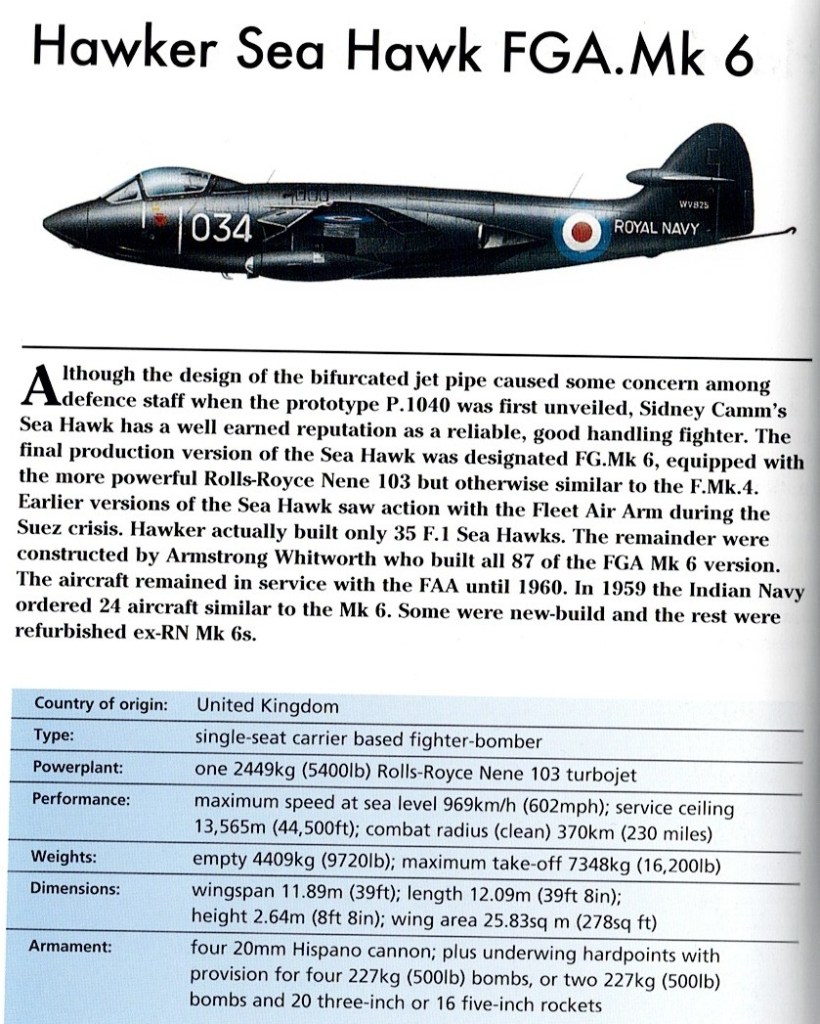
Adoption of the more powerful Nene 103 turbojet engine in 1956 led to the Sea Hawk FB.Mk 5 (about 50 converted from Mk 3) and 86 new (plus some converted) Sea Hawk FGA.Mk 6 derivatives, these basically being re-engined Sea Hawk FB.Mk 3s and Sea Hawk FGA.Mk 4s, although some Sea Hawk FGA.Mk Gs were built as such.
In addition to production for the Fleet Air Arm, the Sea Hawk also operated with the naval air arms of India. Two squadrons of F(GA).6 were acquired by the Indian Navy for service on the aircraft carrier Vikrant; this service subsequently also received 22 ex-RN F(GA).4/6 and 28 ex-German aircraft.
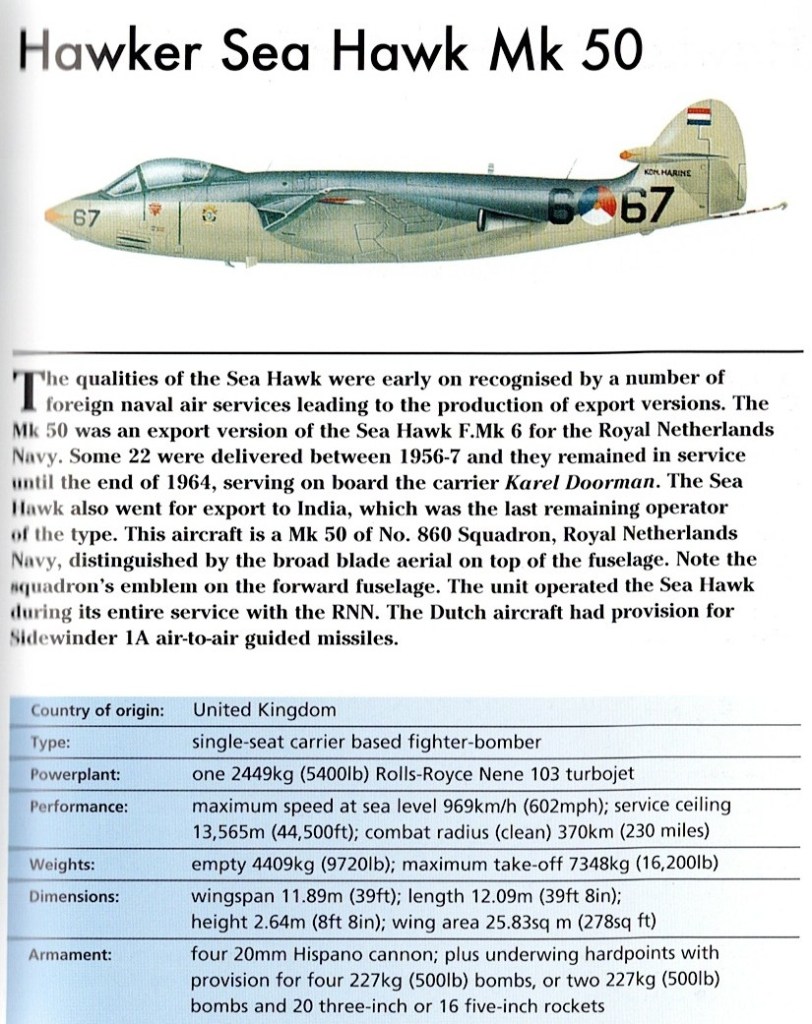
22 Sea Hawk Mk 50 for the Royal Netherlands Navy were similar to Mk 6 but with American radio equipment; modified in 1959 to carry Sidewinder missiles.
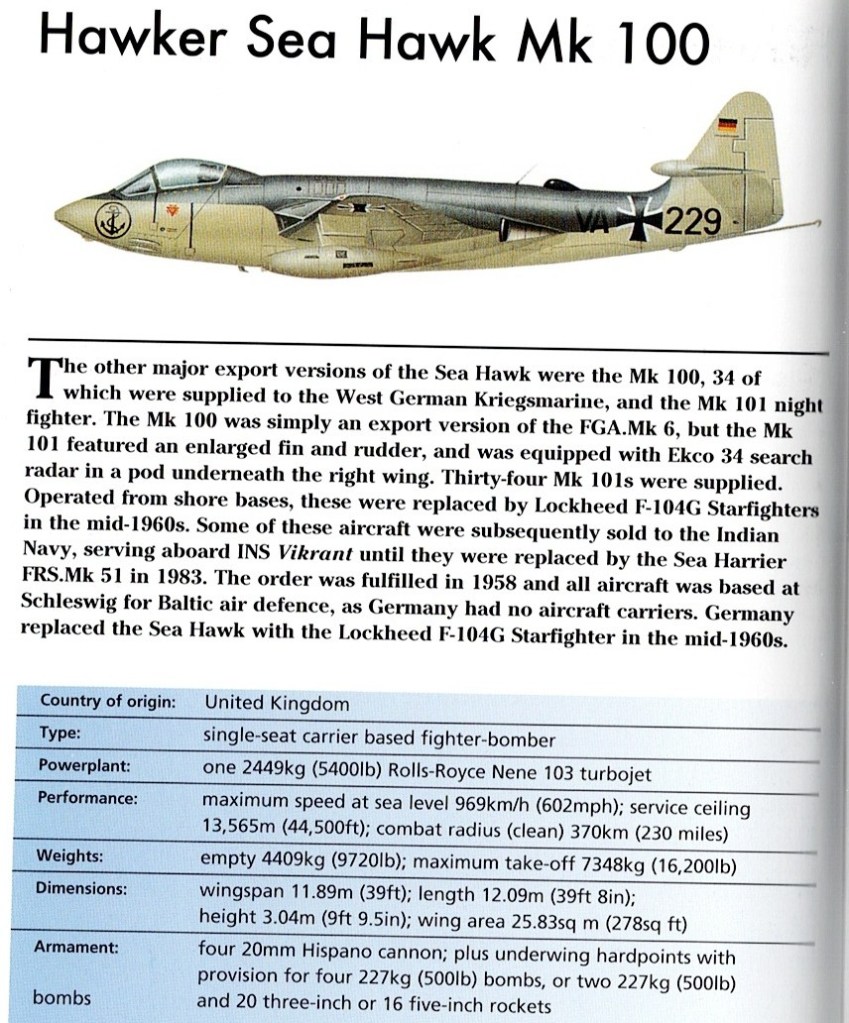
34 Sea Hawk Mk 100 close-support strike fighters were produced for the Federal German Navy, and 34 Sea Hawk Mk 101 long-range radar reconnaissance fighters for the Federal German Navy.
Sea Hawk F.Mk 1 Engine: 1 x Rolls-Royce Nene 101 tur¬bojet, 2268-kg (5,000-lb) thrust. Wing span: 39 ft 0 in (11.89 m). Length: 39 ft 8 in (12.09m). Height: 8 ft 8 in (2.64 m). Max TO wt: 16,200 lb (7347 kg). Max level speed: 560 mph (901 kph).
Sea Hawk FGA.4 Engine: RR Nene Wingspan: 39 ft Length: 40 ft
Sea Hawk FGA.Mk 6 Engine: one 2359-kg (5,200-lb) thrust Rolls-Royce Nene 103 turbojet. Wingspan: 11.89 m (39 ft 0 in) Length: 12.09 m (39 ft 8 in) Height 2.64 m (8 ft 8 in) Wing area 25.83 sq.m (278 sq ft) Wheel track: 8 ft 6 in Maximum speed 945 km/h (587 mph) at 6095 m (20,000 ft) Service ceiling 13565 m (44,500 ft) ROC: 5700 fpm Range 1287 km (800 miles) with auxiliary fuel. Empty weight: 4672 kg (10,300 lb) Maximum take-off weight: 6895 kg (15,200 lb) Armament: four MK Hispano Mk V 20-mm cannon, plus two 227-kg (500-lb) bombs or 2076-mm (3-in) rockets. Crew: 1
Genesis of the Fury design lay in the Typhoon and its, successor, the Tempest. Early troubles with the Napier Sabre engine and the failure of the Rolls Royce Vulture caused delays in the Typhoon and cancellation of the Tornado programme, and switched the spotlight to the Rolls Royce Griffon and Bristol Centaurus engines. Simultaneously, the Typhoon proved unsuitable as a medium attitude fighter on account of its thick wing, and in 1941, Sydney Camm put forward proposals for the Typhoon II with a thinner, eliptical wing and leading edge radiators. Alternative powerplants included Sabre, Centaurus and Griffon, and in time, with these engines, the fighter appeared as the Tempest I, II and III. The wing radiator scheme was not adopted and the Tempest I was abandoned, while the Sabre ¬powered Mark V was the only version to see combat in World War II. The Griffon Tempest III and IV were also abandoned.
The Centaurus Tempest II was dogged by engine delays but, when it finally arrived, proved the best of the Tempest family. Camm had long advocated use of the Centaurus, having in January 1940 suggested its substitution in the Tornado. Some time after the Vulture Tornado programme had been scrapped, a Centaurus 12 was tested in a Tornado airframe but initially with little success. When, however, a captured Focke¬Wulf Fw 190A was examined late in 1941, numerous alterations to the British radial engine installation were made by Bristol, with considerable benefit to the test bed’s performance.
The Centaurus Tornado continued flying in 1942 and it was the results that led to the Tempest II. A parallel development was the submission of the Hawker Light Fighter design to the Air Ministry in the autumn of 1942, again alternative versions being powered by the Sabre IV, Griffon 61 and Centaurus IV. These were to be much lightened versions of the Tempest and were the original Fury design schemes. Principal difference from the earlier design lay in the abbreviated wing centre section which now resulted in the main wheels, when retracted, almost meeting on the centreline of the aircraft.
Following their submission in 1942, the designs became the subject of Air Ministry and naval fighter specification N.7/43 in 1943. Contracts were issued for a number of prototypes of what was to become the Fury and, long before these were flown, orders for 400 production aircraft were placed to be shared equally by the RAF and the Fleet Air Arm. The entire Sabre production became earmarked for the Typhoon and Tempest (the latter forming Britain’s main fighter defence against the flying bombs), and the Griffon was required for such established aircraft as the Spitfire, Barracuda and Firefly. Only the Centaurus (still suffering from cooling and lubrication difficulties) remained available for the Hawker fighter, and even this was scheduled for the Far East in the Tempest II.
The Fury used the same high-speed aerofoil section which had been specially developed for the Tempest to delay the compressibility effects first encountered with the Tornado and Typhoon. The wing consisted of two Tempest outer sections bolted together on the fuselage centreline, instead of being attached to the sides of the fuselage as on the Tempest. The monocoque fuselage and tail unit were completely new structures.
The first Bristol Centaurus 12-engined prototype flew for the first time on 1 September 1944. It was subsequently re-engined with a Centaurus 15. Although two other Centaurus-engined prototypes were built, the second to fly (on 27 November 1944) was powered by a Rolls-Royce Griffon 85 engine driving two Rotol three-bladed co-axial contra-rotating propellers. One of the Griffon-engined prototypes was subsequently re-engined with a Napier Sabre VII driving a five-bladed propeller, and flown in June 1946. A second Sabre-engined Fury was also flown.
With the end of the War came widespread cancellation of contracts for military aircraft. Only three prototype Furies (two RAF and one naval) had flown and, with the introduction of the Gloster Meteor jet fighter to the RAF an established fact, the Air Ministry lost interest in the Fury project and cancelled its order for 200 fighters. Registered G AKRY, the first F.2143 Fury prototype (originally NX798) was eventually sold to Egypt. The first example to fly was the RAF’s Fury Mk 1 on 1 September 1944, whilst the Hawker Sea Fury prototype took to the air for its maiden flight on 21 February 1945. However, the return of peace led to large-scale defence cutbacks, Hawker’s newest fighter suffering badly with all the RAF examples and half of the Royal Navy aircraft being cancelled, although the manufacturer did ultimately achieve modest export sales of the land-based Fury, customers including Egypt, Iraq and Pakistan.
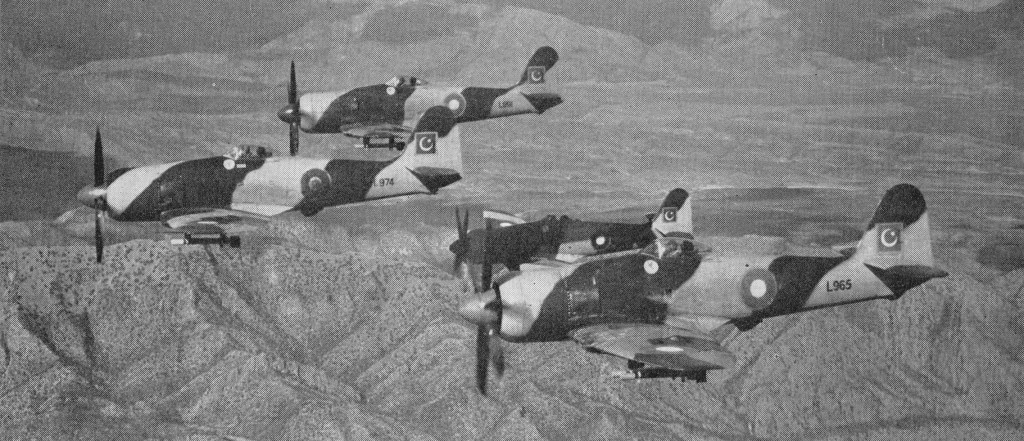
Pakistan Air Force 1958
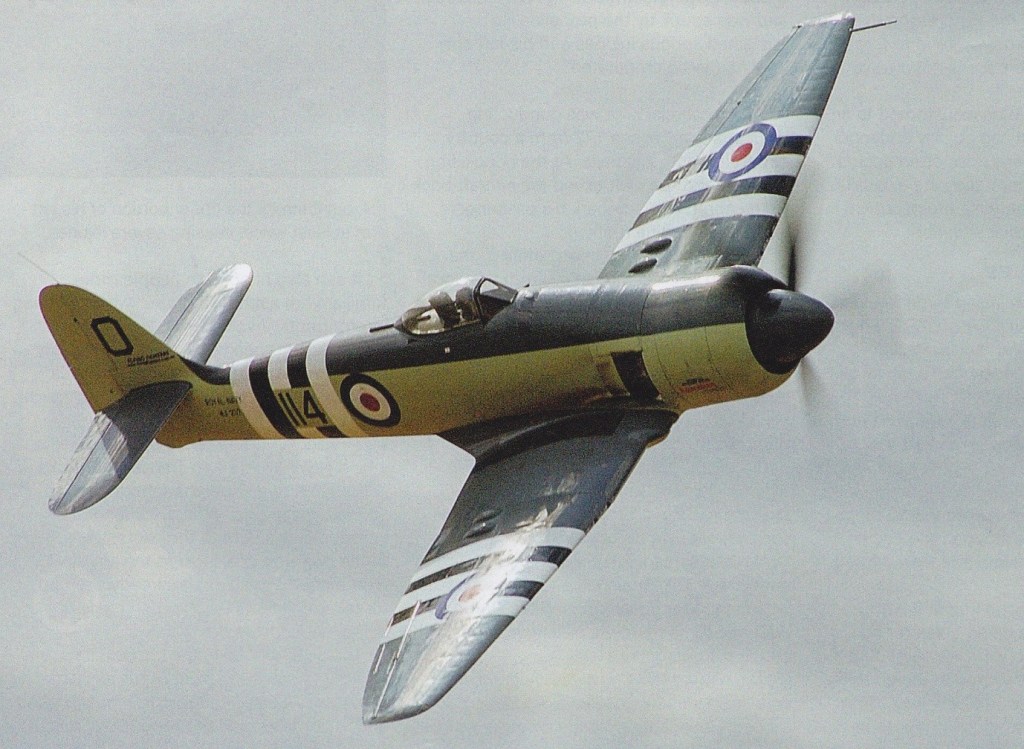
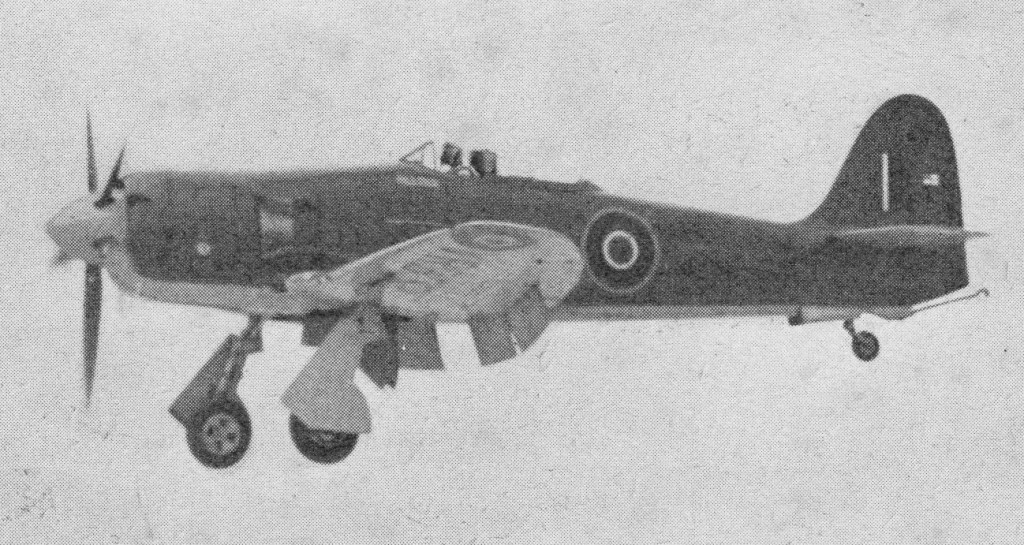
The Admiralty, although obliged to forego 100 aircraft, retained its interest in the project and instructed Hawker to continue trials with its prototypes, SR661 and SR666. By the end of 1945 the latter had flown and set a pattern that was to become familiar over the following eighteen years. Production aircraft were derived from the three prototype ‘Hooked’ Furies, with various degrees of navalisation including folding wings and arrester gear. The fully-navalised Sea Fury with arrester hook and folding wings did not fly until October 21, 1945.
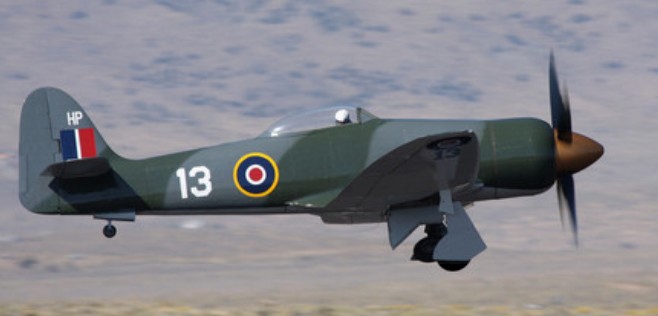
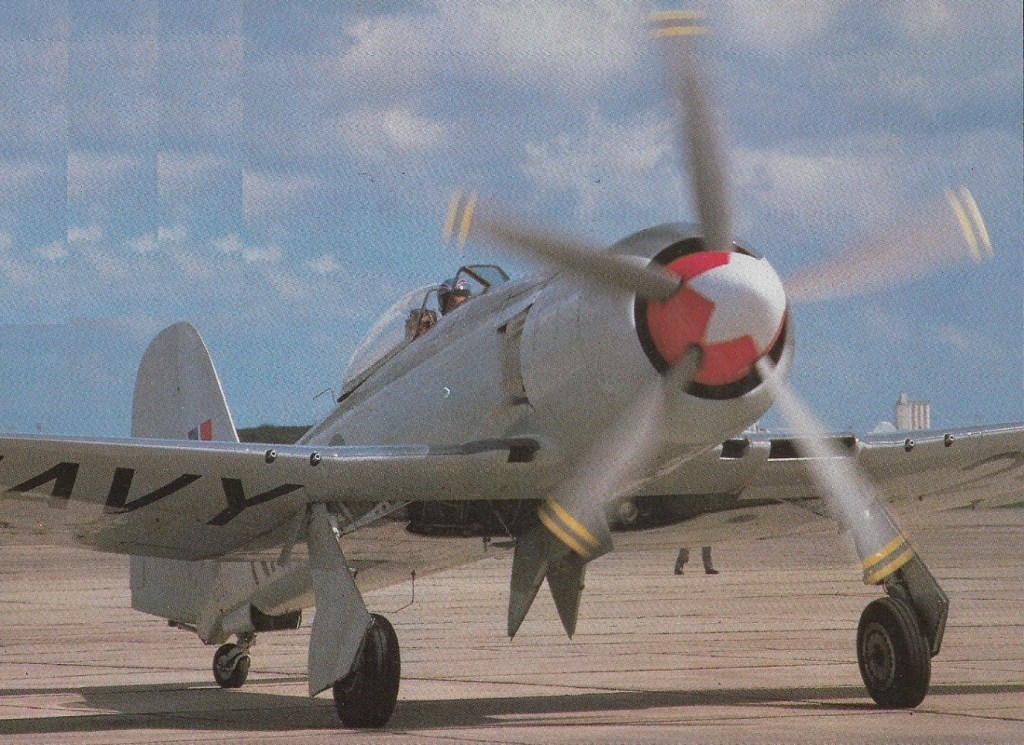
By now named the Sea Fury it having been the intention to call RAF aircraft simply Fury, with its thin eliptical wings and finely cowled radial engine behind a large five blade Rotol propeller.
Fifty Sea Fury F.10s were ordered for the Royal Navy, each powered by an 1,841kW Bristol Centaurus 18 eighteen-cylinder two-row radial sleeve-valve air-cooled engine.
Demands were voiced for the Sea Fury to carry bombs, and so, in 1948, appeared the Mark II fighter bomber ¬capable of carrying rockets, drop tanks, mines, napalm or 1,000 pound (454 kg) bombs. With this aircraft the Royal Navy went to war over Korea in 1950.
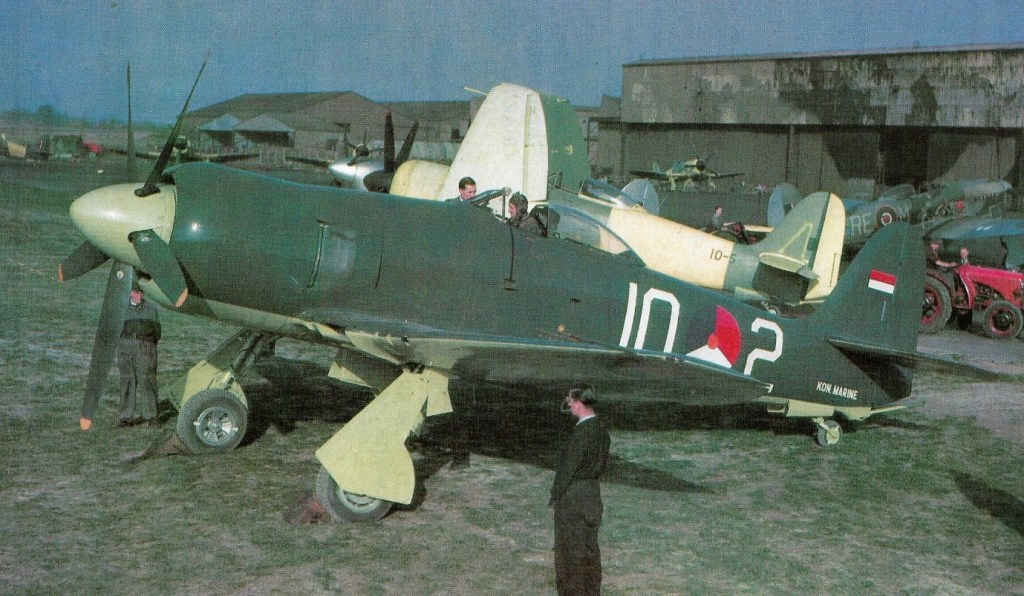
As soon as deliveries started to the Fleet Air Arm in 1946, other countries looked at the design with views to adopting it for their own forces. First was Holland. The Royal Netherlands Navy had received an ex British aircraft carrier, HMS Venerable, and, under the name Karel Doorman, the new vessel was about to be commissioned. The Dutch Government placed an order for ten Sea Furies and followed these with licence built aircraft in 1948. The Sea Fury FB.51 was similar to the FB.11 but had Dutch language instruments and other minor changes for service with the Royal Netherlands Navy. Deliveries from Hawker were supplemented by production under licence by Fokker in the Netherlands.
The Royal Navy’s aircraft first flew in pro¬duction form as the Sea Fury F.Mk 10 on 7 September 1946, entering service with No. 807 Squadron in July 1947. It brought with it a 450 mph (724 kmh) performance, an 11.5 minute climb to 30,000 feet (9 144 m) and an armament of four 20 mm guns a performance unsurpassed by any shipboard fighter in the World at that time.
Manufacture of the Sea Fury F.10 as a pure fighter was short-lived and only 50 were com¬pleted. Production then switch¬ing to the Sea Fury FB.Mk 11 fighter-¬bomber derivative which could carry up to 907 kg (2,000 lb) of external ord¬nance and which also featured a leng¬thened arrester hook plus provision for rocket-assisted take-off gear. This variant became the definitive Sea Fury, deliveries beginning in May 1948, and by the time the line closed in the early 1950s 515 had been completed, as well as 60 examples of the Sea Fury T.Mk 20 two-seat trainer. By then the Sea Fury had also been engaged in combat in Korea, emerging victorious over the jet-powered MiG¬15 on at least two occasions.
It was as the result of foreign interest in the Sea Fury that the two seat trainer version came into existence. In 1947 Iraq had questioned the possibility of providing a two seat variant on which her pilots could train, prior to graduating to the fighter. So successful did the project appear that the prototype was purchased by the Admiralty, leading to the T. Mark 20. The Sea Fury T.20 was a two-seat trainer version for the Royal Navy, based on the F.10. One 20mm cannon was deleted from each wing to allow for the installation in the wings of equipment displaced from the fuselage by the second cockpit. Bombs and rockets or long-range drop tanks could be carried beneath the wings as on the FB.11 fighter bomber.
Pakistan proved to be the largest customer for Furies, for between 1949 and 1954, ninety three single seaters and five trainers were delivered. The Fury FB.60 and 61 were single-seat and two-seat Furies for Pakistan, the single Trainer having a ‘tunnel’ enclosure over the two cockpits.
Iraq ordered a total of fifty five fighters and fighter bombers and took delivery of five trainers as well between 1950 and 1953, but little is known of their service life until their retirement in the early 1960s. 30 Centaurus-engined Fury Is were ordered for the Iraqi Air Force in 1946. Thereafter two Fury Trainers, each with a second separate cockpit introduced immediately aft of the fighter cockpit (first flown on 15 January 1948), were delivered to Iraq, together with another batch of 25 Fury Is and Trainers. Retaining the wing folding and tail-hook mechanisms of the ship-borne fighters, they lacked the hydraulic operation and became known as Baghdad Furies, similar in all other respects to those serving with the navies (although Iraq did receive in that number some Fleet Air Arm Sea Furies diverted from the assembly line.) Egypt received thirteen single seaters (including one of the original Fury prototypes).
Egypt received 12 Sea Furies.
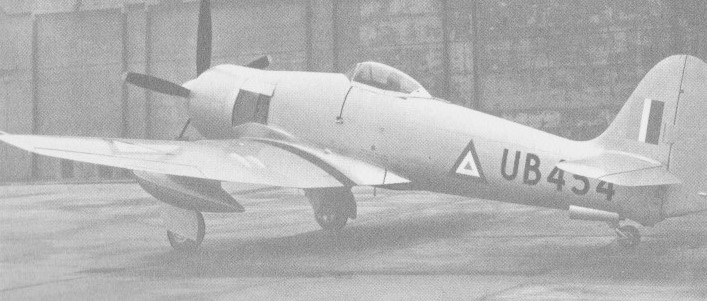
By 1954 large numbers of war ¬scarred and otherwise dilapidated Sea Fury carcases languished at the naval storage units at Anthorn, Donibristle and Abbots¬inch, until early in 1957 it became known that they were to be offered for disposal. Hawker, whose Blackpool factory was threatened with closure by the ramifications of the 1957 Defence White Paper, determined to make good a number of these old aircraft and set about finding markets overseas. Having repurchased around two hundred of the old fighters and trainers, the company was able to negotiate an order with the Burmese Government and, by widespread cannibalisation, sold eighteen single seaters and three trainers to that country. It was being sold as a counter insurgency (or COIN) aircraft for such duties the Batista Government of Cuba followed Burma in 1958 placed an order for fifteen fighters and two trainers. Despite great secrecy and testing of unmarked aircraft in this country, word leaked out that Britain was trading military aircraft with a politically unsuitable cus¬tomer and a scandal threatened. However, despite Batista’s demise, the contract was honoured and full payment was com¬pleted by the Castro regime before trade sanctions were imposed. Western Germany has been taking delivery of Sea Fury two ¬seaters in small numbers almost every year since 1959 and, to 1963, sixteen have been delivered to the D.L.B. for target towing under civil contract to the Luftwaffe. A single¬ seater had been added to the number. Iraq presented four examples to Morocco.
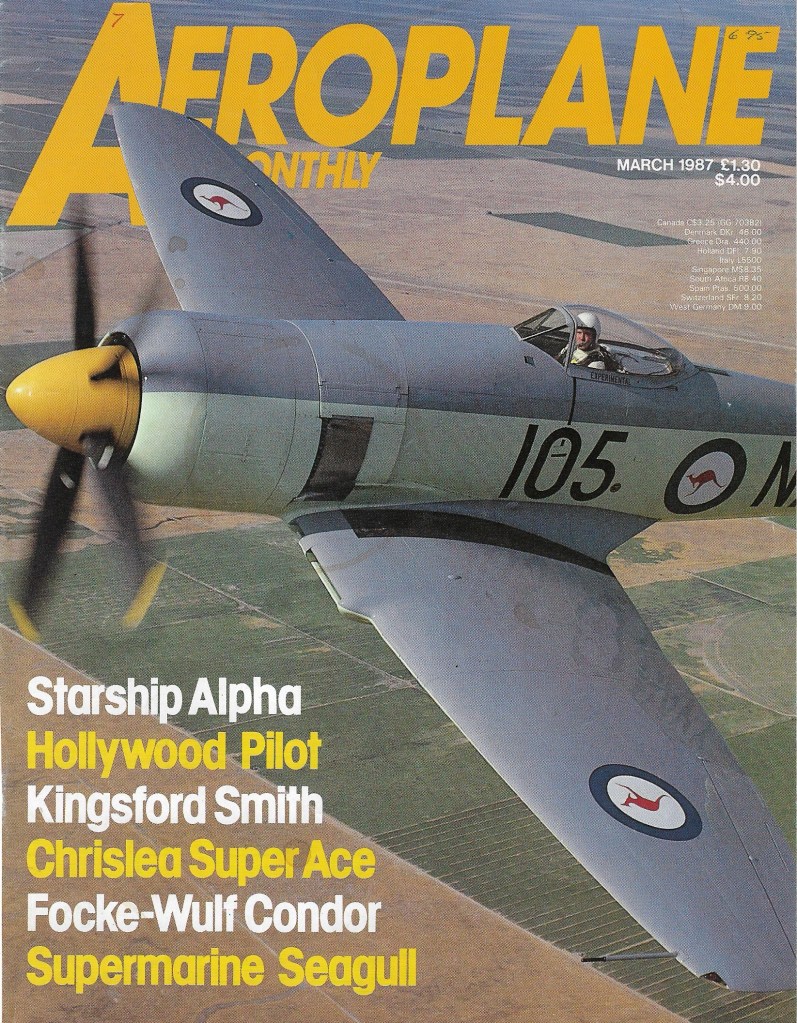
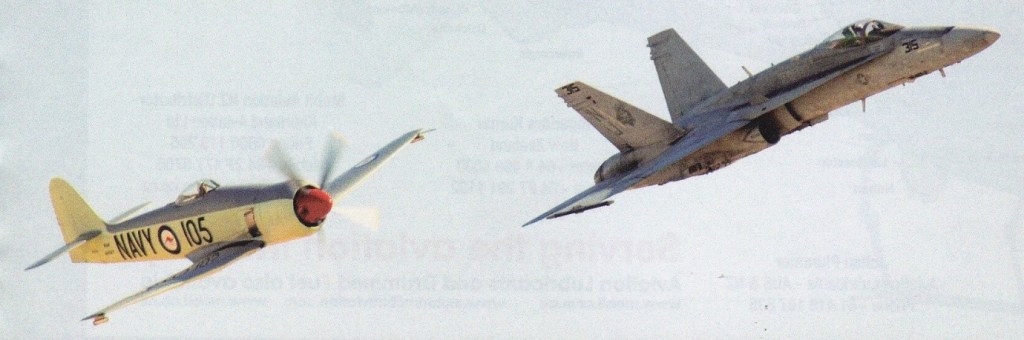
Australia ordered 101 Sea Fury Mark II in 1948. The first was delivered in May 1949, and the last was delivered in 1953.
By the mid- 1950s the Sea Fury had been supplanted by more modern types with the Fleet Air Arm, but some export Sea Furies continued to fly with the air arms of Burma and Cuba for a few more years.
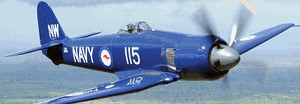
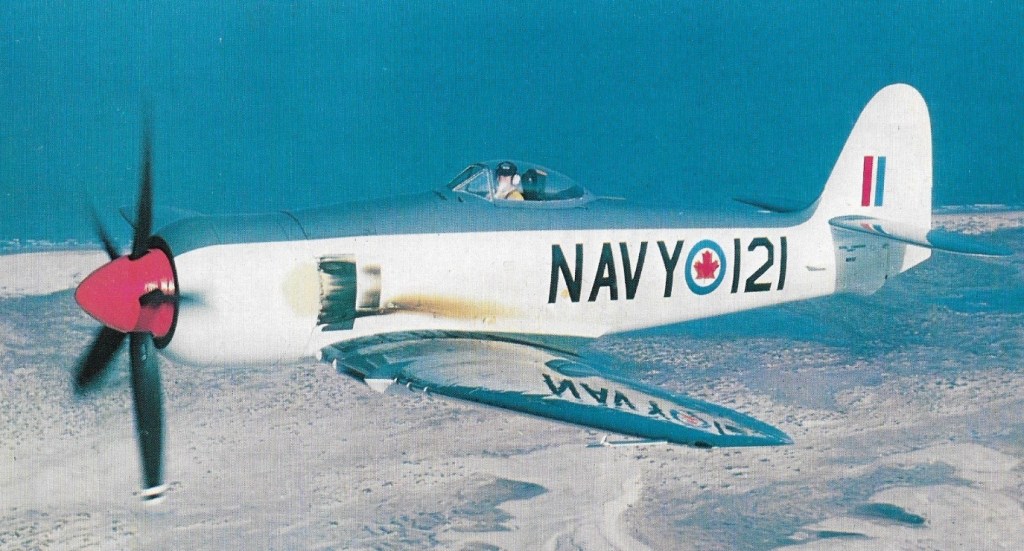
The Royal Canadian Navy equipped Squadrons VF-870 and VF-871 with the Sea Fury. These Squadrons flew 75 Sea Furies from February, 1948 to April, 1957 operating from HMCS Magnificent. The RCN Sea Fury aircraft were replaced by the RCN’s first jet fighter, the McDonnell F2H3 Banshee in 1957.
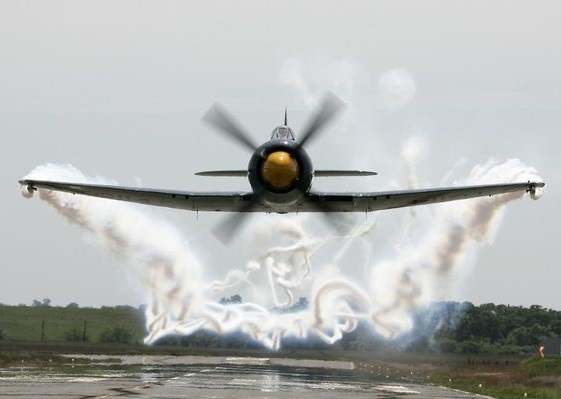
A total of 860 Sea Fury airplanes were built, including a number of tandem two seat trainers. This type exists in very small numbers in the United States where modified versions have scored notable wins on the air-racing circuit.
Fury Max speed: 445 mph at 20,000 ft. Cruising speed: 400+ mph at 20,000 ft. Max range with over load tanks: 2,000 miles Armament: four 20 millimetre cannons, rockets or two 1000 lb bombs.
Sea Fury FB.Mk 11 Engine: one 2,480-hp (1849-kW) Bristol Centaurus 18 Wing span: 11.70 m (38 ft 4.75 in) Wing area: 26.0 sq.m (280 sq ft) Length: 10.57 m (34 ft 8 in) Height: 4.84 m (15 ft 10.5 in) Wheel track: 12 ft Empty weight: 4191 kg (9,240 lb) Maximum take-off weight: 5670 kg (12,500 lb) Maximum speed: 740 km/h (460 mph) at 5485 m. (18,000 ft) Fuel capacity: 200 Imp.G External fuel: 2 x 45 or 90 Imp.G Initial Rate Of Climb: 7 minutes to 20000ft Max ROC: 4320 fpm Service ceiling 10910 m (35,800 ft) Range 1127 km (700 miles) on internal fuel Takeoff run: 960 ft Armament: four 20-mm cannon, plus up to 907 kg (2,000 lb) of external ordnance / 8 x 60lb rockets or 2 x 1000lb bombs Crew: 1