Circa 1990.
Engine: Rotax, 97hp
Height: 7 ft
Length: 12.5 ft
Empty weight: 310 lb
Gross weight: 725 lb
Payload Total: 415 lb
Main rotor diam: 19 ft
Tail rotor dia: 3.5 ft
Max speed: 85 mph
Cruise: 63 mph
Ceiling: 12,500 ft
Seats: 1
Circa 1990.
Engine: Rotax, 97hp
Height: 7 ft
Length: 12.5 ft
Empty weight: 310 lb
Gross weight: 725 lb
Payload Total: 415 lb
Main rotor diam: 19 ft
Tail rotor dia: 3.5 ft
Max speed: 85 mph
Cruise: 63 mph
Ceiling: 12,500 ft
Seats: 1
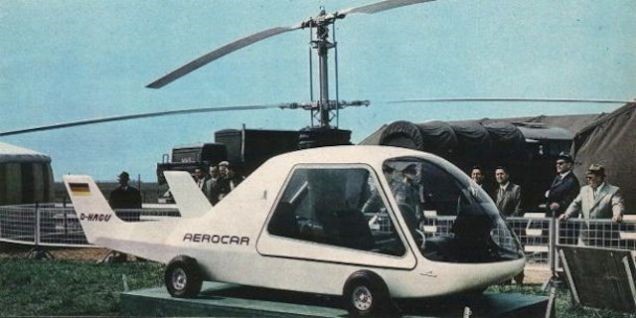
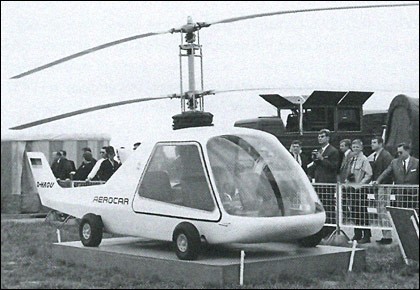
The Rotocar III has developed into the Aerocar. This has a 4-seat cabin, a twin tail assembly, and four road wheels hydraulically driven from the Oredon IV engine mounted behind the rotor pylon.
Wagner built a prototype (D-HAGU) Aerocar roadable helicopter, powered by a 260hp Franklin 6AS-335-B engine, which had a complete body shell. It was first flown in 1965. It was subsequently rebuilt with a Turbomeca Oredon turbine engine.
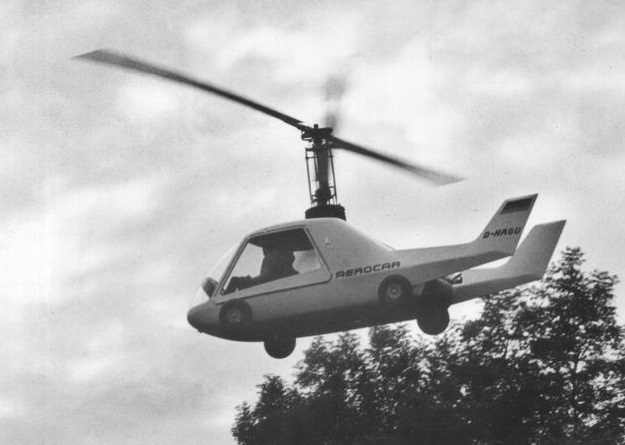
After extensive development work had been carried out, the Wagner designs were passed to a new company, Helikopter Technik Munchen (HTM) in 1971. HTM abandoned the Aerocar.

The first five designs evolved by Alfred Vogt of the Helicopter Technik Wagner since the company’s formation in 1960 included two experimental helicopters, each powered by a 95hp rotary engine. One was a simple 2-seater with a skid undercarriage and pod-shaped body. From this Wagner produced the Sky-Trac torque-less helicopter, which is basically a chassis frame carrying the engine and rotor system, to which a variety of cabins or equipment can be fitted to fulfil different roles.
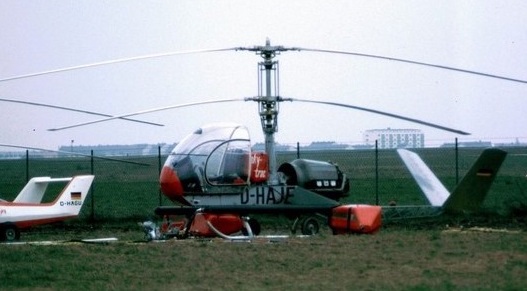
Development commenced in the mid-1960s as an offshoot of the Wagner firm’s attempts to develop a roadable helicopter, and utilised the same coaxial dynamic components that had been developed for that project. Each design utilized a contra-rotating rotor system in which the lower three-blade rotor was attached to the crankcase of a 95 hp three-cylinder rotary engine, rotating around the rotor pylon, with the upper two-blade rotor driven by the crankshaft. The Skytrac featured a narrow single-seat cabin at one end of a box-like “keel” structure, a horizontally mounted Franklin flat-6 engine at the other end, and the transmission and rotor mast between them. The pilot’s seat was enclosed by a sliding, bubble canopy. The prototype flew in this form in July 1965. The Wagner Sky-Trac 1 (D-HAJE), still had a frame structure but was fitted with a 260hp Franklin 6AS-335-B engine, and had a sliding canopy forming an enclosed cabin for the single pilot.
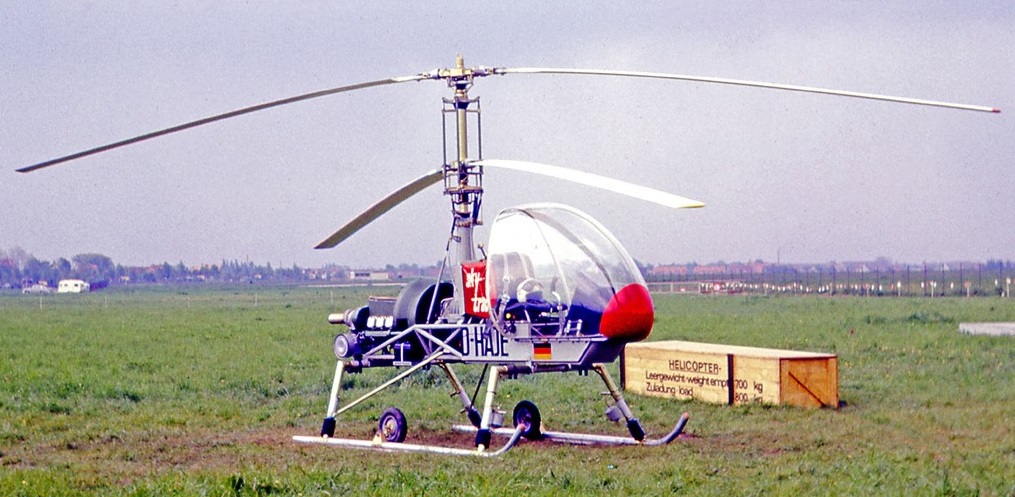
Prototypes of the Sky-Trac 1 (D-HAJE) and Sky-Trac 3 (D-HAJI) were exhibited publicly for the first time at the Hanover Air Show in May 1966.
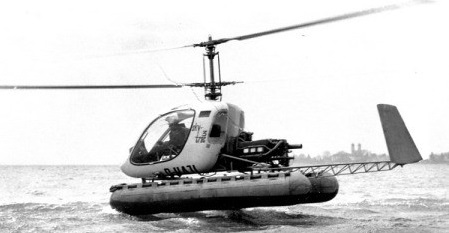
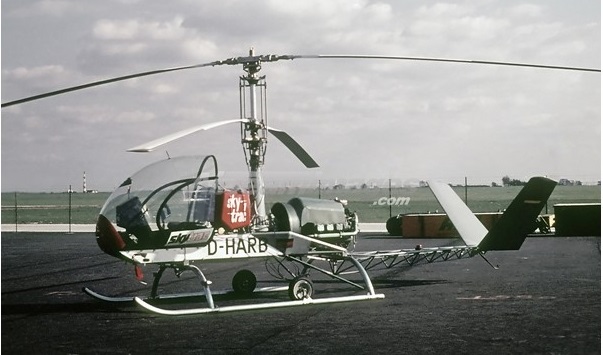
The second machine built (D-HARB) was fitted with a pontoon landing gear and a longer boom with a V-tail. Both are powered by similar 260hp Franklin 6AS-335-B piston-engines, the Sky-Trac 1 being a single-seater with a ‘goldfish bowl’ moulded canopy, open at the rear.
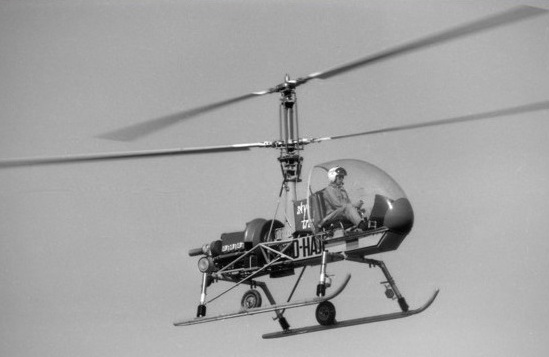
The three-seat Sky-Trac 3 (D-HAJI c/n 11), also flown in 1965, had a more complete cabin structure, faired-in at the back and underneath, and was fitted with spray bars and under-slung tanks for agricultural chemicals. The Sky-Trac 3 can lift loads at least equivalent to its own weight, an under-fuselage hook permitting slung loads of over 700kg to be transported. Alternatively, the heart-shaped cabin can accommodate a stretcher and medical attendant in addition to the pilot, or for agricultural use can be fitted with spray bars and an under-slung tank holding 650 litres of liquid chemicals.
The HTM FJ-Skytrac received both German and FAA certification in 1969.
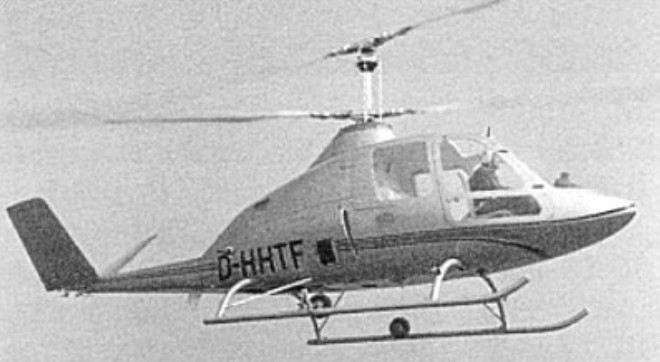
The company developed a kit to convert the Skytrac into a four-seat light helicopter known as the HTM Skyrider. On 21 February 1974 Helicopter Technik München flew the prototype (D-HHTF) of the HTM Skyrider four-seater powered by a 260-hp (194-kW) Avco Lycoming engine.
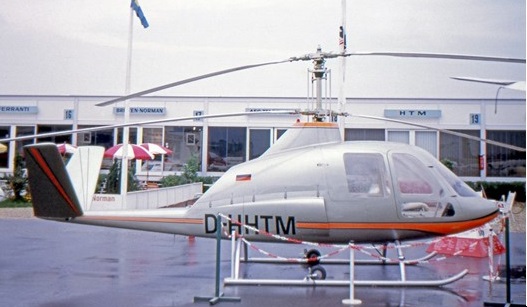
After extensive development work had been carried out, the Wagner designs were passed to a new company, Helikopter Technik Munchen (HTM) in 1971. HTM abandoned the Aerocar, but built a new prototype of the FJ-Sky-Trac (D-HHTM) in tandem two-seat configuration, as a utility helicopter with a 260hp Lycoming IO-540 engine. This still had the coaxial rotor system but was extensively redesigned to accommodate the new engine and cockpit layout.
In 1971, the newly formed Helikopter Technik München (HTM) took over the manufacture and marketing of the Skytrac, announcing in mid-1972 that a production line was being established at Jesenwang with the intention of producing 35 machines by the end of 1973, all of which had found buyers. After this initial batch, HTM planned to sell licences to produce the design in batches of 30 machines each. None of this was to come to pass, however, as HTM was unable to finance the production of the first batch of aircraft.
HTM then went on to build two examples of the HTM Skyrider (D-HTMS and D-HHTF) which reverted to the configuration of the Sky-Trac with a four-seat cabin and a fully enclosed streamlined structure. Mockups of this configuration were displayed at the Hanover and Cannes airshows in 1972 and a prototype was exhibited at the June 1973 Paris Air Show. The Skyrider had a skid undercarriage and V-tail, which commenced flight testing on 21 February 1974. It was possible to convert the basic Skytrac into a Skyrider in a matter of only a few hours’ work.
The Sky-Trac 1 and Sky-Trac 3 were used by HTM to demonstrate the concept, and a new prototype of the Sky-Trac (D-HHTM) was built in tandem two-seat configuration, as a utility helicopter with a 260 h.p. Lycoming 10-540 engine. This still had the coaxial rotor system but was extensively redesigned to accommodate the new engine and cockpit layout.
Since 1992 all the rights for production and design of the Skytrac and Skyrider helicopters are owned by Mr. P. Chrobak.
Construction Numbers:
D-HAJE Wagner Helicopter Technik FJ-V6, Skytrac 1, cn 10
D-HAJI Wagner Helicopter Technik FJ-V7, Skytrac 3, cn 11
D-HARB Wagner Helicopter Technik FJ-V8, Skytrac 1, cn 12
D-HAGO Wagner Helicopter Technik FJ-V2 Skytrac cn 6
D-HAGU Aerocar Wagner Helicopter Technik FJ-V3 Skytrac cn 7
D-HAGY Wagner Helicopter Technik FJ-V4 Skytrac cn 8
D-HAHI Skyrider Wagner Helicopter Technik FJ-V5 Skytrac cn 9
I worked in the Montege des Skytrack and Skyrider from 1972 to 1974 as a group leader and was one of the few co-riders who was allowed to get into a Skyrider. Unfortunately, the company HTM then went into insolvency and I still have a title from the insolvency administrator about 5000 DM that was never enforced. The helicopter was moved in Moosbach / Lohrbach airfield in the Odenwald.
Franz Wenninger
Specifications:
Skytrac
Engine: 1 × Franklin 6AS-335-B, 195 kW (260 hp)
Length: 4.00 m (13 ft 2 in)
Main rotor diameter: 10.40 m (34 ft 1 in)
Height: 3.80 m (12 ft 6 in)
Main rotor area: 84.9 m2 (914 ft2)
Empty weight: 850 kg (1,870 lb)
Gross weight: 1,500 kg (3,300 lb)
Maximum speed: 160 km/h (100 mph)
Range: 400 km (250 miles)
Service ceiling: 3,500 m (11,000 ft)
Rate of climb: 2.0 m/s (400 ft/min)
Crew: One pilot
Capacity: 2 passengers
HTM Skyrider
Engine: Lycoming IO-540, 260hp
Rotor diameter: 10.40m
Fuselage length: 7.43m
Weight empty: 1015kg
Gross weight: 1530kg
Max speed: 185km/h
Service ceiling: 3860m
Range: 620km
Wagner Sky-Trac 3
Engine: 1 x Franklin 6AS-335-B, 195kW / 260 hp
Rotor diameter: 10.0m
Fuselage length: 4.0m
Height: 3.80m
Max take-off weight: 1500kg
Max speed: 166km/h
Service ceiling: 2200m
Max range: 200km
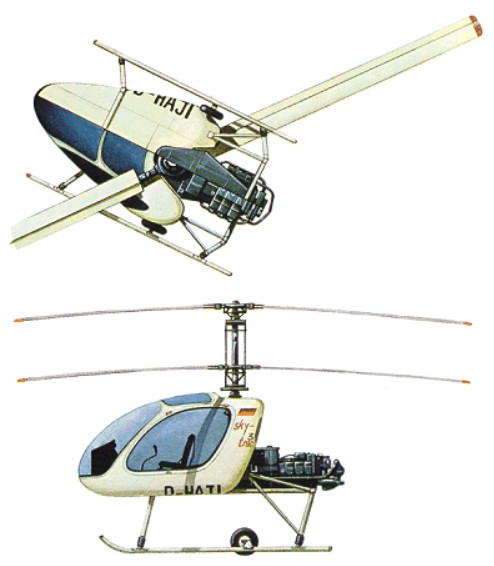
The Helikopter Technik Wagner of Friedrichshafen, Germany, was formed by Josef Wagner with the objective to develop a torque-free basic vehicle which could be fitted with a variety of cabins and specialized equipment for different applications. Founded to produce the Skytrac two-seat lightweight multipurpose helicopter, designed originally by Wagner Helicopter Technik.
Development was started in 1960 and designed by Chief Engineer Alfred Vogt, the earliest simple two-seat pod-shaped test models with coaxial rotors and skid landing gear were fairly rudimentary machines built to test the concept, and one design was a roadable machine titled the Rotocar III.
The HTM FJ-Skytrac received both German and FAA certification, and the company developed a kit to convert the Skytrac into a four-seat light helicopter known as the HTM Skyrider. Production terminated owing to lack of capital.
De Bothezat who, after abandoning his first helicopter in 1923, had created a firm for the design and manufacturing of industrial fans, returned in 1937 to the helicopter: he created then the Helicopter Corporation of America and built a coaxial helicopter whose testing was entrusted to a Russian ace of World War I Captain Sergievsky.
Helicopteros Do Brasil sa was founded 1978, with partial Aerospatiale of France shareholding, to assemble Aerospatiale SA 315B Lama and AS 350B Ecureuil helicopters, known locally as HB 315B Gaviao and HB 350B Esquilo respectively. Programs encompassed assembly of Esquilo plus the military AS 550 Fennec version, and AS 365 Dauphin and military AS 565 Panther (all Eurocopter types).
Canada
Based in Canada for project management, but with French connections in helicopter development; first flew in France in 1976 and 1984 two prototypes of a four-seat helicopter with rotor driven by cold-air tip jets. Program halted.
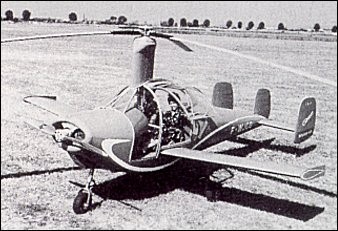
In France, Helicop-Air, produced the prototype of a two-seat light autogyro-type aircraft known as the Girhel.
The Girhel is a side-by-side two-seat light aircraft to which an autogyro rotor has been fitted. It was designed with the assistance of Ing. Georges Lepere.
For take-off the rotor can be set turning by engaging a clutch in a drive-shaft from the engine. In flight the rotor autorotates and the engine drives a tractor airscrew in the conventional manner. Most of the “lift” is contributed by the fixed wings in cruising flight, so that the rotor is heavily loaded only during take-off and landing. The three-blade rotor is of wood construction, with variable pitch. Starting is by a clutch and drive-shaft from engine. The wings are mid-wing cantilever monoplane with a single metal spar, wood covering, large ailerons, and end-plates at the tips.

The all-metal fuselage structure has a cantilever monoplane type tail unit, with conventional elevators, two fins and central rudder. All-wood structure. The landing gear is a non-retractable tricycle type. The nose-wheel is steerable and brakes are on the main wheels.
The two seats are side-by-side in the enclosed cabin. Dual controls are optional. Space for baggage is aft of the seats. There is provision for carrying a litter or agricultural spray-gear.
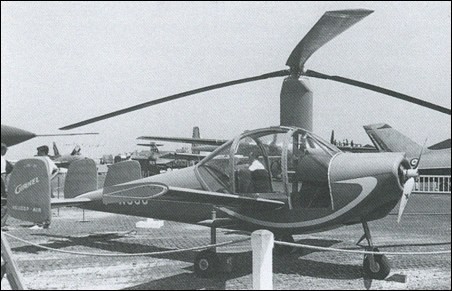
This was exhibited for the first time at the 1959 Paris Salon de l’Aeronautique.
It is not clear whether the prototype actually flew.
Two versions of the Girhel were offered:
Girhel L.50. 90hp Continental C90 engine with Ratier two-blade fixed-pitch airscrew.
Girhel L.51. With 150hp Lycoming O-320 engine with a variable-pitch airscrew.
Helicop-Air L.50 Girhel
Engine: Continental C.90, 65kW
Prop: Ratier two-blade fixed-pitch
Rotor diameter: 10.0m
Wngspan: 6.0m
Length: 6.10m
Height: 2.70m
Helicop-Air L51 Girhel
Engine: Lycoming O-320, 150hp
Prop: variable-pitch
Rotor diameter: 10.0m
Wngspan: 6.0m
Length: 6.10m
Height: 2.70m
Weight empty: 416kg
Weight loaded: 750kg
Max speed (est.): 215km/h
Cruising speed (est.): 180km/h
Min flying speed (est.): 22km/h
Range with pilot and 234kg payload (est.): 100km
Range with two persons and baggage (est.): 1000km
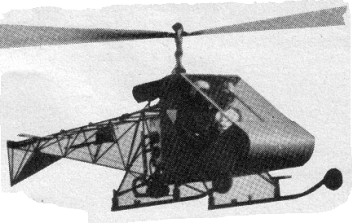
Harold E. Emigh founded the Helicopter Research Corporation in 1954 to develop and market a single-seat personal helicopter. Known as the Helicom Commuter Jr Model H-1 A, the prototype first flew in 1960, and was sold both in ready-to-fly form and as a kit for assembly by amateur constructors. A ground trainer version was developed also, mounted via a gimbal to a castoring base which was too heavy for the helicopter to lift from the ground.
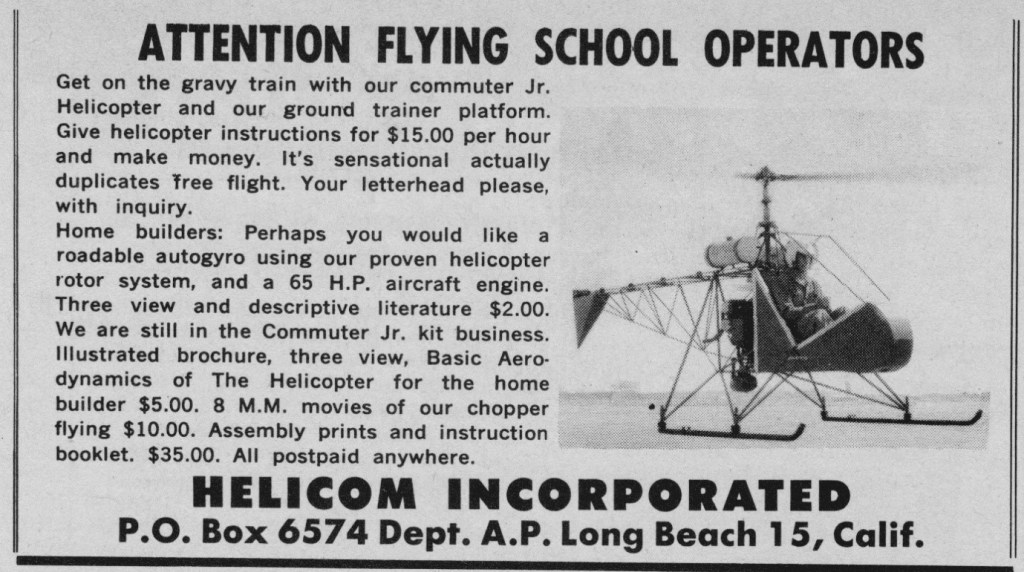
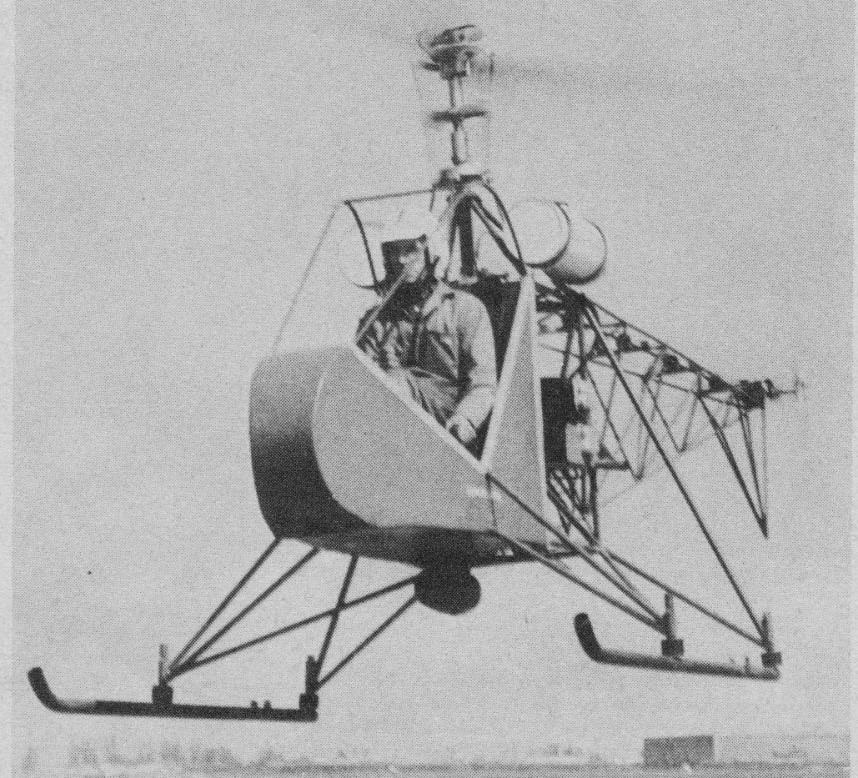
The commercial rights were sold to Southern Pacific Aircraft Co and then to International Helicopter Inc of Mayville, New York, with the machine being refined along the way as the Commuter II.
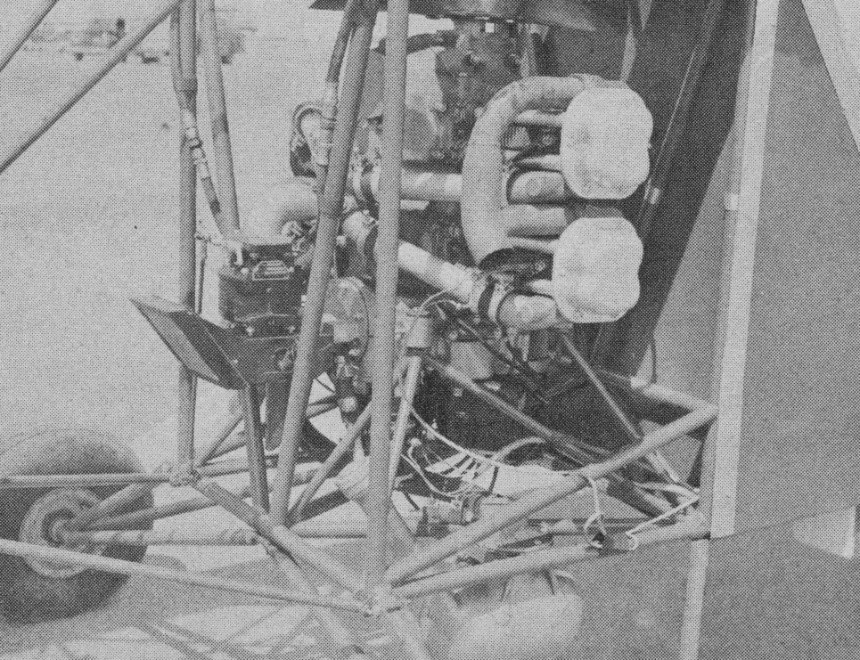
Engine: Continental, 90 hp.
Gross weight: 950 lb
Fuel capacity: 2 x 6 USG
Cruise: 90 mph