1996: PO Box 2134, Hemet, CA 92546-2134, USA.
LSA builder
1996: PO Box 2134, Hemet, CA 92546-2134, USA.
LSA builder
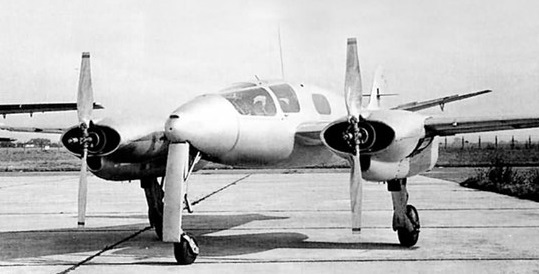
The Hirsch–MAéRC H-100 was a one-off research aircraft designed by Frenchman René Hirsch to test his system to deal with gusts that make for bumpy and uncomfortable flying.
It incorporated a system in which the halves of the horizontal tail moved on chordwise hinges to operate flaps on the wings. The conventional elevators provided not only pitching moments, but moved the tail halves about their chordwise hinges to cause the flaps to move in the direction to provide direct lift control. In this way, the loss of longitudinal control due to the gust-alleviation system was overcome. Of wooden construction, the H-100 incorporated many other ingenious features, including swivelling wingtips for reducing rolling moments due to rolling gusts and lift due to horizontal gusts. The design also incorporated large pneumatic servos operated by dynamic pressure to restore damping in roll and to stabilize the rate of climb or descent.
The single aircraft built was retired after 130 test flying hours and was then donated to the Musée de l’Air et de l’Espace, at Le Bourget, Paris, where it remains on display.
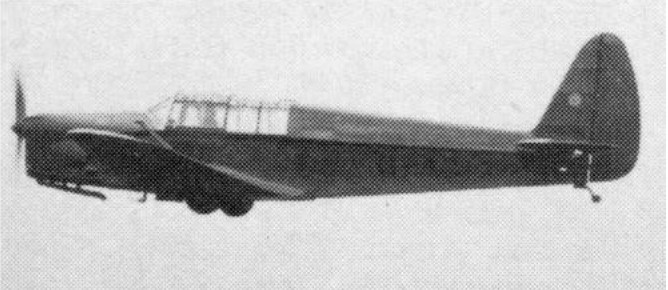
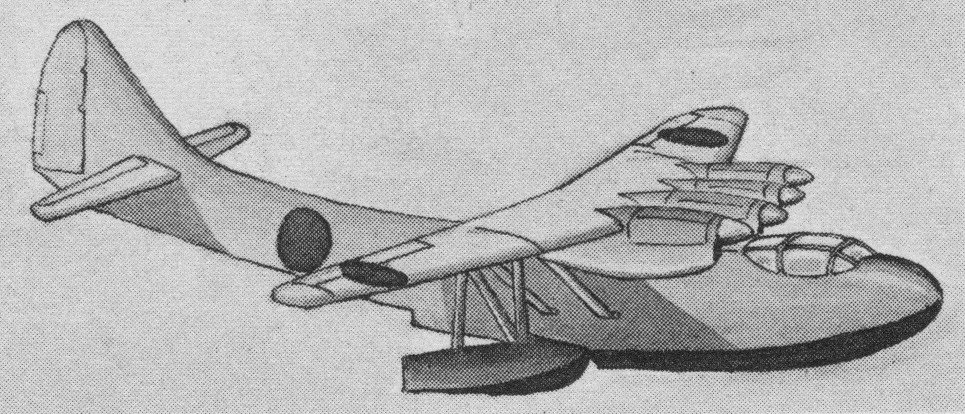
Reports of a copy of the French Leo H-24-6 flying boat led to assignment of the code name ‘Tillie’. The aircraft was actually a Japanese original design powered by Junkers Jumo 205c engines that was dropped in the experimental stages.
The Hiro Type 91, (full designation Hiro Type 91 520 hp water-cooled W-12), was a 12-cylinder, water-cooled, W engine developed for aircraft use by the Imperial Japanese Navy in the mid-1930s. Power was in the 450 kW (600 hp) range. Its design was inspired by the Lorraine-Dietrich 12Eb Courlis. An enlarged more powerful engine, the Type 90 had also been developed using the Lorraine 12F Courlis as inspiration, developing 600 hp.
Applications:
Aichi E10A
Aichi E11A
Hiro H4H
Kawanishi E7K
Mitsubishi Ka-9
Specifications:
Type 91 500hp-1
Type: 12-cylinder water-cooled W-block (3 banks of 4 cylinders) aircraft piston engine
Bore: 135 mm
Stroke: 160 mm
Displacement: 27.5 L
Cooling system: Liquid-cooled
Power output:
620 PS for takeoff
520 hp for max continuous
Japan’s military leaders discovered the value of aircraft while participating in World War I. It was necessary to import all of its military aircraft and engines as there was no aviation manufacturing industry in Japan at that time. The Imperial Japanese did not want to rely on foreign products, yet that was all that was available. To remedy this, Japan began importing state-of-the-art aircraft from around the world, and after close examination and study they incorporated the best features of each into their own design, thereby creating a uniquely superior Japanese designed and built product.
In late 1928 the IJN imported a Supermarine Southampton II from Britain. The Southampton was a twin-engine biplane flying boat, with the 500 hp (373 kW) Napier Lion VA W-block tractor engines mounted between the wings. It was one of the most successful flying boats of the between-war period.
In 1929, Lieut-Cdr (Ordnance) Jun Okamura was assigned as chief designer to assist in the design of a new Japanese aircraft using the Southampton as a starting point. After performance testing at Yokosuka, the Southampton was ferried to the Hiro Naval Arsenal for further study. Testing and evaluation revealed several construction innovations when compared to the German flying boats that were also undergoing evaluation. Those features included an all-metal hull and simplified construction, both of which the Japanese Navy hoped to incorporate into the replacement for the outdated Type 15 Flying-boat.
The Napier Lion engines were closely examined by the engineers at Hiro as well. They were charged with creating a new Japanese designed and built engine based on the Napier engine that powered the Supermarine Southampton II. The new engine was identified as the Type 14 engine, as it was accepted in the 14th year of Emperor Taishō’s reign, as that was the designation method used at the time.
The Hiro Type 14 engine, (full designation Hiro Type 14 500hp water-cooled W-12), was first run in 1929. A water-cooled twelve-cylinder W engine built by the Hiro Naval Arsenal (Hiro Kaigun Ko-sho) for the Imperial Japanese Navy. The Hiro Type 14 engine had three banks of four cylinders each, with the center bank upright, and the other two banks angled outward 60 degrees. The first aircraft to be powered by a Type 14 engine was the Hiro H2H flying boat.
The 550 hp Type 14 engine, although notionally more powerful than the Napier Lion, flight tests of the H2H1 indicated the Type 14 engine had poor performance due to insufficient power, and it was replaced by the 600 hp Hiro Type 91 engine (an enlarged development of the Type 14) when manufacturing was shifted to Aichi in 1931.
Designed by the Hiro navy air arsenal in 1932, this twin-engined land-based heavy bomber was not a particularly successful venture, and only eight were built. The prototype made its first flight in March 1933, and a number of faults were revealed during the flight test programme. Most serious were a weakness of the basic airframe structure, and a tendency to wing flutter. Difficulties were also encountered with the original powerplant, which consisted of a pair of 600 hp Hiro Type 94 water cooled engines.
The G2H1 went into production in 1935 as Navy Type 95. The production version carried a crew of seven, was armed with four 7.7 mm (0.303¬in) Type 92 machine guns, and carried an internal bombload of six 250 kg (551 1b) or four 400 kg (881 1b) bombs. Only six were built by Hiro, because of the generally unsatisfactory nature of the aircraft. Two others were completed by Mitsubishi, with 900 hp 18 cylinder engines. In 1934, Mitsubishi evolved the Ka 9 long range reconnaissance monoplane based on the G2H1 design. The chief claim to fame of the two types was their influence upon the development of the highly successful Mitsubishi G3M bomber. The few G2H1s built took part in raids against mainland China during the Sino Japanese war. Before long, however, most of them were destroyed in a fire at their base on Cheju Island in the Korea Strait.
Span: 31.68 m (103 ft 11.25 in)
Length: 20.15 m (66 ft 11 in)
Gross weight: 11000 kg (24 251 lb)
Maximum speed: 245 km/h (152 mph).
Hiro’s Navy Type 90-1 three-engined flying-boat, built in the early 1930s, had Japanese-built Hispano-Suiza engines and bore a close resemblance to the German Rohrbach flying-boats.
In 1920, Shorts Bros. export some F.5 to Japan, which then bought a license. The arsenal of Yokosuka to build 10, Aichi 40 and arsenal Hiro 10 before developing in 1927 from F.5 Hiro Type 15 (Hiro H1H).
Japan
Hiro’s Navy Type 90-1 three-engined flying-boat, built in the early 1930s, had Japanese-built Hispano-Suiza engines and bore a close resemblance to the German Rohrbach flying-boats. In 1932 the company started work on a twin-engined land-based attack bomber, Hiro G2H1, which went into production in 1935 as Navy Type 95. Only eight were built, two by Mitsubishi, which subsequently developed a long-range reconnaissance version which influenced the design of the successful Mitsubishi G3M bomber.

