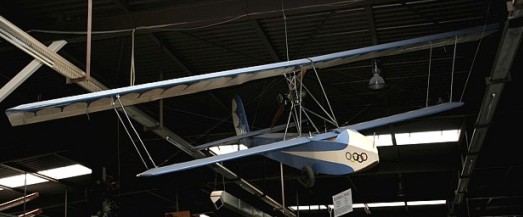
At the end of of 1935 Hübner flew the Mücke for the first time. Flight areas were the Neckarwiesen and Obrigheim, Germany. The biplane is detachable and can fit a trailer. The 2 cyliner, pusher, 1.8Ps engine was fastened between two struts.
At the end of of 1935 Hübner flew the Mücke for the first time. Flight areas were the Neckarwiesen and Obrigheim, Germany. The biplane is detachable and can fit a trailer. The 2 cyliner, pusher, 1.8Ps engine was fastened between two struts.
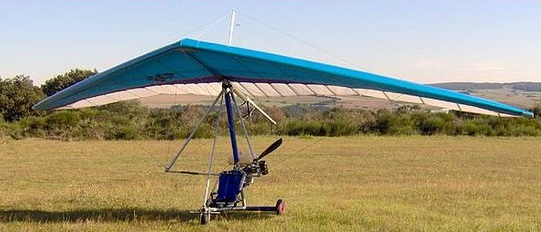
The Hubertec Thermik (English: Thermal) is a German ultralight trike, designed and produced by Hubertec of Aach, Rhineland-Palatinate. The aircraft was supplied as a complete ready-to-fly-aircraft.
The company is an industrial prototyping and exercise machine specialist that decided to produce an ultralight trike design as a sideline project.
The 1998 Zhong Hua ZH-100 airship was registered B 614 L “Red/Yellow” to Gao Xinsheng, China.
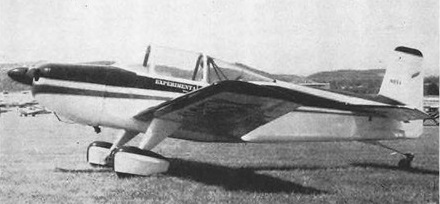
Designed and built by Harold Hayden, Robert Kinney, Arthur Payne and Reno Benner in their spare time, over about five years, near Bristol, PA, USA.
Fuel is carried in the wing tips. Flaps are fitted.
Engine: Lycoming O-235-C1, 115 hp
Wing span: 25 ft
Wing area: 99 sq.ft
Length: 19.1 ft
Height: 8 ft 1 in
Gross weight: 1300 lb
Fuel capacity: 36 USG
Cruise: 145 mph
Wing loading: 13 lb/sq.ft
TO dist: 400 ft
Stall: 50 mph
Glider builder
HPH Ltd, Caslavska 126, P.O.Box 112, CZ-284 01 Kutn & Hor, Czech Republic.
HPH Ltd. took over the original molds and drawings for glider Glasflugel 304 from Mr. George Brauchle in 1998.
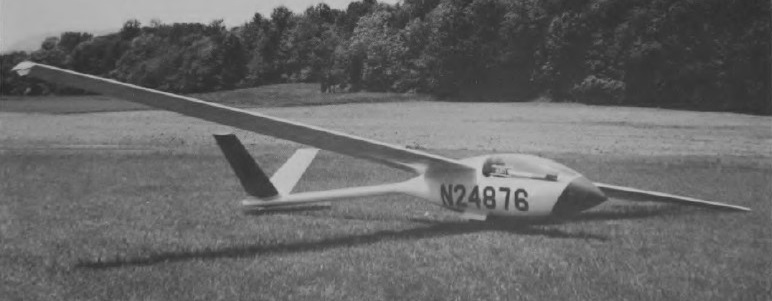
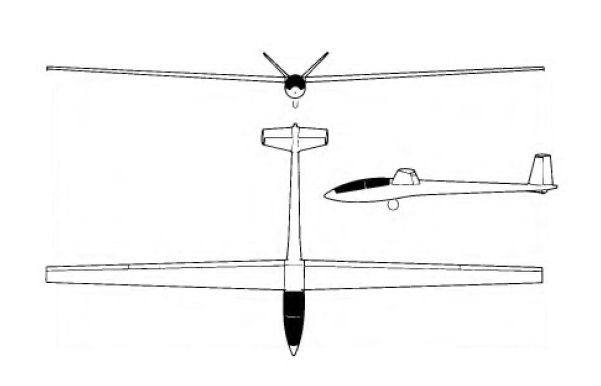
To meet the Standard Class specifications of OSTIV – the Organisation Scientifique et Technique Internationale du Vol a Voile – R.E. Schreder designed the 15m span RS-15 single-seater, which first flew in 1973 and is especially intended for simple and rapid assembly by homebuilders; it is licensed in the amateur-built Experimental category. No jigs are required, and most major components are prefabricated, thus reducing assembly time for a builder with no more than average mechanical aptitude to approximately 500 man-hours. The RS-15 is a pod-and-boom desgin which originally was intended to convert into various configurations, with wingspans of from 13 to 20 m. being matched with booms of suitable length, two-place pods, etc. In the event, Schreder decided to go with the basic 15 m. single-seat version featuring a fiberglass cockpit pod and a six-inch-diameter tube for the boom.
The cantilever shoulder wings are all-metal except for polyurethane foam plastic ribs spaced at 4in intervals. The main-wing spar caps are machined from aluminium plate and up to 200lb of water ballast is carried inside the wing box spars. Plain ailerons are featured, and these can be linked to the optional trailing edge flaps/air brakes, which are of aluminium sheet bonded to foam ribs.
The monocoque fuselage is built in two main parts: a prefabricated glassfibre forward pod, complete with bulkheads, floorboards and a moulded pilot’s seat, and a 6in diameter tail boom of aluminium tube with an all-metal V-tail which can be folded upwards for towing or storage.
The retractable monowheel has a hydraulic shockabsorber and brake, and there is a fixed steerable tailwheel, also with a shock-absorber.
A number of significantly modified RS-15s have been built including Otto Zauner’s One Yankee with his own design of fuselage and tailplane.
RS-15
Span: 15m / 49 ft 2.5 in
Length: 6.71 m / 22 ft 0 in
Height: 1.17 m / 3 ft 10 in
Wing area: 10.5 sq.m / 113 sq.ft
Aspect ratio: 21.4
Airfoil: Wortmann FX-67-K-150
Empty weight: 200 kg / 440 lb
Max weight: 426 kg / 940 lb
Water Ballast: 90 kg / 200 lb
Payload: 226 kg / 500 lb
Wing Load: 40.57 kg/sq.m / 8.3 lb/sq.ft
Max speed: 150 mph / 130 kt / 241 km/h (in smooth air)
Stall speed: 32.5 kt / 60 km/h
Max rough air speed: 104 kt / 193 km/h
Max aero-tow speed: 120 mph
Min sinking speed: 0.64 m/s / 2.1 fps / 1.24 kt at 43 kt / 80 km/h
L/DMax: 38 at 93 kph / 50 kt / 58 mph
Best glide ratio: 38:1
Seats: 1
No. Built: 20
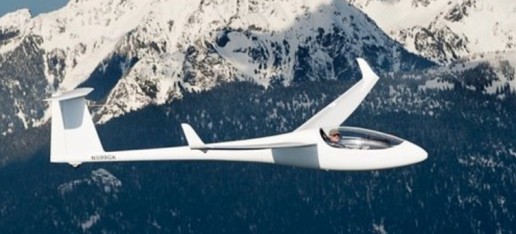
The Tetra 15 is a carbon-fiber 15meter (with plans to have 18meter extensions) sailplane that Brad Hill and Bob Kuykendall built. It is registered as a homebuilt experimental glider, built by Brad Hill using the molds from the HP-24 project.
First flying in Jan 2012 in Arlington, Washington, the kit form is from HP Aircraft and called the HP-24. Bob Kuykendall started in April 2001 posting updates on the HP-24 project.
Brad accumulated roughly 400 hours in the Tetra 15 in two seasons.Performance is matched with other gliders where their factory claims 42:1.
This was the only kit-built composite glider being produced in the United States in 2014.
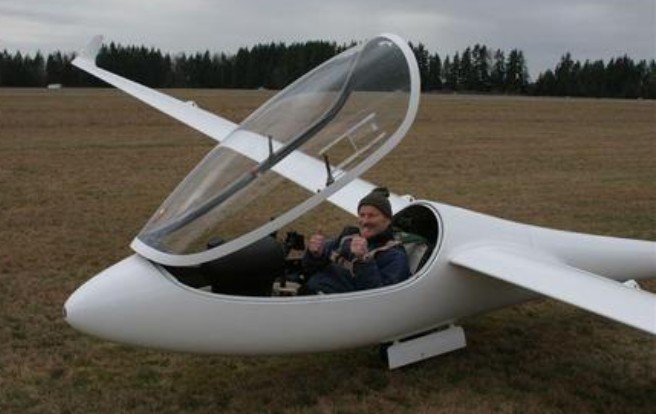
The HP-22 is- a high-performance, 15-meter class, side-by-side, two-place, self-launching, amphibious sailplane. It is designed for simple, rapid assembly by the homebuilder, licensed in the Amateur-built Experimental Category.
The basic layout so closely resembled an amphibian that making it watercapable added little extra weight or performance penalty. Every effort was made to produce a ship that could be built by the average amateur without any prefabricated parts, jigs or molds, the company says. Emergency wheels-up landings may be made on the keel skid.
The following design features and kit simplify construction of the HP-22 and reduce building time to approximately 400 man-hours: main wing spar caps cut from 1-inch thick aluminium plates; rectangular wing with all ribs the same size, fuselage panels and bulkheads that are glued together, which simplifies riveting and reduces caulking and leak and corrosion problems; epoxy bonding for rapid assembly of fuselage, wings and tall., automatic extension and retraction of engine, eliminating any need for manual or electric motor actuation; retractable wing floats and wheels to reduce drag and permit operations on water and snow: a complete kilit of materials with all complicated welding, machining, forming, panels and bulkheads, cable swaging, heat treating, etc. accomplished.
1984 Estimated prices: Tail Kit $350, Wing Kit $3,300, Engine Kit $3,000, Trailer Kit $2,500, Fuselage Kit $3,600, Complete Kit without Engine $7,000, Complete Kit with Engine $10,000, ‘ Drawings and Instructions Only $150:
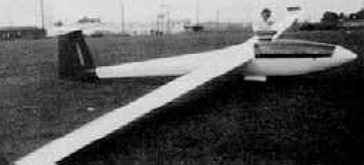
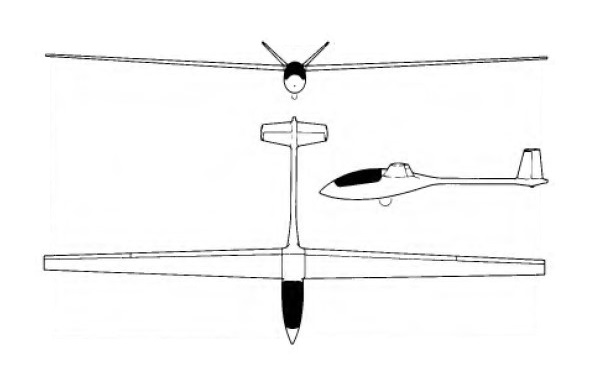
The HP-19 features a straight tapered wing employing a Schreder modification of a Wortmann airfoil and tip winglets. Large flaps provide glidepath control.
Structure: metal, fiberglass, carbon fiber spar caps, foam ribs
Wing span: 15m / 49.2ft
Wing area: 10.5sq.m / 113sq.ft
Empty Weight: 213kg / 470lb
Payload: 227kg / 500lb
Gross Weight: 440kg / 970lb
Wing Load: 41.9kg/sq.m / 8.58lb/sq.ft
Water Ballast: 0
Aspect ratio: 21.4
Airfoil: Wortmann/ Schreder mod.
MinSink: 0.49 m/s / 1.6 fps / 0.95 kt
L/DMax: 42 80 kph / 43 kt / 50 mph
Seats: 1
No. Built: 1
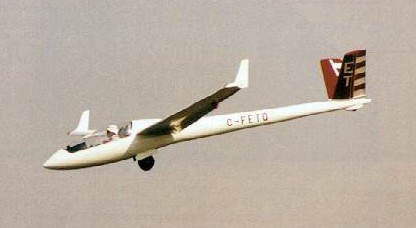
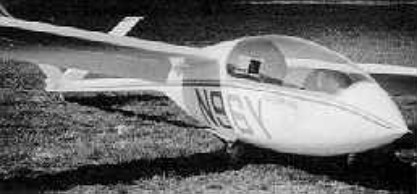
Designer Richard E. Shreder’s HP (for high-performance) 18 is a 15-meter Standard Class sailplane racer, which made its first flight in 1975; it is designed for sale in kit form for homebuilt construction and assembly, and about 170 had been built or were under construction by early 1979.
It is constructed with machined aluminium spars for the cantilever shoulder wing and precut hard foam wing ribs spaced at 10cm intervals; the HP-18A differs in having carbon-fibre spars but has similar wing rib construction. The HP-18 uses the Wortmann 67-150 airfoil. Camber-changing flaps and ailerons occupy the entire trailing edge deflecting 90 degrees, and up to 200lb of water ballast can be carried inside the wing box spar.
The design also incorporates certain improvements over the Standard Class RS-15 to which it is generally similar, such as new wing tips, a removable tailwheel, better gap seals and improved streamlining.
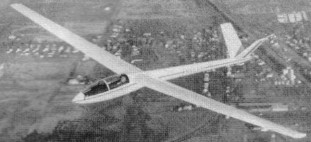
The HP-18 has a slightly longer fuselage than the RS-15 , with a circular instead of oval section, and this is supplied as a pre-formed Kevlar pod, aluminium rear fuselage and the V-tail; the pilot sits under a two-piece flush canopy. The control stick is side-mounted with attached brake handle and trim tab although modifications using a conventional stick have been made. A retractable Tost monowheel with a mechanically-expanding brake is supplemented by a steerable tailwheel.
One HP-18, C-GOIY, has been modified by its Canadian builders Don Band and Peter Masak to have winglets of glassfibre and balsa and Wortmann FX-60-126 section at the wing tips.

One belongs to the National Soaring Museum.
HP-18A
Span: 15m / 49 ft 2.5 in
Length: 7.16 m / 23 ft 6 in
Height: 1.22 m / 4 ft 0 in
Wing area: 10.66 sq.m / 114.7 sq ft
Aspect ratio: 21.4
Airfoil: Wortmann FX 67-150
Empty Weight: 213kg / 470lb
Gross Weight: 440kg / 970lb
Wing Load: 41.9kg/sq.m / 8.58lb/sq.ft
Water Ballast: 90kg / 200lb
Max speed (smooth air): 150 mph / 130 kt / 241 km/h
Top speed (rough air): 120 mph / 104 kt / 193 km/h
Max aero-tow speed: 120 mph
Stall clean: 40 mph
Stall flaps: 35 mph
Min sinking speed: 0.55 m/s / 1.8 fps / 1.07 kt at 45 mph / 39 kt / 73 km/h
Min. sink, 656 lb: 1.8 fps @ 50 mph
Best glide ratio: 40:1
Seats: 1