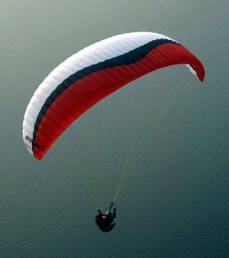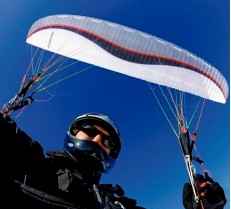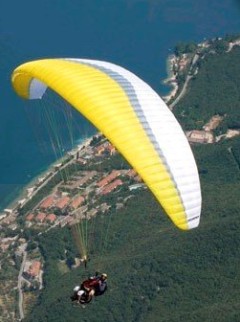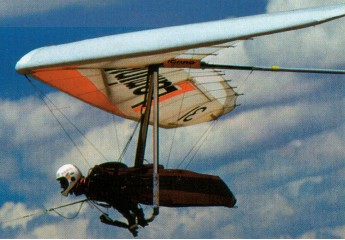
The Laminar 2013 was for advanced pilots.
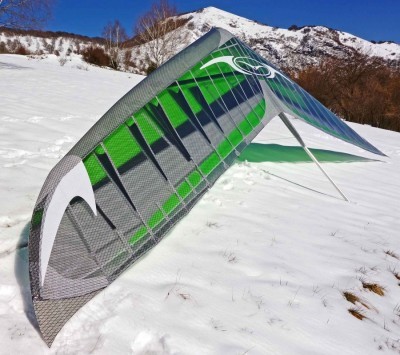
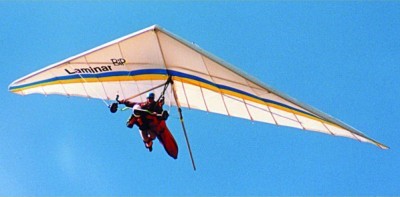
The 2002 Laminar Eazy EZ was for intermediate pilots. The EZ is the performance model with the same geometry as the ST and a few less battens and lighter.
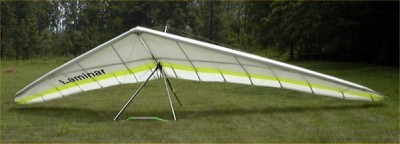
The 2000 Laminar Mr700 (Mrx) was for advanced pilots.
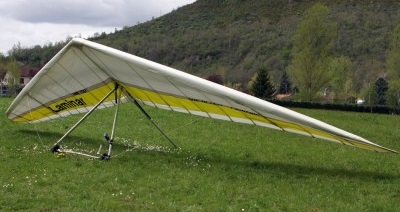
The 14m Laminar Mr700 (Mrx) version is very light in roll with vb off, vb on does stiffen up handling but does not yaw. Take off and landings are good, nice to thermal and good performance overall. Build quality is excellent with very nice precision made parts, rubber backed uprights, and easy to rig/de-rig.
Developed from 1997, the Laminar 13 ST I of 1998 is a particularly sympatic wing for those who do not weigh heavy, and is easy in all its handling, landing without problem.
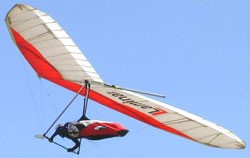
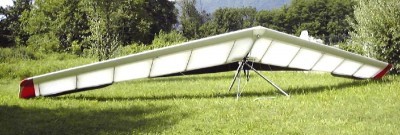
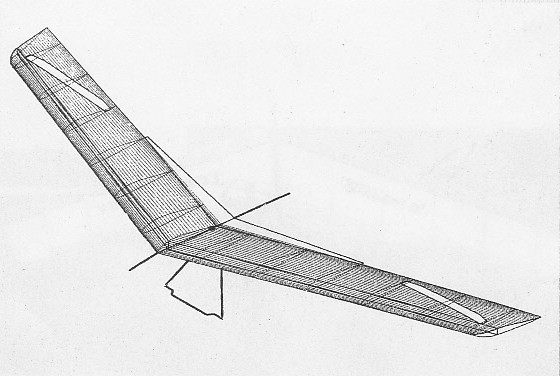
The Laminar ST is a topless model hang glider circa 1998. The R version has a kingpost.
Once in the air the Laminar ST wing is very nice, a little brighter and faster than a standard Laminar. In transition overdrive stretched in slightly turbulent conditions the wing tends to go in yaw and in addition it is very hard to turn and to correct, it is quite painful and unpleasant in the long transitions, overdrive stretched and low speed.
The Laminar ST 2 of 1999 is for advanced pilots.
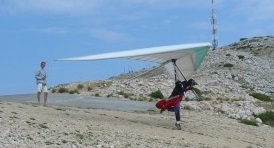
The Laminar Z8 of 2006 was for advanced pilots.
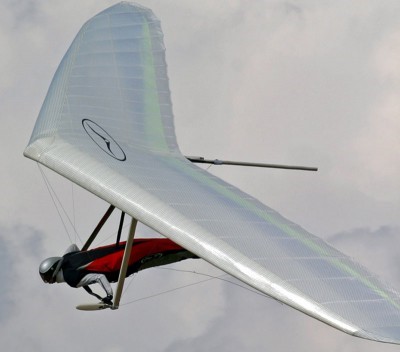
The 2008 Laminar Z9 was for advanced pilots.
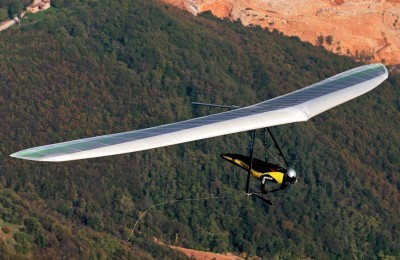
The 2003 Laminar Zero 7 was for advanced pilots.
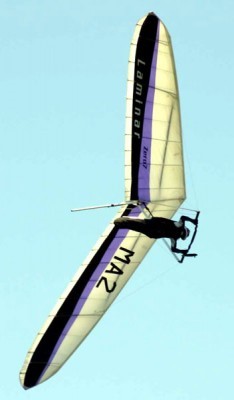
The 2010 Laminar ZX was for advanced pilots.
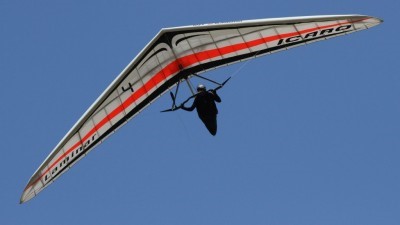
Laminar 12 ST
Wing area: 12.5 sq.m
Certification: DHV
Pilot weight: 50-85 kg
Wing span: 9.9 m
Nose Angle: 130 deg
Aspect ratio: 7.84
Hang glider weight: 32 kg
Minimum speed: 30 km/h
Packed length: 4.9 m
Packed length short: 3.7 m
Number of battens: 27
Price (1998) £ 3690
Laminar 13 ST
Wing area: 13.2 sq.m
Certification: DHV 2-3/SHV
Pilot weight: 60-90 kg
Wing span: 10.02 m
Nose Angle: 130 deg
Aspect ratio: 7.6
Hang glider weight: 33 kg
Minimum speed: 33 km/h
Maximum speed: 75 km/h
Max glide ratio (L/H): 11.37
Max glide ratio speed: 44 km/h
Minimum sink rate: 0.92 m/s
Packed length: 4.98 m
Packed length short: 4.15 m
Number of battens: 27
Price (1998) £ 3690
Laminar 14 ST
Wing area: 14.4 sq.m
Certification: DHV 3/SHV
Pilot weight: 75-110 kg
Wing span: 10.4 m
Nose Angle: 130 deg
Aspect ratio: 7.5
Hang glider weight: 34 kg
Minimum speed: 33 km/h
Packed length: 5.2 m
Packed length short: 4.15 m
Number of battens: 29
Price (1998) £ 3690
Laminar BIP 21
Wing area: 21 m²
Wing span: 11.2 m
Aspect ratio: 5
Hang glider weight: 38 kg
Minimum pilot weight: 115 kg
Maximum pilot weight: 200 kg
Minimum speed: 32 km/h
Maximum speed: 90 km/h
Packed length: 5.6 m
Packed length short: 4 m
Number of battens: 23
Nose angle: 127°
Laminar EZ 14
Wing area: 14.5 sq.m
Certification: DHV
Pilot weight: 65-95 kg
Wing span: 10.3 m
Nose Angle: 127 deg
Hang glider weight: 28 kg
Aspect ratio: 7.3
Packed length: 5.2 m
Packed length short: 4 m
Number of battens: 21
Laminar Eazy EZ 16
Wing area: 15.7 m²
Wing span: 10.5 m
Aspect ratio: 7
Hang glider weight: 30 kg
Minimum pilot weight: 75 kg
Maximum pilot weight: 110 kg
Packed length: 5.4 m
Packed length short: 4 m
Number of battens: 21
Nose angle: 127°
Global classification: DHV 1-2
Maximum speed (VNE): 80 km / h
Stall: 27 km / h
Double surface: 80.0%
Number of batten: 17/4
MR700 (MRX) 12 MR
Wing area: 13.36 m²
Wing span: 9.84 m
Aspect ratio: 7.25
Hang glider weight: 30 kg
Minimum pilot weight: 50 kg
Maximum pilot weight: 85 kg
Packed length: 4.9 m
Packed length short: 3.6 m
Number of battens: 27
Nose angle: 127°
MR700 (MRX) 13 MR
Wing area: 13.77 m²
Wing span: 10.06 m
Aspect ratio: 7.35
Hang glider weight: 32 kg
Minimum pilot weight: 60 kg
Maximum pilot weight: 90 kg
Packed length: 4.98 m
Packed length short: 4 m
Number of battens: 30
Nose angle: 127°
MR700 (MRX) 14 MR
Wing area: 14.88 m²
Wing span: 10.48 m
Aspect ratio: 7.38
Hang glider weight: 34 kg
Minimum pilot weight: 75 kg
Maximum pilot weight: 110 kg
Packed length: 5.2 m
Packed length short: 4.15 m
Number of battens: 30
Nose angle: 127°
Laminar R 13
Wing area: 13.2 sq.m
Certification: DHV 2-3/SHV
Pilot weight: 55-85 kg
Wing span: 10.2 m
Nose Angle: 130 deg
Aspect ratio: 7.6
Price (1998) £ 2810
Laminar R 12
Wing area: 12.5 sq.m
Certification: DHV 2-3
Pilot weight: 45/65 kg
Wing span: 9.9 m
Nose Angle: 130 deg
Aspect ratio: 7.8
Price (1998) £ 2810
Laminar R 14
Wing area: 14.4 sq.m
Certification: DHV 3/SHV
Pilot weight: 65-100 kg
Wing span: 10.4 m
Nose Angle: 130 deg
Aspect ratio: 7.51
Price (1998) £ 2810
Laminar Z8 L12.9
Wing area: 12.86 m²
Wing span: 9.84 m
Aspect ratio: 7.53
Hang glider weight: 30 kg
Minimum pilot weight: 50 kg
Maximum pilot weight: 75 kg
Packed length: 4.90 m
Packed length short: 3.50 m
Number of battens: 30
Nose angle: 128°
Laminar Z8 L13.2
Wing area: 13.18 m²
Wing span: 10.06 m
Aspect ratio: 7.68
Hang glider weight: 32 kg
Minimum pilot weight: 60 kg
Maximum pilot weight: 85 kg
Packed length: 4.98 m
Packed length short: 3.88 m
Number of battens: 30
Nose angle: 131°
Laminar Z8 L13.7
Wing area: 13.77 m²
Wing span: 10.06 m
Aspect ratio: 7.35
Hang glider weight: 32 kg
Minimum pilot weight: 65 kg
Maximum pilot weight: 90 kg
Packed length: 4.98 m
Packed length short: 3.88 m
Number of battens: 30
Nose angle: 131°
Laminar Z8 L14.1
Wing area: 14.12 m²
Wing span: 10.48 m
Aspect ratio: 7.78
Hang glider weight: 34 kg
Minimum pilot weight: 75 kg
Maximum pilot weight: 100 kg
Packed length: 5.20 m
Packed length short: 4.10 m
Number of battens: 32
Nose angle: 131°
Laminar Z8 L14.8
Wing area: 14.88 m²
Wing span: 10.48 m
Aspect ratio: 7.38
Hang glider weight: 34 kg
Minimum pilot weight: 85 kg
Maximum pilot weight: 110 kg
Packed length: 5.20 m
Packed length short: 4.10 m
Number of battens: 32
Nose angle: 131°
Zero7 13.3
Wing area: 13.3 m²
Zero7 13.7
Wing area: 13.77 m²
Wing span: 10.6 m
Aspect ratio: 7.35
Hang glider weight: 32 kg
Minimum pilot weight: 60 kg
Maximum pilot weight: 90 kg
Packed length: 5 m
Packed length short: 4 m
Number of battens: 30
Nose angle: 127°
Zero7 14.2
Wing area: 14.24 m²
Wing span: 10.33 m
Aspect ratio: 7.49
Hang glider weight: 33 kg
Minimum pilot weight: 70 kg
Maximum pilot weight: 100 kg
Packed length: 5 m
Packed length short: 4 m
Number of battens: 30
Nose angle: 127°
Zero7 14.8
Wing area: 14.88 m²
Wing span: 10.48 m
Aspect ratio: 7.38
Hang glider weight: 34 kg
Minimum pilot weight: 75 kg
Maximum pilot weight: 110 kg
Packed length: 5 m
Packed length short: 4 m
Number of battens: 30
Nose angle: 127°
Laminar ZX 12.6
Wing area: 12.52 m²
Wing span: 9.61 m
Aspect ratio: 7.38
Hang glider weight: 28 kg
Minimum pilot weight: 55 kg
Maximum pilot weight: 75 kg
Packed length: 4.75 m
Packed length short: 3.35 m
Nose angle: 132°
Laminar ZX 13.1
Wing area: 13.24 m²
Wing span: 10.05 m
Aspect ratio: 7.63
Hang glider weight: 30 kg
Minimum pilot weight: 70 kg
Maximum pilot weight: 85 kg
Packed length: 4.98 m
Packed length short: 3.90 m
Nose angle: 132°
Laminar ZX 13.7
Wing area: 13.88 m²
Wing span: 10.05 m
Aspect ratio: 7.28
Hang glider weight: 31 kg
Minimum pilot weight: 80 kg
Maximum pilot weight: 90 kg
Packed length: 4.98 m
Packed length short: 3.90 m
Nose angle: 132°
Laminar ZX 14.1
Wing area: 14.16 m²
Wing span: 10.54 m
Aspect ratio: 7.85
Hang glider weight: 32 kg
Minimum pilot weight: 90 kg
Maximum pilot weight: 100 kg
Packed length: 5.20 m
Packed length short: 4.10 m
Nose angle: 134°
Laminar ZX 14.8
Wing area: 14.82 m²
Wing span: 10.54 m
Aspect ratio: 7.50
Hang glider weight: 33 kg
Minimum pilot weight: 100 kg
Maximum pilot weight: 110 kg
Packed length: 5.20 m
Packed length short: 4.10 m
Nose angle: 134°