IndUS Aviation is an American light aircraft manufacturer founded in 1994 by Ram Pattisapu, M.D., and headquartered in Dallas, Texas at the Dallas Executive Airport. The company manufactures variants of the Thorp T-211 and the T-111, originally designed by John Thorp. Sub-assembly and component manufacturing is contracted out to the Indian company Taneja Aerospace & Aviation with final assembly in the company’s Dallas factory. IndUS acquired the rights to the Thorp T-211, including tooling and parts. IndUS Aviation was developing an improved version of the Thorp T-211 which they call the Thorpedo LP and the Sport E. By February 2010 the company had 28 aircraft in customer hands and registered with the FAA, including one T-11 Sky Skooter and 27 T-211s. In March 2010, due to the ongoing economic situation, the company was undergoing a reorganization and its website domain registration had expired. By December 2010 the company reorganization was still reported as underway while the website had been restored.
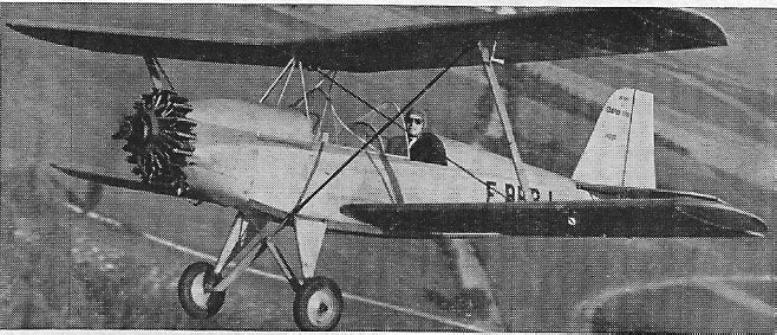
The Aero 110 fuselage has a fabric covered steel-tube framework and powered by a 45 hp Salmson 9ADB radial air-cooled engine.
A Single-bay staggered biplane, upper and lower wings are of equal span and chord. A hinged panel in the upper wing provides access to the front cockpit. Full dual controls are fitted.
Produced by the Societe Indraero and flown for the first time on 1 May 1950, the Aero 110 was produced for the Service de l’Aviation Legre et Sportive (S.A.L.S.).
Engine: 45 hp Salmson 9ADB Wing span: 24 ft 11 in Length: 18 ft 4 in Empty weight: 594 lb Loaded weight: 1000 lb Max speed: 81 mph Cruise: 71.4 mph
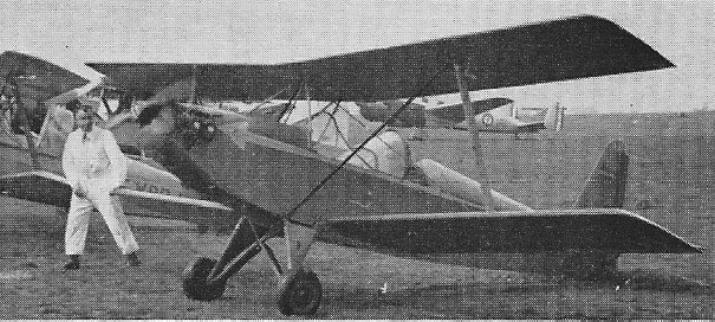
Developed by the Societe Indraero and first flown in 1953, the Aero 101 was designed by MM. Chapeau and Blanchet as a light tandem two-seat training biplane for the Service de l’Aviation Legre et Sportive (S.A.L.S.), and an initial production batch of thirteen was built.
Derived from the Aero 110, it differs by being all-wood construction, a tail wheel and brakes. Powered by a 75 hp Minie 4 DC-32 engine, the tandem open cockpits are fitted with dual controls.
Engine: 75 hp Minie 4 DC-32 Wing span: 24 ft 11 in Length: 18 ft 4 in Max speed: 108.6 mph Cruise: 93 mph ROC: 630 fpm
A small helicopter, it can be stored in a single car garage, can be built in any home workshop with simple tools. It has full cyclic, full collective, tail rotor pedals, twist grip throttle and is capable of vertical take-off and landing – a VTOL helicopter. The Indian is capable of hovering, forward, backward with sideward flight and autorotation. A homebuilt helicopter using “off-the-shelf components” it can be built as an ultralight helicopter. It is constructed with bolt together 4130 chromoly steel tubing frame (and 6061-T6 aluminum tubing) and could be built for under $8,000 including engine using off-the-shelf components. The build time was estimated at 300-800 hours depending on ability.
Dual carb, dual CDI 50-65 hp engine, 2 cycle, two cylinder inline, fan cooled Compact Radial, Rotax or Hirth aircraft engines – recommended A 55hp+ motorcycle engine with mount or other engine may be used Main rotor blades are NACA 0012 – 21′ x 8″ 425 RPM Tail rotor blades are NACA 0012 – 36″ x 3.5″ 3000 RPM Empty weight – 254 lbs Gross weight – 525 lbs Useful payload – 273 lbs Length – 15′ 9″ Width – 7′ Height – 7′ 6″ Cruise speed – 63 mph Top speed – 75 mph Ceiling – 9000′ Fuel – 5 gallons/1.25 hrs Range – 100 miles
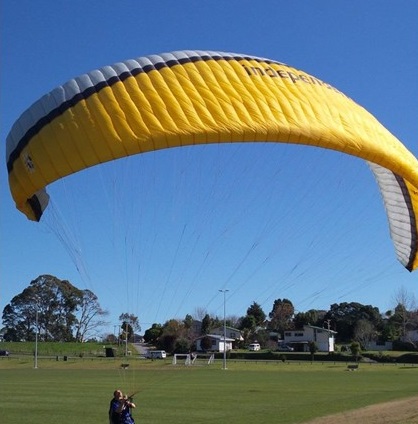
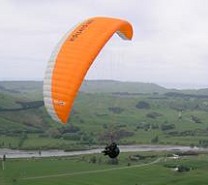
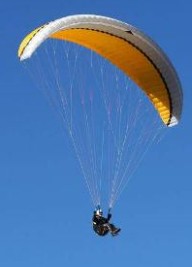
After 2 years, Independence (the brand created by designer Michael Nesler) created a replacement for its intermediate model Dragon. The Dragon 2 comes with a higher aspect ratio and increased number of cells (46). The glider features a black stripe that goes from tip to tip, on the centre of the canopy and used in all the 2003 models of this brand. In the development of Dragon 2, Independence worked with the new design software FD, with which they obtained “a really clean upper and lower surface”, according to the brand. Special attention was paid to the tension between the leading and the trailing edge, which adds up for better performance at the same security level DHV 1-2, say the designers. Dragon 2 was to be available in 4 sizes including S, L and XL.
Dragon 1 Medium Clip in weight: 85 – 105kg. DHV 1-2
Dragon 2
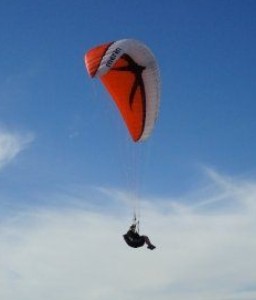
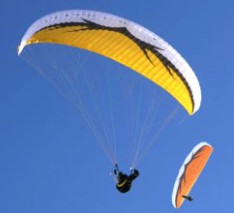
The Dragon 3 is a completely new glider, introducing a new material for the profile that helps reduce the diagonal extension and get a smoother, cleaner canopy, according to the manufacturer. The handling has also been improved to obtain a “very good dynamic for a DHV1-2 glider”, together with safe and good-natured extreme-flight behaviour that make the Dragon 3 a good choice for “freestyle” pilots. Another design feature is the brake system with variable rear-edge-tension to slightly contract the rear edge during braking for more efficient turning and improved performance, as fewer lines are used and so there’s less drag. The Dragon 3 was available in 3 sizes.