The enclosed fuselage Atlas Firebird two-seater helicopter.
Author: Terry
Intora-Firebird Firebird
The Firebird open-frame single-seat helicopter was also available in UAV form.
Intora-Firebird Plc
Offers the Firebird open-frame single-seat helicopter, also available in UAV form, and the enclosed-fuselage Atlas Firebird two-seater.
Inter-Tech Raptor
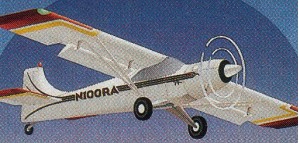
Various aspects of this design have been tested and flown on approximately six previous dates. First flown in September 1997.
Kit price in 1997 was US$22,950.
Top speed: 155 mph
Cruise: 130 mph
Stall: 37 mph
Range: 600 sm
Engine: Continental IO-520, 300 hp
HP range: 200-300
Fuel capacity: 60 USG
Empty weight: 1500 lb
Gross weight: 3000 lb
Height: 6.7 ft
Length: 25.8 ft
Wing span: 37 ft
Wing area: 194 sq.ft
Seats: 4
Landing gear: tailwheel
Inter-Tech Aircraft Inc
1997: PO Box 822, Powell, WY 82435, USA.
LSA builder
Interstate S1B Cadet / L-6 Grasshopper
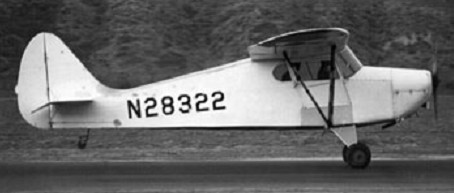
In 1940, the Interstate Aircraft & Engineering Corp. began production of the Interstate Cadet. The S1B was a member of a family of taildraggers, such as the Piper Cub, Taylorcraft, Luscombe, and Aeronca Champ that served many a weekend pilot with fun-filled hours during the late 1930s and early 1940s. The original Cadet was produced in a number of versions using engines from 65 hp to 102 hp. Most popular was the S5B using a 102-hp four-cylinder Franklin.
The tandem two-seater was modified for the military at the beginning of the war and called the L-6 liaison plane. This version was equipped with a glazed canopy that extended well aft toward the tail.
In 1969, production of the Interstate Cadet was resurrected by Bill and Jan Diehl, owners of Arctic Aircraft Co. in Anchorage, Alaska. The revived Cadet was dubbed the S2B2.
Engine 102-hp Franklin
Length: 23.458 ft / 7.15 m
Height: 6.988 ft / 2.13 m
Wingspan : 35.499 ft / 10.82 m
Wing area : 173.839 sq.ft / 16.15 sq.m
Gross wt. 1,650 lb / 748.0 kg
Empty wt. 1,103 lb. / 500.0 kg
Wing loading: 9.43 lb/sq.ft / 46.0 kg/sq.m
Fuel capacity 15 USG.
Top speed 114 mph / 99 kts / 183 km/h
Cruise 105 mph / 91 kts / 169 km/h
Stall 38 mph.
Initial climb rate 900 fpm.
Range: 469 nm / 869 km
Service ceiling 16,500 ft / 5030
Seats 2.
Interstate Aircraft & Engineering Corporation
Founded in April 1937, this company was originally a manufacturer of hydraulic and other precision components for the U.S. aircraft industry. Produced in 1940 the Cadet two-seat light cabin monoplane which, after U.S. entry into the Second World War, was developed as a light liaison and observation aircraft for the U.S. Army. Designed and built a number of drone aircraft prototypes for both U.S. Army and Navy. All were pilotless radio-controlled weapon carriers.
Interplane S3 Eagle
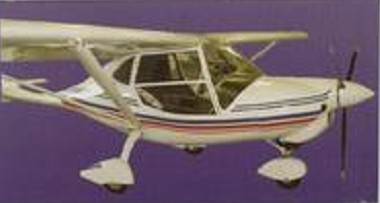
Stall: 35 kt / 40 mph / 64 kmh
Cruise: 104 kt / 120 mph / 193 kmh
VNE: 111 kt / 128 mph / 206 kmh
Empty Weight: 318 kg / 700 lbs
MTOW Weight: 599 kg / 1320 lbs
Climb Ratio: 1100 ft/min / 6 m/s
Take-off distance (50ft obstacle): 600 ft / 183 m
Landing distance (50ft obstacle): 500 ft / 152 m
Interplane S2 Falcon / Qualt 201 / Flamingo
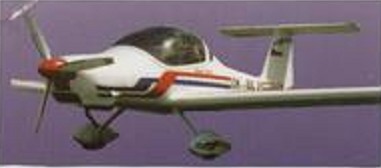
This plane is also known as Qualt 201 or Flamingo
Stall: 33 kt / 38 mph / 61 kmh
Cruise: 118 kt / 136 mph / 219 kmh
VNE: 133 kt / 153 mph / 246 kmh
Empty Weight: 318 kg / 700 lbs
MTOW Weight: 599 kg / 1320 lbs
Climb Ratio: 1200 ft/min / 6 m/s
Take-off distance (50ft obstacle): 640 ft / 195 m
Landing distance (50ft obstacle): 600 ft / 183 m
Interplane Skyboy / S1 Cobra
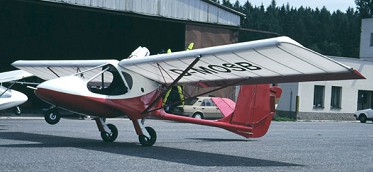
A two place, side by side ultralight has a composite fuselage, an automobie like instrument panel and faired undercarriage. Power is with a Rorax 503, with a Rotax 582 optional, in pusher configuration at the back of the cockpit area and behind the trailing edge of the wing. The tail is on a tubular tailboom with conventional three axis controls. A high wing-aluminium & composite microlight, the Skyboy has a fully enclosable composite cabin with dual controls.
The Skyboy comes preassembled by Czech firm LET.
The agent in France was Junkers Profly.
The price in France, 1997, ex France, including engine and propeller was approximately US$22,400.
The “Skyboy” was renamed the S1 Cobra.
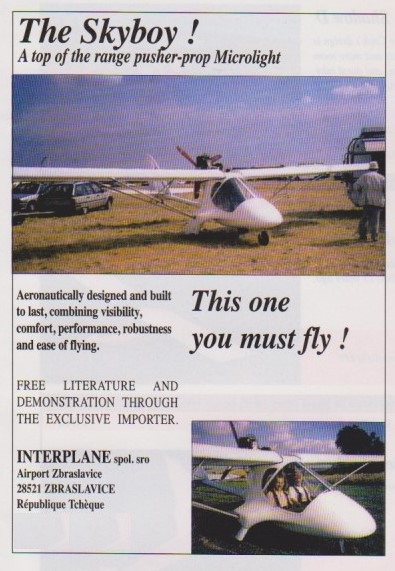
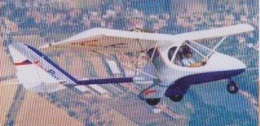
The Skyboy was offered with two different wing profiles. One for low speed manoeuvrability and one for fast cruise.
Engine: Rotax 503
Wing span: 34.5 ft
Length: 20.8 ft
Empty weight: 447 lb
MTOW: 990 lb
Stall: 35 kt / 40 mph / 64 kmh
Cruise: 83 kt / 95 mph / 153 kmh
VNE: 111 kt / 128 mph / 206 kmh
Climb Ratio: 1050 ft/min / 5 m/s
Take-off distance (50ft obstacle): 330 ft / 101 m
Landing distance (50ft obstacle): 380 ft / 116 m
Engine: Rotax 582, 64 hp
Wing span: 10.5 m
Wing area: 15.2 sq.m
MAUW: 450 kg
Empty weight: 210 kg
Fuel capacity: 42 lt
Max speed: 150 kph
Cruise speed: 120 kph
Minimum speed: 54 kph
Climb rate: 5.5 m/s
Seats: 2
Fuel consumption: 15 lt/hr
Price (1998): 32 000 DM

